Journals on Medical Microbiology |BJSTR

OssDsign Catalyst® Bone Graft Performance in a Three-Level Extreme Lateral Interbody Fusion (XLIF®)

Introduction

Spinal fusion is commonly performed in patients with a variety of pathologies when conservative treatment fails resulting in continued pain and functional limitations. These symptoms decrease the quality of life for an individual to the extent that surgery may be indicated [1]. Minimally invasive interbody fusion techniques using anterolateral approaches such as Extreme lateral interbody fusion (XLIF®, NuVasive, Inc., San Diego, CA) have been developed to avoid disruption of the posterior spinal column, while permitting wide exposure of the disc space, use of larger interbody cages, shorter operating times, less blood loss, and indirect nerve root decompression [2,3]. The use of synthetic bone grafts has become mainstream in recent years with advances in nanoscale architecture, microporosity, and ionic substitution designed to amplify signaling pathways to instruct bone formation [4,5]. A new silicate-enriched (5.8 wt% silicon) calcium phosphate bone graft substitute (Catalyst®, OssDsign A.B.) with nanoscale architecture is gaining popularity among spine surgeons in the US. The following is a report on the use of Catalyst in a challenging three-level XLIF case.

Case Description

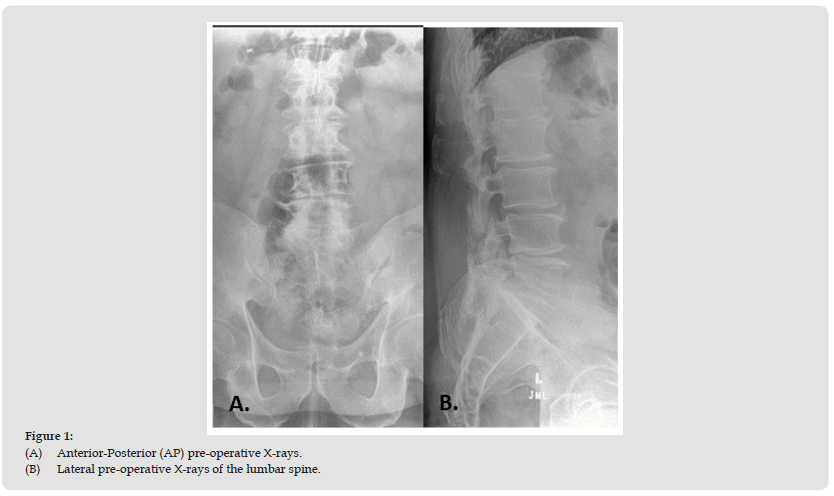
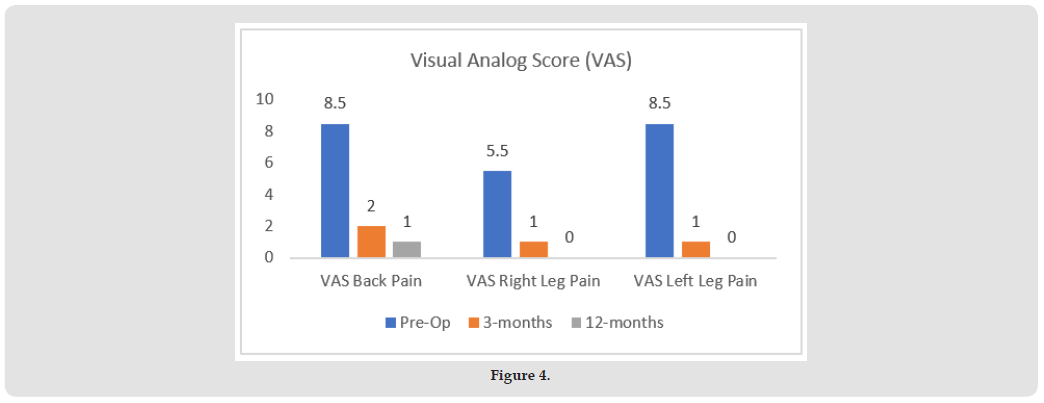
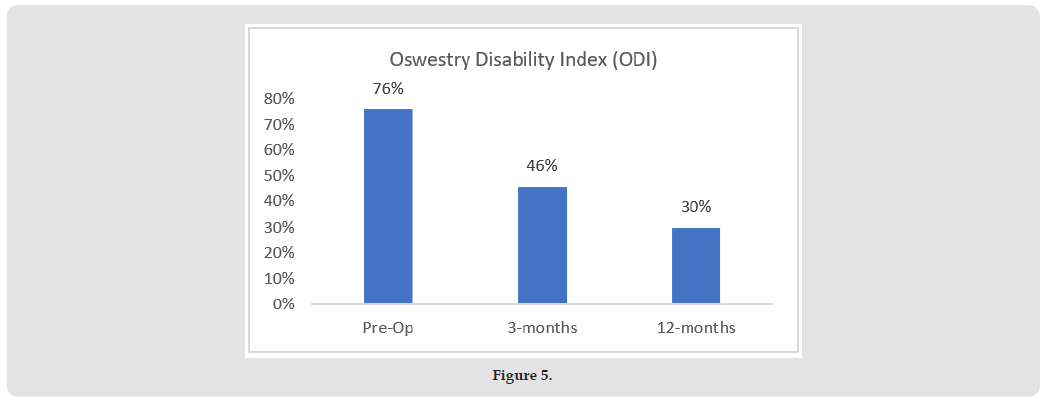
This case reports the results of a 60-year-old male (BMI 32.3) with a prior history of high blood pressure and endocrine disease who presented with severe back and leg pain causing severe disability (Visual Analogue Score (VAS) for pain: VAS Back – 8.5/10, VAS Right Leg-5.5/10, VAS Left Leg 8.5/10, and Oswestry Disability Index (ODI) score 76%). He had several lumbar decompression (laminectomy) procedures in the past along with an uninstrumented L5-S1 posterolateral (PLF) fusion and a C3-C7 cervical fusion (ACDF). Pre-operative X-rays (Anterior-Posterior (AP) and Lateral) of the lumbar spine are shown in Figure 1. Magnetic Resonance Imaging (MRI), clinical, and radiographic examination revealed degenerative disc disease (DDD) at 3 levels (L2-L3, L3-L4, and L4-L5). After 6 months of conservative treatment and administration of both narcotic and anti-inflammatory medications, the patient chose to have surgery after having been informed of the potential risks and benefits. The surgery was performed in a staged fashion in May 2022 and consisted of a three-level, minimally invasive, XLIF® at L2-L5 using three PEEK interbody cages, one at each level, approved for use with Catalyst® Bone Graft. Each cage was filled with 8cc of Catalyst, totaling 24cc. The second stage was done two days later adding posterior instrumentation with pedicle screws and rods with local autograft placed in the lateral gutters. There were no intraoperative complications seen in either procedure. The patient returned for follow-up examinations at 3, 6, and 12 months.

Figure 1

biomedres-openaccess-journal-bjstr

Results

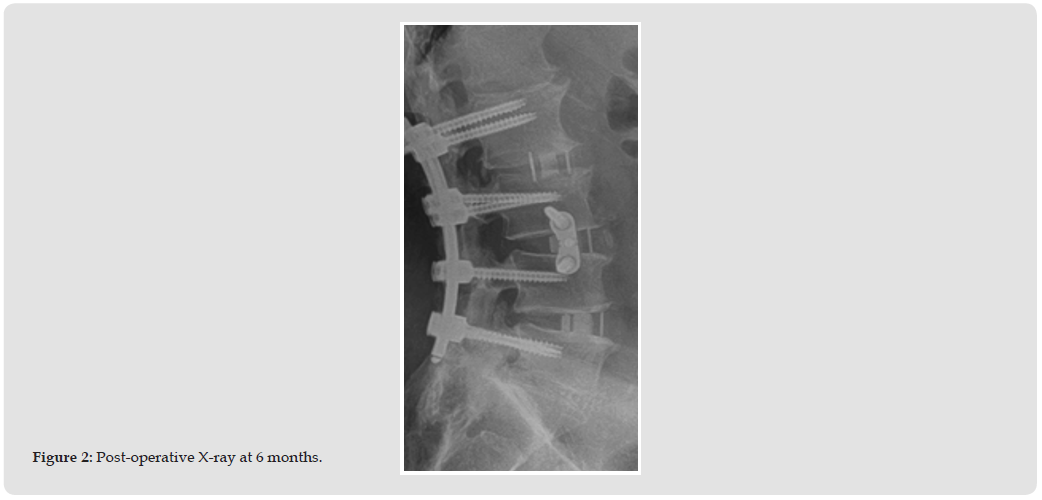
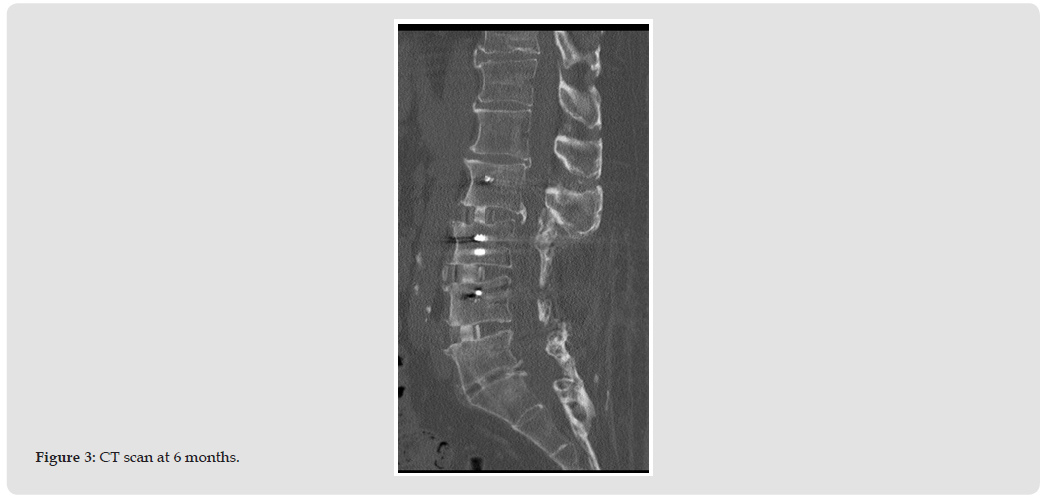
At 3-month follow-up, plain X-rays (AP and lateral images) revealed the instrumentation to be intact and well-positioned. VAS Pain Scores and ODI improved significantly from the pre-operative scores (VAS Back-2/10, VAS Right Leg-1/10, VAS Left Leg 1/10, ODI 46%). At 6-month follow-up, pain, and function further improved and radiographic findings, both X-Ray (Figure 2) and CT scan (Figure 3), showed complete interbody fusion at all three levels. At the 12-month follow-up, the patient was generally pain-free (using only occasional over-the-counter pain relief, Figures 4 & 5) with significantly improved function (VAS Back-1/10, VAS Right Leg-0/10, VAS Left Leg 0/10, ODI 30%). Radiographic findings, both X-ray (Figure 6) and CT scan (Figure 7) at 12 months confirm complete interbody fusion at all three levels. There were no post-operative complications seen during the follow-up period.

Figure 2

biomedres-openaccess-journal-bjstr

Figure 3

biomedres-openaccess-journal-bjstr

Figure 4

biomedres-openaccess-journal-bjstr

Figure 5

biomedres-openaccess-journal-bjstr

Figure 6

biomedres-openaccess-journal-bjstr

Figure 7

biomedres-openaccess-journal-bjstr

Discussion

Recent studies have shown minimally invasive multi-level interbody procedures such as XLIF and others (e.g, OLIF, ALIF and TLIF) to be comparable with respect to fusion rates and global sagittal alignment [6-8]. Catalyst bone graft was shown previously to provide consistent and rapid bone healing in one-level TLIF patients with significantly improved VAS and ODI scores8. The case described here finds earlier than expected interbody fusion at 6 months with corresponding clinical and functional improvement, which was confirmed at the 12-month follow-up visit. This patient’s outcome in a multi-level XLIF with challenging comorbidities (i.e., obesity, multiple previous spine surgeries, endocrine disorder) provides support for the use of this bone graft substitute in more challenging patient scenarios.

Acknowledgement

We particularly thank the Clinical Study Coordinator, Rebekah Vinson, who enabled the recruitment and all the data collection for this Case Study and the OssDsign Spine Registry through which the data has been collected.

Follow us on: Biomedical Journal Impact Factor: https://biomedres.us

https://scholar.google.com/citations?user=OFtUOZYAAAAJ&hl=en
https://www.base-search.net/Search/Results?lookfor=Biomed+Journal+of+Scientific+%26+Technical+Research&l=en&refid=dcsuggesten
https://citefactor.org/journal/2574-1241/biomedical-journal-of-scientific-technical-research
https://ideas.repec.org/s/abf/journl.html
https://econpapers.repec.org/article/abfjournl/
https://www.ncbi.nlm.nih.gov/nlmcatalog/101723284
https://bjstr.org/
https://bjstr.org/about.php
https://biomedres.us/reprints.php
https://biomedres.net/submit-manuscript.php

Journals on Emergency medicine |BJSTR

Radiofrequency Ablation Sacroiliac Joint Pain

Introduction

Low back pain is a common concern for many individuals worldwide. In the United States, it affects two-thirds of Americans during their lifetime [1]. The sacroiliac (SI) joint is a frequent cause of low back pain, with its incidence increasing if a patient develops low back pain after lumbar fusion surgery [2]. The spine, pelvis, and legs are functionally interconnected. The SI joint serves as a shock absorber and engages in force transmission between the upper body and legs during activities such as walking, running, jumping, and bending. It acts as a stress reliever and adds resilience to the pelvic girdle, preventing fractures under the tremendous forces it endures during various bipedal activities [3]. Risk factors for SI joint dysfunction include obesity, leg length discrepancy, scoliosis, pregnancy, and repetitive or chronic microtrauma [4]. A leg length discrepancy can increase the stress across the SI joint fivefold. Age-related changes begin early in life and continue throughout. The primary function of the SI joint is to provide stability, allowing little movement. Movement in the SI joint has been measured in all planes but is limited to 2 mm horizontally and less than 6 degrees in rotation. While hypermobility is not typically associated with pain, pain is commonly seen with instability, multiparity, and muscle-related weakness.

Anatomy

The SI joint is a large diarthrodial joint located between the iliac bones and the sacrum (Figure 1). It is synovial only in the anterior superior part with fused posterior inferior part. There is significant variability between individuals regarding the shape and size, the surface area of the SI joint is about 17.5 cm2, and the volume is 0.6–2.5 ml [5]. The innervation of the SI joint is not well established. The ventral and dorsal parts have separate sources of innervation. The dorsal part is innervated by the lateral branches of the L4-S3 dorsal rami, while the ventral part is innervated by the ventral rami [6]. Myelinated and unmyelinated fibers have been found in the capsule, and small fibers positive for substance P and calcitonin gene-related polypeptide have been found in the cartilage [7]. The nociceptors in the SI joints have a higher threshold than those in the facet joints but a lower threshold compared to those in the discs. The network created by the lateral branches of the dorsal rami is the target of diagnostic blocks and ablative therapy [8]. These nerves consistently course over the lateral sacral crest. The SI joint provides stability during movement, better withstanding medially directed forces than torsion or axial compression loads [9]. Torsion and axial forces preferentially injure the weaker anterior joint capsule [10]. Strong ligaments and muscles support the joint, but as we age, our bones can become arthritic, and these ligaments may stiffen, causing the bones to rub together and produce pain.

Figure 1

biomedres-openaccess-journal-bjstr

In addition to low back pain from irritation to the free nerve endings in the joint, SI joint pain can cause symptoms such as numbness, tingling, or weakness that radiates to the lower extremities [11]. Symptoms are typically worsened by sitting on the affected side, and patients may present with difficulty riding in a car, prolonged sitting or standing, or climbing stairs. SI joint pain can mimic other conditions such as herniated discs or hip pathology, making proper diagnosis crucial. In addition to a detailed medical history, experienced providers use joint manipulation and various functional tests, such as Patrick’s test, Gaenslen’s test, SI joint shear test, Yeoman’s test, compression test, and thrust test, to assist in diagnosis. If pain is reproduced with most of these stress maneuvers, the SI joint is considered the primary pain generator. However, the validity of these maneuvers has been questioned recently [12]. Imaging studies, such as X-ray, CT, or MRI, have poor sensitivity, specificity, and diagnostic utility for SI joint pain. Their main utility is to exclude other dysfunctions in the neighboring spine and hips. Typically, a diagnostic SI joint injection is performed to confirm the cause of the pain. SI joint involvement is confirmed if the patient’s pain level decreases by more than 75% with the diagnostic injection. Image-guided injections, either intra-articular or targeting the lateral sacral network, are the only reliable methods for selecting patients for ablative therapy.

Dual diagnostic blocks with at least 70% pain relief have Level II evidence for accurately diagnosing the SI joint as the source of pain, while single diagnostic blocks with at least 75% pain relief have Level III evidence. Single injections cannot detect false positives, which have a prevalence of 12-26% with dual blocks. Intra-articular injections underdetect SI joint area pain, which is more effectively identified by lateral sacral branch blocks, predicting better ablation outcomes [13]. SI joint pain is initially treated with non-interventional modalities, including physical therapy, NSAIDs, and muscle relaxants. The evidence for NSAIDs in treating SI joint pain is not conclusive and is based on expert opinion. Interventional treatment options include intra-articular steroid injections, prolotherapy, percutaneous sacroiliac joint fusion, and radiofrequency ablation [14]. There are various causes of SI joint pain, both traumatic and non-traumatic. Non-traumatic causes include rheumatoid arthritis, pregnancy, inflammatory bowel disease, and metastatic cancer [15]. Spinal metastases are a frequent complication of cancer that often goes overlooked. Autopsy studies indicate that about 30% of all cancer patients will develop some kind of spinal metastasis [16].

Although the liver and lungs are more common sites for overall metastasis, autopsy reports show that 60-70% of patients with metastatic cancer acquire spinal metastasis. The thoracic spine is the most common location for spinal metastasis (60-80%), followed by the lumbar spine (15-30%) and the cervical spine (<10%) [17]. Such involvement of the spine can cause instability and deformity and may lead to complications such as pathologic vertebral compression fractures (pVCF) and metastatic epidural spinal cord compression (MESCC). Approximately one in ten patients with spinal metastases will develop MESCC, and another 12.6% will develop a pVCF [18]. The SI joint can be subjected to indirect stress from primary, secondary, or metastatic cancer in the spine, resulting in pelvic imbalances and unequal weight distribution. By the time bone metastasis occurs, treatment aims to control pain and maintain quality of life. Understanding the epidemiology should increase awareness of the first symptoms and promote early diagnosis, emphasizing the prevention of future skeletal complications, and thus improving overall outcomes [17] (Figure 2).

Figure 2

biomedres-openaccess-journal-bjstr

Ablative Therapies for SI Joint

Pain is always best managed when the underlying pathophysiology is treated. However, the pathophysiology of chronic SI joint pain, even when cancer-related, often cannot be effectively treated. The innervation of the SI joint is accessible for ablation, making it a suitable target for intervention. Radiofrequency Ablation (RFA) uses electrical energy to create thermal energy that destroys the nerves causing pain. In 1931, Martin Kirschner used a direct current (DC) via an uninsulated needle to ablate the Gasserian ganglion to treat trigeminal neuralgia [19]. High frequency alternating current (AC) produced controlled lesions, with frequencies (300-500 kHz) similar to those used by radio transmitters, hence the name “radiofrequency ablation” [20]. The rapidly alternating electrical field in RFA causes ion vibrations (including water molecules) at the same frequency, generating heat that denatures proteins and leads to cell death. Although RFA has been a treatment option for SI joint pain since 2001 [21], it may sometimes be overlooked for cancer-related pain. Because RFA is a localized procedure at the site of pain, it tends to have fewer unwarranted systemic side effects compared to oral medications, which is advantageous for palliative care patients. Additionally, there are few contraindications for RFA beyond the standard risks of infection and bleeding common to any surgical procedure. Multiple RFA techniques for the SI joint are used in practice today. These techniques vary in target visualization methods, lesioning techniques, and target sites. The outcome of RFA depends on proper patient selection and accurate needle placement during the ablative treatment.

Target Sites

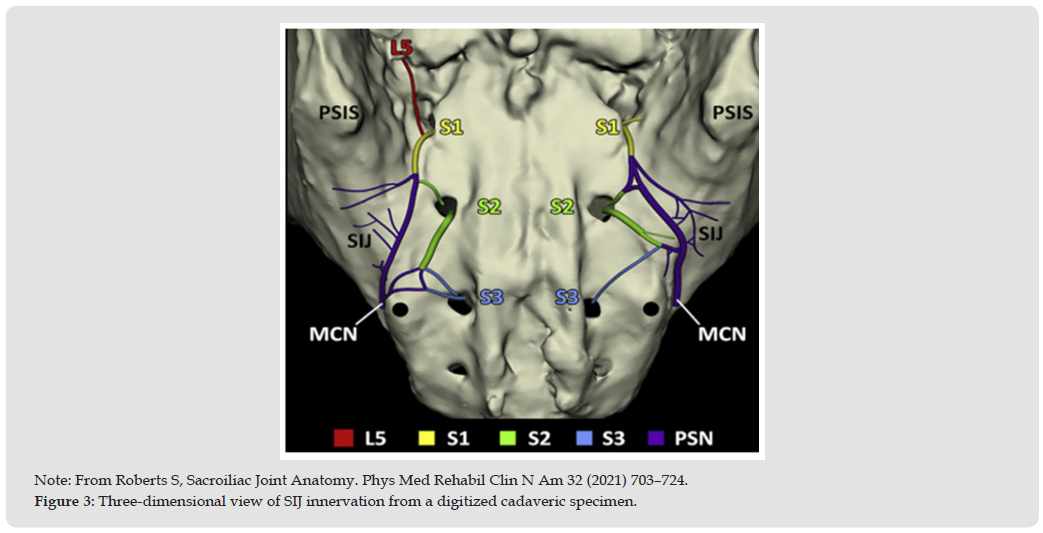
The SI joint is extensively innervated by the L5 dorsal ramus and the lateral branches of the S1, S2, and S3 dorsal rami of the sacral nerves. The unique innervation of the SI joint and its anatomical variations present various challenges for clinicians. The purpose of this article is to review these different techniques and demonstrate how Radiofrequency Ablation (RFA) can be a valuable intervention for chronic SI joint pain including in terminal cancer patients seeking palliative care options (Figure 3). There are numerous approaches, each with varying levels of evidence. A systemic review favors cooled RF approach over conventional RF. Irrespective of the technique the target is the same, lateral branches form L5- S3. Traditional target sites around the sacral foramina for lesioning have been questioned. Stout et al in a cadaver study demonstrated that RFA lesioning using traditional targets would result in incomplete lesioning in 40% of cases [22]. New specific targets were found through cadaver dissection with overlaying radius epsilon then captured by fluoroscopy. They proposed 4:30 and 6:00 for S1; 2:30, 4:00, and 5:30 for S2 (unchanged); and 1:00 and 2:30 for S3 on the right side. The targets for the left are the mirror image on the right: 6:00 and 7:30 for S1; 6:30, 8:00, and 9:30 for S2; 9:30 and 11:00 for S3. They claimed 95% success rate assuming ablation size is as expected. Robinson et al quantified the relationship between the posterior sacral network and bony anatomical landmarks [23].

Specifically, the first, second, and third transverse sacral tubercles (TSTs) of the lateral sacral crest are consistent bony landmarks identifiable by ultrasound. The study used digitization and 3D modeling to then determine mean distances for posterior sacral foramina and interforaminal distance in tested sacra for males and females. The aim of these anatomical studies is to better quantify the anatomical relationship of nerves to bony landmarks which allows for better accuracy for lesioning with RFA. In general, the lateral branches of L5 and S1-S3 dorsal rami are targeted lateral to the posterior sacral foramina and a larger lesion area will minimize missing a nerve due to anatomical variations. Exact needle locations vary depending on the device and technique being used.

Figure 3

biomedres-openaccess-journal-bjstr

Lesioning Techniques

Conventional Radiofrequency

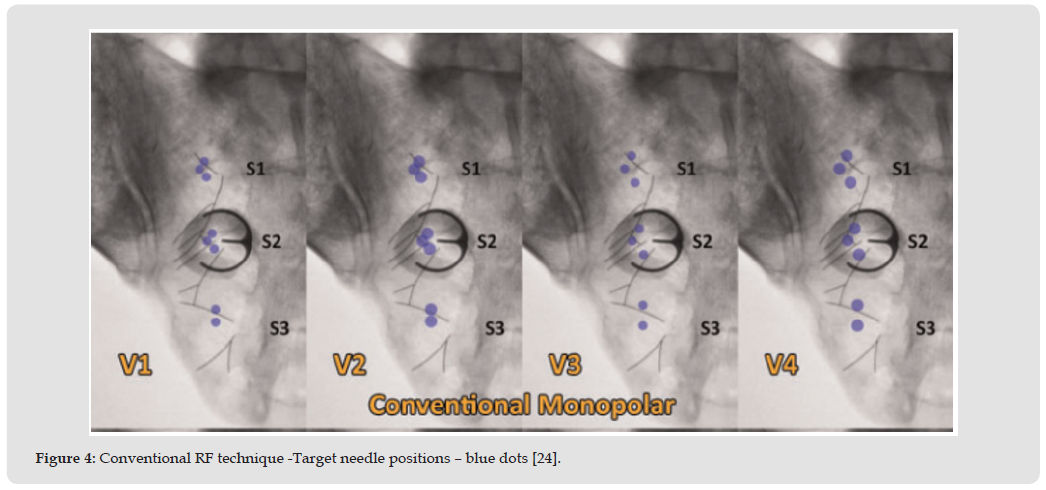
Conventional RF is performed using monopolar or bipolar technique. In monopolar technique needle gauge and orientation determine the burn size while in bipolar the spacing between the needle tips must be optimal for ablation as burn area is between the needle tips. Roberts at al studied seventeen different ablation approaches and found bipolar approach is more successful in ablating lateral nerves than conventional monopolar radiofrequency ablation [24]. In conventional monopolar approach, the sacral foramina are imagined as face of the clock and needles are placed at regular intervals around the lateral edge of the foramen. The usual positions are 1:00, 3:00, 5:30 on the right and 11:00, 9:00 and 630 on the left at S1 and S2. At the S3 and S4 levels, the needle clock face positions are 1:30 and 4:30 on the right, and 7:30 and 10:30 on the left (Figure 4). A number of bipolar approaches are used to ensure effective ablation of lateral branches. Multiple needles of various gauges are placed along the line from S1 to S4 5- 10 mm from the lateral margins.

Figure 4

biomedres-openaccess-journal-bjstr

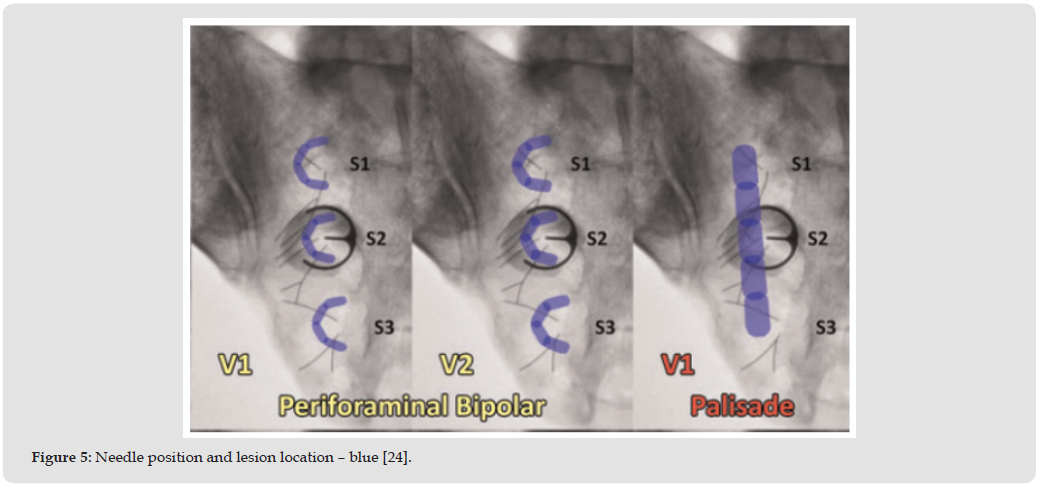
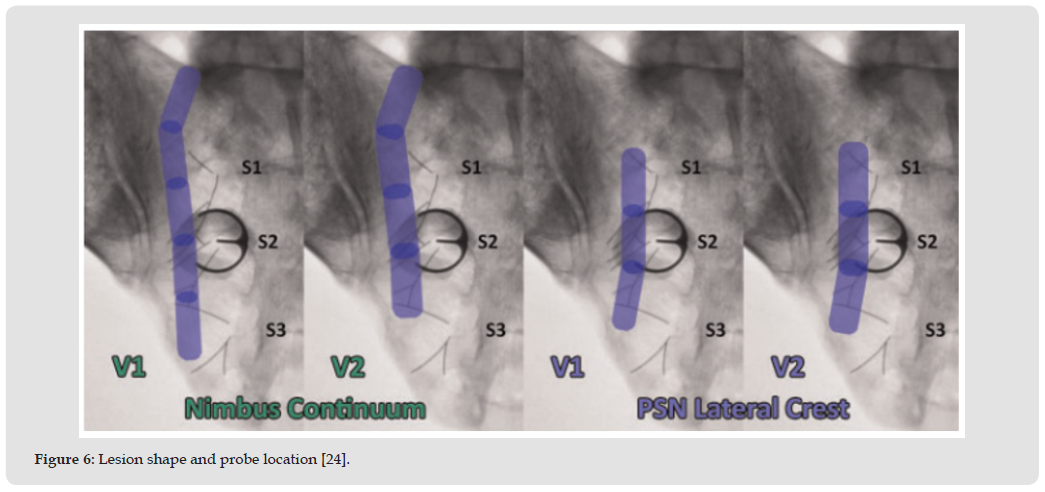
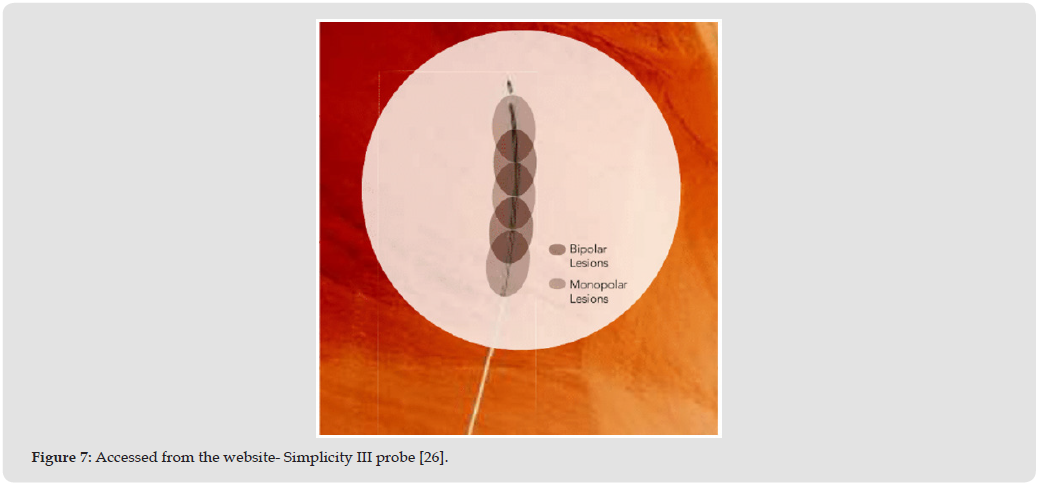
Needle gauge varies from 22 to 17 and they are placed 4 mm to 15 mm apart. Four commonly used techniques are leapfrog technique (22g needles placed 4mm apart), palisade technique (20 g needles placed 10 mm apart), Nimbus continuum technique (17 g needles placed 15 mm apart), and lateral crest technique (same as palisade). The bipolar approach is considered less cumbersome with reduced cost as produce can be done in a shorter time [15,25] (Figures 5 & 6). Multi-lesion probes such as Simplicity III are available which can produce continuous strip lesions for more complete denervation. The probe has three active sites which create overlapping three monopolar lesions and two bipolar lesions resulting in a total burn area of 9mm x 52.5mm [26] (Figure 7).

Figure 5

biomedres-openaccess-journal-bjstr

Figure 6

biomedres-openaccess-journal-bjstr

Figure 7

biomedres-openaccess-journal-bjstr

Cooled RFA

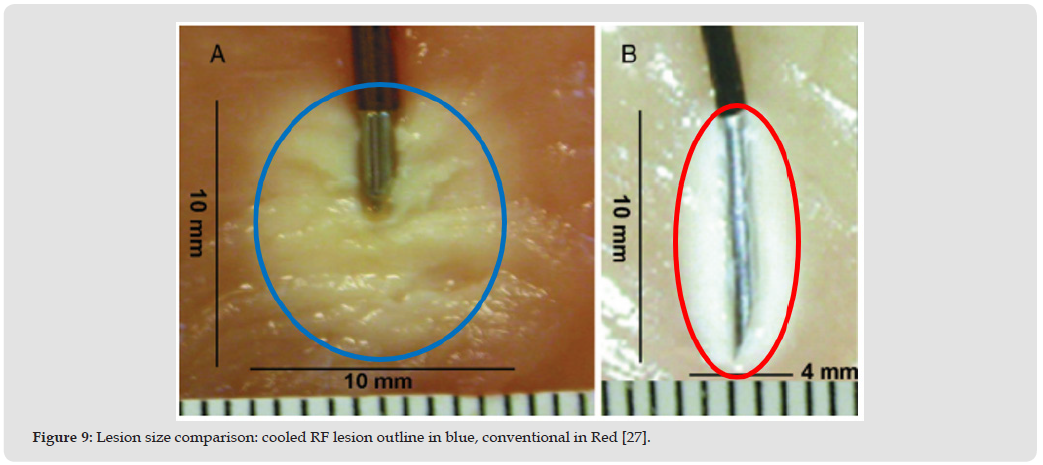
Cooled RF is a variation of conventional RF approach that has been used to treat SI joint pain since 2013. Thermal energy in standard RFA is limited by desiccation and overheating of the targeted tissue, which limits consistent lesioning during the procedure. In cooled RFA, water is used to keep the needle tip temperature at 60C which results in consistent and uniform heating of the surrounding tissue resulting in on average lesion that is twice the size of lesion compared to conventional RFA which results in more complete ablation of the target nerve fibers [27]. The probe is 17 g in size with a 4 mm active tip. The target points around the sacral foramen are the same as in conventional RF (Figures 8 & 9). The safety and effectiveness of cooled RFA was reviewed in a met analysis by Sun et al. [28] and found that the procedure is effective and safe. The mean drop in pain score was 3.81 or 3.74 depending upon the scale used. Furthermore, one study suggests that repeat cooled RFA procedures resulted in longer pain relief than single procedures. For standard cooled RFA procedures, the average duration of relief was 5.5 months after the first procedure and 9 months after the second procedure. Through a further review of patient records, the study found that RFA reduces utilization of medical care (41%) and repeat RFA resulted in a 59% reduction in utilization of medical care, and a reduction in medical costs accordingly [29].

Figure 8

biomedres-openaccess-journal-bjstr

Figure 9

biomedres-openaccess-journal-bjstr

Level of Evidence for Various RF Approaches

Three systemic and one narrative reviews have been published evaluating the effectiveness of various RFA techniques. In the most recent systematic analysis Lee at al analyzed 37 studies encompassing 8 RCT, 14 retrospective and 11 prospective studies including 4 case reports. Despite the variability in types of radiofrequency technology, technique, nerve targets, and study methodology, most studies found that substantial proportions of patients achieved at least 50% or more relief at 1, 3, 6, and 12 months following lateral nerve ablation. Using the GRADE system, evidence was rated at moderate level to effectively reduce pain and disability in majority of patients with posterior joint complex SI joint pain at 1, 3, 6, and 12 months. The level of evidence was upgraded to high quality when only anatomically validated techniques were assessed.

Endoscopic RFA

Recently, endoscopic visualization has been used to localize the posterior sacroiliac ligament in the effort to treat SIJ pain. Ablation of the lateral branch nerves innervating the posterior capsule of the SIJ and overlying soft tissues using a bipolar radiofrequency probe through the endoscope’s working channel has had favorable clinical outcomes [30]. The endoscope allows visualization of sensory nerve fibers with a diameter between 0.21 and 1.51mm, allowing precise targeting of the L5 dorsal rami and lateral sacral branches from S1, S2 and S3 dorsal sacral rami Therefore, this approach may be particularly useful when a patient’s anatomy and/or previous fusion/surgical hardware may obscure the view using traditional fluoroscopic visualization. Chen CM, et al. even compared the efficacy of performing endoscopic rhizotomy vs Cooled RFA approaches for treatment of SIJ pain [31] (Figure 10). The study compared outcomes of 72 patients over the course of 1 year and found better functional outcomes and longer duration of symptoms in the full endoscopic rhizotomy group vs the cooled RFA group. In addition, only 8% (3 out of 36) of patients in the endoscopic group experienced recurrence of pain as opposed to a 61% recurrence rate after 1 year from RFA. Of note, however, the average operation time for the navigation-assisted endoscopic procedure was 61.8 minutes, which was almost double the time for cooled RFA procedure [32].

Figure 10

biomedres-openaccess-journal-bjstr

Cryoneurolysis

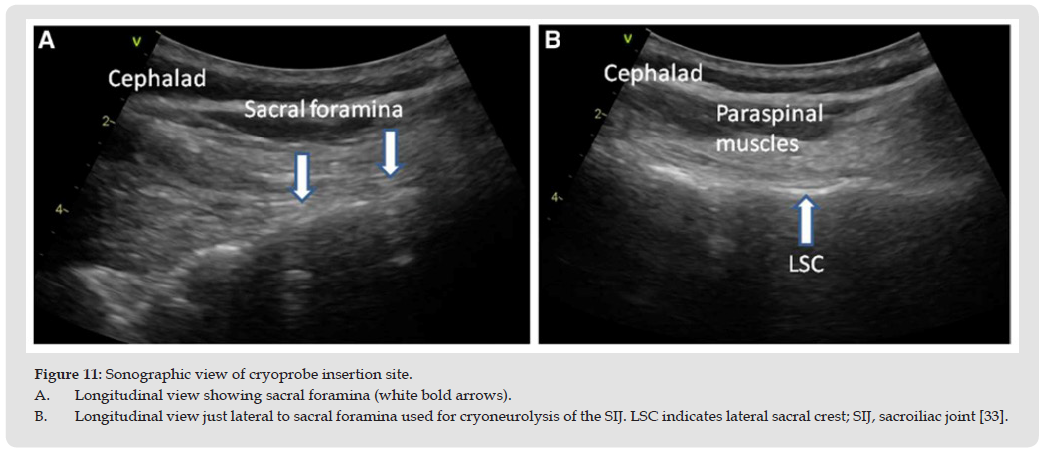
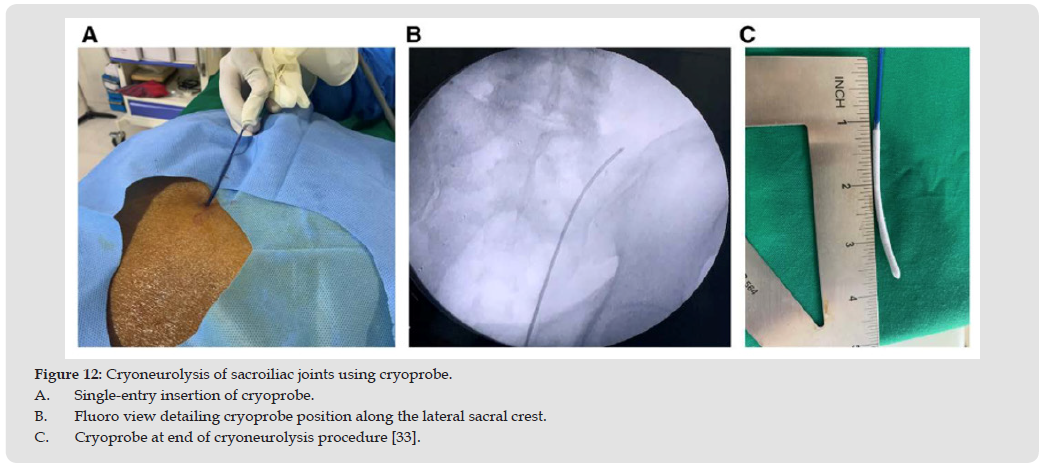
Cryoneurolysis is a technique that targets nerves with extremely cold temperatures to temporarily destroy the nerves (the application of cryoneurolysis). Cryoneurolysis is used in a wide array of pain management plans. Cryoneurolysis probes are larger and would result in larger lesions thus avoiding the pitfall of missing lateral sacral nerve branches seen with various RF approaches. Sahoo et al. [33], outline five case studies that used cryoneurolysis for SI joint pain specifically. All five patients were selected after at least 50% pain improvement to 2 ml intraarticular injection of 2 ml 2% lidocaine. Cryoneurolysis was performed a week later. Ultrasound was utilized to confirm the probes were localized lateral sacral crest and 14g cryoprobe was placed with ultrasound guidance along the lateral crest. Fluoroscopy was used to confirm that the probe is lateral to sacral foramina in AP view and is lying on the sacral bone in lateral view. The optimal position was verified by checking sensory and motor stimulation with electrical stimulation at 50 hertz and 2 hertz respectively (Figures 11 & 12). The technique included two cycles of four minutes split into a three-minute freezing cycle and a one-minute defrosting cycle. Freezing and defrosting was visualized under ultrasound. After this procedure, patients were followed up at one month, three-month, and six-month intervals. At one month, three patients had no complaints of pain and two patients had 1/10 pain. At the three and six months, all the patients reported greater than 50% pain relief. These initial results show promise for cryoneurolysis to be more widely used for SI joint pain. There are many advantages to this procedure as well. One advantage is that cryoneurolysis only requires a single skin entry point as opposed to cooled RFA which requires at least eight points of entry. The complication rate as high as 20% has been reported after RF of SI joint [34]. Cryoneurolysis is potentially a less expensive approach with potential to have lower incidence of numbness and tingling. Cryoneurolysis shows promise as an option for SI joint pain but requires further study.

Figure 11

biomedres-openaccess-journal-bjstr

Figure 12

biomedres-openaccess-journal-bjstr

MR-HIFU

Another option for patients with SIJ pain is MRI guided high intensity focused ultrasound (MR-HIFU) [35]. With this technique, patients undergo MRI imaging and use ultrasound probes to generate enough heat that can effectively treat SI joint pain. Thus, the main advantage with this technique is that it is non-invasive and avoids the use of radiation. In addition, with the use of MRI, pain centers can be more precisely targeted over standard X-ray imaging such as with RFA. But the procedures require immobility necessitating some form of anesthesia. Planning is done using a 3D T2w paramedian MRI image directly lateral to sacral foramen. The dorsal L5 ramus and the lateral branches of the S1–S3 dorsal rami are targeted. Target picked are treated with US 1.2 MHz probe using 60-120 W power with the aim to generate temperature over 60C within the tissue. Therefore, MR-HIFU provides alternatives for patients with SI joint pain and who may not be able to undergo ablation with usual radiofrequency approaches. In one case report reported in literature, patients had no pain issue at 6 months follow. This is an attractive technique for patients on anticoagulants as no needle is inserted [36] (Figure 13).

Figure 13

biomedres-openaccess-journal-bjstr

Conclusion

Radiofrequency ablation is an effective treatment modality for SI joint-related pain from any reason including cancer. New techniques continue to emerge, allowing for more precise and better outcomes. Outcome is very much dependent on proper patient selection. Endoscopic RFA allows for greater visualization and accuracy in patients with varying anatomy and/or obscuring surgical hardware. Cryoneurolysis reduces the number of entry points into the skin and potentially increases duration of pain relief. MR-HIFU provides a non-invasive and more accurate approach to treating SIJ pain which can be especially useful for sick patients who are coagulopathic or taking anticoagulants. Furthermore, refinement of procedural intricacies such as the use of hypertonic saline to increase lesion areas emerge as RFA is becoming more widely used. Moreover, its implementation has shown it is a great overall option to address some of the nuances which are specific to the palliative population Improvement in pain will result in lower opioid need that can lead to better quality of life and lower opioid-related side effects. RFA is an established analgesic intervention for SI joint pain, the option of RFA use should be considered in patients with low back pain.

Follow us on: Biomedical Journal Impact Factor: https://biomedres.us

https://scholar.google.com/citations?user=OFtUOZYAAAAJ&hl=en
https://www.base-search.net/Search/Results?lookfor=Biomed+Journal+of+Scientific+%26+Technical+Research&l=en&refid=dcsuggesten
https://citefactor.org/journal/2574-1241/biomedical-journal-of-scientific-technical-research
https://ideas.repec.org/s/abf/journl.html
https://econpapers.repec.org/article/abfjournl/
https://www.ncbi.nlm.nih.gov/nlmcatalog/101723284
https://bjstr.org/
https://bjstr.org/about.php
https://biomedres.us/reprints.php
https://biomedres.net/submit-manuscript.php
Journals on Medical Casereports |BJSTR

The Biology of the Facultative Halophyte Atriplex patula L.

Introduction

The genus Atriplex L. is represented by about 250 species globally. Molecular and morphological data have provided some evidence supporting the inclusion of the Chenopodiaceae in the family Amaranthaceae with the former family Chenopodiaceae now listed as a subfamily Chenopodioideae [1]. However, Welsh et al. [2] and others still use the nomen Chenopodiaceae in systematic treatments. Atriplex patula L. (spear orach, spearscale) is a facultative halophyte that tolerates low to moderate levels of soil salinity [3]. It is a widespread weedy species that occurs in agricultural fields, on roadsides, on the margins of coastal salt marshes, and in other areas where disturbance has occurred. Atriplex patula produces dimorphic seeds which allows the species to be established in unstable habitats [4, 3]. Welsh [1] indicated that A. patula was possibly introduced in North America from Europe, Asia, or North Africa in the 18th century, and its occurrence has been documented in at least 10 provinces in Canada and 29 states in the U.S.A. Chetina et al. [5] have reported that A. patula occurs in saline sites at 59º N near Perm Krai, Russia, and De Cauwer et al. [6] noted that this species is a weed control problem in sugar beet fields in Belgium. Atriplex patula has been suggested for use in habitat remediation because stems and leaves accumulate and store heavy metal pollutants [7]. Herein, we summarize important aspects of this widespread facultative halophyte.

Synonyms, Taxonomy, Variation

Synonymy of the Atriplex patula complex is in a state of confusion. Synonyms of Atriplex patula L. (spear orach, spreading orache, spearscale) in North America have primarily been listed as Atriplex hastata L. subsp. patula (L.) S. Pons, A. hastata var. patula (L.) Farwell, and Teutiopsis patula (L.) Selak [1], whereas Correll and Correll [8] listed A. patula L. as A. patula L. var. hastata (L.) Gray. The nomens A. prostrata Boucher and A. hastata L. sensu Aellen non L. have also been listed as synonyms by Stalter and Lamont [9]. The following taxonomic description of A. patula is summarized from treatments of the species by Correll and Correll, [8], Stalter, [10], Taylor and Wilken, [11], and Welsh, [1]. Atriplex patula is a monoecious annual with a root system that typically extends between 10 to 18 cm below the substrate surface. Stems are erect and branched, glabrous to scaly, and range from 30 cm to 1.5 m in height. Leaves are opposite below and alternate above.

Petioles of lower leaves are up to half as long as the blades. Blades are bright green, 2.5 to 7.0 cm long and nearly as broad, truncate at the base, and acute or obtuse at the apex. The staminate flowers bearing 5 tepals and 5 stamens are borne in a terminal spike or panicle. The pistillate flowers are usually borne in few-flowered axillary or spike-like cymes. Pistillate flowers have 2 stigmas, and the base of the ovary is enclosed in a pair of bracts often reddish at maturity and up to 7 mm long. Seeds are dimorphic. Brown seeds are 2.5 to 4.0 mm wide, and black seeds are 1.0 to 2.0 mm wide. Chromosome numbers for the A. patula complex are 2n = 18 and 2n = 36. In the Netherlands, Van Der Meyden [12] tentatively recognized A. patula L. and A. hastata L. as separate species. However, he noted that there are no sharp distinctions between the two taxa, and numerous overlapping morphological variations exist in leaf blade morphology between the two entities. Van Der Meyden [12] stated that different ploidy levels occur in the complex. Atriplex hastata is a diploid and A. patula is a tetraploid.

Geographic Distribution

Atriplex patula is an annual, weedy, facultative halophyte that has a wide distributional range in North America, Europe, North Africa, and Asia. Correll and Correll [8] reported its range in North America from Newfoundland westward to British Columbia in Canada, and from Newfoundland to South Carolina in the U.S.A. Stalter et al. [13] reported the occurrence of the species in coastal sites in northern Florida. On the Pacific coast of North America, it occurs from British Columbia to California. Ungar [3] indicated that it occurs in low to moderately saline sites in Kansas and Nebraska, and Correll and Correll [8] and Proffitt et al. [14] stated that A. patula is often present in saline sites in Texas and Louisiana. Atriplex patula in widespread in Europe. De Cauwer et al. [6] reported that A. patula is a weed control problem in sugar beet fields in Belgium, and Chetina et al. [5] reported the occurrence of this species in salinized alluvial soils at 59º N latitude at Perm Krai, Russia.

Range of Habitats

Atriplex patula is a weedy, facultative halophyte that occurs in a wide variety of soil types including sandy loams and clays [6], salt impacted alluvial soils [5, 15], and water-logged soils [16]. In sugar beet fields in Belgium, De Cauwer et al. [6] reported that the species is less common in acid sandy soils and is less tolerant to drought than to water-logging. Ungar [3] indicated that A. patula is a summer annual in the Central U.S.A. and can tolerate moderately saline soils under field conditions ranging from 2 ppt to 13 ppt total salts. In North Carolina, Stalter and Lamont [9] stated that habitats for A. patula are beaches and upper margins of brackish and salt marshes. In New England salt marshes, Rand [17-19] reported that this species is usually found in bare areas in the mid to high marsh in topographic zones usually dominated by Juncus gerardii or Iva frutescens. She noted that the annual halophyte Salicornia europaea may compete with A. patula in this harsh physical environment. Proffitt et al. [14] found a similar case in salt marshes in Louisiana where A. patula occurs in bare patches within sites dominated by Sporobolus alterniflorus (Spartina alterniflora).

Physiological Ecology

Atriplex patula has Kranz anatomy in leaves which is indicative of the associated C4 carbon fixation pathway of photosynthesis [1]. The C4 pathway increases efficiency of CO2 usage and subsequent carbon fixation. Salinity is an important factor that affects imbibition of water in seeds, germination, root elongation, and overall plant vitality [20]. NaCl in the substrate affects osmotic balance and specific ions. Salinization influences the production of the low molecular weight amino acid proline in A. patula leaves. Proline acts as an antioxidant and protects cellular protein structure and ultimately increases A. patula resistance to salt in acidic soil conditions [5].

Dimorphic Seeds and Germination

Two types of seeds occur in A. patula. One is black and ranges in size from 1.0 to 2.0 mm in diameter, and the other seed type is brown and ranges in diameter from 1.3 to 3.0 mm [4, 3, 1]. Large brown seeds have three times the mass of smaller black seeds, a thin seed coat, a larger embryo, and absorbs water 100 times faster than unscarified black seeds [20-21]. Nurse et al. [21] stated stated that seed dimorphism enhances survival of the species in variable habitats. Larger brown seeds have a limited dormancy period and germinate rapidly in spring. However, brown seeds are more susceptible to fungal attack than black seeds [21]. Ungar [22] reported that black seeds have a hard seed coat, a long dormancy period, and scarification is required to break dormancy. In the laboratory, unscarified black seeds did not germinate. However, 73% of scarified black seeds germinated [4, 22]. Black seeds have greater resistance to high salinity stress than brown seeds and retain their viability longer than brown seeds [21]. In the laboratory, Ungar [22] found that seeds germinated and seedlings survived salinity concentrations up to 20 ppt. Germination was reduced at salinity values greater than 10 ppt, and germination declined to 17% of controls at 20 ppt. Ungar [22] also noted that seeds are less inhibited to high salinity levels that growing seedlings. In Oregon, Keammerer and Hacker [23] stated that A. patula seed viability was 91% in the high intertidal zone, but they did not mention seed dimorphism.

Competition and Herbivores

Atriplex patula does not fare well in competition with taller or more aggressive species in salt marshes. Minchinton et al. [24] reported that the common reed (Phragmites australis), in the upper margins of New England salt marshes, modifies soil and light conditions and produces a heavy cover of litter. These factors exclude the perennial Solidago sempervirens and the annual A. patula from this topographic zone. Atriplex patula seedling establishment and survival of mature plants only occurs at sites that have not been invaded by P. australis. A chrysomelid beetle (Erynephala maritima) is a herbivore that damages A. patula and the succulent annual halophyte Salicornia europaea in salt marshes in Rhode Island [25]. Damage to A. patula is extensive at mid-tidal elevations which are frequently inundated [17]. She also found that A. patula plants are more extensively damaged when they are not present in dense stands of S. europaea [17]. In field plots cleared of S. europaea beetle herbivory reduced A. patula survival by about 50% and reduced reproduction by 37% [18, 19].

Phytoremediation

Atriplex patula is a species that removes significant amounts of Na ions from salt-impacted soils and stores salt in cellular vacuoles in stems and leaves [15]. They noted that the deep root system improves soil quality and soil permeability in oil field brine spill sites in Saskatchewan, Canada. Mature plants are removed of spill sites and are disposed off-site. High seed production insures a standing crop in the next growing season.

Vickerman et al. [7] examined A. patula for potential habitat improvement and phytoremediation of the heavy metal Se. They found that phytoremediation was greatest in saline sites having low to moderate levels of sulfate. They also indicated that mature plants could be mechanically harvested and disposed off-site.

Management and Role as an Allergen

Atriplex patula is an aggressive annual weed in sugar beet fields in Belgium. Various herbicides have been used to control the species. However, this species exhibits high intraspecific variation in herbicide sensitivity and weed control by herbicides has been shown to be difficult [6]. Atriplex species produce extensive amounts of windblown pollen and may play a role in allergic sensitization [26]. Ferrer et al. [27] noted that pollen of A. patula extracts should be used in a battery of potential allergens for use in diagnosis and treatment of respiratory allergies in patients.

Acknowledgment

We thank Matt Toska and Menahil Shahid undergraduate research students for obtaining reference articles and St. John’s University for providing publication expenses.

Follow us on: Biomedical Journal Impact Factor: https://biomedres.us

https://scholar.google.com/citations?user=OFtUOZYAAAAJ&hl=en
https://www.base-search.net/Search/Results?lookfor=Biomed+Journal+of+Scientific+%26+Technical+Research&l=en&refid=dcsuggesten
https://citefactor.org/journal/2574-1241/biomedical-journal-of-scientific-technical-research
https://ideas.repec.org/s/abf/journl.html
https://econpapers.repec.org/article/abfjournl/
https://www.ncbi.nlm.nih.gov/nlmcatalog/101723284
https://bjstr.org/
https://bjstr.org/about.php
https://biomedres.us/reprints.php
https://biomedres.net/submit-manuscript.php
Medical humanities |BJSTR

Non-Small Cell Lung Cancer – A Case of the Bazex

Introduction

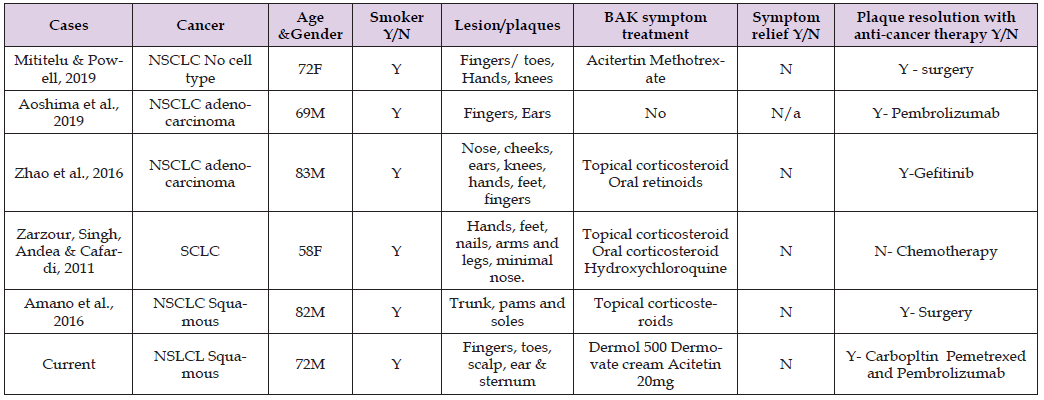
Bazex syndrome is a paraneoplastic psoriasiform dermatitis, predominately seen in squamous cell carcinomas (SCC) of aero-digestive tract and non-small cell lung cancers (Räßler, et al. [1]). Lesions are seen mainly in adult males (>60 years old (YO)) >3:1 woman, with an alcohol and smoking history noted in 28% of cases noted to be alcohol and smoking (Räßler, et al. [1]). Clinically, lesions may be erythematous, scaling and appear psoriatic like, which may lead to a delayed diagnosis of cancer while benign skin causes are treated (Räßler, Goetze & Elsner, 2017). Acral lesions may be considered pathognomonic of BAK upon confirmation of carcinoma with common distribution of lesions on: ears (79% & 28%), nails (75% & 57%), nose (63% & 33%), fingers (61% & 29%), hands (57% & 38%), feet (50% & 30%) and less commonly the trunk (13% & n/a), scalp (7% & n/a), elbows (19% & n/a) and cheeks (19% & n/a) (Räßler, et al. [1]). Treatment of the underlying cancer has been found to successfully treat the skin lesions when therapy is established with cases noting response to NSCLC BAK syndrome lesions after chemotherapy, immunotherapy and surgical intervention (Table 1) (Mititelu, et al. [2-4]). The current case reports BAK syndrome in a 76-year-old male following a delayed diagnosis and details his diagnosis and treatment journey to date while he remains on current active first line management. Within the report is a brief review of the lung cancer cases and BAK syndrome, showing literature available via Medline and Pub med from 2011-2021 in the English language using the search term ((Bazex) OR (acrokeratosis)) AND (Title Combined: (lung cancer OR carcinoma)).

Consent

Consent was obtained to use images in relation to this report, identifiers are anonymised and no patient personal information is used within this article.

Time line

December 2020 – January 2023.

Patient Presentation

76-year-old retired white British male presented with 6-month history of psoriatic like plaques on fingers and toes bi-laterally, progressing to the scalp and torso, with >10% weight loss and progressing breathlessness two weeks prior to diagnosis. He has a >40 pack year smoking history and a past medical history of chronic obstructive pulmonary disease (COPD) and hypertension, taking medicines; amlodipine 5mg, acitetin 20mg, atrovastatin 10mg nocte, furosemide 40mg mane, aspirin 75mg, tiotropium 10mcg mane and salbutamol inhaled 100mcg/dose, with no known drug allergies. No family history of Bazex acrokeratosis neoplastica syndrome or lung cancer was present.

Delayed Diagnosis

Initial treatment for scaling dermatosis was initiated by the community doctor with dermol 500 and dermovate cream, which gained no symptomatic benefit over a 6-month period March – September, later given acitetin 20mg with no continued benefit. New shortness of breath triggered a chest x-ray via the community GP which highlighted a supraclavicular mass and a right hilar mass, leading to a two week wait for suspected cancer.

Diagnostics

A computer topography (CT) and a positron emission topography CT scan (PET-CT) confirmed stage 3b lung cancer, with a 7cm mass in the right lower lobe with atelectasis and right upper lobe nodal lesion with a 4cm supraclavicular lesion and a paratracheal node at 3.5cm, confirmed as avid on a positron CT scan. The supraclavicular node was biopsied showing a squamous cell carcinoma with a programmed death ligand -1 as 10% and no actionable mutations, next generation sequencing was not performed.

Stage

T4N3M0 – 3b (Matilla et al. [5]).

Examination

The examination took place prior to cycle one of chemo/immunotherapy, or any anti-cancer treatment on the same day. Comparison over treatment will be detailed in the discussion. Over all the patient was comfortable at rest, with no mobility aids, no oxygen, no indwelling catheters or lines in-situ. The end of bed assessment clearly identified plaques upon finger nails bi-laterally.

Lung Exam

No additional berthing sounds identified, with good air expansion. Saturation was 96% on room air with a respiration rate of 16 breaths per minute at rest.

Heart Exam

No additional sounds or murmurs were identified, with a pulse rate of 58 beats per minute regular and a blood pressure of 103/53.

Abdominal Exam

A single plaque identified in the epigastric area, no scars where noted, with no masses, a soft abdomen on palpation and bowel sounds throughout.

Hands

Plaques (pre-treatment) noted on finger nails bi-laterally, crusting and yellow with thickened perioncychium and mild palm erythema bi-laterally.

Toe nails

Equally to fingers, yellow scaling plaques bi-laterally were noted with erythematous cracks on the heels bi-laterally.

Other

Three lesions were noted on the scalp and one on post oracular on the left side.

Treatment

Triple therapy was initialised based on squamous metastatic NSCLC with a PDL-1 of 10%, given Carboplatin, Paclitaxel and Pembrolizumab was administered in four cycles, following which, Pembrolizumab immunotherapy continued as a single agent treatment (Paz-Ares et al. [6]). Radiotherapy 20 grey in 5 fractions was given to reduced paratracheal mass, with continued Pembrolizumab to 10 cycles before progressive disease n mediastinum and superior vena cava obstruction, before patient died of progressive disease. Scans performed every 3 months measured with iRECIST criteria (Persigehl, et al. [7]), with best outcome partial response (PR) to treatment and an overall time to progression of 10 months from start of treatment.

Discussion

Delayed diagnosis of BAK syndrome may prolong ant-cancer treatment leading to diagnosis at a later stage, limiting treatment options for patients, which parallels the current case who waited 6 months from the onset of plaque lesions to diagnosis of lung cancer (Zarzour, et al. [8]) noted death of a small cell lung cancer patient 6 months following diagnosis despite a 2-year history of hyper pigmented rash over forearms and legs, diagnosed as BAK syndrome (Räßler, et al. [1,8]). Similarly, an epidermal growth factor receptor mutation (EGFR) was diagnosed with metastatic bone lesions after a 5 year history of pruritic, acral lesions, suggesting earlier recognition may of allowed lower diagnostic stage (Zhao et al. [8]). The current case noted a 6 month delay pre-treatment, leading to a diagnosis of 3b NSCLC with supraclavicular lymph node spread, meaning an advanced stage of lung cancer untreatable to radical surgery or radiation, giving a poor prognosis with systemic treatment, although the current treatment regime of chemotherapy combined immunotherapy may lead to prolonged survival (Matilla, et al. [5,6]). Psoriatic lesions occurred in the current case on the hands, feet, nose, nails, auricular helices and scalp in the current case, with a lesion on the trunk suggesting advanced carcinoma correlation (Bazex, et al. [9]). Typically the lesions will respond (Table 1) to anti-cancer therapy as was the case here, the individual who failed to respond died within 6 months of diagnosis, and unusually had SCLC (Zarzour, et al. [8]).

Table 1: Table showing similar cases in lung cancer after a search of Pub med and Medline with the search term ‘’ ((Bazex) OR (acrokeratosis)) AND (Title Combined:(lung cancer OR carcinoma))’’ year 2011- 2021, English language. N=No, Y= Yes, M= Male, F-Female, NSCLC= Non-small cell lung cancer, SCLC+ Small cell lung cancer, N/a = Not applicable.

biomedres-openaccess-journal-bjstr

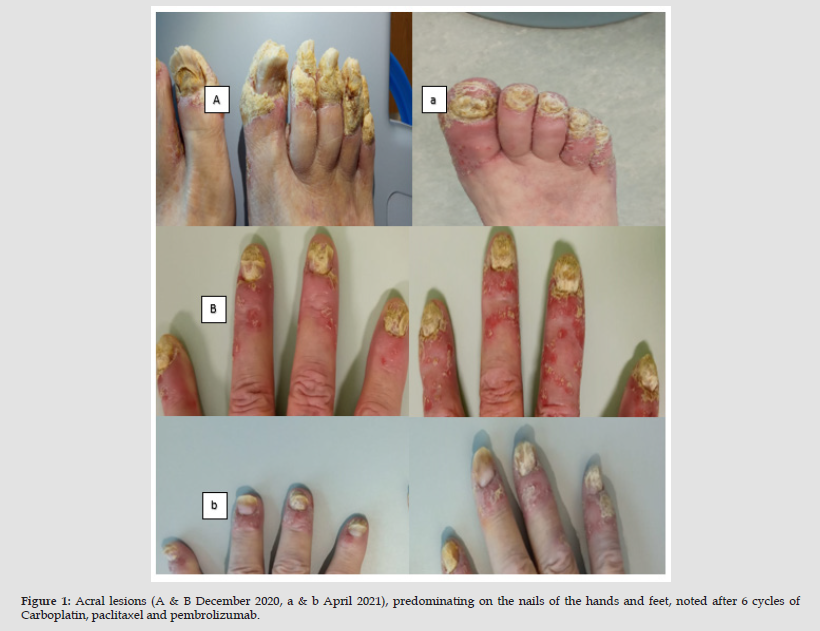
Previous cases have shown symptomatic benefit from adjuvant treatment with acitretin, used to treat severe psoriasis, at 0.25-1mg/ kg body weight (Bazex, et al. [4,10]). The current case has shown how Pembrolizumab combined with chemotherapy therapy in advanced/ metastatic NSCLC (Paz-Ares, et al. [6]), may reduce plaques in BAK syndrome (Figures 1A-a & 1B-b) which is paralleled by (Aoshima, et al. [2]), who showed a improvement in the distal extremities after 7 cycles of Pembrolizumab. Pathophysiology of BAK syndrome may be related to cross reactivity of tumour antigens irritating the skin, growth factors associated with epidermal growth factor and vitamin deficiency such as Zinc and vitamin A (Amanon, et al. [4,11]) Showed serum immunoglobulin e and eosinophil count elevated in an 82 YO SCC of the lung, with reduced levels after tumour removal, suggesting a role of the Th2-type cytokine response leading to an elevated inflammation, which may cross react causing keratin based skin plaques seen in BAK syndrome, although reactive response to the subcutaneous cancer itself could not be ruled out as well as raised inflammation as a result of patients positive smoking status. The current case survived approximately 12 months post treatment with chemotherapy and pembrolizumab, compared to 15.9 months in the literature for NSCLC SCC patients (Paz-Ares, et al [6,12]). Diagnosis in the current case was on observation capacity, failure to resond to anti- psoriatic medication and response to anti-cancer therapy, although none biopsy may be a limitation here.

Further limitations are a lack of tracked biomarkers throughout treatment, with immunoglobulin E, also not detailed, as suggested to be raised in BAK syndrome by (Amanon, et al. [4,13,14]). Take home messages from the current case highlight that BAK syndrome in SCC NSCLC can be successfully treated with combine chemotherapy and immunotherapy, with lesion/plaque regression corresponding to successful anti-cancer treatment, although the patient did die of advanced NSCLC. Plaques in BAK syndrome are not commonly responsive to psoriatic therapy, and a smoker with a resistant history of psoriatic lesion treatment should be considered for an upper digestive or lung cancer diagnosis to rule out an underlying malignancy (Moore, et al. [15]).

Figure 1

biomedres-openaccess-journal-bjstr

Competing Interests

No competing interests.

Ethics Approval

Ethical guidelines were followed, with written consent obtained for images.

De-Identification

All information remains anonymized.

Follow us on: Biomedical Journal Impact Factor: https://biomedres.us

https://scholar.google.com/citations?user=OFtUOZYAAAAJ&hl=en
https://www.base-search.net/Search/Results?lookfor=Biomed+Journal+of+Scientific+%26+Technical+Research&l=en&refid=dcsuggesten
https://citefactor.org/journal/2574-1241/biomedical-journal-of-scientific-technical-research
https://ideas.repec.org/s/abf/journl.html
https://econpapers.repec.org/article/abfjournl/
https://www.ncbi.nlm.nih.gov/nlmcatalog/101723284
https://bjstr.org/
https://bjstr.org/about.php
https://biomedres.us/reprints.php
https://biomedres.net/submit-manuscript.php
Journals on Medical Microbiology |BJSTR

Morbidity and Mortality of Open and Laparoscopic Cholecystectomy in Males. Multicenter Study

Introduction

Male gender has been mentioned as a risk factor in open or minimally invasive gallbladder surgery. In open surgery, some “anatomical difficulties” in men could be the sharpest right costal angle and greater muscle mass compared to women; It is also mentioned that men seek medical attention late due to work issues [1]; However, in other articles, it is mentioned that men undergo emergency surgery more frequently; in addition to age, which is higher in this group [2]. It is also mentioned that the inflammatory reaction is greater in men, a situation that represents a greater risk in minimally invasive surgery, conditioning a conversion rate of 15% [1-5]; therefore, some authors recommend the need for earlier intervention to reduce the risk of complications [5]. Another risk factor is obesity, which in Mexican population, the male gender represents 73.5% and female gender 76.8%, according to ENSANUT reports from 2022 [6]. According to Tokyo International Consensus classification and other publications, the management to be followed was determined, emphasizing on intervention in the acute phase of cholecystitis to avoid complications, of course, depending on the cholecystitis severity, so they recommend early cholecystectomy (in the first 72 hours after the onset of the disease). Laparoscopic surgery was the modality of choice in 20% of cases that come to be intervened [7].

There is still a debate about whether early intervention should be taken to avoid complications due to the inflammatory process [4,8], arguing that acute gallbladder symptoms usually subside after 2 or 3 days, resolving in 85% of cases within a week [9]; however, as mentioned above, only one-fifth of patients in the acute period are candidates for LC. Other authors have proposed LC at one and a half or three months after the acute phase, due to the risks involved in inflammation, being the most important, the anatomy loss among them, which in addition, we know that the bile ducts are the structures with the most anatomical variants, predominating on the cystic in more than 70% of cases [10], increasing the risk of injury to these structures, including the liver vasculature or even large vessels injury by the laparoscopic procedure itself, such as arteries, vena cava or portal vein; However, it has been seen that performing it in a deferred or interval manner (conservative treatment) is accompanied by 26% of failures, having to be urgently operated, and 28.5% of these patients could present complications such as cholangitis, pancreatitis or a biliary peritonitis [11].

According to literature, in women initially there is a greater inflammatory reaction and greater production of antibodies; However, women offer a greater response to antigens, both innate and adaptive. The immune response basically resides on the X chromosome; In addition, hormonal factors, such as estrogen, stimulate the immune response; on the contrary, androgens inhibit it [12]. Bile duct injury in LC have an incidence between 0.2 and 0.8%; in open surgery, it is less than 0.2% [13]. In relation to sex, Shreenath et al do not consider it as a predictor, but report that conversion secondary to difficult cholecystectomy is frequent in patients with history of hospitalization, previous abdominal surgeries, palpable gallbladder, BMI greater than 27.5 kg/m2 and thickened gallbladder wall. Sex, age, and impact calculation were not identified as predictors [14,15]. In summary, the prevalence of cholelithiasis in Mexico is 14.3%, of which 8.5% are men and 20.5% are women; obesity has been reported to be associated with a cholelithiasis elevated risk [16] and as an important factor in the conversion of LC [17,18]. The most used marker to measure the quality of a surgical procedure is the incidence of complications [19]. Andrade Carbo et al., from Ecuador, reported a higher rate of surgical complications in women compared to men (52% vs. 48% respectively) [20].

Corona DJ y cols., in Mexico on 2006, reported 72% of 111 male patients operated urgently of OC, 55 patients presented complications inherent due to cholecystitis severity [21]. Hospital stay was shorter in LC than OC group with an average of two days vs 4 days in 57% and 34.3% of cases respectively [22]. On the other hand, there is an increase bile duct injury incidence, with the increasing use of LC, although other authors report that they have decreased with the learning curve [23] Most articles mention a conversion rate of 4 to 8%, even up to 20%; the current mortality rate for OC is 0.39% and 0.07% for LC, with an average of 0.016% [24]. Some mention that male sex, obesity, age, wall thickness or stage of the disease are the factors that hinder surgery and therefore, conditioning factors for conversion, so in the absence of consensus to categorize a difficult CL, the scoring scale proposed by Ayón et al. has been used that take into account 7 aspects: adhesions presence, gallbladder wall and size, inadvertent calculus or macrocalculus, Calot’s triangle critical view, surgical time, and how vesicular bed hemostasis was achieved [25].

Methods and Materials

From January 2021 to December 2023, an ambispective, descriptive and analytical multicenter study was carried out of the clinical archive from Dr. Darío Fernández Fierro General Hospital (HGDDFF), Hospital General La Villa (HGV), and Hospital Universitario de Puebla (HUP), of the surgeries performed by General Surgery department to determine the morbidity and mortality of OC and LC in men during emergency or scheduled interventions. Data were collected separately by dividing the hospitals into three groups according to the order mentioned above. The following variables were analyzed: sex, age, BMI, time of evolution of the condition before surgery, transoperative bleeding, surgery time, drains presence, postoperative pain, and hospital stay. The statistical analysis was performed with SPSS-27 to perform the univariate analysis of the variables of interest, describing cumulative incidence and prevalence of injuries, relative and absolute frequencies of the categorical variables and measures of central tendency for the quantitative variables according to the data distribution. The study was carried out strictly in accordance with the Ethical principles of patient confidentiality.

Results

HGDDFF (Group 1)

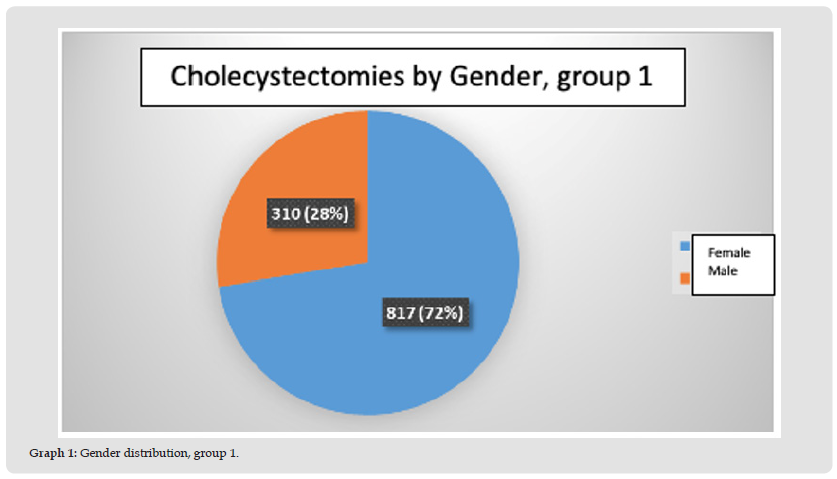
During the 3 years included in the study period, a total of N=1409 cholecystectomies were carried out, 80% (n = 1127) met the selection criteria, of which 72.49% were female (817/1127) with an average age of 54 years (± 16.6), ranging from 18 to 94 years; 27.5% (310/1127) were male (Graph 1), being more frequent between 30 and 50 years, with an average age of 40 years in 65% of the cases; 15% from 51 to 60 and 20% from 71 to 80 years. In 80.9% of all patients (n=912) were between the ages of 36 and 57 years and in 31%, the most common comorbidities were systemic arterial hypertension (SAH) in 55%, diabetes mellitus (DM2) 45%, hypothyroidism 16%; elective surgeries accounted for 50.57% (570/1127) and 49.43% (557/1127) of emergency surgeries; OC in 4.34% (49) and LC in 96.65% (1078/1127). Average time of 2 h in 53.23% (600/1127). In OC, the surgical time was 90 minutes; in LC 70 minutes on average, with an interval of 30 to 180 minutes. Less than one hour 7%; Minimal bleeding (bleeding defined and calculated by the anesthesiology service ≤ 90 ml) in 92.25% of males, with no statistically significant difference with respect to females (p= 0.509482).

Graph 1

biomedres-openaccess-journal-bjstr

Complications in LC

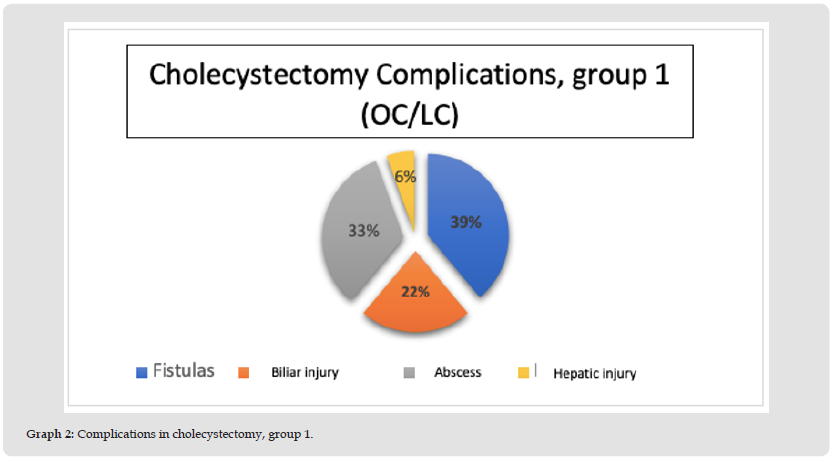
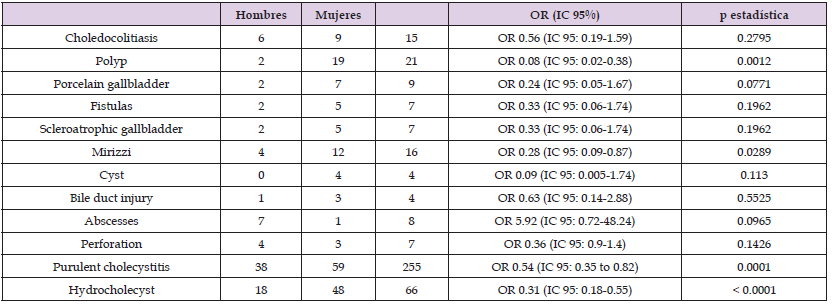
Cystic artery bleeding occurred in 5%, controlled by laparoscopy; bleeding from the surgical site in 1 case; liver thermal injury due to defects in the thermal insulation of the electrocautery. Mortality in 11 patients (0.97%), with a Porta vein injury, which initially due to the urgency, was managed by a general surgeon and caused a late intervention of the vascular surgeon with disastrous results. (Graph 2). In 0.92% (10/1078) of the LC, STC was performed, especially in acute cases. In OC, 6.12% (3/49). Cystic duct leaks occurred in 3 cases, identified and resolved by ERCP. There were 5 bile duct injuries, 4 referred to a fourth level of medical care; 1 was repaired by a surgical oncologist at the time of injury with open Y Roux’s surgery (Strasberg E2 type) (Table 1). In-hospital stay ranged from one to six days; 77% less than 2 days; 3 days in 18%, with the main reason being drainage monitoring. 4 days in 11%, for pain or drainage surveillance in 63%, and in 1 patient, 6 days for choledocholithiasis.

Graph 2

biomedres-openaccess-journal-bjstr

Table 1: Transoperative Findings. group 1.

biomedres-openaccess-journal-bjstr

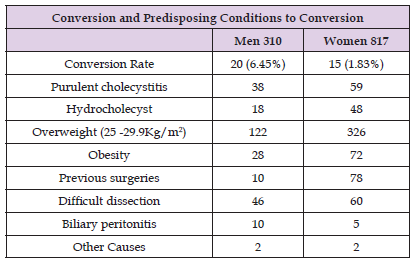
The conversion rate for males was 6.45% (20/310) and 1.83% (15/817) for females. Elective surgeries were dominated by women. Regarding the age group, on 31 patients’ conversion predominated between 41 and 55 years old, and a probability of conversion of 3.1 (OR). According to BMI, CL conversion, especially in emergency cases, was more frequent in 28 patients (43.75%) classified as overweight (25.1 to 30 kg/m2), followed by 16 patients (25%) classified as grade I obesity (30 to 34.9 kg/m2). (Table 2) There was a predominance in symptomatic Cholecystitis (76.56%); which is the most associated condition to conversion in urgent surgery in 28 cases (43.75%) with an OR= 2.45 conversion probability.

Table 2: Group 1, Conversion and Conversion Factors.

biomedres-openaccess-journal-bjstr

HGV (Group 2)

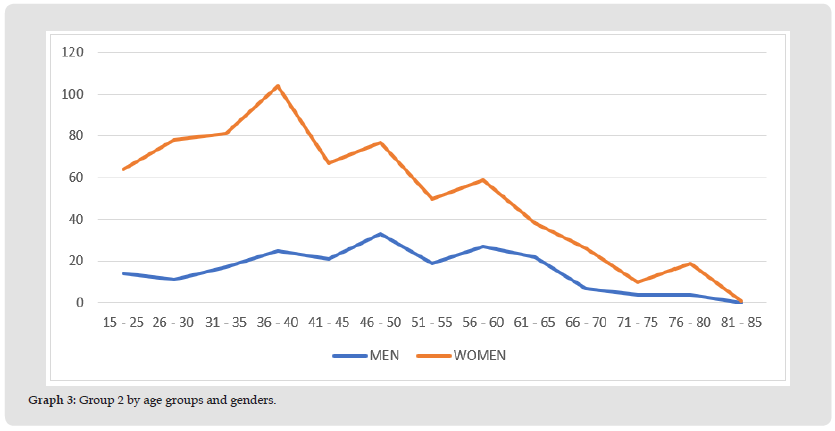
This hospital serves the population without medical services, in which 674 cholecystectomies were performed, 71.06% (479) women and 28.93% (195) men; of the total, 55.93% were OC (377/674) and 44.06% LC (297/674); 92.43% (623/674) were intervened due to emergency and 7.56% (51/674) were an elective procedure, from which 44 were women and 7 men. Minimum and maximum age in women 16 to 86 years, with a maximum peak between 36 and 40 years; In men, minimum and maximum age 18 to 82 years, with two peaks between 46 and 50 and 56 to 60 years (Graph 3). Among the findings we have a 1.92% conversion rate (6 men and 7 women). In 14 patients (2.07%) STC was performed (9 men, 5 women); There were 3 injuries (2 bile duct and 1 duodenum injury); A biliodigestive fistula was evidenced and resolved in the same surgery; in 72 patients (10.68%) a purulent cholecystitis was found (21 men and 51 women); Biliary peritonitis in 9 patients (6 men, 3 women); hydrocholecyst in 35 (11 males, 24 females); cholangitis 5 (2 men, 3 women-one with septic shock) and Mirizzi syndrome in 4 patients (3 women). The average surgery time in 90% of LC was less than 2 hours.

Graph 3

biomedres-openaccess-journal-bjstr

HUP (Group 3)

For reasons beyond our control, we do not have current data, only reports from 2009 to 2014 period, in which 78 CL were performed per year, of which the female gender represented more than 70% of the cases with a mean age of 44.4 ±17.2 years, with two conversions (Pérez Ayala, Thesis 2014) and that currently in the ISSSTE Regional Hospital, of the same Federal Entity to transpolate the data, approximately 200 surgeries are performed per year, reported by Dr. Dávila Esparza, a total of 1190 cases, of which 78.9% were female and 21.1% male, with an age range of 18 to 94 years and an average age of 51 years (F:M relation 3.73:1). Average hospital stay was 3.4 days and surgery duration averaged 93 minutes. A conversion rate of 4.8% and bile duct injury at 0.08%. (Dávila Esparza, Thesis 2021)

Discussion

Acute cholecystitis is the second leading cause of consultation in abdominal surgical emergencies; In Mexico, it is estimated that between 200 and 300 thousand LC are performed annually, according to the lecture given at the “12th Mexican Association of Endoscopic Surgery Regional Meeting” at the New Civil Hospital of Guadalajara “Dr. Juan I. Menchaca”, by Dr. Adolfo Cuendis, Gea González General Hospital MD of Endoscopic Surgery Division in Mexico City [26]. Gallbladder problems mainly affect young women between the ages of 20 and 40, who are multi-pregnant or overweight. In men is more associated with eating problems and low fluid intake. From all gallbladder surgeries, 80% are due to gallstone problems. In Mexico, 10 to 20% of the population has gallstones and 30% will develop acute cholecystitis [27,28]. LC is currently the first-line technique for the surgical treatment of gallbladder pathology, with less time spent in hospitalization and convalescence; reduced postoperative pain and operative site infection, and better aesthetic results; However, LC is not without disadvantages, such as a higher percentage of iatrogenic bile duct injury and more challenging controlling profuse bleeding difficulty degree [24,29].

In our study, we found an F:M ratio higher than that reported in the international literature with respect to sex, being 3.34:1, in relation to the reports of 2:1 respectively, perhaps due to the place we occupy in obesity, overweight, DM2, and the fact that our female population is larger, which translates on the necessity to investigate an ethnic factor. Either way, the Puebla ISSSTE Hospital with different economic status employees, F:M was 3.73:1 and HGV, which attends low resources population, was similar from the relation reported in international literature (F:M 2.4:1); We insist, this could be associated due to the predominant obesity on bureaucrats. In terms of surgical time, we are in the average time with the report of Jarkín et al. (9), of 71 minutes in boarding with three laparoscopic ports, and above the results of Manoj Kumar et al. 47 minutes [18].

Recent meta-analyses have shown that early urgent LC provides a benefit in terms of hospital stay, but not in terms of conversion rates and perioperative complications [28]. Currently the LC is the election procedure. There is no standardized management of early-stage LC in our institution, and some articles even contraindicate it in the acute phase [28].

According to some publications, there is no statistically significant difference in the complications of an early and delayed LC; It is recommended to perform it in the first 3 days of the onset of the clinical presentation being urgent surgery more common in men [21]. There is the unknown or assertion if surgery in men is more difficult or presents more complications, perhaps because the inflammatory process is greater or because they present themselves to seek medical attention earlier than women, associated to less pain tolerance or due to work reasons, a situation that favors an intervention during the acute process. This increases the risk of injuries and technical difficulties in surgery, and not necessarily because surgery is more difficult in men, which remains to be clarified with larger studies. Zhu et al. proposed the term 72 golden hours from the onset of the disease to perform LC [4]. In addition to the factors mentioned above that can lead to conversion, we have symptomatic gallstones (biliary colic) and DM2 as predominant factors. Elective surgery is more often in female sex [29,30].

In our study, we found that there was no statistically significant difference between men and women in the minimum bleeding present in 95.92% on the male group (p= 0.509482).

1.76% (n=19) were converted to open surgery, in contrast to what has been reported in the international literature, which reaches figures of up to 20%. Surgical time was obviously longer in acute inflammatory processes. Complications with an OR greater than 1.0 were abscesses with 5 cases in men and 1 in women (OR of 4.23, 95 CI: 0.49-36.29) and liver injury in 1 case in men with an OR of 2.53 (95 CI: 0.10 – 62.41). According to the above, it could be said that more than the male sex being a risk factor, obesity, the stage in which patients are intervened, inflammatory grade and age are predominant factors for a difficult cholecystitis, and it would be necessary to clarify if the inflammatory reaction is greater in men as mentioned by some authors and not the stage of the disease in which they are intervened (acute phase). In relation to the inflammatory reaction and antibodies production, it is mentioned that in women, it is initially bigger, with a greater immune innate and adaptative response to antigens, which is described to be reside in the X chromosome and the hormonal factors (estrogens) that stimulate the immune response, as opposed to androgens that inhibit it [12].

Hayama et al. mention that the risk factors for conversion depend on the stage at which surgery is performed in acute cholecystitis (early surgery less than 240 hours vs late surgery after 240 hours). Necrotizing cholecystitis was a difficulty risk factor in early surgery, while higher white blood cell count, and older age are risk factors in late surgery [31]. It is relevant on these situations to know if we have the possibility of predicting the conversion rate as mentioned by Rothman et al., who give importance to the gallbladder wall thickness (>5 mm), contracted gallbladder, > 65 years of age, male sex, and acute cholecystitis [32]. Other publications list DM, chronic kidney disease, choledocholithiasis and Mirizzi syndrome as risk factors for conversion; patients with jaundice, cholangitis, or pancreatitis [33]. However, we must not forget that the conversion to open surgery is considered an alternative resource for resolution and it is necessary to know how to make the decision on time. Percentages range from 0.08% to 18% [34]. Regarding sex, Shreenath et al. mention that conversion in difficult cholecystectomy is frequent in patients with hospitalization history, previous abdominal surgeries, palpable gallbladder, BMI >27.5 kg/m2 and thickened gallbladder wall.

Variables such as age, sex, and impacted stones were not found to be significant predictors. However, they mention that in the case of men they may outperform women, due to sociocultural factors that predispose a late attendance to medical centers [35]. In addition, Chávez Segura stated the results of studies in relation to sex should be considered inconclusive, because most of the population that goes to hospitals are mostly female [36], which we take as a reservation because it is more frequent in women. It is stated that male sex is a difficult risk factor for LC, although there are no statistically significant results, as there is a criteria diversity [37]. Age is identified as a risk factor for mortality, postoperative complications, and intraoperative conversions to OC, since the older the age, the greater the number of associated diseases and complications [37]. Obesity is a disease associated with acute cholecystitis and surgical modality conversion and is considered as a significant factor. Campos Guzmán et al. consider that overweight and obesity are a risk factor, not only for conversion, but also for the appearance of postoperative complications, prolonged hospital stay and, therefore, higher economic expenditure [37,38].

García Álvarez et al. also mention that the presence of associated diseases, such as biliary colic, obesity, and SAH, increase the risk of conversion [39]. In our investigation, on group 1, 8 conditions that complicate cholecystectomy were detected, in which the male factor has statistical significance (p = 0.003685) when all parameters are compared; when analyzing them individually it can be inferred that the male factor is protective when comparing the same complications in the female gender with a p < 0.0001 statistically significant, in cases of hydrocholecyst OR 0.31 (95 CI: 0.18-0.55); biliary peritonitis OR 0.84 (95 CI: 0.24-2.93). It is noteworthy in the Emergency Hospital that serves the general population without medical services, as expected, OC was performed in most cases (55.93%) and F:M ratio 2.4:1. The aim of this study was to determine whether the male sex factor is associated with a higher risk of surgery and complications in OC and LC in emergency or elective procedures and, as such, in LC, associated with conversion. However, perhaps due to the number of cases, we could not give an adequate answer to the research question, although according to our results, when comparing complications in women and men, the male factor was found to be protective. The important thing is to know when convert to open surgery and resort to related specialties.

Conclusion

Obesity, stage of the disease and age aggravate morbidity and mortality in cholecystectomy. According to our study, sex is not a condition of conversion. Bile duct lesions in our study were within the range reported in the universal literature of 0.2 to 0.8%.

Special Thanks

For Your Technical Assistance to Doctors
Karen Monserrat Guznay Matute
Pedro Sánchez Román.

Conflicts of Interest

The authors declare that there are no conflicts of interest related to this article. They agree to open access publication in accordance with the journal’s policy.

Follow us on: Biomedical Journal Impact Factor: https://biomedres.us

https://scholar.google.com/citations?user=OFtUOZYAAAAJ&hl=en
https://www.base-search.net/Search/Results?lookfor=Biomed+Journal+of+Scientific+%26+Technical+Research&l=en&refid=dcsuggesten
https://citefactor.org/journal/2574-1241/biomedical-journal-of-scientific-technical-research
https://ideas.repec.org/s/abf/journl.html
https://econpapers.repec.org/article/abfjournl/
https://www.ncbi.nlm.nih.gov/nlmcatalog/101723284
https://bjstr.org/
https://bjstr.org/about.php
https://biomedres.us/reprints.php
https://biomedres.net/submit-manuscript.php
Journals on Biomedical Imaging |BJSTR

Solar Alpha Particle Radiation Increases Human Mortality – An Example from the Malignant Melanoma Mortality in the Europe and Mediterranean

Introduction

In a series of publications [1-20], a dangerous phenomenon of cosmic origin for humanity was described – the presence of a high correlation between the flows of positively charged particles with high kinetic energy recorded from satellites in the Earth orbit and mortality on the Earth’s surface from many diseases. The main focus of the mentioned publications was on the effect of solar alpha radiation on mortality from diseases, killer number one of mankind – those of the circulatory system. The harmful effects of solar alpha radiation are also observed on many other organs and systems in the human organism, turning this invisible effect into one of the main causes of death for humanity. The mentioned dangerous phenomenon of cosmic origin is unevenly spread on the planet’s surface. Europe and the Mediterranean are among the most affected. However, in [1-20] are described many examples, where this phenomenon is also observable in several countries from the Northern Hemisphere – Asia, America, and even Africa. The European Union has a tradition of maintaining reliable mortality statistics, in which the discussed multifaceted influence of solar alpha radiation on mortality stands out clearly.

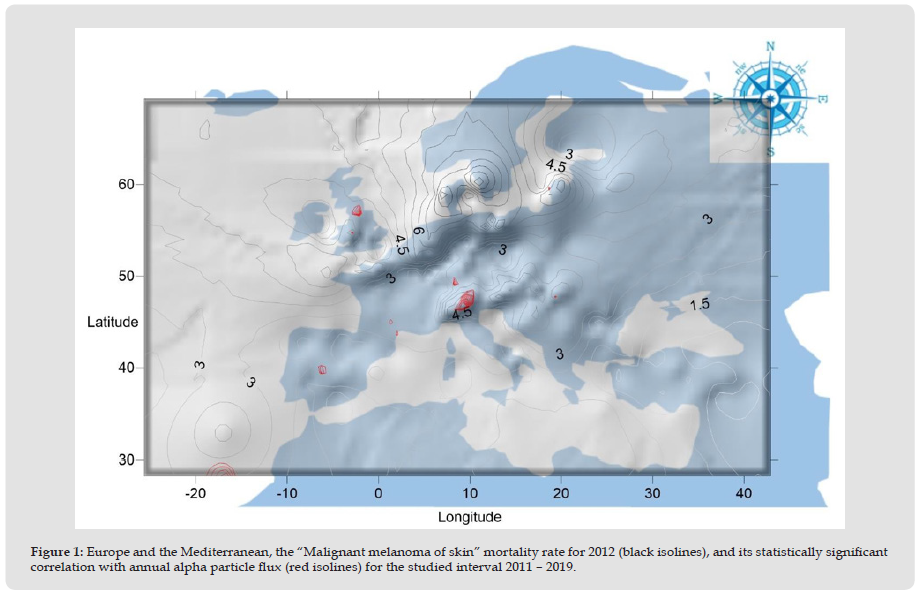
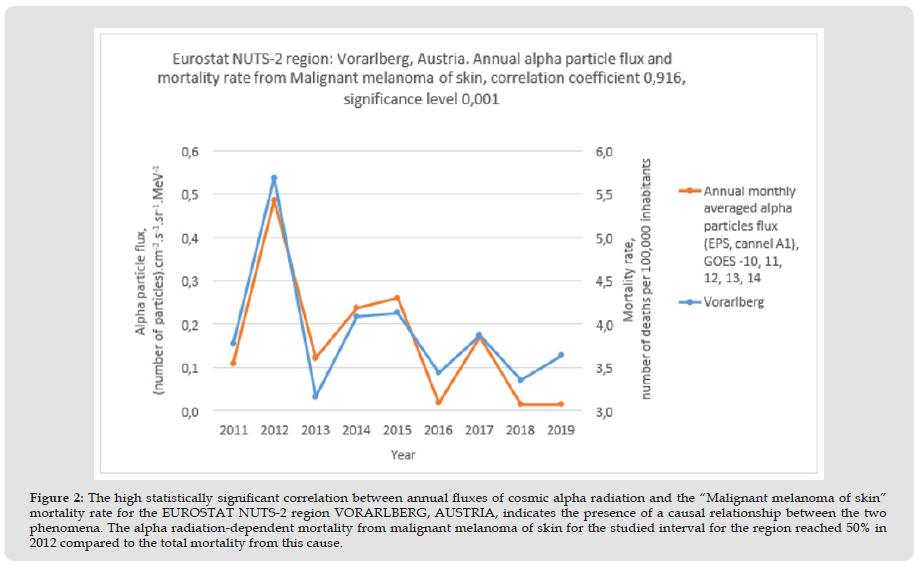
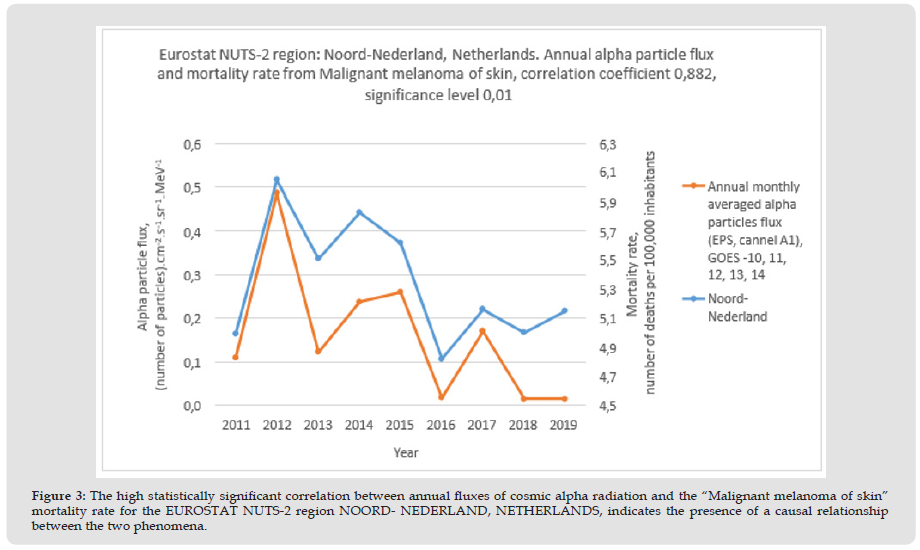
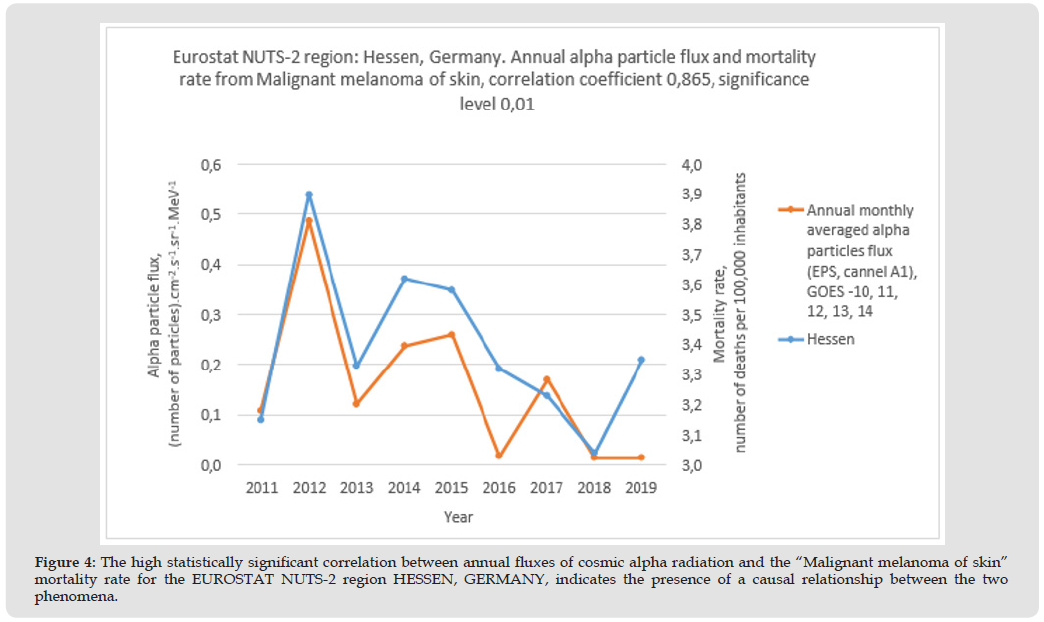
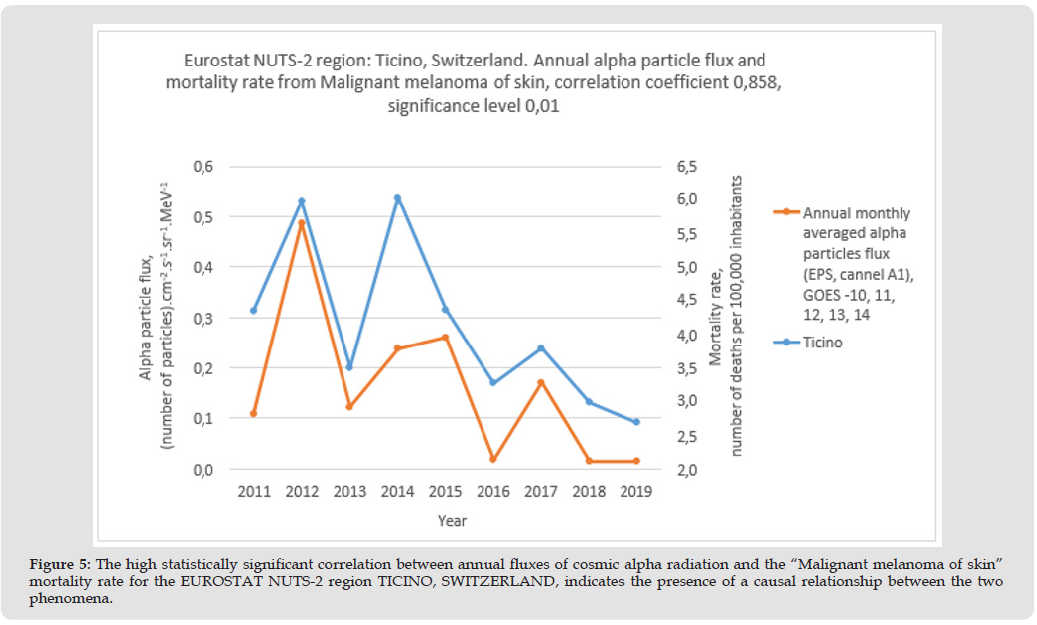
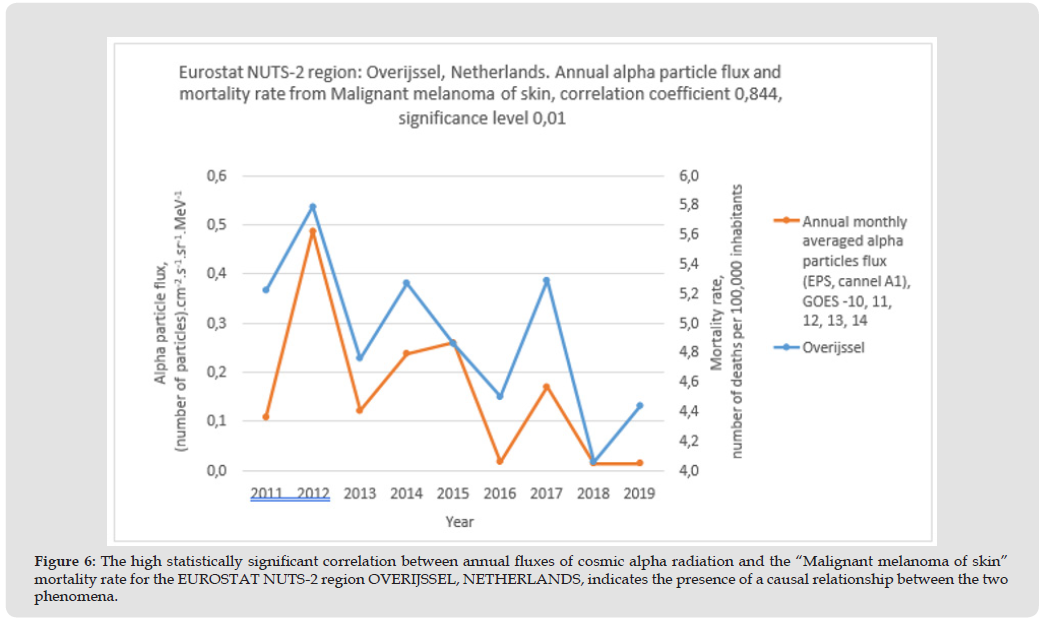
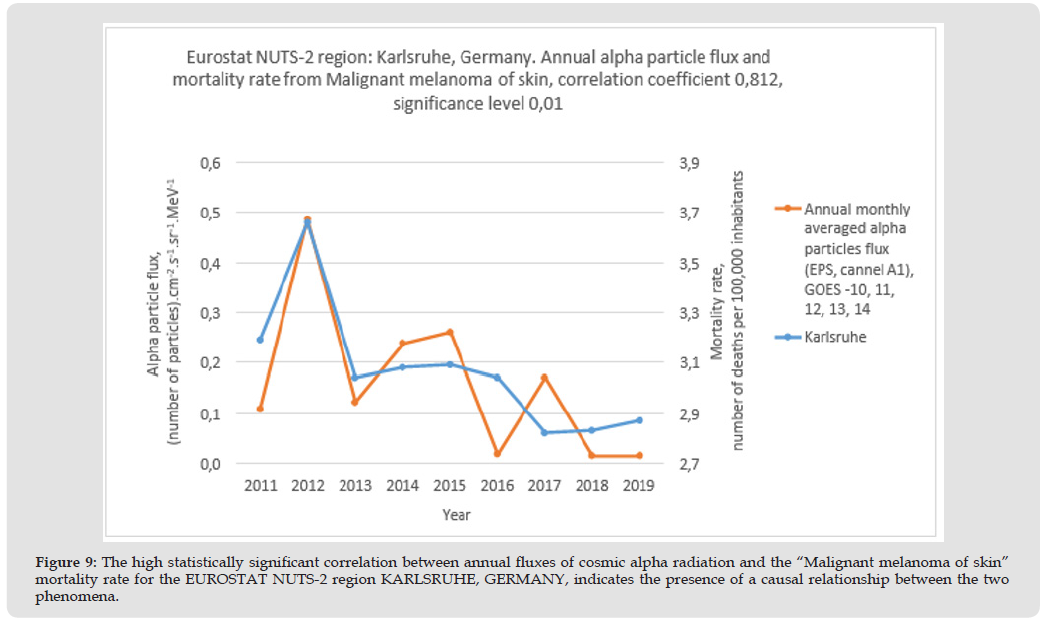
Below, based on data from mortality statistics in the European Union, the unexpected association between solar alpha radiation and mortality from malignant melanoma of the skin is shown. According to [21,22], 90% of recorded cases of the deadliest skin cancer, melanoma, are caused by excessive exposure of the skin to ultraviolet radiation, mainly of solar origin. Statistical data show a drastic disparity in the incidence of the three types of skin cancer – basal cell carcinoma, squamous carcinoma, and melanoma, which is strange if it is assumed that all three types of cancer are caused by the same cause – ultraviolet radiation. Melanoma cases in the US are only 2% of all reported skin cancer cases [23]. This fact is probably related to different mechanisms of occurrence of melanoma compared to other types of skin cancer. In support of this statement are the results of 13 studies involving 7,700 cases of melanoma in people of color [24]. Research findings question the occurrence of melanoma as a result of exposure to ultraviolet radiation in individuals of color. Below are the results of a study that reveals a new unsuspected cause of melanoma – highenergy solar corpuscular alpha radiation. The nature of the alpha radiation is different from that of ultraviolet radiation. The processes that alpha radiation can induce in the human body are more intensive than those induced by UV radiation. In addition, the high-energy alpha radiation can also ionize the atoms in the living organism, which drastically worsens the normal metabolism in living cells. This type of radiation may be the leading external cause of melanoma disease.

Methods and Materials

Mortality Data

The analysis below is based on an authoritative source of health data – EUROSTAT [25]. In the study, the parameter annual mortality rate – number of deaths per 100,000 inhabitants was used as a characteristic of mortality. EUROSTAT offers free access to data on mortality rate from causes in the countries of the European Union, the European Economic Area, and the candidate countries for membership in the union. Geographically, these countries occupy Europe and the Mediterranean. Data are grouped by NUTS (Nomenclature Des Unités Territoriales Statistiques in French, the nomenclature of territorial units for statistics). In the study, were used mortality data from the EUROSTAT shortlist in which mortality rates are grouped by causes of death into 92 groups, mostly diseases. The groups are related to the classes in the International Disease Classifier ICD-10, (10th revision). The shortlist contains mortality data for EU countries (NUTS-1) and EU regions (NUTS-2, smaller areas of the larger NUTS-1 countries). Currently (2023) the shortlist includes mortality rate data for the interval 2011 – 2020. Annual mortality rate data were extracted for 353 European regions (NUTS-2) separately from each of the shortlist groups for the interval 2011 – 2019 (the last pre-pandemic year).

Satellite Data

Satellite data on corpuscular radiation – protons and alpha particles recorded by the satellites of the series GOES (Geostationary Operational Environmental Satellites) were obtained from an NOAA site [26]. The satellites of the GOES series fly in geostationary orbit (above the Earth’s equator), at an altitude of 36,000 kilometers above the Earth’s surface, make one lap in 24 hours, that is, they “hang” over a certain point on the Earth’s surface and are not shade by the Earth at their circumference around it. Data on alpha-particle and proton fluxes (unit: (number of particles) cm-2.s-1.sr-1.MeV-1) with energies of the range 3.8 – 21.3 MeV were used. The fluxes were recorded by the satellite high-energy particle detectors: 1. Energetic Particles Sensor (EPS), and 2. Energetic Proton, Electron, and Alpha Detector (EPEAD). The data are available averaged over a 5-minute interval, during which there are up to 25 reports of the instrument.

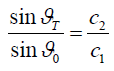
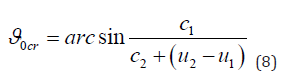
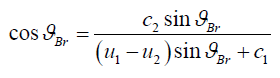
Data Processing

The correlation coefficients [27] between the annual averaged alpha radiation flux and the annual mortality rate were calculated. A map was created showing (with black isolines) the distribution of the annual mortality for 353 NUTS-2 European regions from the EUROSTAT shortlist death cause: “Malignant melanoma of skin” (EUROSTAT mortality shortlist number 18), for 2012, the year with the highest solar activity in the studied time interval 2011 – 2019. With red isolines, the map shows the distribution across the territory of Europe and the Mediterranean of the correlation coefficient between the annual mortality rate from “Malignant melanoma of skin” with the annually averaged alpha particle flux for the time interval 2011 – 2019. Data on the coordinates, latitude, and longitude [Google Earth] of the centroids of the NUTS-2 regions included in the study were used in the map. Mapping was performed with Golden Software Surfer10. The kriging interpolation procedure was selected. In mathematical statistics, the level of statistical significance [27] is a parameter, indicating the degree of reliability of the calculated correlation coefficient. The smaller the number of this parameter, the more reliably the correlation coefficient is established, i.e. the more reliably a causeand- effect relationship has been established, in the case between the annual flux of solar alpha radiation and mortality from a cause of “Malignant melanoma of skin”. The correlation coefficient and the level of statistical significance are related.

For the 9 years included in the study, a minimum correlation coefficient of 0.668 corresponds to a statistical significance level of 0.05 [27]. In scientific studies, a level of statistical significance no greater than 0.05 is accepted as a criterion for the reliability of the correlation coefficient. The red isolines on the correlation coefficient distribution in the map enclose the regions with statistically significant values of the correlation coefficients around and up to a significance level of 0.05. Correlation coefficients with a significance level above 0.05 are of high reliability (the higher the number, the lower the significance level) i.e. the existence of a causal relationship between cosmic alpha radiation and mortality from the cause “Malignant melanoma of skin” can be considered reliably established in the mentioned areas enclosed by red isolines on the correlation coefficient. If there is a coincidence for some of the maxima for mortality rate and correlation coefficients, then in the region of these maxima, the impact of alpha radiation contributes noticeably to the mortality from “Malignant melanoma of skin”. To the extent that the hypothetical mechanism proposed below explaining the observed phenomenon assumes that charged particles of high energy pass through the atmosphere and reach the Earth’s surface, the energy required for this was calculated from databases and calculators PSTAR and ASTAR [28,29]. Geomagnetic field data were obtained from the INTERMAGNET site [30].

Results

The described dangerous phenomenon is observed in the form of dependence between the annual average flux of radiation from positively charged particles (protons and alpha particles) with high kinetic energy, recorded by satellites in orbit around the Earth, and the annual mortality rate in the statistics of several countries from all continents in the Northern Hemisphere. The countries in whose mortality statistics the phenomenon is observed are located in a band parallel to the equator with approximate boundaries along the parallels of 30° and 60° north latitudes. It is observed in the annual mortality statistics of small countries. It is not noticeable in the statistics of large countries in the same band. It can be inferred that the impact on the Earth’s surface is short-lived and over a limited area the size of a small country, but is masked in large country statistics because it does not affect the entire area of the large country at the same time. This conclusion is confirmed for the USA, for which there is data on mortality in individual states [10]. The mortality statistic of the European Union is suitable for the study because it is based on statistical regions, smaller than a country, but still big enough, to include a statistically sufficient number of inhabitants.

This phenomenon would be expected to influence mortality in countries south of the Equator, but mortality statistics for them are scarce, unreliable, or absent, preventing reliable inferences about such an influence in the Southern Hemisphere. For particle energies of the order of 3.8 – 21.3 MeV, the year-averaged fluxes of protons and alpha particles are highly correlated, i.e. the studied phenomenon of lethality is noticeable in both the mean proton flux and the mean alpha particle flux data. For the reason explained below, only the average flux of high-energy alpha particles is included as the incident radiation in the examples below. Figure 1 shows for the Europe and Mediterranean the distribution of the mortality rate for EUROSTAT shortlist deaths cause: „Malignant melanoma of skin” for 2012, the year of maximum solar activity for the studied interval, and alpha particle flux maximum (black isolines), and the distribution of the statistically significant correlation coefficient between solar alpha particle fluxes and the mortality rate for “Malignant melanoma of skin” (red isolines). The statistically significant influence of alpha radiation on mortality from malignant melanoma of skin is limited to a band parallel to the Equator with approximate dimensions between 40° and 60° north latitude. Not all high mortality areas in the study region fall into it. Over Denmark and Sweden, there is an area of high mortality from malignant melanoma of the skin in which the contribution of alpha radiation to mortality is not noticeable.

Figure 1

biomedres-openaccess-journal-bjstr

The impact of alpha radiation on mortality in the mentioned band does not continuously cover the entire band but is of the nature of limited spots in it, covering mainly mountainous areas. A pronounced effect – a statistically significant coincidence between areas with increased annual malignant melanoma of skin mortality and its correlation with annual alpha radiation flux is observed for the Alpine region (Italy, Austria, Switzerland), the Carpathians, the Pyrenees, and the Baltic countries. Central Spain and the Central United Kingdom are affected too. Figures 2-9 show the correlated changes in malignant melanoma of skin mortality with alpha radiation flux for these areas.

Figures 2-9 show the time dependence in the interval 2011 – 2019 of two numerical sequences:

• Of the recorded annual fluxes of alpha particles from satellites of the GOES series – 10, 11, 12, 13, and 14, and,
• Of the “Malignant melanoma of skin” annual mortality rate for some of the NUTS-2 regions of the European Union.
The high correlation between the two numerical sequences can be seen, indicating the existence of a causal relationship between them.

Figure 2

biomedres-openaccess-journal-bjstr

Figure 3

biomedres-openaccess-journal-bjstr

Figure 4

biomedres-openaccess-journal-bjstr

Figure 5

biomedres-openaccess-journal-bjstr

Figure 6

biomedres-openaccess-journal-bjstr

Figure 7

biomedres-openaccess-journal-bjstr

Figure 8

biomedres-openaccess-journal-bjstr

Figure 9

biomedres-openaccess-journal-bjstr

Discussion

The given examples convincingly prove the existence of an influence of cosmic radiation flux on malignant melanoma mortality. The problem of the mechanism of the described influence remains unclear. A hypothesized mechanism of this influence is outlined below, answering many of the questions that arise.

1) An observed phenomenon – mortality from many diseases in the statistics of many countries located mainly in the 30°N – 60°N band, is strongly correlated with fluxes of positively charged particles with energy of the order of 4 – 21 MeV, recorded by the GOES series satellites in Earth orbit.

2) The recorded alpha particle flows are mostly pulses with a duration of less than 5 minutes (the averaging interval of the recording device).

3) Proposed hypothesis – positively charged particles with high energy penetrate through the Earth’s atmosphere to the Earth’s surface and damage human health, causing death mainly in elderly people.

4) As the average altitude of the affected countries increases, the particle flux- correlated mortality shows an increasing trend [4,10]. It is probably due to the more intense radiation flux penetrating the thinner atmosphere over the mountainous region of Earth’s surface – an argument favoring the hypothesis.

5) The source of the flows of positively charged particles is the Sun – mortality increases with observable processes on the Sun – from Solar Mass Ejections directed to Earth (a phenomenon on the solar surface that could be observed with other astronomical means) [4,8]. The Alpha Magnetic Spectrometer (AMS-02) on the International Space Station measures cosmic rays, excluding those of solar origin (when shielded from the Sun by the station’s solar panels). In particular, it measures the flow of 3He and 4He (alpha particles) in cosmic rays. The measurements show [31] increasing annual flux of alpha particles in cosmic rays for the interval of years from 2011 to 2017 (last available data), while the flux of GOES registered (solar?) alpha particles for the same interval of years is decreasing (Figures 2-9). Indirect evidence for the Sun as a source of high-energy alpha particles is that this assumption convincingly explains the downstream processes that ultimately lead to death.

6) Positively charged solar particles capable of penetrating through the Earth’s atmosphere to the Earth’s surface are high-energy alpha particles. Calculators PSTAR [28] and ASTAR [29] calculate the penetration parameters of protons, respectively alpha particles in different substances, in particular in air. Calculations with data for a homogeneous atmosphere – an atmospheric model with constant density, temperature, and pressure decreasing with height [4] show that only particles whose energy is above 2.4 GeV for protons and over 6.2 GeV for alpha particles can penetrate the Earth’s atmosphere to the surface. There are no registered by GOES satellites protons above 0.7 GeV, but there are registered alpha particles with energy above 3.4 GeV, hypothetically also those with energy above 6.2 GeV [4,10,12], i.e. the particles that penetrate to the Earth’s surface are probably high-energy alpha particles. Only fluxes of alpha particles with a magnitude of at least (1000 particles).cm 2. s-1. MeV-1 is correlated with the mortality of the Earth’s surface.

7) It is assumed that the alpha particles recorded by the satellites were emitted simultaneously with the hypothetical fast alpha particles in a common explosive process (flares?) on the solar surface. It can be calculated that particles with an energy of 7 GeV need 8.87 min to reach the Earth’s surface from the Sun’s surface and registered by satellites particles with energies of 5 – 10 MeV travel about 2 hours. The registered alpha particles do not have enough energy to penetrate the atmosphere, unlike the hypothetical Fast alpha particles that reach the surface of the Earth in minutes from the center of the solar disk. However, the registered alpha particles are an indicator that two hours earlier there was an irradiation of the Earth’s surface with fast (unregistered) alpha particles.

8) Although alpha particle streams irradiate the entire illuminated part of the atmosphere, penetration of fast alpha particles to the surface occurs only in a limited area of the surface (death spot), for which two conditions favoring penetration are combined:

a) The Sun is culminating for the center of the death spot,

b) For the center of the death spot, a coincidence is in effect – the direction of the geomagnetic vector coincides with the direction of the alpha particle intrusion – the alpha particle movement is not affected by the deflecting magnetic force. Such a coincidence occurs twice a year for latitudes in the band from 28°N to 48°N [4]. For latitudes outside this band, such a coincidence is impossible, the fast alpha particles do not reach the Earth’s surface, or their flux on the surface decreases fast with their moving away from the band.

9) During the year, the apparent position of the Sun relative to the point of observation shifts, so that the maximum angle of elevation of the Sun’s disk above the horizon (solar culmination) changes depending on the date.

The latitude and longitude of a point on the Earth’s surface where the solar disk is at its culmination at that moment of registration of the incoming alpha particle flow – the point of registration, can be determined from the date (latitude), and the hours and minutes of registration (longitude). The center of the dead spot can be calculated – it is approximately 30° east of the registration point [10]. The Earth’s angular velocity is 15° per hour. The moment of occurrence of a flow of fast alpha particles cannot be predicted, but the dates of increased risk for a given point on the Earth’s surface between 30°N – 50°N can be calculated by the latitude of the location [10]. For example, for the EUROSTAT NUTS-2 region Vorarlberg, Austria See (Figure 2), with latitude 47°N, the dates with maximum risk are around May 24 and July 20. On these dates, the inclination (63.6°) of the geomagnetic vector for Austria is close in magnitude to or coincides with the culmination of the Sun (the Earth’s atmosphere is thinnest at the moment of the Sun’s culmination, and there is no deflecting magnetic force for alpha particles if they intrude at this time from the Sun). The increased risk of health incidents outdoors around local noon is a further argument for the healthfulness of the indoor midday break (‘siesta’) practiced in Mediterranean countries. The arguments given above reveal a new, previously unsuspected cosmic cause of melanoma mortality – solar corpuscular alpha radiation. This type of radiation may be the leading external cause of melanoma disease. The risk, in particular for melanoma, is highest for inhabitants in the mountainous regions, in ours around local noon.

The risk is also increased during certain days of the year (depending on the latitude of the observation point) during which the solar culmination coincides with the angle of the geomagnetic vector (inclination). If a stream of high-energy solar alpha particles were to hit the Earth at this time, there would be no deflecting magnetic force on them, making it easier for them to reach the Earth’s surface. The predominant part of the recorded pulses of alpha particles forms unnatural series with fixed periods and relatively constant magnitudes, which allows the hypothesis of their artificial origin [12]. The creams and oils that are used to protect the skin from ultraviolet radiation are useless in protecting the human body from the penetration of alpha particles with high enough energy, capable of overcoming the resistance of the atmosphere and reaching the Earth’s surface. The predominant part of the recorded pulses of alpha particles forms unnatural series with fixed periods and relatively constant magnitudes, which allows the hypothesis of their artificial origin [12].

Follow us on: Biomedical Journal Impact Factor: https://biomedres.us

https://scholar.google.com/citations?user=OFtUOZYAAAAJ&hl=en
https://www.base-search.net/Search/Results?lookfor=Biomed+Journal+of+Scientific+%26+Technical+Research&l=en&refid=dcsuggesten
https://citefactor.org/journal/2574-1241/biomedical-journal-of-scientific-technical-research
https://ideas.repec.org/s/abf/journl.html
https://econpapers.repec.org/article/abfjournl/
https://www.ncbi.nlm.nih.gov/nlmcatalog/101723284
https://bjstr.org/
https://bjstr.org/about.php
https://biomedres.us/reprints.php
https://biomedres.net/submit-manuscript.php
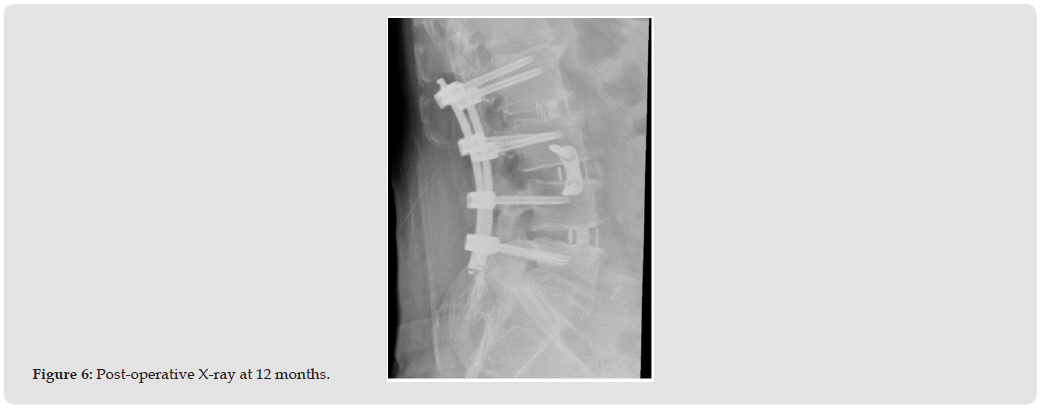
medical journal in usa |BJSTR

Polymorphisms of Aryl Hydrocarbon Receptor (AHR) Gene in a China Population: Associated with Risk of Acute Coronary Syndrome

Introduction

Acute coronary syndrome (ACS) is the leading cause of morbidity and mortality globally. Acute coronary syndrome (ACS) ranges from ST-segment elevation myocardial infarction (STEMI), non-ST-segment elevation myocardial infarction (NSTEMI) and unstable angina (UA). Many studies have demonstrated that polycyclic aromatic hydrocarbons (PHAs), which are major constituents of cigarette tobacco tar, are strongly involved in the pathogenesis of the cardiovascular disease (CVD) [1]. Knowing that PAH-induced toxicities are mediated by the activation of a cytosolic receptor, aryl hydrocarbon receptor (AhR), which regulates the expression of a group of xenobiotic metabolizing enzymes (XMEs), suggests a direct link between AhR-regulated XMEs and CVD [2,3]. More recently, the functions of AhR expression levels and functional AhR polymorphisms appear to affect the susceptibility and progression of CVD, which increases our understanding of the mechanism by which dioxin pollution and cigarette smoke trigger CVD [4]. In the past, it is well established that these results provide a AhR and polymorphisms is new potential factor in the targeted treatment of CVD.

However, little is known about the role of AhR in ACS. So, investigation of the potential correlation between AhR polymorphisms and ACS susceptibility would hence provide a valuable insight into the role of AhR in ACS. The AhR belongs to the family of basic-helix-loop-helix transcription factors [5]. It is known that polymorphisms of the AhR gene have negative effects on the affinity and sensitivity of the AhR proteins and activation of the AhR signaling pathway. Among the previous reports on single nucleotide polymorphisms (SNPs) of the AhR gene, rs2066853 has attracted considerable attention for its association with the risk [6]. However, no association between AhR polymorphisms and ACS has yet been determined. Therefore, based on a cohort study of 938 incident CVD cases, we identified AhR as a novel ACS susceptibility gene.

Method

Study Population

Informed written consent was obtained from all CAD and the study protocol was approved by the Institutional Ethics Committee of the Affiliated hospital of Guangdong Medical College. All experimental methods applied in this study were carried out according to approved guidelines. A total of 939 patients with CAD were recruited from the Affiliated Hospital of Guangdong Medical College (Zhanjiang, China) between May 2011 and August 2013. The clinical diagnosis of CAD was performed as follows: existing myocardial infarction, treated by percutaneous coronary intervention or coronary artery bypass graft, more than 50% stenosis in at least one of the main coronary arteries demonstrated angiographically, together with physiological examination including increased hs-TnI, MYO, CK and CK-MB. According to the degree of severity and clinical pathological characteristics, the CAD group was divided into too subgroups: ACS and stable angina (SA), based on the American College of Cardiology/American Heart Association Task Force on Practice Guidelines [7,8]. Those with acute or chronic infections, systemic inflammatory diseases, autoimmune diseases, blood diseases, severe liver or renal function defects, malignant tumors, heart failure, arrhythmia, cardiomyopathies, and hematologic disorders were excluded from the study.

Genotyping

Human genomic DNA was isolated from peripheral blood using the TIAN amp Blood DNA Kit (Tiangen Biotech, Beijing, China), according to the manufacturer’s instruction. Direct sequencing was used for genotyping analysis. A total of 10 ng of genomic DNA from each subject was used as a template to PCR-amplify DNA fragments of 150–250 bp containing AhR rs2066853 using the following primers: forward, 59-GATTGATTTTGAAGACCTCA-39 and reverse, 59-CTGAAGGTA TGAAGGGAG-39. After purification and precipitation by polyethylene glycol electrophoresis, the DNA fragment underwent direct sequencing on an ABI 3130XL DNA sequence detector with the Big DyeH Terminator v3.1 Kit (Applied Biosystems, Foster City, CA, USA). The result was documented and analyzed by the Gene Mapper 4.0 system (Applied Biosystems).

Statistical Analysis

All data were shown as means ±standard errors or percentage frequencies. Statistical analyses were performed using SPSS (ver. 12.0, IBM, New York, NY, USA) software. Allele frequencies of AhR were calculated based on subject genotypes, and differences in allele and genotype distributions between ACS and SA groups were analyzed by binary logistic regression or the chi-squared test. Multiple comparison corrections were performed with a one-way ANOVA using Bonferroni correction. Two-tailed P values, odds ratios, and 95% confidence intervals are presented for all association tests. A value of P< 0.05 was considered statistically significant.

Results

Patients

A total of 938 CAD patients, which contained 672 stable angina and 266 ACS. Baseline characteristics were well match across the AhR phenotype are summarized in Table 1. The distribution of the AhR genotypes were 414 (44.1%), 422 (45.0%) and 102 (10.9%) for GG, AG and AA, respectively. Thus, 524 (55.9%) patients were combined (AG+AA) genotype. According to genotypes were increased significantly in ACS patients compared with the SA groups P<0.05, Figure 1. These results suggested that AhR polymorphisms were related to ACS pathogenesis.

Table 1: Clinical, laboratory, and procedural characteristics of the study population.

biomedres-openaccess-journal-bjstr

Note: Continuous data are shown as mean ±S D. Dichotomous data are shown as n (%). BMI, body mass index; Glu, glucose; CHOL, cholesterol; TG, triglyceride; HDL, Hight density lipoprotein; LDL, low density lipoprotein. ACS, acute coronary syndrome.

Figure 1

biomedres-openaccess-journal-bjstr

Logistic Regression Analysis for Prediction of ACS

To determine predictors of ACS, a univariate regression analysis was performed to evaluate. The impact of sex, hypertension, smoking, diabetes mellitus, hype-rcholesterolemia and AhR phenotype (Table 2). We found that the ACS risk associated with the variant genotype of AhR, and hypertension increased significantly. The combined (AG+AA) genotype allele (OR: 1.51, 95%CI: 1.12-2.02, p<0.001) and hypertension (OR:1.43, 95% CI:1.07-1.91, p<0.05) were significant predictors of ACS.

Table 2: Logistic regression analysis of independent risk factors of ACS.

biomedres-openaccess-journal-bjstr

Note: The combined (AG+AA) genotype allele: OR: 1.51. 95% CI: 1 .12-2.02. p<0.001. hypertension: OR:1.43, 95% Cl:1.07-1.91, p<0.05.

Discussion

This study is the first to compare the data AhR phenotype for ACS status in coronary artery disease patients. Recently, the incidence of cardiovascular disease has been on the rise in the environmentally exposed population. As a critical transducer for contaminant dioxin, a mass of evidence has indicated AhR plays a role in the pathogenesis of CAD 3.4. [9-11]. A recent study showed that AhR contributed to plaque vulnerability and promoted atherosclerosis by inducing vascular inflammation [11]. Based on this hospital case research, we investigated the associations between AhR genotype and the risk of ACS. Activating the AhR signaling pathway induces vascular inflammation and promotes atherosclerosis, thereby increasing the occurrence and development of CAD [12]. AhR is bound up with various pathogenic factors of ACS, despite it is not clear whether AhR directly led to the development of ACS, there has been no previous research on the role of AhR variants in the risk of ACS. In this study, we surveyed the relationship between AhR rs2066853 and ACS susceptibility. Our current research shows significant correlation the relationship between AhR phenotype and the risk of ACS in the Chinese population. The rs2066853 G >A missense mutation site is in the exon 10 of AhR, which also causes the arginine in the transcription activation domain of AhR protein to become lysine [13].

Therefore, the hereditary stability of AhR rs2066853 has a strong influence on the structure and function of the protein encoded. So, it explains the individual susceptibility of certain diseases [14-17]. Former research about rs2066853 that mainly focused on cancer, but their verdicts were quite contradictory and disputable. Huang [3] et al, showed that the AhR expression level and functional AhR polymorphism have a potential impact on the susceptibility and development of Chinese CAD. According to our study, it was found that the significantly increased risk of ACS is related to the A allele of rs2066853. When further studying the combined (AG + AA) genotype of rs2066853, the proportion of (AG + AA) genotypes in patients with ACS was significantly higher than that of (GG) phenotype (Figure 1). All the subjects in this study were patients who had been diagnosed with CAD by coronary angiography. Logistic regression analysis of independent risk factors of ACS (Table 2) showed that hypertension and AHR (AG + AA) were significantly different (P <0.05). Smoking, hypertension, diabetes, and low-density lipoprotein, hypercholesterolemia are all risk factors for CAD, ACS is a subtype of CAD, so considering smoking, cholesterol, low density lipoprotein, hypertension, and diabetes can increase the incidence of ACS [6.7]. Since our study subjects are all diagnosed patients with coronary artery disease, these risk factors for ACS do not show significant differences, except for hypertension. Significant differences in the occurrence of hypertension are considered to be significantly related to poor blood pressure control in patients with CAD who have hypertension.

In conclusion, we provide evidence that the functional polymorphisms of the AhR gene may affect the susceptibility and clinical progress of ACS in the Chinese population, which opens new horizons for the etiology of ACS and may be beneficial for future ACS treatment. However, a larger sample of research may be needed to confirm these findings and further explore its mechanism of action.

Follow us on: Biomedical Journal Impact Factor: https://biomedres.us

https://scholar.google.com/citations?user=OFtUOZYAAAAJ&hl=en
https://www.base-search.net/Search/Results?lookfor=Biomed+Journal+of+Scientific+%26+Technical+Research&l=en&refid=dcsuggesten
https://citefactor.org/journal/2574-1241/biomedical-journal-of-scientific-technical-research
https://ideas.repec.org/s/abf/journl.html
https://econpapers.repec.org/article/abfjournl/
https://www.ncbi.nlm.nih.gov/nlmcatalog/101723284
https://bjstr.org/
https://bjstr.org/about.php
https://biomedres.us/reprints.php
https://biomedres.net/submit-manuscript.php
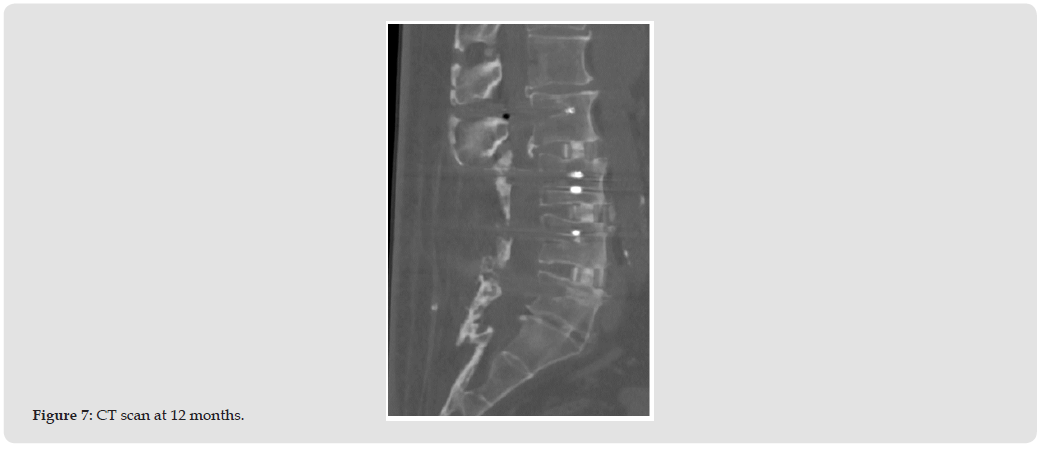
Journals on Biomedical Science |BJSTR

Alzheimer’s Disease: Nanotherapeutics

Editorial

Nanotherapeutics is forefront of new strategies that is nanotechnology [1] due neurons size of nanotools and devices which fall in the range of a billionth of a meter, are being considered to treat and diagnose neurodegenerative diseases [2,3]. Irregularities in the natural functioning of neurons, initiate brain health disorders. Therefore, to treat these neurons is a very complicated task and even their locations are beyond the common approach. Nanotherapeutics [4] is quite capable to do the aforesaid chore and can be a good choice to be a therapy for neurodegenerative diseases, such as Parkinson’s disease (PD) and Alzheimer’s disease (AD) [5]. Various nanoparticles have been reported that can target brain in-vitro and in-vivo. Recently, the association of microglia, the brain-immune cells and uncontrolled inflammation has been discovered by the researchers of Rutgers University. Microglia tackled pathological changes within the brain to identify the undesired and foreign particles, so that it be cleared in a fast mode. The neurodegenerative disorders are very complex physiological, to resolve this issue, it is not a good approach to solely have a concern with searching therapy for neurons, but there are needs to search the mediators and those should be treated first, like in this case microglia, the mediator of neuron physiology and it be targeted first as this new strategy. This finding is considered as a breakthrough and could be a potential therapeutic target [6]. Such an approach may further reduce brain inflammation.

According to described literature, nanoparticles as a therapy and source of diagnosis of Alzheimer disease can cross the BBB and eliminate the Aß burden [7]. Finally, this therapy can slow the long-term progression of the disorder. The abnormal structure present in the brain of AD patients are senile plaques (deposits of the protein) and neurofibrillary tangles (neuron exposure) and both of them tied with Aß. By removing Aß, these disorders will be healed. It is very unfortunate that no researcher can get success in it. By applying nanotechnology, a few nanoparticles and nanomaterials have been designed that can simultaneously cross over BBB and hit the desired target [8]. Moreover, nanotechnologically developed tools and devices can perform diagnosis and imaging of brain diseases, including brain ischemia, stroke, and inflammation of the nervous system [9]. More interestingly, nano-biosensors have been developed that have a high grade of sensitivity for earlier detection of AD. The synthesis of biologically active HDL-based nanomaterials was reported through a microfluidic technology [10]. Lipid, protein, gold, quantum dot, and iron oxide, are the key components of aforesaid nanoparticles [11] These specifically designed nanoparticles can interact with microglia and this is what required. These interactions will explore new avenue for designing those nanomedicine platforms that can enable targeted delivery with zero toxicity. [12] Nanotherapeutics prescribed for curing Alzheimer’s disease that explores various the applications of nanotechnology in clinical neuroscience for developing innovative therapeutic for treating AD [1].

Nanomedicine-based immunotherapy summarize to be considered for developing nanomedicine-based therapy to overcome the pathways of BBB and that can mimic the innate immune actions [13]. Nanorobotics are automatic molecular machines that can travel and monitor different compounds, and can store that information [14]. Nanotherapeutic that can combat excitotoxicity during stroke, TBI, and hypoxia–ischemia and deal with mitigating oxidative stress, was described [15]. Nanomedicines were reported that can replace or enrich diseased or injured cells and tissue and replenish the local environment or can halt further degeneration and hence capable in dissolve translational challenges for treating neurological disorders [16]. Generally, microglia protect neurons by removing pathological agents, but if a long-term exposure of microglia stimulants initiate neuronal damage because of secretion of pro-inflammatory agents, resulting neuroinflammation and neurodegeneration [17] Designing microglia-targeting nanotherapeutics for the treatment of neurodegenerative disorders was presented [18]. Intranasal delivery of nanotherapeutics and nano biotherapeutics were designed as an engineered nanocarriers as a smart delivery system for treating AD and highlighted as a proficient approach [19]. In order to assess the potential applications of the medicinal plants, their derived components, and Phyto-Therapeutic, nano medicinal strategies have been developed that can transport aforesaid components for treating AD [20].

Flavonoid-based nanomedicines inhibit the accumulation of large aggregates state of amyloid-beta 42 (Aβ42), and hindered the formation of neurofibrillary tangles of hyper-phosphorylated forms of microtubule-associated tau protein, during AD [21]. The stem cell and nano-based therapies were applied as novel therapeutic strategies for treating AD, associated pathogenesis and pathogenic trajectories [22]. Nanomedicine [23] can offer impressive resolutions as a tiny machine for the healthcare that will cure a lot of life threatening diseases [24] Nanocarriers having polysaccharides as a component are remarkable as nanotherapeutics for curing Alzheimer disease and increase the transportation of the desired molecules [25]. Exploring recent advances in nanotherapeutics being tiny molecules of immunotherapeutic have many advantages over biological drugs regarding complexity, tissue penetration, manufacturing cost [26] Extracellular vesicles were also applied to treat neuroinflammation and are very helpful for pathogenesis, diagnosis, and therapy [27] Nanotherapeutics medicine of extracellular vesicles performed as theragnostic platform for biogenesis, membrane trafficking, and oxidative stress [28]. Highly bioactive zeolite imidazole framework-8–capped were applied as nanotherapeutics to suppresses inflammation- and the activation of astrocytes and secretion of proinflammatory cytokines, and notified as neuroprotective therapy. [29] Nanotools can detect the degeneration of amyloid-β peptide (Aβ) oligomers, and act as suppressor of oxidative stress of free radicals. [30].

Advances in personalized nanotherapeutics is a as state-of-theart, that can be applied in various strategies and developed a novel nano-enabling therapeutic schemes to cure and monitor diseases. [31] The emergence of nanotherapeutics from laboratory to clinic comprehensively discussed and the persisted shortcomings for delivery of classical (small) drugs, macromolecular therapeutics, and recombinant vaccine were illustrated. [32,33] Nanomedicine overcome the obstacles and improve diagnostic and therapeutic outcomes in the healing neurodegenerative disorders. [34] Nano neuro medicines can be applied for neuroimaging as well as for therapeutic applications for degenerative, inflammatory and infectious disorders of the nervous system. [35] Small interfering RNAs, displayed remarkable promises and underlined as potential therapeutics option for curing AD. [36] Precision nanomedicine was reported as target-specific agents and are able to bypass the blood-brain barrier rapidly, and ultimately become a novel therapeutic modality to treat neurodegenerative diseases. [37] Potential use of nanomedicine for treating anti-inflammatory neurodegenerative diseases, (AD and PD) was underlined and that have ability of penetration of the BBB to achieve a therapeutic potential in the field of therapy that can be used for healing of neurodegenerative diseases. [38] Macrophage targeted theragnostic as personalized nanomedicine were discovered that can be successful as a theragnostic in macrophage ablation, phenotype modulation and inhibition of their inflammatory activity [39].

Selective targeting capabilities of nanomedicine have been reported that can deal with the pathological permeability of the blood– brain barrier during neurovascular inflammation [40]. Comparatively to conventional formulations, a number of nano formulations were recommended for improving the pharmacodynamics of the encapsulated drug for healing inflammatory diseases that can improve the quality of therapeutic treatment for curing diseases like AD and PDs. [41] Published article covered the promising aspects of ongoing developments in the diagnosis and management of Alzheimer’s disease by applying nanotechnology. [42,43] Emerging role of nanotechnology and different nanoparticle (Gold, quantum dots, polymeric, liposomes, carbon nanotubes, and fullerenes) were highlighted for treating neurological disorders, including AD, PD and Huntington’s disease and has shown great potential to overcome the problems. Phosphorus dendrimers that have potential to fight against cancers, neurodegenerative diseases, and inflammation, both in vitro and in vivo, were described. [44] A book, entitled “Nanomedicine for Inflammatory Diseases” covered different aspects of translational medicine for clinicians and disclosed various aspects for treating inflammatory disease and bridging the gap between the laboratory bench top and the clinical bedside [45].

Acknowledgements

One of the authors, Rajiv Kumar, gratefully acknowledges his younger brother, Bitto.

Consent for Publication

Not Applicable.

Conflict of Interest

The authors declare no conflict of interest, financial or otherwise.

Declaration of Competing Interest

The authors declare that they have no known competing financial interests or personal relationships that could have appeared to influence the work reported in this paper.

Data Availability Statement

Due to the nature of the research, [ethical, legal/commercial] supporting data is not applicable and thus not available.

Follow us on: Biomedical Journal Impact Factor: https://biomedres.us

https://scholar.google.com/citations?user=OFtUOZYAAAAJ&hl=en
https://www.base-search.net/Search/Results?lookfor=Biomed+Journal+of+Scientific+%26+Technical+Research&l=en&refid=dcsuggesten
https://citefactor.org/journal/2574-1241/biomedical-journal-of-scientific-technical-research
https://ideas.repec.org/s/abf/journl.html
https://econpapers.repec.org/article/abfjournl/
https://www.ncbi.nlm.nih.gov/nlmcatalog/101723284
https://bjstr.org/
https://bjstr.org/about.php
https://biomedres.us/reprints.php
https://biomedres.net/submit-manuscript.php

Open access clinical and medical journal |BJSTR

Educating to Generate Self-Learning

Introduction

Universities continue to reject a large number of students who, despite having previously completed the official and necessary school cycles (preschool, primary, secondary and baccalaureate), did not manage to acquire solid and sufficient knowledge in a period of at least sixteen years or more of schooling to pass the evaluations that are applied to them as a requirement to be accepted as new students to higher education. Entering a school becomes, and is seen by the student and society, a mere formality, a matter full of bureaucratic-administrative processes and tasks that take up a lot of time, which at the time is carried out with a superficial character, out of obligation and without conviction or depth, when it should be a procedure for the school authorities, Teachers and parents and the applicants themselves would know their strengths and weaknesses in terms of their knowledge and knowledge and therefore be able to apply themselves to continue strengthening or correct their deficiencies. In addition, learning and consequently the knowledge and knowledge of students is a variable that is almost always taken into account by employers who demand certain competencies from their future employees. This situation is notorious due to the gap between the competencies certified by the professional degree and the real skills of the university graduate, this difference is a serious problem since it is thought that the graduate is less and less prepared to face the new professional and labor standards that are required. On the other hand, the concerns and complaints of students in this regard are also abundant, for them the educational system does not teach them correctly to solve problems, to make decisions, to think and to learn how to self-learn.

Most teachers are expert information processors, however they are primarily concerned with the results they must achieve, as well as the number of topics they have to cover in tight periods of time and more concerned with teaching than with student learning; To be able to decipher why the teacher, even in these times, continues to think that teaching is more of a priority than learning is very difficult because his thinking and that of the student is a black box, an enigma that is difficult to unravel. The presentation of the contents of a topic in higher education should not depend mainly on the erudition capacity of the teacher, since this situation does not ensure that the group follows it and understands the explanation, these classes can provide in general terms to the group of students congruent, structured and valuable information in general and particular, But there will always be students who are not able to understand and assimilate the information because they do not have the knowledge, nor the level of understanding that the teacher has reached around them, all of which determines that the information presented is not internalized and amalgamated with the information they already have, the information received is dispersed in a series of unconnected data, isolated, fragments of information, unrelated to previous knowledge or situations of daily or professional life. In terms of learning, it is still tied to intuitive practices of common sense, to the old popular affirmations and beliefs about the process of teaching and learning, that it is the obligation of the teacher to teach and the student to learn from him, rigid strategies and tactics are used and formats as old as the rote and arbitrary reception of reading by the student and relying on memory for an evaluation or a In addition, the student trusts in his ability and ability to copy and the teacher in silencing his conscience by making him see nothing, all this and more is in part what irremediably condemns what he has learned to oblivion, although in these cases that is not the important thing, what matters is to obtain a passing grade (Granados López H, et al. [1]).

Self-learning, which, unlike teacher-conditioned learning, can lead the student to move towards academic independence and thus be in the future a better professional who really contributes to the solution not only of the problems of society in general, but also of his, for this the teaching of study strategies in students is a primary factor to achieve better learning based on self-learning and thus facilitate their school transition and increase the chances of academic success.

Educating to Stop Self-Learning

Experimental studies and achievements in the fields of artificial intelligence and cognitive psychology of learning have made it possible to formulate new perspectives and redefine the laws that regulate human learning, which change the logic of education. When we talk about difficulties at school, we immediately think of bad grades, long and tedious class sessions, failed exams, threats of expulsion, failure, stress, depression, etc., school demands are a fact that we can only accept exist; If the student does not comply in the way that the teacher expects or the institution demands, then other means are resorted to make him work harder, even if the parents, teachers or coordinators and/or those responsible for his education do not seek the remedy directly on what produces the problem. Rather, they act on the causes that originate the problem, with this the students remain subject to the set of obligations established by the educational system, within which studying to learn and know in a more satisfactory and broader way, represents for the student one of the most punitive and most volitional obligations. It would be interesting to ask ourselves about what educational demands cost the student and how much guilt and responsibility teachers have in the fatigue, instability, anxiety, blockage, deception and repudiation of study originated in the student; This consideration is not only about asking simple and plain questions, without foundation, that provoke reactions of indifference, it is about creating a current situation that gives rise to situations and the establishment of a link between education or teaching and educational research, where the action of students, teachers and parents improve the conceptions that are held in this regard, intending in the end to qualitatively sensitize the student about the importance of learning and knowledge for the achievement of each student’s particular life project.

When talking about strategies, techniques and study habits and their effect on learning, it is common to start by rescuing that motivation is an essential factor to achieve academic success as a result of the effort of study strategies and learning as an inherent instrument to achieve the proposed goals, the strengthening of self-esteem and confidence in one’s own competence as essential traits to obtain a good school performance and to be able to face the social commitment that the student contracts when being educated, giving society as a professional all the accumulation of knowledge and skills as homogeneous as heterogeneous that were achieved through their course through school institutions. Nowadays it is not enough to learn to read, write and solve simple calculations, it is also important to analyze and address in a timely manner those aspects that determine many of the problems related to high failure rates and low terminal efficiency. It is known that motivation is an essential and necessary factor for satisfactory academic achievement, for the orientation towards success and in the valuation of effort and skills as an inherent instrument to achieve the proposed goals, as well as the strengthening of self-esteem and confidence in one’s own competence as essential traits. The quality of education depends, to some extent, on the knowledge and skills it fosters corresponding to what the student requires and what their environment demands, for this it is necessary to strengthen self-learning thanks to study or learning strategies. Study strategies are currently considered as any behavior or thought that facilitates coding in such a way that it improves the integration and retrieval of knowledge; More specifically, these thoughts and behaviors constitute organized plans of action designed to achieve a goal.

From the new cognitive conceptualization of study strategies, new research began to be carried out with a different approach, since previously studies on human learning were dominated by the behaviorist school of thought, this resulted in a total dependence on the effects of external events as determinants of what was learned. With the increase in interest in organizational mental processes and in the transformation of information that takes place within the student, interest was refocused on what was known as the black box of the human mind (Barca Lozano A, et al. [2]). At the end of the 20th century, there was a reassessment of the role of educational systems, investment in human resources, in more and better training of professionals and citizens has once again been considered a primary and priority objective to promote development and social and individual progress.

These new approaches are due to the fact that in the last thirty years the changes, trends and professional, labor and social demands advance at a dizzying pace, being the most important trends that have had the greatest impact on the educational, professional and labor world the following: The internationalization of the economy that is transforming social relations, the dominant culture and values according to the rules of the market economy; the globalization of communication and information, with increasingly agile and powerful systems displacing traditional media; The information society is already a fact in which progress is made day by day with innumerable consequences in social life, in the advancement of knowledge and in the organization of work; scientific and technological development, which extends to all areas of knowledge and has a decisive influence on the social field, which poses significant challenges to the structure of curricular content and its development; the disappearance of barriers between nations and the attractiveness of developing countries are producing migratory movements with enormous impacts; cultural, religious and ethnic integration, avoiding cultural assimilation, is one of the most important challenges for national education systems; demographic and family changes, among which four main trends can be highlighted: the ageing of the population, the relative ageing of employed workers as the recruitment of young people is reduced, the increase in single-parent families posing new responsibilities for educational establishments that care for children at an early age, and the increasing incorporation of women into the world of work, However, there is still significant gender inequality in the labour market. The diversification of employment where the time of stable and long-term work at the end of studies has ended, the present situation is characterized by the difficulty of finding employment, by part-time work, by the increase in self-employment and by the need for constant changes in work according to new demands. the continuation of unemployment or underemployment, where there is no reasonable prospect that it will fall in the immediate future and where the most affected groups are those who cannot obtain a job due to their limited qualifications or because of the difficulties in accessing the specialization required by the new jobs; the ideological and moral pluralism of society, where the changes that are taking place in society as a whole are separating the consensus around the values to be transmitted; There is a risk that the fragmentation of values will lead only to pragmatic criteria, which will serve as a reference point for human behaviour.

It is possible that a new society has been taking shape for some time, a society saturated with information and knowledge, impregnated with science and technology, open to the world, a society characterized by the situation of the various individual situations, marked by the variety of their rhythms, a society eager for capacities in perpetual renewal, a society that could also be called a society of education or training, and for this new society it is necessary to The emergence of a new educational system based on self-learning and meta-learning, where students are taught the importance and value of knowledge and the impact that educational convictions and study strategies can have on success or failure, not only at school, but also professionally. If the purpose is for the student to learn how to learn, to be able to generate his own style of self-learning, that is, to be the manager of his own learning, to be active, participatory, dynamic expository, creative, innovative and transformative of his own reality, it is necessary that he be taught, guided and educated how to get there, and for that obviously a competitive teaching staff is required. active, participatory, dynamic, expository, creative, innovative and transformative of their own reality. Undoubtedly, if it is necessary to really have a student who becomes a student, it is necessary to teach him how to be one and for this the strategies are vast and diverse, both to be used by the teacher and by the student.

The use of strategies in students is handled as a constructivist conception of learning, where the arguments that support the way of teaching are illustrated, in this regard it can be said that it is the idea that the individual maintains in cognitive and social aspects of behavior, as well as in affective aspects where it is not the product of the environment or the results of his internal dispositions. rather, it refers to the reconstruction that takes place day by day (Castillo Claure Víctor, et al. [3]). The human being builds his own knowledge where he uses the schemes he already has, to then relate it to the new knowledge that at a certain moment provokes a conflict to then establish a balance; In order for the construction process to be developed, it is necessary to point out two fundamental aspects: What previous knowledge the student has regarding the new information or the activity or task to be solved and what external activities or activities are carried out. must be carried out by the student. Constructivism in school learning seeks the idea of fulfilling the purpose of the education provided by the school, that of promoting the processes of personal growth of the learner. The characteristics of students’ prior knowledge differ from one subject to another, some knowledge is more conceptual and others more procedural; some are more descriptive, others more explanatory; some more general, others more specific, etc., the student must be provided with general knowledge to help him modify his previous ideas, it is necessary that the presentation of school knowledge is based on situations of daily life, this so that the student takes more interest in the effort made in the school (Diaz Barriga Arceo F, et al.[4]).

Influence of the Cognitive Approach

The main interest of the cognitive approach has been focused on describing and analyzing various processes, such as perception, attention, comprehension, thinking, knowledge representation, memory, problem solving, among others, based on the human information processing approach, which currently constitutes the central current of thought in both psychology and education. The emphasis is located on the study of mental processes and on the examination of the structures of knowledge that can be deduced from the different and varied forms of human behavior, this current of thought has tried to explain some aspects that were not studied by associationist approaches, such as the effects of the characteristics of the learner on learning, its role as a processing organism, the ways of thinking at a high level, what it processes during a learning situation, the consequences of certain forms of processing, and the way learning outcomes are measured. Consequently, it can be said that the cognitive approach has influenced the theory and research on human learning in a significant way, regarding this approach the following can be said: It conceives learning as an active and constructive process, emphasizes the presence of high-level processes in learning, points out that learning is a cumulative process in which prior knowledge plays a fundamental role. In other words, learning is a process that consists of the accumulation of information which is organized in our cognitive structures or schemas in such a way that they are enriched and structured until they reach levels of refinement that are characteristic of expert subjects, this approach tries to determine the way or ways in which knowledge is represented and organized in memory. Some say that representation is in the form of images, but others say that it is in the form of verbal propositions or statements and point out that the organization is hierarchical and others that it is in the form of networks (Serrano González Tejero J M, et al. [5]).

Learn to Build

Learning contributes to development to the extent that learning is not copying or reproducing reality; For the constructivist conception, learning occurs when one is able to elaborate a personal representation about an object of reality or content that one intends to learn. This elaboration implies approaching the object or content in order to apprehend it; It is not an empty approach, from nothing, but of the previous experiences, interests and knowledge that one has, we could say that with the meanings that have been constructed one comes into contact with a new aspect that only sometimes seems new, but that in reality can be interpreted perfectly with the meanings that one already possesses. while at other times it will be a challenge to which an attempt will be made to respond by modifying the meanings already provided in such a way as to account for the new content, phenomenon or situation. In this process, not only is the known modified, but the new is also interpreted in a peculiar way, so that it is registered and made one’s own; when this process occurs, it is said that one learns meaningfully, constructing one’s own personal meaning for an object of knowledge that objectively exists (Erausquin C, et al. [6]).

Effective Study and Learning Strategies

Studying is a process that consists mainly of activities carried out by students in order to prepare themselves to take tests, exams or other types of tasks, with the purpose of passing academic courses in educational institutions. Many students finish their high school studies with no or very few study strategies, so universities and other higher education institutions have found it necessary to offer training programs in this type of strategy, with a remedial or compensatory perspective. The area of study strategies was once known as study habits. This name was mainly due to the preponderance of associationist and behaviorist models of learning, which pointed out that in order to learn something it was necessary to internalize it, through repetition and practice creating habits. It could be pointed out, then, that such positions promoted study habits related mainly to external aspects of the student such as: organizing and establishing a study schedule, choosing a place to study, among others; With the change of orientation in the approach to learning processes from an associationist and/ or behaviorist perspective to a cognitive perspective, study began to be conceived as a set of internal and external processes carried out by students to acquire knowledge and develop skills and abilities that allow them to pass academic courses in the educational institutions of the educational system. It is important, in order to understand the difference between habit and strategy, to distinguish between studying and other forms of learning, depending on the purposes and context, learning is not the same as studying; Learning can be the result of a set of processes that can occur anywhere, we can learn in the street, watching television, reading a book, visiting a museum or exercising in a gym, but we also learn in educational institutions called schools, being that the difference between one type of learning and another is that in schools it is academic learning and in other places it is everyday learning.

Carrying out one or more study strategies implies the performance of a set of explicit or implicit operations that students perform during the study process, it basically refers to all those activities that allow them to learn the information contained in materials or texts in the form of prose; To do this, the strategies can be diverse, such as copying the material, taking notes, underlining or highlighting the important parts of the material and summarizing the information, among others. The purpose of study strategies is to help the student pay attention to the important aspects of the study material, to make sure to transfer the material to the working memory because as we know if this information is elaborated, that is, worked, we can store it in our permanent memory system or else it will be lost. The influence that these strategies can have on the study can be as follows:

They direct the student’s attention to certain relevant parts of the information contained in the text, limit the amount of attention the student pays to the information in the text, stimulate the condition by allowing the reader to add information to the information already stored in his or her memory system, allow the establishment of internal relationships, forcing the student to construct an outline or give a coherent organization to the material, and allow the construction of information in the text. external relations, encouraging the student to add his/her comments or reactions to the information contained in the text (Mauri T, et al [7]).There are general strategies, such as broad activities related tocific skills or resources we use when performing a task. On the other hand, there are strategies of repetition, elaboration, organization, regulation and affective, considering each of them in basic learning tasks and in complex learning tasks. Most of them can be considered as micro or macro learning strategies; Micro strategies are more specific to each task, are more related to specific knowledge and skills and can be taught, macro learning strategies aim at the knowledge and understanding of the subject’s own learning mechanisms, have a high degree of transfer and are difficult to teach.

reasoning and thinking, and mediation strategies, which are the specific skills or resources we use when performing a task. On the other hand, there are strategies of repetition, elaboration, organization, regulation and affective, considering each of them in basic learning tasks and in complex learning tasks. Most of them can be considered as micro or macro learning strategies; Micro strategies are more specific to each task, are more related to specific knowledge and skills and can be taught, macro learning strategies aim at the knowledge and understanding of the subject’s own learning mechanisms, have a high degree of transfer and are difficult to teach.

Micro Strategies

A) Repetition strategies (require a minimum degree of cognitive control), operate on the memorization of data and aim to select and acquire units of information for transfer to working memory. Repetition strategies in complex learning tasks help students to pay attention to the most valuable aspects of a lesson and transfer that material to working memory for later study: we could cite recording practices, copying, repetition, etc.
B) Elaboration strategies (they favor the connections between the knowledge previously learned by the student and the new contents, the level of cognitive control would still be low).
• Elaboration strategies in basic learning tasks which intervene in the coding processes for the construction of associations in the materials to be learned.
• Elaboration strategies in complex learning tasks serve to complete previous knowledge with new information. This group would include note-taking and notes, diagrams and summaries, concept maps, etc.

Macro Strategies

Go to

A) Organizational strategies (they look for an internal structure or organization in the learning material that gives it a meaning of its own). Hierarchy and classification would be clear examples of organizational strategies, but also thinking and problem-solving skills could be included in this category. Cognitive control is superior.
• Organizational strategies for basic learning tasks, which help the student to organize the materials in such a way as to facilitate further learning, require the student to be able to group or categorize the contents.
• Organizational strategies for complex learning tasks, these strategies would be responsible for the selection of information to be transferred to working memory and the construction of relationships between ideas in that memory.

Regulatory Strategies

They are applied by the student when he sets goals in his learning and assesses the degree to which he has achieved those goals. It would encompass the use of metacognitive skills: meta attention, meta comprehension and meta memory (Meza A, et al. [8]).

Meta-Cognition

Regarding meta-cognition, since 1976 it has been defined and described as the knowledge of oneself and concerning one’s own cognitive processes and products to everything related to it. Metacognition indicates, among other things, the active examination and consequent regulation and organization of these processes in relation to the cognitive objects they deal with, usually in the service of some specific end or object. Within meta-cognition there are affect-motivational strategies which are related to the control that the student exercises over his or her learning environment, they are strategic used consciously it is a personal style of learning, these strategies demand a high level of control. Macro strategies based on meta-knowledge are responsible for re-establishing the parameters of a task, locating errors, determining the most appropriate intervention techniques and methods, controlling their application and making decisions based on the results obtained, although the direct resolution of the task corresponds to micro strategies through specific operations or procedures. They are classified into four broad types of basic or primary strategies for learning: acquisition, retention, recovery, and support. There are so-called support strategies that favor study and are precisely those that should be taught to the student; Among them is the planning of study time, attitude in class, how to develop a topic, study conditions, differentiated study by subjects, methods, etc. All strategies involve a lot of information at different levels, so there are also different types of classifications, for example: Linguistic strategies that are those that involve superficial structures such as texts or sentences with their underlying semantic representations; cognitive strategies that involve the use of knowledge about the world and other types of episodic and cognitive information such as attitudes, beliefs, aspirations, etc.

All strategies are flexible, operate at different levels of analysis at the same time, operate with different types of input data, can be executed even when the information processed is incomplete and can combine data-driven processes, are context-sensitive depending on the student’s interest, attention, goals, beliefs, and attitudes, are non-deterministic, and tend to produce a large number of options that vary in plausibility. There are hierarchical relationships between strategies, where some dominate the others, those that work with global information act as top-down processing strategies in the understanding of local information; there may be local-level strategies, which place constraints on subsequent meanings, as well as retroactive strategies, which explain the meaning of expressions to which only a partial interpretation has been assigned; There are those to use knowledge, such as retrieval and interpretation, which allow us to obtain the relevant information in each state or point, leaving the more general information at the level of a general control scheme. There are preoperative strategies, even before having read or heard the learning material, they are communicative and contextualizing; they specify purposes, tasks, difficulties in materials, etc., determining the subsequent choice of more local or global strategies, they are anticipatory and have a determining role in learning (Bonilla Traña M, et al. [9]). A cognitive strategy is also the set of procedures that a learner can use to acquire, retain, and retrieve different kinds of performance and knowledge, these cognitive strategies include the learner’s ability to represent (drawing, writing, imagining), selection ability (attention and intention), and self-direction ability (self-programming and self-monitoring).

With this conception, it is assumed that the composition of a cognitive strategy is a guiding cognitive task (a method for inducing the student to perform certain kinds of operations) and a capacity for selection, representation and self-direction. On other occasions, it is necessary to provide a specific guiding task to induce the use of the relevant learning strategies, as would be the case of elaboration strategies that add color to a given representation, which improves its recall, or organizational strategies that undress the representation of any external referent but that structure the information to be learned. in such a way that they integrate its various components, improving their comprehension and memorability. According to this point of view, an instructional sequence is designed to help students develop and organize internal mediation processes, it is about teaching them, in addition to the assistance of cognitive strategies, an appropriate use of them, so it would facilitate the acquisition, retention, integration and recovery of what has been learned (Córdoba Urbano D L, et al. [10]).

Conclusion

The simple transit through higher education schools in an inertial, passive way, with disinterest and without intrinsic and extrinsic motivations does not guarantee professional, economic and social success, on the contrary it practically condemns the student during his stay in these institutions to an endless number of problematic situations, stress, sanctions and even delay in graduation or desertion and for those who manage to graduate practically condemn themselves to underemployment or unemployment. accompanied by frustrations and waste of time. That is why it is important that from the first educational levels the student begins to be taught the importance of studying, what study strategies are and what they are for, so that they have the basic foundations in this regard and that they are gradually strengthened and enriched as they advance in the educational levels, until they achieve self-learning and metacognition.

Follow us on: Biomedical Journal Impact Factor: https://biomedres.us

https://scholar.google.com/citations?user=OFtUOZYAAAAJ&hl=en
https://www.base-search.net/Search/Results?lookfor=Biomed+Journal+of+Scientific+%26+Technical+Research&l=en&refid=dcsuggesten
https://citefactor.org/journal/2574-1241/biomedical-journal-of-scientific-technical-research
https://ideas.repec.org/s/abf/journl.html
https://econpapers.repec.org/article/abfjournl/
https://www.ncbi.nlm.nih.gov/nlmcatalog/101723284
https://bjstr.org/
https://bjstr.org/about.php
https://biomedres.us/reprints.php
https://biomedres.net/submit-manuscript.php
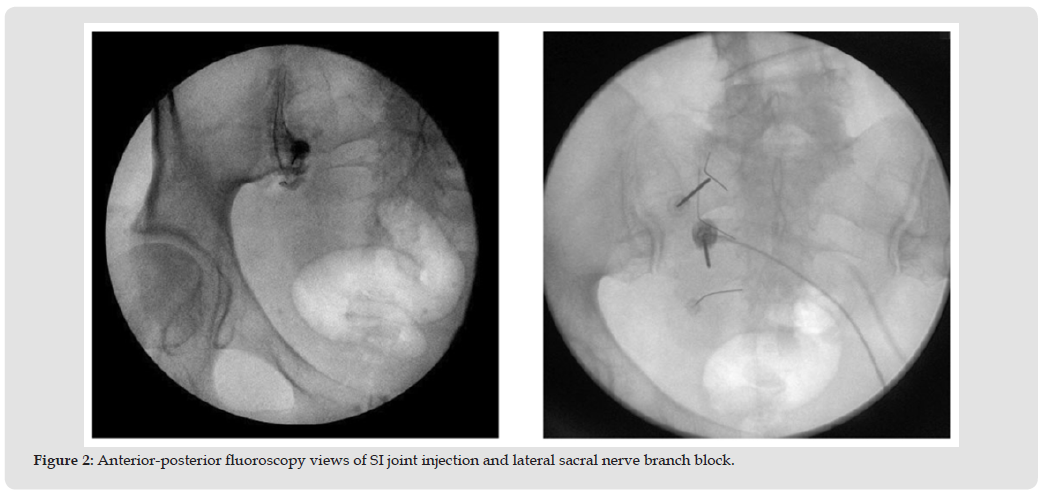
American medical journal |BJSTR

Generalization of the Law of Wave Refraction at the Interface of Mobile Environments

Introduction

Waves are the most common physical process. Almost all natural processes take place with the participation of waves of various natures, the basic properties of which are largely similar [1]. During the interaction of waves propagating in media at the interfaces, reflection and refraction of waves arise – a fundamental phenomenon of physics, which has found great application in various fields of technology and in natural processes. Wave reflection occurs when waves are reflected from the interface between media, propagate in the same medium and change their direction without changing the parameters of the medium [2]. In this case, the angle of reflection is equal to the angle of incidence, the incident and reflected rays lie in the same plane with the normal to the surface. Wave refraction occurs when waves move from one medium to another with different parameters and at the same time change their speed and direction. According to the law of refraction, the wave vector of the refracted wave lies in the same plane with the wave vector of the incident wave and the normal to the interface drawn at the point of incidence. The ratio of the sine of the angle of incidence to the sine of the angle of refraction is equal to the ratio of the velocities of sound waves in the first and second media c1 and c2 (Snell’s law). When a wave passes from a medium with a higher density (lower speed of wave propagation) to a medium with a lower density (accordingly, with a higher speed of wave propagation at a certain angle of incidence, it may not pass into the second medium and be completely reflected from the interface between the media. This effect is called total internal reflection and is widely used in optical technology for channeling optical radiation. The laws of reflection and refraction are well studied for stationary parameters of contacting media [3,4]. In the nonstationary state of the parameters of the adjacent media, there are features of the laws of reflection and refraction that must be taken into account in measuring technology [5-7]. This paper examines the influence of the motion of adjacent media parallel to the interface between media on the laws of reflection and refraction.

Simulation

The passage of waves through the interface of two media moving along the interface 0z (for simplicity, we assume that 0 ) (Figure 1) in the general case with different velocities u1 and u2 is considered. The speed of propagation of waves in the first stationary

The solution for the incident, reflected and transmitted waves in each of the regions is sought in the form of functions:

where in the general case, the wave numbers of the forward and backward waves in the first medium and the forward wave in the second semi-infinite medium differ due to the difference in the velocities of these waves, which is created by the movement of the media: where in the general case, the wave numbers of the forward and backward waves in the first medium and the forward wave in the second semi-infinite medium differ due to the difference in the velocities of these waves, which is created by the movement of the media:

Main Results and Discussion

Substitution of the field components into the boundary conditions for Ey leads to the relation:

where z – components of wave numbers are determined by the relations:

since the boundary conditions must be satisfied at any point z, then.

The angle of refraction is determined through the angle of incidence by the relation.

which in the absence of mutual displacement of the adjacent media ( u1 = u2 ) transforms into the known relation [1-3]:

Thus, the law of reflection does not change, but the law of refraction is transformed, which is associated with a change in the ratio of wave velocities in media during their relative motion. Figure 2 shows the dependence of the angle of refraction on the angle of incidence for various ratios of media parameters.

Figure 2

biomedres-openaccess-journal-bjstr

When a wave passes an interface from a denser medium to a less dense one (for example, from moving water into air), the critical angle of total internal reflection at is determined by the relation.

and depends on the relative difference in the velocities of the media to the wave speed c1.2 in a denser layer (in Figure 3). An increase in the angles of total internal reflection is observed when the direction of motion of the medium changes. The movement of the adjacent media also affects the polarization effect upon reflection. The angle of total polarization (Brewster angle from the condition T 0 2 π ) is determined from the equation.

A change in the Brewster angle due to the movement of media is observed when the difference in media velocities changes. For example, changing from -0.2 to 0.2 changes the Brewster angle from 1.05 to 1.15 rad.

Figure 3

biomedres-openaccess-journal-bjstr

Conclusion

The movement of media adjacent to the interface does not lead to a change in the law of wave reflection, but significantly changes the law of refraction, the angle of total internal reflection and the Brewster angle, which can be used to control these parameters or to measure the velocities of media.

Follow us on: Biomedical Journal Impact Factor: https://biomedres.us

https://scholar.google.com/citations?user=OFtUOZYAAAAJ&hl=en
https://www.base-search.net/Search/Results?lookfor=Biomed+Journal+of+Scientific+%26+Technical+Research&l=en&refid=dcsuggesten
https://citefactor.org/journal/2574-1241/biomedical-journal-of-scientific-technical-research
https://ideas.repec.org/s/abf/journl.html
https://econpapers.repec.org/article/abfjournl/
https://www.ncbi.nlm.nih.gov/nlmcatalog/101723284
https://bjstr.org/
https://bjstr.org/about.php
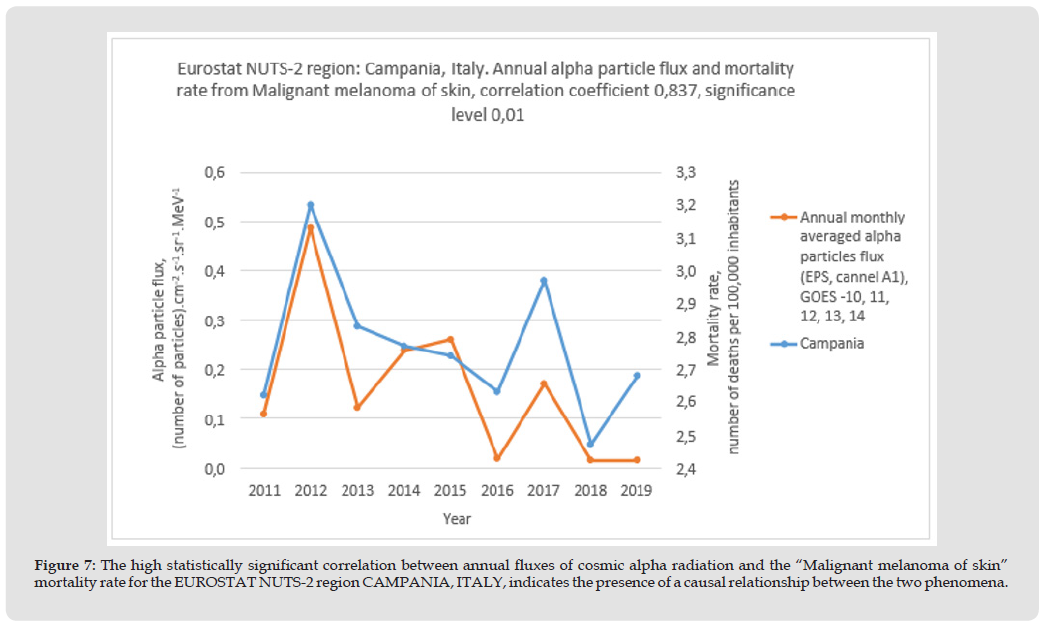
https://biomedres.us/reprints.php
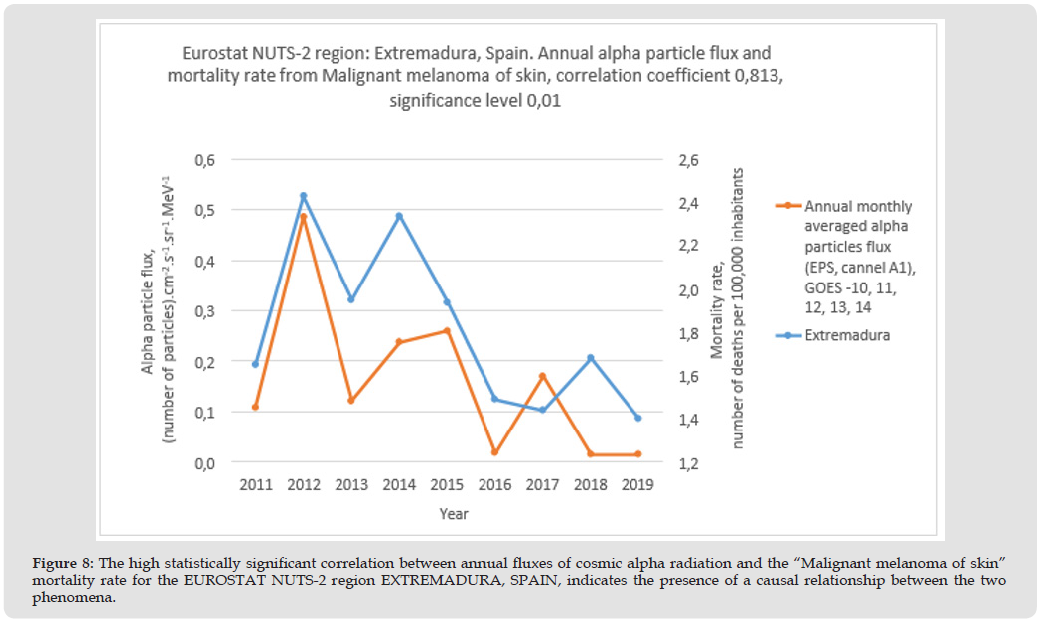
https://biomedres.net/submit-manuscript.php