Journals on Biomedical Engineering |BJSTR

Legal Considerations on Personal Information Protection Systems that Use Blockchain

Introduction

The balance between protection and use of personal information has become more important in recent years, as seen in the use of Big Data in Artificial Intelligence (AI) development and the ecosystem for data use by governments in smart and super city concepts. Over 30 years have passed since Dr. Ann Cavoukian, the former Information and Privacy Commissioner of Ontario, Canada, advocated the concept of privacy-by-design in 1995, but the idea that service providers should protect user privacy at every stage from design to use, and so on, has become a global standard today [1]. Of course, although private businesses and government services incorporate system design for personal information protection in their terms of use, regulations, and privacy policies, many cases of personal information leakage are caused by human error; therefore, a mechanism to prevent leakage needs to be built, such as by clarifying the transaction history of such information. Privacy protection mechanisms using blockchain technology have attracted attention in recent years. This technology is also expected to be implemented in the sharing of medical records and prescriptions among medical institutions. Blockchain is the technology underlying cryptocurrencies such as Bitcoin, and has also become that underlying smart contracts to automate contracts in financial transactions.

Some local governments in Japan have recently conducted demonstration experiments on providing administrative services using blockchain technology and are making efforts to implement them. This study contributes to the proper activation of the use of personal information in the future by presenting specific cases of privacy protection systems using blockchain and conducting legal reviews from the perspective of Japan’s Act on the Protection of Personal Information [2].

Blockchain and Privacy Protection Systems

Advantages of Blockchain-based Privacy Protection

According to the definition by the Japan Blockchain Association, blockchain refers in a broad sense to “a technology that achieves high availability and data integrity by using digital signatures and hash pointers to create a data structure where it is easy to detect tampering and storing this data in a large number of nodes distributed on a network” [3]. Decentralized management of information is one of the characteristics of blockchain technology, which has the advantages of (1) high availability, (2) high integrity, and (3) low cost of transactions in the management of information [4].

  1. Regarding high availability, unlike centralized information management, where a failure of the management system will result in the system stopping function, blockchain-based information management enables the system to operate even if a part of the network is damaged. In addition to operational benefits, this is also advantageous from the perspective of responding to risks from cyberattacks.
  2. Regarding high integrity, impersonation is difficult because each information transaction uses encrypted signatures, and further, since transaction data is stored on a chain with previous blocks, tampering is virtually impossible as data tampering would require the tampering of previous data as well. Since the entire transaction history is recorded, one can monitor data tampering in real-time.
  3. IN terms of the low cost of transactions, unlike centralized information management, there is no need for a third party for information management, thereby reducing management costs, as only service providers and users may exchange information. Regarding this point, this may lower the barrier to providing services. At the same time, since the service user is personally and directly involved in the transaction of information, the privacy decisions of the individual involved in the transaction of personal information can be better reflected [5].

Implementation Cases

Implementation of Blockchain in Local Governments in Japan: Several demonstration experiments of blockchain technology have been conducted in recent years in local communities under initiatives such as Smart Cities and Society 5.0, with blockchain technology as one of the core technologies. A survey conducted by the Institute for Tokyo Municipal Research [6] revealed that current cases have the following characteristics:

  1. Using blockchain as a proof to third parties, 2. Using blockchain to track and record movement history, 3. Sharing information over a wide scale, and 4. Adding new economic value.

One case is the “Iizuka Blockchain Street Concept” announced in Iizuka, Fukuoka Prefecture in 2019, and as a 2020 experiment focusing on data distribution, a demonstration experiment is being conducted to digitize various certificates such as residence certificates using dummy data, that ensure “proof of issuance origin” instead of the official seal (mayor’s seal) and “tamper-resistance” instead of copy-protection paper through a blockchain-based trust service. In this experiment, the hash value of the digital signature is recorded in the form of a blockchain to prevent tampering, and the transaction date and time are clarified by a timestamp to prevent tampering. This demonstration experiment was carried out through an agreement between Iizuka City and four companies in the city. In 2021, Iizuka City announced the “Iizuka City Blockchain Promotion Declaration” at the “Fukuoka Blockchain Forum (hosted by Fukuoka Prefecture),” which aimed for city development using blockchain, with industry-academia- government collaboration in the form of a comprehensive project that includes human resource development [7].

Kaga in Ishikawa Prefecture announced the “Blockchain City Declaration” in 2018, and is promoting a smart city concept using internet and communication technology (ICT), in which it aims to issue the “Kaga e-Resident Card NFT” with the Web3 Wallet Management Function using official individual authentication using Non-Fungible Tokens (NFTs) with My Number Cards and the blockchain under the demonstration experiment for electronic voting that links smartphones and the My Number cards, resulting in a “Kaga e-Resident System” to create the “Kaga e-Resident” who is an electronic resident by 2021. In March 2024, an announcement was made that “Kaga e-Resident Card NFT” would be issued on the “Japan Open Chain,” a public chain [8]. Nagasaki in Nagasaki Prefecture has started offering an electronic contracting system using blockchain since 2023. Demonstration experiments for this project were carried out in 2021, and it has been operational since 2023 after verifying its appropriateness under the Construction Business Act and the Electronic Signature Act. Blockchain encryption technology uses IC cards with built-in electronic certificates used for electronic bidding and secret keys (wallets) linked to IDs and passwords, enabling settlement without IC cards, and the necessary documents are organized and shared, and agreement information is recorded on the blockchain, making the contract fully digitalized [9]. In addition, Kumamoto in Kumamoto Prefecture, Saga in Saga Prefecture, Bandai in Fukushima Prefecture, and Yabu in Hyogo Prefecture have also been promoting the use and introduction of blockchain. However, across Japan, knowledge about blockchain is lacking or a shortage of technical personnel, initial introduction costs, and so on exists, so the movement toward introduction is not necessarily active [10].

Estonian Healthcare Blockchain: Estonia is currently one of the most digitized countries, with e-IDs and administrative digitization reaching almost 99%. In Estonia, personal information is linked to a personal ID, attributed to an individual, and stored in an encrypted government database. To prevent data tampering, transaction records, and so on are managed as a blockchain, and timestamping for every second is implemented, thereby making it virtually impossible to tamper with (KSI blockchain). In addition, they have managed data collaboration between public and private sectors by decentralizing data in databases to ensure the confidentiality and robustness of information and to ensure secure data collaboration (x-Road) [11]. The development of timestamping technology for blockchain use in Estonia began around 2007, and a system using this technology was introduced in 2012. An example of information management using blockchain in Estonia is medical blockchain. Medical records are digitized, and medical information such as drug prescription information can be shared between all medical institutions, facilitating appropriate drug prescription and medical treatment [12]. As previously mentioned, transactions with personal information are timestamped every second, so if another individual accesses the medical information, that transaction can be tracked, thus ensuring the integrity of the data. Each use case in Estonia is a representative model case to advance the digitization of governments in the future.

Consent Acquisition Model: Several proposals have been made recently in the academic field for systems to protect personal information using blockchain [13]. Rivadeneira, et al. propose a model to handle personal information based on blockchain technology that builds on some of the features of a conceptual privacy preservation framework called Pacha (Privacy-Aware Component for a Human-inthe- Loop IoT Approach) [14]. The model proposes the use of authorized blockchains to preserve the integrity of transactions derived from both data sharing and consent actions, and aims to address consent management, transparency, and non-repudiation issues in human- centric internet of things (IoT) systems by eliminating a centralized approach and relying on blockchain technology. Human-centric IoT is a focal issue in the current smart city concept and Society 5.0. IoT devices contain a considerable amount of information with high expectations of privacy protection, such as healthcare and lifestyle information, and the secure and low-cost management of such information as well as the ability to fully reflect the intentions of relevant individuals in the context of such information are critical. Although these models have not yet been implemented, future trends in this area will attract attention.

Review based on the Act on the Protection of Personal Information in Japan

Appropriateness of Blockchain in Personal Information Protection Systems

Blockchains can be categorized as public blockchains, which are decentralized, private blockchains, which are centralized under a single entity, and consortium blockchains, which have more than one controlling entity. Public blockchains, in which anyone can participate as a node, are considered highly secure and transparent because the rules cannot be changed by a specific administrator. However, since they openly disclose transaction data, private and consortium types are superior in transactions that involve highly confidential information. Private- and consortium-type blockchains differ in terms of the high degree of decentralization of management authority and information, and many blockchains related to personal information that local governments are considering for introduction are based on the former. Blockchains can also be classified into permissioned and permissionless according to whether they are approved by administrators, and since the latter require approval from participants whose trustworthiness is unknown to finalize transactions, the former is superior in managing highly confidential information. Furthermore, permissionless blockchains may not meet EU GDPR privacy protection requirements [15]. This work reviews permissioned type blockchain with an administrator for information from the perspective of Japan’s Act on the Protection of Personal Information (Personal Information Protection Act).

Analysis based on the Act on the Protection of Personal Information

The Japanese Personal Information Protection Act defines a business handling personal information as a person who uses a database of personal information for business purposes, and establishes various obligations regarding the management, use, and transfer to third parties of the personal information held by the business. The 2015 amendment to the Law on the Protection of Personal Data strengthens the provisions for personal participation and establishes the right to claim as a mechanism to ensure the Identifiable person’s right to self-determination with respect to the data held by the company. The right to request disclosure (Article 33), correction (Article 34), and suspension of use (Article 35) of personal information from business handling personal information is stipulated. Also, for government agencies, the right to request disclosure (Article 76), correction (Article 90), suspension of use, deletion, etc. (Article 98) of retained personal information and the procedural provisions for these rights have been established. In addition, since the 2020 Amendment, the rules for participation by the Identifiable person have been further strengthened [16].

It is understood that the human right of individuals protected by the Personal Information Protection Act is the right to privacy, and the Supreme Court has also expressed the view that it is the right not to have personal information disclosed to third parties [17]. In other words, from the perspective of the right to privacy, it is generally understood that personal information should be under the control of the identifiable person unless there is a justifiable reason. The Personal Information Protection Act is a law whose purpose is to protect the appropriate use of personal information while protecting the privacy of individuals [18]. Therefore, businesses are required to handle personal information in an appropriate manner that reflects the intent of the identifiable person, although there are differences in the degree to which the type of personal data (e.g., anonymized processed information, pseudonymized processed information, etc.) is handled. The following is a review of the applicability of the Personal Information Protection Act to the use of blockchain from the perspectives of personal information management and the reflection of the will of individuals.

Management of Personal Information: Businesses handling personal information are required to specify the purpose of use when acquiring personal information (Article 17), notify the identifiable person of the purpose of use (Article 21), acquire the information in an appropriate manner (Article 20), prohibit in principle the handling of personal information outside the scope of the purpose of use without the consent of the person (Article 18), and prohibit inappropriate use (Article 19), The law also prohibits the improper use of personal information (Article 19) and restricts the provision of personal information to third parties (Article 27), thereby requiring the proper handling of personal information that reflects the will of the individual, from its acquisition to its use. While the data of personal information in one’s possession must be authentic (Article 22), if the transaction records of such personal information are block chained, in addition to the approval process at the time the transaction is finalized, the entire transaction record can be referenced retroactively, thus ensuring the data’s non-falsification. The retroactivity of transaction records will also contribute to reducing the risk of leakage from the perspective of the obligation of business handling personal information to supervise employees (Article 24) and subcontractors (Article 25) to ensure that personal information is handled appropriately. On the other hand, as for the authenticity of data, the second sentence of Article 22 states that “Efforts shall be made to erase said personal data without delay when there is no longer a need to use it,” so if personal information itself is block chained, not only the transaction history but also the data itself can be guaranteed to be non-tampered with. However, this requirement cannot be met because the data cannot be modified or deleted.

In addition, when personal information is managed and transactions are approved in a decentralized manner among multiple businesses, such as in the case of a consortium-type blockchain, the issue of provision of personal information to a third party arises. The Personal Information Protection Act stipulates in Article 27, Paragraph 1, that in principle personal information may be provided to a third party only with the prior consent of the identifiable person to whom the information pertains. However, Article 27, Paragraph 2 of the Act stipulates that personal information may be provided to a third party without the consent of the person in exceptional cases, provided that the 8 requirements, such as the purpose of providing personal information to a third party, are fulfilled in advance. In item 6, “the fact that it will cease to provide personal data that can be used to identify the person to a third party at the request of the A system that makes it difficult to delete personal information itself will not meet this requirement, making it virtually impossible to provide personal data to a third party on an opt-out basis. In addition, when conducting global transactions, there may be a conflict with personal information protection legislation that establishes the right to request and the obligation to delete data, such as the right to be forgotten (right to erasure) under Article 17(1) of the GDPR [19]. Even though the second sentence of Article 22 on personal information is only an effort provision, it is desirable that even a permissioned blockchain with a controller should not contain personal information itself. Similarly, appropriate management of personal information is stipulated for government agencies, etc., and the above issues surrounding blockchain and personal information in business handling personal information may be applicable.

Identifiable Person’s Participation: As mentioned above, the Personal Information Protection Act since the 2015 amendment stipulates the right of the individual to make various types of requests, and the influence of the Identifiable person in the way and the eligibility of the content of personal information held by business handling personal information and government agencies, etc. has become stronger. As already mentioned in (i) above, if personal information itself is recorded on the block, it becomes virtually impossible to correct or delete such personal information when the need for correction or deletion arises at the request of the Identifiable person. Identifiable information would therefore leave the control of the person, and the request for privacy protection would not be fully satisfied. Therefore, as mentioned above, it is appropriate for a privacy protection system using blockchain to function as a ledger to record transaction history. In addition, when an opt-out method is used in the provision of personal information to a third party, Article 27(2)(v) stipulates the requirement that “the means or manner in which it will provide the data to the third party” be clearly indicated to the Identifiable person. This is because the means of provision is considered to be closely related to the damage to the Identifiable person resulting from the transfer of information. The method of provision will be indicated here, such as whether the information will be provided online or whether it will involve the transfer of physical media, such as by mail. If the privacy protection system using the blockchain is used as a ledger of transaction history, it can be said that it does not fall under the method of provision itself. If the personal information itself is recorded on the block, then this system would be a method of provision to a third party, but as mentioned earlier, this method is difficult to adopt for an opt-out method because it is difficult to correct or delete the information.

Conclusion

I discussed blockchain-based personal information protection systems. This is an analysis from a legal perspective only, and the technical aspects of blockchain are based on previous studies. In the context of privacy protection, personal information protection systems using blockchain technology may reduce the risk of falsification or leakage of personal information from the perspective of transaction transparency and data integrity of such information, and contribute to the protection of data privacy rights by reflecting the will of the service user. On the other hand, blockchainization of personal information itself entails privacy risks due to the difficulty of tampering with that information. Therefore, it would be appropriate in the current situation to introduce it as a system to guarantee the security of information transactions, combined with cloud storage and other information storage technologies. From the perspective of privacy-by-design, research and development are expected to continue, but in the future, I would like to continue to analyze and study cases in Japan where such systems have been introduced.

Acknowledgements

This work was supported by JSPS KAKENHI Grant Number 20K13385. I would like to thank Editage (HYPERLINK «http://www. editage.com»www.editage.com) for English language editing.

Follow us on: Biomedical Journal Impact Factor: https://biomedres.us

https://scholar.google.com/citations?user=OFtUOZYAAAAJ&hl=en
https://www.base-search.net/Search/Results?lookfor=Biomed+Journal+of+Scientific+%26+Technical+Research&l=en&refid=dcsuggesten
https://citefactor.org/journal/2574-1241/biomedical-journal-of-scientific-technical-research
https://ideas.repec.org/s/abf/journl.html
https://econpapers.repec.org/article/abfjournl/
https://www.ncbi.nlm.nih.gov/nlmcatalog/101723284
https://bjstr.org/
https://bjstr.org/about.php
https://biomedres.us/reprints.php
https://biomedres.net/submit-manuscript.php

Top medical open access journal |BJSTR

Creating an Integrated Cybersecurity Plan for a Healthcare System

Introduction

More significant than ever is cybersecurity awareness and planning in medical healthcare systems. With medical data being more valuable than ever, preparing for cyberattacks is essential and more critical than ever. With the digitalization of healthcare systems, it is critical that healthcare leaders protect the data within their care. The likelihood of a breach is therefore greatly minimized as preparations are made to prevent and avert new attacks (Javaid, [1]). Data from specific patients are gathered from multiple sources until a wide variety of data, including lab, notes from providers, nurses, staff, etc., is included and a picture of the patient’s health is available to the cybercriminal. The rapid increase in digitalization and transfer of services to cyberspace leads to an increase in cyberattacks and incidents in cyberspace. Enterprises need to be prepared for multiple cyberattacks and global supply chains and healthcare facilities are under the threat of cybercrimes as private individuals are impacted and major disruption occurs. Significant financial and reputation damages occur to many facilities. Cybersecurity experts and teams are tasked with keeping information and Personally Identifiable Information (PII) secure and out of the reach of cybercriminals (Bukauskas, [2]). Cybersecurity breaches can affect the market value, reputation, and competitive advantage of the organization at risk. However, many studies have targeted cybersecurity management rather than the breach itself. Intrusion detection systems have emphasized how regulatory compliance can reduce the rates of and the number of occurrences of data breaches (Shaikh & Siponen [3]).

The knowledge that hackers and criminals are always one step ahead of health systems. It is essential that cyber programs be ramped up to include weaknesses and other data that individuals not working for the medical center are likely to ignore (Javaid [1]). The rise in healthcare technology has led the way to more and more sophisticated cyberattacks. A breach of information can include the loss of data, displacement of data, etc. At least two-thirds of organizations have suffered a loss or theft of data since implementing the Electronic Medical Record (EMR). Most losses have been related to breaches or theft of data from portable devices (Bhuyan, et al. [4]). A cybercriminal accessed one of the servers in Charleston Regional Medical Center in the US by using a compromised username and password, leading to the theft of sensitive patient data pertaining to 21,836 patients. The following information was compromised in the data breach: names, dates of birth, addresses, phone numbers, social security numbers, credit card numbers with expiration dates, health insurance information, medical record numbers, etc. An incident management process often includes the following steps (Warsinske [5]): detection, response, mitigation, reporting, recovery, remediation, and lessons learned (debriefing).

Business Continuity Plan

A business continuity plan (BCP) is an approach employed to upgrade organizational flexibility, by improving the capacity of an enterprise to endure and continue business operations during a substantial disruption. BCP is essential not only for ensuring the availability of health and services, but also for supporting infrastructure and efficiency in any supply chain. A BCP requires data backup (off-site) and the capacity to retrieve it distantly (Tracey, [6]). Components of business continuity plans in healthcare systems include written disaster plans, backup communication, phone tree, the frequency with which plans are reviewed and updated (e.g., every year), plans orchestrated with regional and local agencies, pre-event cross-training of staff, the exercise frequency of a disaster (e.g., once every 3-6 months), etc. (Rebmann [7]). Suppose there is an information system outage or disruption in the Medical Center. In that case, Electronic Medical Records/Electronic Health Records (EMRs/EHRs), and the network infrastructure (devices, equipment, or hardware for network, storage, computing, etc.) are the recovery criticality. It is necessary for nurses to maintain patient safety if they do not have access to EMRs/EHRs due to the disruption.

Asset Management Program

Ineffective asset management in an operating room (OR) results in unsuccessful operation of resources, prolonged operational times, and risen costs. An analysis of acquired data helps quantify instrument use, procedure flow, performance, and avoidance of retained instruments. Radiofrequency identification (RFID) in the OR has been thought of as an approach to recognizing retained surgical items (Hendricks, et al. [8]). Hospitals persistently seek to enhance their business process flows and asset use and optimize procurement processes. Asset tracking management, followed by tracking medical staff and patients is a significant application for RFID in healthcare (Angeles [9]). Data is the primary asset in any medical center. Having a robust cybersecurity program is essential for protecting not only the patient data but also staff and data significant for the operation of the medical center. Data management involves data collecting, sharing, storing, using, and destroying when it is no longer needed. It helps stop data-related problems before they arise. As for information assets in the Medical Center, network-critical devices, servers, storage devices, medical databases, patient data, software (for access controls, diagnosis, medical image processing, patient monitoring), etc. are at a high level of significance.

Secure Network Infrastructure Plan

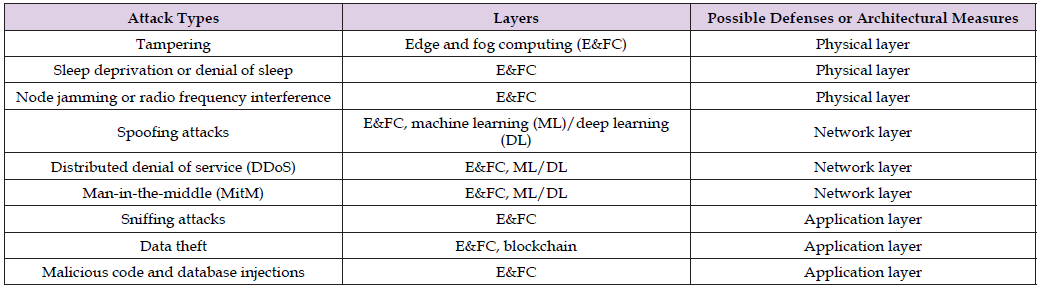
Network infrastructure devices include routers, firewalls, switches, servers, storage area networks, etc. Securing access to infrastructure devices, limiting unnecessary lateral communications, hardening network devices, physical or virtual separation of sensitive information, and implementing Out-of-Band management help secure network infrastructure (CISA, 2020). The Internet of Things (IoT) and the Internet of Medical Things (IoMT) have been applied in health care. (Table 1) (Alaba [10-12]) shows the layers classification of IoT. (Table 2) (Rangelov, et al. [13]) shows attack types, the layer targeted by an attack, and possible defenses or architectural measures in an urban IoT network. IoMT connects medical devices, health sensors, and health records to data platforms via wireless communication. A healthcare network is a kind of cyber-physical system. It includes IoT, embedded sensors, cloud computing, etc. There can be network security problems after a migration of the information system of a hospital to the cloud. Security problems can lead to 1) leakage of health data, and 2) loss or damage of the data (Gao [14]). Withthe intelligence of mobile terminal devices, a mobile healthcare network can present real-time communication and services in healthcare. However, security and privacy regarding healthcare data is a major concern. Ciphertext- policy attribute-based encryption can help protect security and privacy in a mobile healthcare network (Wang, et al. [15]). In Charleston Medical Center, blockchain helps not only to protect data but also to ensure that privacy standards such as the Health Insurance Portability and Accountability Act (HIPPA) are met (Kharatyan, et al. [16]).

Table 1: The Classification of IoT Layers.

biomedres-openaccess-journal-bjstr

Table 2: Classification of Attack Types, the Layer Targeted by an Attack, and Possible Defenses or ArchitecturalMeasures in an Urban IoT Network.

biomedres-openaccess-journal-bjstr


Security Awareness and Training Program

Due to attacks and service disruption in the hospitals and clinical environment, there is a high demand for delivering security awareness and training programs (e.g., training to detect phishing emails) for healthcare professionals, with participants being nurses, doctors, admin personnel, and management teams. The programs, together with internal auditing effectiveness, are significant. A cooperative and standardized approach to the development of security awareness and training programs is expected to support hospitals against cyberattacks (Nifakos, et al. [17]). Allemployees in the Medical Center should complete universal training annually, including

  1. Computers being covered with privacy screens.
  2. Not chatting about patients in public places.
  3. Regulations for Centers for Medicare & Medicaid Services and Medicaid.
  4. Not reading information from charts if you aren’t taking care of the patient.
  5. Biometric screening, barcodes for medication safety.

Identity and Access Management Plan

Hospitals leverage identity and access management to minimize the disruption of clinical and administrative workflows. Secure access enables the rapid expansion of personnel working remotely (Gellert, et al. [18]). Blockchain is helpful for identity and access management in healthcare. It is useful to exchange and secure patient data and healthcare information in hospitals, pharmaceutical companies, diagnostic labs, and for healthcare providers (e.g., physicians, nurse practitioners, and physician assistants). It helps to detect medical takes and dangerous incidents. Identity and access control settings and access control settings should be maintained up to date (Warsinske, et al.[5]). It is necessary to update the identity and access status of people who leave the Medical Center or change departments or jobs within the center. There are many devices (e.g., computers, laptops, and biometric devices) in the Medical Center. If an employee does not work in the center anymore, the employee will be asked to return devices that had been issued to him/her for work.

Security Assessment and Testing Strategic Plan

Security assessment and testing (Warsinske, et al. [5]) in the Medical Center include

  1. Regular vulnerability scans
    . 2) Reviews of user files and logs.
  2. Testing the network system and hosts.
  3. Assets tracking (such as medical devices, data extraction devices, and health data).
  4. Assessment of cloud vendors and third-party service providers.
  5. The susceptibility of employees to social engineering; and
  6. Privacy concerns about the collected data.

It is helpful to periodically check system and network security by conducting penetration testing. Penetration testing is an approach to checking the security of a system or computer network through performing an attacking simulation (Satria, et al. [19]). Penetration testing in healthcare is helpful for detecting vulnerabilities of health information systems (including hardware/ medical devices, operation systems, application software and tools, etc.), and patient information and databases.

Software Development Security Plan

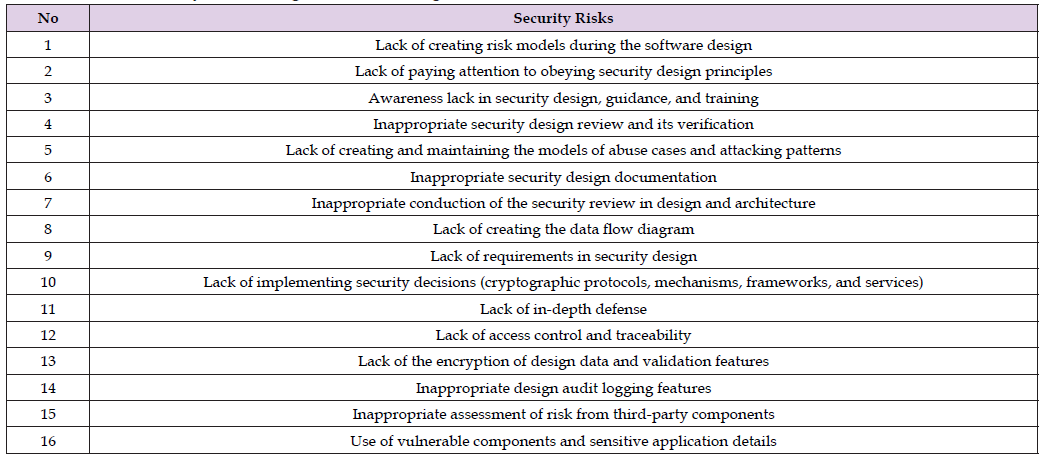
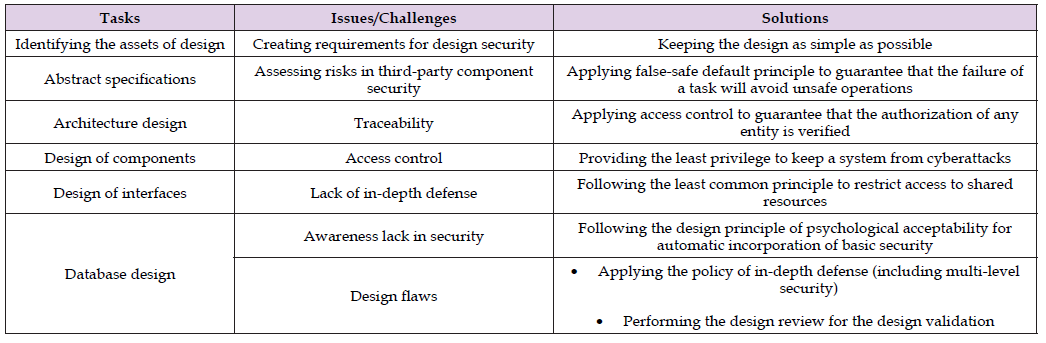
Software development security covers the security of the developmental environment, the security of software and components, application security, and the security of the developmental lifecycle (Warsinske, et al. [5]). There are possible troubles in vendor enterprises such as cyber theft. Research on developing a model of cyber security challenges helps vendors’ enterprises to recognize challenges in cyber security during software development (Khan, et al. [20]). (Table 3) lists some common security problems during the period of software design (Khan, et al. [21]). Tasks, challenges, and solutions during the period of the software design are listed in (Table 4) (Humayun, et al. [22]).

Table 3: Software Security Risks During the Software Design.

biomedres-openaccess-journal-bjstr

Table 4: Tasks, Issues/Challenges, and Solutions of the Design Phase.

biomedres-openaccess-journal-bjstr
Development of a Security Incident Report in a Large Medical Center: A Case Study

Detection

In Charleston Regional Medical Center, biometrics is used to detect internal events; fingerprinting (one of the biometrics) is used to detect pharmaceutical events at the site of medication administration; and computer screening is used to prevent patients or third parties from reading or accessing the chart. Both the Chief Information Officer (CIO) and the Chief Security Officer (CSO) in the Medical Center received ransomware emails. The information security team checked the log-in records in the information system and recognized a compromised username and password on one of the servers. The data (patient data and research data) breach in the Medical Center was detected by the information technology team and reported to the CIO, CSO, and management team.

Response

As soon as the incident/data breach was confirmed and triaged, the Medical Center began to organize response activities. Preparation was made and actions were taken in time to mitigate the cyberattack and damage. Initial response plans (Warsinske, et al. [5]) can include the following actions:

  • Disconnect the hardware that has been affected from the network, avoiding powering down and data (in volatile memory) loss.
  • Utilize integrity checking to guarantee that copies have all original data.
  • HIPPA (Health Insurance Portability and Accountability Act) secure emails—deidentified patient information

Mitigation

Mitigation is to stop an incident from getting worse. The first action is trying to perform the isolation or containing of the incident or data breach. The information security team and senior management in the Medical Center should determine whether the normal operational model is changed temporarily till the incident or data breach is completely resolved (Warsinske, et al. [5]). In addition, users are required to change their passwords, and all systems have the latest patches installed. It is also required to use multi-authentication including at least biometrics such as fingerprints in the access system. Access privilege policies are strictly implemented. Only authorized personnel can access patient data and research data. Privilege and authorization should be checked and audited on a regular basis in case some of the personnel changed their positions or left the Medical Center.

Reporting

Internal incident (data breach) reporting is given to both the CIO and the CSO in the Medical Center. The public relations officer will report the incident to the public. The center also needs to report the incident to customers (such as patients), partners (i.e., sister hospitals, etc.), service provider (i.e., access system) that associates with the incident, and related software/hardware suppliers or vendors. As a professional in security, how to handle breaches concerning personally identifiable information (PII) is a serious issue. Staff education and annual professional training are critical to reduce data breaches and mitigate cyberattacks on health data in the Medical Center. The professional training is provided to all employees in the Medical Center.

Recovery

A team with the proper training and skills of recovery should be formed before an incident. A recovery plan is started when the team responds to the incident. Services and capabilities are started to restore incrementally. It’s easier to restore a system after an isolated incident rather than widespread problems. This kind of problem can typically be fixed by recovering prior system backups and replacing attacked files with clean ones (Warsinske, et al. [5]). The access system in the Medical Center is replaced by an updated version with the protection of security tools. There are many tasks in the recovery list. The recovery team decides the priority sequence according to the significance levels of the tasks and take recovery actions, following the priority sequence.

Remediation

Remediation means a restoration from reduced functionality to full functionality. The fix after remediation frequently corresponds to a restoration to full functionality. The remediation stage covers necessary activities to deal with impairments due to an incident or data breach. A hands-on approach is sometimes needed for severe problems or in the absence of a recent system backup. In this situation, it is needed to restore the system from a generic baseline or restoration point (Warsinske, et al. [5]). This leaves the Medical Center with a fresh and newly installed system. The information technology team takes a leading role in the remediation process after cyberattacks. In many situations, especially severe cyberattacks, all employees in the Medical Center should be involved in the remediation process.

Lessons Learned (Debriefing)

This is the final phase, including examining anything, seeing how an incident response process can be improved, going through incident management steps, and questioning or critiquing everything. This helps decrease the probability or impact of future data breaches or incidents. Lessons learned should be used in the training of awareness to avoid future incidents (Warsinske, et al. [5]). The lessons from the incident/data breach in the Medical Center lies in the failure to implement the cybersecurity practice of data protection standards outlined in HIPAA. Physicians, nurses, and only authorized individuals can access the data in the systems of the Medical Center. The lessons from the failure in practice can be added in the annual professional training.

Integrated Cybersecurity Methodology

Cybersecurity planning helps the selection and implementation of security controls to mitigate risks/threats. How to inform defensive decision-making to mitigate risks/threats was studied with a focus on making integrated, interdependent planning decisions (DuBois, et al. [23]). An integrated cybersecurity and cyber-awareness strategy was presented that consists of three main steps: 1) the assessment of cybersecurity attitudes & behaviors 2) self-diagnoses, and 3) learning/ teaching activities. Table 5 shows some topics of training or learning/ teaching programs in cybersecurity (Antunes, et al. [24]). An interoperable pipeline was offered to integrate external artificial intelligence (AI) tools with electronic health records (EHRs) (Afshar, et al. [25]). An integrated cybersecurity method and supporting tools for a healthcare information system have been proposed based on the capability of integrating a medical practice system into a system of cyberattack detection, such as a SecurityInformation and Event Management System to congregate the security data from the components of systems, derive context for the analysis of use cases, and trigger the detection of anomalous behaviors (Coutinho, et al. [26]). It has been suggested that a completely integrated cybersecurity training platform should be created. The training platform needs more discreet, but realistic and comprehensive training in cybersecurity (Lee, et al. [27]).

Table 5: Some Topics Regarding Cybersecurity for Educational or Training Programs.

biomedres-openaccess-journal-bjstr


Risk Analysis and Mitigation Recommendations

Regardless of what SDLC (software development life cycle) model is utilized, secure software development should be integrated throughout it. Vulnerabilities result from not only bugs due to coding flaws, but also weaknesses due to incorrect trust assumptions, security configuration settings, and obsolete risk analysis (Souppaya, et al. [28]). (Table 6) (Nelson, et al. [29]) shows the suggested practices of radiation oncology for the preparation and response to cyberattacks. Using the secure software development framework helps an organization to meet the following recommendations of software development (Souppaya, et al. [28]):

  • Make sure that the people, technology, and processes have been prepared for the software development with strong security.
  • Keep all the components of the software from unauthorized access and tampering.
  • Develop secure software with the least vulnerabilities when it is released.
  • Detect residual vulnerabilities after the software is released and give a proper response to deal with the residual vulnerabilities so that similar vulnerabilities will be avoided.

Table 6: Suggested Cybersecurity Practices of Radiation Oncology

biomedres-openaccess-journal-bjstr


Conclusion

The rapid increase in digitalization and transfer of services to cyberspace leads to an increase in cyberattacks and incidents in cyberspace. Enterprises need to be prepared for multiple cyberattacks and global supply chains and healthcare facilities are under the threat of cybercrimes as private individuals are impacted and major disruption occurs. Significant financial and reputation damages occur to many facilities. With the digitalization of healthcare data, the loss of data and potential theft of data is great. Cybersecurity awareness is critical for healthcare systems. A business continuity plan is also essential for healthcare data to protect the data. Becoming cyber-aware is also key as hospital key personnel need to be aware of data loss. Password protection, biometrics, etc. are all protective devices for patient data. [30] Security assessment and testing for a secure plan is part of a robust program set by cybersecurity teams. Software security plans are also necessary for keeping up to date with cybersecurity programs. Integrated information security systems and cyberteams are necessary for ensuring that mobile data and healthcare data are protected. Risk identification and mitigation programs are necessary to prevent any theft of data. It is necessary to stay abreast of all threats and have a strong team prepared for every situation. Each team member must have the skills necessary for cybersecurity threats. Debriefing is probably the most essential skill which helps in forming future teams against future threats.

Acknowledgements

The authors would like to express thanks to Technology and Healthcare Solutions, USA for its help and support.

Conflict of Interest

The authors would like to announce that there is no conflict of interest.

Follow us on: Biomedical Journal Impact Factor: https://biomedres.us

https://scholar.google.com/citations?user=OFtUOZYAAAAJ&hl=en
https://www.base-search.net/Search/Results?lookfor=Biomed+Journal+of+Scientific+%26+Technical+Research&l=en&refid=dcsuggesten
https://citefactor.org/journal/2574-1241/biomedical-journal-of-scientific-technical-research
https://ideas.repec.org/s/abf/journl.html
https://econpapers.repec.org/article/abfjournl/
https://www.ncbi.nlm.nih.gov/nlmcatalog/101723284
https://bjstr.org/
https://bjstr.org/about.php
https://biomedres.us/reprints.php
https://biomedres.net/submit-manuscript.php
Journals on Biomedical Science | BJSTR

The Usage of FIKR (Facet, Insight, Knowledge and Resilience) Personality Assessment Tool for Biomedical Personnels: A Literature Review and Synthesis

Introduction

The personality profilings (PPs) have also been identified for social or helping occupations such as medical officials, nurses, medical doctors, and physical therapists (Cattell, et al. [1-4]). People in helping occupations tend to be above average in Extraversion. They also tend to be below average in Tough-Mindedness (in the Receptive/open direction) – above average in Sensitivity and Open-to-Change. They also tend to be below average on Anxiety and Emotionally Stable; and above average on Self-Control traits of Perfectionism and Rule-Consciousness. These results have been validated in various international samples, such as British counsellors of adolescents (Lee, [5]), and customer service personnel (Williams, [6]). In social and helping occupations, such as those in the biomedical field, professionals must possess technical skills and strong personal qualities such as empathy, emotional intelligence, and resilience (Arora, et al. [7]). These personal qualities are essential for building strong doctor-patient relationships, effective teamwork, and navigating challenging situations. Additionally, the FIKR ((Facet, Insight, Knowledge and Resilience) (Humanology, 2024) assessment tool can be a valuable resource for evaluating and developing these personal qualities in biomedical personnel. By using the FIKR assessment tool, biomedical personnel can better understand their strengths and weaknesses in facets such as empathy, emotional intelligence, knowledge, and resilience.

This understanding can help them improve their professional practice, enhance patient care, and ensure overall job effectiveness. Furthermore, the FIKR assessment tool can also aid in identifying areas where additional training or support may benefit biomedical personnel (Giesler, et al. [8-10]). Hence, this paper aims to review all the available literature using the keywords ‘Personality Doctor’ and ‘Personality Nurse’ in the Scopus database and identify the personality traits in FIKR PP for medical doctors and nurses.

Methodology

On 10 May 2024, the keywords ‘Personality Doctor’ and ‘Personality Nurse’ were used for the relevant publications in the article title. Later, bibliometric analyses using VOS viewer software (VOS stands for visualization of similarities – see http://www.vosviewer.com) were used to generate a clear graphical representation of bibliometric maps, especially for extensive datasets (Ellegaard, et al. [11-12]). Scopus comprises many significant research papers and offers integrated analysis tools for creating informative visual representations (Guz, et al. [13]). VOS viewer was employed to analyze each keyword, calculate links, calculate total link strengths, and compare co-occurrences with other keywords.

Results

The Scopus database had a high relevancy, and 77 papers were reached. To highlight the trends of studies conducted on the topic of ‘Personality Doctor’ from 1953 to 2024 (based on 77 papers from the Scopus database), a bibliometric analysis is performed using the VOSviewer software, as shown in Figure 1. Figure 1 gives a holistic overview of the past research based on keywords’ co-occurrences with ‘Personality Doctor’. The analysis reveals a discernible prominence reflecting seven significant clusters that can be identified based on visualization in Figure 1. A total of 115 items with 8 clusters is found (Figure 1). Interestingly, the personality traits identified are Neurosis and reliability (Cluster 1), self-concept (Cluster 2), and extraversion (Cluster 7). To highlight the trends of studies conducted on the topic of ‘Personality Nurse’ from 1927 to 2024 (based on 333 papers from the Scopus database), a bibliometric analysis is performed using the VOS viewer software, as shown in Figure 2. Figure 2 gives a holistic overview of the past research based on keywords’ co-occurrences with ‘Personality Nurse’. The analysis reveals a discernible prominence reflecting seven significant clusters that can be identified based on visualization in Figure 2.

Figure 1

biomedres-openaccess-journal-bjstr

Figure 2

biomedres-openaccess-journal-bjstr

A total of 155 items with 6 clusters are found (Figure 2). Interestingly, the personality traits identified are Extraversion (Cluster 1), empathy and resilience (Cluster 2), competence (Cluster 3), and self-concept (Cluster 4). However, it is argued that there has been a lack of studies on other personality traits for medical doctors and nurses (Figures 1 & 2), and thus, this has become a knowledge gap for future studies. Therefore, the present study highlights the 20 personality traits as an important PT that holds a reasonable novelty in the Humanology FIKR PP inventory in selecting the suitable medical doctors and nurses. Hence, there is a rationale to propose and highlight the use of personality traits in medical doctors and nurses. Therefore, this has become a novelty in this present paper (Figure 3).

Figure 3

biomedres-openaccess-journal-bjstr

Discussion

With the keywords ‘Personality Doctor’, two important personality traits (self-concept and extraversion) are identified. With the keywords ‘Personality nurse’, the personality traits including Extraversion, empathy and resilience, competence, and self-concept are identified. Since the two PTs namely self-concept and extraversion are found as important traits in both medical doctors and nurses, the following discussion are focussed on the two traits in this paper.

The Importance of Self-Concept

The field of healthcare is demanding and stressful, requiring doctors and nurses to constantly face challenging situations and high levels of responsibility. Therefore, the importance of self-concept and personality traits among doctors and nurses cannot be underestimated. Self-concept refers to how individuals perceive and evaluate themselves, including their beliefs, values, abilities, and overall self-image. Having a positive self-concept can greatly impact the job performance and well-being of healthcare professionals. Research has shown that healthcare professionals with high self-concept tend to have higher levels of job satisfaction, motivation, and engagement (Karanikola, et al. [14-17]). Additionally, personality traits play a crucial role in shaping the behaviour and performance of doctors and nurses. For example, doctors and nurses who possess empathy, patience, and compassion traits are more likely to establish strong patient relationships, effectively communicate with patients, and provide high-quality care. Furthermore, personality traits like conscientiousness and agreeableness are positively associated with job performance in the healthcare field. Hence, it is vital for healthcare organizations to emphasize the development and nurturing of positive self-concept and the desired personality traits among doctors and nurses.

The Importance of Extraversion

Among healthcare professionals such as doctors and nurses, extraversion is an important personality trait that can greatly impact their job performance and overall well-being. Research studies have shown that individuals with higher levels of extraversion tend to be more outgoing, sociable, and energetic. This can be particularly beneficial in healthcare settings where effective communication and teamwork are crucial (Kourkouta, et al. [18-21]). In addition, extroverted individuals are often more comfortable in social interactions, making building rapport with patients and colleagues easier. This can improve patient satisfaction and outcomes and enhance teamwork among healthcare professionals. Furthermore, extraversion can also contribute to better stress management and resilience in healthcare professionals. Overall, the importance of extraversion personality traits among doctors and nurses is evident in their ability to communicate effectively, collaborate effectively, and thrive in demanding healthcare environments. In sum, extraversion is a valuable personality trait among doctors and nurses as it enhances communication skills, fosters positive relationships with patients and colleagues, and improves stress management and resilience.

Advantages of FIKR Assessment

The advantages of using FIKR PP assessment too for biomedical personnels are presented in (Figure 1).

Facet

FIKR tool offers detailed insights into personality, aiding biomedical personnels’ self-understanding. Good medical personnel possess certain personality traits that contribute to their effectiveness in providing quality care to patients. These traits include empathy, compassion, good communication skills, adaptability, and a strong work ethic (Arora, et al. [7]). These traits enable medical professionals to establish strong doctor-patient relationships, work effectively in teams, and handle difficult situations with professionalism and emotional intelligence. They are able to connect with patients on a deeper level, understanding their emotions and perspectives, and provide care with empathy and compassion.

Insight

Using FIKR tool enhances self-awareness and professional growth for biomedical personnels. Healthcare is a field that requires individuals with insightful personalities to excel in providing quality care to patients. These individuals possess a deep understanding and perception of the needs and concerns of their patients, allowing them to make informed decisions and provide effective treatment. They are able to empathize with patients, listen attentively, and ask relevant questions to gather important information (Arora, et al. [7]). Additionally, individuals with insightful personalities in the medical field are able to think critically and problem solve effectively. They are able to analyze complex medical conditions and situations, identify patterns and trends, and come up with innovative solutions.

Knowledge

FIKR tool helps biomedical personnels learn about strengths and areas for improvement. A knowledgeable personality is crucial for a good medical personnel. They need to possess a deep understanding of medical concepts, procedures, and treatments in order to provide the best possible care for their patients. Furthermore, a knowledgeable medical personnel will stay updated on the latest research and advancements in their field, allowing them to provide evidence-based care that is both effective and safe. Their knowledge will also enable them to accurately diagnose and treat medical conditions, as well as educate their patients on preventative measures and healthy lifestyle habits. In addition, a knowledgeable medical personnel will be able to effectively communicate complex medical information to patients in a way that is easy to understand (Kourkouta, et al. [18,22-23]).

Resilience

FIKR tool helps biomedical personnels build resilience by coping effectively with challenges. Resilience is an essential trait for medical personnel to possess in order to effectively navigate the challenges and pressures of their profession. Nurses, in particular, face numerous modern-day problems that can impact their ability to remain resilient. These challenges include increasing workloads, dealing with complex patients and medical conditions, facing ethical dilemmas, and maintaining a healthy work-life balance. Having a resilient personality allows medical personnel to face adversity, remain focused, and maintain an optimistic outlook for the future. By developing resilience, medical personnel are better equipped to cope with stress, handle difficult situations, and bounce back from setbacks. Resilience enables medical personnel to continue providing high-quality care to patients, despite facing adverse circumstances. To develop resilience, medical personnel can benefit from intrapersonal characteristics such as hope, self-efficacy, and coping mechanisms (Turner, et al. [24-29]).

Understanding

FIKR tool deepens self-awareness, fostering better relationships for biomedical personnels. Overall, the FIKR assessment tool’s potential to enhance personal qualities such as empathy, emotional intelligence, and resilience among biomedical personnel aligns with the ever-increasing focus on patient-centered care and interprofessional collaboration in the biomedical field. Its comprehensive approach can contribute to improved patient outcomes, job satisfaction, and the overall effectiveness of social and helping occupations in the biomedical field. For nurses, the FIKR assessment tool can help assess and develop their empathy, emotional intelligence, knowledge, and resilience. This tool can aid nurses in understanding their strengths and areas for improvement. It can provide valuable insights into enhancing patient interactions, teamwork, and overall job performance. Furthermore, for other biomedical personnel such as medical laboratory workers and pharmacists, the FIKR tool can assess and develop their personal qualities, allowing them to provide better patient support and care. For doctors, developing strong personal qualities such as empathy and emotional intelligence can contribute to better doctor- patient relationships, improved communication, and ultimately better patient outcomes (Arora, et al. [7]). Utilizing the FIKR assessment tool in the biomedical field can help doctors and other medical professionals enhance their emotional understanding, improve professionalism, and strengthen their ability to navigate complex and challenging situations in the healthcare setting.

This tool can also assist in identifying biomedical personnel who may be more inclined to engage in counterproductive behaviour, allowing for proactive interventions and support to prevent such behaviours. Therefore, for biomedical personnel, such as nurses and medical doctors, the FIKR tool can be valuable in assessing and developing their personal qualities for success in their social/helping occupations. The FIKR assessment tool can provide valuable insights into biomedical personnel’s strengths and areas for improvement, helping them enhance their empathy, emotional intelligence and resilience. This can lead to improved patient care, better teamwork, and increased job satisfaction in the biomedical field. In the biomedical field, the FIKR assessment tool can be used to evaluate and strengthen the personal qualities of empathy, emotional intelligence, and resilience among biomedical personnel (Magnier, et al. [30-31]). The FIKR assessment tool holds significant potential in the biomedical field. It offers a comprehensive approach to evaluating and developing the personal qualities necessary for success in social and helping occupations. The tool’s focus on empathy, emotional intelligence, knowledge, and resilience aligns well with the demands of the healthcare environment (Millis, et al. [32-34]).

Conclusion

The FIKR assessment tool has the potential to significantly contribute to the success and effectiveness of biomedical personnel, especially medical doctors and nurses working in hospitals. Its ability to assess and enhance important personal qualities such as cultural empathy, open-mindedness, emotional stability, social initiative, and flexibility makes it valuable for fostering strong doctor-patient relationships, promoting teamwork, and supporting professionalism and systems-based practice. Hence, the use of the FIKR personality inventory can be an effective assessment tool, especially for medical doctors and nurses.

Follow us on: Biomedical Journal Impact Factor: https://biomedres.us

https://scholar.google.com/citations?user=OFtUOZYAAAAJ&hl=en
https://www.base-search.net/Search/Results?lookfor=Biomed+Journal+of+Scientific+%26+Technical+Research&l=en&refid=dcsuggesten
https://citefactor.org/journal/2574-1241/biomedical-journal-of-scientific-technical-research
https://ideas.repec.org/s/abf/journl.html
https://econpapers.repec.org/article/abfjournl/
https://www.ncbi.nlm.nih.gov/nlmcatalog/101723284
https://bjstr.org/
https://bjstr.org/about.php
https://biomedres.us/reprints.php
https://biomedres.net/submit-manuscript.php
Journals on Medical Casereports |BJSTR

Using Chinese Herbal Medicine to Treat Cancer Patients: A Study Incorporating Artificial Intelligence

Introduction

In recent decades some western physicians have incorporated elements of Traditional Chinese Medicine (TCM) into their medical practices. A body of English language literature is now available for reference purposes for physicians and other healthcare professionals who may not be familiar with what TCM has to offer [1-21]. TCM can be subdivided into several branches, including acupuncture, acupressure, tai chi, qigong [22-49] and herbal medicine. The present study focuses on the use of Chinese herbal medicine (CHM) in the treatment of cancer patients. For medical practitioners who may not be familiar with the use of Chinese herbal medicines, a good place to quickly learn the basics would be to do a search using artificial intelligence (AI). The use of AI for medical research has become popular in recent years [50-76] and will likely become a major medical research tool in the future, as AI becomes more sophisticated and widespread.

The Study

For medical professionals who want to learn some basics quickly and easily, a good place to start would be to do a search using AI. The present study uses Microsoft Copilot [77], which, as of this writing, is one of the more popular AI bots. The first step is to formulate a command or instruction that Copilot can use to retrieve the information needed. The instruction must not be too broad. However, for purposes of this article, we will start with a rather broad instruction so that the reader can become familiar with the basics of Chinese herbal medicine.

Instruction

Write an essay on Chinese herbal medicine. The essay should be aimed at a medical professional who is not familiar with Chinese herbal medicine and who wants to learn the basics. Include references.

The Reply

Certainly! Here’s a concise essay introducing Chinese herbal medicine to medical professionals who are new to this field.

Chinese Herbal Medicine: An Introduction for Medical Professionals

Overview

Chinese herbal medicine (CHM) is an integral part of Traditional Chinese Medicine (TCM), which has evolved over thousands of years. TCM practitioners use various approaches, including acupuncture, tai chi, and herbal products, to address health problems. In this essay, we’ll focus on the basics of Chinese herbal medicine.

Key Components of Chinese Herbal Medicine

Herbal Formulas:

  • CHM relies on complex herbal formulas, which combine multiple herbs to achieve specific therapeutic effects.
  • These formulas are tailored to individual patients based on their unique patterns of disharmony.

Herb Selection and Preparation:

  • CHM uses a vast array of plant-based materials, including roots, leaves, stems, and flowers.
  • Herbs are often combined to enhance efficacy and minimize side effects.
  • Traditional methods of preparation include decoctions (boiling herbs), powders, pills, and teas.

Patterns of Disharmony:

  • TCM diagnoses patients based on patterns of disharmony (e.g., excess, deficiency, heat, cold).
  • Herbs are selected to rebalance these patterns and restore harmony.

Effectiveness and Safety

Acupuncture:

  • Acupuncture stimulates specific points on the body using thin needles.
  • Research suggests that acupuncture may help manage chronic pain conditions, such as low-back pain, osteoarthritis, and migraines1.

Tai Chi:

  • Tai chi combines gentle movements, mental focus, and relaxation.
  • It improves balance, reduces pain from knee osteoarthritis, and enhances quality of life1.

Chinese Herbal Products

  • Studies on Chinese herbal products have yielded mixed results due to varying quality.
  • Safety concerns include contamination and manufacturing errors2.

References

  1. National Center for Complementary and Integrative Health (NCCIH). Traditional Chinese Medicine: What You Need To Know [78].
  2. Abdelhamid, Y. (2023). What Is Traditional Chinese Medicine?[ 79].

Remember that while CHM has a rich history, it’s essential for medical professionals to approach it with an open mind and collaborate with TCM practitioners to provide holistic care for patients.

Author Note

Notice that Copilot provided some basic information about Chinese herbal medicine but also included irrelevant information about acupuncture and tai chi. Although acupuncture and tai chi are tools in the TCM toolbox, the essay was supposed to be limited to a discussion of Chinese herbal medicine. The reason I mention this flaw is to point out the inefficiency of using AI to obtain relevant information about a specific topic. A Google search might have provided more targeted information, although perhaps not in an efficient format. AI efficiency will likely improve as AI bots become more sophisticated, but for now, researchers must be content with whatever information AI generates, which may not always be what the researcher wants. Also notice that the references it gave were incomplete. However, it did provide the references in the form of a hot link, which directs the reader to the actual publication. An examination of the Abdelhamid citation [79] found an error. The article referred to was actually published in 2022, not 2023. Now that the reader has obtained some very basic information about Chinese herbal medicine, it is time to focus on a more precise target – the use of Chinese herbal medicine to treat cancer patients. The more detailed the instruction, the better the reply is likely to be.

Instruction

How can Chinese herbal medicine (CHM) be used to treat cancer patients? Which herbs have been found to be effective? Cite some studies that have found CHM to be effective. Summarize their findings and provide citations.

Author Note

Copilot started to provide a reply, then stopped. When I asked it to continue, it continued, but omitted items 3 through 10. This kind of glitch happens sometimes, although not as frequently now as in the recent past, when ChatGPT3.5 was the leading chat bot. Researchers who experience such a glitch can overcome it by simply asking Copilot or other chat bot to either finish the essay or write a new essay. When I asked Copilot to rewrite the essay from scratch, it gave the following reply.

The Reply: I apologize for the oversight. Let’s revisit the list of Chinese herbs used in cancer treatment, including items 3 to 10:

  1. Curcumin
    o Derived from turmeric, curcumin has anti-proliferative and pro-apoptotic effects.
    o Clinical studies are limited, but it shows promise.
  2. Epigallocatechin gallate (EGCG)
    o Found in green tea, EGCG targets the laminin receptor and has potential in treating prostate cancer.
  3. Berberine
    o Derived from various plants, berberine exhibits anti-cancer properties.
    o Its effects on cancer immunity need further investigation.
  4. Artemisinin
    o Derived from sweet wormwood (Artemisia annua), artemisinin has anti-proliferative and anti-metastatic effects.
    o It’s used in combination therapies for cancer treatment.
  5. Ginsenoside Rg3
    o Ginseng-derived ginsenoside Rg3 inhibits P-glycoprotein activity, reversing multidrug resistance in cancer cells.
  6. Ursolic Acid
    o Found in various herbs, ursolic acid has anti-cancer effects.
    o Its clinical applications are still under investigation.
  7. Silibinin
    o Derived from milk thistle, silibinin shows anti-angiogenic effects.
    o Research continues to explore its potential in cancer therapy.
  8. Emodin
    o Emodin, from rhubarb, exhibits anti-proliferative effects.
    o Its clinical applications require further study.
  9. Triptolide
    o Derived from thunder god vine, triptolide has anti-cancer properties.
    o Its mechanism of action and clinical applications are being investigated.
  10. Cucurbitacin B
    o Found in various cucurbitaceous plants, cucurbitacin B has anti-cancer effects.
    o Its potential in combined therapy needs exploration.
  11. Tripterygium wilfordii Hook F (TwHF)
    o Also known as “lei gong teng,” TwHF has been used in CHM for centuries.
    o Triptolide, an active compound in TwHF, exhibits anti-inflammatory and anti-cancer effects.
    o Studies suggest its potential in treating various cancers, including pancreatic, liver, and breast cancer.
  12. Astragalus Membranaceus (Huang Qi)
    o Huang Qi is an immune-modulating herb.
    o It enhances immune function and reduces chemotherapy- induced side effects.
    o Clinical trials show improved quality of life and prolonged survival in cancer patients.
  13. Ganoderma lucidum (Lingzhi/Reishi)
    o Lingzhi is a medicinal mushroom with immunomodulatory properties.
    o It enhances immune responses and may inhibit tumor growth.
    o Research supports its use as an adjunctive therapy in cancer management.
  14. Oldenlandia diffusa (Bai Hua She She Cao)
    o Bai Hua She She Cao has anti-cancer effects.
    o Studies indicate its potential in treating lung, liver, and breast cancer.
  15. Sophora flavescens (Ku Shen)
    o Ku Shen contains matrine and oxymatrine, which exhibit anti- cancer properties.
    o Research suggests their efficacy against leukemia, liver cancer, and gastric cancer.
  16. Salvia miltiorrhiza (Dan Shen)
    o Dan Shen improves microcirculation and reduces oxidative stress.
    o It may enhance the effectiveness of chemotherapy and radiation therapy.
  17. Polygonum cuspidatum (Hu Zhang)
    o Hu Zhang contains resveratrol, known for its anti-cancer effects.
    o Studies highlight its potential in breast, prostate, and colorectal cancer.
    Remember that while these herbs show promise, individual responses can vary. Always consult with a qualified healthcare professional before integrating CHM into cancer treatment. For a comprehensive understanding, refer to the review by Luo et al. (2019).

Author Note

This reply was much better than the first reply, which gave some irrelevant information about acupuncture and tai chi. It cited two references [80-81]. The second one [81] was incomplete, but better than nothing. The information given provides a good starting point for further research. It should be pointed out that medical professionals need to verify the accuracy of the information just provided, since prior studies have found that AI can sometimes give information that is inaccurate [82]. AI can be used as a starting point for medical (and other) research, but it should not be the only research that is done, since its results need to be verified.

One can dig deeper into the subject by asking additional questions. For example,

Instruction

How do Chinese herbal compounds affect cancer cells? Write a brief essay and provide references.

Reply

Certainly! Chinese herbal medicine has a long history of use in cancer treatment. Numerous natural compounds derived from these herbs exhibit anti-cancer effects. Let’s delve into some key points:

  1. Anti-Cancer Compounds from Chinese Herbal Medicine
    o Curcumin: Derived from turmeric, curcumin has anti-proliferative and pro-apoptotic effects. It induces autophagy and enhances apoptotic cell death [83].
    o Epigallocatechin gallate (EGCG): Found in green tea, EGCG targets receptors and shows efficacy in treating prostate cancer [83].
    o Berberine: Extracted from various plants, berberine has anti- inflammatory and anti-cancer properties.
    o Artemisinin: Derived from sweet wormwood, artemisinin exhibits anti-metastatic and anti-angiogenic effects.
    o Ginsenoside Rg3: Ginseng-derived compound that inhibits P-glycoprotein activity, reversing multidrug resistance [83]. o Ursolic acid, Silibinin, Emodin, and others also contribute to anti-cancer effects.
  2. Mechanisms of Action
    o These compounds regulate autophagy, enhance chemotherapy, and balance immunity.
    o Some directly target cancer cells, while others modulate the tumor microenvironment.
    o EGCG, for instance, inhibits Laminin receptor (Lam 67R), impacting cancer cell growth [83].
  3. Clinical Studies and Immunomodulation:
    o Evidence on immunomodulatory effects and clinical trials of these compounds is limited.
    o Further research is needed to explore their mechanisms as immune checkpoint modulators [83].
  4. References

o Luo, H., Vong, C. T., Chen, H., Gao, Y., Lyu, P., Qiu, L., … & Wang, Y. (2019). Naturally occurring anti-cancer compounds: shining from Chinese herbal medicine. Chinese Medicine, 14, 48 [83] o Read the full article here. In summary, Chinese herbal compounds offer promising avenues for cancer therapy,

Author Note

The response was good, although brief. There was also some repetition with the prior replies.

Instruction

What role does Chinese herbal medicine play in cancer palliative care? Write a brief essay and provide references.

Reply

Certainly! Chinese herbal medicine (CHM) has gained attention as a complementary approach in cancer palliative care. Let’s explore its role:

  1. Symptom Management
    o CHM is commonly used to alleviate cancer-related symptoms such as pain, fatigue, nausea, and insomnia.
    o Herbal formulations can improve quality of life by addressing physical and emotional distress.
  2. Quality of Life Enhancement
    o CHM may enhance overall well-being, reduce anxiety, and promote relaxation.
    o Patients often report improved energy levels and better emotional balance.
  3. Safety and Adverse Effects
    o Studies show that CHM is generally safe, with minimal adverse effects.
    o It can be a valuable option for patients seeking holistic care.
  4. Survival and Toxicity
    o Evidence on CHM’s impact on survival is inconclusive.
    o Some studies suggest potential benefits, but more research is needed.
    o CHM may help reduce chemotherapy and radiotherapy-related toxicities.
  5. References
    o Chung, V. C., Wu, X., Hui, E. P., Ziea, E. T., Ng, B. F., Ho, R. S., … & Wu, J. C. (2015). Effectiveness of Chinese herbal medicine for cancer palliative care: overview of systematic reviews with meta- analyses. Scientific Reports, 5, 18111[84].
    o Read the full article here.
    In summary, CHM can contribute to symptom relief and improved quality of life in cancer patients receiving palliative care. However, its impact on survival remains uncertain.

Author Note

Again, the reply was brief, but provided some useful information, which can be used as the basis for further research.

Instruction

What are the limitations and potential risks of using Chinese herbal compounds to treat cancer patients? Write a brief essay and provide references.

Reply

Certainly! Chinese herbal medicine (CHM) has gained attention as a complementary approach in cancer treatment. However, it’s essential to consider both the potential benefits and limitations:

  1. Lack of Standardization
    o CHM formulations vary widely, making it challenging to standardize dosages and quality.
    o Inconsistent potency and purity can affect efficacy and safety.
  2. Herb-Drug Interactions
    o CHM may interact with conventional cancer drugs, affecting their effectiveness.
    o Patients should inform their oncologists about CHM use to prevent adverse interactions[ 85].
  3. Limited Clinical Evidence
    o While some studies show positive effects, robust clinical evidence is lacking.
    o Rigorous randomized controlled trials are needed to validate CHM’s efficacy.
  4. Risk of Toxicity
    o Certain herbs may have toxic components or contaminants.
    o Long-term use without supervision can lead to adverse effects.
  5. Patient Variability
    o Responses to CHM vary among individuals due to genetic factors.
    o Personalized approaches are crucial for optimal outcomes.
  6. References
    o KPC. (2023). Exploring a new study: Using Chinese herbs to treat cancer [85].
    o Cochrane. (n.d.). Chinese medicinal herbs for the treatment of side-effects from chemotherapy in breast cancer patients [86]. In summary, while CHM shows promise, cautious integration with conventional treatments and close monitoring are essential to mitigate risks.

Author Note

Again, the information given was brief but to the point. The second reference given [86] was inaccurate but useful. It listed Cochrane with no date, but actually, if one follows the link provided, the actual authors, date and complete citation are available.

Concluding Comments

This study shows that artificial intelligence can be used to generate useful information about the possible applications of Chinese herbal compounds to treat cancer patients. It also shows that the information obtained might be superficial, incomplete and perhaps inaccurate at times. Thus, the use of artificial intelligence to conduct research on cancer, and perhaps thousands of other topics, can be the first step in a research project, but should not be the last. The information obtained must be verified for accuracy and completeness. If further research needs to be done of a particular medical topic, and to place to obtain more detailed information would be the PubMed website [87]. This website is one of several excellent sources of information on a wide range of medical issues and studies. A search of “Chinese herbal” and “cancer” received 1,315 hits. Thus, much more information is available on this topic [88-114]. Some studies examining the use of CHM on cancer therapy include the regulation of immunity [89], gastric cancer [92, 95, 109-110], liver cancer [93], chemoprevention and therapy [94], oesophageal cancer [96], cervical cancer [97], oral cancer [98], hepatocellular carcinoma [99-100, 113], lung cancer [101], prostate cancer [102], colorectal cancer [103, 112], symptom management in palliative care [104], pancreatic cancer [105], cancer related fatigue [106], reactive oxygen species [107], breast cancer [108, 114], and chemotherapy-induced nausea and vomiting [111], to name a few.

Follow us on: Biomedical Journal Impact Factor: https://biomedres.us

https://scholar.google.com/citations?user=OFtUOZYAAAAJ&hl=en
https://www.base-search.net/Search/Results?lookfor=Biomed+Journal+of+Scientific+%26+Technical+Research&l=en&refid=dcsuggesten
https://citefactor.org/journal/2574-1241/biomedical-journal-of-scientific-technical-research
https://ideas.repec.org/s/abf/journl.html
https://econpapers.repec.org/article/abfjournl/
https://www.ncbi.nlm.nih.gov/nlmcatalog/101723284
https://bjstr.org/
https://bjstr.org/about.php
https://biomedres.us/reprints.php
https://biomedres.net/submit-manuscript.php

Open Access journals on surgery |BJSTR

The Aggrandized Cavalcade Columnar Cell Hyperplasia

Editorial

Columnar cell hyperplasia breast is constituted of enlarged terminal duct lobular units [TDLUs] delineating irregular distension of acini. Terminal duct lobular units composed of mammary gland acini are layered by columnar epithelial cells and commonly expound intraluminal secretions and calcification. Generally, lesion is devoid of low grade cytological atypia as observed with flat epithelial atypia or architectural atypia encountered within atypical ductal hyperplasia or ductal carcinoma in situ. As per World Health Organization [WHO] categorization, lesion may be additionally designated as columnar cell change or columnar cell hyperplasia. Notwithstanding, nomenclature as blunt duct adenosis, columnar alteration of lobules, columnar metaplasia, hyperplastic unfolded lobules, hyperplastic enlarged lobular units or enlarged lobular units with columnar alteration are not recommended. Besides, lesions exemplifying cytological atypia are denominated as flat epithelial atypia [FEA]. Commonly implicating breast terminal duct lobular unit, columnar cell lesions as columnar cell changes or columnar cell hyperplasia and flat epithelial atypia may be encountered in ~42% of surgical specimens evaluated for presence of calcification [1,2].

Of obscure etiology, tumefaction may represent as an antecedent non-obligate precursor within low grade breast neoplasia pathway and manifests as an indicator of potential cellular and nuclear atypia within concurrent breast lesions [1,2]. Columnar cell hyperplasia expresses loss of chromosome 16q. Generally, columnar cell hyperplasia enunciates minimal prevalence of molecular alterations. However, progressive accumulation of allelic denaturation through a morphological continuum of columnar cell hyperplasia, atypia and invasive carcinoma breast may emerge [2,3]. Columnar cell hyperplasia is devoid of specific clinical features. Commonly, tumefaction is discerned upon screening mammography, especially lesions associated with micro-calcification [2,3]. Cytological examination expounds variable cellular and nuclear atypia wherein distinction from diverse papillary neoplasms or well differentiated adenocarcinoma may be challenging. Neoplasm is composed of flattened cellular sheets.

Tumor cells configure three dimensional cellular clusters composed of polygonal epithelial cells delineating a distinct cellular perimeter. Tumor cells are permeated with finely granular cytoplasm and enlarged nuclei. Few myoepithelial cells appear commingled with neoplastic cells wherein palisading columnar epithelial cells are disseminated peripherally [3,4]. Grossly, columnar cell hyperplasia is devoid of specific macroscopic features. Upon microscopy, columnar cell change implicates terminal duct lobular units with the occurrence of irregular, variably distended acini. Breast acini are layered with singular or dual epithelial cell layers wherein layering epithelial cells expound uniform, ovoid to elongated nuclei which are oriented perpendicular to basement membrane. Tumor cells frequently depict apical snouts. Intra-luminal secretions and calcification may be observed [3,4]. Columnar cell hyperplasia exemplifies irregular, variably distended acini of terminal duct lobular unit. Breast acini are layered with stratified epithelial cells constituted of ≥ 2 cell layers.

Epithelial cells may configure tufts or mounds. Layering epithelial cells are impregnated with uniform, ovoid to elongated nuclei which appear to articulate nuclear crowding and overlapping. Apical snouts are frequently discerned. Intra-luminal secretions and calcification may be discerned [3,4]. Columnar cells change or columnar cell hyperplasia demonstrating cytological atypia is constituted of tumor cell impregnated with spherical nuclei delineating irregular nuclear chromatin, variably prominent nucleoli, and enhanced nucleocytoplasmic ratio. Aforesaid lesions may be categorized as flat epithelial atypia. Tumor cells expound loss of orientation and appear perpendicular w.r.t basement membrane. Notwithstanding, morphological variations as rigid bars, arcades and true micro-papillary articulations are encountered within atypical ductal hyperplasia or low-grade ductal carcinoma in situ [3,4] (Figures 1 & 2).

Figure 1

biomedres-openaccess-journal-bjstr

Figure 2

biomedres-openaccess-journal-bjstr

Columnar cell hyperplasia expounds diffuse, intense immune reactivity to estrogen receptors [ER] and progesterone receptors [PR], low molecular weight keratins as CK8, CK18, CK19, BCL2 or E-cadherin. Tumor cells appear immune nonreactive to high molecular keratin as CK5, CK5/6 or 34β E12 [5,6] (Table 1). Columnar cell hyperplasia breast requires segregation from neoplasms as mammary gland cyst, apocrine metaplasia, cystic hyper-secretory hyperplasia, flat epithelial atypia, atypical ductal hyperplasia, low grade ductal carcinoma in situ or ductal carcinoma in situ, clinging subtype [5,6]. Neoplasm may be appropriately ascertained by histological assessment of image guided core needle biopsy or surgical excision specimens. Upon mammographic imaging, heterogeneous, dense breast tissue appears admixed with clusters of fine or amorphous, pleomorphic calcification. However, imaging features as branching of micro-calcification are infrequently observed [5,6]. Surgical excision appears superfluous in instances where columnar cell change or columnar cell hyperplasia devoid of atypia emerges as a significant morphological feature upon evaluation of core needle tissue biopsy specimens [5,6].

Table 1: Lifetime Risk of Carcinoma Breast in Benign Breast Disease [4].biomedres-openaccess-journal-bjstr

Additionally, adjuvant therapeutic intervention of preponderant columnar cell lesion discerned upon histological assessment of surgical [7,8] excision specimens appears unnecessary. Proportionate emergence of malignant metamorphosis and invasive carcinoma breast is minimally enhanced with a relative risk of ~1.5. However, possible malignant transition of columnar cell changes or columnar cell hyperplasia appears concordant with concurrent proliferative breast lesions [5,6]. Columnar cell hyperplasia may be concordant with diverse breast lesions pre-eminently associated with low grade breast neoplasia pathway as flat epithelial atypia, atypical ductal hyperplasia, low grade ductal carcinoma in situ or lobular neoplasia [5,6].

Follow us on: Biomedical Journal Impact Factor: https://biomedres.us

https://scholar.google.com/citations?user=OFtUOZYAAAAJ&hl=en
https://www.base-search.net/Search/Results?lookfor=Biomed+Journal+of+Scientific+%26+Technical+Research&l=en&refid=dcsuggesten
https://citefactor.org/journal/2574-1241/biomedical-journal-of-scientific-technical-research
https://ideas.repec.org/s/abf/journl.html
https://econpapers.repec.org/article/abfjournl/
https://www.ncbi.nlm.nih.gov/nlmcatalog/101723284
https://bjstr.org/
https://bjstr.org/about.php
https://biomedres.us/reprints.php
https://biomedres.net/submit-manuscript.php

Medical Journal in usa |BJSTR

Beneficial Health Effects of the Combined Application of the Qi Quant BRIGHT Energy Plate and the Qi Quant Regeneration Plate 3.0

Introduction

Cell metabolism is a fundamental process that plays a critical role in maintaining vitality and overall health in the body. Within the complex network of cells, various metabolic pathways work together to produce energy, synthesize essential molecules, and regulate cellular functions. One key player in this process is the connective tissue fibroblast, a type of cell that is essential for maintaining the structural integrity of tissues and organs [1,2]. The metabolic activity of fibroblasts is essential for maintaining the health and function of connective tissues throughout the body. By producing energy through processes such as glycolysis and oxidative phosphorylation, fibroblasts ensure that tissues have the necessary resources to repair and regenerate when needed. Additionally, fibroblasts are involved in the synthesis of collagen and other extracellular matrix components, which are essential for tissue repair and maintenance [3]. In addition to their structural role, fibroblasts also play a role in cell metabolism by secreting growth factors and cytokines that regulate cellular activities such as proliferation, differentiation, and inflammation [4-6].

Especially the inflammatory process is a fundamental physiological response of the body to injury, infection, or harmful stimuli. It serves as a protective mechanism aimed at eliminating the initial cause of cell injury, clearing out damaged cells and tissues, and establishing a repair process. This complex biological response involves the activation of neutrophils as inflammation mediating cells which invade the inflamed tissue after the release of cytokines and other mediators [7-9]. Recently we have demonstrated the effectiveness of the Qi Quant Regeneration Plate 3.0 which was able to reduce oxidative stress acting on intestinal epithelial cells [10]. Moreover, we could also show a marked anti-inflammatory potential by reducing the generation of superoxide anion radicals by functional neutrophils. In the present study we examined whether the combination of both plates, Qi Quant BRIGHT Energy Plate and Qi Quant Regeneration Plate 3.0, results in even more pronounced beneficial effects at the cellular level.

Materials and Methods

Qi Quant BRIGHT Energy Plate

According to the information of the manufacturer, the new intelligent energy plate named BRIGHT supplies our body with energizing vital frequencies. By supplying the optimum vital frequency spectrum of the Qi Quant Technology, the energy potential of the cells is immediately charged. As the absorption capacity varies from user to user depending on their current situation, the Qi Quant BRIGHT Energy Plate has a special measuring module that analyses the user’s present energy potential. This enables the user to supply the system with a precise and harmonized energy level. This adjustment takes place during the entire application time. This ensures that neither over-energization nor an energetic undersupply can occur. For the experiments described here, the BRIGHT Energy Plate powered by Qi Quant Technology was kindly provided by Qi Life Energy GmbH, A-8775 Kalwang, Austria.

Qi Quant Regeneration Plate 3.0

According to the manufacturer, the Qi Quant Regeneration Plate 3.0 should be positioned under the bed. The plate produces a vital field with a frequency pool containing all important regeneration frequencies within a radius of 90 cm. The body’s own energy field only resonates with those frequencies that are required for an optimal supply of energy to the cells. The field strength of the vital field is adjusted in such a way that the energy system cannot be over-energized. The effect of the regeneration plate on the user can only be seen energetically and includes all known recovery support of energetics such as deep restful sleep, harmonization for body, mind and soul, removal of energetic blockages, opening of the energy flow, and, finally, protection against unwanted environmental pollution and influences such as geopathogenic interference zones, electromagnetic fields and others. Thus, the energy potential of the cells is gently built up again during sleep. For the experiments described here, the Regeneration Plate 3.0 powered by Qi Quant Technology was kindly provided by Qi Life Energy GmbH, A-8775 Kalwang, Austria.

Cell Culture

The studies were performed with two different cell lines: (1) Connective tissue fibroblasts (cell line L-929, ACC-2; Leibniz Institute DSMZ, Braunschweig, Germany). (2) Human promyelocytes (cell line HL-60; ACC-3; ECACC 98070106; Leibniz Institute DSMZ, Braunschweig, Germany).

Cells were routinely cultured in RPMI 1640 supplemented with 10% growth mixture and 0.5% gentamycin in incubator at 37°C and an atmosphere of 5% CO2 and 95% air at almost 100% humidity.

Basal Metabolism of Connective Tissue Fibroblasts

For the experiments, cells from mass cultures were seeded in 96- well culture plates (200μl culture medium/well) at a cell density of 50,000 cells/well and incubated for 24 hours until the cells had completely adhered. The cell cultures were first placed on the Qi Quant Energy Plate for 5 min and then immediately on the Qi Quant Regeneration Plate for 10 min. The untreated control cultures were simultaneously placed for 15 minutes about 7 meters away and separated by several house walls. Cells were incubated for 24 hours. Thereafter, a reaction mixture consisting of phosphate buffered saline with 10 mM glucose as an energy source and the tetrazolium dye WST-1 (Sigma-Aldrich, Taufkirchen, Germany) was added to the cells. The cleavage of the dye is directly proportional to the mitochondrial dehydrogenases activity and the cellular energy metabolism.

Finally, the optical density was measured as a difference measurement ΔOD = 450 – 690 nm at definite time points by an Elisareader (BioTek ELx808 with software Gen 5 version 3.00) and analyzed using Microsoft Excel. A total of three independent experiments with duplicate wells were performed (n = 3).

Regeneration of Connective Tissue Fibroblasts

Connective tissue fibroblasts were seeded at a density of 100,000 cells/ml into the four compartments of a silicone frame (4 well-culture inserts; ibidi, Gräfelfing, Germany). The individual compartments are separated from each other by a 500 μm thick silicone bar. Because of the special adhesion area of the silicone frame, it adheres firmly to the bottom of a culture dish and forms a defined cell-free space that the cells can colonize by proliferation and migration after the frame has been removed. After reaching confluency within 48 hours after cell seeding, the silicone frames were removed with tweezers. A sharp wound edge was obtained between the four compartments of the frame. Immediately, after removing the silicone frame, the cell cultures were first placed on the Qi Quant BRIGHT Energy Plate for 5 minutes and then immediately on the Qi Quant Regeneration Plate for 10 min. The untreated control cultures were simultaneously placed for 15 minutes about 7 meters away and separated by several house walls. After further incubation in the incubator for 24 hours, the cells were washed with phosphate buffered saline, fixed with methanol p.a., stained with Giemsa methylene blue solution and air-dried. The width of the remaining cell-free area was documented micrographically under the microscope of at least 4 points per cell culture. Analysis of the data was done using a software with artificial intelligence (Ikosa AI, KML Vision, Graz, Austria). A total of three independent experiments were performed (n = 3).

Superoxide Anion Radical Generation by Functional Neutrophils

The non-adherently growing promyelocytes were routinely cultivated as mass cultures in suspension and were subculture twice a week. By addition of 1.5% dimethylsulfoxide to the culture medium, cells were differentiated over a period of 6 days into functional neutrophils, which are capable to generate superoxide anion radicals after stimulation by a phorbol ester in vitro [11-13]. For the examination of endogenous radical formation, the culture flasks with the functional neutrophils were first placed on the Qi Quant BRIGHT Energy Plate for 5 minutes and then immediately on the Qi Quant Regeneration Plate 3.0 for 10 minutes. The untreated control cultures were simultaneously placed for 15 minutes about 7 meters away and separated by several house walls. Then, after centrifugation at 190 x g and repeated washings in phosphate buffered saline, the functional neutrophils were stimulated to generate superoxide anion radicals by adding a phorbol ester to the reaction mixture. The radicals caused a cleavage of the tetrazolium dye WST-1 (Sigma-Aldrich, Taufkirchen, Germany), which was also added to the reaction mixture. The cleavage of the dye was directly related to the amount of oxygen radicals, i.e. the more reactive radicals were present in the reaction mixture, the more pronounced was the cleavage of the dye and the change in optical density (= color change of the dye). The optical density was recorded at t = 0 and at definite time points with the Elisareader (BioTek ELx808 with software Gen 5 version 3.00) and analyzed using Microsoft Excel. A total of three independent experiments with triplicate wells were performed (n = 3).

Statistical Analysis

Statistical analysis was done using the parameter-free two-tailed Wilcoxon-Mann-Whitney rank sum test.

Results and Discussion

The basal cell metabolism of the connective tissue fibroblasts was significantly improved by 12.3 ± 1.2% (mean value ± standard deviation; p ≤ 0.01) by the single exposure to the combination of the Qi Quant BRIGHT Energy Plate and the Qi Quant Regeneration Plate 3.0 when compared to the untreated control. In accordance with this result was the stimulation of regeneration of connective tissue fibroblasts which was significantly improved by 25.2 ± 5.6% (mean ± standard deviation; p ≤ 0.01) by this combined exposure (Figure 1). Connective tissue fibroblasts play a pivotal role in the maintenance of tissue integrity and function. These specialized cells are integral to the wound healing process, orchestrating a series of complex metabolic activities that facilitate tissue repair and regeneration [1]. Fibroblasts are highly dynamic cells that respond to injury by undergoing metabolic activation and proliferation as well as migration. The multifaceted process of wound healing can be broadly divided into four overlapping phases: haemostasis, inflammation, proliferation, and remodelling. In the in vitro model used here, we simulated the proliferation phase, which is characterized by the formation of new tissue. Connective tissue fibroblasts migrate and proliferate into the wounded area and synthesize collagen and extracellular matrix, providing structural support and accelerating the regeneration process [14,15].

Figure 1

biomedres-openaccess-journal-bjstr

Our results have demonstrated that the combination of the Qi Quant BRIGHT Energy Plate and the Qi Quant Regeneration Plate 3.0 is able to promote both described physiological functions of connective tissue fibroblasts, namely basal cell metabolism and wound healing/ regeneration, in a statistically significant manner. Although the stimulation of the basal cell metabolism itself was moderate, the colonization of the cell-free area was much more pronounced. Possibly the synergistic promotion of cell proliferation and cell migration accentuates the effect of the increased metabolic state of the connective tissue fibroblasts. Even though the basal cell metabolism of functional neutrophils was significantly increased by 54.2 ± 8.7% (mean ± standard deviation; p ≤ 0.01) by the combination of the Qi Quant BRIGHT Energy Plate and the Qi Quant Regeneration Plate 3.0, we observed a significant inhibition of endogenous radical production resulting in an anti-inflammatory effect of 26.8 ± 3.8% (mean ± standard deviation; p ≤ 0.01) when compared to the untreated control. Neutrophilic granulocytes (also called polymorphonuclear neutrophils or PMN) constitute the largest group of leukocytes and form the first line of defense against pathogenic microorganisms. They combat these pathogens through phagocytosis, the release of antimicrobial molecules, and the generation of reactive oxygen species via an oxidative burst [16].

Attracted by chemical substances such as specific chemokines or cytokines released during the inflammatory process, these cells can migrate from the blood into inflamed tissue and produce superoxide anion radicals [17,18]. These radicals contribute to tissue destruction (necrosis) in the inflamed area and may cause a progression of the inflammatory process, potentially slowing wound healing. For an overview of the role of neutrophils in health and disease, see [19]. We utilized an in vitro model representing one specific aspect of the inflammatory process, namely the influence of reactive oxygen radicals. We investigated whether the combination of the Qi Quant BRIGHT Energy Plate and the Qi Quant Regeneration Plate 3.0 could reduce endogenous superoxide anion radical generation more effectively than in untreated control cells. The reduced radical generation of functional neutrophils is comparable to an anti-inflammatory effect in the tissue. The results indicate that exposure to the combination of the Qi Quant BRIGHT Energy Plate and the Qi Quant Regeneration Plate 3.0 led to a decrease in endogenous radical generation by functional neutrophils by more than 50%. This suggests that the plate combination has an anti-inflammatory action, contributing to improved regeneration and health. However, the effect is within a range that should not significantly impact the innate immune system’s ability to defend against microbial pathogens in vivo [20].

Follow us on: Biomedical Journal Impact Factor: https://biomedres.us

https://scholar.google.com/citations?user=OFtUOZYAAAAJ&hl=en
https://www.base-search.net/Search/Results?lookfor=Biomed+Journal+of+Scientific+%26+Technical+Research&l=en&refid=dcsuggesten
https://citefactor.org/journal/2574-1241/biomedical-journal-of-scientific-technical-research
https://ideas.repec.org/s/abf/journl.html
https://econpapers.repec.org/article/abfjournl/
https://www.ncbi.nlm.nih.gov/nlmcatalog/101723284
https://bjstr.org/
https://bjstr.org/about.php
https://biomedres.us/reprints.php
https://biomedres.net/submit-manuscript.php

Journals on Biomedical Imaging |BJSTR

Diffuse Intrinsic Pontine Glioma: Retrospective Case Study of a 19-Year-Old Male at a Kentucky Rural Clinic

Introduction

Diffuse Intrinsic Pontine Glioma (DIPG) is a proliferative brain tumor that is aggressive in nature and rapid growing. DIPG predominantly affects the pons, a part of the brain stem that is responsible for regulating vital physiologic functions such as breathing, heart rate, and hemodynamic stability. Additionally, the pons is responsible for the neurological regulation of muscles used for sight, hearing, ambulation, communication, and eating. DIPG is considered a glioma, pointing to its origination from the brain stem’s glial cells, which are responsible for supporting and protecting neurons (Childhood diffuse intrinsic pontine glioma, [1]). In the United States, about 300 children are diagnosed with DIPG each year, affecting children between 5 and 10 years of age, but may occur in younger populations and in some cases, teenage populations. DIPG is rarely identified in adult populations. Symptoms of DIPG typically are of a rapid onset and include but are not limited to visual disturbances, difficulty with mastication, dysphagia, unilateral facial paralysis, morning headache, vomiting, extremity weakness, disruption of balance and behavioral changes (Childhood diffuse intrinsic pontine glioma, [1]). Newly diagnosed DIPG is typically treated with external beam radiation and chemotherapy, although many clinicians recommend clinical trials to improve the odds of survival. DIPG is challenging to treat due to its physiologic location, rapidly progressive nature and means by which it alters the histology of healthy tissue. Most children with DIPG do not live longer than 2 years after initial diagnosis (Childhood diffuse intrinsic pontine glioma, [1]).

Case Presentation

History of Present Illness

A 19-year-old white male presents to rural health clinic with a chief complaint of unilateral facial drooping and weakness. He also admits frequent episodes of falling recently with issues concerning his balance. He reports these symptoms have been ongoing for three to four months, but he has not sought out any medical care due to the inability to afford health insurance. He assumed he likely had Bell’s Palsy with the facial drooping and the symptoms would resolve spontaneously. Patient denies any visual disturbances. He admits new onset headaches, but states they are manageable. Patient states he has no issue with ambulation besides the occasional disruption in balance which sometimes causes him to fall. He denies any recent upper respiratory infections, hearing difficulties or shortness of breath.

Social History

Patient denies tobacco, alcohol, or illicit drug use. He is in a monogamous relationship with no children.

Allergies

No known medicine, food, or environmental allergies.

Past Medical History

None.

Past Surgical History

Hernia repair at age 8. Wisdom teeth extraction.

Medications

• Famotidine for heartburn. • Ibuprofen for headache.

Physical Exam

Vitals: Temperature, 97 F; heart rate 85; respiratory rate, 20; blood pressure 129/83; body mass index, 20.
B well, appearing with left side facial drooping, sitting calmly in a chair, conversing freely, with no apparent motor or sensory defects, in no acute distress, well developed, well nourished.
Head: normocephalic, atraumatic.
Eyes: pupils equal, round, reactive to light and accommodation.
Ears: normal.
Oral Cavity: mucosa moist.
Throat: clear.
Neck/Thyroid: neck supple, full range of motion, no cervical lymphadenopathy.
Skin: no suspicious lesions, warm and dry.
Heart: no murmurs, regular rate, and rhythm, S1, S2 normal.
Lungs: clear to auscultation bilaterally.
Abdomen: normal, bowel sounds present, soft, non-tender, non-distended.
Extremities: no clubbing, cyanosis, or edema.
Neurologic: facial drooping left side.

Initial Evaluation

Laboratory Studies

Initial work-up from primary care clinic revealed low Vitamin D, slight leukocytosis, and subclinical evidence for hyperthyroidism.

CT Head Without Contrast

Impression: Ill-defined mass centered at the left middle cerebellar peduncle and pons with expansion of the pons and edema extending into the left cerebellar hemisphere and left cerebral peduncle. Trace prominence of the ventricular system most notably within the bilateral temporal horns of the lateral ventricles. Early hydrocephalus is suspected.

Differential Diagnosis

• Cerebrovascular Accident (CVA)
• Transient Ischemic Attack (TIA)
• Bell’s Palsy
• Acute Otitis Media
• Primary Brain Malignancy
• Subdural Hematoma
• Lyme Disease
• Salivary Gland Tumor
• Guillan-Barre Syndrome (Tiemstra, et al. [2])

Confirmatory Evaluation

MRI of the Brain without contrast confirms expansile pontine mass and associated mass effect. Mild lateral and third ventriculomegaly are also noted. A subtle focus of periosteal new bone formation along the anterior left mandibular ramus is identified, making prior trauma the most likely consideration.

Diagnosis

Based on radiologic findings, a diagnosis of Diffuse Intrinsic Pontine Glioma was made.

Management

A critical step in managing DIPG is obtaining tissue for diagnosis, as this will characterize the lesion for appropriate identification and treatment. Despite the reluctance of past medical practices to biopsy DIPGs due to anatomical location, advancements in technology have birthed stereotactic biopsy, which has been deemed both safe and as diagnostically reliable as the archaic supratentorial biopsy. Additionally, the tissue volume extracted allows for a broad analysis which includes whole-genome sequencing (Bentayebi, et al. [3]). DIPGs typically have a lethal prognosis due to the inability to surgically resect tumors safely, and current drug and radiation therapies ultimately being ineffective. The current standard of care is treatment with oral temozolomide and external radiation therapy for a total of 6 weeks in patients over 3 years of age (Weisbrod, et al. [4]). Some studies have revealed efficacy of ribociclab therapy in the management of DIPGs, as suspicion exists that the Cyclin-Dependent-Kinase-Retinoblastoma (CDK-RB) pathway is dysregulated in those with DIPG, and a CDK4/6 inhibitor like ribociclab may be useful in lengthening life expectancy (DeWire, et al. [5]).

Discussion

Diffuse Intrinsic Pontine Glioma (DIPG) is an aggressive tumor of the brainstem. It predominantly affects the pediatric population, with approximately 200 to 300 new cases diagnosed every year in the United States. The majority of those affected typically survive less than one year. The primary mode of treatment for DIPG is radiation therapy, as surgical resection can be catastrophic. Radiation is considered a temporary solution and there has been no pharmacologic agent which has been effective in treating DIPGs (Pellot, et al. [6]).

Etiology/Pathophysiology

DIPG formation may be linked to brain development, as many studies suggest that the disease process is mitigated by specific cells that exist in high concentrations, during the initial development of cerebral tissue. This assumption is supported by data showing DIPGs typically occur in childhood during a time when cerebral tissue is active in development, and rarely in adulthood. A notoriously accepted theory for the development of DIPG is a mutation in the H3 gene. On a biological molecular level, the H3K27M gene mutation has been detected in almost 80% of DIPGs. Brainstem tumors affect approximately 300 children in the United States each year and are considered a significant cause of death in pediatric patients diagnosed with neuromalignancies, 80% of which are DIPGs. Pontine gliomas peak around 6-9 years of age and appear to prefer the male gender and comprise 20% of all childhood tumors (Pellot, et al. [6]).

Diagnosis

DIPGs frequently present with three very common symptoms including ataxia, pyramidal tract dysfunction, and an abducens nerve, or facial palsy. Facial palsy is present in most patients at diagnosis and is typically the initial sign of DIPG. DIPGs often present acutely and the best diagnostic study to evaluate any suspicion of a glial tumor is an MRI of the brain with and without contrast. An expanded pons and basilar artery encasement are usually seen on imaging and a T2 FLAIR shows signal in more than half of the ventral pons. The epicenter of the DIPG is usually within the pons, however it is not uncommon to see regional dissemination into the cerebellum at diagnosis. It is common for glial tumors to spread throughout the central nervous system including the medulla, lateral ventricles, midbrain, cerebellum, thalamus, hippocampus, and frontal lobe. Lumbar puncture is becoming more of a reasonable option, given the metastatic nature of DIPG, as Cerebrospinal Fluid (CSF) may be used to evaluate the molecular characteristics of glial tumors (Vitanza, et al. [7]).

Treatment

Oral corticosteroids are the most prescribed initial treatment for newly diagnosed DIPG. A minority of the affected populous require emergent radiotherapy and treatment for hydrocephalus, typically due to the rapid onset of biological disease. A stereotactic needle biopsy may be considered if molecular findings are required for a specific clinical trial. Pontine biopsies have been shown to be clinically safe at experienced healthcare facilities, and while neurological adverse events are rare, they can be severe and are a potential risk. Radiotherapy should be initiated regardless of whether a biopsy has been performed or not. Oral corticosteroids are used to alleviate symptoms in the interim between biopsy and initiation of radiation (Vitanza, et al. [7]).

Prognosis

Survival rates from high-grade brain stem tumors in childhood remain very poor, with one estimate approximating that only four in ten young pediatric patients diagnosed with a DIPG will live one year after diagnosis. The studies conducted thus far fail to clearly demonstrate symptom improvement over time or render any major impact of chemotherapy or radiotherapy approaches (Hassan, et al. [8]). The outcome of DIPG is extremely poor and equivalently fatal, however there are a sub-group of patients who experience longer survival times. There appears to be 3 favorable prognostic factors which include age at the time of diagnosis being 3 years or less, longer periods of time between symptom onset and diagnosis and the absence of cranial nerve palsy at time of presentation (Vanan, et al. [9]).

Conflict of Interest Statement

The author declares that there is no conflict of interest.

Ethic Statement

This article does not contain any studies involving human participants performed by the author.

Follow us on: Biomedical Journal Impact Factor: https://biomedres.us

https://scholar.google.com/citations?user=OFtUOZYAAAAJ&hl=en
https://www.base-search.net/Search/Results?lookfor=Biomed+Journal+of+Scientific+%26+Technical+Research&l=en&refid=dcsuggesten
https://citefactor.org/journal/2574-1241/biomedical-journal-of-scientific-technical-research
https://ideas.repec.org/s/abf/journl.html
https://econpapers.repec.org/article/abfjournl/
https://www.ncbi.nlm.nih.gov/nlmcatalog/101723284
https://bjstr.org/
https://bjstr.org/about.php
https://biomedres.us/reprints.php
https://biomedres.net/submit-manuscript.php

Open access clinical and medical journal |BJSTR

The Initiation of Neonatal Deafness Screening by the Pediatric Team at the Neonatology Department of Marrakech University Hospital Experience and Challenges

Introduction

Deafness is the most common sensory deficit at birth. It affects approximately 1 to 2 newborns per thousand births [1]. In children at risk, its prevalence is considerably higher, it is of the order of 1 to 4 percent births [2,3]. Deafness in children differs from that in adults because it disrupts the development of the child’s communication, language and cognitive faculties and their social relationships [4]. To reduce the consequences of this handicap, several screening techniques allowing an objective, reliable and rapid assessment of the functioning of the ear and auditory pathways have been developed. Among them, induced otoacoustic emissions (OEAP) is the most used [5]. This technique must be included in the systematic examination of any child in the same way as other devices. In Morocco, there is no systematic screening for neonatal deafness whether in children at risk or children without risk factors [4]. These screenings, if carried out, are not of an organized nature. Epidemiological data concerning neonatal deafness in our country are rare and unpublished. In this context, the national neonatal screening program for congenital diseases will be reinforced by neonatal screening for congenital deafness, hence the interest of our pilot work in this area, which will improve detection and intervention strategies for newborns. born at risk of hearing loss. This work is the result of collaboration between the ENT, neonatal intensive care and maternity services of the Mohammed VI University Hospital. It took place in three stages, the first two concerned the screening of deafness, the third is the diagnosis confirmation stage.

Objective

The primary objective of our study was to initiate screening for neonatal deafness by pediatric iansusing THEOEAP and to assess the feasibility and relevance of carrying out such screening in our context with a view to its generalization nationally.

Materials and Methods

This is a prospective study spread over two months, between February and March 2024, concerning newborns hospitalized in neonatal intensive care (RN) and those examined in the delivery suites (SC) of the maternity ward of the Mohammed VI University Hospital. from Marrakech. Screening is done by two OEAP tests. If the first test was negative, a second was carried out during the first control consultation or after invitation. We referred newborns with two negative tests to the otolaryngology of the Mohammed VI University Hospital of Marrakech for additional support. Concerning the risk factors we used those adopted by the Joint Committee on Children’s Hearing (CMAE) of the American Academy of Pediatrics (AAP). Data collection was based onan anonymous operating sheet. The statistical analysis of the data was carried out with Microsoft Office Excel 2016, then used and analyzed using SPSS®18 software. Qualitative variables are expressed as percentages and quantitative variables are expressed as averages with limits.

Results

519 newborns were successfully screened. 49.8% were girls and 51.2% were boys, 459 (88.43%) were seen at the postpartum level and 60 patients or 11.57% at the RN level. The overall average age of screening was 2.1 days,6.3 days for the RN and 1.12 days at the SC level. 294 cases (56.6%) showed a positive response from the first test compared to a unilateral or bilateral negative response in 225 cases (43.4%)[190 from the SC and 35 from the RN].Of these 225 newborns, only 87 (38.6%)[57 from SC and 30 from RN]responded to our invitation and they benefited from a second test within our service with an average delay of 18.5 days with extremes ranging from7 days to 30 days. Geographical constraints (distance, accessibility, means of transport, etc.), economic and social constraints represented the major excuses for not returning to hearing testing in our series. This second test made it possible to obtain a favorable bilateral response in 68 newborns (78.16%). A unilateral or bilateral lack of response was noted in 19 patients (21.84%), including 13 (68.42%) for the RN and 6 (31.58) at the SC level. The latter, having a negative test, were sent to the ENT department to perform an auditory evoked potential under general anesthesia and their results will be communicated to us later. Regarding hospitalized patients, they all have at least 2 risk factors for deafness. The use of ototoxic medications and hospitalization for more than 48 hours represent the most common risk factors (93% and 88% respectively) in our series.

Discussion

The perception of the world around the human being cannot be done without the senses and it is essentially hearing which facilitates communication and promotes psycho-affective development and social interactions and integration into society. Worldwide, more than 5% of the world’s population, or 466 million people (34 million children), suffer from hearing impairment. Permanent bilateral neonatal deafness (SPBN) affects between 800 and 1000 newborns each year in France [1]. Its incidence is estimated in the Auvergne-Rhône-Alpes region at 1.2‰ per 115,000 newborns [2]. In 2050, more than 900 million people will have this type of disability. In Morocco its incidence is estimated at 600 children per year [3]. Our work represents the first assessment of its kind in our country and region. Untreated hearing loss impacts the social and economic development of communities and countries. A case of deafness detected and treated is equivalent to 400,000 dollars saved for society. The World Health Organization (WHO) estimates that approximately 60% of cases of hearing loss in children could be avoided through preventive measures [4]. Neonatal hearing loss can be stable or progressive. It often results from injury to the ear, rarely from injury to the auditory nerve, and very rarely from injury to the central nervous system. The fight against this anomaly is based on interventions relating to prevention, screening and early treatment as well as rehabilitation. Neonatal screening for deafness would contribute to the reduction of neurosensory and disabling morbidities in children. Several studies have evaluated its systematic feasibility by OEAP and the attitude of parents towards such screening [4]. In France, maternity screening has been organized since April 2012 [6].

The Moroccan Ministry of Health plans its gradual implementation with a view to extending it to all regions and it will be supported by the provision of systematic examinations during early childhood [4]. In our service this screening is done after the agreement of one of the two parents. The second test is done freely after a telephone call from the parents after having clearly explained its role and its necessity as well as its ease, tolerance and safety. This problem makes it necessary to develop reliable diagnostic techniques to avoid medical wandering and diagnostic delay [6], and rapid enough for the screening of a large population. In France, early auditory evoked potentials (EAEPs) in air conduction (AC) by clicks remain the gold standard in the diagnosis of deafness compared to automated otoacoustic emissions [7,8]. The search for auditory steady state responses (ASSR) in CA is sometimes also used at the confirmation stage [9] with the possibility of simultaneous evaluation of the hearing threshold on frequencies 0.5 to 4 kHz, for both ears. In children, such a presentation would lead to interactions in the cochlea or auditory pathways altering the reliability of the measurements [6]. The validity of ASSR in children in conduction oosseous hearing loss (CO) is discussed [9] and this technique alone does not allow us to suggest conductive hearing loss (ST).

There is a risk of diagnostic error linked to transient deafness in infants, common in the first months [7]. In our work, the screening was based on the search for OEAPs in an automated manner with a qualitative result of the OEAP type present or absent, the data is based on an algorithm fixed and integrated into the device. We respected several conditions during our screening: The newborn must be calm, ideally asleep: inactive and silent. The external ear canal must be patent (absence of organic debris in the external ear canal and absence of fluid in the middle ear). The correct positioning of the probe in the external acoustic meatus and the intrinsic (breathing, snoring, sucking) and extrinsic (room, surroundings) sound levels must be low. A normal otoscopy is necessary for the correct measurement of OEAP. Its role is preponderant in the search for anomalies in the external ear and/or the middle ear [10]. Congenital deafness is often detected late. according to a study, the average age at the time of the announcement of the diagnosis is 3.7 years which is very late, the same study highlighted the possible predominance of genetic causes of sensorineural deafness in children in Morocco, and highlights the need to improve policies for the prevention of infectious diseases and screening for neonatal deafness [4].

Like several teams, we tried to carry out the first test after the second day of life [11]. It is preferable to delay the test by the OEAP as much as possible, especially when it comes to newborns hospitalized in an intensive care unit, to allow premature babies to get as close as possible to the term of 35 weeks. It is true that obtaining OEAP is not dependent on the term beyond 29 weeks, but the more the child grows, the more we move away from the problems of fluctuation in obtaining OEAP depending on the presence or not an effusion in the middle ear or vernix caseosa in the external ear canal. Indeed, according to Doyle [12], the rates of positive tests increase considerably between testing before 12 hours and after 36 hours of life. This rate goes from 26% before 12 hours to 78% after 36 hours. According to Panosetti [12], this rate increases from 67% for a first test carried out between 24 and 48 hours, to 95.1% when it is carried out between the 4th and 5th day of life.

The duration of the test is a significant factor to take into account, particularly on the scale of mass screening. In the literature this duration varies between 2 and 7 minutes [13]. In our experience, the average time to test both ears was 5.2 minutes, including setup time and the time required for the test itself. Unlike our study, on all the newborns studied by Morlet et al. 83.6% of newborns had a positive test while 16.4% had a negative test [14]. Ayache et al found a positive test in 86.56% and negative in 11.36% of newborns [15]. The incidence of positive tests reached 88.64% in the series by Hess et al versus 11.36% of negative tests [16]. 82.7% was the incidence of positive tests reported by Panosetti, et al. [17]. Our results can be explained by the significant noises secondary to the significant activity in the departments where we carried out the tests. After the first screening test, 87 patients (38.6%) presented to the service for the second screening test. Performing a second test makes it possible to reduce the calculated false positive rate. This rate is frequently due to the presence of seromucous otitis, the occurrence of which is frequent in premature babies and newborns hospitalized in neonatal intensive care [12]. Clemens et al demonstrate in a prospective study that the false positive rate decreases considerably after a second test [18]. Gravel reports a summons rate of 2% after the second test versus 6.6% after the first test, which represents a significant difference [19].

Aidan reports a much higher summons rate, 16.75%, but which decreases significantly after the second screening test to 0.63% [12]. In the literature, the prevalence of deafness in newborns at risk varies between 1 and 4%. In the series by Hess and his team, 13 at-risk newborns out of 942 were diagnosed deaf after PEA, i.e. a prevalence of 1.4% [12]. This prevalence amounts to 4.36% for the German team from Sitka, since 10 children at risk were diagnosed as deaf out of 229 studied [12]. In 2007, in a Dutch multivariate study conducted by Hille et al the prevalence of deafness in children at risk was 3.2%. This rate is much lower among French teams [20]. Ayache and his team at Amiens University Hospital report a prevalence of 0.93% [12]. Morlet reports a result similar to the latter; 0.91% [21]. The prevalence of deafness in our series was 2.3%. In our series we studied the risk factors for neonatal deafness issued by the Joint Committee on Childhood Hearing (CMAE) of the American Academy of Pediatrics (AAP) are the criteria retained by the entire international community. We find: family history of deafness, prematurity, neonatal jaundice, use of hot therapy [9, stay in neonatology, Assisted ventilation for more than 24 hours or ECMO (blood oxygenation by extracorporeal circuit), bacterial meningitis, maternal-fetal infections, ototoxic medications mainly including aminoglycosides (gentamycin, tobramycin), alone or combined with diuretics of the loop (furosemide) and craniofacial anomalies. To this list, we added other factors explored in our study, namely: parental consanguinity, congenital hypothyroidism, the notion of obstructed delivery and early neonatal infection. To facilitate the study, we have divided these factors into three groups according to their occurrence in relation to the time of birth: Prenatal factors, Perinatal factors, Postnatal factors. In Europe and America, the main arguments cited against systematic screening at birth by OEAP is the number of false positives, which induces an additional cost due to the need to test these babies again and parental anxiety.

In our study, socio-demographic constraints and parents’ lack of information constitute the main obstacles to this screening. In his work, Hess reports a loss to follow-up rate of 2.01%, and 1.9% death after the first test [12]. The French teams, for their part, deplore a higher rate of loss to follow-up. Morlet reports having lost follow-up of 4.18% of patients to be re-tested [12]. This rate is 6.87% for Ayache and his team [12].

Conclusion

The evolution of hearing aid technologies, particularly cochlear implants, has prompted reflection on the need for early detection of deafness. Advances in cochlear implants have opened up new possibilities for helping children with deafness regain some quality of life. This therefore raises the question of the importance of identifying deafness at the earliest stages in order to enable rapid and effective intervention. Our preliminary assessment, very limited in time, revealing alongside its results several technical and organizational challenges, shows that early detection of neonatal deafness is possible and desirable in our context and that it deserves to be continued in our establishment as well as on a national scale for all newborns in particular, those at risk. It is also important to raise awareness among health professionals, parents and decision-makers about the importance of this screening and to put in place effective programs to ensure that all children can benefit from this opportunity.

Follow us on: Biomedical Journal Impact Factor: https://biomedres.us

https://scholar.google.com/citations?user=OFtUOZYAAAAJ&hl=en
https://www.base-search.net/Search/Results?lookfor=Biomed+Journal+of+Scientific+%26+Technical+Research&l=en&refid=dcsuggesten
https://citefactor.org/journal/2574-1241/biomedical-journal-of-scientific-technical-research
https://ideas.repec.org/s/abf/journl.html
https://econpapers.repec.org/article/abfjournl/
https://www.ncbi.nlm.nih.gov/nlmcatalog/101723284
https://bjstr.org/
https://bjstr.org/about.php
https://biomedres.us/reprints.php
https://biomedres.net/submit-manuscript.php

Journals on Emergency Medicine |BJSTR

Bladder Cancer Diary: A Necessary Clinical Tool for Management of Bladder Cancer Patients

Introduction

Bladder cancer is one of the most common Urological cancers. Bladder carcinoma is most frequently seen above the age of 55 years and is significantly more common in men, than in women [1]. Several risk factors are associated with bladder carcinoma namely smoking, occupational exposure to aromatic hydrocarbons and amines seen in paint, petroleum factory workers, chronic bladder inflammation including schistosomiasis, and others [2]. Bladder cancer owing to its multifocality carries a great risk of recurrence and progression, requiring extensive surveillance and follow-up extending over years or maybe even a lifetime, depending upon the risk group stratification [3,4]. Such a prolonged follow-up also causes a significant cost burden on health systems globally [5]. Additionally, there is a great variation and discrepancy among health systems across the world in the implementation of follow-up for patients with bladder cancer [6]. A significant portion of patients are either lost to follow-up over these years or succumb to errors in follow-up made by treating Urologists as “complete patient information” including initial presentation, initial histopathological biopsy, operative records, staging radiological investigations, follow-up cystoscopies and adjuvant treatments conducted and data on recurrences are not available at a single place. The problem is less frequently encountered in established healthcare setups like National Health Services (NHS) UK, but significant in health systems where electronic patient records are not available nationally.

Even in established healthcare setups, it takes a lot of time to retrieve all the patient clinical letters and data in outpatient clinics were patients normally present for follow-up of bladder cancer. The rationale of using and formulating a “Bladder Cancer diary”, is to create a diary having all the patient clinical information from the time of initial presentation to date, available at a single glance. Although the bladder cancer guidelines already exist, there is a huge discrepancy in implementation, leading to unnecessary interventions on the one hand and an increased risk of progression and recurrences, due to incomplete follow-up on the other hand. This diary will also serve the purpose of the patient’s right to information, which is of pinnacle importance in modern-day medicine [7]. The purpose of this study is to use a Bladder cancer diary as a clinical tool, which can be conveniently used to provide critical clinical information required for the management and follow-up of bladder cancer available at a single glance.

Material and Method

Our research is a descriptive type of study, conducted at Services Hospital Lahore on new and follow-up cases of Bladder Cancer between June 2023 to August 2023. By reviewing existing literature and “The European Association of Urology Guidelines” on bladder cancer, we have formulated a bladder cancer diary that contains the patient’s clinical record. This bladder cancer diary can be filled by the treating urologist, nurse, MDT coordinator, and others and is to be kept with the patient for record keeping and planning further interventions, at a single glance. This diary is to be kept with patients serving the purpose of patient right to information as well, where they can bring it to their clinical appointments and present it to the treating urologist who can then both review the previous clinical information as well as add clinical notes at the end of the session for future reference.

• Inclusion Criteria:

1) Both Males and Females 2) Age 40 – 80 years 3) All New and Follow-up cases of Bladder Cancer 4) Patients who consent to participate

• Exclusion Criteria:

1) Patients with refused to participate

Validation of Bladder Cancer Diary

The draft of the diary after formulation was sent to a panel of experts, including Consultant Urologists and Radiologists from different teaching hospitals via emails and in person. Based upon their recommendations, a 2nd final draft of the bladder cancer diary was created.

Pilot

After Validation, a pilot project of 30 patients was run, in which a bladder cancer diary was filled and completed and deficiencies in follow-up were noted to interpret and analyze the importance of a bladder Cancer diary.

Results

The proposed changes after validation from the expert panel in 2nd draft included:

1. Addition of MRI for local staging, in addition to CT scan in preoperative radiology.
2. Addition of Previous Biopsy details in the recurrence section.
3. Addition of stoma care section after Cystectomy and Diversion.
4. Addition of History of tuberculosis in the History section.

Results of Pilot After Validation

This was followed by a Running Pilot project of twenty Patients, for which bladder Cancer diary Performa’s were filled and results were interpreted and analyzed. The mean age of the patients was 64.3 years ± 8.97. Among 30 patients included there were 21 male and 9 female patients. Following commonly occurring deficiencies were seen regarding management and follow-up of bladder Cancer patients (Table 1).

Table 1: Commonly Observed Deficiencies in Patients of Bladder Cancer during Pilot Project.

biomedres-openaccess-journal-bjstr

Table 2:

biomedres-openaccess-journal-bjstr

1) A large majority of patients did not have follow-up check cystoscopies beyond a year, until recurrence of symptoms like painless hematuria.
2) Few Patients lost their Radiology and biopsy reports in follow- up, with no previous record available.
3) Few patients did not have any follow-up at all after First TURBT until the recurrence of bladder cancer causing life-threatening and incurable disease burden.
In almost all patients except a few, there was a significant lack of implementation of follow-up for Bladder Cancer patients causing unnecessary interventions on one hand and complete or partial lack of follow including check cystoscopies on another hand, necessitating the use of record keeping in form of Bladder Cancer diary (Table 2).

Discussion

Clinical Record keeping is an essential part of good clinical care, patient safety, clinical audit, and clinical governance [8,9]. Record keeping helps doctors liaise with other doctors, their patients, support staff, community-based services, and regulatory bodies. It is essential for continuity of care in health services [10]. Poor record keeping also comes with the risk of medicolegal errors, errors in patient management, and unnecessary repetition of investigations and interventions [11]. Therefore, it is vital and critical. Bladder Cancer due to the natural history of the disease requires follow-up stretching over years. There also exists a great discrepancy in the follow-up of patients with bladder cancer. In healthcare systems where electronic record keeping is not available or not synchronized nationally, there exists a lack of implementation of bladder cancer follow-up guidelines, leading to a greater risk of progression of disease, recurrences, and even later on presentation with incurable metastatic disease. Any clinical tool that presents the option of cataloging, collection, and reproducibility of clinical data for bladder cancer patients carries a significant appeal for its use in clinical practice. The bladder tumor diary that we have suggested and formulated in our study is one of the prime examples of a necessary clinical tool in the management of patients with Bladder Cancer.

Worldwide greater importance and stress are now being laid by regulatory bodies for record keeping of patients. In Urology, the collection of clinical information does exist in the case of the management of overactive bladder and urinary incontinence in the form of a bladder diary [12], but no such valid attempts are seen in clinical practices for the sake of bladder cancer management. Bladder cancer diary is a quite fresh concept with few previous efforts seen in the same domain across different healthcare systems globally for bladder cancer patients. In an era of clinical governance and essential record keeping, our study has presented a fresh yet valid clinical tool for the management of bladder cancer patients in the form of a bladder tumor diary that also comes up with the benefit of the patient’s right to clinical information. Limitations of our study, however, include a lack of similar efforts in literature, bladder tumor diary being a fresh concept that still has to pass the test of time and practical implementation in clinical practice, and expert opinions on the matter, but still is an introductory effort that can form the basis of similar and better efforts in future to help in standardization and implementation of good clinical care for bladder cancer patients.

Conclusion

It is concluded that a bladder tumor diary is a critical clinical tool that can be used conveniently in the management of bladder cancer patients. The use of a bladder Cancer diary will not only reduce the errors in implementation of follow-up of bladder cancer patients but will also minimize the time taken in clinical appointments to gather, retrieve, and tabulate previous clinical records of patients. This is of particular importance in healthcare systems where electronic patient records are either not available or not synchronized nationally. Bladder tumor also carries a universal appeal, where this can lead to standardization of patient care with far fewer chances of discrepancies in follow-up of bladder cancer.

Follow us on: Biomedical Journal Impact Factor: https://biomedres.us

https://scholar.google.com/citations?user=OFtUOZYAAAAJ&hl=en
https://www.base-search.net/Search/Results?lookfor=Biomed+Journal+of+Scientific+%26+Technical+Research&l=en&refid=dcsuggesten
https://citefactor.org/journal/2574-1241/biomedical-journal-of-scientific-technical-research
https://ideas.repec.org/s/abf/journl.html
https://econpapers.repec.org/article/abfjournl/
https://www.ncbi.nlm.nih.gov/nlmcatalog/101723284
https://bjstr.org/
https://bjstr.org/about.php
https://biomedres.us/reprints.php
https://biomedres.net/submit-manuscript.php
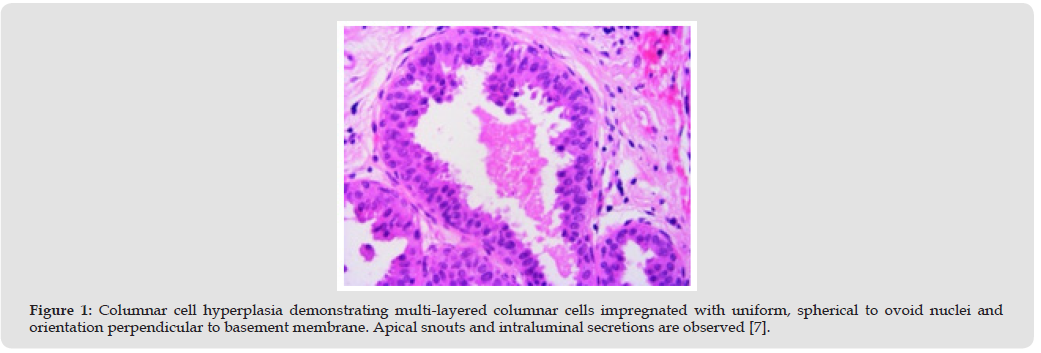
Journals on medical research |BJSTR

Do We Really Need Lie Scales to Detect Faking on Self-Report Measures?

Overview


Objectively scored non-cognitive instruments such as Likert-Style self-report questionnaires are used routinely for information gathering, diagnosis, placement, theory building, prediction, classification, and selection within numerous disciplines including biomedicine. However, one of the most serious drawbacks to such measures is their susceptibility to response biases that can undermine valid interpretation of results. Pervasive among such biases is Socially Desirable Responding (SDR), which reflects tendencies to endorse (fake good) or deny (fake bad) socially acceptable behaviors when something can be gained by doing so. A common way to address such problems is to administer validity or so called “lie” scales intended to detect such response tendencies along with the targeted measures of interest. Examples of such validity scales include the K and L scales from the Minnesota Multiphasic Personality Inventory [1,2], Marlowe-Crowne Social Desirability Scale [3], Edwards Social Desirability Scale [4], Eysenck Lie Scale [5], Martin-Larsen Approval-Motivation Scale [6], Jacobson-Kellogg Social Desirability Inventory [7], Self- and Other- Deception Questionnaires [8], Balanced Inventory of Desirable Responding (BIDR; [9]), and Paulhus Deception Scales (PDS; [10]), among others

The Balanced Inventory of Desirable Responding (BIDR)


The BIDR and PDS are widely used companion measures that can be coupled with any self-report questionnaire to detect possible faking. They are essentially the same instruments, sharing 38 of 40 items in common and the same theoretical underpinning. Both instruments also are more comprehensive than most of the ones previously cited because they measure two distinct components of socially desirable responding: Impression Management (IM) and Self-Deceptive Enhancement (SDE; see, e.g., [11-13]). The SDE subscale consists of 20 items intended to measure honest but inflated self-presentation. High scores on SDE demonstrate exaggeration of skills and lack of self-awareness. The IM scale consists of 20 items that reflect uncommon but socially desirable behaviors. Higher scores on IM may reflect intentional attempts to present a socially approved but inaccurate image to others. Similarly, lower scores on IM and SDE can reflect a socially disapproved and oppositely distorted image to others. Each subscale consists of equal numbers of positively and negatively phrased items. In common applications, the BIDR includes a 7-point response metric, whereas the PDS includes a 5-point response metric, although both inventories could include either metric. Within each instrument, the lowest scale point is labeled as “not true” and highest as “very true,” with negatively keyed items reverse scored. We report results for the BIDR here due to its widespread use, effectiveness in detecting faking (see, e.g., [14-16]), and availability from its author Delroy Paulhus at no cost (https://www2.psych.ubc.ca/~dpaulhus/).

Although both the BIDR and PDS have been effectively used to detect faked responses to questionnaires, they each are 40 items in length and thus are frequently impractical to administer. One possible way to avoid using validity scales altogether is to use responses to the targeted measures themselves to detect faking directly. Over the years, many such techniques, varying in complexity, have been proposed (see e.g., [17-19]). Unfortunately, in most cases, these techniques have not fared any better than external validity scales in detecting faking.

A Simple Way to Detect Faking Without Lie Scales

One extremely simple technique that our research team recently considered for detecting faking was to use total scores for instruments that have multiple subscales measuring weakly correlated constructs. For most self-report measures, respondents can recognize responses that are socially desirable or undesirable and fake accordingly (see [19] for a comprehensive review of studies into faking responses on personality inventories). However, with multidimensional inventories with weakly correlated subscale scores, a pattern of highly desirable or undesirable responses across all subscales would be very unusual when responding honestly, and therefore provide an alternative and potentially more effective way to detect faking. After coming up with this idea, we checked back over the research literature to determine whether others had used this technique in the past. We uncovered only one such study in which Comrey and Backer [20] found that the total score from the Comrey Personality Scales was more effective in detecting faking than were validity scale scores and other indices derived from item scores within the same instrument.

Purpose of our Recent Study

Given that the Comrey and Backer [20] study is nearly 50 years old, and that their approach has seemingly not been used much thereafter, we decided to put it to the test in a new study that we recently described at the annual meeting of the American Psychological Association [21]. In the remainder of this brief article, we will share results from that study in which we compared the effectiveness of the validity scales from the BIDR and total scores from the Big Five Inventory [22] in detecting instances of faking good and faking bad.

Methods

Participants and Measures

We assigned 448 college students at random to two research conditions: (1) fake good (n =224) and (2) fake bad (n =224). In each condition, respondents completed web-based versions of the Big Five Inventory (BFI; [22], also see [19,23-26]) followed by the Balanced Inventory of Desirable Responding (BIDR; [9-10], also see [15,16,18,24,27-31]). The BFI has 44 items with five 8- to 10-item subscales that measure five superordinate dimensions of personality: Agreeableness, Conscientiousness, Extraversion, Neuroticism, and Openness, answered using a 5-point Likert-style response metric (1 = disagree strongly, 2 = disagree a little, 3 = neither agree nor disagree, 4 = agree a little, and 5 = agree strongly). As noted earlier, the BIDR has two 20-item subscales to measure Impression Management (IM) and Self-Deceptive Enhancement (SDE) using a 7-point response metric (1 = not true, 4 = somewhat true, 7 = very true).

Procedure

Participants in each research condition answered the measures honestly first, and then again to convey either the best (fake good) or worst (fake bad) impressions of themselves. To use all collected data to full advantage (that is, include 448 cases in each condition), we combined fake-good scores with honest scores for the fake-bad condition and combined fake-bad scores with honest scores from the fake-good condition. When computing total scores across subscales for the BFI, responses to the Neuroticism subscale were reverse scored so that higher scores would represent more socially desirable responses. Classification accuracy (correctly labeling honest and faked responses), false-positive-error rate (labeling honest as faked responses), and false-negative-error rate (labeling faked as honest responses) were calculated for all scoring points for each scale within the BFI and BIDR under fake-good and fake-bad conditions. The score that maximized overall classification accuracy was selected as the cut score for each scale, and overall classification accuracy was compared across subscales and instruments. Using large and equal size groups for honest and faked responding was intended to provide very strict and conservative tests of classification accuracy because it would rarely be the case in practice that half of the respondents would willfully fake responses.

Results

Cut scores and indices of classification accuracy are provided in Tables 1 & 2 for faking good and faking bad, respectively. Our analyses for individual subscales revealed that Neuroticism, when reversed scored, was best for detecting faking good (90.38% classification accuracy), and that Agreeableness was best for detecting faking bad (95.19% classification accuracy). At the overall instrument level, total BFI scores were better than total BIDR scores for detecting both faking good (93.75% versus 89.90% classification accuracy) and faking bad (95.67% versus 93.00% classification accuracy).

Table 1: CT Exam Protocol.

biomedres-openaccess-journal-bjstr

Note: BIDR = Balanced Inventory of Desirable Responding [9]; BFI = Big Five Inventory [22].

Table 2: Cut scores and Indices of Classification Accuracy for Detecting Faking Bad.biomedres-openaccess-journal-bjstr

Note: BIDR = Balanced Inventory of Desirable Responding [9]; BFI = Big Five Inventory [22].

Summary and Conclusions

Since the beginning of formal uses of objectively scored self-report measures, socially desirable responding and related tendencies to fake responses have been serious concerns for users of results from such measures. Accordingly, a wide variety of methods to discourage and detect such invalid response tendencies have been suggested and evaluated over the years. Administering validity or “lie” scales along with the targeted measures of interest is perhaps the most common technique used to detect faking but has the drawback of requiring administration of extra items. To address such inefficiencies, we revisited the technique of using total scores for measures that assess multiple, and ideally weakly correlated, constructs. To provide a strong test of the effectiveness of the “total score-based” method, we implemented it using a brief length but widely administered personality inventory along with one of most comprehensive direct measures of socially desirable responding available to large and equal size honest and faking groups. Results were very encouraging in showing that the “total score-based” method outperformed popular extended length validity scales while requiring no additional items beyond those from the targeted instrument. The total score technique also would be expected to perform even better with longer measures, additional subscales, and lower correlations among subscale scores. We, therefore, encourage further research into and application of this promising “rediscovered” procedure for detecting faking on self-report measures sharing the characteristics considered here.

Follow us on: Biomedical Journal Impact Factor: https://biomedres.us

https://scholar.google.com/citations?user=OFtUOZYAAAAJ&hl=en
https://www.base-search.net/Search/Results?lookfor=Biomed+Journal+of+Scientific+%26+Technical+Research&l=en&refid=dcsuggesten
https://citefactor.org/journal/2574-1241/biomedical-journal-of-scientific-technical-research
https://ideas.repec.org/s/abf/journl.html
https://econpapers.repec.org/article/abfjournl/
https://www.ncbi.nlm.nih.gov/nlmcatalog/101723284
https://bjstr.org/
https://bjstr.org/about.php
https://biomedres.us/reprints.php
https://biomedres.net/submit-manuscript.php