Journals on Urology

An Alternative Technique for Treating Complex Ureteral Strictures and Defects using A Peritoneal Graft

Abstract

Purpose: To describe a new technique of ureteral reconstruction using a free peritoneal graft.

Methods: Between 2006 and 2015 we identified 8 patients with complex ureteral strictures involving in 7 cases the middle ureter. Stricture length ranged from 4 to 12 cm. Two cases were secondary to long strictures from retroperitoneal fibrosis after vascular surgical, 3 cases followed an extensive resection, required for large intraureteral masses, 2 cases were secondary to repeated endoscopic procedures for urinary stones and 1 case followed repeated pyeloplastics. After ureteral incision a free peritoneal graft was harvested from nearby healthy peritoneum. An onlay patch was fixed with running suture to the remaining ureteral plate after placement of an ureteral catheter. The ureter was wrapped with omentum.

Results: Follow-up has ranged from 14 to 76 months. Five patients were free from recurrence after 6, 30, 36, 54 and 60 months, showing good passage of the contrast without dilatation of the upper urinary tract on the uro-CT/urography. In 2 patients occurred a recurrence below the reconstructed ureter after 6 and 60 months without symptoms and with mild hydronephrosis. The last patient showed asymptomatic obstruction of the reconstructed segment with hydronephrosis of the upper pole system 6 months after the procedure. The limitation of this study is the small sample series, due to the selective indications.

Conclusion: This technique allows for preservation of any remaining vascular supply of the ureter and can be a feasible and use full alternative to nephrectomy, ileal ureter and autotransplantation in highly selected cases.

Keywords: Peritoneal Graft; Complex Ureteral Stricture; Middle Ureter; Ureter Reconstruction

Introduction

Mid-ureteral strictures and defects with or without involvement of the upper urinary tract represent one of the most serious reconstructive challenges for urologists and might require more complex treatment like bowel replacement or auto transplantation. These procedures are of considerable magnitude and associated with high rates of complications and long term morbidity [1-3]. Based on the evidence that atonic ureters affected by schistosomiasis can drain well by gravity [4-6] and on the success of buccal mucosal graft in the repair of complicated hypospadias [7,8] in 1999 Naude described a new technique using buccal mucosal graft for treating complicated ureteral strictures with good results [9]. Starting from our experience in urethral reconstruction with buccal mucosal graft, we describe a new alternative technique of ureteral reconstruction using a free peritoneal graft in 8 highly selected cases. Written informed consent was collected from all patients before intervention.

Materials and Methods

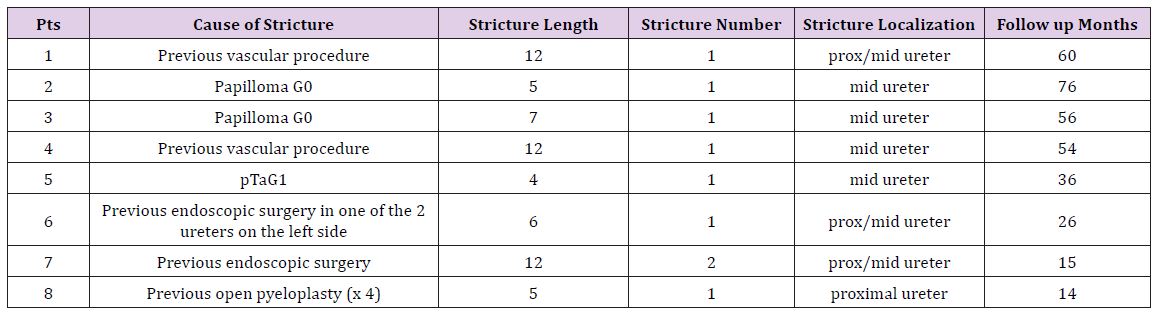
Between January 2006 and December 2015, 8 patients with mid-ureteral narrowing and obstruction and/or with complex ureteral stricture were treated using a peritoneal graft. Stricture/ defect length ranged from 4 to 12 cm. Due to their length, all cases would have otherwise required an ileal ureter, nephrectomy or auto transplantation. Two cases were secondary to long strictures from retroperitoneal fibrosis after vascular surgical procedures, three cases followed an extensive resection, required for large intraureteral masses (2 papillomas and 1 pTaG1) resulting in insufficient ureteral width for closure, 2 cases was secondary to repeated endoscopic procedures for urinary stones and 1 case followed repeated open pyeloplastics (with involvement of a long part of proximal ureter). The surgical procedure was performed with extraperitoneal exposure of strictured ureter in 7 patients while in 1 was performed transperitoneally.

After identification of the strictured ureteric segment, the narrow segment was opened longitudinally and the incision was extended for 1 cm in both directions into healthy ureter, preserving the longitudinal ureteral adventizial vessels to support the vascularization of the graft; a free peritoneal graft of appropriate dimension was harvested from nearby healthy peritoneum, shaped to appropriate size and fixed with running 5/0 Monocryl suture to the remaining ureteral plate after placement of an indwelling ureteral catheter (Figures 1 & 2). Finally, the greater omentum was mobilized to cover completely the reconstructed area and secured with absorbable interrupted suture (Table 1). The wound was drained with a 24 Chavier drain and a transurethral catheter was inserted into the urinary bladder for 10 days to ensure a zero degree pressure system. A cystography was performed after 10 days to show the patency of the ureter and the absence of extravasation: if the suture line was watertight, the transurethral catheter was removed; otherwise it remained in place for an additional week or more. The ureteral catheter was removed after 6 weeks or 3 months, depending on the length of the stricture and on the presence of extravasation, and an intravenous pyelography was done after removal to show the patency of the reconstructed ureter.

Table 1: Characteristics of the operated ureteral strictures.
Results

A total of 8 ureteral reconstructions with peritoneal graft were successfully performed in 8 patients. All postoperative courses were uneventful without any major complications. The urethral catheter was removed after cystography on the 10th postoperative day in 3 patients, after 3 weeks in 4 patients and after 6 weeks in the other one. The ureteral stent was removed six weeks postoperatively in 3 patients and after 3 months in the other 5 patients.After removal of the ureteral catheter all patients became an intravenous pyelography, which showed the patency of all ureteral reconstructions except in one patient, who became symptomatic and required the insertion of another stent. Patient follow-up has ranged from 14 to 76 months (average 42.1 months). Five patients (62.5%) were free from stricture recurrence after 14, 36, 54, 56 and 60 months, showing free passage of the contrast through the operated ureter without dilatation of the upper urinary tract on the uro-CT or urography and normal renal function (Figures 3 & 4). A stricture recurrence below the reconstructed ureter occurred 60 and 6 months after the procedure in 2 patients (25%). The first of these was operated for a large intraureteral mass and the length of patch was 5 cm.

After 60 months the patient developed a recurrence below the reconstructed ureter without symptoms, with mild hydronephrosis at the urography and with minimal worsening of the renal function: he didn’t required surgery and died 16 months later with stable disease at 92 years. The second patient was operated for a long double stricture of a length of 12 cm after repeated endoscopic operations for urinary stones and after radiotherapy and robotic radical prostatectomy for a prostate tumor. For the persistence of extravasation he needed the urethral catheter for 6 weeks; after the removal of the stent, 3 months after the operation, he became symptomatic and after temporary stenting, also this patient became asymptomatic with narrowing of the ureter below the reconstructed patent ureteric segment and hydronephrosis at the urography. A reoperation was not an option for this patient, who refused other attempts to save the kidney. In the last patient (12.5%), who had a partial duplicated ureter, the intravenous urography showed obstruction of the reconstructed segment of the upper pol ureter with hydronephrosis of the upper pole system 3 months after removal of the ureteral catheter (6 months after the surgical procedure); the patient was completely asymptomatic and the obstruction was occasionally found during the control examination; the lower pol system showed a good drainage and the patient didn’t required surgery.

Discussion

The ureteric strictures can be caused by several factors like stones, infections, fibrosis, malignancy, radiotherapy or in most cases by iatrogenic surgical trauma occurred during gynecological, colorectal and vascular surgery or after endourological surgery [10- 12]. The strictures, that are too long or not suitable for treatment with end to end anastomosis, Boari flap or Psoas hitch technique, may require an ileal ureter, autotransplantation or nephrectomy. These procedures are complex and associated with high risk of complications specially in unprepared patients in emergency situations. Further more, if the stricture involves the middle ureter, the risk of ischemic necrosis, due to the reduced vascular supply of this segment, can be high even for shorter lesions and an end to end anastomosis is not recommended even if feasible, As alternative to these complex procedures, based on the evidence that atonic ureters affected by schistosomiasis can drain well by gravity and on the success of buccal mucosal graft in the repair of complicated hypospadias, Naude and other Authors [13-15] have reported the successfull use of buccal mucosal patch graft for the reconstruction of a variety of ureteric lesions without major complications. [16- 18] Animal experiments have showed, that a free peritoneal graft, used as bladder substitute, works like a multipotent matrix for urethelialization of the reconstructed area, supporting the migration of the smooth muscle cells from the edges of the defects in a centripetal direction [19-21].

A free peritoneal graft was already successfully used in cardiovascular surgery and in gastrointestinal surgery [22-23]. In urology a pediculated peritoneal graft was initially used for cistoplasty and closure of vesicovaginal fistulae [24] but a free peritoneal graft was used for the first time in animal experiments for bladder repair with good results from Hutschenreiter [25]. Thueroff [26] used a free peritoneal graft to cover defects of the renal pelvis not suitable for primary closure or to envelope renal pelvis and/or ureter to reduce the risk of extrinsec obstruction, due to scarring in 31 patients, with good results in 25. Stadie et al. had good results in 29 out of 30 patients in a similar study. Encouraged from these studies, we have treated these 8 selected patients with long mid-ureteral strictures and with complex ureteral strictures, using a free peritoneal patch graft, wrapped with greater omentum. In five patients we achieved good urographic results and actually they are still free from recurrence. One patient developed a stricture recurrence after 5 years but during all this period he maintained normal renal function without complications related to the procedure.

In the other patient with recurrence, the multiple operations for urinary stones and especially the preceding radiotherapy have probably caused the persistence of extravasat and favoured the stricture below the reconstructed ureter. The last patient with partial double district, who developed the obstruction of the reconstructed segment of the upper pol ureter, was admitted to the hospital some months before with hydronephrosis of the upper pol and reduction of parenchima, due to a 2,5 cm stone in theproximal duplicated ureter: He underwent to repeated endoscopic procedures without success and with persistence of the stone. We attempted to remove the stone with open surgery and the ureter was closed with a peritoneal graft. The poor urinary drainage of the upper pol has failed to maintain the patency of the reconstructed ureter and so, probably, in this case no type of reconstruction was indicated. The advantage of this technique is the unlimited availability of the material, which can be simply harvested from nearby healthy peritoneum without related complications.

Furthermore this technique of reconstruction is simple and associated with a lower rates of complications and long term morbidity; it allows a good drainage of the upper tract and patency of the ureter, preserving as much as possible the vascular supply and reducing the risk of ischemic necrosis. In addition it can be used in unprepared patients in emergency situation to avoid more complex procedure. The limitations of this study are the small sample series and its retrospective nature. Our results are however encouraging and to our knowledge, this is the first paper which describes the use of a free peritoneal patch graft for the treatment of strictures of the middle segment of the ureter.We think, that this approach should be considered in all patients, who would need ureteric replacement for long mid-ureteral strictures, and specially in those with renal impairment, to avoid metabolic problems or increasing morbidity.

Conclusion

Mid-ureteral strictures and defects represent one of the most serious reconstructive challenges for urologists. We describe a novel technique for treating long mid-ureteral strictures or defects using a peritoneal graft with Omental wrapping. This technique allows for preservation of any remaining vascular supply of the ureter and can be a feasible and useful alternative to nephrectomy, ileal ureter and auto transplantation in highly selected cases.

For More Articles: Biomedical Journal Impact Factor : https://biomedres.us

Journals on Science

Evaluation of the Effect of Propolis on Implant Stability by Resonance Frequency Analysis and Removal Torque Test

Abstract

Purpose: Osseointegration is the structural and functional connection without fibrous tissue, between the bone and the implant surface under load. Free radicals are among the factors that affect bone healing and osseointegration. Recently, researchers have begun to show interest in the idea that implant-related complications may occur due to free radical-induced tissue damage. Hence use of a material with antioxidant properties may be a useful tool on implantology. This study is planned presuming propolis could have positive effects on osseointegration and implant stability due to its antioxidant nature, its effect accelerating the bone formation, wound healing and increasing the bone density.

Methods: Study consisted of three groups. At all groups, implants were placed on proximal metaphyseal region of the rabbit tibia. Only dental implants were placed on the Control Group. Propolis solution was applied to slots before placing the implants on Local Group and propolis was applied systemically for 28 days after implantation on Systemic Group. Resonance frequency analysis (RFA) was performed on the day implants are placed and both RFA and removal torque test were performed on the 28th day.

Results: The study was composed of 24 rabbits grouped as follows: Control (n = 8), local (n = 8), and systemic (n = 8) for application of propolis. Systemic group showed statistically lower results of RFA at baseline (p<0.05). Propolis application resulted in a significant increase in RFA in each group: local (baseline RFA, 46,8 vs RFA after Propolis 56.0; P< 0.05), systemic (baseline RFA, 44.8 vs RFA after propolis, 58.8, P< 0,05); while the control group showed no significant difference (baseline RFA, 51.5 vs RFA after waiting period, 57.8 P> 0.05). Removal torque test showed statistically significant difference between the groups (systemic group 58,7; local, 49,8 and control, 45,1; P<0.05).

Conclusion: These results suggest that the propolis may have a positive effect on implant stability, especially if administered systemically.

Introduction

Propolis is a natural product bees prepare by enzymatically changing secretions they gathered from the buds and barks of plants. Nowadays, propolis has syrup, spray, throat lozenge, cream and lotion preparations which are formulated to prevent and treat upper respiratory tract infections like cold and flu, for use in cosmetic purposes and in dermatological problems such as wounds and burns, also infections like acne, Herpes Simplex 1 and 2. In addition, there are toothpaste and mouthwash preparations used in the caries prevention and treatment of oral infections such as gingivitis and stomatitis [1]. Investigations have shown that propolis has antimicrobial, antiviral, antifungal, antiprotozoal, antiparasitic, antiinflammatory, anti-ulcer antitumor and antioxidant effects and protective effects on liver, heart and brain [2].

Propolis has been shown to regulate the blood glucose level and the blood pressure, to affect the amount of lipid in blood and to cleanse lipid peroxidation products and free radicals [3]. In addition, propolis has immunostimulant, antimutagenic [4], anesthetic [5,6] and analgesic [7] effects. Osseointegration is the structural and functional connection without fibrous tissue, between the bone and the implant surface under load [8]. There are many factors that affect osseointegration. Primer stability, implant surface characteristics, anatomical state of implant area, prosthesis design, occlusion pattern on healing phase and bone metabolism constitute some of these factors [9]. Free radicals are among the factors that affect bone healing and osseointegration. Recently, researchers started to show interest in the idea that implantrelated complications may occur due to free radical-induced tissue damage [9-10].

On healing process after implantation, granulation tissue is minimal and well-organized bone formation is observed [11]. Following the placement of the implant, with the necrosis and resorption of the traumatized bone, new bone formation and a series of healing events occur in the area around the titanium body [11,12]. Following the implantation, the amount of contact between the implant and the surrounding bone increases due to bone healing. Treatment may fail if implants are loaded before this contact reaches a certain level. For this reason, loading time should be decided based on the implant stability [13].

Based on the literature review, we thought that propolis may shorten the consolidation phase after implantation and have a positive impact on implant stability. In this study, we aimed to investigate the effects of propolis on stability and to help to develop new agents that will support the osseointegration and bone healing process.

Methods

This study was approved by the Cumhuriyet University IRB and the animal care and use committee.

Animals

For our study, 24 male New Zealand rabbits (Oryctolagus Cunilus L), approximately 6 months old and weighing about 2.5- 3 kg, were obtained from Cumhuriyet University Experimental Animals. Food and water requirements of all animals were met without limit. Standard conditions were applied in the animal room (22-24 °C, 55-70% humidity, 1 atm, 12 hours light / dark room). During the study period, animals were placed in stainless steel cages measuring 50 x 80 x 50 cm, with each cage containing a single rabbit. All animals were brought to the laboratory one month prior to surgical procedure and monitored to ensure optimal health conditions, protection from infections, and adaptation to their new location. Animals were divided into 3 groups, each consisting of 8 rabbits.

Implantation of the Biomaterials

Animals went under anesthesia by intramuscular injection of 10-20 mg / kg Xylazine (Rompun 2%, Bayer, Istanbul, Turkey) and 50 mg / kg Ketamine HCl (Ketalar, Eczacıbaşı-Warner Lambert, İstanbul, Turkey) before the surgical procedure. 3.5 x 10 mm sized dental implants with external hexagonal platform, were obtained from ADIN Dental Implant Systems (SLA Surface, Toureg-NP, Afula, Israel). The unilateral tibia proximal region was shaved and cleaned with antiseptic solution on each rabbit. Surgical area was prepared by coating with sterile surgical drapes and sterile film. A 2-3 cm incision was made from the proximal to distal metaphyseal region of the tibia. Subcutaneous tissues and muscle layers were dissected with blunt dissection to reach tibia surface. Implant slots were prepared using burs at the rate of 600-1000 rpm, under sufficient isotonic solution irrigation, according to the company’s recommendations (Table 1).

Table 1: Difference of surgical procedures on groups.

Dental implants were placed in the slots using a ratchet and attention was paid to have adequate primary stabilization. After implantation, RFA measurements were made with Ostell (Integration Diagnostics AB, Göteborg, and Sweeden). After the operation, elevated epidermal flap was sutured to its original position with 5-0 polyglactine 910 (Vikril Jonson & Johnson / Ethicon) attaching the muscle, subcutaneous fascia and skin. Postoperatively, 50 mg / kg Ceftaxon (Cephaxon-Toprak) IM and 4 mg / kg Carprofen (Rimadyl-Pfizer) were administered subcutaneously for 3 days. 200 mg / kg / day of the propolis was given to the rabbits in Systemic Group by oral gavage for 28 days. All the rabbits were taken to a 28-day rest period under pre-prepared, appropriate ambient conditions. At the end of the 28-day follow-up period, animals were sacrificed via 200 mg / kg i.p. sodium pentobarbital injection.

Preparation of the Propolis

1g of propolis (Eğriçayır Organic Bee Products / Mersin) was added to 1 ml dimethyl sulfoxide (DMSO) and vortexed for 1 minute (Jeio Tech, Vortex Mixer VM-96T). The prepared mixture was put in an ultrasonic bath (Kudos HP Heating Series ultrasonic cleaner) and stirred at 25 °C and 53 kHz, for 15 minutes. After filtering via sterile filters with 0.22 μm pore size, prepared solution was diluted with saline (1: 4; DMSO: saline) and got ready to use.

Resonance Frequency Analysis

Osstell® was used to measure the resonance frequency. The measurements were made by placing the Smart Peg on implants. After inserting the implants and at the end of follow-up period, resonance frequency analysis was performed and the procedure was repeated 5 times for each implant. At each measurement, the most repeated result was accepted as correct.

Removal Torque Test

All rabbits were subjected to removal torque test after RFA measurement at the end of follow-up period. The probe of the digital torque meter (Lutron TQ-8800; Lutron Electronics Enterprise, Taipei, Taiwan) was attached to the implant, and force was applied in a controlled and increasing way reverse clockwise. The moment implant began to rotate within its slot, force was stopped. Highest value on the digital display was recorded in N / cm.

Statistical Analysis

The data obtained from our study were uploaded to the SPSS (ver: 22.0) program and evaluated. When the parametric test assumptions are fulfilled (Kolmogorov-Simirnov) Variance Analysis and Tukey Test; when the parametric test assumptions were not met, the Kruskal – Wallis Test was applied and the P-values was taken as 0.05.

Results

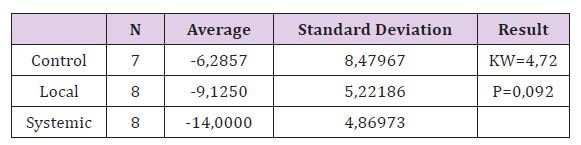
One of the animals in control group died due to diarrhea. None of the other subjects had a pathology caused by the device or method that affected their general health. Findings in the study were analyzed in two parts as resonance frequency analysis and removal torque test. Measurements were performed separately foreach group (Figure 1). When the operation day measurements of resonance frequency analysis in all three groups were compared, the difference was significant (P <0.05). When the measurements were compared in pairs, difference between the control group and the systemic group was significant, but no significant difference was found between the control group and the local group or the local group and the systemic group (P> 0.05). When the resonance frequency measurements were compared on the 28th day in all three groups, the difference between the groups was not significant (P> 0.05) (Figure 2).

Figure 1: Distribution of RFA 1st day values of groups.

Figure 2: Distribution of RFA 28th day values of groups.

Table 2: Comparison of RFA 1st day and 28th day differences between groups.

When comparing the removal torque test measurements in all three groups, the difference was significant (P <0.05). When the removal torque test measurements were compared in pairs difference between the control group and the systemic group was found to be significant, but no significant difference was found between the control group and the local group, the local group and the systemic group (P> 0.05) (Figure 3). There was no significant difference between the RFA measurements of Control Group on day 1 and day 28 (P> 0.05). In the Local Group and Systemic Group, the differences were significant when comparing RFA 1st and 28th day measurements (P <0.05). The most important difference is seen in the systemic group (Table 2). When improvement of RFA from 1st to 28th day in all three groups was compared, the difference between the groups was found to be statistically insignificant. But the biggest difference is seen in the systemic group. This result may be due to the low number of subjects.

Figure 3: Distribution of RFA 28th day values of groups.

Discussion

There are defensive mechanisms in the organism which prevent reactive oxygen species from forming and damaging them. These are called antioxidant defense systems or antioxidants. Studies show that antioxidants play a protective role against free radicals [14]. Propolis is a very complex natural compound that has been in use since ancient times for treatment and is still in use today. In-vitro antioxidant activity of propolis has been shown in many studies conducted with different methods. Benzyl caffeate, the high amount of phenolic component and caffeic acid phenyl ester which is the active component of propolis has been suggested to be responsible for its antioxidant activity [15].

Propolis has antibacterial, anti-inflammatory, antitumor, analgesic and anesthetic effects [15,16]. Anti-inflammatory, hepatoprotective, cardio protective and radio protective effects of propolis are associated with its high antioxidant activity [17]. There are many studies investigating the effects of propolis on bone. In a study by Altan et al., effect of systemically applied propolis on the expanded premaxillary suture was studied and it was thought that bone formation in this region could be accelerated [18]. In a study by Guney et al., effects of propolis on fracture healing were examined and the time-dependent, beneficial effects of propolis were discussed. Toker et al. [19] investigated the effects of systemic propolis on morphometric and histopathological changes in experimental periodontitis induced in rats and found propolis to prevent alveolar bone loss [20].

Based on these studies, we suggest that the propolis may shorten the consolidation phase after implantation and have a positive effect on implant stability. In addition, due to its antiinflammatory and anesthetic effect, propolis may reduce postoperative stress. There is no standard for the extraction procedure or thecomposition of propolis-containing extracts [21]. Traditionally, the dissolved fraction of propolis in 70% ethanol is extracted and is called propolis balsam [22]. However, DMSO has been shown to be less toxic than ethanol [23,24]. In a study investigating the antimicrobial activity of propolis, DMSO extracts showed higher antimicrobial activity than acetone extracts [25]. In another study using DMSO, experimental periodontitis was induced in rats and systemic propolis administration decreased alveolar bone loss [20]. Taking these studies into consideration, we decided to use DMSO in the preparation of the propolis solution.

An official dose limit for propolis has not been established. However, in rats LD50 was found to be 2-7.34 g / kg. The recommended daily dose is 1.4 mg / kg [26,27]. Studies have indicated that propolis is toxic when administered over a concentration of 2000 mg / kg [16]. In a study on rats, propolis administered via oral gavage at 500 mg / kg / day following intraperitoneal implant placement was found to have mitigating effects on inflammation, angiogenesis and fibrogenesis [27]. In a study conducted by Bereket et al., effect of propolis on the consolidation phase was investigated after distraction osteogenesis was performed on rabbits and the applications at oral doses of 100 mg / kg / day and 200 mg / kg / day were compared. It was observed that the 200 mg application was more effective in accelerating new bone formation [28]. We did not encounter any experimental or clinical study investigating the effect of propolis on implant stability. Therefore, the duration, dosage and regimen for propolis after implantation was determined for the first time in this study but studies investigating effects of propolis on bone healing constitutes a basis for our research. Therefore, systemic propolis administration course was selected as 200 mg / kg / day.

There are many studies in which propolis is applied locally. In a rabbit study, the intraarticular administration of propolis in the experimental septic arthritis model yielded beneficial results [29]. Another study showed that a layer of propolis application with allograft enhanced and accelerated osseointegration and shortened the consolidation phase [30]. In addition, the ability to obtain a dense form of propolis that is homogeneously dissolved, has no toxic effect and can be easily applied to the implant cavity, allowed us to plan the study in this way. During the experiment, the surgical procedure and placement of implants were performed by a single operator, aiming to standardize.

The selection of rabbits as experimental animals in our study is due to the fact that physiological bone healing in rabbits is similar to humans, and at the same time the rate of healing is three times higher than that of humans [31]. Physiologically, an 8-week healing period in rabbits is equal of 6 to 8 months of healing in humans [32]. The 4-week recovery period for rabbits is thought to be sufficient for monitoring new bone formation and angiogenesis [33]. Therefore, we opted to perform the measurements on the 28th day to achieve appropriate osseointegration, bone healing and implant stability. One of the major problems faced by dentists is the assessment of the osseointegration of the dental implant. The amount of osseointegration between the implant surface and the bone supporting the implant is used to measure the stability of the implant [34]. This measurement can be made with many different techniques [34,35]. Most important methods are percussion test, Periotest, resonance frequency analysis and removal torque test.

The use of percussion sounds to measure implant stability is a highly subjective method and is not reliable enough. One of the first devices used to provide an objective stability measurement was the Periotest, initially designed for measuring the stability of the teeth, but also for implant stability [36,37]. However, reproducibility of the results obtained with Periotest is affected by many factors such as the vertical position of the measuring point on the abutment, the angulations, and the distance between the hand piece and abutment [38]. The removal torque test is one of the in vivo mechanical tests used to evaluate the strength of the connection between the bone and the implant surface [31,39,40]. When removal torque is tested, it is assumed that the implant’s high resistance to the extraction indicates that there is a high amount of bone formation and contact between the bone and the implant surface. Ivanoff et al. [40] have shown that the removal torque value is closely related to the bone implant contact and the amount of bone entering the grooves.

They reported that the need for higher torque forces to remove implants can be interpreted as an increase in bone implant contact and an increase in osseointegration strength [41]. However, removal torque test may not be the most effective method for measuring the amount of bone around the implant or the fixation. The underlying biomechanical principles in torque tests are quite complex. Shear force in the bone implant interface is the most important component. The removal torque tests are invasive biomechanical tests that give information about the rigidity of the implant within the bone [42]. The removal torque test shows resistance to shear forces at the bone implant interface, but the results do not always show a direct correlation with bone response or surface hardness.

Therefore, it is also necessary to measure the amount of bone implant contact [43]. On the other hand, it is possible to measure implant stability by resonance frequency analysis in terms of the implant stability quotient (ISQ) at every moment of treatment and loading [44,45]. It is believed that the measurements made by resonance frequency analysis have eliminated the observer dependent errors. Because the transducer is inserted onto the implant and the measurement is automated. It has been reported that the torque used during the insertion of the transducer (Smart Peg) on implant does not affect the test results and that the results obtained with this method are highly reproducible [46]. Studies have shown that bone height supporting implants significantly affects the RFA values [44,47,48]. If the rigidity of the bone implant interface is assessed by RFA, the results are expected to relate to bone density and bone implant contact, as well as changes occurring during healing at the bone implant interface or parallel to the resorption of the peri-implant bone [49].

Although there are many methods to assess implant stability, resonance frequency analysis, a non-invasive method introduced by Meredith et al. [44,50,51], allows monitoring of changes in stability and stiffness at the bone implant interface to allow clinically successful and failed implant differentiation [44]. In addition to the non-invasive use of ISQ values in evaluating implant stability, thismethod has been reported to provide reliable and accurate results regarding the bone-implant interface in early evaluation of implant stability [39, 52]. Meredith et al. [50] have shown that implants with high initial ISQ values have shown that stability can reach a peak plateau with shorter recovery periods and that resonance frequency analysis can be a valuable method for monitoring the connection between the implants and the surrounding bone. Considering these investigations, we decided to combine resonance frequency analysis and removal torque test to measure implant stability in our study.

Primer stability plays an important role in the clinical success of implants. Therefore, the results of resonance frequency analysis performed during surgical application can help physicians to predict the prognosis of the implant. Because of this and because it is possible to observe the amount of change in stability as a numerical value, in our study, resonance frequency analysis was performed twice, one immediately after the implant placement and one on the 28th day. In our study, effects of propolis which is known to have a high antioxidant effect, has been experimentally investigated with local and systemic applications on the implant stability in rabbits. After completing the measurements on day 28, the results of the applied stability tests were evaluated.

Numerous modifications have been made to the implant design or surgical technique to improve implant stability and osseointegration. There are many factors that influence osseointegration. Primer stability, implant surface characteristics, anatomic state of the implant site, prosthesis design, occlusion pattern on healing phase and bone metabolism constitute some of these factors [9]. Recently, researchers have begun to show interest in the idea that implant-related complications may occur due to the free radical-induced tissue damage [9-10]. The results of our work have led us to believe that propolis may have positive effects on implant stability and the application of propolis when primer stability is lower, may be an effective support in achieving the desired level of osseointegration and stability within the same duration. These effects are thought to be more pronounced when propolis is administered systemically.

Conclusion

In order to support osseointegration and increase implant stability, propolis application may have positive effects, especially with systemic administration. However, more studies are needed in this area and our work may form a baseline to find alternative ways of supporting osseointegration, to have a clear understanding of the effects of propolis on implant stability, and to determine the effective dosage and administration pattern to help with bone healing.

For More Articles: Biomedical Journal Impact Factor : https://biomedres.us

Journals on Agriculture

Spatial and Temporal Variations of Climatic Parameters under Changing Climate of Hindu Kush Himalayan Region of India

Mini Review

Climate change can severely threat India’s water security. India’s hydro-climatic regime is expected to alter significantly over the course of the 21st century. If the current pattern of demand and usage continues, it is predicted that by 2030 about half the demand for water will be unmet. Growing population, rapid industrialization and urbanization, and climate change will further affect water availability. In this context, it is important for India to consolidate water resource management through rational estimates and regulation. The vulnerability of the Indian subcontinent to the impact of changing climate is of vital importance because the major impact of climate change in this continent would be on the hydrology, affecting water resources and agricultural economy. Water resource has become a prime concern for development and planning, including food production and flood control. The impact of climate change may be relatively severe with the reduction in the water availability over different parts of the globe. Hindu Kush Himalayan region of Jammu and Kashmir is a hill state having varied topography and great diversity in cultural, social and economic practices of its different regions.

However, agriculture remains the backbone of the economy of Jammu and Kashmir with over 65 percent of its population depends on agriculture and allied sectors. These sectors contribute around 27 percent to the State’s income. The diversity in physiographic features, agro-climatic variations at macro and micro level, existence of cold arid, temperate, inter-mediate and sub-tropical zones. Over the years, the agriculturists and farmers have adopted several area specific and time specific cultivation practices to meet the requirement of their staple food crops. Dwindling water resources too is a major challenge as only 42 percent of the cultivated area is under irrigation. Fragile soil in hilly areas is susceptible to soil erosion and a single cropping season is available in temperate and high altitude areas. Net irrigated area in the region is just 24 percent Irrigation is an essential input of agriculture and is practiced in all parts of the world where rainfall does not provide enough ground moisture.

In areas of irregular rainfall, irrigation is used during dry spells to ensure harvests and to increase crop yields. A major constraint to the development of agriculture in Jammu and Kashmir is the fact that only 50 per cent of the ultimate irrigation potential of the state has been harnessed. The ultimate irrigation potential in Jammu and Kashmir has been assessed at 1358 thousand hectare, which includes 250 thousand hectare to be developed through major and medium irrigation and 1108 thousand hectare through minor irrigation. The impact of climate change on annual air temperature and precipitation and crop water requirement is great concern in present context. The present paper focused on detecting trends in maximum temperature, minimum temperature, precipitation, reference evapotranspiration, evaporation and relative humidity at monthly, seasonal and annual basis for different regions of HKH.

Reference evapotranspiration (RET) plays a critical role in irrigation planning and is needed for the determination of water demands of crops. The widely used Mann-Kendall test was used at 5% and 10% significance level on time series data of 20 year (1995-2015) for Srinagar Kashmir region and 15 year data of Leh (2001-2015). The magnitude of the identified trends in the meteorological parameters was obtained through the parametric linear regression test. In order to identify the dominant variables among the independent variables associated with changes in dependent variable, a stepwise regression method was used. The results on monthly basis, annually and seasonal basis were carried out. In case of Srinagar on annual basis only RET (ETo) witnessed statistically significant increasing trend at 5% significance level.

Trend analysis on seasonal basis revealed that ET0 in autumn season at the rate of 8.32 mm/decade and in winter season at the rate of 8.63 mm/decade and precipitation in autumn season at the rate of 19.21 mm/decade witnessed statistically significant increasing trends only at 5% level of significance and no trends were observed in other seasons. No significant trends were witnessed in maximum temperature, minimum temperature, relative humidity and evaporation at 5% or 10% significance level. In case of Leh region, it is witnessed that statistically significant falling trends are witnessed in maximum temperature in the month of July at the rate of 1.70°C/decade, at 5% level of significance.

In case of minimum temperature statistically significant falling trend at 5% level of significance as the values of Z (Test Statistics) obtained through the MK test are more than -1.96 was witnessed in month of August at the rate of 1.31°C/decade. Statistically significant falling trend was witnessed in the month of December at the rate of 1.74°C/decade at 10 % significance level. It is witnessed that statistically significant falling trends are witnessed in relative humidity in the month of March to December (at 5% level of significance. On examining the results of stepwise regression to determine the meteorological parameters responsible for the observed ETO changes, wind speed followed by sunshine duration, and temperature were found to be the main causative variables of the observed changes in the ETO over Srinagar in the annual time scale.

It is understood that the global warming and its impact on the hydrological cycle and the nature of hydrological events would pose an additional threat to the Himalayan region. To harness this potential, India needs to invest soon in increasing storage capacity, improving water-use efficiency, and managing surface-water and groundwater resources in a sustainable way to avoid problems of soil Stalinization and water logging. In order to minimize the adverse impacts of climate change on country’s water resources and attaining its sustainable development and management, there are needs of developing rational adaptation strategies. Thus, due consideration is required to be given to the effect of climate change while planning, designing and operation of the water resources projects.

These would be reflected in proper assessment of water resources, developing suitable hydrological design practices and operational policies for water projects, putting in place effective flood and drought management strategies, developing water efficient irrigation practices, etc. believes in a future in which the region’s mountain people can experience enhanced livelihoods, equity, and social and environmental security in which they can adapt to environmental, socioeconomic, and climate change and in which generations of mountain and downstream populations can enjoy the benefits and opportunities afforded by the region’s natural endowment.

For More Articles: Biomedical Journal Impact Factor : https://biomedres.us

Journals on Surgery

Amniotic Membrane in the Treatment of Spinal Cord Injuries

Mini Review
Spinal cord injury (SCI) is one of the most common and devastating injuries found in the neurological clinic [1,2]. It is defined as damage to the spinal cord that causes temporary or permanent changes in its function, resulting in significant neurological dysfunction and disability [3,4]. SCI has physical, social and occupational consequences for patients and their families, resulting in loss of independence and an increase in the mortality rate [3]. In addition, studies show that expenses for care of patients with SCI can reach US$1.1-4.6 million per patient throughout life. Thus, it is extremely important to develop effective treatments [5]. This type of injury can cause many disorders, depending on his localization and severity. According to Castro, the number of people with some type of physical disability has increased in the past few years [6]. A partial spinal cord injury is sufficient to cause permanent disabilities, such as the Brown-Sequard syndrome, often observed after spinal cord hemisection [7]. Currently, surgical treatment for mechanical stabilization and decompression has been performed in cases of unstable fractures with spinal cord injury and the use of drugs to treat such lesions has been extensively studied [8].

In the last three decades, numerous neuroprotective and neuroregenerative therapies have been transferred from preclinical studies to clinical trials [3]. However, it is still not possible to find standard therapy universally accepted and new therapeutic approaches are needed [4]. Experimental and clinical studies evidenced that spinal cord suffers primary and secondary damages after acute injury [9]. Primary injury occurs with the initial traumatic event that produces immediate mechanical disruption and displacement of the spine, which causes compression or transection of the spinal cord [3]. There are rupture of meninges, hemorrhage and massive death of neurons, oligodendrocytes and astrocytes [10]. Together, these events immediately initiate a cascade of secondary lesions, which cyclically results in the death of neurons and glial cells, ischemia and inflammation, resulting in further damage to the spinal cord and neurological dysfunction [3]. After these secondary damages, changes in the organization and structural architecture of the spinal cord occur, including the formation of cystic cavities and a glial scar, causing a physical barrier to axonal regeneration [3,10,11]. The glial scar and cystic cavities, in combination with poor endogenous remyelination and axonal growth, prove that the spinal cord has a low potential for intrinsic recovery, thus SCI causes permanent neurological deficits [3].

The treatment and functional reconstruction of an injury in the central nervous system constitute a challenge for health areas. A growing number of researchers have attempted to apply neural stem cells combined with artificial materials for nerve repair. However, these approaches are challenged by ethical and practical issues. Amniotic tissue, on the other hand, is a clinical product of discard and amniotic epithelial cells are pluripotent, with low immunogenicity and are not the subject of ethical debate [12]. Amniotic membrane (AM), innermost layer of the fetal membranes, is composed of three histologically distinct layers: the epithelial layer, the basement membrane and avascular mesenchymal/ stromal layer. The epithelial layer comprises a flat, cuboidal and columnar cells uniformly disposed on the basement membrane, which consists mainly of collagen IV, elastin, fibronectin, laminin and proteoglycans. The mesenchymal layer in turn consists of three regions: an acellular compact layer, that forms the main fibrous skeleton of the AM composed of collagens I, III and fibronectin; a network of dispersed fibroblast-like mesenchymal cells; and a spongy layer of loosely arranged collagen fibers that separates the amniotic membrane from the chorion [13].

Both cell types isolated from AM, amniotic epithelial cells (AECs) and amniotic mesenchymal stromal cells (AMSC), express stem cell markers and have the ability to differentiate toward all three germ layers [14]. AECs have been used in several researches to study the damaged tissues repair and experimental evidence has demonstrated its great regenerative potential for various tissues [14-16]. In addition, AECs have some properties similar to neural and glial cells and ability to secrete neurotransmitters [17-19]. Thus, these cells have great potential in the treatment of SCI. Sankar demonstrated in his study that AECs survive in the transplanted environment, support the growth of axons through them, preventing glial scar formation at the site of injury and the death of damaged neurons. These results are similar to those found in neural transplantation studies. Thus, it is believed that AECs may exhibit the same properties of neural tissue, regarding the beneficial effects on repair of SCI [20]. Roh also obtained good results when applying AECs in SCI induced in rats. His results demonstrated that transplantation of AECs has a beneficial effect on SCI-induced neuropathic pain [21]. Gao investigate the synergistic effects of anti-inflammatory drug administration and transplantation of AECs following SCI in rats. He stated that this combination reduced the secondary damage and promoted functional recovery after SCI [1].

However, in order to improve the results obtained in the treatment of this type of lesion, studies have used AECs combined with scaffolds. They stated that this combination resulted in a lower glial scar in the damaged region when compared to animals that received only AECs. These animals also had lower inflammatory infiltrate and improved motor function. Scaffolding provided a more favorable environment for regeneration of the central nervous system, ensuring that transplanted cells had a growth surface and promoted cell adhesion [12]. In this context, several studies have chosen to use the AM as a fragment, rather than isolated AECs. This protocol allows to preserve the micro-environment with all the growth factors and differentiation factors present, providing action of these chemical mediators in the injured tissue repair process. In addition, it also facilitates the processing and use of AM. AM patching provides to the injured tissue mechanical protection, anti-adhesive effect, wound protection and migration and adhesion of basal epithelial cells. In addition, studies show that AM has several useful properties for the proper development of the repair process: reduction of fibrosis, prevention of apoptosis, restoration of the epithelial phenotype, antibacterial action, anti-inflammatory action, protease inhibitor, low immunogenicity and does not induce rejection after transplantation [22-24].

Other studies have demonstrated the great potential of using AM fragments on the treatment of other tissue injuries. Cargnoni [25] applied AM as a patch to reduce the induced necrosis in rat hearts and Sant’Anna [26] demonstrated that AM application reduced liver fibrosis induced by bile duct ligation when it was applied around the rat liver. Furthermore, Nicodemo demonstrated in her study that human amniotic membrane fragment application on acute lesion in the Achilles tendon of rats favored the evolution of tissue repair, reduced the inflammatory response, induced the proliferation of fibroblasts and collagen fibers, and allowed a reduction in healing process time [27]. In clinical practice, it has also been applied in ophthalmology since 1997 [28]. It is used therapeutically for defects of the cornea and conjunctiva [29]; prevention of postoperative adhesions [30]; reconstruction of defects of the pharynx and oral mucosa [31] and in bone defects [32]. In general, AM patching has shown interesting results when applied in injured tissue, with low incidence of side effects, encouraging the development of new experimental research aimed at the treatment of SCI. Further studies are needed to determine the effects of this treatment protocol on the development of the SCI repair process.

For More Articles: Biomedical Journal Impact Factor : https://biomedres.us
Journals on Obstetrics and Gynecology

The Effect of 6 Weeks versus 3 Weeks Post Partum Visit On Short Interval Delivery Rate

Abstract

The Effect of 6 Weeks versus 3 Weeks Post Partum Visit on Short Interval Delivery Rate.

Objective: To evaluate the effect of postpartum visit timing on short interval delivery rates.

Methods: Retrospective chart review was conducted on all patients who had two deliveries at a large community hospital resident’s clinic between May of 2011 to January 2013. Patient demographics, breast feeding, economic status, and postpartum visit attendance were compared to patients that had only one delivery during that time period. From May 2015 to January 2017, 18 months after altering the timing of postpartum visit from 6 to 3 weeks, the short interval delivery and attendance at postpartum visit were compared between the two time periods at the same clinic. Univariate analysis using Chi square or t -test were used as appropriate.

Results: During the initial study phase 72 (7.3%) out of 991 patients had a short interval delivery. Only age (25.4 ± 6.4, 27.9 ± 5.1, p=0.001) and attendance at the postpartum visit (49.6% vs. 63.6, p=0.02) differed between the short interval delivery and the non-short interval delivery groups. In the follow up period (May 2015 to January 2017), 53 (5%) out of 1056 deliveries were short interval deliveries. Postpartum visit attendance was 752 (71.2%). Significant decrease in short interval pregnancy was noted when comparing the two time periods (7.3% vs. 5%, p=0.04). In addition an increase in PPV attendance was noted (62.1% vs. 71.2%, p=0.001).

Conclusion: Changing the timing of the postpartum visit from 6 weeks to 3 weeks may decrease short interval delivery rate and increase postpartum visit attendance.

Keywords: Short; Interval; Delivery; Pregnancy; Postpartum; Visit

Introduction

The World Health Organization recommends ideal pregnancy spacing between 18 and 60 months [1]. In the United States the recommended interval between pregnancies has not yet reached a consensus. However, in the literature, short interval pregnancy (SIP) has been defined between 6 and 18 months from live birth to conception of a subsequent pregnancy [2]. SIP has been associated with multiple maternal and neonatal complications. Preterm premature rupture of membranes, preterm birth, placental abruption, congenital anomalies, low birth weight, autism, schizophrenia, fetal and maternal death have all been noted to increase with SIP [3].

Interestingly, in the United States, risk factors for SIP include college education, childbearing after 30 yrs of age, and private insurance benefits [2]. This indicates a group that may have a wish for a SIP. From the literature, those that have a SIP of less than 6 months are at the highest risk of poor pregnancy outcomes and as such may benefit most from intervention [4]. It has been reported that SIP (less than 6 months) is more common in lower social economic groups, younger ages, lower educational levels and in those receiving suboptimal prenatal care [5,6]. The National Survey of Family Growth, reports that in the United States, unintended pregnancy rates are as high as 50% with a third of them meeting criteria for SIP [2].

The economic burden of these unintended pregnancies is estimated at 11billion dollars per year [7]. The postpartum period or puerperium, defined as the time between the delivery of theplacenta and generally considered to end six weeks postpartum, is critical for the prevention of SIP. Immediate initiation of postpartum contraception at the postpartum visit (PPV) is the intervention that has had the greatest impact in reducing SIP [8]. The convention of the six week PPV is based on older non evidence based expert opinion [9]. Most women resume sexual activity before 6 weeks after delivery and, in the non-breastfeeding woman, ovulation can happen as early as 25 days postpartum [10]. Interestingly, many providers counsel their patients to schedule their postpartum visit 6 weeks after delivery, thus loosing valuable time for the timely initiation of birth control. We chose to use two deliveries in an 18 months time frame as short interval deliveries. Based on this information we hypothesized that women with short interval delivery (SID) would be more likely to miss their postpartum visit (PPV). Furthermore, techniques to increase attendance at the PPV would in turn decrease SID. The following study was designed to answer these questions.

Methods

Charts were reviewed of all patients that had 2 deliveries during an 18 month period (May 2011 to January 2013) from a residency clinic at a community hospital. The study was approved by St. Luke’s institutional review board. The short interval deliveries (SID) were compared to patients who only had one delivery during this time period (non-SID). We compared the following variables; age, parity, employment status, insurance coverage, race, breastfeeding, attendance at postpartum visit (PPV) and Depo-Provera post delivery all related to first pregnancy. Separate univariant analyses on the above variables were performed comparing SID to non-SID patients. The information obtained from this analysis was used to develop a protocol to apply prospectively to our clinic population to decrease SID. In a follow up time period, May 2015 to January 2017, we compared SID to the above previous study period. The proportion of SID as well as the percentage of all patients that attended their PPV was compared to the previous time period. Chi square and t- test were used as appropriate. A p value of 0.05 or less was considered significant. Correction for multiple measurements was not performed. Statistical calculations were done utilizing Sigma Stat software (Systat Software, San Jose, CA)

Results

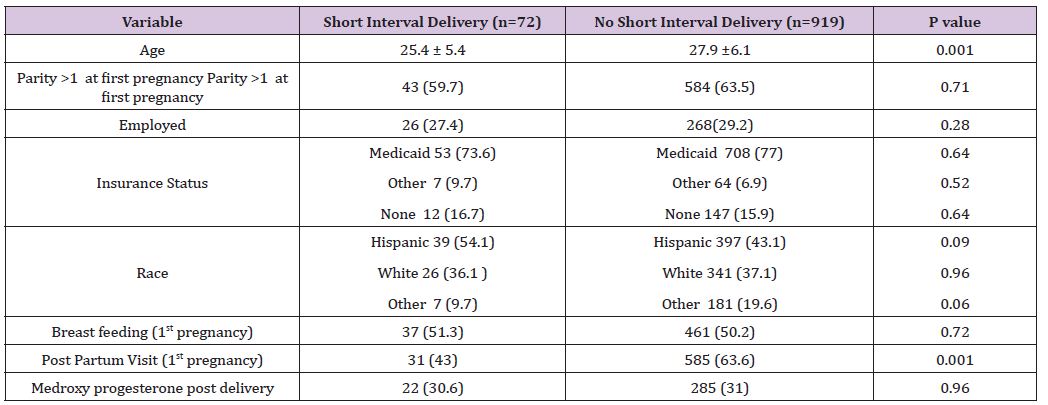
During the initial study phase 991 deliveries were performed, of which 72 (7.3%) were SID. PPV attendance was 616 (62.1%). Only younger age (25.4 ± 6.4, 27.9 ± 5.1, p=0.001) and attendance at the PPV (43.1% vs. 63.6, p=0.02) differed between the SID and the non SID group (Table 1). The only modifiable variable was attendance at the PPV. Based on these finding, a PPV program was developed that included moving the PPV from 6 weeks to 3 weeks in attempt to increase PPV attendance. In the follow up period of the 1056 deliveries, 53 (5%) were SID and PPV attendance was 71.2% (n=752). Significant decrease in SID was noted when comparing the two time periods (7.3% vs. 5%, p=0.04). In addition an increase in PPV attendance was noted (62.1% vs. 71.2%, p=0.001).

Table 1: Comparison of Characteristics of Short Interval Delivery to Non -Short Interval Delivery during Initial Phase of Study.

Discussion

We noted that a younger age and failure to attend their PPV after first pregnancy were increased in SID as compared to non-SID in our population. From this information, we altered the timing of the PPV from traditional 6 weeks to 3 weeks, in an attempt to increase PPV attendance. In the second phase of our study we noted, an increase in our PPV attendance and a decrease in SID. Thus, suggesting a 3 week PPV as a possible intervention to decreasing SID. Previous studies have shown that the initiating of contraception in the postpartum period is an effective tool in decreasing SIP [11]. National data has demonstrated that up to 40 % of patients fail to attend their postpartum visit [12]. Novel approaches to increase PPV attendance can provide a timely venue to discuss and prescribe contraception. This in turn will decrease the SIP. Another approach to increase prenatal care is the offering of incentives, such as coupons, cash, and merchandise. Although some of these studies noted an increase in attendance at prenatal care visits, they were no more likely to return for a PPV than the non- incentivized controls [13]. Furthermore, short interval pregnancy was not an outcome measure in these incentivizingstudies. We chose to use two deliveries in an 18 months time frame. We employed these criteria for several reasons. It was a definable end point that could be obtained from our current databases (Table 2).

Table 2: Comparison of Attendance of Postpartum Visit (PPV) at First Pregnancy and Short Interval Delivery (SID) Between Phase 1 (6 Week PPV) and Phase 2 (3 Week PPV) of Study.

Trying to determine if an individual had a positive pregnancy test or a termination after a live birth was fraught with validity difficulties. Lastly, this endpoint of 2 deliveries in 18 months may identify the greatest risk group for potential pregnancy complications and hence the appropriate subset of SIP that would benefit from an intervention [1]. Although we have noted no adverse clinical outcomes since altering the timing of our PPVs, our study was underpowered to look at improvement in detection or failure to identify problems as a result of altering PPV timing. The 6 week PPV is based on the physiology to allow for sufficient time for involution of pregnancy. This timing of the PPV is based on no discernable evidence [14]. The traditional timing of PPV may relate to a time when less effective contraception was available. Studies have shown that between 20 and 60% of women has had intercourse by 6 weeks postpartum [15]. The return of ovulation can occur as early as 26 days postpartum and 78% of women have ovulated before their “first post partum” menses [16]. For these reason, the starting of contraception prior to 6 weeks seems prudent.

Although we encourage long acting reversible contraception (LARC) in appropriate individuals, estrogen containing contraception was also prescribed at the 3 week PPV. These medications were avoided in breast feeding patients and in those that may be at higher risk of venous thrombosis. This includes obesity, smokers, difficulty in ambulation and other medical complications. If these individuals were not amenable to other forms of birth control, then combined contraception was started after 6 weeks. There are several strengths of our study. It was performed on a stable population that is not transient. Although minor deviation from individualizations can occur, major counseling, treatments, and follow up are protocol driven, ensuring evidence proven standard of care. We chose two time periods to allow for adequate implementation of our revised PPV protocol and decreasing the chance of overlapping study participants. As noted earlier, we defined our SIP as two deliveries in the dedicated time periods. This ensured validity in our measurements and also identified those pregnancies at highest risk for poor outcomes. Lastly, during the both study phases the only immediate postpartum contraception available was medroxy progesterone.

This eliminates the bias of immediate postpartum LARC on the incidence of SID. There are some noted weaknesses to our study. A randomized study design would have allowed for a more effective method to control potential biases that may occur over time. Although our definition of SIP has its value, it could be considered a weakness, because it fails to identify a large population that maybe at risk for subtle outcome concerns. The time period was considerable for this project. Thus, different clinician and changes in patient population may have occurred. The difference we found in attendance at PPV and decrease in SID were statistically significant in our two cohorts, but our study was underpowered to analyze more clinically important outcomes, such as preterm labor, preeclampsia, LBW, or other morbidities. SIP can lead to poor pregnancy outcomes. Postpartum contraception is a proven intervention that has decreased SIP rate. However, to implement postpartum contraception novel approaches are needed to ensure the patient can receive it. Changing the PPV from the standard 6 to 3 weeks may be one technique to provide clinician-patient interaction to educated and prescript postpartum contraception in a timely fashion.

For More Articles: Biomedical Journal Impact Factor : https://biomedres.us

Journals on Cancer

Desmocollin-3 and Cancer

Abstract

Desmocollin-3 [DSC3] is a transmembrane glycoprotein belonging to cadherin family of homophilic adhesion molecules, and is produced by the endoplasmic reticulum. DSC3 expression is seen in the suprabasal layer of stratified epithelium. DSC3 is a p53 responsive gene and can be detected by microarray. DSC3 protein expression is associated with expression of wild type p53 expression and can be detected by immune histochemistry. DSC3 protein is expressed on the surface of normal tissues. In proliferative tissues like, fetal and cancer, DSC3 protein is also seen in cytoplasm besides on cell surface. Expression of DSC3 is used as a diagnostic biomarker to differentiate squamous NSCLC from adenocarcinoma of lung. DSC3 expression is also seen in ovarian cancer, melanoma, colorectal cancer, cervical cancer, and meningioma cancer arising from oral cavity.

Expression of wild type p53 is associated with expression of DSC3. Chemotherapy, radiotherapy, targeted therapy [tyrosine kinase inhibitors], hypo methylating agents are known to induce expression of DSC3 in DSC3 negative cancers. As a homophilic adhesion molecule, it provides a unique opportunity for active immunotherapy by inducing DSC3 on surface of immune cells. CADI-05 is one such immunotherapy. It is found useful in management of squamous NSCLC and ovarian cancer when used with chemotherapy. It improves response rate and survival. As a mono therapy, it induces remission in melanoma and bladder cancer.

Keywords: Desmocollin- NSCLC; Cancer; CADI-05; Biomarker; Immunotherapy

Abbreviations: DSC3: Desmocollin-3; NSCLC: Non-small cell lung cancer

Introduction

Desmocollin-3[DSC3] is one of the adhesion molecules of cadher in super family found in desmosome and is a major adhesive force of epithelial cells [1-6]. DSC3 is a transmembrane calcium-dependent glycoprotein produced by the endoplasmic reticulum,encoded by the DSC3 gene. DSC3 is expressed, mainly in basal and immediate suprabasal layers of the stratified squamous epithelia [7] like buccal mucosa, esophagus, cervix, fore skin tongue, trachea etc. [3,8]. As an adhesion molecule, DSC3 provides homophilic adhesion i.e. cells expressing DSC3 will adhere to each other at the site of expression but not with others; it also works as a receptor as well as ligand to participate in cell signaling [9].

P53 and Desmocollin-3

DSC3 is one of the p53-responsive gene [1-11]. p53 is reported to be an upstream to DSC3. Expression of DSC3 gene is associated with expression of wild type of p53 and depends on the methylation status of the DSC3 DNA in the p53 binding site [10,11]. p53 expression in cancer is known to be altered by mutation or deletion of the p53 gene, with mutation of p53 being the most common event in human cancer [12]. Besides deletion and mutation of p53, p53 target genes are also silenced by epigenetic silencing like DNA methylation [1-11]. Mutant p53 inactivates p63 and is also associated with down regulation of DSC3 [10]. p63 is a master regulator of epidermal gene transcription and plays an essential function in controlling epidermal development , cell proliferation, stratification and cell–matrix adhesion [13]. There are two main isoforms of p63, Tap63 and Delta Np63. Delta Np63 alpha isoform is the most abundantly expressed p63 isoform. Both p63 and delta Np63 are activator for desmocollin-3 gene [13]. Knockdown of p63 and delta Np63 results in marked reduction in expression of DSC3 without any effect on expression of another adhesion molecule E-cadherin [13].

Desmocollin-3 and Cancer:

Desmosomal abnormalities are seen in cancer, as are alterations in DCS3 expression. In many epithelial cancers, DSC3 expression either over expressed or absent. DSC3 expression is not seen in many cancers e.g. adenocarcinoma of lung, breast, prostate cancer wherein there is mutation of P53 or hyper methylation. DSC3 was first cloned from human bladder cancer cell line [14]. Its presence can be detected by microarray (gene) or immunehistochemistry (protein)

a. Lung Cancer:DSC3 is not seen in normal lung tissue [15]. DSC-3 gene is over expressed 58 fold compared to adenocarcinoma [16]. Immunohistochemistry reveals in lung cancer expression of DSC3 is seen at basal layers of tumor. DSC3expression is seen in around 30% of cases [17]. DSC 3 expression is seen in squamous NSCLC and not in adenocarcinoma of lung. It is closely associated with p63 expression which is another marker used for differentiation of Squamous NSCLC from other varieties [18-20].

b. OvarianCancer: DSC3 is seen in around 85% of ovarian caners. Its expression seems to be dependent on FSH.

c. Melanoma: DSC3 is expressed in melanoma [21-24]. Its expression decreases with increased thickness and progression to metastatic melanoma [22].

c. Melanoma: DSC3 expression is seen in 60% colon cancer and also seen in 40% of colorectal lesion metastatic to the liver [10,25,26].

e. Bladder Cancer: DSC3 was first cloned from a bladder cancer cell line [14]. We have documented DSC3 expression in around 60% of bladder cancer irrespective of grade and stage of tumor.

f. Meningioma: DSC3 expression is described in around 60% of meningioma [21,27].

g. Chondrosarcoma: DSC3 gene expression is detected in 4 of the 5 chondrosarcoma cell lines [28].

h. Pediatric Acute Lymphoblastic Leukemia: DSC3 gene is described to be over expressed in all TEL-AML1 subtype of paediatric acute lymphoblastic leukemia [29].

i. Skin Tumors: Loss of DSC3 is seen with tumour development and progression [30] and is associated with increase in K-Ras induced skin tumors [31].

j. Oral squamous cell carcinoma: Oral mucosa normally expresses DSC3. However development of oral Squamous cell carcinoma is associated with reduction or absence of DSC3 expression. This reduction/absence of DSC3 expression was associated with higher histological grade (moderately or poorly differentiated) [32].

k. Breastcancer: DSC3 is expressed in a normal breast but is down-regulated in breast cancer cell lines and primary breast tumors at protein as well as gene level [3,33]. The loss of DSC3protein expression is more likely to be aberrant methylation of rather than gene deletion or gross rearrangement of the gene [3].

l. Prostatecancer: DSC3 is expressed in normalprostate as well asbenign prostate tumors but is absent in prostate cancer due to hyper methylation [34].

Table 1: Sensitivity of DSC3 for squamous NSCLC.

Desmocollin-3 as a diagnostic biomarker:

a. Squamous NSCLC: DSC3 is used as a diagnostic biomarker to differentiate Squamous NSCLC from adenocarcinoma of lung [35-42]. DSC3 is more specific for squamous NSCLC compared to p63 as p63 is also expressed in Adenocarcinoma. DSC3 gene is up-regulated in squamous NSCLC and down regulated in adenocarcinoma [43]. Specificity of DSC3 is 100% while sensitivity is variable [18-20, 44,45] and varies with differentiation of tumor. Maximum sensitivity is seen in highly differentiated tumors and is lowest for poorly differentiated Squamous NSCLC. Sensitivity of DSC3 for squamous NSCLC is 93.2% in large cohort of 426 but drops to 59% in poorly differentiated squamous NSCLC (Table 1). DSC3 expression in NSCLC is also not related to stage or histologic grade [17] of a disease [46].

b. Paediatric Acute Lymphoblastic Leukaemia: DSC3 gene expression can be used to differentiate TEL-AML1 from other subtypes of paediatricacute lymphoblastic leukaemia [29].

a) NSCLC: In spite of squamous NSCLC having poor prognosis,smaller clinical trials suggest that DSC3 expressing tumors are likely to have better survival compared to DSC3 negative tumors and may serve as a potential prognostic marker [1,17].

b) Colorectalcancer: Tumors with methylated DSC3 DNA were significantly correlated to a worse clinical outcome than unmethylated tumors. The methylation status of DSC3 DNA was not linked to any of clinical pathological parameters includingage, gender, size of tumor, tumor grading, and tumor stage in these patients [10].

c) Prostatecancer: Loss of DSC3 predicts poor prognosis.

Effect of therapeutic intervention on DSC3 expression:

a. DNA damaging agents: Expression of wild type of p53 can also be increased or induced by DNA damaging agents like radiotherapy, doxorubicin, cisplatin, paclitaxel, gemcitabine etc. Expressionof wild type p53 is sufficient to induce expression of DSC3 in breast, colorectal and lung cancers in absence of DSC3 DNA methylation [1,10,11]. Expression of wild typep53 converts DSC3 negative tumors in to DSC3 positive.

b. Tyrosine Kinase inhibitors: DSC3 expression has reciprocal relationship with ERK of MAPK family.Decreased ERK is seen following successful treatment with tyrosine kinase inhibitors. EGFR inhibitor like gefitinib converts DSC3 negative EGFR mutant adenocarcinoma of lung in to DSC3 positive.

c. Hypomethylating/Demethylating agents: DSC3 hypermethylation is seen in prostate and breast cancerleading to lack of DSC3 expression by this tumors [3, 6, 33]. Hypomethylating/Demethylating agents like azacytidine convert DSC3 negative tumors to DSC3 Cadi-05[3,47].

Desmocollin-3 and immunotherapy:

DSC3 is a homophilic adhesion molecule, which works as a receptor as well as a ligand. This provides an opportunity to develop an active immunotherapy for DSC3 expressing tumors by inducing DSC3 on surface of tumor targeting activated immune cells. CADI- 05 is one such active immunotherapy. It induces DSC3 expression on immune cells and also induces Th1 type of immune response through TLR2 agonist activity [48]. Cadi-05 increases tumor infiltrating immune cells [49] and found useful in management of cancers as a monotherapy for small size tumors [49,50]. As combination therapy with checkpoint modulators, radiotherapy as well as chemotherapy, Cadi-05 improves outcome of large size tumors [51].

Cadi-05 achieves and maintains remission in melanoma as well as in bladder cancer as a systemic monotherapy [52, 53]. In combination with chemotherapy, it improves response rate. Responses achieved are durable and results in improved survival. Identical results are seen when combined with radiotherapy. It is expected that combination with anti PD-L1 therapy will result in significant improvement in no. of durable responses.

For More Articles: Biomedical Journal Impact Factor : https://biomedres.us
Journals on Orthopedics

Trigger of All Fingers in an 80 Years Old Male: A Case Report

Introduction

Trigger finger is a common condition with a reported prevalence of 2% to 20% [1,2]. Generally, trigger finger affects women more than men and the age distribution is bimodal with one group below six years of age and the other in their fifth and sixth decade of lif. It is a disorder which is associated with entrapment of the flexor digitorum superficialis or flexor digitorum profundus tendon along its course through fibro-osseous tunnels of the wrist, palm and digits of the hand [1]. Onset is usually gradual, associated with repetitive tasks, unaccustomed activity or compression of the pulley against hard objects. Snapping, clicking, locking, stiffness, and difficulty extending a flexed digit, often with discomfort or pain, are the most prominent symptoms [3,4]. Several studies suggest that individuals with type 1 diabetes, rheumatoid arthritis, carpal tunnel syndrome, arthritic changes in the wrist, hypothyroidism, mucopolysaccharidoses, amyloidosis, and congestive heart failure may be predisposed to flexor tendon entrapment [1].

The research on patients with trigger finger indicates various methods of treating patients including splinting, nonsteroidal antiinflammatory agents, percutaneous injection of corticosteroids, and surgical releas [1,2,5]. Very small, uncontrolled case series have shown in their results that only about half of patients are satisfied with their symptoms after a period of splint immobilization [6-8]. Triggering may resolve after one or two corticosteroid injections, but the results vary substantially between studies (35 % and 87 % for one and 72 % to 92 % for two injections) [9-13]. Various literatures suggest that patients should be informed about 50% success rates when offering a corticosteroid injection for trigger finger and that the chances of patients landing to surgical release still remains [14-16]. Percutaneous release has a success rate of 94% according to a recent systematic review of 2114 procedures but is accompanied by relatively high rates of complications like injury to nerves, injury to A2 pulley and bowstringing [17]. Open surgical release has a high success rate with few adverse events and is supposed to be the final treatment for trigger fingers [18,19]. We here present a case of trigger finger which has unique presentation but is successfully treated with open release.

Case Report

Figure 1: Release of A1 pulley of right thumb.

Figure 2: Release of A1 pulley of right thumb.

An 80 years old male patient presented to our OPD with triggering of both thumbs and middle finger of left hand. The patient had no co morbidities like diabetes, hypertension, or hypothyroidism and hence was advised percutaneous steroid injections along with analgesics and relative splinting. 2 weeks after the injection he was relieved of his symptoms in left thumb and middle finger but right thumb was still affected. The patient was advised 2nd dose of subcutaneous steroid injection along the flexor tendon sheath and A1 pulley of right thumb but his symptoms still persisted. As the patient was still reluctant to undergo surgical release he was offered splinting and relative rest to the thumb. After 2 months of initial presentation he again present to our OPD with triggering and pain at A1 pulleys of all fingers in right hand and remaining 3 fingers in the left hand. He was finally operated with release of A1 pulley of all fingers in right hand and steroid injections in left hand. After 3 months of surgery the patient was doing well with good finger grip and no pain or restriction of movements. The operative pictures and surgical approach has been shown in (Figures 1 & 2).

Discussion

The present case is unique in itself with only one case reported till date as triggering of 10 fingers [20]. Although the presentation was gradual and the treatment was staged with physiotherapy, steroid injection and finally with surgical open release but eventually all the fingers were involved in a period of 3 months and they needed some form of intervention. Two out of three fingers which were initially treated by steroid injections were cured with no symptoms after 3 months of presentation. This result is similar to the published data about the efficacy of steroid injections in treatment of trigger fingers [9-11]. Patients who have recurrence or treatment failure with steroid injections are usually seen to opt for surgery in the first place, if other fingers are involved. Similar is the situation in our case where the patient opted for surgical release when remaining fingers were involved.

Trezies et al. investigated the occupational histories of 178 patients with idiopathic trigger fingers and they demonstrated no significant difference between the occupational distribution of patients with trigger digits and that of the general population [21]. They concluded that occupation may have a role to play in triggering of digits but many patients develop trigger for reasons other than occupation. Weilby concluded that anatomic and intrinsic factors, contribute to a predisposition for the development of tendon entrapment of the hand [22]. Our patient was a male who did not have any predisposing factors such as thyroid disease, diabetes, renal disease, connective tissue disorders, gout or rheumatoid arthritis. The unusual presentation of this patient at the age of 80 years with no positive family history and with no occupational predisposition for trigger finger makes this case unique in itself.

Conclusion

Trigger finger is a condition characterized by fibrocartilagenous metaplasia and hypertrophy of the surrounding structures of the flexor tendon resulting in a painful and debilitating restriction of motion. Flexor tendinopathy could be multi-factorial including anatomical variations of the pulley system and biomechanical etiologies. This could be exposure to shear forces and unaccustomed activity. Conventional treatment aims at decreasing inflammation through corticosteroid injection or surgically removing imposing tissue. Steroids although serve as a non surgical means to relieve the patient of symptoms, but have a limited role in multiple trigger digits presenting at one setting.

For More Articles: Biomedical Journal Impact Factor : https://biomedres.us
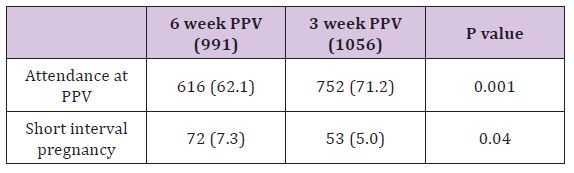
Journals on Obstetrics & Gynaecology

Pseudo-Meigs Syndrome with Ovarian and Abdominal Tuberculosis: A Case Report

Abstract

Tuberculosis (TB) is the second leading cause of death from infectious diseases worldwide. In non immuno compromised women, extra pulmonary TB accounts for 20% of new cases identified .Isolated ovarian TB is an uncommon disease given that genitourinary TB usually presents with endometrial and fallopian tube involvement. We report a case of cystic ovarian mass, with ascites, pleural effusion; tuberculosis of ovary and omentum; third degree utero vaginal prolapse in a post menopausal woman. Ascites and pleural effusion resolved spontaneously in a week of surgery. Patient received ATT and recovered well. Diagnostic difficulties in this case are discussed.

Keywords: Extra Pulmonary Tuberculosis; Ovarian Cyst: Ovarian Tuberculosis; Pseudo Meig’S Syndrome

Introduction

Tuberculosis (TB) is the second leading cause of death from infectious diseases worldwide [1]. Genitourinary TB is the second most common site for extra pulmonary TB [2]. Extra pulmonary TB is common in immuno compromised patients. 20.2% of the new cases of TB are extra pulmonary. Nine percent of extra pulmonary tuberculosis is accounted by genital tuberculosis [2]. Isolated ovarian TB is an uncommon disease given that genitourinary TB usually presents with endometrial and fallopian tube involvement [3]. Pseudo Meigs syndrome is co existence of pelvic tumour, hydrothorax and ascites. Pseudo Meigs syndrome is clinically important because it resembles metastatic pelvic cancer. Pelvic and peritoneal tuberculosis may resemble advanced ovarian cancer.

Case Report

Mrs.xxxx aged 50years P1L1, post menopausal lady presented at Obstetrics & Gynaecology department of Vinayaka Mission`s Medical College & Hospital for mass descending per vagina since 1 year and abdominal distension since 1 year. She is from a low socio economic status, rural, agricultural background. Her last childbirth is 34 years ago. Attained menopause 10 years ago. She is not a known case of hypertension or diabetes mellitus. H/o contact with Pulmonary TB present (neighbour-defaulter and died 6 years ago). Dull looking, thin built woman, cachexic, with BMI 16kg/m2. Spine is normal. No lymphadenopathy. On systemic examination-dull note and diminished breath sounds on right lower chest. On abdominal examination-no ventral hernia, no doughy feel of abdomen. Mass of 18×20 cm arising from pelvis, extending from right iliac fossa to left iliac fossa. Mass is mobile, cystic, mildly tender and lower border of the mass couldn’t be felt Minimal ascites.

On Gynaecological examination, third degree UV prolapses with cystocele and rectocele with Keratinization. On bimanual examination uterus atrophic, douglas pouch is full; mass is felt high up, continuous with abdominal mass. Colpocentesis yielded straw coloured fluid. On Ultrasonography–Uterus shows postmenopausal atrophic changes, of size measuring 4.0×2.7×2.1 cm, Myometrium normal and endometrium thin. A large well defined thin walled anechoic midline abdominopelvic cystic lesion seen with multiple septae and internal echoes, with few hyper echoic areas. The mass measured 19x17x10 cm; no calcification. Both ovaries are not imaged. Minimal ascites Serology: HIV-negative Tumor markers found to be

a). Alpha Feto Protein : 0.67 IU/ml

b). Beta HCG : 5.17 mIU /ml

c). CA 125: 213.4 units/ml

d). CA 15-3: 25.7 units/ml

e). CA 19-9 :< 0.6 units/ml

f). CEA: 1.3ng/ml

Chest X Ray-Lungs clear; moderate pleural fluid on right side CT Abdomen revealed well defined abdominopelvic hypodense cystic mass present with few areas of peripheral solid elements, minimal calcification. Mild ascites. Cytology of Ascitic Fluid-negative for malignant cells. Pleural analysis showed no malignant cells. With the team of Gynaecologists and Oncosurgeon- laparomy done. Liver, spleen normal. No adhesions. Moderate ascites. Uterus and tubes are atrophic, no nodularity. Left ovary atrophic. Right ovary is the seat of palpable mass; mass is free from adhesions, cystic, septate with few solid areas. Small areas of papillary projections noted over ovarian mass. No obvious peritoneal nodules. No lymphadenopathy. Small area of rolled up omentum. Bowel wall not involved. Right Ovarian Cystectomy, Salphigectomy, Total Abdominal Hysterectomy with Left Salphingo-Oophorectomy done. Omental and peritoneal biopsy done. Post operatively, 2 units of Albumin infusion and packed cell transfusion done. Histopathological findings- Atrophic endometrium; Myometrium unremarkable; Chronic cervicitis; Serous cystadenoma; Epitheloid granulomas seen in the right ovary; peritoneal biopsy nil significant; Omental tissue showed Tuberculous Granulomas. Post operative period uneventful. Anti tuberculous treatment started during hospital stay. Rifampicin, Isoniazid, Ethambutol and Pyrazinamide daily dose for two months followed by Rifampicin and isoniazid. Ascites and pleural effusion disappeared in a week. At six months post operative, general condition improved; definitive surgery for prolapse is scheduled.

Discussion

This patient presented with prolapse uterus, cystic ovarian mass with ascites and pleural effusion suggestive of Pseudo-Meigs syndrome and histological evidence of Omental tuberculosis. All other pelvic organs were spared. No definite diagnosis can be made. Genital TB accounts for 5-15 % of infertility. In women with tubal factor of infertility,30-50 % can have tuberculosis. In genital tuberculosis, fallopian tube is involved in 80-90 %; endometrium in 60-80 % ; ovary involved in 20-30 % and cervix in 5% of cases. Tuberculosis of pelvic organs mimics advanced ovarian cancer due to the presence of ascites, complex adnexal masses, peritoneal deposits and raised CA-125 level, especially in peri-and postmenopausal women. Other common features among women with these two conditions are abdominal pain and distension, weight loss and reduced appetite. Pseudo Meigs syndrome is a condition characterised by non malignant ascites and pleural effusion along with pelvic tumours other than solid benign ovarian tumours. Occasionally leiomyomas, stomach and colonic tumours are also seen [4]. It may occur in patients with systemic lupus erythematosis and can have elevated CA125 level [5].

A thorough family history may narrow the differential diagnosis from an infectious etiology, such as TB in patients with multiple family members who had TB, to malignancy in a family history of ovarian cancer [6,7].

In premenopausal women, elevations in CA-125 have been noted in endometriosis, TB, and other non neoplastic diseases.This makes CA-125 relatively nonspecific and non diagnostic in premenopausal women. CA-125 is elevated in 80% of postmenopausal ovarian carcinomas. Initial diagnosis of tubo ovarian abscess or ovarian malignancy can be mistaken given the similarities in clinical, radiologic, and serum markers such as an elevated cancer antigen-125, (CA-125) [8]. Sometimes women with pelvic-peritoneal tuberculosis may be subjected to a laparotomy for suspected ovarian cancer which is likely to increase their morbidity [9-13].

Conclusion

As the treatment of pelvic-peritoneal tuberculosis is completely different from that of ovarian cancer, it is important to reach a correct diagnosis. An effort should be made to obtain a cytological or histopathological diagnosis of either condition by ultrasound guided needle biopsy or laparoscopically obtained biopsy rather that proceeding with laparotomy for suspected ovarian cancer.

For More Articles: Biomedical Journal Impact Factor : https://biomedres.us

Journals on Orthopaedics

Low Back Pain: Not a Segmental Pathology

Abstract

Objective: To evaluate the pathologies of musculoskeletal system in patients complaining of low back pain. Methodology: One hundred patients, who reported to us for treatment of Low back pain (LBP), were included in the study. All patients had radiological assessment of complete spinal cord as well as other segments of musculoskeletal system.

Results: There were 58 males and 42 females. The age of the patients ranged from 13 to 84 years. The mean age ± SD was 52.5 ± 15.9 years. Nearly half of the patients (45%) showed pathologies in neck region, 31% in Temporo-mandibular joint, 22% in knees and 17% in shoulder joints. No pathology was noted among ribs or feet.

Conclusions: The results of the present study calls for wider dissemination of these findings and making health care providers of the importance of examining all area of musculoskeletal system when treating patients with low back pain.

Introduction

The system of muscles, tendons, ligaments, bones, joints and associated tissues that move the body and maintains its form is called Musculoskeletal System [1]. The diseases of this system, referred to as musculoskeletal diseases (MSDs), are extremely common and have important consequences for the individuals and society2. MSDs are one of the major causes of disease burden around the world and have been a significant reason for development of WHO’s Bone and Joint Decade3. MSDs affect individuals by limiting their activities and restricting their participation in the work force, thus increasing the need for social support. Three MSDs, rheumatoid Arthritis, Osteoarthritis and Backache are important causes of Disability -adjusted – life years (DALYs) [2].

In World Health Organization Global Burden of Disease (WHOGBD) Study 2010, low back pain (LBP) was the leading cause of years lived with disability in the world, neck pain being the fourth cause, and other musculoskeletal disorders the fifth4. According to World Health Organization, the prevalence of MSDs is increasing in both developing and developed world [3-5]. In 2010 study, prevalence of low back pain based on 165 studies from 54 countries was 11.9 ± 2 %, which increased to 12.2% (95% CI = 12.3-13.1 %) in WHO’s latest Global Burden of Diseases Study [5] of 2013.

Musculoskeletal conditions are a diverse group with regard to pathophysiology but are linked anatomically and by their association with pain and impaired physical function. They encompass a spectrum of conditions, from those of acute onset and short duration to lifelong disorders; including osteoarthritis, rheumatoid arthritis, osteoporosis, and low back pain. The prevalence of many of these conditions increases markedly with age, and many are affected by lifestyle factors, such as obesity and lack of physical activity [3]. New episodes are twice as common in people with a history of low back pain. Lifetime prevalence is58- 84% and the point prevalence (proportion of population studied that are suffering back pain at a particular point of time) is 4-33%9 [6]. Low back pain affects men a little more than women and is most frequent in the working population with the highest incidence seen in those aged 25-64year [6]. The prevalence differs with the type of population studied. Three studies of Pakistan [7-9] show a prevalence of 6.5% to 44.1%.

The exact source of acute low back pain is often difficult to identify. In fact, there are numerous possible pain producers including muscles, soft connective tissue, ligaments, joint capsules and cartilage, and blood vessels. These tissues may be pulled, strained, stretched or sprained. Additionally, annular tears (small tears that occur in the outer layer of the inter vertebral disc) can initiate severe pain. Even if the actual tissue damage is minor, and likely to repair quickly, the pain experienced may be quite severe. No matter which tissue is initially irritated, a cascade of events occurs which contributes to the pain experience. Numerous chemical substances are released in response to tissue irritation. These substances “stimulate” the surrounding pain sensitive nerve fibers, resulting in the sensation of pain. Some of these chemicals trigger the process of inflammation, or swelling, which also contributes to pain. The chemicals associated with this inflammatory process feedback more signals which perpetuate the process of swelling. The inflammation attributable to this cycle of events may persist for days to weeks [10].

Many studies have found patients with low back pain having significant changes in other joints [11-13]. However; this fact has never been brought to light in Pakistani literature. Since our centre primarily caters to the patients suffering from musculoskeletal disorders, it was thought worthwhile to undertake a similar study.

Materials and Methods

Figure 1: Joints involved.

One hundred consecutive patients complaining of low back pain were included in the study. There were 42 females and 58 male patients. On arrival at our centre, each patient was interviewed in detail by a Medical Officer / Psychologist. The presenting complaints were recorded and height, weight, Blood Pressure, Pulse and BMI are noted. Thereafter, the patient had complete physical examination by an Orthopedic Surgeon. For cervical spine, transverse processes are palpated on both sides from C2 to C6 for each vertebra and spinous process is palpated for C7 vertebra. For thoracic and lumbar spine, spinous processes are palpated for each vertebra. For sacral spine posterior surface is palpated. SI joint is palpated on posterior joint line, ankle joint is palpated on deltoid ligament and lateral collateral ligament, knee joint is palpated on site of attachment of medial collateral ligament, hip joint is palpated on greater trochanter, sternoclavicular and shoulder joints are palpated on anterior joint lines, elbow joint is palpated on lateral and medial side of olecranon, wrist joint is palpated on joint line dorsally and on radial and ulnar styloid processes and small joints of hands and feet are palpated on respective joint lines. Radiological and where needed laboratory investigations were undertaken for all joints shown in Figure 1. At our centre, all records are computerized. Radiological imaging is reported by local Radiologists as well as Radiologists at KKT Centre Canada.

Results

The age of the patients ranged from 13 to 84 years (Table 1). The mean age of100 patients was 52.2 ± 15.9 years being 51.9 ± 17.8 years among males and 52.5 ± 11.7 years among females showing no significant difference (P= 0.86). The pathologies seen in joints other than spine are shown in Figure-1. The maximum number of patients (45%) showed pathologies in neck region, 31% in Temporo-mandibular joint, 22% in knees and 17% in shoulder joints. No pathology was noted among ribs or feet.

Table 1: Joints involved.

Discussion

Many investigators have studied the involvement of various joints in patients of low back pain. Shum et al11 of United Christian Hospital, Hong Kong studied 60 patients to examine differences in the kinematics and joint coordination of the lumbar spine and hips between healthy subjects and patients with sub-acute low back pain (LBP).They concluded that back pain was related to changes in the kinematics and coordination of the lumbar spine and hips during sit-to-stand and stand-to-sit. Assessment of back pain patients should include kinematic analysis of the hips as well as the spine.

In another study, the same group12 studied 20 asymptomatic subjects, 20 LBP and 20 patients with LBP and a positive straight leg raising test were requested to perform the sit-to-stand and stand-to-sit activities. Electromagnetic sensors were attached to the body to measure their kinematics. Back Pain patients exhibited compensatory movements and altered load sharing strategies during sit-to-stand and stand-to-sit activities. They conclude that the therapy should take account of these changes so that normal kinematic and kinetic characteristics of the spine and hip can be restored.

Rahbaret et al. [13] of Tabriz University of Medical Sciences in Iran conducted a case control study on 170 patients in order to evaluate the association between knee pain and lumbar disorders. They concluded that low back pain may be responsible in the development and/or progression of knee pain. Conversely, chronic and debilitating LBP can be due to the effects of knee pain and lower extremity impairments.

Renkawitz et al. [14] from University of Regensburg, Germany conducted an experimental study on 82 individual in order to examine the relationship between Low Back Pain (LBP), neuromuscular imbalance, clinical symptoms, and trunk extension strength on two independent occasions. A direct relationship between LBP and neuromuscular imbalance was documented in individuals with LBP, whereas no significant imbalance was found in subject without LBP. However, our findings are in contrast to the prevailing practices in Pakistan. Most health care providers treat low back pain as a segmental pathology. The moment a patient with low back pain comes to a Health Care Provider; a General Practitioner or an Orthopedic Surgeon, the total attention of health care provider gets focused on to lumber/sacral spine. Radiological investigations of spine are started ignoring a thorough examination of other musculoskeletal areas. The results of the present study are in conformity with the findings of international studies mentioned above. Up to 45% of patients with low back pain were having pathologies of other musculoskeletal areas also.

Conclusion

The results of the present study calls for wider dissemination of these findings and making health care providers aware of the importance of examining all areas of musculoskeletal system when treating patients with low back pain.

For More Articles: Biomedical Journal Impact Factor : https://biomedres.us

Journals on Orthopaedics

Controversies in the Acute Management of High Spinal Cord Injuries, an Update and Opinion

Abstract

The incidence of spinal cord injuries is the lowest of all major trauma, with devastating impact on the individual affected. The immediate treatment, though it remains mainly supportive, in many situations will determine the outcome and the cost of health care. Standards of care are unfortunately still lacking, this is mainly due to the existing controversies and lack of effective treatment of the injured cord. The author discusses here some of the controversial points based on literature review and personal observation.

Abbreviations : MP: Methyl Prednisolone; NASCIS: National Acute spinal Cord Injuries Study; SDI: Spinal Decompression in Acute

Introduction

Timing of surgery

It is well known that secondary insult to the spinal cord may occur because of mechanical as well as physiological instability, an injured cord will exhibit a cascade of pathological processes involving immune mechanisms and mediators which will lead to swelling of the cord rendering it susceptible to iatrogenic injury including hypoxia and hypotension, this is found to be maximal at 24 hours. The argument for early surgery should mean that it is carried out within 4 hours of injury i.e. before cord swelling become apparent; complex, or lengthy surgery at the stage of spinal cord oedema could be harmful. Reports exist that outcome of surgery done at 24 to 72 hours is not associated with better neurological improvement or shorter length of stay in hospital, at the same time reported a high percentage of complications ranging between 24 to 41% [1-20].

It has to be noted that in cervical and upper thoracic cord injuries,” surgical stabilisation is not synonymous with early mobilisation “, that was mainly due to the multisystem physiological dysfunction and instability associated with SCI, which may take few weeks to settle. Optimum time for surgical intervention remains a question and it is the opinion of the author that surgery is best done within 4 hours of injury or be deferred later provided that alignment of the spine is corrected and maintained by traction in case of cervical spine injury and bed rest (postural reduction) in thoracic injuries, this is in addition to the standard supportive measures aimed at maintaining adequate cord perfusion and oxygenation [20-30].

High Dose Methyl Prednisolone

Since the publication of the National Acute spinal Cord Injuries Study (NASCIS) II, high dose methyl Prednisolone administration in the first 8 hours became a standard treatment for the acutely injured spinal cord. Evidence is now accumulating that there is no appreciable functional improvement after such treatment despite a modest improvement in motor scale, in addition it has been shown that the study itself contain statistical artefacts. Although steroids continue to be given to patients with spinal cord injury in many institutions, evidence of deleterious effects continues to accumulate. This controversy led to surgeons having to administer the drug for fear of litigation rather than due to a belief in improved clinical outcomes. After critical evaluation of the data available it is concluded that there is no sufficient evidence to support the use of MP in acute SCI [30-45].

Spinal Decompression in Acute SCI

It has been shown that many incomplete SCI patients, neurologically & functionally improve after conservative treatment and / or surgical stabilisation only without decompression of a traumatic spinal stenosis. Also literature show that closed or open reduction of dislocated facets in case of cervical spine offers a satisfactory decompression especially in the first few hours after injury, with good clinical outcome (in some series up to 85%) in terms of neurological improvement. After critical analysis of the available literature, there is clearly no correlation between the percentage canal encroachment and the extent of neurological deficit, also neurological recovery does not correlate with canal decompression in acute trauma of the spinal cord. Neurological decompression and stabilisation, however is indicated in cases of neurological deterioration due to epidural collection or inability to maintain spinal alignment [45-55].

Conclusion

Management of acute SCI is still sub-optimum in many areas due to the relative rarity of such devastating injury; more high quality research is required to arrive at consistent standards of care or protocols of management. It is the opinion of the author that the need arises for the creation of spinal injuries centres covering a wide population area, with an integrated multi-disciplinary input and a comprehensive care routine of management from the early hours of injury; this will undoubtedly solve the competency issue of the treating team.

For More Articles: Biomedical Journal Impact Factor : https://biomedres.us