Journal on Oncology

A Case of Xeroderma Pigmentosum | Daniel was a case of Xeroderma pigmentosum, which was confirmed by genetic examinations at the University of Tübingen. The skin of patients which is exposed to light develops malignant tumors as a result of the light rays because the skin is not able to render the UV light harmless. As Daniel was between the ages of 6 and 16 a total of 56 partly disfiguring operations were necessary, especially on the face. He had already had all forms of skin cancer from the relatively harmless basal cell carcinoma to malignant melanoma and it is almost a miracle that these tumors had not already killed him. It should be borne in mind that the life expectancy of these patients is only 16 years of age and Daniel, who is in the meantime over 27 years-old, has fortunately lived considerably longer. For More Articles: Biomedical Science Articles : https://biomedres.us/

Multiple skin tumours can be seen.

Journal on Psychology

The Psychopathological Craving: Cross-Cutting through the Psychosocial Aftermath of the De-Addiction Process | The pangs of an addiction often lead to fatal life outcomes. Its gradual transition from a regular behavior, habituation to unavoidable craving and obsessive addiction reflects how a certain thing or aspect can become an inseparable entity of man’s life. Addiction towards something can breach the thin borders between the triad of use, misuse and abuse. Although the former can have certain positive impact, however misuse or abuse of something is bound to lead to unfathomable physical, psychological, personal as well as societal level drudgery and despair. Severe addiction also has been reported to be one of the most significant contributors of crime, harming behavior, suicide or eventual death. The de-addiction process comes as a ray of hope to fight against addiction and overcome the odds. However, the de-addiction process has to be administered under professional supervision and extreme care. The present clinical presentations reflect two case studies depicting both the affirmative as well as flip sides of the de-addiction process. The two cases stand as strong guidelines of practice, ethics and how de-addiction can have both positive and lethal outcomes depending on the management modalities and psychosocial support. For More Articles: Biomedical Research Articles : https://biomedres.us/

Journal on Health Sciences

Utilization of Whole-Body Vibration Intervention for Improving Mobility in Spinal Cord Injury | Suffering a spinal cord injury (SCI) constitutes numerous neurologic, vascular and muscular problems below the level of injury. Neurologic problems can include sensation and motor impairments which can limit effective and efficient mobility and jeopardize safety. Vascular problems can include reductions in thigh blood flow, femoral artery diameter, vascular reactivity and capillary alterations [1]. Muscular problem alterations have included atrophy, particularly of type 2 fibers and eventually a shift from type 1 to type 2B [1]. These skeletal-muscle changes seemingly paralleling vascular reductions, over time, increase the risk of secondary clinical conditions such as pressure ulcers and cardiovascular disease [1]. Bone mineral density reductions and architecture due to lack of mechanical loading have been observed within 12 months post SCI [2]. Skeletal-muscle atrophy, bone density decreases and vascular insufficiencies, coupled with motor impairments can lead to subsequent mobility and gait problems. For More Articles: Scientific Research Articles on Biomedical : https://biomedres.us/

Journal on Medicine

Aseptic Loosening Of Total Ankle Arthroplasty | We present the case of a 62 years old man who suffered from a fracture of the astragals ten years ago. Since then he complained of pain while walking and at night. He used to be a taxi driver. The pain has led him to search for any other options since rehabilitation and NSAIDs did not improve his symptoms. He went under a total ankle arthroplasty replacement (Figure 1). After surgery, he was provided a foot ankle orthosis and remained not weight bearing for 6 weeks. After that time, he was let to initiate active exercises of the ankle, progressive weight bearing load and walking with canes. Electromagnetic pulsed fields were provided because of pain and edema. Articular balance was recovered by the second month post-surgery (dorsal flexion of 10º, and plantar flexion of 30º); but pain remained during walking and at night. He was referred to his orthopedic surgeon and anterior-posterior and lateral radiographies of the ankle were ordered. A slight radiolucent sign in anterior-posterior radiography of the tibia component was seen (Figure 2). He continued with Electromagnetic pulsed fields in order to reinforce bone adhesion, and to diminished pain and edema [1,2]. Active exercises were prescribed to maintain articular range of movement. He began to walk again with canes. For More Articles: Biomedical Journal Articles : https://biomedres.us/

Radiographic evaluation at 3 days post-surgery.

Journal on Surgery

Irene Castle: The Unsung Role of a Humanitarian Towards Fundamentals Defining the Operation of Modern IACUCs | Animal research is an evolutionary process where researchers subject themselves to strong competition for funding. Since 1985, the approval of such endeavors had envisioned the official incorporation of strict rules and regulations to assure humane animal use and care, falling under IACUCs regulation. In order to get their projects approved, researchers comply with their respective institutional organizations but they are rarely, if never exposed, to data involving the fundamentals resulting in the creation of modern IACUCs. Therefore, this paper intends to fill out an outstanding gap of information regarding the foundation of the first known animal ethics committee in the Chicago-area during 1945, and the struggles that characterized its genesis and the official implementation among medical organizations, while describing the early role played by distinct key characters involved that resulted in modern IACUCs. For More Articles: Biomedical Open Access Journals : https://biomedres.us/

Irene Castle at photo shoots in New York City.

Journal on Medical Science

Esophageal Carcinoma: It is Time to Move on | Esophageal carcinoma is a rare cancer of the gastro-intestinal tract, but the incidence is increasing annually. This is because of continued smoking (Epidermoid Carcinoma) and the high incidence of acid reflux disorder as in Western Hemisphere (Adenocarcinoma). The later in part may be due to abuse of alcohol, and being overweight. In the seventies the primary treatment of localized disease of the esophagus was surgery alone for mid and lower third operable and resectable early lesion. Post operative radiotherapy (RT) was recommended and given to those with close margin(s) and/or found to have regional lymph node(s) involvement. The patients with cancers of the upper third, regardless of their pathology, and those with locally advanced disease where treated with radiation only. For More Articles: Journal of Scientific and Technical Research : https://biomedres.us/

Journal on Gynecology

Staphylococcus Epidermidis Induced Maternal Sepsis and Chorioamnionitis Post Fetoscopic Laser Ablation: A Case Report | A case of severe chorioamnionitis with Staphylococcus epidermidis after fetoscopic laser ablation is presented. Infection with these bacteria, which is part of the normal skin flora, is uncommon. A revision of the Prophylactic antibiotic treatment should be taken into account. TTTS is a serious complication of monochorionic-diamniotic twins pregnancy and its divided into 4 levels of severity. When left untreated it is associated with high rate of fetal mortality. Fetoscopic laser ablation of the anastomotic vessels is one of the treatment options. Intra-amniotic infection (IAI) is frequently found with enteric or vaginal flora, such as- Ureaplasma and Mycoplasma, Anaerobes and GBS [1]. This complication as the result of the procedure is about 2% [2], despite prophylactic antibiotic treatment. In this case study we present an IAI after laser ablation involving Staphylococcus epidermidis, that is part of the human flora and is not known to be with high virulence. This case requires reconsideration of the pre-op treatment in order to reduce the rate of future cases. For More Articles: Biomedical Science Articles : https://biomedres.us/

Journal on Gastroenterology

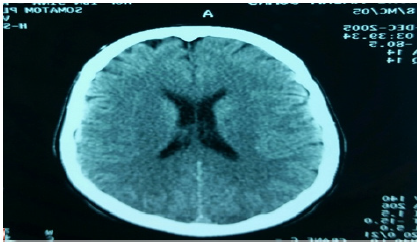
Hepatitis C and Neurological Disorders A Patient’s Case Report | Neurological disorders associated with hepatitis C is most often related to mixed cryoglobulinemia. The aim of this study is to show the severity of neurological disorders during hepatitis c infection. Mrs. S A, 60 years old, who had been in purpuric rash for six months, associated with physical and psychic asthenia and weight loss at 16 kg in 8 months. The evolution was marked by an alteration of the neurological state of the patient with an installation of motor deficit affecting the 04 limbs, abolition of the osteo-tendinous reflexes, and a hypoesthesia of the upper and lower limbs. The electromyogram (EMG) showed a sensori-motor polyradiculo neuropathy, and the etiological diagnosis was in favor of a peripheral neuropathy secondary to a cryoglobulinemia, related to hepatitis c. In addition, the patient presented after a few days of headaches, a sharp drop in visual acuity and high blood pressure, this is complicated by two episodes of convulsive seizures. A cranial CT scan is performed in an emergency without abnormalities, with no sign in relation to thrombophlebitis after injection of contrast agent. The diagnosis retained is a central neurological disease secondary to infection with the virus c associated with peripheral neurological disease. For More Articles: Biomedical Science Articles : https://biomedres.us/

Cranial CT scan normal, without abnormalities.

Journal of Operative Dentistry

Detection of Early Carious Lesions Using Laser Diode Near-Infrared Transillumination (In Vitro Study) | The importance of early detection before the development of irreversible damage is now generally accepted [1]. Most studies do not report the presence of non cavitated lesions, though they have been shown to have predictive value. Thirty three extracted sound premolars were examined on both approximal surfaces by EDX to determine Ca/P ions ratio on (D1), imaged using Periapical Digital Radiography (D2), and transilluminated using DIAGNO cam (D3). Any defect that indicated cavities by any of the mentioned methods discarded the tooth. Three teeth were randomly selected and imaged by Scanning Electron Microscopy. The remaining thirty teeth were covered with acid resistant varnish except in 3x3mm in approximal areas and 15 teeth were immersed in a demineralizing solution for 48H (Group I), the other 15 teeth were immersed for 72H (Group II). Both groups were then re-examined using D1, D2 & D3. Six teeth of groups I & II were selected and imaged by Scanning Electron Microscopy. Biomedical Research Articles : https://biomedres.us/

Journal on Traumatology

Treatment of Scaphoid Waist Non-Union with A ModifiedMatti-Russe Technique: Our Experience Giuseppe | Amongst the different techniques for scaphoid non-union, the Matti-Russe procedure is a simple method where a corticocancellous bone graft from the iliac crest is packed in the scaphoid. A variant of the technique used in our Department involves a longer incision and bone graft from the radius. Aim of the study was to evaluate the outcome of our variant of the Matti-Russe procedure for scaphoid nonunion. During a 30-year period (January 1986-June 2016), 29 patients referred to our Hospital with a scaphoid nonunion and underwent our modified Matti-Russe procedure. We sampled 16 patients (14M; 2F) with complete data who referred consecutively between January 2000 and June 2016 (age range: 15.6-59.8 years; average 34 years). Scaphoid non-union was classified according to Alnot. Post-operatively the wrist and thumb were immobilized in a cast for 6 weeks. Patients’ outcomes were assessed at 4-months and at 12-months post-op using the Mayo wrist score (MWS) questionnaire. Average follow-up was 18.4 ± 5.6 months. For More Articles: Journal of Biomedical Research and Reviews : https://biomedres.us/