Journals on Emergency Medicine |BJSTR

Bladder Cancer Diary: A Necessary Clinical Tool for Management of Bladder Cancer Patients

Introduction

Bladder cancer is one of the most common Urological cancers. Bladder carcinoma is most frequently seen above the age of 55 years and is significantly more common in men, than in women [1]. Several risk factors are associated with bladder carcinoma namely smoking, occupational exposure to aromatic hydrocarbons and amines seen in paint, petroleum factory workers, chronic bladder inflammation including schistosomiasis, and others [2]. Bladder cancer owing to its multifocality carries a great risk of recurrence and progression, requiring extensive surveillance and follow-up extending over years or maybe even a lifetime, depending upon the risk group stratification [3,4]. Such a prolonged follow-up also causes a significant cost burden on health systems globally [5]. Additionally, there is a great variation and discrepancy among health systems across the world in the implementation of follow-up for patients with bladder cancer [6]. A significant portion of patients are either lost to follow-up over these years or succumb to errors in follow-up made by treating Urologists as “complete patient information” including initial presentation, initial histopathological biopsy, operative records, staging radiological investigations, follow-up cystoscopies and adjuvant treatments conducted and data on recurrences are not available at a single place. The problem is less frequently encountered in established healthcare setups like National Health Services (NHS) UK, but significant in health systems where electronic patient records are not available nationally.

Even in established healthcare setups, it takes a lot of time to retrieve all the patient clinical letters and data in outpatient clinics were patients normally present for follow-up of bladder cancer. The rationale of using and formulating a “Bladder Cancer diary”, is to create a diary having all the patient clinical information from the time of initial presentation to date, available at a single glance. Although the bladder cancer guidelines already exist, there is a huge discrepancy in implementation, leading to unnecessary interventions on the one hand and an increased risk of progression and recurrences, due to incomplete follow-up on the other hand. This diary will also serve the purpose of the patient’s right to information, which is of pinnacle importance in modern-day medicine [7]. The purpose of this study is to use a Bladder cancer diary as a clinical tool, which can be conveniently used to provide critical clinical information required for the management and follow-up of bladder cancer available at a single glance.

Material and Method

Our research is a descriptive type of study, conducted at Services Hospital Lahore on new and follow-up cases of Bladder Cancer between June 2023 to August 2023. By reviewing existing literature and “The European Association of Urology Guidelines” on bladder cancer, we have formulated a bladder cancer diary that contains the patient’s clinical record. This bladder cancer diary can be filled by the treating urologist, nurse, MDT coordinator, and others and is to be kept with the patient for record keeping and planning further interventions, at a single glance. This diary is to be kept with patients serving the purpose of patient right to information as well, where they can bring it to their clinical appointments and present it to the treating urologist who can then both review the previous clinical information as well as add clinical notes at the end of the session for future reference.

• Inclusion Criteria:

1) Both Males and Females 2) Age 40 – 80 years 3) All New and Follow-up cases of Bladder Cancer 4) Patients who consent to participate

• Exclusion Criteria:

1) Patients with refused to participate

Validation of Bladder Cancer Diary

The draft of the diary after formulation was sent to a panel of experts, including Consultant Urologists and Radiologists from different teaching hospitals via emails and in person. Based upon their recommendations, a 2nd final draft of the bladder cancer diary was created.

Pilot

After Validation, a pilot project of 30 patients was run, in which a bladder cancer diary was filled and completed and deficiencies in follow-up were noted to interpret and analyze the importance of a bladder Cancer diary.

Results

The proposed changes after validation from the expert panel in 2nd draft included:

1. Addition of MRI for local staging, in addition to CT scan in preoperative radiology.
2. Addition of Previous Biopsy details in the recurrence section.
3. Addition of stoma care section after Cystectomy and Diversion.
4. Addition of History of tuberculosis in the History section.

Results of Pilot After Validation

This was followed by a Running Pilot project of twenty Patients, for which bladder Cancer diary Performa’s were filled and results were interpreted and analyzed. The mean age of the patients was 64.3 years ± 8.97. Among 30 patients included there were 21 male and 9 female patients. Following commonly occurring deficiencies were seen regarding management and follow-up of bladder Cancer patients (Table 1).

Table 1: Commonly Observed Deficiencies in Patients of Bladder Cancer during Pilot Project.

biomedres-openaccess-journal-bjstr

Table 2:

biomedres-openaccess-journal-bjstr

1) A large majority of patients did not have follow-up check cystoscopies beyond a year, until recurrence of symptoms like painless hematuria.
2) Few Patients lost their Radiology and biopsy reports in follow- up, with no previous record available.
3) Few patients did not have any follow-up at all after First TURBT until the recurrence of bladder cancer causing life-threatening and incurable disease burden.
In almost all patients except a few, there was a significant lack of implementation of follow-up for Bladder Cancer patients causing unnecessary interventions on one hand and complete or partial lack of follow including check cystoscopies on another hand, necessitating the use of record keeping in form of Bladder Cancer diary (Table 2).

Discussion

Clinical Record keeping is an essential part of good clinical care, patient safety, clinical audit, and clinical governance [8,9]. Record keeping helps doctors liaise with other doctors, their patients, support staff, community-based services, and regulatory bodies. It is essential for continuity of care in health services [10]. Poor record keeping also comes with the risk of medicolegal errors, errors in patient management, and unnecessary repetition of investigations and interventions [11]. Therefore, it is vital and critical. Bladder Cancer due to the natural history of the disease requires follow-up stretching over years. There also exists a great discrepancy in the follow-up of patients with bladder cancer. In healthcare systems where electronic record keeping is not available or not synchronized nationally, there exists a lack of implementation of bladder cancer follow-up guidelines, leading to a greater risk of progression of disease, recurrences, and even later on presentation with incurable metastatic disease. Any clinical tool that presents the option of cataloging, collection, and reproducibility of clinical data for bladder cancer patients carries a significant appeal for its use in clinical practice. The bladder tumor diary that we have suggested and formulated in our study is one of the prime examples of a necessary clinical tool in the management of patients with Bladder Cancer.

Worldwide greater importance and stress are now being laid by regulatory bodies for record keeping of patients. In Urology, the collection of clinical information does exist in the case of the management of overactive bladder and urinary incontinence in the form of a bladder diary [12], but no such valid attempts are seen in clinical practices for the sake of bladder cancer management. Bladder cancer diary is a quite fresh concept with few previous efforts seen in the same domain across different healthcare systems globally for bladder cancer patients. In an era of clinical governance and essential record keeping, our study has presented a fresh yet valid clinical tool for the management of bladder cancer patients in the form of a bladder tumor diary that also comes up with the benefit of the patient’s right to clinical information. Limitations of our study, however, include a lack of similar efforts in literature, bladder tumor diary being a fresh concept that still has to pass the test of time and practical implementation in clinical practice, and expert opinions on the matter, but still is an introductory effort that can form the basis of similar and better efforts in future to help in standardization and implementation of good clinical care for bladder cancer patients.

Conclusion

It is concluded that a bladder tumor diary is a critical clinical tool that can be used conveniently in the management of bladder cancer patients. The use of a bladder Cancer diary will not only reduce the errors in implementation of follow-up of bladder cancer patients but will also minimize the time taken in clinical appointments to gather, retrieve, and tabulate previous clinical records of patients. This is of particular importance in healthcare systems where electronic patient records are either not available or not synchronized nationally. Bladder tumor also carries a universal appeal, where this can lead to standardization of patient care with far fewer chances of discrepancies in follow-up of bladder cancer.

Follow us on: Biomedical Journal Impact Factor: https://biomedres.us

https://scholar.google.com/citations?user=OFtUOZYAAAAJ&hl=en
https://www.base-search.net/Search/Results?lookfor=Biomed+Journal+of+Scientific+%26+Technical+Research&l=en&refid=dcsuggesten
https://citefactor.org/journal/2574-1241/biomedical-journal-of-scientific-technical-research
https://ideas.repec.org/s/abf/journl.html
https://econpapers.repec.org/article/abfjournl/
https://www.ncbi.nlm.nih.gov/nlmcatalog/101723284
https://bjstr.org/
https://bjstr.org/about.php
https://biomedres.us/reprints.php
https://biomedres.net/submit-manuscript.php

Journals on medical research |BJSTR

Do We Really Need Lie Scales to Detect Faking on Self-Report Measures?

Overview


Objectively scored non-cognitive instruments such as Likert-Style self-report questionnaires are used routinely for information gathering, diagnosis, placement, theory building, prediction, classification, and selection within numerous disciplines including biomedicine. However, one of the most serious drawbacks to such measures is their susceptibility to response biases that can undermine valid interpretation of results. Pervasive among such biases is Socially Desirable Responding (SDR), which reflects tendencies to endorse (fake good) or deny (fake bad) socially acceptable behaviors when something can be gained by doing so. A common way to address such problems is to administer validity or so called “lie” scales intended to detect such response tendencies along with the targeted measures of interest. Examples of such validity scales include the K and L scales from the Minnesota Multiphasic Personality Inventory [1,2], Marlowe-Crowne Social Desirability Scale [3], Edwards Social Desirability Scale [4], Eysenck Lie Scale [5], Martin-Larsen Approval-Motivation Scale [6], Jacobson-Kellogg Social Desirability Inventory [7], Self- and Other- Deception Questionnaires [8], Balanced Inventory of Desirable Responding (BIDR; [9]), and Paulhus Deception Scales (PDS; [10]), among others

The Balanced Inventory of Desirable Responding (BIDR)


The BIDR and PDS are widely used companion measures that can be coupled with any self-report questionnaire to detect possible faking. They are essentially the same instruments, sharing 38 of 40 items in common and the same theoretical underpinning. Both instruments also are more comprehensive than most of the ones previously cited because they measure two distinct components of socially desirable responding: Impression Management (IM) and Self-Deceptive Enhancement (SDE; see, e.g., [11-13]). The SDE subscale consists of 20 items intended to measure honest but inflated self-presentation. High scores on SDE demonstrate exaggeration of skills and lack of self-awareness. The IM scale consists of 20 items that reflect uncommon but socially desirable behaviors. Higher scores on IM may reflect intentional attempts to present a socially approved but inaccurate image to others. Similarly, lower scores on IM and SDE can reflect a socially disapproved and oppositely distorted image to others. Each subscale consists of equal numbers of positively and negatively phrased items. In common applications, the BIDR includes a 7-point response metric, whereas the PDS includes a 5-point response metric, although both inventories could include either metric. Within each instrument, the lowest scale point is labeled as “not true” and highest as “very true,” with negatively keyed items reverse scored. We report results for the BIDR here due to its widespread use, effectiveness in detecting faking (see, e.g., [14-16]), and availability from its author Delroy Paulhus at no cost (https://www2.psych.ubc.ca/~dpaulhus/).

Although both the BIDR and PDS have been effectively used to detect faked responses to questionnaires, they each are 40 items in length and thus are frequently impractical to administer. One possible way to avoid using validity scales altogether is to use responses to the targeted measures themselves to detect faking directly. Over the years, many such techniques, varying in complexity, have been proposed (see e.g., [17-19]). Unfortunately, in most cases, these techniques have not fared any better than external validity scales in detecting faking.

A Simple Way to Detect Faking Without Lie Scales

One extremely simple technique that our research team recently considered for detecting faking was to use total scores for instruments that have multiple subscales measuring weakly correlated constructs. For most self-report measures, respondents can recognize responses that are socially desirable or undesirable and fake accordingly (see [19] for a comprehensive review of studies into faking responses on personality inventories). However, with multidimensional inventories with weakly correlated subscale scores, a pattern of highly desirable or undesirable responses across all subscales would be very unusual when responding honestly, and therefore provide an alternative and potentially more effective way to detect faking. After coming up with this idea, we checked back over the research literature to determine whether others had used this technique in the past. We uncovered only one such study in which Comrey and Backer [20] found that the total score from the Comrey Personality Scales was more effective in detecting faking than were validity scale scores and other indices derived from item scores within the same instrument.

Purpose of our Recent Study

Given that the Comrey and Backer [20] study is nearly 50 years old, and that their approach has seemingly not been used much thereafter, we decided to put it to the test in a new study that we recently described at the annual meeting of the American Psychological Association [21]. In the remainder of this brief article, we will share results from that study in which we compared the effectiveness of the validity scales from the BIDR and total scores from the Big Five Inventory [22] in detecting instances of faking good and faking bad.

Methods

Participants and Measures

We assigned 448 college students at random to two research conditions: (1) fake good (n =224) and (2) fake bad (n =224). In each condition, respondents completed web-based versions of the Big Five Inventory (BFI; [22], also see [19,23-26]) followed by the Balanced Inventory of Desirable Responding (BIDR; [9-10], also see [15,16,18,24,27-31]). The BFI has 44 items with five 8- to 10-item subscales that measure five superordinate dimensions of personality: Agreeableness, Conscientiousness, Extraversion, Neuroticism, and Openness, answered using a 5-point Likert-style response metric (1 = disagree strongly, 2 = disagree a little, 3 = neither agree nor disagree, 4 = agree a little, and 5 = agree strongly). As noted earlier, the BIDR has two 20-item subscales to measure Impression Management (IM) and Self-Deceptive Enhancement (SDE) using a 7-point response metric (1 = not true, 4 = somewhat true, 7 = very true).

Procedure

Participants in each research condition answered the measures honestly first, and then again to convey either the best (fake good) or worst (fake bad) impressions of themselves. To use all collected data to full advantage (that is, include 448 cases in each condition), we combined fake-good scores with honest scores for the fake-bad condition and combined fake-bad scores with honest scores from the fake-good condition. When computing total scores across subscales for the BFI, responses to the Neuroticism subscale were reverse scored so that higher scores would represent more socially desirable responses. Classification accuracy (correctly labeling honest and faked responses), false-positive-error rate (labeling honest as faked responses), and false-negative-error rate (labeling faked as honest responses) were calculated for all scoring points for each scale within the BFI and BIDR under fake-good and fake-bad conditions. The score that maximized overall classification accuracy was selected as the cut score for each scale, and overall classification accuracy was compared across subscales and instruments. Using large and equal size groups for honest and faked responding was intended to provide very strict and conservative tests of classification accuracy because it would rarely be the case in practice that half of the respondents would willfully fake responses.

Results

Cut scores and indices of classification accuracy are provided in Tables 1 & 2 for faking good and faking bad, respectively. Our analyses for individual subscales revealed that Neuroticism, when reversed scored, was best for detecting faking good (90.38% classification accuracy), and that Agreeableness was best for detecting faking bad (95.19% classification accuracy). At the overall instrument level, total BFI scores were better than total BIDR scores for detecting both faking good (93.75% versus 89.90% classification accuracy) and faking bad (95.67% versus 93.00% classification accuracy).

Table 1: CT Exam Protocol.

biomedres-openaccess-journal-bjstr

Note: BIDR = Balanced Inventory of Desirable Responding [9]; BFI = Big Five Inventory [22].

Table 2: Cut scores and Indices of Classification Accuracy for Detecting Faking Bad.biomedres-openaccess-journal-bjstr

Note: BIDR = Balanced Inventory of Desirable Responding [9]; BFI = Big Five Inventory [22].

Summary and Conclusions

Since the beginning of formal uses of objectively scored self-report measures, socially desirable responding and related tendencies to fake responses have been serious concerns for users of results from such measures. Accordingly, a wide variety of methods to discourage and detect such invalid response tendencies have been suggested and evaluated over the years. Administering validity or “lie” scales along with the targeted measures of interest is perhaps the most common technique used to detect faking but has the drawback of requiring administration of extra items. To address such inefficiencies, we revisited the technique of using total scores for measures that assess multiple, and ideally weakly correlated, constructs. To provide a strong test of the effectiveness of the “total score-based” method, we implemented it using a brief length but widely administered personality inventory along with one of most comprehensive direct measures of socially desirable responding available to large and equal size honest and faking groups. Results were very encouraging in showing that the “total score-based” method outperformed popular extended length validity scales while requiring no additional items beyond those from the targeted instrument. The total score technique also would be expected to perform even better with longer measures, additional subscales, and lower correlations among subscale scores. We, therefore, encourage further research into and application of this promising “rediscovered” procedure for detecting faking on self-report measures sharing the characteristics considered here.

Follow us on: Biomedical Journal Impact Factor: https://biomedres.us

https://scholar.google.com/citations?user=OFtUOZYAAAAJ&hl=en
https://www.base-search.net/Search/Results?lookfor=Biomed+Journal+of+Scientific+%26+Technical+Research&l=en&refid=dcsuggesten
https://citefactor.org/journal/2574-1241/biomedical-journal-of-scientific-technical-research
https://ideas.repec.org/s/abf/journl.html
https://econpapers.repec.org/article/abfjournl/
https://www.ncbi.nlm.nih.gov/nlmcatalog/101723284
https://bjstr.org/
https://bjstr.org/about.php
https://biomedres.us/reprints.php
https://biomedres.net/submit-manuscript.php

Journals on Medical drug and theraputics |BJSTR

GC-MS Analysis of Terpenoids Extracted from Buchholzia Coriacea Seed Displayed Inhibitory Potentials Against Sars Spike Protein Receptor Binding Pocket

Editorial

Chronic silicosis, interstitial pneumonia, coal worker’s pneumoconiosis, idiopathic pulmonary fibrosis, siderosis, nonspecific interstitial pneumonitis, hypersensitivity pneumonitis, connective tissue- related pulmonary fibrosis, cryptogenic organizing pneumonia, acute interstitial pneumonitis, and desquamative interstitial pneumonitis, sarcoidosis, familial pulmonary fibrosis, and asbestosis are among the commonly known (internal) lung diseases, infections, and injuries [1]. Pneumonia and acute bronchitis are examples of lung infections that can cause serious side effects including pulmonary hypertension and respiratory failure. This editorial examined the general pathophysiological characteristics, mechanisms, and occurrences of various injuries. Severe lung infections initiate acute respiratory distress syndrome and chronic obstructive pulmonary disease that declines lung function [2]. Simultaneously, the lungs become inflamed and make breathing difficult. Moreover, inflammation leads to the overproduction of mucus and thickening of the lining of the lungs. These unnatural alterations disturbed gas exchange for respiration and therefore, excessive inflammation can be life-threatening. Besides, harmful pathogens always remain in the contacts, and inflammation is necessary to eliminate these fatal elements. Therefore, a perfect balance between inflammation and anti-inflammation is critical for the proper functioning of the lung and its homeostasis [3]. These pathological settings initiate various diseases such as pneumonia, acute respiratory distress syndrome, asthma, chronic obstructive pulmonary disease, rheumatoid lung disease, interstitial lung diseases, pulmonary fibrosis, pulmonary sarcoidosis, and pulmonary hypertension.

The cellular and molecular aspects of lung inflammation during acute and chronic inflammatory states were described. Alveolar macrophages and alveolar epithelial cells networking operate through extracellular vesicles for cell-cell crosstalk. Intercellular communications influence the releases of cytokines and mediators to modify routes. Oxidative stress initiates the pathogenesis of chronic obstructive pulmonary disease and induces airway hyperreactivity and neutrophilic inflammation, resulting in cell death. The initial oxidant insult initiates the secretion of mitochondrial reactive oxygen species, and proteases that activate NLRP3 inflammasome, alveolar septa destruction, remodeling, fibrosis, cell death pathways, and IL-1, and can be considered novel therapeutic targets. Furthermore, the generation of TNFα initiate inflammatory responses that propagate many diseases, including asthma, chronic bronchitis, and respiratory distress diseases. The suggested pharmacological agents reduce the impact of TNFα in the progression of diseases and inflammation. Immunological elucidation, and anti-TNFα therapeutic strategies can be discovered new therapeutic targets to cure inflammatory diseases and helpful to the diagnosis of inflammation and cell death. The features of host-pathogen, host-allergen, and host-particle interactions were shaped by infiltrating immune cells and secreted innate immune proteins. Apoptotic cell, neutrophil, alveolar macrophages and epithelial cell interactions tackled lung inflammation (Figure 1) [4].

Figure 1

biomedres-openaccess-journal-bjstr

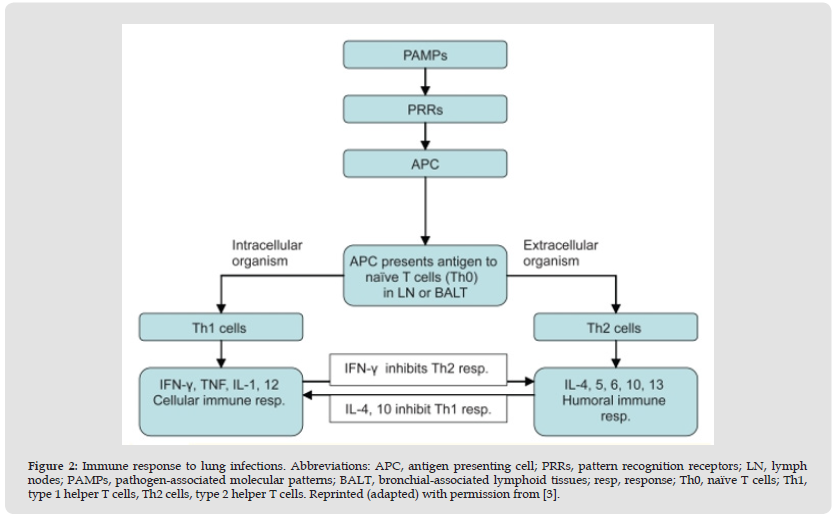
Furthermore, pharmacological manipulation can influence the routes of lung inflammation by dealing with neutrophil/eosinophil. SARC-2 infection initiates predominantly respiratory disease and various disorders of the airway, lung parenchymal, pulmonary vascular, and respiratory neuromuscular. As a result, alveolar injury promotes airway capacity and multi-organ failure that further induce hyper production of cytokines, defined as cytokine storm [5]. Clinical evidence influenced circulating leukocyte subsets and cytokine secretion, including IL-6, MCP-3, TNF, GM-CSF, IFN-induced protein 10), IL- 17, IL-1β, IL-10, and IL-1ra. By blocking proinflammatory cytokines through therapeutics such as immunoregulatory therapy, nanotechnology and corticosteroids, these storms can be prevented [6]. The concerned routes such as neutrophil NETosis, macrophages, and T cell response, that promote cytokine storm and triggered associated diseases, must be examined for searching for the therapeutics targets [5]. These illustrations proved a few similarities of it with pneumonia. The components of the cytokine storm, such as IL-6, TNF, and IL-1β, initiate vascular hyper permeability, multiorgan failure. Overall, overproduction of aforementioned components, after over a time period, becomes uncontrolled induced death. The proposed nanotherapeutics have the potential to target the inflammatory response requisite for pathogen clearance during normal proceedings (Figure 2).

Figure 2

biomedres-openaccess-journal-bjstr

SARS-CoV-2 primarily affects the respiratory system and then spreads systemically to the other organs. The higher ACE-2 expression makes the alveolar epithelial cells more accessible for SARSCoV- 2 [7,8]. In its most severe form, SARS-CoV-2 infection leads to a life-threatening pneumonia, advancing to the acute respiratory distress syndrome (ARDS) and multiorgan failure. Immunopathology of such infection signals toward the dysfunctional innate and adaptive immune pathways in lung alveolar cells [9]. This hyperinflammatory immune crosstalk is explained by the infiltration of activated monocytes/ macrophages and T cells, excessive release of proinflammatory cytokines and chemokines, interleukins (IL), interferon (INF), interferon- γ-inducible protein 10 (IP-10), granulocyte macrophage-colony stimulating factor (GM-CSF), tumour necrosis factor-α (TNF-α), macrophage inflammatory proteins (MIP), transforming growth factors and others [10,11]. The cytokine storm in patients with Covid-19 is associated with the elevated serum levels of IL-1β, IL-6, IP-10, TNF, INF-γ, MIP (1α and 1β), and vascular endothelial growth factor (VEGF) [12]. In most of the cases, a direct correlation is observed between the viral burden (i.e., nasopharyngeal viral load) and cytokine levels (e.g., INF-α, γ, and TNF) [13]. The severity of illness in a small fraction of patients with cytokine storm is also related with the coexisting ailments (like cancer, obesity, hypertension, diabetes and other). The chronic course of infection in such patients is either because of their pre-established chronic inflammation or the possibility of an early onset of organ failure under that cytokine storm. Higher mortality rate of the hospitalized COVID-19 patients is associated with the elevated levels of inflammatory cytokines in several reports [12,14]. Therefore, treatment strategies for an effective suppression of inflammatory cytokine’s activity, along with the restoration of the host’s homeostasis become crucial [15]. However, for various reasons, therapeutic considerations for the treatment of COVID-19 associated cytokine storm are very complex, unlike the several other cytokine storm conditions [5]. Presently, the major therapeutic candidates considered to manage cytokine storm in hospitalized patients include IL-6 inhibitors (Tocilizumab and Sarilumab), JAK/STAT (Janus kinases/signal transducers and activators of transcription) inhibitors (Ruxolitinib and Baricitinib), IL-1 receptor antagonist (Anakinra), and Corticosteroids etc [16,17]. With several candidates in the pipeline, a comprehensive understanding of the molecular mechanisms is essential for their clinical success.

Acknowledgement

One of the authors, Rajiv Kumar, gratefully acknowledges his younger brother, Bitto.

Consent for Publication

Not Applicable.

This research received no particular grant from any funding agency in the public, private, or not-for-profit sectors.

Conflict of Interest

The authors declare no conflict of interest, financial or otherwise.

Declaration of Competing Interest

The authors declare that they have no known competing financial interests or personal relationships that could have appeared to influence the work reported in this paper.

Data Availability Statement

Due to the nature of the research, [ethical, legal/commercial] supporting data is not applicable and thus not available.

Follow us on: Biomedical Journal Impact Factor: https://biomedres.us

https://scholar.google.com/citations?user=OFtUOZYAAAAJ&hl=en
https://www.base-search.net/Search/Results?lookfor=Biomed+Journal+of+Scientific+%26+Technical+Research&l=en&refid=dcsuggesten
https://citefactor.org/journal/2574-1241/biomedical-journal-of-scientific-technical-research
https://ideas.repec.org/s/abf/journl.html
https://econpapers.repec.org/article/abfjournl/
https://www.ncbi.nlm.nih.gov/nlmcatalog/101723284
https://bjstr.org/
https://bjstr.org/about.php
https://biomedres.us/reprints.php
https://biomedres.net/submit-manuscript.php

Journals on Medical Microbiology |BJSTR

GC-MS Analysis of Terpenoids Extracted from Buchholzia Coriacea Seed Displayed Inhibitory Potentials Against Sars Spike Protein Receptor Binding Pocket

Background

Human Corona Viruses

Corona viruses (CoVs), a family of viruses that cause respiratory and intestinal illnesses in humans and animals (Cui et al. [1]). They usually cause mild colds in people but the emergence of the severe acute respiratory syndrome (SARS) epidemic in China in 2002-2003 and the Middle East respiratory syndrome (MERS) on the Arabian Peninsula in 2012 show they can also cause severe disease (Cui et al. [1]). Today, HCoVs are well known for rapid evolution due to high nucleotide substitution and recombination rate (Vijgen et al. [2]). HCoVs have been appeared periodically in deferent places around the world and linked with major outbreaks of human fatal pneumonia since the beginning of the 21st century (Wu et al. [3]). First CoV outbreak as severe acute respiratory syndrome corona virus (SARS-CoV) started in November, 2002 at Foshan, China (Ge et al. [4]) and later turned into global infection in 2003 with a lethal rate of 10% worldwide (Lee et al. [5]). Following one decade, second HCoV pandemic was caused by Middle East respiratory syndrome corona virus (MERS-CoV), originated in June, 2012 at Jeddah, Saudi Arabia (Ge et al. [4]), with a global fatality rate of 35% (de Groot et al. [6]). Recent third major HCoV explosion, occurred in December, 2019 at Wuhan province of China, caused by highly homologous novel strain of SARS-CoV, classified as severe acute respiratory syndrome corona virus-2 (SARS-CoV-2); designated the infection as COVID-19 (Corona Virus Disease 2019) pandemic (Zhu et al. [7]). These HCoVs outbreaks are classified as continuous threat to humans and world economy because of their unpredicted emergence, rapid and easy proliferation that lead to catastrophic consequences (Zhu et al. [7]).

The virus and its host shared a complex relationship, including numerous viral and host factors, for initiation of viral infection; subsequently in potential pathogenesis (Lim et al. [8]). As intracellular obligate parasites, viruses have also advanced various strategies to hi- jack host-cell machineries (Lim et al. [8]). For HCoVs, there is no potential therapeutic agent such as drug or vaccine; thus, strict implementation of high vigilance such as for SARS-CoV-2 has been recommended for prevention and to check the infection (Cheng et al. [9]). Researchers and Authorities (WHO, CDC Atlanta and others) across the globe are working to combat the current on-going SARS-CoV-2 outbreaks, and identifying the possible origin of this novel virus to develop effective therapeutics (Cohen, et al. [10-12]). Therefore, identifying the route of origin and pathogenesis of major pathogenic HCoVs may provide cognizance in the development of potential therapeutics.

These viruses have been confronted on several occasions with prerequisite to classify a newly emerged virus associated to a severe or even fatal disease in humans under existing genera or a new species (Gorbalenya et al. [13]). In this context, current classification distributed 39 species of CoVs in 27 subgenera, 5 genera, and 2 subfamilies that categorized under family Coronaviridae, suborder Cornidovirineae, order Nidovirales, and realm Riboviria (Gorbalenya et al. [13,14]). Herein, HCoVs are categorized under subfamily Coronavirinae of family Coronaviridae, are genotypically and serologically alienated into four major genera; AlphaCoV, BetaCoV, GammaCoV, and DeltaCoV, by International Committee for Taxonomy of Viruses (Wu et al. [3]). Remdesivir, a prodrug of an adenosine nucleotide analogue, is an antiviral agent with broad-spectrum activity against viruses from several families (Brown, et al. [15]). Remdesivir was previously under development for the treatment of Ebola virus disease in the wake of the 2014-2016 Ebola outbreaks in West Africa. While it was a promising therapeutic agent for Ebola virus disease in preclinical studies (Warren, et al. [16]), monoclonal antibodies out performed remdesivir in a phase III clinical trial (Mulangu, et al. [17]) and remdesivir is no longer being developed in this indication. The antiviral activity of remdesivir against corona viruses, however, has rendered the drug of great interest during the current global pandemic.

The novel corona virus disease 2019 (COVID-19), caused by severe acute respiratory syndrome corona virus 2 (SARS-CoV-2) infection, was first reported in Wuhan, China, in December, 2019. The World Health Organization declared COVID-19 a Public Health Emergency of International Concern on 30 January, 2020 and a pandemic on 11 March, 2020 spurring an international effort to rapidly identify treatments that might ease the burden on health care systems. Phase III trials of remdesivir in COVID-19 were initiated as early as February, 2020 (WHO, 2020). Based on data from the multinational phase III ACTT-1 and SIMPLE-severe trials, remdesivir received an emergency use authorization in the USA on 1 May, 2020, and a special approval for emergency use in Japan on 7 May, 2020. Remdesivir received its first conditional approval for use in patients with severe COVID-19 in Taiwan in late May, 2020 with this conditional approval requiring the pharmaceutical company to implement a risk management plan to ensure safety.

Buchholzia. Coriacea Plant

Buchholzia. coriacea was named after R. W. Buchholz who collected plants in Cameroon in the late 19th century (Anie, et al. [18]). It belongs to the Capparaceae family. The seed of B. coriacea has medicinal values. These seeds gave the plants its common name of “wonderful kola” because of its usage in traditional medicine. The seeds are covered in a purple aril which is chewed in Ivory Coast and has a sharp pungent taste. (Burkill [19]) carried out a research on the medical uses of this plant in different parts of Africa. It has been used for years to meet a variety of illnesses; since it has been used continually over many generations it is likely that wonderful kola actually has an effect against illnesses. As a result of its supposed broad-spectrum activity, there is need to conduct studies on potential utilization of wonderful kola in foods. This research is aimed at studying the molecular interaction between secondary metabolites analyzed from the terpenoids of B. coriacea, and SARS spike protein receptor binding domain using Schrödinger Suite and also to evaluate the ADME analysis of the terpenoids of B. coriacea using Qikprop.

Materials and Methods

Extraction of Terpenoid from Buchholzia Coriacea

The method described by (Jiang et al., 2016) was employed for the extraction of terpenoid from the seed of Buchholzia coriacea. The powdered seed were soaked in n-hexane for 72 hours at room temperature and filtered. The filtrate was concentrated in a rotary evaporator at 50ºC. Terpenoids were extracted from the crude by 85:15 v/v n-hexane, ethyl acetate, and silica gel (pore size 230–400 mesh, Sigma-Aldrich catalog number: 227196). Agilent 6890a GC equipped with an HP5-MS column (30 m × 0.250 mm × 0.25 μm) coupled to an Agilent 5975C Mass Spectral Detector or Flame Ionization Detector (FID) was employed for the characterization of the terpenoids.

Gas Chromatography-Mass Spectrophotometer (GC/MS)

The sample was injected into Gas Chromatography (GC) in a port which was heated up to 3000C where the material then volatilized. The column was wound within a special oven which controls temperatures from -200 to 3200. The column surface is coated with a material which will separate the various chemical compounds in the sample based on size and/or polarity. Sample components that are more volatile and smaller in size will travel through the column faster than others; hence, gaseous components are separated as they flow through the column into the mass spectrophotometer. The mass spectrum is used to identify the components by comparing each to reference libraries of over 275,000 unique spectra. To quantify compounds within the analyzed sample, analysts establish a standard curve of known concentrations of each material.

Ligand Library Generation and Preparation

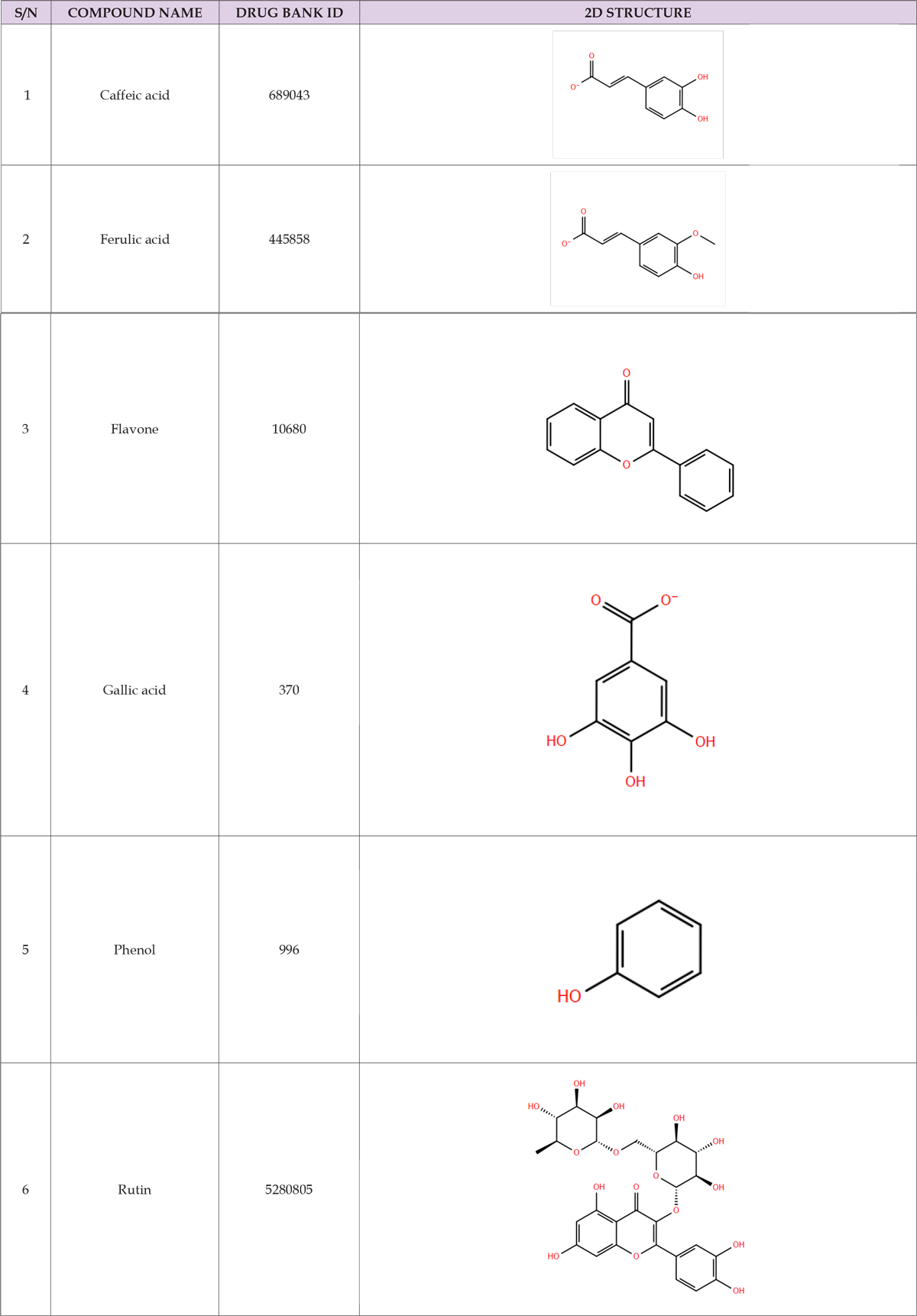
Structures of Terpenoid compounds (two dimensional) Caffeic acid, Ferulic acid, Flavone, Gallic acid, Phenol, and Rutin were mined from PubChem online database (Kim et al., 2016) in sdf format and was prepared using ligprep tool (Schrödinger, 2021), (Using Epik at pH 7.0 with OPLS3 force field). Maestro, Schrodinger Suite 2021 (Schrödinger, 2021). A maximum of 32 possible stereoisomers per ligand were obtained.

Target Retrieval and Protein Preparation

X-ray crystallographic structure of SARS spike protein receptor binding domain (2GHV) complexed with an inhibitor as co-crystallized ligand at the active site (RNA 960) (PDB ID: 2GHV) (Asthana et al., 2014) was retrieved from Protein Data Bank (Berman et al., 2000). It was selected as a result of the presence of an inhibitor as ligand at the active site of the protein (David et al., 2018). The retrieved protein was viewed and prepared using Maestro 12.5 (Schrödinger, 2021), Protein preparation wizard, optimized at pH 7.0 and minimized using OPLS3 as force field. Charges and bond orders were assigned and water molecules were deleted. Hydrogen was added to the heavy atoms.

Receptor Grid Generation

Receptor grid shows the area between the ligand and the protein where interaction takes place. For Glide docking, grids were generated by using OPLS-3 force field by keeping the van-der Waals scaling factor of 1.0 and charge cut-off value of 0.25. A box was generated to each direction with 14 Å × 14 Å × 14 Å for docking experiments.

Extra Precision (XP) Ligand Docking

XP ligand docking was performed rather than SP docking because XP is better than SP in scoring function and it also predicts the false positive results (Friesner et al., 2006). This docking was performed in Glide of Schrödinger Maestro v9.4 (Friesner et al., 2004). Final result of docking can be found as glide score by energy minimization. For docking, van-der Waals scaling factor was set to 0.85 and 0.15 for ligand compounds and partial charges cut-off value was fixed at -10.0 kcal/mole. The lowest glide score containing compounds were then subjected to MM-GBSA analysis for binding free energy calculation and best poses were recorded for every ligand compounds.

Prime MM-GBSA

Binding free energy calculation was also carried out for the protein ligand complexes. MM-GBSA is a combined method for binding free energy calculation which was used in this experiment that accumulates OPLSAA molecular mechanics energies (EMM), an SGB solvation model for polar solvation (GSGB), and a non-polar solvation term (GNP) composed of the non-polar solvent accessible surface area and van-der Waals interactions (Rastelli et al., 2010). The best poses from the Glide score were used for binding free energy calculation. The total free energy of binding: ΔGbind = Gcomplex – (Gprotein + Gligand), where G = EMM + GSGB + GNP

Ligand based ADME Analysis

Analysis of physiological descriptors of a compound such as adsorption, distribution, metabolism and excretion behaviour of the ligand compounds ADME analysis was done in QikProp module of Schrodinger (Natarajan et al., 2015). It also predicts the physico- chemical nature of the compounds as well as their pharmacokinetics properties. In this study, we used the Qikprop 3.2 module of Schrodinger (Sharma et al., 2011). There are also several other descriptors also analyzed such as Predicted IC50 for blocking HERG K+channel in-vitro, predicted octanol or water partition coefficient [log P(o/w)], number of hydrogen bond acceptors (HBA), number of hydrogen bond donors (HBD), predicted aqueous solubility (log s), solvent-accessible surface area (SASA), skin permeability (logKp), MDCK cell permeability (MDCK), binding to human serum albumin (logKhsa), blood-brain partition coefficient (logBB), percentage human oral absorption rate (Table 1).

Table 1: 2D structure of terpenoids from buchholzia coriacea extract obtained from NCBI PUBCHEM and EMBL-EBI database.

biomedres-openaccess-journal-bjstr

Results

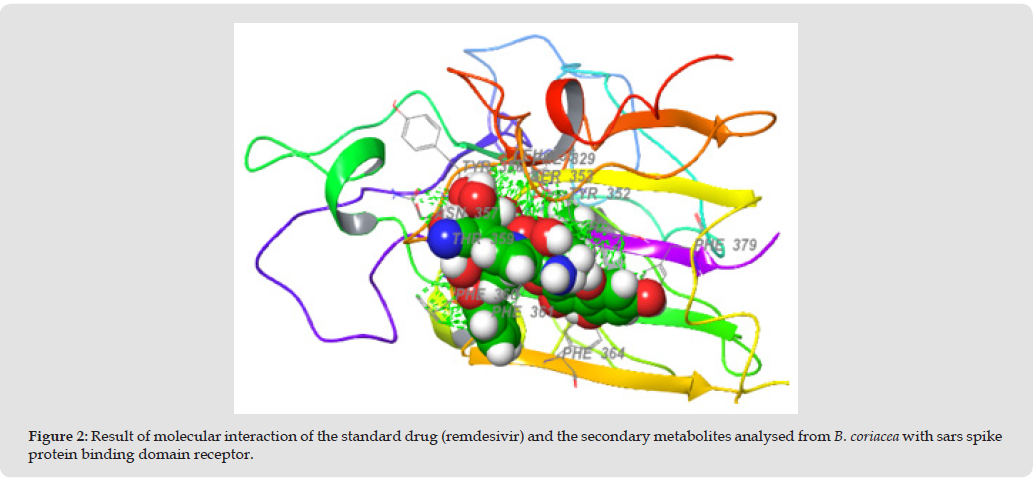
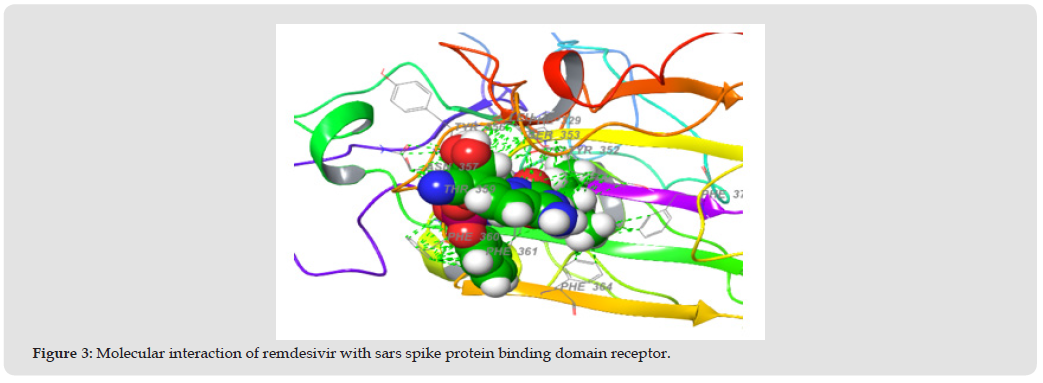
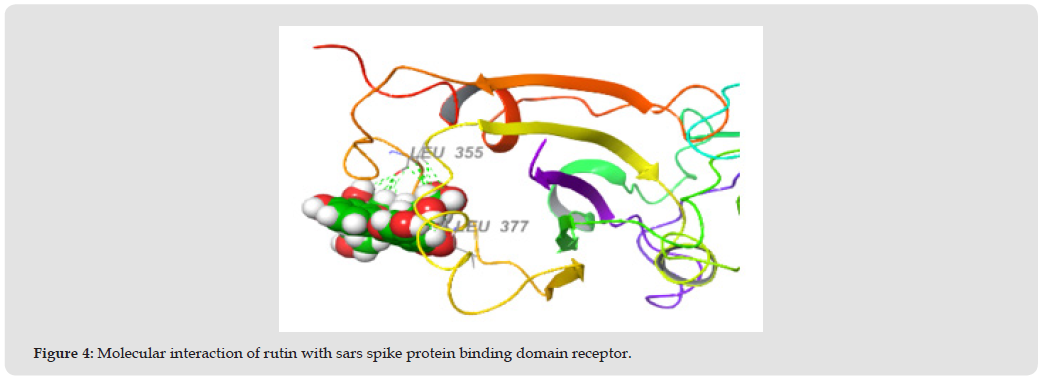
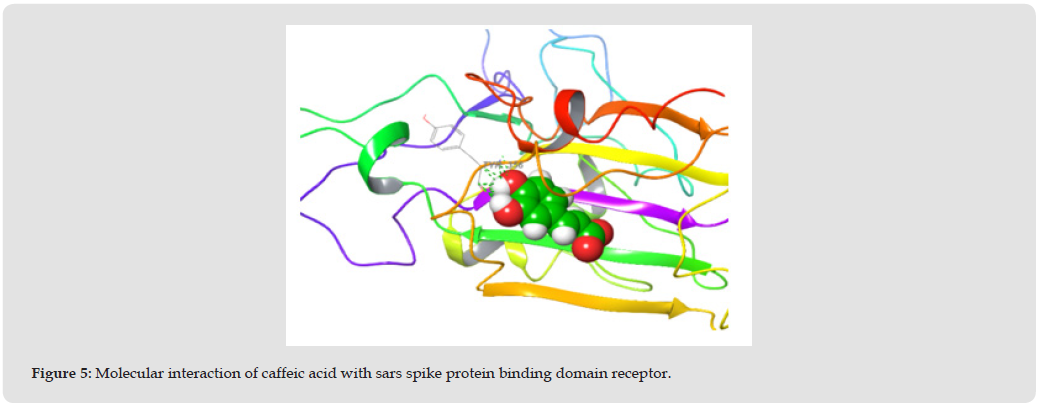
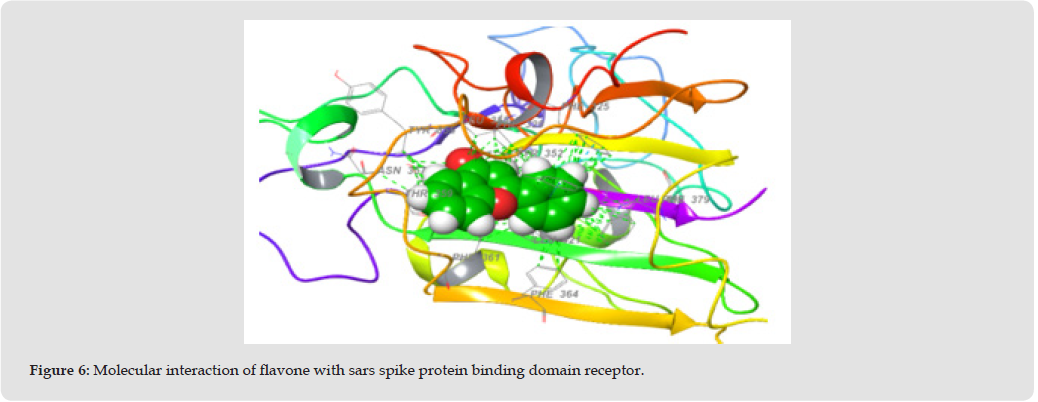
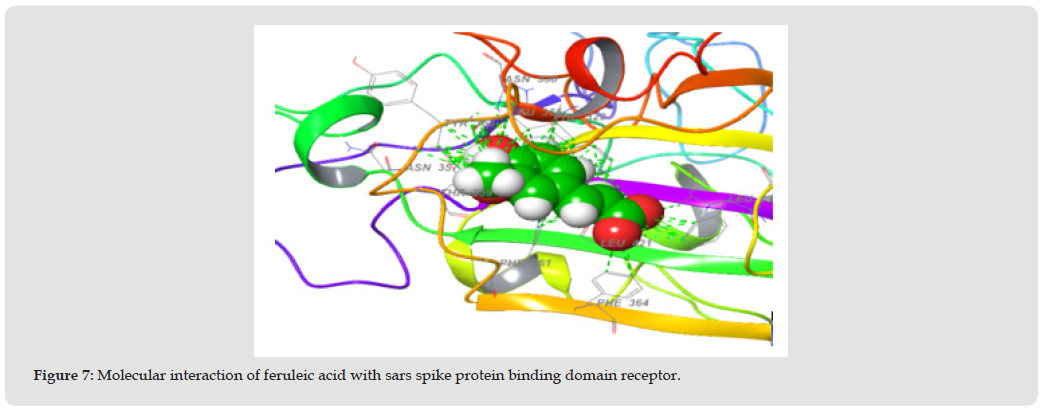
(Tables 2-4) and (Figures 1-7).

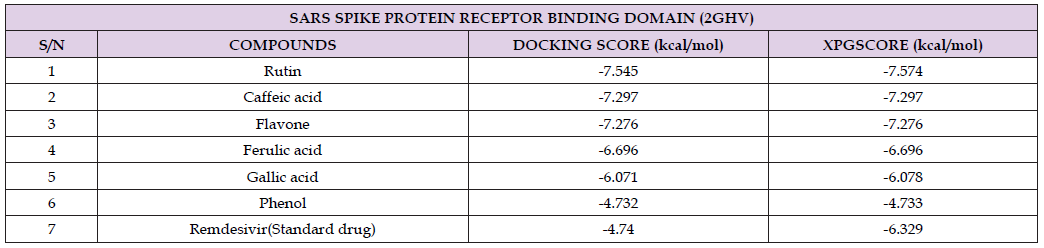
Table 2: Docking score of SARS spike protein receptor binding domain (2GHV) with the secondary metabolites analysed from B. coriacea and remdesivir as the standard drug.

biomedres-openaccess-journal-bjstr

Table 3: ADME properties of some secondary metabolites analysed from B. coriacea using QIKPROP.

biomedres-openaccess-journal-bjstr

Table 4: ADME properties of some secondary metabolites analysed from B. coriacea using QIKPROP.

biomedres-openaccess-journal-bjstr

Note: WHERE;
Total solvent accessible surface area, SASA = 300.0-1000.0
Hydrogen bonds donor, HB donor = 0.0-6.0
Hydrogen bonds acceptor, HB acceptor = 2.0-20.0
Predicted IC50 value for blockage of HERG K+ channels, QPlogHERG = Concern below -5
Predicted qualitative human oral absorption, HOA (%) = >80% is high, <25% is poor
Predicted blood/brain partition coefficient, QPlogBB = -3.0-1.2
Predicted value for serum protein binding QPlogKHsa
Predicted octanol/water partition coefficient, QPlog Po/w = -2.0-6.5

Figure 1

biomedres-openaccess-journal-bjstr

Figure 2

biomedres-openaccess-journal-bjstr

Figure 3

biomedres-openaccess-journal-bjstr

Figure 4

biomedres-openaccess-journal-bjstr

Figure 5

biomedres-openaccess-journal-bjstr

Figure 6

biomedres-openaccess-journal-bjstr

Figure 7

biomedres-openaccess-journal-bjstr

Discussion and Conclusion

Discussion

The corona viral surface spike protein S is a type-I transmembrane glycoprotein that mediates initial host binding via the cell surface receptor angiotensin-converting enzyme 2 (ACE2), as well as the subsequent membrane fusion events required for cell entry. The SARSCoV surface spike protein S mediates viral entry into the host cell and includes two functional domains as follows: S1 (Gly13–Arg667) and S2 (Ser668–Thr1255). S1contains the host-specific receptor binding domain (RBD), whereas S2 mediates fusion between viral and host cell membranes (Xu, et al. [20]). Angiotensin-converting enzyme2 (ACE2) was identified as a functional receptor for the SARS-CoV (Li, et al. [21]). The recently determined structure of the S1-RBD in complex with the extracellular domain of ACE2 illustrates the structural basis for the initial step of virus-host recognition. As the mediator of host-specific SARS infection and a major viral surface antigen, the S protein is an attractive candidate for both vaccine development and immunotherapy. Marasco and co-workers in 2005 previously identified a potent neutralizing human monoclonal antibody against the S1 RBD, designated “80R,”fromtwonon-immune (i.e not restricted by B cell re-combination) human antibody libraries. 80R binds S1 with nano-molar affinity, blocks the binding of S1 to ACE2, prevents the formation of syncytia in-vitro (Sui et al. [22]), and inhibits viral replication in-vivo.

Deletion studies have shown that the 80R epitope on S1 is located in the minimal ACE2 binding domain, between residues 324 and 503 (Sui, et al. [23]). Terpenoid compounds used in this study were extracted from Buchholzia coriacea. Using Gas Chromatography-Mass Spectrophotometer (GC-MS), the compounds were quantified and characterized to give rutin, gallic acid, caffeic acid, ferulic acid, flavone, and phenol which have strong antioxidant properties. This study tends to predict the best inhibitor for SARS spike protein receptor binding domain (2GHV) from terpenoid compounds of Buchholzia coriacea using molecular docking approach. The binding affinity of the standard drug remdesivir was compared with other ligands of the compounds derived from B. coriacea. After docking of the phytochemicals with SARS spike protein receptor binding domain, the docking scores were as follows; rutin -7.545 kcal/mol, caffeic acid -7.297 kcal/ mol, flavone -7.276 kcal/mol, ferulic acid -6.696 kcal/mol, gallic acid -6.071 kcal/mol, phenol -4.732 kcal/mol and remdesivir -4.740 kcal/ mol [24-38]. From the result of ADME analysis, the blood brain barrier permeability of the tested compounds was nearly between the acceptable ranges which is very important for a drug to pass through those barriers rutin, gallic acid, caffeic acid, ferulic acid, flavone, and phenol showed QPlogBB value of -4.278, -1.661 -1.559, -1.066, 0.078, and 0.101 respectively.

Where the acceptable range is -3.0 to 1.2, rutin could not adhere to the QPlogBB result therefore, would not be able to penetrate blood brain barrier while the remaining compounds sailed through. The secondary metabolites: rutin, gallic acid, caffeic acid, ferulic acid, phenol and flavones showed the number of hydrogen bonds donor value of 9, 4, 3, 2, 1 and 0 respectively. Where acceptable range is 0.0-6.0 and also showed the number of hydrogen bonds acceptor value of 20.55, 4.25, 3.5, 3.5, 0.75 and 2.5 respectively. These are in the value of acceptable range (2.0-20.0) [39-59]. Rutin could not sail through the hydrogen bond donor and hydrogen bond acceptor because it has exceeded the acceptable range while phenol having the least number could also not sail through because it could not meet up the acceptable range. The other compounds were able to adhere to the range.

Rutin, caffeic acid, flavone, ferulic acid, gallic acid and phenol showed solvent accessible surface area value of 767.872, 389.661, 457.137, 408.488, 341.213 and 276.612 respectively where the acceptable range value is 300.0-1000. All compounds sailed through the solvent accessible surface area value except phenol which could not meet up the acceptable range. Predicted IC50 value for blocking Human ethera- go-go related gene (HERG) K+ channel for caffeic acid, ferulic acid, gallic acid and phenol were in the acceptable range (below -5), while rutin (-5.127) and flavone (-5.451) were above the acceptable range. The predicted octanol or water partition coefficient for the compounds were also analysed rutin, caffeic acid, flavone, ferulic acid, gallic acid and phenol showed -2.567, 0.539, 3.553, 1.389, -0.577 and 1.459 respectively where the acceptable range is -2.0-6.5. Human oral absorption rate was greater for flavone (100%), phenol (100%), ferulic acid (68.81%), caffeic acid (54.072%), gallic acid (41.457%) and rutin (0%) [60-70]. where the acceptable percentage < 25% is poor and > 80% is good. Caffeic acid, gallic acid and ferulic acid with the binding affinities -7.297 kcal/mol, -6.071 kcal/mol and -6.696 kcal/ mol greater than the binding affinity of the standard drug (remdesivir) -4.740 kcal/mol sailed through the 8 ADME analysis. Therefore, they could be lead compounds in the treatment of SARS-COV [71-74].

Conclusion

Conclusively, further wet research should be carried out on caffeic acid, gallic acid and ferulic acid using in-vivo analysis to validate the result. Clinical verification is needed to ascertain them as better drugs with little or no side effects in the management of SARS-COV.

Acknowledgement

We acknowledge the Director of Research, Center for Biosafety and Drug Development (CBDD), Adekunle Ajasin University, Akungba Akoko, Ondo State, Nigeria for allowing us to use his laboratory.

Follow us on: Biomedical Journal Impact Factor: https://biomedres.us

https://scholar.google.com/citations?user=OFtUOZYAAAAJ&hl=en
https://www.base-search.net/Search/Results?lookfor=Biomed+Journal+of+Scientific+%26+Technical+Research&l=en&refid=dcsuggesten
https://citefactor.org/journal/2574-1241/biomedical-journal-of-scientific-technical-research
https://ideas.repec.org/s/abf/journl.html
https://econpapers.repec.org/article/abfjournl/
https://www.ncbi.nlm.nih.gov/nlmcatalog/101723284
https://bjstr.org/
https://bjstr.org/about.php
https://biomedres.us/reprints.php
https://biomedres.net/submit-manuscript.php

Open access clinical and medical journal |BJSTR

Advances in the Study of the Effects of Anesthetics on the Neural Circuit of the Brain

Background

Approximately 250 million individuals worldwide undergo surgical anesthesia annually [1], a crucial practice aimed at alleviating pain, ensuring patient safety, and facilitating optimal surgical conditions during surgery or invasive procedures. Anesthesia refers to the administration of anesthetics to induce a regulated, temporary state of sensory loss or unconsciousness in individuals. It effectively addresses patients’ conditions through four aspects: analgesia, sedation, muscle relaxation, and loss of consciousness [2]. Prior studies indicate that general anesthesia does not globally suppress the brain as a whole; instead, it modulates the functioning of specific neural networks [3-5], particularly by regulating neural circuits. Neural circuits consist of intricate connections established among various types of neurons in the brain. The interplay between the electrophysiological characteristics of neurons in vivo and the organization of neural circuits gives rise to a sophisticated neuronal network [6]. Neural circuits exert their influence within organisms through various configurations such as series, parallel, feedforward, feedback, positive feedback, negative feedback, and more [7].

Research has demonstrated the association of neural circuits with the processes of pain generation and consciousness. For instance, Redinbaugh, et al. (2018) identified that thalamocortical circuits play a specific role in regulating the onset and cessation of consciousness in macaques [8]. Additionally, local circuits involving medial prefrontal cortex (mPFC)-midbrain periaqueductal gray matter (PAG) neurons have been implicated in the development of chronic pain [9]. The administration of anesthetics significantly mitigates the risk of pain by modulating these neural circuits. Understanding the current state of research, identifying research focal points, and forecasting future directions are essential for advancing knowledge in a particular field. Bibliometric analysis, employing mathematical, statistical, and quantitative methods, effectively examines the internal relationships and distribution patterns within literature [10]. Despite the increasing publication of relevant papers on nerve circuitry in anesthesia, there remains a dearth of systematic reports on measurement studies in this domain.

Hence, this study aims to address this gap by comprehensively analyzing all research papers on neural circuits and anesthesia indexed in the Web of Science (WOS). Our analysis encompasses publication trends, global contributions, keyword analysis, and more, aiming to delineate the predominant trends in the application of neural circuits in anesthesia research and provide guidance for future investigations. This paper employs bibliometric analysis to visually present four key aspects of anesthesia and neural circuits: publication trends, global contributions, reference mapping, and keyword co-occurrence. Additionally, it synthesizes information on neural circuits and their targets pivotal in the induction of general anesthesia by commonly used anesthetics. This synthesis serves to furnish a theoretical foundation for subsequent scholars interested in advancing research within this field.

Materials and Methods

The primary keywords utilized for the search were (“Anesthesia”) OR (“Anesthetics”) AND (“neuronal circuit” OR “neural circuit” OR “nerve circuits”). Relevant literature on anesthesia and neural circuits was collected from the Web of Science (WOS) database. The search methodology and screening process are outlined in Figure 1A. Our focus was on original articles, excluding other types such as commentaries and reviews. All data, presented in plain text format, encompassed information on countries/regions, titles, keywords, authors, institutions, and journals. The search was concluded on September 13th, 2022, to mitigate any discrepancies arising from database updates. For the analysis of country/region contributions and keyword significance, VOS viewer 1.6.18 was employed. In the network generated by VOS viewer, the size of each node indicated the number of publications, with larger nodes representing more publications. Links between nodes depicted the relevance among various parameters (countries/regions, institutions, authors, or keywords), with thicker links indicating stronger connections. Furthermore, domain overlay analysis was conducted using both VOS viewer 1.6.18 and Pajek 645.16. Data processing and visualization, including publication year statistics, citation frequency analysis, and the calculation of average citation time and H-index for each country, institution, or author per project, were carried out using Microsoft Excel 2019 and Origin. Given that our analysis was based on publicly available datasets, an ethical statement was deemed unnecessary for this study.

Results Publication Trend

A total of 164 articles concerning the utilization of neural circuits in anesthesia were incorporated into the final bibliometric analysis. Examination of annual publication figures revealed a notable upward trajectory in research output over the years, particularly evident from 2010 to 2017 (with 5-15 papers annually) and 2018 to 2022 (with 10-25 articles annually). A significant surge in publications from 2019 to 2021 underscores the growing popularity and widespread attention garnered by the application of anesthesia in neural circuits (Figure 1B).

Figure 1

biomedres-openaccess-journal-bjstr

Global Contribution

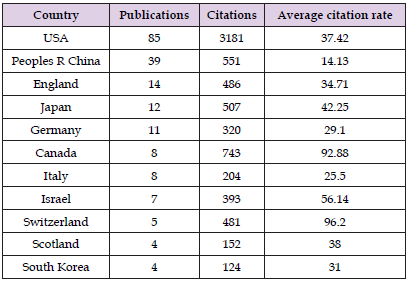
Regional co-authorship analysis revealed interconnectedness among 18 countries and regions, with the USA serving as a research hub, maintaining close collaborations with China, Germany, and the UK (Figure 2A). Despite relatively lower research outputs from Japan, Italy, and Israel, the intensity and volume of their contributions suggest strong interrelations with other countries and significant influence on international research. To visualize the global distribution of publications by country, VOS viewer was utilized and normalized using the correlation intensity method, with a minimum publication threshold set at two. Approximately 19 countries, including the United States (USA), China, Canada, the United Kingdom (UK), and others, met this threshold (Figure 2B). In terms of publication numbers, the USA emerged as the most prolific contributor with 85 publications, followed by China (39), the UK (14), and Japan (12) (Table 1). Notable journals such as Science, Current Biology, Proceedings of the National Academy of Sciences, and Nature Reviews Neurology played a significant role in disseminating research on anesthesia and neural circuits (Figures 2C & 2D). Regarding total citations, the top three countries were the US (3181), China (551), and the UK (486). The highest average citation rates were recorded for Switzerland (96.20), Canada (92.88), and Israel (56.14) (Table 1). These findings underscore the predominant influence of the USA and China in this field.

Figure 2

biomedres-openaccess-journal-bjstr

Authors Distribution

The three most prolific authors in terms of articles published from 1997 to 2022 were Brown Emeryn (12 publications), Akeju Oluwaseun (8 publications), and Purdon Patrick (7 publications), all based in the United States. Following them was Hai-Long Dong (5 publications) from China (Table 2). When considering citations, the top three authors were Brown Emeryn (1126 citations), Purdon Patrick (937 citations), and Pavone Kara (562 citations), also all from the United States (Table 2).

Journal Distribution

An overlay analysis of the cited journals reveals that ‘Anesthesiology’ is the journal with the highest number of citations, followed by ‘Frontiers in Neural Circuits’ (Figure 2C). Notably, in recent years, journals like ‘Current Neuropharmacology’ and ‘Frontiers in Neuroscience’ have experienced a rise in citations (Figure 2D).

Table 1: The Top 11 countries contributing to publications related to neural circuits for anesthesia or anesthetics.
biomedres-openaccess-journal-bjstr

Table 2: The top authors in the field of Neural Circuits for anesthesia or anesthetics ranked by publication and citation numbers.

biomedres-openaccess-journal-bjstr

Reference Mapping

We compiled the 25 most cited references (Figure 3B), with the most cited being Franks N, 2008, published in Nature Reviews Neuroscience, volume 9, issue 5, pages 370-386 (doi: 10.1038/nrn2372).

Keyword Copolymerization Analysis

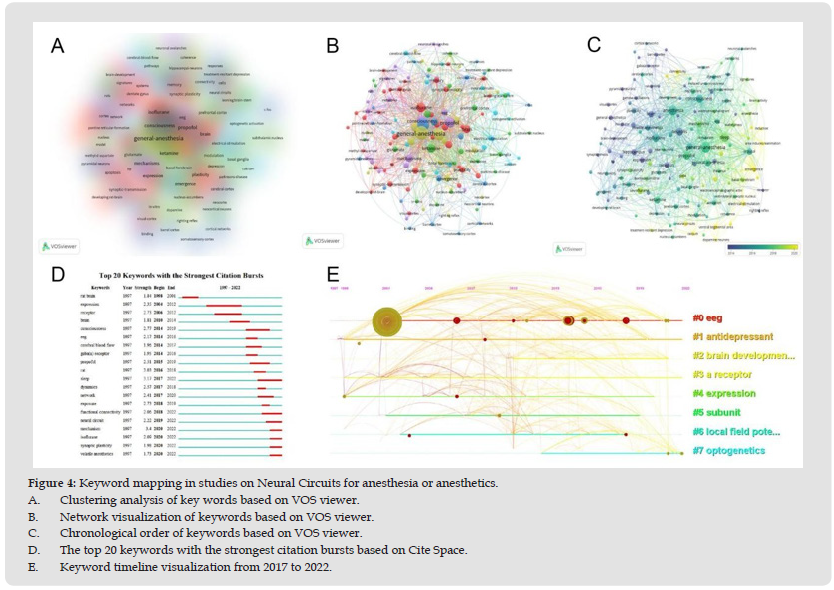
Keywords serve as a succinct representation of the core themes within a paper. Conducting a co-occurrence analysis aids in systematically comprehending the research hotspots, progress, and internal relationships within the domain of anesthesia-related neural circuits. In our study, we set the threshold for keyword occurrences in titles at a minimum of 5. Using VOS viewer for this analysis, we established a threshold of at least 16 occurrences for a keyword to be deemed significant. As a result, 234 keywords were identified and grouped into six clusters: general anesthesia, consciousness, propofol, isoflurane, ketamine, and brain (Figures 4A & 4B). The temporal distribution of these keywords was visualized based on the average year of publication, demonstrating ongoing updates and advancements in research pertaining to anesthesia or anesthetic-related neural circuits. Recently emerging keywords such as ‘plasticity’, ‘bispectral index’, and ‘propofol’ underscore growing research interests in these areas (Figure 4C). A co-polymerization analysis, conducted using Cite Space, revealed a concentration of studies on keywords including ‘mechanism’, ‘isoflurane’, ‘synaptic plasticity’, and ‘volatile anesthetic’ from 1994 to 2022 (Figure 4D). Over the last three years, there has been a consistent trend in the number of citations across all keywords. Clustering analysis along the time axis suggests that ‘neural circuits’, ‘mechanisms’, ‘isoflurane’, ‘synaptic plasticity’, and ‘volatile anesthesia’ have been focal points of recent research, potentially indicating directions for future investigations (Figure 4E).

Figure 3

biomedres-openaccess-journal-bjstr

Figure 4

biomedres-openaccess-journal-bjstr

Discussion and Prospect

Overview of Research on the Neural Circuit in General Anesthesia

This paper presents a comprehensive bibliometric analysis of research on anesthesia and neural circuits, focusing on publications, contributing countries, references, and keywords. The analysis reveals a steady increase in publications from 2019 to 2021, reflecting growing interest and attention in this field. Notably, nineteen countries and regions have contributed papers on anesthesia and associated neural circuits, with China and the USA emerging as the most prolific and influential contributors. Among individual authors, the top three, all from the US, include Brown Emeryn (12 publications), Akeju Oluwaseun (8), and Purdon Patrick (7), followed by Hai-Long Dong (5) from China. In terms of citations, the leading authors are also from the USA, with Brown Emeryn (1126 citations), Purdon Patrick (937), and Pavone Kara (562) garnering the highest citation counts. This underscores the significant role that the USA plays in research related to anesthesia and neural circuits. Keyword analysis reveals current focus areas in this field, including general anesthesia, consciousness, propofol, isoflurane, ketamine, and brain studies. The keyword timeline clusters suggest that neural circuits, mechanisms, isoflurane, synaptic plasticity, and volatile anesthesia are prominent research hotspots in recent years and likely directions for future research.

Concept and Function of General Anesthetics

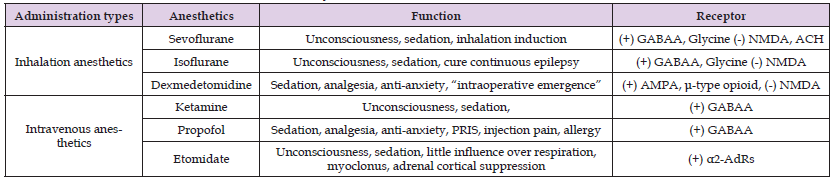
General anesthetics, administered via inhalation, intravenous injection, or intramuscular injection, exert a reversible depressant effect on the central nervous system. Clinically, they are categorized into two main types: intravenous and inhalation anesthetics [11]. These agents vary in potency and efficacy for different neurobiological effects (Table 3). They possess sedative and analgesic properties; for instance, isoflurane and propofol are commonly utilized for sedation [12,13]. Moreover, certain anesthetics have therapeutic applications for specific conditions; for example, isoflurane can be employed in the treatment of epilepsy [14], while propofol has demonstrated effectiveness in alleviating depression [15]. Nitrous oxide and ketamine induce analgesia by inhibiting glutamate and nicotinic receptors while activating potassium channels, such as TREK-1. Dexmedetomidine mediates analgesia through the locus coeruleus-norepinephrinergic circuit [16]. Each anesthetic influences unique oscillatory dynamics, potentially associated with the modulation of neural circuits downstream of the brainstem and hypothalamus [17], and alters electroencephalogram (EEG) wave patterns and frequencies. Notably, Oluwaseun Akeju’s study administering dexmedetomidine and propofol to volunteers revealed a deeper unconsciousness induced by prolonged large-amplitude slow oscillations [18].

Table 3: Molecular structure and function of commonly used clinical anesthetics.
biomedres-openaccess-journal-bjstr

Ketamine, for instance, reduces γ-aminobutyric acid (GABA) inhibitory postsynaptic potential (IPSC)-induced β/γ (13-40 Hz) brain wave oscillations [19]. The actions of anesthetics involve multiple neural groups; for instance, propofol and sevoflurane inhibit neuronal activity and/or increase inhibitory synaptic connections in thalamocortical circuits [20] and induce loss of consciousness (LOC) by activating dopamine D1 receptor (D1R)-expressing neurons in the nucleus ambiguous [21]. The role of anesthesia in memory formation is significant. Research by Nir Samuel, et al. revealed that circuits within the macaque’s amygdala and dorsal anterior cingulate cortex maintain aversive memory acquisition under ketamine and midazolam sedation [22]. In Drosophila, pentazocine released from dorsal paired medial neurons (DPM) inhibits memory formation during isoflurane anesthesia [23]. Improper use of anesthetics can lead to adverse effects; for instance, etomidate increases susceptibility to pneumonia in trauma patients [24], and propofol can cause propofol infusion syndrome (PRIS), potentially resulting in refractory bradycardia and cardiac arrest [14]. In surgical applications, however, anesthetics significantly reduce risks and enhance safety.

Study on Neural Circuit Involved in Different Anesthetics

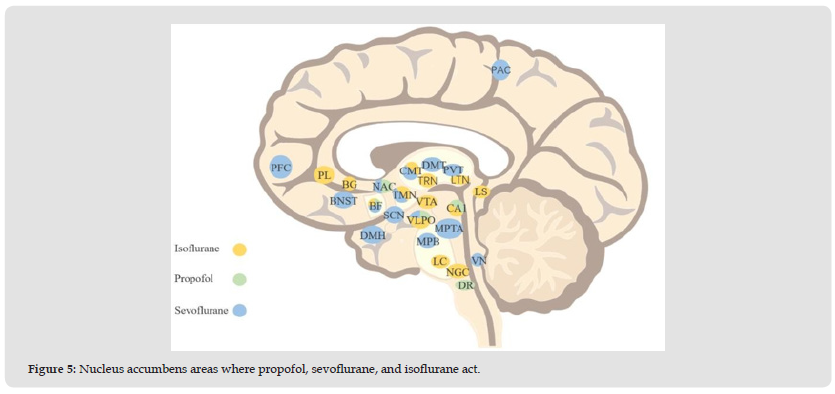
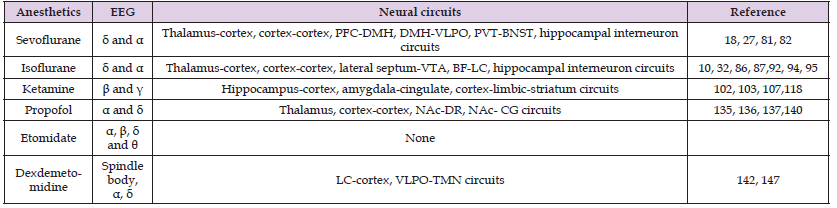
Based on the insights derived from the aforementioned analyses, we conducted a comprehensive review of studies focusing on anesthesia and neural circuits, with particular emphasis on areas such as sleep, memory, or unconsciousness (Table 4, Figures 5 & 6). We delve into their potential relevance to clinical anesthesia and elucidate the specific pathways implicated in their effects, such as the inhibition of NMDA receptor activity and the upregulation of GABA channel opening (Figure 7). Therefore, drawing on the findings of these analyses, we conducted a review of studies on anesthesia and neural circuits, particularly those related to sleep, memory, or unconsciousness (Table 4, Figures 5 & 6). We explore their potential relevance to clinical anesthesia and the specific pathways implicated in their effects, such as the inhibition of NMDA receptor activity and the upregulation of GABA channel opening (Figure 7).

Table 4: EEG waves evoked by different anesthetics and the neural circuits involved.
biomedres-openaccess-journal-bjstr

Figure 5

biomedres-openaccess-journal-bjstr

Figure 6

biomedres-openaccess-journal-bjstr

Figure 7

biomedres-openaccess-journal-bjstr

Sevoflurane: Sevoflurane, a well-tolerated volatile anesthetic commonly utilized for inhalation induction, is particularly suitable for pediatric patients. Its clinical effects may include bradycardia, hypotension, cough, and vomiting. Sevoflurane enhances the activity of GABAA-type and glycine receptors [25] and activates double-pore potassium channels [26-30], influencing EEG wave patterns. Notably, sevoflurane induces a significant increase in EEG power in children from infancy to 6 years of age, stabilizing at around 21 years. α wave (8-13 Hz) coherence is a prominent EEG feature associated with sevoflurane-induced unconsciousness in adults [31]. Multiple nuclei groups are implicated in sevoflurane anesthesia. The vestibular nucleus (VN), midbrain pontine tegmental area (MPTA), central medial thalamus (CMT), dorsomedial thalamus (DMT), and parietal association cortex (PAC) within the thalamocortical circuit have been identified as mediators of sevoflurane anesthesia [32]. Additionally, neural circuits regulating consciousness under sevoflurane anesthesia enhance endogenous sleep network activity by activating the ventral lateral preoptic area (VLPO) nucleus in the hypothalamus [33,34]. The induction of prefrontal cortex (PFC)-dorsomedial hypothalamic nucleus (DMH) glutamatergic and GABAergic-VLPO circuits in the DMH boosts neuronal activity [35]. The inhibition of postsynaptic GABAA receptors and background potassium channels in the medial parabrachial nucleus (MPB) facilitates anesthesia induction [36], while the inhibition of presynaptic Ca2+ channels in hippocampal interneurons and the reduced firing frequency of CMT neurons suppress emergence during anesthesia [37].

Emergence from sevoflurane anesthesia involves various circuits and nuclei. Research by Sarah L. Reitz, et al. found that activation of preprotachykinin-1 (Tac-1) neurons in the preoptic area (POA) induced emergence in mice [38]. Similarly, neurons with dopamine receptors in the nucleus accumbens (NAc) are involved in consciousness regulation under sevoflurane anesthesia and promote emergence [21]. Blue light stimulation enhances neuronal activity in the suprachiasmatic nucleus (SCN) under sevoflurane, inducing high levels of c-Fos expression in the prefrontal cortex (PFC) and lateral hypothalamus (LH), thereby facilitating emergence [39]. Transient stimulation of the paraventricular nucleus of the thalamus (PVT)-bed nucleus of stria terminalis (BNST) pathway also induces behavioral emergence in mice and reduces anesthesia depth during induced burst suppression [40]. It has been observed that sevoflurane not only induces anesthesia but also enhances the intrinsic excitability of cerebellar granule cells, shaping neuronal communication without altering the neural circuit [41].

Isoflurane: Isoflurane, a halogen-class inhalation anesthetic, was introduced clinically before sevoflurane and is predominantly used for animal anesthesia. Its molecular formula is C3H2ClF5O. Isoflurane targets two-pore potassium channels, NMDA receptors, glycine receptors, and GABAA receptors. Its interaction with GABAA receptors, particularly within thalamocortical circuits, modifies inhibitory postsynaptic current production in excitatory spiny stellate cells and cone cells of the auditory cortex [42]. Similarly to sevoflurane, isoflurane prevents action potential inhibition by activating potassium channels in the CMT and reducing central thalamic neuronal firing [37]. Isoflurane’s effects extend to the modulation of GABAergic neurons in the lateral septum, which send inhibitory signals to the ventral tegmental area (VTA), influencing the emergence and depth of anesthesia [43,44]. It directly activates neurons in the VLPO [45] and alters the activity of multicellular biological interneurons [46].

Activation of the histaminergic tuberomammillary nucleus (TMN) induces emergence from isoflurane anesthesia. In Drosophila, TMN damage following isoflurane exposure leads to a loss of the righting reflex and extended emergence time, although it does not significantly affect sensitivity to other anesthetics like propofol, pentobarbital, and ketamine [47]. Post-isoflurane anesthesia, stimulation of anterior nuclear giant cells (aNGC) robustly activates specific neuronal groups in the reticular activating system, enabling extensive reactivation of cortical function and motor behavior in rodents. This involves coordinating multiple emergence-promoting circuits, such as the locus coeruleus and parabrachial nucleus [48]. Mice lacking excitatory amino acid transporter protein 3 (EAAT3) show increased sensitivity to isoflurane-induced anesthesia, mediated by the hypothalamic sleep neural circuit [49]. Light stimulation activates orexinergic neurons in the BF-LC pathway, promoting emergence and motor recovery in rats [50,51]. Research suggests that isoflurane anesthesia primarily affects cortical rather than subcortical structures in mice, leading to diminished thalamus-cortex connections [32]. Connectivity between the solitary bundle nucleus and the ventral lateral or suspected nucleus at the head of the medulla oblongata also decreases under isoflurane anesthesia [52]. Isoflurane influences memory by inhibiting interneurons within the cortical hippocampal circuit [53]. It also impacts neurons in the anterior border of the medial prefrontal limbic and inferior limbic areas, affecting associative learning processes [54]. Additionally, isoflurane affects the activity of cortical limbic and reward-related areas, such as the basal nucleus and limbic thalamic nuclei, which play roles in sensory association processes, emotions, and learning and memory-related behaviors [55].

Ketamine: Ketamine, a general anesthetic administered intravenously, is chemically related to phencyclidine and has the formula C13H16ClNO HCl. It antagonizes NMDA receptors and non-competitively inhibits norepinephrine transporter proteins. Additionally, ketamine upregulates AMPA receptors and activates μ opioid receptors, providing anesthetic, analgesic, amnesic, and sedative effects [56]. It also inhibits Na+ and Ca2+ channels and interacts with monoaminergic, cholinergic, muscarinic, and nicotinic receptors [57]. Distinct from other anesthetics, ketamine selectively inhibits the medial thalamic nucleus, blocks reticular tract conduction in the spinal cord, and activates the limbic system, thereby inducing “dissociative anesthesia”, which is independent of its analgesic properties [58-60].

Ketamine’s blockage of NMDA receptors in cortical interneurons is more pronounced than in pyramidal neurons, resulting in the relative inhibition of the former and hyperactivity in glutamate-mediated pyramidal neurons. This leads to rigidity, shallow sedation, amnesia, and significant analgesia [61,62]. At higher doses, ketamine induces unconsciousness typical of general anesthesia [63]. First introduced in the 1960s as an anesthetic [64], ketamine has potential for psychiatric dependence and is unique among intravenous anesthetics for its analgesic properties. Its clinical use is sometimes limited due to side effects like rapid heart rate, hypertension, and hallucinations [65]. However, its lower respiratory depression capability makes it a preferred choice in settings without reliable ventilatory support. Ketamine has been explored for treating mood disorders [66], addiction [67], schizophrenia [68], and for pain relief [69,70].

Under ketamine anesthesia, EEG characteristically shows a γ burst [71,72], a decrease in α power, and an increase in γ power. This γ power amplification is pronounced in anesthetized rats and monkeys [73]. Ketamine affects the thalamocortical network by altering sensorimotor rhythm amplitudes and interregional blood flow but does not inhibit the thalamus directly [74.,75]. It activates various emergence centers, such as the mesencephalon and brainstem [76], instead of the ventral lateral preoptic nucleus [77]. Ketamine enhances connections between the prefrontal cortex and hippocampus, remodels cortico-marginal-striatal circuits, and alters overall brain functional connectivity [66]. It consistently elevates activity in the medial substantia nigra, ventral tegmental area, frontal cortex, and ventral striatum, potentially improving depression scores in major depressive disorder [78,79] patients through its rapid and sustained effects on the midbrain’s limbic neural network. During ketamine administration, feedback connections in the frontoparietal network progressively weaken and become significantly inhibited post-loss of consciousness [72,80]. Anesthesia studies in monkeys have revealed changes in brain activity regionally, with increases in the fractional amplitude of low and medium frequency fluctuations in various brain regions [81]. Resting-state functional MRI confirms acute changes in brain circuit intensity and connectivity under ketamine, notably disrupting the functional connectivity of the default mode, cognitive control, and medullary affective networks. Currently, conventional treatments for major depressive disorder are slow-acting and less effective with a higher recurrence rate [82,83]. Recently, ketamine has garnered attention as a rapid-acting antidepressant but remains underexplored in anesthesia-induced loss of consciousness studies.

Propofol: Propofol, chemically known as 2,6-diisopropylphenol with the molecular formula C12H18O, is a widely used and extensively studied short-acting intravenous anesthetic in clinical practice. It primarily suppresses neuronal activity by enhancing GABAA receptor-mediated inhibition in the cortex, thalamus, and brainstem [27,84-86]. Propofol facilitates the opening of chloride channels, increasing inward chloride flow, and consequently hyperpolarizing postsynaptic membranes [87]. It is commonly used for the induction and maintenance of sedation and general anesthesia, especially in outpatient procedures. However, its administration can lead to side effects such as respiratory depression, apnea, hypotension, injection pain, and allergies. Dosage of propofol is critical [88], a lower dosage may cause excitation instead of sedation, linked to the activation of AMP-dependent protein kinase (AMPK) [89] in neurons and LTS cell-mediated excitation of cortical interneurons [90-92]. Conversely, a higher dosage can result in unconsciousness [93,94]. The EEG patterns under propofol anesthesia are characterized by frontal alpha oscillations (8 to 12 Hz), delta oscillations (1 to 4 Hz), and slow oscillations (0.1 to 1 Hz). Large amplitude slow oscillations, indicating prolonged neuronal silence, are induced to deepen unconsciousness [18]. α oscillations, synchronized between the thalamus and medial prefrontal cortex, can trigger coherent thalamocortical δ oscillations, which are critical for consciousness.

The transition from sedation to unconsciousness might be attributed to alterations in the GABAergic network across the cortex, thalamus, and brainstem, resulting in an inhibited brain state [93,94]. However, research by Li Ma, et al. indicates that this inhibition is not uniform across the brain. Disproportionate inhibition of functional connectivity in frontal and parietal regions can induce coherent oscillations and intensify certain frontoparietal interactions in the motoneuron [95]. Similarly, Laura D Lewis, et al.’s intracranial cortical EEG recordings during propofol anesthesia revealed uneven local cortical dynamics, suggesting that some cortical areas under anesthesia might be in a state of emergent inhibition while adjacent areas exhibit continuous activity [96]. This uneven activity is evident in the nucleus accumbens during anesthesia, where a significant increase in c-Fos expression in VLPO neurons is observed, leading to loss of consciousness [76]. Stimulating the nucleus ambiguus (NAc) can prolong propofol-induced loss of consciousness by inhibiting functional connectivity between NAc-dorsal raphe (DR) and NAc-cingulate cortex (CG) [97]. Additionally, propofol reduces the excitability of cholinergic neurons in the mouse basal forebrain via GABAA receptors, affecting the basal forebrain’s critical role in sleep-wake regulation [98]. In terms of memory behavior effects, propofol’s sustained activation of GABAA-type receptors leads to long-term potentiation (LTP) injury in the CA1 region of the hippocampus, reducing cortical neuron density [99]. This decrease in excitatory input to cortical pyramidal neurons, along with reduced activity of pyramidal and cortical inhibitory interneurons, has been linked to impaired cognitive and behavioral cortical circuits in neonatal mice, resulting in cognitive and behavioral deficits [100].

Etomidate: Etomidate is a non-barbiturate intravenous anesthetic, primarily mediating anesthesia by enhancing GABAA receptors [101]. It acts rapidly and minimally impacts the respiratory and cardiovascular systems, making it particularly suitable for geriatric patients with cardiovascular and cerebrovascular diseases and an ideal induction agent for cardiac anesthesia [102]. However, etomidate’s inhibition of adrenal cortical endosteroid synthesis has sparked considerable controversy. There is currently no consensus on whether its use should be limited to specific scenarios, especially in cases of infectious shock and critical care patients [103-105]. In a study by Zhang L, et al., EEG data from 20 patients who underwent etomidate- induced general anesthesia were analyzed. The findings suggested that the neural circuit mechanisms inducing unconsciousness were associated with evoked δ-, θ-, α-, and β-wave oscillations, along with enhanced δ-wave coherence [106]. At present, detailed information on the neural circuits involved in etomidate anesthesia remains temporarily unavailable.

Dexmedetomidine: Dexmedetomidine, an agonist of central and peripheral α2-adrenergic receptors (α2-AdRs), induces hyperpolarization, decreases norepinephrine release, and produces sedative, anxiolytic, and analgesic effects. During sedation, spindle oscillations (12 to 16 Hz) in the EEG pattern are significantly induced, akin to those observed during general anesthesia with propofol18. Dexmedetomidine acts on brainstem sleep circuits, binding to presynaptic α2-adrenergic receptors in the locus coeruleus (LC) [107] and mediating sedation that mimics NREM sleep [107,108]. Nelson LE, et al. demonstrated that dexmedetomidine-induced sedation could be reversed by impairing the LC or by injecting an α2-AdR inhibitor into the LC of rats [108]. They observed that activating α2-AdR in nodal papillae nuclei to inhibit the ventrolateral preoptic area (VLPO) subsequently inhibited the tuberomammillary nucleus (TMN) via GABA release, similar to selective injections of anesthetics or GABA agonists into the nucleus. However, dexmedetomidine does not significantly alter cortical EEG frequencies, and subcortical function remains connected in anesthetized mice, maintaining interaction between the cortex and thalamus [32,109]. Notably, dexmedetomidine does not reliably induce unconsciousness; its primary use is in sedation, particularly beneficial in “awake craniotomy” where patient communication is necessary [108]. It synergistically enhances the effects of other sedative and analgesic drugs, thus reducing their required dosages. Its clinical application extends to ICU sedation and as a supplement in intraoperative general anesthesia. Our findings are summarized below. Firstly, the presence of neural connections does not always imply functionality.

The existence of structural connections does not guarantee functional connectivity, which necessitates further exploration. Secondly, the current understanding of neural circuits in anesthesia is largely based on animal experiments, suggesting variability in neural circuits between humans and animals due to differences in nervous system development. Therefore, more reliable experimental models are needed for validation. Thirdly, variations in brain structure, synaptogenesis, neuronal differentiation, neurochemical signaling, and myelination at different stages of cerebral development indicate that adult neural network systems cannot be directly applied to children’s brains of various ages [110,111]. Fourthly, no single brain region or mechanism has been definitively linked to consciousness, indicating that consciousness arises from complex functional interactions across different neural circuits and neurons in varying temporal and spatial contexts. Identifying where and when anesthesia targets or takes effect remains a challenging endeavor. It is also difficult to discern common mechanisms among the diverse changes in unconsciousness induced by different anesthetics [112].

Conclusion

In conclusion, our bibliometric analysis of the literature on anesthesia and neural circuits reveals a growing interest in understanding the intricate relationship between anesthetic agents and neural circuitry. Specifically, there is significant research focusing on the involvement of cortex-cortex and thalamus-cortex pathways with anesthetics such as sevoflurane, isoflurane, and propofol. Dexmedetomidine, primarily used for sedation, has been investigated for its effects on brainstem sleep circuits but does not reliably induce unconsciousness. Ketamine, while garnering attention for its potential as a rapid-acting antidepressant, has limited research on its neural circuitry during anesthesia. Studies on the neural circuits related to etomidate are scarce and require further investigation. Overall, our analysis highlights a notable gap in research regarding the precise neural circuits involved in the mechanisms of general anesthesia. Further exploration in this area is crucial for advancing our understanding of anesthesia-induced unconsciousness and developing safer and more effective anesthetic agents and techniques.

Availability of Data and Materials

Not applicable.

Ethics Approval and Consent to Participate

Not applicable.

Consent for Publication

All information and images contained in this article obtained informed consent from all authors.

Competing Interests

The authors declare that they have no competing interests.

Authors’ Contributions

Shi-Feng Wang collected the data and wrote the article, Jin-lin Mei and Le-Chen Shen completed the picture production, Qiu-Xia Xiao participated in manuscript revision, and Liu-lin Xiong reviewed the full text.

Follow us on: Biomedical Journal Impact Factor: https://biomedres.us

https://scholar.google.com/citations?user=OFtUOZYAAAAJ&hl=en
https://www.base-search.net/Search/Results?lookfor=Biomed+Journal+of+Scientific+%26+Technical+Research&l=en&refid=dcsuggesten
https://citefactor.org/journal/2574-1241/biomedical-journal-of-scientific-technical-research
https://ideas.repec.org/s/abf/journl.html
https://econpapers.repec.org/article/abfjournl/
https://www.ncbi.nlm.nih.gov/nlmcatalog/101723284
https://bjstr.org/
https://bjstr.org/about.php
https://biomedres.us/reprints.php
https://biomedres.net/submit-manuscript.php

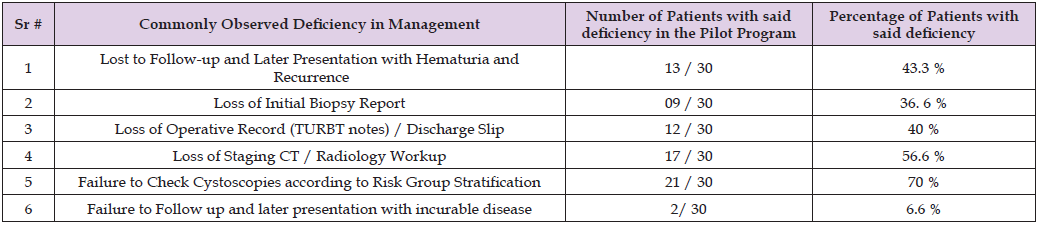
Journals on Biomedical Science | BJSTR

Examination on Updating the Life of Mechanical Product in Transportation Arranged in Quantum-Ferried Life Protype and Sample Size

Introduction

The system functioned by machinery brings (produced) power to maintain an organized effect that entails movement & forces and gets mechanical advantages by precisely realizing undisclosed mechanisms. By conducting the vapor compression cycle, a domestic refrigerator lets cooled air from evaporator to refrigerator and freezer division. In the meantime, foods in refrigerator and freezer department may be held recently. Refrigerator is arranged of compressor, condenser, capillary, and evaporator [2]. It might be designed to correctly function over the conditions truly deployed by the consumer. If there are design frailty, product may not instantly function in its assumed lifetime (Figure 1). As finding design frailty by reliability testing and modifying it, an engineer can optimally function it [1]. This organized procedure detains:

(1) ALT scheme,
(2) Load scrutiny,
(3) ALTs with modifications, and
(4) The consideration to discern whether product gets to the designed BX life. For a case investigation, the mechanical product during transportation will be inspected.

Methods

We adopted a cross-sectional study design to determine healthcare workers’ knowledge, attitudes, and practices (KAP) during the COVID-19 pandemic. The study was conducted via a self-administered questionnaire to 373 healthcare workers in five selected healthcare facilities in the Ashanti region sampled through the multistage random technique. There is no standardised and validated device for assessing KAPs on COVID-19. The questionnaire was constructed from two questionnaires that were previously used to determine healthcare workers’ KAP towards COVID-19. Sections of the instruments of Limbu et al. and Kamali et al. were used [6,7].

Measurement

Knowledge and attitude were assessed using a five-point Likert scale, and scoring was conducted by assigning numbers 1-5 to the scale: strongly agree – 5; agree – 4; neutral – 3; disagree – 2; strongly disagree -1. The more frequent answers of 4 and 5 revealed adequate knowledge and a positive attitude, whereas limited knowledge and negative attitude were indicated by more frequent scores of 3 and below. The scoring of the practices of the healthcare workers towards COVID-19 prevention was conducted by assigning 0 to an incorrect answer and 1 to a correct answer. The practice questions were 17 with three options (Yes, NO, and lack of facility/inadequate equipment). The total score was calculated and divided by the number of questions and later multiplied by 100 to obtain the cumulative percentage. The respondents who scored 80%-100% on the knowledge, attitude, and practice questions were considered to have very good knowledge, excellent attitude, and practices 60%-79% had good knowledge, attitude, and practices, and a score less than 60% was considered limited knowledge, poor attitude, and poor practices. The questionnaire comprised 60 items, of which almost all were close-ended questions.

1. Part 1: Comprises the demographic information and source of information on COVID-19.
2. Part 2: Focused on questions about the respondents’ knowledge of COVID-19,
3. Part 3: Included questions on the respondents’ attitude towards COVID-19,
4. Part 4: The respondents answered questions about COVID-19 prevention.

Figure 1

biomedres-openaccess-journal-bjstr

Parametric ALT in System Functioned by Machinery

Finding in the Schrodinger’s mathematical problem can be discovered:

Linear transport shall be indicated:

For an incident, solid-state diffusion, J, shall be condensed

When Equation (3) takes the reverse, the life-stress (LS) model can be elucidated:

To find the acceleration factor (AF), announced by the relation between the elevated-level stress and common stress, AF may be expressed as:

To reach the allocated time for designed lifetime – B1 life of ten years, sample size united by Equation (6) can be indicated as [2]:

Case Examination: Refurbishing the Fatigue Lifetime of a Household Product Subjected to Random Shakes in Transported by Railroad

Refrigerators were conveyed from the LA situated in the western coast of the U.S. to consumers who lived in the US, the part of the country near the Atlantic Ocean. This trip for an entire travel period – seven days – was 7,200 km. As uttered by market data, after products subjected to random vibrations on rail transit way were transported, refrigerators did not work because the mount rubbers & soldering in compressor were fatigued and the connecting tubes were broken, going along with engineers to request for taking the place of it. Namely, in the US, the interval when earliest failure occurred for two days was approximately 2,500 km during rail transportation. In Chicago, 27% of the carried refrigerators was failed. As the products transported the 7,200-km distance from the western coast of the U.S. to Boston, 67% of the refrigerators was failed. It was evident that the unsuccessful refrigerator had design frailties. To rightly work the product within its assumed lifetime during transportation, as recognizing them by parametric ALT, the company had to alter them (Figure 2). Because of the basis load, Y, force transmissibility, Q, may be defined:

where X is the unchanging solution on the mechanical system, FT is the applied force, Y is the extent of foundation excitations, r is the frequency ratio  is the damping proportion  K is the spring constant.

Figure 2

biomedres-openaccess-journal-bjstr

As the stress during transit originates from the transported vibration loads, FT, which can be expressed as the power spectral density (PSD) of acceleration on the regulated frequency band, Equation (5) can be defined:

So, discovered on Equation (6), AF may be indicated:

where a1 is the elevated PSD on the assigned frequency band, a0 is the common PSD on the assigned frequency band, R, is amplitude proportion of gravitational acceleration. As inspecting the computed vibration, the natural frequencies for horizontal and vertical vibration were 5 Hz and 9 Hz. The damping proportion was anticipated to be ς = 0.1 with a settling period of 2 sec and approximately 5.3 overshoot. The frequency ratio at the natural frequency ωn also was anticipated to be r .

To attain the AF of random shakes found from the field, elevated PSD to the product were applied to the shaking table for each orientation (Figure 3). From Equation (8), the force transmissibility, Q, had the magnitude of approximately 5.3. Due to acceleration of 1 Grms, the AF was 4.0, roughly calculated to that of worst-case of 0.25 Grms. Employing a cumulative damage constant, λ , of 2.0, the entire AF from Equation (10) was set to be 450.0. As the calculated shape parameter on Weibull plot was 6.41 and the life aim – B1 life for the whole travel distance had, for three samples, the test time attained from Equation (7) was approximated to have 40 min. Namely, if the refrigerator was failed less than once in assigned period – 40 min., product was suitable for the whole travel distance of 7,200 km to live the product fatigued because of random vibration.

Figure 3

biomedres-openaccess-journal-bjstr

Results and Conclusions

In the 1st ALT, the unsuccessfulness for the stress — 1.00 Grms at the natural frequency (r = 1.0,ς ≈ 0.1) were found. Namely, for these circumstances, at 20 min, mount rubber & soldering were fatigued and tubes on the samples were broken. It happened because of no pillar in the area of stress raiser for the mount rubber to endure the random loads because of parallel vibrations. As action plans, the product was redesigned as the altered rubber mount in compressor, C1 (Figures 4 & 5). In 2nd ALT, the product is successful till 60 min. When product reached at an acceleration of 1.00 Grms in the shake table, the natural frequency on the parallel direction was altered from 5Hz to 8 Hz by the enlarged damping (Figure 6). To enlarge the fatigue lifetime of refrigerator during transit, ALT was developed. The quantum- conveyed life-stress model and sample size were suggested. As an occasion inpsection, enhancing the lifetime of a product fatigued by random vibrations in rail transportation was investigated. As the mount rubbers in compressor was redevised, there were no issues for assigned time – 40 min. So, the product was assured to endure the fatigue produced and fulfil the refrigerator lifetime – B1 life for the whole travel distance.

Figure 4

biomedres-openaccess-journal-bjstr

Figure 5

biomedres-openaccess-journal-bjstr

Figure 6

biomedres-openaccess-journal-bjstr

Follow us on: Biomedical Journal Impact Factor: https://biomedres.us

https://scholar.google.com/citations?user=OFtUOZYAAAAJ&hl=en
https://www.base-search.net/Search/Results?lookfor=Biomed+Journal+of+Scientific+%26+Technical+Research&l=en&refid=dcsuggesten
https://citefactor.org/journal/2574-1241/biomedical-journal-of-scientific-technical-research
https://ideas.repec.org/s/abf/journl.html
https://econpapers.repec.org/article/abfjournl/
https://www.ncbi.nlm.nih.gov/nlmcatalog/101723284
https://bjstr.org/
https://bjstr.org/about.php
https://biomedres.us/reprints.php
https://biomedres.net/submit-manuscript.php

American medical journal |BJSTR

Knowledge, Attitude, and Practices of Healthcare Workers towards COVID-19: A Cross-Sectional Study in the Ashanti Region, Ghana

Introduction

The Coronavirus disease-19 (COVID-19) is not the first and will most probably not be the last respiratory pandemic that the world experiences. Influenza and coronaviruses have historically infected people with pandemic potential. Three deadly coronaviruses lead to the loss of several lives since the discovery of the Severe Acute Respiratory Syndrome Virus (SARS-CoV) in 2003 in the Guangdong province of China, the Middle East Respiratory Syndrome Virus (MERS-CoV) in 2013 in Jeddah, Saudi Arabia, and the Severe Acute Respiratory Syndrome Virus-2 (SARS-CoV-2) in 2019 in Wuhan, China [1]. There have been other instances of novel human coronavirus (HCoV) emergence causing pandemics, although the COVID-19 pandemic is the first known caused by Human coronavirus. There has been multiple healthcare-associated spread of MERS; 13% to 70% were among healthcare workers (HCWs). The influenza A (H1N1) pandemic in 2009, the emergence of the influenza A (H5N1), SARS-CoV, and the SARS-CoV-2 pandemic prompted a rise in patient screening for respiratory infections. Preventive measures for COVID-19 have increased the importance of infection prevention and control measures to prevent intra-hospital spread of respiratory illnesses, providing an opportunity to change practice for other respiratory infections [2].

COVID-19 spreads from person to person through the inhalation of aerosols from infected Individuals. COVID-19 is highly infectious, and its primary clinical symptoms include fever, dry cough, fatigue, headache, and dyspnoea. The World Health Organisation (WHO) declared COVID-19 as a public health emergency of global concern [3]. The SARS-CoV-2 caused a global pandemic. Among the critical matters are healthcare workers’ infection and healthcare-associated spread of the disease. The WHO issued interim infection prevention and control guidelines, such as social distancing, hand washing, testing, and tracing, affecting community members to limit healthcare workers’ exposure to SARS-CoV-2 viruses during patient care [4]. These workers are at the frontline of the COVID-19 response, and daily exposed to the pathogen. Unfortunately, healthcare workers experience significant challenges in adhering to the guidelines. One such reason is limited knowledge of the disease. As in the rest of the world, the SARSCov- 2 infected healthcare workers in Ghana. The healthcare workers in Ghana followed the WHO interim guidelines for preventing and controlling COVID-19. The Ministry of Health (MOH) also published provisional standard treatment guidelines for COVID-19 and encouraged the training of all healthcare workers to protect themselves from the virus and to prevent its spread. Usually, in institutions in Ghana, healthcare workers do not observe the protocols. Not all the healthcare facilities in Ashanti had sufficient resources, such as PPE and isolation facilities for suspected COVID-19 cases [5].

In the northern region of Ghana, the Savelugu Hospital closed for two weeks following an outbreak of COVID-19 among hospital staff and patients. A lack of knowledge of healthcare workers resulted in delayed identification and treatment of COVID-19 patients and a rapid spread of SARS-CoV-2 infections. Negative attitudes regarding their responsibilities toward preventing the spread of COVID-19 and poor practices of preventive protocols in managing COVID-19 patients put themselves, their patients, and the community at risk. The healthcare workers who contracted COVID-19 transmitted the infection to their colleagues, families, relatives, and friends. To guarantee the control of respiratory infections, such as the COVID-19 infection, healthcare workers’ knowledge of prevention and control measures is essential. It is also important to determine the factors affecting their attitude to have adequate practices to early diagnose and treat patients and prevent the spread of infections. This study, therefore, sought to investigate the KAP of healthcare workers in the Ashanti region of Ghana towards COVID-19.

Methods

We adopted a cross-sectional study design to determine healthcare workers’ knowledge, attitudes, and practices (KAP) during the COVID-19 pandemic. The study was conducted via a self-administered questionnaire to 373 healthcare workers in five selected healthcare facilities in the Ashanti region sampled through the multistage random technique. There is no standardised and validated device for assessing KAPs on COVID-19. The questionnaire was constructed from two questionnaires that were previously used to determine healthcare workers’ KAP towards COVID-19. Sections of the instruments of Limbu et al. and Kamali et al. were used [6,7].

Measurement

Knowledge and attitude were assessed using a five-point Likert scale, and scoring was conducted by assigning numbers 1-5 to the scale: strongly agree – 5; agree – 4; neutral – 3; disagree – 2; strongly disagree -1. The more frequent answers of 4 and 5 revealed adequate knowledge and a positive attitude, whereas limited knowledge and negative attitude were indicated by more frequent scores of 3 and below. The scoring of the practices of the healthcare workers towards COVID-19 prevention was conducted by assigning 0 to an incorrect answer and 1 to a correct answer. The practice questions were 17 with three options (Yes, NO, and lack of facility/inadequate equipment). The total score was calculated and divided by the number of questions and later multiplied by 100 to obtain the cumulative percentage. The respondents who scored 80%-100% on the knowledge, attitude, and practice questions were considered to have very good knowledge, excellent attitude, and practices 60%-79% had good knowledge, attitude, and practices, and a score less than 60% was considered limited knowledge, poor attitude, and poor practices. The questionnaire comprised 60 items, of which almost all were close-ended questions.

1. Part 1: Comprises the demographic information and source of information on COVID-19.
2. Part 2: Focused on questions about the respondents’ knowledge of COVID-19,
3. Part 3: Included questions on the respondents’ attitude towards COVID-19,
4. Part 4: The respondents answered questions about COVID-19 prevention.

Statistical Analysis

The demographic characteristics are compared with the level of KAP scores using the Chi-square test. A 95% confidence interval (CI) was used to quantify the strength of the association between sociodemographic characteristics and KAP scores of healthcare workers. The level of significance was set at P < 0.05 (two-sided).

Results

Demographic Characteristics of Respondents

In our study,373 healthcare workers filled out questionnaires received from all the facilities. The mean age was 30.96 years (SD=6.25; ranged,20-39) Table 1. shows the demographic characteristics of the participants.

Table 1: Demographic characteristics of 373 healthcare workers in the study.

biomedres-openaccess-journal-bjstr

Source of Information Regarding COVID-19

Healthcare workers’ sources of information regarding COVID-19 are represented in Figure 1. Most healthcare workers received information regarding COVID-19 from the news media (32.7%, n=122), and 21.7% reported they obtained their information from the website of their hospital. Others remarked on social media (20.9%, n=78) and international organisations, such as the WHO (20.9%, n=78). Few reported receiving information from friends and relatives (3.8%, n=14).

Figure 1

biomedres-openaccess-journal-bjstr

Healthcare Worker’s Knowledge, Attitude, and Practice Score on COVID-19

Findings from the study revealed that 11% had exceptional knowledge, and a few (3.2%) had limited knowledge of COVID-19. They obtained less than 60% on the knowledge questions. Most respondents, indicating 85.8%, had good knowledge of COVID-19 (Table 2). The study revealed that 56.6% of the healthcare worker respondents had good attitudes towards COVID-19 whereas 22.3% had poor attitudes. (Table 3). Less than 50% of the healthcare worker respondents had excellent practices towards COVID-19 prevention in the Ashanti Region (Table 4). The KAP scores are also presented in Figure 2. The results from the bivariate analysis revealed there was a significant positive association between the healthcare worker respondents’ attitudes and practices towards COVID-19 (p=0.022). The respondents’ good attitude related positively to their knowledge of COVID-19 (p=0.048) (Table 5).

Table 2: Knowledge category.

biomedres-openaccess-journal-bjstr

Table 3: Attitude category.

biomedres-openaccess-journal-bjstr

Table 4: Practice categories.

biomedres-openaccess-journal-bjstr

Table 5: Bivariate analysis of healthcare workers’ knowledge, attitudes, and practices towards COVID-19 by using theChi-Square.

biomedres-openaccess-journal-bjstr

Figure 2

biomedres-openaccess-journal-bjstr

Discussion

Findings from the study revealed that most respondents, indicating 85.8%, had good knowledge of COVID-19. The result is comparable with two studies conducted in Nigeria, where the healthcare worker respondents’ knowledge of COVID-19 was 88.75%, and 82.4% respectively [8,9]. The findings of the present study about good knowledge of COVID-19 were low compared to two studies conducted in Pakistan [10,11].Conversely, the percentage of healthcare worker respondents of this study who obtained good marks for their understanding of COVID-19 is much higher than that of studies conducted in Thailand and Nepal [12,13].The differences in the knowledge level of the respondents in the mentioned studies may relate to most healthcare workers having had relevant training on COVID-19, whereas others received no training before the studies were conducted. Secondly, the study revealed that 56.6% of the healthcare worker respondents had good attitudes towards COVID-19. This finding compares well with that of two studies conducted in Nepal, where 53% and 54% of good attitudes were recorded [6,14].

The finding of the present study is also low compared to a study conducted in Ethiopia [15]. The difference in the healthcare worker respondents’ attitudes could be owing to variances in the study setting, the timeframe of the study, and the cut-off points for the attitude scores. Less than 50% of the healthcare worker respondents had excellent practices towards COVID-19 prevention in the Ashanti Region. In a similar study in Uganda, only 37% of the healthcare worker respondents had good practices towards preventing the spread of the coronavirus disease [16]. Much higher scores were identified in studies in China, and Yemen, where 89.7% and 87.7% of the healthcare worker respondents had good practices towards COVID-19 prevention [17,18]. In the current study, most of the healthcare worker respondents who exhibited poor preventive practices indicated that a lack of personal protective equipment and few isolation facilities in the Ashanti region were to be blamed. The was a significant positive association between the healthcare worker respondents’ positive attitudes and practices towards COVID-19. The respondents’ attitudes related positively to their knowledge of COVID-19. The Health Belief Model and the KAP theory explain this. “Knowledge is the foundation of behaviour (practice), and attitudes are the driving force of behaviour change” [19].

“A person’s intention of a specific behaviour is alienated from his/ her attitude towards that particular behaviour”.19 The study established a high knowledge level among the healthcare worker respondents regarding COVID-19. An increase in knowledge level helps to reduce misinformation, eventually leading to a good attitude. Acquisition of knowledge by the respondents enabled them to know their susceptibility to COVID-19 infection, the severity of the disease, the benefits of preventive actions, and their ability to initiate new preventive behaviours. In addition, our study results revealed that COVID-19 KAP differs by sociodemographic factors. According to the Health Belief Model, the modifying factors refer to factors influencing behaviour change. It includes the person’s age, gender, ethnicity, personality, knowledge, and socioeconomic status [20]. The healthcare worker respondents with a higher level of education had excellent practices to prevent the spread of the infection. The finding follows studies conducted in China and Ethiopia [21,22]. The variations may be related to higher education programmes preparing graduates to develop the habit of doing research, and this helped them to search for relevant information regarding COVID-19 and the prevention of the spread of the infection. Pertinent information acquisition leads to behaviour change and, therefore, good preventive practices. Another reason might be that those with a higher level of education may have a better understanding of the spread, effect, prevention, and control of infections.

Conclusion

In conclusion, our findings suggest that Healthcare workers in the Ashanti region demonstrated good knowledge and positive attitude however, a divergence remains in their preventive practices towards COVID-19, suggesting that interventions should go far beyond just knowledge and attitude; however, strategies should be developed to prevent the healthcare-associated spread of COVID-19 and other respiratory infections in all health facilities across the globe.

Ethical Consideration

Written permission to conduct the research was obtained from the Faculty of Health Sciences Research Ethics Committee of the University of Pretoria (reference no. 357/2022) before data collection. Permission to conduct the study in the selected healthcare facilities was obtained from the Regional Director of Health, Ghana Health Service, Ashanti Region.

Follow us on: Biomedical Journal Impact Factor: https://biomedres.us

https://scholar.google.com/citations?user=OFtUOZYAAAAJ&hl=en
https://www.base-search.net/Search/Results?lookfor=Biomed+Journal+of+Scientific+%26+Technical+Research&l=en&refid=dcsuggesten
https://citefactor.org/journal/2574-1241/biomedical-journal-of-scientific-technical-research
https://ideas.repec.org/s/abf/journl.html
https://econpapers.repec.org/article/abfjournl/
https://www.ncbi.nlm.nih.gov/nlmcatalog/101723284
https://bjstr.org/
https://bjstr.org/about.php
https://biomedres.us/reprints.php
https://biomedres.net/submit-manuscript.php
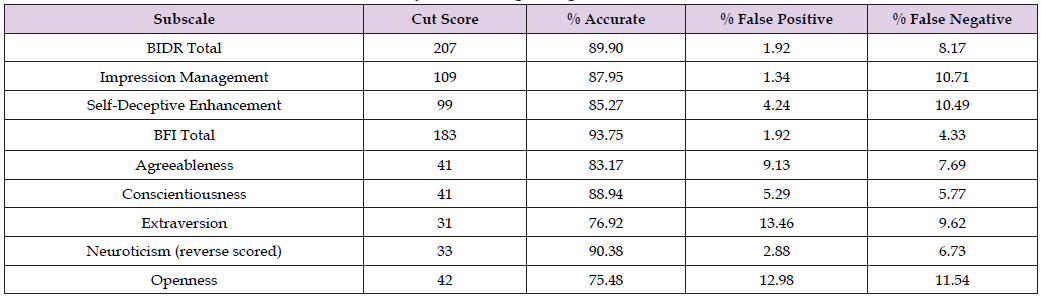
Journals on Biomedical Engineering |BJSTR

Evaluation of a Biodegradable Synthetic Matrix for Lateral Ankle Ligament Surgical Repair Augmentation: An Open Label Controlled Multicenter Retrospective Review

Introduction

Ankle sprains account for up to 40% of all athletic injuries, and 85% of ankle injuries involve the lateral ligamentous complex [1]. Initial patient treatment is conservative, but continued ligament laxity may require surgical intervention. Chronic recurrent lateral ankle instability occurs after 10% to 20% of acute ankle sprains [2]. Although multiple surgical procedures for anterior talofibular ligament (ATFL) repair or ligament reconstruction are well described, the modified Broström repair technique is most widely utilized [3,4]. Yet, reoperation rates have been reported as high as 14% following surgical repair [5]. Lateral ligament repair can be performed alone or with augmentation. For patients with poor tissue quality, medical comorbidities and complex repairs, the use of autograft, allograft, or synthetic augmentation devices may improve healing. Early tissue necrosis and resorption of avascular tissue grafts can lead to loss of biomechanical properties and ultimate load to failure [6-8]. Several synthetic grafts have been developed as alternatives to auto- or allograft replacements. Soft tissue augmentation devices have historically been designed with a rigid structure unmatched to the elastic modulus of the targeted musculoskeletal tissues [3,9]. A degradable biomaterial matrix woven from wet-spun fibers of polycaprolactone based-polyurethane urea (PUUR) provides an augmentation device closer to the elastic modulus of ligament. PUUR textile strips (Artelon Flexband®, Marietta, GA), have been reported for numerous orthopedic soft tissue reconstructive applications [9-13]. PUUR elastomers have an extensive safety record and are widely used biomaterials in catheters, vascular prosthesis, and artificial hearts due to their adaptable mechanical properties and documented biocompatibility [14- 17]. The biomechanical properties of PUUR and the woven textile nature create manufacturing adaptability to optimize tensile properties to mimic native tissue. This improves functional kinematics by providing resistance to stress relaxation and creep while decreasing stress shielding.

Although PUUR has been used in >60,000 cases to date in the reconstruction of soft tissues throughout the body, a direct comparison of lateral ankle ligament repair, with and without PUUR augmentation, has not been previously conducted. The purpose of this study was to perform a retrospective medical chart review to assess the safety and efficacy determined by clinical evaluation, VAS, and physical therapy milestones in patients undergoing a modified Broström procedure with and without PUUR augmentation. In addition, patients enrolled in the retrospective study were contacted to complete a longer-term patient outcome and satisfaction survey following at least 1-year post-operative.

Methods

Patient Identification

Following appropriate ethics approval, a retrospective review of patients diagnosed with chronic lateral ankle instability who underwent a modified Broström procedure either alone (MB) or with PUUR augmentation (PUUR) between January 2018 and June 2022 was conducted. Patients that had surgery performed by any of the nine participating foot and ankle surgeons and had postoperative hospital or ASC safety and efficacy data were evaluated for eligibility. All study surgeons performed both augmented and non-augmented repairs. At all participating study institutions, consecutive chart review was performed to identify patients who met all of the inclusion and none of the exclusion criteria (Table 1). 226 patients met study qualifications (MB = 83, PUUR = 143). Data was extracted from both written and electronic medical records. Physician and patient reported outcomes and revision rates were established via chart review from patient scheduled and unscheduled follow up clinic visits. Clinical post-surgical follow up for this procedure typically concludes at 12 weeks, therefore, to collect longer-term outcome measures outside of the clinical follow up window, we attempted to contact all patients via phone at a minimum of one year post operative and asked to complete a satisfaction and functional survey.

Table 1: Study Selection Criteria.

biomedres-openaccess-journal-bjstr

Surgical Technique

PUUR used in the study consisted of strips of varying size (0.3- 0.5cm X 8-32cm). For patients that underwent augmentation with the PUUR matrix, the modified Broström procedure was performed first followed by tensioning of the PUUR device anchored on either end via bone tunnels (Figure 1). Using the provided kit, guide wires were placed into the anterior fibula and into extra-articular talus body/ neck junction. Bone tunnels were created and the PUUR graft was inserted into the talus first. The modified Brostrom procedure was completed and the PUUR graft was placed overtop or superficial to the repair and inserted into the fibula bone tunnel. Additional procedures such as synovectomy and arthroscopy were commonly performed as needed. A summary of additional procedures in each group is presented (Table 2).

Figure 1

biomedres-openaccess-journal-bjstr

Table 2: Concomitant Procedures

.biomedres-openaccess-journal-bjstr

Characteristics and Outcome Assessments

Patient demographics, diagnosis, and injury history including previous treatments for the index ankle were collected. Clinical evaluations included physician’s assessment of healing progression measured by typical patient post-op examination (i.e. wound healing, stability measurements, ROM, swelling, etc). Visual analog scale (VAS) for pain (collected at 2 of 4 participating institutions) was recorded prior to surgery and at 2-, 6-, and 12-week post-surgical visits. Only patients with baseline VAS and VAS at least two follow-up visits were included in VAS analysis. Safety data was assessed by collecting adverse events and complications. While all adverse events were collected, events relating to procedure specific outcomes, including delayed wound healing, wound infection, neuritis, and peri-implant osteolysis were analyzed in greater detail. Complications defined by patients necessitating a return to the operating room were also reported and classified as relating to product, procedure, or neither. Postoperative rehabilitation milestones including non-weight bearing duration, time to physical therapy initiation, total physical therapy duration, and time to transition from boot to brace with ultimate unrestricted full weight bearing (FWB) were analyzed. Given the multi-center study design, the post-operative rehabilitation programs were not standardized across study sites, however, the approach was similar for all sites and the following summary represents an aggregate protocol. From immediate post-operative: non-weight bearing (NWB; 0-4wks), transition to CAM boot with weight bearing as tolerated (WBAT) and transition to PT initiation (2-6wks), transition out of CAM boot to lace-up brace and progression to FWB (6-10 weeks), sport-specific activity initiation (10-12wks) and return to play (RTP; 12+wks). Progression throughout each stage was determined by the physician and collected from the clinical medical records. Identified patients who were at least 1-year post-operative were solicited by phone, and if willing, consented for participation in phone surveys. Ultimately, 46/143 (32.2%) of PUUR patients and 40/83 (48.2%) of MB patients completed the survey which measured residual pain, instability, any additional procedures including revision surgery, quality of life ratings, and overall satisfaction.

Statistical Analysis

All data were recorded in Microsoft Excel (2011, Microsoft Corp., Redmond, WA). The data are presented as frequencies, means, standard errors, ranges, and percentages. All outcomes for the study were defined as the average change in the outcome from baseline. At each timepoint (2-, 6- and 12-weeks post-operative), the mean change from baseline in both groups was evaluated. Where comparisons were possible, scores were analyzed using a student’s t test; a P-value of less than .05 was considered significant. For the comparison of proportions, Chi-square test was used, and a P-value of less than .05 was considered significant.

Results

Patient Characteristics

A total of 226 patients who underwent an MB procedure alone (n=83) or with PUUR augmentation (n=143) were enrolled in the study. There were no differences in patient pre-operative demographics between the two groups (Table 3). Significantly more PUUR patients underwent concomitant procedures at the time of their ATFL repair compared to the MB group (99.3%; 142/143 vs. 80.1%; 67/83; P < .0001). The type and distribution of the most common concomitant procedures between both groups are provided in Table 2. Physician assessment of healing progression was similar between the two groups at the 2-, 6- and 12-week clinical follow-up visits.

Table 3: Patient Demographics.

biomedres-openaccess-journal-bjstr

VAS

VAS was collected before surgery and at each follow-up visit from patients at 2 of the 4 study sites. Preoperatively, there was no significant difference in pain between groups (MB 6.39, PUUR 5.54, P = 0.08). PUUR augmented patients (n=44) demonstrated significantly lower VAS scores compared to MB alone (n=33) at the 2 (4.68 ± 0.35 vs. 6.26 ±0.37, P< .001), 6 (2.95 ± 0.32 vs. 5.42 ± 0.50, P<.0001) and 12 (2.75 ± 0.26 vs. 4.77 ± 0.41, P<.0001) week post-operative visits (Figure 2). At 6- and 12-week postoperative visits, the mean VAS was significantly reduced compared to baseline in both groups.

Figure 2

biomedres-openaccess-journal-bjstr

Adverse Events and Complications

Complications: There were 9 reported complications, 3 in the MB group (3.6%) and 6 (4.2%) in the PUUR group (p = 0.83). No complications were reported as product related. There were 2 revisions (2.40%) in the MB group and 1 revision (0.70%) in the PUUR group. The PUUR revision patient sustained a significant ankle repeat injury following a serious fall approximately 1-year post-surgery. This required a revision of the lateral ligament repair with PUUR matrix along with peroneal tenosynovectomy, 1st metatarsal dorsiflexion osteotomy, and ankle arthroscopy with synovectomy. One revision in the MB group occurred 10 days postoperative from reportedly chronic neuropathic pain requiring repeat surgical evaluation with ankle arthroscopic debridement, lateral ankle ligament assessment, and peroneal synovectomy. The second isolated MB group revision was disclosed by the patient in a follow-up call and had occurred outside of the study site of care, requiring anchor removal with soft tissue repair. There were 5 remaining complications in the PUUR group. One patient experienced a deep wound infection requiring irrigation and debridement and antibiotics. Another patient fell down a flight of stairs sustaining a bimalleolar ankle fracture. A separate patient presented with peroneal tendon split tear and underwent peroneal tenolysis. A diabetic patient underwent partial first metatarsal excision, FHL tenolysis and sesamoid excision due to a great toe ulceration. The final patient underwent a tibial osteotomy and open talar osteochondral treatment for a progressive lesion. No cases of implant failure, periimplant fracture, or foreign body reaction were observed. The final complication in the MB group was a patient that required gastrocnemius recession with associated ankle arthrotomy and posterior capsular release.

Adverse Events: Adverse events were collected from all enrolled patients. A total of 53 adverse events (22.1% of patients) occurred. The most common adverse events were delayed wound healing (n = 19 patients)neuritis (n = 7 patients), and superficial wound infection (n = 6 patients). Delayed wound healing occurred in a similar number of patients in both groups (PUUR = 10 vs. MB = 9) and was correlated with a significant increase in BMI (P=.020). Neuritis occurred in 4 MB and 3 PUUR patient. Superficial wound infection did not occur in any MB patients and occurred in 6 PUUR patients, though no deep infection developed. Amongst the remaining [21] additional adverse events, all were classified as either mild or moderate and no adverse events were related to the PUUR device. There were no serious adverse events reported in either group.

Postoperative Rehabilitation: A summary of the major post-operative rehabilitation milestones collected with the number of subjects with evaluable data for each milestone is presented in Table 4. Early PT milestones were similar between groups. Non-weightbearing duration after surgery was similar (PUUR: 4.0 ± 0.1 wks. vs. MB: 3.7 ± 0.2 wks). Similarly, there was no difference in the mean time to physical therapy initiation (PUUR 5.03 ± 0.19 weeks vs. MB 4.96 ± 0.26 weeks); or total physical therapy duration (PUUR 10.1 ± 0.93 weeks vs. MB 11.2 ± 3.2 weeks). However, the time to unrestricted FWB in commercial footwear with or without bracing for patients in the PUUR augmented group was significantly faster compared to MB alone. PUUR augmented patients transitioned to normal footwear an average of 2.4 weeks faster than MB patients (9.04 ± 0.34 wks vs. 11.4 ± 1.79 wks. P = .047).

Table 4: Post-operative Rehabilitation Milestone Summary.

biomedres-openaccess-journal-bjstr

Patient Survey: In an effort to gain longer term follow up data, best attempts were made to contact all patients that were at least 12 months postoperative to assess residual ankle pain, instability, additional procedures, revisions, quality of life, and overall procedure satisfaction. Patients that provided consent completed the short satisfaction survey. Mean follow-up was 20.8 ± 0.87 months for PUUR patients (n = 46) and 32.5 ± 2.76 months for MB patients (n = 40) (Table 5). Although this is a limited patient response, and clearly does not represent a lost-to-follow up population, this is not surprising given our requests to complete the patient survey were unsolicited and unexpected by these patients. There was a significant difference in both the number of responders (p = 0.02) and length of follow up (p<0.0001) between study groups. Overall, there were no significant differences in answers to survey questions between groups. Patient satisfaction on a ten-point scale with 0 representing not satisfied and 10 representing very satisfied was rated high in both groups (PUUR = 8.5 vs. MB = 8.9; P = .305). Similarly, most patients indicated they would repeat the procedure and would recommend the surgery to a family member. Approximately 50% of patients in both groups reported some degree of occasional pain, though there was no difference in severity between groups. Residual ankle instability was similar across groups (PUUR 26.1% and MB = 20%). A single isolated MB patient reported having a revision surgery outside of the care of a study surgeon.

Table 5: Patient Satisfaction Survey.

biomedres-openaccess-journal-bjstr

Discussion

This is the first controlled study to assess the safety and clinical efficacy of a PUUR matrix woven textile for ATFL augmentation during modified Broström repair. Pain scores for both groups were significantly decreased from preoperative levels through 12-weeks follow-up (PUUR: 5.5 to 2.35 and MB: 6.4 to 3.29). However, pain in the PUUR group was significantly lower at all follow-up clinical visits (2, 6, 12 weeks) compared to isolated MB group which may be more notable given the greater complexities of the surgical procedures in the augmentation group. The range of patient reported pre-to post-op changes in VAS scores (approximately 6 – 2) over similar time points is consistent with previous publications. In a similar ATFL repair study, Kulwin et al., did not report a comparative decrease in early postoperative pain between patients that underwent MB alone vs. MB patients augmented with suture tape [18]. This discrepancy could be due to differences in study design, surgical procedure, or device used in augmentation. In their report of isolated ATFL repair with augmentation, Xu et al. also reported decreases in pain from pre-surgery in patients undergoing MB with or without suture tape augmentation, but no difference in pain between the 2 groups [19]. A potential benefit of ATFL augmentation is accelerating the postoperative recovery period due to the additional biomechanical support. While there was no difference in NWB duration between MB and PUUR groups, PUUR augmentation led to a statistically significant reduction in time to unrestricted FWB in commercial footwear. As experience with the augmentation device became more evident, the study surgeons began to further expedite the post-operative rehabilitation program with their augmented patients.

There were 2 revisions in the isolated MB group, and 1 in the PUUR augmentation group (2.40% vs 0.70%, respectively). This is similar compared to published results that report revision rates following modified Brostrom procedures at 1.2% [19]. Overall, there were no differences in adverse events between PUUR and MB alone groups. The majority of adverse events noted in both groups were secondary to delayed wound healing (MB = 10% and PUUR = 6.3%). A subgroup analysis demonstrated patients from both groups experiencing delayed wound healing had a significantly higher BMI, which is known to correlate with delayed wound healing [20,21]. All AEs were classified as mild to moderate, and no AEs were considered related to the study device. The safety profile of the PUUR device is similar to that reported by Kelly et al., who reported an overall AE rate of 12.4% (13/105 patients) with PUUR incorporation in various foot and ankle reconstructive procedures. ATFL augmentation during the MB procedure is thought to relieve the injured ligament from excessive stressstrain forces during early to mid-phase healing process. Giza et al. reported PUUR augmented repairs increased ultimate load to failure by 150%, and prevented creep compared to control samples [22]. The resorbable PUUR matrix maintains 90% of its initial strength through the first year of implantation, and then degrades slowly by hydrolysis over a period of up to seven years [23]. In addition to strength, PUUR tensile properties have been demonstrated to alter mechanically driven biological signals and to orchestrate local cell populations during the remodeling process [24] allowing the matrix to promote tissue maturation by promoting cell recruitment, extracellular matrix deposition and angiogenesis [11,25-28].

There are clear limitations within this study given the retrospective nature of the study design. The availability of data was limited to what was present within the medical records both in amount and type (outcome measures) available for collection. In particular, the postoperative rehabilitation evaluation may be confounded by the patients completing therapy at different sites. Despite the constraints of retrospective study designs, the true value is to gather real world evidence of the use of products in everyday clinical practice outside the scope of a rigorously designed protocol that may considerably narrow both practical clinical product application and the participating patient population. A prospective, randomized, controlled trial with validated functional outcome measurements, standardized post-op rehabilitation protocols and lengthier follow-up is ongoing. The results of this study will further enhance the ability to detect any notable differences with augmentation.

Conclusion

This is the first study to directly compare MB with and without PUUR augmentation. PUUR augmentation of the lateral ligamentous complex during ankle instability surgery decreased recovery pain and allowed quicker return to FWB, compared to MB alone. The PUUR matrix was safe with no difference in adverse events compared to a control group. This study shows early results suggesting PUUR augmentation may create the potential to expedite and improve patient outcomes post-operatively compared to modified Broström alone.

Follow us on: Biomedical Journal Impact Factor: https://biomedres.us

https://scholar.google.com/citations?user=OFtUOZYAAAAJ&hl=en
https://www.base-search.net/Search/Results?lookfor=Biomed+Journal+of+Scientific+%26+Technical+Research&l=en&refid=dcsuggesten
https://citefactor.org/journal/2574-1241/biomedical-journal-of-scientific-technical-research
https://ideas.repec.org/s/abf/journl.html
https://econpapers.repec.org/article/abfjournl/
https://www.ncbi.nlm.nih.gov/nlmcatalog/101723284
https://bjstr.org/
https://bjstr.org/about.php
https://biomedres.us/reprints.php
https://biomedres.net/submit-manuscript.php
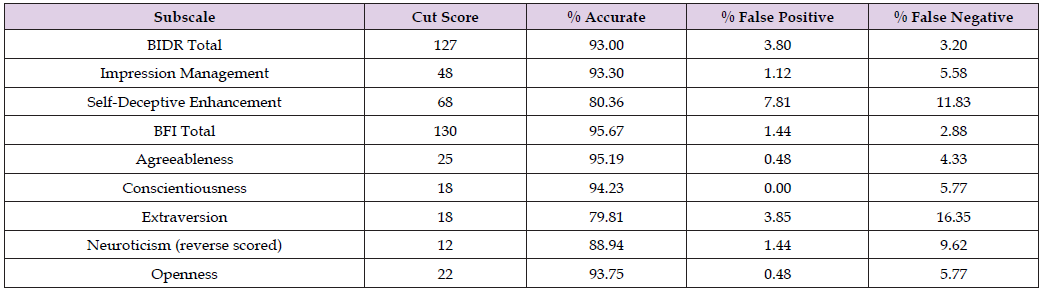
Journal on medical genetics |BJSTR

Medical Support in the Selectively Integrated Returns Intelligent Optimization System – SEIRIOS

Introduction

During the Second Phase of the therapy portfolio selection are required advanced higher moments [2] (ultrakurtosis, hyperultrakurtosis, etc), [3-7], depicting advanced forms of risk. Initially a feasible set of therapeutically combination policies is produced by the evaluated therapy portfolio, resulting to the efficient frontier where the utility function [8-11], is maximized on return under minimal risk, [12-15] expressed as an almost adequate approach of a maximum Sharpe ratio. The paper examines the first step that resolves the second step. I examine 60 Modular networks – MDN- of neural or hybrid neural-genetic combinations: 20 Modular Neural Networks and 40 Hybrid MDNs, of altered topologies to define the optimum classifier for portfolio selection. The paper:

i. Analyses the therapy selection that patients have under further higher moments, in certain returns and risk levels,
ii. Supports further the Isoelastic Utility as a sufficient norm,
iii. Evolves the Therapeutical Portfolio Theory, [16], extracting covered patterns on health fundamentals indices, excluding bias, detecting robust stocks, under Chaotic Entropy of FHR
iv. Investigates the performance of the Modular Networks in hybrid or neural or models, revealing the optimum classification model that fits intense therapy.
v. Utilises the SEIRIOS model on therapeutical portfolio optimisation.

The Entropy of Chaos, [17] in the form of Relative Entropy-TRE produces the Kullback-Leibler Relative Entropy – KLRE – for systems unextensive, on nonlinear, complex systems of long memory. [18-24] evaluated in practice the markets on a KLRE, Tsallis approach.

Systemic Approach

The complicated behavior of patients requires further moments [6,7,12,13,25]:

Robust computing abilities are necessary to the heuristics for the solution process of the non-convex problem. I provide an advanced classifier that detects hidden corporate info, especially hoaxes to support the decision-making process of investors.

Intelligent Computing

The Recurrent and Modular neural and hybrid neuro-genetic networks are comparatively analysed in a variety of classifiers forms.

The Self Organized Features Maps and their Hybrids

The Self Organized Features Maps-SOFM neural net, [26], is optimized for clustering, and data examination. The unsupervised learning trains SOFM producing a 2 Dimensional map. The discretized input surface of training set reduces dimensionality. The SOFM implements competitive learning, whilst the inputs givens as 16 financial indices have an unknown significance in the SOFM nets. In the hybrid forms, Genetic Algorithms-GA [27], were incorporated on the:

i. Inputs layer only,
ii. Inputs and outputs layers only,
iii. All layers,
iv. All layers with cross validation.

The training of each model is extensive to converge to a model of the lowest error. GAs is implemented in different hybrids and the Batch learning method was applied to the SOFM to adjust the weights (Figures 1 & 2).

Figure 1

biomedres-openaccess-journal-bjstr

Figure 2

biomedres-openaccess-journal-bjstr

Recurrent Networks and Neural-Genetic Hybrids

The Recurrent Neural Nets -RNN- create a directed cyclical grid in connections of feedback. The RNN have different elaboration than the feedforward systems. RNNs can have chaotic performances. Their ordinal problems are resolved by the Long Short- Term Memory -LSTMapproach [8], in cases of:

i) Temporally extended noisy patterns recognition,
ii) Temporal order in noisy widely separated events recognition,
iii) Temporal distance between events, data extraction,
iv) Smooth & anomalous periodic trajectories, stable generation of precisely timed rhythms,
v) Extended time intervals, robust storage of high-precision real numbers. Genetic Algorithms optimized the RNNs [1,7], on 4 alternative topologies.

The Genetic Algorithms were selected to optimize RNN models, in terms of selecting the inputs, and the performance of neurons. The learning method of On-Line is selected to adjust the Recurrent Hybrids weights, and thus optimize the:

a) Amount of Neurons,
b) Size of Step, and
c) Rate of Momentum, as the output optimised the Momentum and
size of Step in the Gas (Figures 3 & 4).

Figure 3

biomedres-openaccess-journal-bjstr

Figure 4

biomedres-openaccess-journal-bjstr

Modular Networks and Neural-Genetic Hybrids

The feedforward Modular – MDN – nets, consist a variation of the Multilayer Perceptrons. The MDNs process inputs in parallel numerous MLPs and recombines the outcomes. The network topology thus forms a structure specialised in the function of each sub-module. From the four MDN topologies, the linear feedforward topology with no bypasses is put in all the models. The MDNs contradicting the MLPs, are lesser interconnected. Thus fewer neurons weights are required for the same size model. Training is boosted with fewer examplars. The optimal operation to provide the MDN topology is fuzzy, feeded by the data, and no reassurance that a module emphasizes the training on a specific part of the data. This paper elaborates 16 Inputs neurons, 1 Output, 706 Exemplars, 4 Upper Neurons without GA into Hidden layers, on the Upper Transfer TanhAxon, Lower Transfer function on the TanhAxon, 4 Lower Neurons, Learning Rule of Momentum, 0.1 Step size, 0.70 Momentums. The learning technique is the Backpropagation, the previous value and a correction term adjusts the weights. Every correction is adjusted by the learning rule. Batch learning technique, 1000 Maximum epochs was the value of the Supervised Learning Control regarding the number of iterations, over the training set to be done by default, the Termination choice is under Minimum MSE below the specified Threshold, in 0.01 threshold, technique of Load best on test. The default Incremental error is significantly less than the Minimum error. The termination on MSE sets the stop criteria on the Cross Validation than the training set. If the MSE of the Cross Validation increases, the model commences overtraining, memorizes the set of training, unable of generalizing the problem (Table 1). Cross validation is used twice in the models on 20 different sets, as an efficient termination of training (Figures 5 & 6).

Table 1: Optimal outcomes of modular, SOFM and recurrent networks overall [14].biomedres-openaccess-journal-bjstr

Figure 5

biomedres-openaccess-journal-bjstr

Figure 6

biomedres-openaccess-journal-bjstr

The SEIRIOS Model

Inspired by my models the ORION [12,13,28] the new integrated Selectively Integrated Returns Intelligent Optimisation System – SEIRIOS, initially reads the fundamentals, prices and time, selecting the first classifier of therapy assets, patientss risk profiles, and λ

  • Next SEIRIOS tests the termination criterion of assets and the optimal portfolio is fulfilled.
  • Next uses ChatGPT, GBT4 and BARD to comparatively evaluate the patients sentiments of the past year per asset Next SEIRIOS reads Isi, investors sentiments per stock
  • Else SEIRIOS proceeds in 2 sets: 1 for healthy assets, and 2 for distressed. For ετ =1asset is deleted, else if ετ = 0 then asset healthy
  • Next Ut (Rt (i)) is given
  • Next SEIRIOS evaluates ISi, Ut (Rt (i)) keeping better assets Next, assets are hierarchized on score.
  • Next, assets of highest Sharpe and utility are selected. All other assets are revaluated in new data on step 9
  • Next, the excellent portfolio is produced of maximum UPj ( f ) .
  • The globally optimal health portfolio is U ∗ Pj ( f )

Formulation

Advanced higher moments demonstrated their impact on the model [1,6,7,29], to support a logical reflection of investment patterns and their dynamic behavior. [1,12,13] contributed:

through [1], to manipulation in superior risk. A risky asset works in the Dynamics of Chaos and Stochastic Differential Equation [26]:

where μ the expected asset return, σ the volatility without jumps, J the jump amplitude on asset > −1, random variable.

u = E (J ),{N (t ),t ≥ 0}Poisson process of strength λ , λ udt an average growth by Poisson jump, {W (t ), t ≥ 0} the Brownian motion of probability ({Ft} t ≥ 0, P), {N (t ) , t ≥ 0}and {W (t ), t ≥ 0}independent, [26]. The non-convex problem needs higher computational resources to undergo the heuristics. Inflammatory reaction, false diagnosis, inefficient therapy, hoaxes, require reliable valuation of the firm. The SDE’s (14), solution is [27,30]:

where Pq(Ω,t ) is the maximum Distribution Entropy by Tsallis in Non-extensive statistics. (17) describes the clustering of volatility and long-term memory effect in assets [26]. (11) describes the optimal utility [29,30]. The Kappa distributions can extend its support in the bubbles management (of diagnosis, therapy, inflammation) (Figure 7).

Figure 7

biomedres-openaccess-journal-bjstr

Data

The data came can be results of medical tests and their desired outcome. In the past the model was tested inv16 financial indexes data of 1411 cases, [30], as the17th index has the classification of executives. The test set was 50% overall, and training 50%. Numerous combinations required to find the optimal MDN and RNN Nets:

i. MDN neural networks
ii. MDN neural nets with Cross Validation
iii. MDN neuro-genetic hybrids with GA on the Inputs only
iv. MDN neuro-genetic hybrids with GA on the Inputs and Ouputs only
v. MDN neuro-genetic hybrids with GA in All Layers
vi. MDN neuro-genetic hybrids with GA in All Layers with Cross Validation
vii. RNN neural networks
viii. RNN neural nets with Cross Validation
ix. RNN neuro-genetic hybrids with GA on the Inputs only
x. RNN neuro-genetic hybrids with GA on the Inputs and Ouputs only
xi. RNN neuro-genetic hybrids with GA in All Layers
xii. RNN neuro-genetic hybrids with GA in All Layers with Cross Validation
xiii. SOFM neural networks
xiv. SOFM neural nets with Cross Validation
xv. SOFM neuro-genetic hybrids with GA on the Inputs only
xvi. SOFM neuro-genetic hybrids with GA on the Inputs and Ouputs only
xvii. SOFM neuro-genetic hybrids with GA in All Layers
xviii. SOFM neuro-genetic hybrids with GA in All Layers with Cross Validation

Results

The Modulars group, [13] MDN Neural Net in 3 layers classified optimally the assets in healthy and distressed: 99.16% and 83.48% respectively, of high fitness of the model to the data in 0.884, the lowest MSE at 0.092, NMSE 0.218 and 4.611%, the AIC was very low at -1230.98 revealing impartiality in a very fast time of 26s as in Table 1. In the Recurrent Networks on the other hand, the optimal performance of the RN Hybrids was in the model of 1 layer with GAs in the inputs only, in high classification rate of the healthy companies at 98.99%, and 96.6% for the distressed, the lowest MSE at 0.038, and 0.0935 in NMSE, the highest fitness of the model into the data 0.986, the AIC had the lowest value at -2062.4 indicating an ideal fitness of the model, similarly for the MDL at -2062.4, at a fast time of 54 minutes and 40seconds, in an over- optimisation hazard. Regarding the SOFMs, the Neural Network of 7 layers had the best results, in mediocre classification, high errors, low fitness, and significant partiality, (Table 1) [31,32].

Concluding Remarks

The Hybrid Recurrent networks of 1hidden layers and Genetics on the input layer only, had superior classification and performance in a fast processing time, the Recurrent Neural Net, ranked second overall in a good performance and a very fast time. The Modular and SOFM networks underperformed significantly and shouldn’t be considered as a classifier potential to an health portfolio optimiser system such as the SEIRIOS.

Follow us on: Biomedical Journal Impact Factor: https://biomedres.us

https://scholar.google.com/citations?user=OFtUOZYAAAAJ&hl=en
https://www.base-search.net/Search/Results?lookfor=Biomed+Journal+of+Scientific+%26+Technical+Research&l=en&refid=dcsuggesten
https://citefactor.org/journal/2574-1241/biomedical-journal-of-scientific-technical-research
https://ideas.repec.org/s/abf/journl.html
https://econpapers.repec.org/article/abfjournl/
https://www.ncbi.nlm.nih.gov/nlmcatalog/101723284
https://bjstr.org/
https://bjstr.org/about.php
https://biomedres.us/reprints.php
https://biomedres.net/submit-manuscript.php
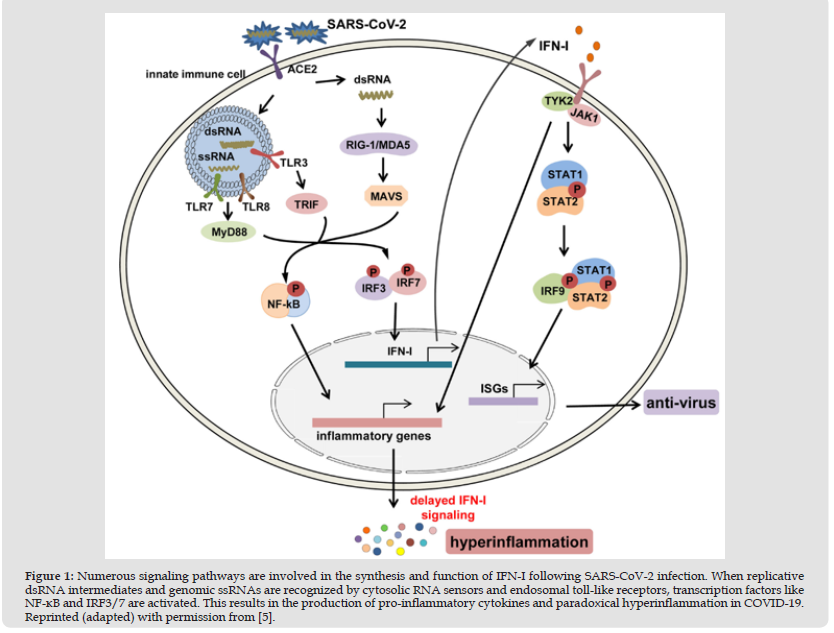
List of open access medical journal |BJSTR

Understanding Nursing Retention: A Study on Nurses’ Perceptions Towards Work Efficiency, Workload, and Burnout

Introduction

According to the International Council of Nurses (ICN), the global shortage of nurses is a crisis that continues to adversely impact healthcare (International Council of Nurses Policy Brief, [1]). Reasons include the long working hours, wages that are below expectation, ageing populations, and most recently, the global pandemic which has diverted nurses away from their usual tasks. Having a sufficient nurse to patient ratio not only has many clinical and economic advantages in patient care (Simpson, et al. [2]), it is also essential in the running of a world class medical institution. The demand on healthcare systems has increased drastically in the past year (International Council of Nurses Policy Brief, [1]), but countries have not been able to meet the increasing needs with a corresponding increase in the nursing workforce (International Council of Nurses Policy Brief, [1]). In the first half of 2021 alone, 500 foreign doctors and nurses have resigned in Singapore, compared with 500 in the whole of 2020 and 600 in 2019 (Tan [3]). An extrapolation of the numbers results in a rough attrition rate of 8% for this group of healthcare workers (MOH [4]). A multitude of factors have contributed to this high attrition rate. Firstly, the increased working hours.

It has been over 20 months of continuous daily battles against the pandemic, and not only have a large majority of healthcare workers been unable to take leave since it started, over 90 percent of them will also not be able to clear their accumulated leave (Tan [3]). Additionally, monthly working hours are high, ranging from 160-175 hours per month (Tan [3]). This, coupled with inefficient work processes have increased the workload and stress that hospital nurses face (Hendrich [5]). These same factors are also associated with burnout, (Lin, et al. [6]) which in turn hampers the efforts made to recruit and retain nurses. Ultimately, this negatively affects nurse staffing and patient outcomes (Garcia, et al. [5,7]). Understanding the root cause of high turnover rate related workload would help to retain nurses in hospitals, which can in turn lower the turnover rate. The purpose of this study is to explore nurses’ perceptions towards work efficiency, workload, and burnout in a hospital setting to gain more understanding of their views in enhancing nurses’ retention in hospitals.

Methods

Design and Setting

A quantifying descriptive qualitative method with open-ended questions was used for this study. The demographic data and open-ended survey were developed according to the Grant, et al. [8] study. The survey was used to explore their working environment, perceptions towards their workload, and suggestions regarding work issues. The study was conducted at Ng Teng Fong General Hospital (NTFGH), an acute care hospital in Singapore.

Sample and Survey

Convenient sampling was adopted in this study. The eligible criteria were enrolled or staff nurses who had a minimum of two years of working experience in NTFGH. There were 80 nurses who completed the survey, but only 57 nurses who met the criteria, and were selected for the study. The survey included four sections;

1) Demographic data,
2) Job scope aspects that were inefficient,
3) Factors that cause nurses to burnout, and
4) What can be done to improve nurses’ working experience.

Data Collection and Ethical Considerations

Ethics approval from NUS-IRB was granted before data collection. Permission for the administration of the survey was obtained from the nurse administrators. The invitation flyer and email with the online weblink were then sent out to eligible participants. The participants filled out the survey online and it took 3 weeks for data collection.

Data Analysis

The data was exported into an excel file, before the demographic and quantitative data were imported into SPSS (version 26). Descriptive analysis was used to describe the participants’ characteristics. The content analysis method was used to identify the significant statements and key words. Lastly, qualification of the similar qualitative method was used to quantify the qualitative data and range the most common concepts/codes.

Results

Characteristics of Participants

The participants’ profiles are presented in Table 1. Majority of the participants were female (86.0%). Three quarters of the participants (75.5%) were Staff Nurses, and the remaining one quarter (24.5%) were Enrolled Nurses. The mean age is 32.23 years old. On average the nurses worked for 9.28 years as a nurse, and 6.32 years in this hospital. They worked on average 41.83 hours a week and all the nurses work overtime at least 1 day of the week. Majority of the nurses worked at the inpatient department (96.5%). The nurses self-reported an average score of 3.09, 2.70 and 3.26 out of 5 for feeling overworked, satisfied, and burnt out respectively. When ranking the different aspects, majority of nurses (n=40, 70.2%) felt that patient care could be made more efficient. Coordinating the care of patients, communication, and answering/making phone calls were the subsequent aspects that nurses felt could be made more efficient. Preparing/clearing requisites was least able (n=11, 19.3%) to be made more efficient by nurses. Similarly, majority of nurses (n=37, 64.9%) felt that patient care burned them out the most. Answering/ making phone calls, coordinating the care of patients, and communication were the next few variables that nurses felt burned them out the most. Likewise, preparing/clearing requisites was the task that least (n=7, 12.3%) burns them out. Table 2 presents the ranking of job scope aspects that can be made more efficient, and factors that impact nurses’ burnout.

Table 1: Demographics of Nursing Population (N = 57).

biomedres-openaccess-journal-bjstr

Table 2: Aspect of job scope that can be made more efficient, and factors impacting nurses’ burnout.

biomedres-openaccess-journal-bjstr

Nurses’ Perception and Experiences Regarding Work Related Issues

Work Efficiency: The results showed that the participants perceived manpower shortage (n=10, 22.7%) as the main factor that impacted their work efficiency. Tasks which take time away from patient care, (n=9, 20.5%) as well as miscommunication (n=7, 15.9%) were the next two perceived causes of work inefficiency. The nurses suggested increasing manpower (n=18, 34.0%) and having dedicated staff (n=17, 32.1%) in the areas of administration, discharge planning and care appointment, transportation, serving meals, and making calls. Better communication between healthcare teams (n=7, 13.2%) was also suggested.

Burnout: High workload (n=20, 14.9%), manpower shortage (n=14, 20.9%), and unreasonable demands from patients and family (n=10, 14.9%) were listed as the three main causes of burnout. The nurses suggested increasing manpower (n=26, 53.1%) , increasing and enforcing rest (n=7, 14.3%), as well as re-examining workflows (n=4, 8.2%) to be helpful for reducing burnout. Workload: Suggestions on better workload management besides hiring more manpower included better teamwork (n=11, 23.9%), reduced job scope (n=10, 21.7%), as well as a better work life balance (n=5, 10.9%).

Time Spent: Nurses wished to spend less time on documentation (n=12, 32.7%), answering phone calls (n=7, 18.9%), and communication with patient’s family (13.5%), while a large majority of them wished to spend more time on patient care (n=37, 74.0%) and selfcare (n=9, 18.0%).

Accomplishment: Completing daily tasks (n=15, 22.7%), ending work on time (n=14, 21.2%), and patient recovery (n=9, 13.6%) were the three main reasons for nurses to feel accomplished at the end of the day. A comfortable working environment (n=10, 20.0%), good colleagues (n=9, 18.0%), and salary (n=8, 16.0%) were influencing factors for nurses to stay at their job. Table 3 presents nurses’ perceptions and suggestions on work related issues.

Table 3: Nurses’ perception and suggestion on work related issues.

biomedres-openaccess-journal-bjstr

Discussion and Nursing Implications

In this study, we explored nurses’ perceptions towards work efficiency, workload, and burnout issues.

Work Efficiency

The results showed that the top three main inefficiencies were attributed to a manpower shortage, tasks which take time away from patient care, and miscommunication between healthcare professionals. The problem of a nursing shortage in Singapore is not new (Chua [9]) and the COVID-19 pandemic has only accentuated it (Chia [10]). Manpower shortage made many nurses experience burnout amidst other issues such as a lack of recognition and protection against abuse (Yip, et al. [11]). With insufficient supply to meet the demands in hospitals, it is unsurprising that there are work inefficiencies. The logical solution that was suggested by those surveyed was to hire more nurses. Despite the demand for nurses, these vacancies are still not filled due to the hardships of the job and the reduced influx of foreign nurses (Begum [12]). Thus, the root of the problem that needs to be tackled is how to improve nurses’ working conditions to make the job more desirable. The nurses surveyed also reported that they were often preoccupied by non-patient care centred tasks such as documentation, transportation of patients, and answering calls. The nature of these tasks dictates that nurses spend a significant amount of time away from essential patient care (Yen, et al. [13]) and thus they feel it is inefficient.

To address this, those surveyed suggested hiring dedicated staff to handle these tasks. This would free up nurses for tasks that make better use of their skill sets (Goh [14]). Lastly, the nurses surveyed attributed a significant amount of inefficiencies to miscommunication between healthcare professionals, particularly with doctors. Miscommunication leads to, in the best case, time wasted, and in the worst case, medical errors that severely affect patients (Tjia, et al. [15]). Those surveyed suggested improving the communication framework between healthcare professionals (Matziou, et al. [16]) as this would improve relations between nurses and doctors, and ultimately increase the level of patient care.

Burnout

The study found that the most pressing factors impacting burnout were the high workload, a manpower shortage, and unreasonable demands from patients and their family. The top two factors of a high workload and a manpower shortage are closely related. Nurses surveyed commented that the volume of work that had to be done greatly exceeded the current nurse staffing levels. They remarked that there were “too many things to do at the same time” and that “they cannot possibly be everywhere at once”. These result in insufficient rest, and a long-term high-stress environment which drastically increases burnout rates among nurses (Tan, et al. [17]). Nurses also often faced unreasonable demands and abuse from patients and their families, and this was worsened during the COVID-19 pandemic when nurses had a higher workload. Abuse can come in both the physical and verbal forms and can result in nurses being psychologically traumatised and emotionally drained (Chua [18]). To tackle these issues, the nurses surveyed suggested once again increasing manpower, increasing and enforcing rest times, as well as re-examining workflows. As mentioned previously, increasing manpower is a complex process, and the root of the problem should be targeted instead (Begum [12]). The nurses highlighted that rest should be increased and enforced, and this was related to their other suggestion of workflows having to be re-examined. They identified poor scheduling of staff which caused many nurses to have to be called back to work on their designated rest days, thus decreasing much needed rest and relaxation, and increasing the incidence of burnout. Having sufficient time to rest and relax is essential in preventing burnout (Demerouti [19]), and thus this offers an alternative to help nurses while manpower shortages cannot be adequately dealt with.

Workload

Our study found that nurses perceived their workload to be high, which was closely related to the manpower shortage and burnout they face. The majority of nurses in the study felt that better teamwork would help better manage their workload while hiring more manpower remains challenging. The finding was in congruence with studies (Yanchus, et al. [20,21]) that have addressed how good teamwork is an antidote to high workload and inadequate staffing. Benefits of effective teamwork include improved coordination of care, efficient use of healthcare services and enhanced communication (Babiker, et al. [22]). Nurse leaders can benefit from these findings by recognizing the importance of creating a work environment that promotes collaboration and teamwork among nurses, and the multidisciplinary team they work with (Nutter [21]). In particular, good communication, trust and mutual respect, and accountability are aspects that would aid in the development of a more effective team (Yanchus, et al. [20]). Creating such an environment would enhance the quality of healthcare, improve patient safety, and better engage nurses who want to remain part of a thriving unit (Nutter, [21)).

However, a significant number of nurses felt that better work-life balance, a reduced job scope, and increasing manpower were still the best way forward in managing their workload. This suggests that while increasing teamwork among nurses may be a promising strategy, it is equally imperative to investigate and adjust nurses’ workloads accordingly to safeguard them from possible fatigue (Cho, et al. [23]).

Time Spent

Documentation was the most frequently mentioned task that the nurses wished to spend less time on. Various literature has attributed this to firstly, documentation compromising on patient care (Momenipour, et al. 2019). This is in line with our findings where 65% of the nurses wished to spend more time on patient care instead. Secondly, the perception that the amount of time spent on documentation is disproportionately high (Momenipour, et al. 2019). Lastly, concerns regarding the amount of time invested into documentation in proportion to its utility (Momenipour, et al. 2019). An observational study (Lim, et al. [24]) has shown significantly less time was spent on patient care activities, but more time on documentation by nurses. It has been suggested that efforts should be made to look into how time spent on documentation can be reduced, such as eliminating duplicate documentation so that nurses can devote more time to patient care (Lim, et al. [24]).

Based on our findings, more than three-quarters of the nurses wanted to spend more time on patient care, but they were overwhelmed by other aspects of their job. Being overwhelmed by aspects of their work that are unrelated to patient care can lead to emotional exhaustion and burnout, hence contributing to lower effectiveness (Dyrbye [25]).

Emotional exhaustion can also damage the hospital’s and nursing staff’s reputation from the patient’s point of view (Aiken [26]). While being able to help others was the top reason for students choosing to undertake a nursing degree (Wilkes, et al. [27]), the inability to perform up to their personal expectation could lead to burnout and decreased job satisfaction (Dyrbye [25]). It is important for nursing managers and hospital administrators to adjust the workload of non-patient care items and allow nurses to devote more time to patient care. Self-care was the second most mentioned item that nurses wanted to spend more time on. With Singapore already facing a nursing shortage (Chua [9]) before the COVID-19 pandemic, the nursing manpower shortage was felt even more acutely during the pandemic, further straining the already stretched nursing resources (Chia [10]). Several new initiatives to support the mental well-being of nurses were then launched, which included mental wellness training, selfcare and research programmes, online chat bots, peer-support networks, and counselling services (MOH [4]). However, for nurses that mentioned self-care, they wanted enforcement of sufficient break times and mandatory rest days. Hence, it is instrumental to support the mental well-being of nurses, and this includes sufficient break times and mandatory rest days as well.

Accomplishment

Based on our results, completing daily tasks was the greatest self-reported factor for feeling a sense of accomplishment, followed by ending work on time, and subsequently patient recovery. Completing daily tasks has been linked to personal accomplishment, and it has an effect on the well-being of an individual (Donaldson [28]). A sense of accomplishment has an effect on the reward system pathway in the body, and tasks with intermediate difficulty induces the greatest sense of achievement (Nakai [29]). This result may be of interest to nurse managers and hospital administrators in understanding the perspective and mindset of their nurses. Understanding and creating a manageable set of daily tasks would be critical in defining the nurses’ perception of their ability, as well as promoting a sense of accomplishment. Ending work on time was the second most self-reported factor for accomplishment. We postulate that this could be due to the intense workload the nurses face on a daily basis. Moreover, all the surveyed nurses reported working overtime weekly. Several possible reasons for working overtime include pressure to conform, a high workload, enhancing self-development (Watanabe [30]), and extra overtime income (Stimpfe [31]). Working overtime involuntarily demonstrated a detrimental effect on mental health and work engagement at both the ward and personal level (Watanabe [30,31]). Nursing managers and hospital administrators could take extra steps to investigate this issue.

Influencing Factor to Stay

The greatest factors for nurses staying on in the hospital were a comfortable working environment, followed by good colleagues, and the salary. Having a comfortable working environment is essential for the psychological health of nurses, and the work environment is a significant factor for the retention of nurses (Wei [32]). Research has shown that a comfortable working environment provides nurses with perceptions of autonomy, control over their practice, good nurse-physician relationships, as well as organisational support (Cortelyou-Ward [33]). Nursing managers and hospital administrators could take into consideration how nurses are coping with their working environment and colleagues on a regular basis. Retention rates for newly graduated nurses were significantly higher in working environments that were rated healthy or very healthy compared to working environments that needed improvement (Kramer [34]). Quarterly review of the nurses’ working environment could be implemented to promote a comfortable working environment as well as improve the retention of nurses [35-39].

Limitations

Our study consisted of nurses from one hospital and might not be representative of the situation at other hospitals in Singapore. Only enrolled and staff nurses were involved in this study while other healthcare professionals were not accounted for.

Conclusion

Patient care is at the heart of nursing but the high workload, manpower shortage and workplace inefficiency have contributed to burnout and less time spent on patient care. Nursing managers and hospital administrators must examine what influences nurses to stay, and what gives them a sense of accomplishment in order to retain nurses. Developing retention strategies and interventions, along with examining their effectiveness, are highly recommended for future research.

Author Contributions

• Study design: CWY, SJY, YJH, LME, YK
• Data collection: CWY, SJY, YJH, LME
• Data analysis: CWY, SJY, YJH
• Manuscript writing: CWY, SJY, YJH, YK
• Critical revisions for important intellectual content: YK
• CWY, SJY, YJH contributed equally in the process of this research study.

Conflict of Interest

The authors have declared no conflict of interest.

Follow us on: Biomedical Journal Impact Factor: https://biomedres.us

https://scholar.google.com/citations?user=OFtUOZYAAAAJ&hl=en
https://www.base-search.net/Search/Results?lookfor=Biomed+Journal+of+Scientific+%26+Technical+Research&l=en&refid=dcsuggesten
https://citefactor.org/journal/2574-1241/biomedical-journal-of-scientific-technical-research
https://ideas.repec.org/s/abf/journl.html
https://econpapers.repec.org/article/abfjournl/
https://www.ncbi.nlm.nih.gov/nlmcatalog/101723284
https://bjstr.org/
https://bjstr.org/about.php
https://biomedres.us/reprints.php
https://biomedres.net/submit-manuscript.php