Journal on medical science

Therapeutic Modulation of Lactate Dehydrogenase Activity Level in Algerian Patients with COVID-19 Infection Associated with Diabetes, Hypertension and Cardiovascular Disease

Introduction

Coronavirus disease 2019 (COVID-19), is caused by severe acute respiratory syndrome coronavirus 2 (SARS-CoV-2) [1]. The clinical presentation of COVID-19 varies widely, ranging from asymptomatic to mild or severe forms. In the early stages of the disease, most patients experience mild clinical symptoms, including a high fever and dry cough. However, 20% of patients rapidly progress to severe illness characterized by atypical interstitial bilateral pneumonia, acute respiratory distress syndrome and multiorgan dysfunction [1]. The primary cell attachment factor in SARS-CoV-2 has been confirmed to be the human angiotensin-converting enzyme 2 (ACE2) cell surface receptor [2]. This single transmembrane domain protein is expressed at appreciable protein levels on terminal bronchiole as well as type I and II lung alveolar epithelial cells, which aligns with the primary pathology of COVID-19: loss of oxygen saturation due to poor pulmonary gas exchange. Likewise, noteworthy ACE2 levels have been reported among enterocytes of the small intestine, arterial, and venous endothelial cells, and arterial smooth muscle cells in most organs, as well as the vagus nerve innervating the lung, heart and digestive system [3], which mirror the diversity of symptoms and pathologies associated with COVID-19: diarrhea, myocarditis, fatigue, encephalopathy (headaches, confusion, anosmia, stroke-like symptoms, and seizures) [4].

In our current study, we are focusing on total lactate dehydrogenase (tLDH) assessment. tLDH is an interesting biomarker for monitoring the course of patients infected with COVID-19 because high levels of tLDH have been associated with worse outcomes in patients with other viral infections in the past [5]. LDH is an intracellular enzyme found in cells in almost all organ systems, which catalyzes the interconversion of pyruvate and lactate, with concomitant interconversion of NADH and NAD+ [6]. It is present in humans in five separate isozymes: LDH-1 in cardiomyocytes, LDH-2 in the reticuloendothelial system, LDH-3 in pneumocytes, LDH-4 in the kidneys and pancreas, and LDH-5 in liver and striated muscle. Although LDH has been traditionally used as a marker of cardiac damage, abnormal values can result from multiple organ injury and decreased oxygenation with up regulation of the glycolytic pathway [7]. Thus, COVID-19 mainly affects the respiratory system, but can cause damage to other body systems, including the cardiovascular, gastrointestinal, hepatobiliary, renal, and central nervous systems [8]. The common comorbidity in patients with COVID-19 are hypertension (HT), cardiovascular disease, diabetes, obesity, and respiratory disease. The use of drugs can restore, strengthen, and modulate the immune system is, therefore, a perfect approach to handling the COVID-19 infection. In this way, we talk about some drugs such as hydroxychloroquine (HCQ), and Azithromycin® (AZM). Several in vitro studies showed a possible antiviral and anti-inflammatory effect of HCQ and AZM in preclinical models of viral infections [9]. HCQ induces the production of reactive oxygen species (ROS) mediated toxicity in inner glial cells after prolonged treatment requiring the use of vitamin C to prevent the ROS production [10].

Furthermore, vitamin C reduces pulmonary lung inflammation and lung injury due to ROS release by phagocytes [11], the reason why treatment was effective in the reduction of tLDH activity levels. We also administered AZM, which inhibits the synthesis of bacterial proteins [12]. Recently, AZM has received increasing attention because of additional properties on a host-defense reactions by exerting the immunomodulation effects in chronic inflammatory diseases [12]. The modulation of immune responses enables the lasting therapeutic advantage of AZM in chronic obstructive pulmonary disease [12]. This seems interesting because when the immune system is weakened by the SARS-Cov-2 infection, bacterial infections will take place. For this reason, we opted for this anti-biotherapy for the improvement of treatment protocol administered to patients in the state of co-infection, so this type of infection could be prevented to avoid the deterioration of other organs. We added also in treatment protocol-2 Cefotaxime® which has a broad antibacterial spectrum and is active against Gram-positive bacteria [13], Teicoplanine® which has antiviral activity against influenza A and B viruses, composed by lipoglycopeptides: bioactive molecules against human coronavirus [14]. The first objective of our study is to investigate the eventual correlation between the total LDH activity levels: enzymatic biomarkers, measured in plasma of patients COVID-19 infection, with different categories of body mass index (BMI) patient’s. Secondly, we highlight the important impact of associated pathologies: HT, cardiovascular disease and diabetes on the tLDH activity levels before and after treatments. By this way we aimed to elucidate also the effectiveness of the two therapeutic protocols which are adopted according to the severity of the viral infection in relation with tissue damage which can be demonstrated by tLDH activity level reduction.

Methods

The pandemic health situation drew our attention as researchers and clinicians, thereby we have tried to find durable solutions both at preventive and treatment levels. This work has been carried out in accordance with the code of Ethics of the World Medical Association (Declaration of Helsinki) for experiments involving humans, consent was obtained for experimentation with human subjects, the privacy rights of human subjects must always be observed. The authors are accountable for all aspects of the work in ensuring that questions related to the accuracy or integrity of any part of the work are appropriately investigated and resolved. In our study, we opted for the assay of total LDH activity level in patients with COVID-19 infection before and after treatment, while following two different treatment therapeutic protocols. The therapeutic protocol 1 (Protocol-1) consist of the use: Hydroxychloroquine (HCQ), Azithromycin® (AZM), Vitamin C, Zinc, Preventive Enoxaparin®, and in therapeutic protocol 2 (Protocol-2): we use the same therapeutic approach 1 with the use of a curative dose of Enoxaparin®, Cefotaxime®, Teicoplanine®, Corticosteroid therapy and Oxygen therapy, according to the severity of COVID-19 infection. We note that the duration of treatment is variable depending on the evolution of the patient’s state of health.

In total we have 86 patients (Table 1), using 1-Biolabo 240T x and Biolisis 50i (Spinreact®), the standard value of tLDH is 200 to 400 IU/L (Pyruvate lactate assay). After receiving the patients who suffered from this viral infection, first we examined the tLDH level from a group of patients before any treatment protocol (tLDH-1), then gave the treatment protocol-1 during the hospitalization, these patients all remained under medical supervision until the end of treatment. In the second step we examined the tLDH level after treatment (tLDH-2). The therapeutic protocol-1 was modified to obtain a second therapeutic protocol-2 by adding of three drugs (Cefotaxime®, Teicoplanin® and Corticosteroid therapy) associated with oxygen therapy in order to reduce the intensity of the various symptoms due to the COVID-19 infection and improve the state of health of the patients [15]. In the therapeutic protocol-2 we use the same procedure as the first treatment protocol-1: we evaluate the tLDH activity level in the second group of patients before treatment protocol-2 (tLDH-1) and after treatment (tLDH-2). However, patients suffering from several other pathologies which are at the origin of the worsening of their state of health are excluded from this study.

Table 1: Stratification of different patients groups with COVID-19 infection and associated pathologies.

Statistical Analysis

In this study we used the ANOVA test for statistical analysis.

Results

Comparison between Total LDH Activity Levels Measured Before and After Using the Two Protocols Treatment in Patients COVID-19 Infection

We note with interest a global down regulation in tLDH-2 activity levels as shown in comparison with the tLDH-1 activity rate, this result is the same that obtained in both protocols followed. Protocol-1: Average tLDH-1 activity level (514±277 UI/L), Average tLDH-2 activity level (359±216 UI/L), and Protocol-2 Average tLDH-1 activity level (687±349 UI/L), Average tLDH-2 activity level (450±285 UI/L).

Relationship between COVID-19 Infection, Cardiovascular Disease, Hypertension (HT) and tLDH Activity Level

In the first step of our study, we investigated the influence of variation BMI on tLDH activity level in patients with cardiovascular disease and HT.

Effect of Cardiovascular Disease and Hypertension on tLDH Activity Level in Different BMI Groups of Patients: As shown in (Figure 1) the analysis of tLDH activity level measured in plasma of patients with COVID-19 infection, associated with HT and cardiovascular disease in different BMI groups (AW: 456±177 UI/L, OW; 562±392 UI/L and Ob: 601±454 UI/L) showed no significant difference (p>0.05) compared to the negative control groups (AW: 472 ± 211 UI/L, OW: 584 ± 312 UI/L and Ob: 509 ± 153 UI/L). We noted with interest that HT and cardiovascular disease and/or obesity did not modulate the activity of tLDH-1 during the infection with COVID-19 before any treatment (Figure 1).

Figure 1

Effect of the Therapeutic Protocol on the tLDH Activity Levels in different BMI Groups of Patients Associate with Cardiovascular Disease and HT: Considering the variation in tLDH activity levels measured in plasma of different BMI groups of patients with COVID-19 infection, and associated with cardiovascular disease and HT shown in (Figure 2) is revealed significantly decreased activity level of tLDH-2 (p<0.05) in negative control group of AW, that we noted effective response to the treatment protocols, AW (tLDH-1: 472±211 UI/L and tLDH-2: 331±128 UI/L). However, in the other groups we observed that cardiovascular disease and obesity suppress the effect of treatment on tLDH activity level (Figure 2). The cardiovascular disease and HT associated with COVID-19 infection revealed no significant difference (p>0.05) between tLDH-1 (AW: 472±211 UI/L, OW: 584±312 UI/L and Ob: 601±454 UI/L) and tLDH-2 (AW: 409±99 UI/L, OW: 378±108 UI/L and Ob: 493±380 UI/L).The obesity associated with COVID-19 infection (negative control) revealed no significant difference (p>0.05) between tLDH-1 (OW: 584±312 UI/L and Ob: 503±171 UI/L) and tLDH-2 (OW: 426±184 UI/L and Ob: 427±114 UI/L).

Figure 2

Relationship between COVID-19 Infection and Diabetes and tLDH Activity Level

In the second step of our study, we investigated the influence of BMI variation on tLDH activity levels in patients with diabetes.

Effect of Diabetes on a tLDH-1 Activity Level in different BMI Groups: As shown in (Figure 3) the analysis of the tLDH-1 activity level measured in plasma of patients with COVID-19 infection, associated with diabetes in different BMI groups (AW: 427±104 UI/L, OW: 457±123 UI/L, and Ob: 653±512 UI/L) are revealed not any significant difference (p>0.05) compared to the groups of negative control subjects (AW: 472±211 UI/L, OW: 585±315 UI/L, and Ob: 503±171 UI/L). We noted that diabetes and/or obesity did not modulate the activity levels of tLDH-1 in the event of infection with COVID-19 (Figure 3).

Figure 3

The Effect of the Therapeutic Protocol on tLDH Activity Levels in Different BMI Groups of Patients with Diabetes: We observed in (Figure 4) that there is a significant decreased activity level of tLDH-2 (P<0.05) measured in the AW group negative control, that we noted effective response to the treatment protocols, AW (tLDH-1: 427±104 UI/L and tLDH-2: 409±87 UI/L). However, in the other groups we observed that diabetes and obesity suppress the effect of treatment on tLDH activity level (Figure 4). The diabetes associated with COVID-19 infection revealed no significant difference between tLDH-1 (AW: 427±104 UI/L, OW: 457±123 UI/L and Ob: 653±512 UI/L) and tLDH-2 (AW: 409±87 UI/L, OW: 385±87 UI/L and Ob: 287±184 UI/L). The obesity associated with COVID-19 infection (negative control) revealed no significant difference between tLDH-1 (OW: 584±312 UI/L and Ob: 503±171 UI/L) and tLDH-2 (OW: 426±184 UI/L and Ob: 427±114 UI/L).

Figure 4

Discussion

We observed during the analysis of our data that the activity levels of tLDH is upregulated during viral infection by COVID-19, this observation is confirmed by the systemic elevated concentrations of tLDH during diagnosis upstream of treatment compared with the standard value (200-400 UI/L) in different groups of BMI (AW, OW and Ob). Our results indicate that the use of treatment protocols is effective. There is a significant difference between tLDH-1 and tLDH-2 demonstrated by ANOVA test. The tLDH activity assay results show that both use treatments protocols (Protocol-1 and Protocol-2) are effective and the obtained results are argued by a down regulation and of tLDH-2 enzyme activity levels in the vast majority of patients who underwent treatment during hospitalization compared to patients whose tLDH-1 values analyzed at the admission of the patients with COVID-19 infection before the treatment. We also noted that the associated pathologies such as hypertension, cardiovascular diseases and diabetes do not modulate the severity of the infection. Contrariwise, they affect the effectiveness of treatments because the patients who suffer from these diseases don’t respond such as negative controls, with the exception of a single case only when the diabetes presents in the obese and overweight groups. We also report that the analysis of tLDH-1 before treatment of patients with COVID-19 infection associated with HT and cardiovascular disease in different BMI groups revealed no significant difference compared to the negative control groups. We concluded that HT and cardiovascular disease modulate the activity of tLDH during infection with COVID-19, and affect negatively the efficacy of treatment protocols. Then we studied the impact of obesity associated with diseases previously cited on the effectiveness of treatment protocols. We noted that diabetes don’t affect the efficacy of treatments in adequate weight subjects with COVID-19 infection. However, we observed in overweight and obese groups that the treatment is less effective.

Conclusion

Our results suggest that associated obesity with cardiovascular diseases, hypertension and diabetes affect the effectiveness of treatments in patients with COVID-19 infection as they are not involved in the severity of viral infection.

Acknowledgments

The authors thank all patients who are participants in this study for providing blood. They also thank Pr. Houda Belgendouz for her participation in this work.

Ethical Statement

The authors are accountable for all aspects of the work in ensuring that questions related to the accuracy or integrity of any part of the work are appropriately investigated and resolved. The authors are accountable for all aspects of the work in ensuring that questions related to the accuracy or integrity of any part of the work are appropriately investigated and resolved. The trial was conducted in accordance with the Declaration of Helsinki (as revised in 2013).

Conflicts of Interest

All authors have no conflicts of interest to declare.

For More Articles: Biomedical Journal Impact Factor: https://biomedres.us

American medical journal

The Impact of Mobile Health on Oral Anticoagulation Therapy: E-Selfcare in Cardiotherpy

Introduction

Different types of thrombosis and thromboembolic events can be usually prevented and treated using anticoagulants [1]. Oral anticoagulants (VKAs) and newer drugs known as the Novel Oral Anticoagulants (NOACs) [2]. Despite the advent of NOACs, there is limited information on their use among patients with renal dysfunction, obese patients, pediatric population, and pregnant women [2]. Moreover, they cost much more than VKAs [2]. Therefore, VKAs, especially warfarin, line up as the first-choice treatment for a large group of patients [3]. Currently, between one and two percent of the population in the developed countries are estimated to receive oral anticoagulants, especially warfarin, on a regular basis [4]. It should be pointed out that the impact of VKAs depends on receiving appropriate doses [2]. To ensure the effective course of VKA therapy, the Prothrombin Time (PT) test should be performed frequently and at regular intervals in order to determine the extent to which the results lie within the therapeutic range, which is regarded as an important indicator of therapy effectiveness [5-7]. The percentage of Time in Therapeutic Range (TTR) is a measure of the quality of VKA therapy management that can be calculated using various methods. The linear interpolation described by Rosendaal is mostly effective in calculating the percentage of TTR [8,9].

TTR refers to the ratio of the number of total days between the two tests in which the patient’s International Normalized Ratio (INR) lies within the therapeutic range [10,11]. Currently, the growing trend of cardiovascular disease (CVD) and the increase in the population taking oral anticoagulants in the world [12,13] as well as the lack of development of facilities commensurate give rise to more increase in demand than in supply. For instance, if all patients in the UK wanted to attend anticoagulation clinics (ACs) in hospitals, the current number of clinics had to increase five to tenfold [14]. Therefore, developing methods with the capability of continuous monitoring of the patient’s conditions at home, work, travel, or in any circumstance at a lower cost and with the shortest time will be of paramount importance. Studies have shown that the utilization of electronic health (eHealth) applications in patient self-management (PSM) has been effective in chronic diseases [15,16]. These applications serve as a reminder to improve medication adherence and control, assist, and inform patients as well [15]. Utilizing these applications by minimizing or even eliminating the need for clinic visits for routine treatment of some common complications and by facilitating self-management can contribute to the patient’s adherence to therapy and increasing the duration of time in which the patient remains within the target therapeutic range and the percentage of TTR [17].

Given the growing trend of using information technology (IT) in various fields of health as well as the lack of studies on the impact of using mobile health (mHealth) in oral anticoagulation therapy in developing countries, the current study was designed. The main objective of this study was to investigate the impact of using “XrinA” mobile application on health outcomes (the number of results of the INR within the therapeutic range and TTR) in patients’ self-management of oral anticoagulation therapies. However, in this study, warfarin was considered the oral anticoagulant of choice, not novel oral anticoagulants (NOACs).

Methods

The Mobile Application Development Process

The demands of application users were identified based on valid texts and experts’ opinions. According to the relevant studies, the functional model of the mobile application for warfarin patient self-management (PSM) was developed, requirements for the mobile application were extracted, and use-case diagrams as well as activity diagrams were drawn. Then, the structural model was developed by extracting classes and drawing Class-Responsibility-Collaboration (CRC) models. The behavioral model was then developed by analyzing the system behavior and drawing the Sequence Diagram. When the class diagram or conceptual model of the application was developed, the application platform and programming language were determined. Eventually, an Android mobile application called XrinA was developed for the purpose of warfarin PSM. The application architecture was designed as a Client-Server model. The application consists of two running parts, including the server part running on the server and the client part running on physicians’ and patients’ phones. The task of the server part is to manage schedules and send reminders to the patient based on the physician’s prescription. Besides, provided that no appropriate feedback is received from the patient about the prescription given, the server part will send out required alerts to the physician. The server part of the application was designed in the Microsoft Visual Studio 2015 and C# language.

The client part, which is a mobile application, was designed in the Android Studio 3 and Java language. The server operating system, the Microsoft Windows Server 2016, and the operating system for clients (i.e., mobile phones) are based on Android. The application can be installed on mobile phones with the Android operating system and Android version 4.2.1 and above. The Microsoft SQL Server 2014 was used to manage the data. Data included patients’ information, schedules associated with each patient, patients’ test results, and the prescriptions given to each patient. The communication between clients and servers was also set up via the Internet and based on the Internet Protocol (IP) of each mobile phone and server. In order to use this application, it is a necessity that users’ mobile phones should be always connected to the Internet and the application should be running (i.e., the users do not log out of the application through the “exit” menu). After coding, the application was tested and then was implemented. To troubleshoot the application described, the three-member research group was provided with the total application process flow and its content. The points of view of each of the mentioned individuals were adopted before and during the application development and then taken into account as well. The application was piloted for two weeks and then finalized.

Study Design

The current study was conducted following a Before-After study design to evaluate the application efficiency.

Sampling Technique

Application users included physicians and patients; therefore, an attempt was made to select them. Among several hospitals and one clinic, the same clinic and a physician who met the inclusion criteria participated the study. Patients referred to the clinic were also selected through purposeful sampling. To do so, all the patients referred to the clinic could take part in the study, provided that they met the inclusion criteria. The inclusion criteria of patients were as follows:

 Participants were selected from patients taking warfarin who referred to the clinic, regardless of their disease.

 Patients whose status was stable.

 Patients who were willing to participate in the project.

 Patients who had a smartphone with the Android operating system.

 Patients who were able to use the mobile application.

 Patients who required warfarin therapy for at least one year.

 The exclusion criteria of patients were as follows:

 Patients with unavailable or incomplete data regarding project implementation.

 Patients who required surgery.

 Patients who developed acute diseases.

 Patients who were unwilling to participate in the project.

According to the above-mentioned criteria, 21 patients were selected from those who referred to the clinic. Patients were interviewed. They were asked about their level of education and how much they adhered to the physician’s instructions in the usual treatment method and followed prescriptions on time.

Evaluation of Application

The application was evaluated in terms of efficiency in maintaining the patients’ INRs within the therapeutic range as well as the patients’ TTR. The current study was conducted following a Before-After study design to evaluate the application efficiency. The required investigations were then performed and the information items required for recording during the study period were determined as well. Eventually, a special medical record form called patients’ medical and laboratory record form was designed to store medical data as well as patients’ INR test results during the two periods of before using the mobile application and after using the mobile application. The form was designed through consulting a two-member research group consisting of a professor of the Department of Health Information Management and Technology of the School of Paramedical Sciences as well as a cardiologist. The medical and laboratory record form can be seen in Table 1. Then, patients’ medical and laboratory data were collected. The study medical data included gender, the start date for taking warfarin, age (in years), indications, target INR range, and the duration of time in which the patient required to be treated. The patients’ laboratory data included the following information recorded at each visit: visit date, blood test date, INR result, complication type, complication incidence date, new dosage, next blood test date, and record date. During the project implementation (both the “Before” and “After” periods), patients were supposed to refer to former laboratories, and the quality of laboratory tests was also supposed to be constant.

Table 1: Patients’ medical and laboratory record form.

Note: a Dosage based on multiples of 1/4 warfarin 5 mg tablet

b Multiple/extensive bruising: The area of bruising is about half the size of the palm or more than three in number

The evaluation of patients started from the “Before” period, and patients could move on to the “After” period, provided that at least four tests were performed on each patient. The minimum number of tests for transfer to the “After” period was four tests. Therefore, at the doctor’s discretion, the number of tests in the “Before” period may have been 4 or more. Besides, the condition for the completion of the “After” period was to perform at least four tests. In the “Before” period, patients were treated as usual, and in the “After” period, the XrinA mobile application was used to tele control oral anticoagulation therapy. In this application, there was a possibility to set up two-way communication between the patient and the physician via the Internet and send a notification. In each period, the ratio of the number of INRs within the therapeutic range to the total number of tests in that period was calculated and expressed in percentage. Therefore, for each period, the percentage of INRs within the therapeutic range was calculated and the results of the two periods were compared. Then, in both the “Before” and “After” periods, the patients’ TTR was calculated and compared.

Research Ethics and Patient Consent

This study has the ethics code “IR.SBMU.RETECH.REC.1398.388”, approved by Shahid Beheshti University of Medical Sciences.

Data Analysis

After patient selection, the date and results of INR test was transferred to Excel (columns A to M), computed, and the following results were obtained.

Table 2:

Column A: The solar date of INR test is written under “Date of Blood Test”.

Column B: The solar date is changed to Gregorian calendar under the same column using the following formula.

=IF(MOD(VALUE(LEFT(A4,4)),4)=0,(VALUE(LEFT(A4,4))-1)*365+(IF((VALUE(MID(A4,6,2))-1)<7,(VALUE(MID(A4,6,2))-1)*31,IF((VALUE(MID(A4,6,2))-1)>6,(VALUE(MID(A4,6,2))-1)*30+6)))+VALUE(RIGHT(A4,2))+INT((VALUE(LEFT(A4,4))-1)/4)+1,(VALUE(LEFT(A4,4))-1)*365+(IF((VALUE(MID(A4,6,2))-1)<7,(VALUE(MID(A4,6,2))-1)*31,IF((VALUE(MID(A4,6,2))-1)>6,(VALUE(MID(A4,6,2))-1)*30+6)))+VALUE(RIGHT(A4,2))+INT((VALUE(LEFT(A4,4))-1)/4))-466710

Column C: The result of the patient test is written in INR column.

Column D: The number of days after the previous test obtained through the following formula is written in column D: “Days Since Last Test”.

=IF (C4=””,””, B4-B3)

Column E: “INR Diff” column shows the INR ratio calculated based on the following formula:

=IF (C4=””,””, C4-C3)

Column F: “Previous INR Within Range?” column depicts if the previous INR was within the therapeutic range based on the following formula:

=IF (C4=””,””, G3)

Column G: “Current INR Within Range?” column depicts if the new INR is within the therapeutic range based on the following formula:

=IF (C4=””,””, IF (C4<$P$2,”Below”, IF(C4>$P$3,”Above”,”In Range”)))

Column H: “Scenario” column shows if the INR result is consistent base on the following formula:

=IF (F4=G4, F4,”Calculate”)

Columns I, J, & K are used to get the INR difference ratio for calculating TTR.

Column “INR Diff Above Range”: This column shows how higher the present INR is from the patient’s therapeutic range based on the following formula:

=IF (C4=””,””, IF (H4=”Above”, ABS(E4), IF(F4=”Above”,ABS(C3-$P$3),IF(G4=”Above”,ABS(C4-$P$3),0))))

Column “INR Diff Within Range”: The present INR within the therapeutic range has been calculated based on the following formula:

=IF (C4=””,””, ABS(E4)-ABS(I4)-ABS(K4))

Column “INR Diff Bellow Range”: This column shows how lower the present INR is from the patient’s therapeutic range based on the following formula:

=IF (C4=””,””, IF (H4=”Below”, ABS(E4), IF (F4=”Below”, ABS(C3-$P$2), IF(G4=”Below”,ABS(C4-$P$2),0))))

Column L: The number of days in which the patients’ INR is within the therapeutic range has been calculated in “Days within Range since Last Test” based on the following formula:

=IF (D4=””,””, M4*D4)

Column M: The percentage of the days in which the patients’ INR is within the therapeutic range has been calculated in “Days within Range since Last Test” based on the following formula:

=IF (J4=””,””, IF (E4=0, IF (G4=”In Range”,1,0), J4/ABS(E4)))

According to data and the above formulae applied on Excel sheet, the results are written in Columns 5 and 6.

An Excel sheet of a patient is also attached (“Data Analysis.xls” file).

Results

Twenty-one patients participated the “Before” period. Demographic information of patients is given in Table 2.

Table 3: Demographic and Educational level of patients.

The factors contributing to patient warfarin uptake are listed in Table 3. The patients’ therapeutic range is presented in Table 4. The whole study period including “Before” and “After” periods ranged from 25/4/2021 to 22/5/2022 for 13 months. The “Before” period lasted from 25/4/2021 to 18/12/2021 for 8 months and the “After” period lasted from 15/11/2021 to 22/5/2022 for 6 months. The start date of the “After” period was not a fixed date for all patients, and each patient moved on to the “After” period as they met its entry criteria. Result regarding the number of tests and the percentage of INRs within the therapeutic range for each patient is presented in Table 5. Result regarding each patient’s TTR during the study is given in Table 6. The INRs within the therapeutic range and TTR of patients as well as their mean are given in Table 7. In the “Before” period, 0-60 % of patients’ INRs were in the therapeutic range and the percentage of TTR ranged from 0% to 70.9%. In the “After” period, 21.1-70 % of patients’ INRs were in the therapeutic range and the percentage of TTR ranged from 28.8% to 62.5%. In the “Before” period, the mean percentage of INRs within the therapeutic range and the mean percentage of TTR of patients were 31.5% and 34.3%, respectively. In the “After” period, the mean percentage of INRs within the therapeutic range and the mean percentage of TTR of patients were 41.4% and 50.1%. In the “After” period, the mean INRs within the therapeutic range and the mean TTR increased by 9.9% and 15.8%. Moreover, the minimum percentage of INR tests within the therapeutic range and TTR, which were zero in the “Before” period, increased to 21.1% and 28.8% (Figure 1).

Table 4: Oral Anticoagulant Therapy (OAT)-requiring pathologies of patients.

Table 5: Oral Anticoagulant Therapy (OAT)-Target INR Range of patients.

Table 6: Results of PT Tests and INR of Patients.

Table 7: TTR of Patients.

Table 8: Percentage of PT Tests in Range, TTRs and Their Means.

Figure 1

Discussion

Patient self-care covers a broad spectrum ranging from the lowest level to the highest level representing the full patient responsibility for the treatment, which means that at the lowest level of self-care, the patient participates to a lesser degree in taking care of himself/herself as compared to the health system, whereas at the highest level of self-care, the patient performs 100% self-care behavior and moves towards patient self-management (PSM). On the one hand, nowadays, patients with chronic diseases are actively involved in their own treatment and have greater cooperation with the treatment team in this sense [1]. On the other hand, studies have shown that the accuracy of dose prescription determined using the computer to achieve the INR target level is not less than that of experienced medical staff prescription [14,18,19]; therefore, the determination of dose rate using computer software has received increased interest from physicians and medical staff day after day [12,13]. Due to the set of these benefits, eHealth applications gain more popularity in this field and PSM is considered as the next step in the management of oral anticoagulation therapy [1]. The platform applied to self-management software includes both personal computers (PC) and mobile phones. It appears that PCs apply highly in medical centers, while mobile phones use more on patients. Because smartphones are almost always with the patient and possess the capability to set up two-way communications [20].

Therefore, self-management mobile applications pave the way for establishing continuous communication between the patient and the care team. The whole study period including Before and After periods ranged from 25/4/2021 to 22/5/2022 for 13 months. The Before period lasted from 25/4/2021 to 18/12/2021 for 8 months and the After period lasted from 15/11/2021 to 22/5/2022 for 6 months. The start date of the After period was not a fixed date for all patients, and each patient moved on to the After period as they met its entry criteria (Table 5). In 18 studies [4,5,7,12-14,21-34], the impact of patient self-management of oral anticoagulation therapy using eHealth applications on the percent of INRs within range and the percent of TTR were investigated. Out of 18 studies on therapeutic outcomes, 16 studies showed that patient self-management using eHealth apps improved therapeutic outcomes. Out of 5 studies [4,5,24,27,28] on INRs within the therapeutic range, 4 studies showed that patient self-management of oral anticoagulation therapy using eHealth applications increased the number of INRs within the therapeutic range. There was no negative impact on the number of INRs within the therapeutic range in any study. Regarding INR, the results of the present study indicated that the XrinA application increased the mean INRs within the therapeutic range by 9.78%; therefore, it is recommended to replace conventional methods with this method. However, it should be pointed out that according to other studies conducted in this field, 50% of major complications occurred when INR is within the therapeutic range [1].

In these circumstances, the use of this application by patients, facilitating access to the care team, can play an effective role in the prevention and reduction of injuries caused by complications and can be regarded as an appropriate alternative to conventional methods as well. Out of 17 studies (4, 5, 7, 12-14, 23, 25-34) on TTR, 14 studies revealed that patient self-management of oral anticoagulation therapy using eHealth applications led to an improvement of TTR values. In most of these studies, it was found that patient self-management using applications increased TTR by 0.7 to 15.4%, so that compared to the conventional methods, the range of TTR increased from 53.2-72.7 to 63.3-80.2 in new methods. The results from the present study indicated that in the new method focusing on the XrinA application, the percentage of TTR ranged from 0-70.9 % to 28.8-62.5% as compared to the conventional methods, which led to a 15.57% increase in the percentage of TTR, indicating that patient self-management of oral anticoagulation therapy using XrinA application based on this index can also be considered as an appropriate alternative to conventional methods. Concerning TTR results, other studies indicated that TTR can be considered as an appropriate alternative to previous models, provided that the percentage of TTR is not less than 60% in a management model and also there is at least 5 to 10% improvement in the percentage of TTR as well [7,33].

As presented in reference [34], TTR was divided into three ranges: weak, medium and good. In the current study, 81% of patients were in the weak range, although the proportion of patients with weak TTR did not alter in the “After” period (Table 8). However, it should be noted that TTR increased by an average of 15.8% compared to the conventional method, indicating that the patient self-management of oral anticoagulation therapy using the XrinA application can be regarded as an appropriate alternative to conventional methods. The INRs within the therapeutic range and TTR of patients as well as their mean are given in Table 8. During interviews with patients, it was found that the main cause of low adherence among patients in the Before period was the forgetting of drug use times and more specifically, not performing tests on time. Significantly, the use of XrinA application increased patients’ adherence. During the interview with the physician, it was revealed that another cause of being out of therapeutic range among patients was the culture of using herbal teas and subsequently the arbitrary use of herbal teas by the patients.

Table 9: Distribution of patients of the two OAT treatment groups (“Before” and “After” with the XrinA).

Conclusion

The study results indicated that the use of XrinA-based PSM improved therapeutic outcomes including the number of INRs within the therapeutic range and the percentage of TTR. However, there were some negative findings among some patients, revealing the necessity for proper application development and implementation and subsequent continuous evaluation. Setting up communication between the patient and the physician was among the other capabilities of the XrinA application. In order to develop mHealth applications with more features and capabilities, it is necessary to organize a team with a combination of different experts in the fields of information technology (IT) and medicine possessing the capability of developing appropriate applications with full knowledge. It is, therefore, recommended that mobile technology, due to its pervasiveness, be utilized in further studies to improve patient self-management of oral anticoagulation therapy.

Conflicts of Interest

The Authors declared that there is no conflict of interest.

Funding

This research did not receive any specific grant from funding agencies in the public, commercial, or not-for-profit sectors.

Authors’ Contributions

HM and MNH designed the research method. BSK analyzed and interpreted the patient data regarding the cardiovascular disease. LS edited the manuscript. All authors read and agreed upon the final manuscript.

Disclosures

There were no relationships with industry.

Data Availability Statement

All data are incorporated into the article.

Clinical Perspectives

Mobile technology, due to its pervasiveness, can increase treatment adherence of the patients. Mobile application can be used as an assisting tool for Patient Self-Management (PSM). The study results indicated that the mobile health Patient Self-Management improved therapeutic outcomes including the number of INRs within the therapeutic range and the percentage of TTR.

For More Articles: Biomedical Journal Impact Factor: https://biomedres.us

Journals on medical research

Production of Activated Carbon Adsorbent from Aloe vera Leaves for Wastewater Treatment

Introduction

The discharge of organic and inorganic pollutants into domestic sewage has caused worldwide concerns due to their hazardous impacts on the ecosystem and biological systems, especially in developing countries (Samaei, Gato-Trinidad, Altaee [1]). On the other hand, in this respect, biomasses produced in the agricultural and cosmetic sector, such as Aloe vera waste leaves, can be both a solution to problems in wastewater, minimize environmental negativity, and provide economic benefits by contributing to the circular economy approach of handling waste in the ecosystem. Although waste biomasses can be used for biogas, bioethanol, and biodiesel production, their complex structure makes their conversion into biofuels difficult and increases the process cost. Converting these wastes into solid products such as activated carbon is a more acceptable utilization method (Ayinla, et al. [2]). Activated carbon is a solid product with a high C content obtained from the pyrolysis reaction, also called carbonization. This product can be used in wastewater applications as an adsorbent. Given the increasing environmental concerns and urgent requirement for sustainable biomass waste management, there has been a notable focus on developing methods to utilize biomass waste without causing devastating ecological effects.

Activated carbon is known for its outstanding ability to adsorb substances and is a promising solution for wastewater treatment applications (Rafatullah, [3]). This study explores a unique approach to producing activated carbon using Aloe vera leaves biomass waste as a starting material. Aloe vera plant has been reported to have numerous health advantages and possesses distinctive characteristics beyond its medicinal applications (Kim, et al. [4]). Due to its fibrous composition and high organic content, it is a promising choice for producing activated carbon through synthesis. Extracting activated carbon from Aloe vera leaves offers both a sustainable alternative and meets the increasing need to utilize agricultural waste for productive purposes. Incorporating Aloe vera leaves into the field of activated carbon production, highlights the successful merging of environmental stewardship and technological advancement in tackling the worldwide water scarcity issue. This study aims to produce activated carbon by pyrolysis from Aloe vera leaf wastes, one of the biggest potential plant wastes in the world, as an adsorbent for wastewater treatment.

Material and Methods

General Experimental Procedures

Aloe vera leaves were oven-dried and ground using a grinding mill. Dried leaves were then powdered well using a mortar and pestle. Carbonization was done in muffle furnace. UV/VIS spectra were recorded using a pre-Unicam SPS-150 Spectrophotometer.

Procedures: The waste Aloe vera leaves were cleaned thoroughly to remove dust and dirt then cut into small pieces followed by sun drying for 48 hour (Karnan 2016 et al) and then it was oven dried at temperatures of 500C for 4 h to eliminate water and to conserve organic components simultaneously. The dried materials were then powdered well using a mortar and pestle into tiny particles, followed by carbonization at 5000C in the absence of oxygen for one hour in a muffle furnace. The carbon obtained from the carbonization of Aloe vera was crushed into the desired particle size of 500 micrometers and then subjected to an activator, 1 M NaOH chemical, for the activation process to increase their porosity and adsorption capacity. In a typical activation process, the 1M NaOH solution (activator) and A. vera carbon materials are mixed in a weight ratio of 3:4, respectively, and air-dried at room temperature for 24 hrs. Another sample was prepared, and the activation and carbonization process were done at the same time (the Aloe vera leaves were crushed, and an activator, 1M NaOH solution, was added in the same ratios as above and carbonized at 5000C for 1 hour. Subsequently, the resulting activated carbon was washed thoroughly with deionized water until the pH of the filtrate became neutral (7) and then dried for two h in a hot air oven at 1200C.

UV-VIS Spectrophotometer Analysis: The UV-VIS spectrophotometer was set up with the wavelength at 664nm, which is the maximum absorption wavelength for methylene blue. Distilled water was used as a blank solution for baseline correction. The absorbance of each standard solution and that of the diluted samples was measured using the spectrophotometer. The absorbance values were then recorded.

Figure 1

Figure 2

Results, Discussion and Observations

The weight of samples A and B were recorded after drying, as shown in the table below (Table 1). A dark powder was obtained after the carbonization heating process. Activation was done using NaOH, and its extent of adsorption was measured using a UV-visible spectrometer (Tables 3 & 4). The weight of the carbon black was recorded as shown in the table below (Table 2). Methylene blue dye was used to test for adsorption properties of the activated charcoal (Tables 5-7). Addition of activated carbon to the MB solutions Although there was a slight color change, the measure of adsorption could not be determined by visual observation. Each sample of the three types of charcoal was measured three times, and an average value was obtained as the measurement for the charcoal type. The following tables show the values obtained from the standard solutions and each type of charcoal used (Tables 3-6). The standards were then run on a UV-Vis spectrophotometer to determine the absorbance, as recorded in the table below (Table 7). The UV-VIS was set at a wavelength of 664 meters. It was observed from the graph that the regression factor R2 was 0.9861 (Figure 8).

Table 1: Weights of the samples A and B.

Table 2: The weight of the carbon black.

Table 3: Standards.

Table 4: Sample A – Charcoal Type A (carbonized then activated).

Table 5: Sample B – Charcoal Type B (activated and carbonized at the same time).

Table 6: Sample C – Commercial-grade activated carbon.

Table 7: Concentration and Absorbance obtained.

Figure 3

Figure 4

Figure 5

Figure 6

Figure 7

Figure 8

Graphical Design 1.

Graphical Design 2.

Discussion

The study aimed to produce activated carbon from waste Aloe vera leaves for wastewater treatment, addressing environmental concerns related to the disposal of Aloe vera waste. The process involved cleaning, drying, carbonization, and activation of the dried Aloe leaves. The resulting activated carbon was then characterized and tested for its adsorption capacity using methylene blue dye. In addition to the adsorption capacity analysis, a kinetic study explored the adsorption rate over time.

a) Carbonization and Activation Process

The carbonization process at 500°C resulted in the formation of a dark powder, indicating the conversion of Aloe vera leaves into carbon. Activation was done using 1 M NaOH which significantly increased the porosity and adsorption capacity of the carbon. Two methods were employed for activation: a separate activation step and simultaneous activation and carbonization. The latter (Charcoal Type B) showed higher adsorption capacity, suggesting that the activation process timing influences the material’s adsorption properties.

b) Yield and Conversion Efficiency

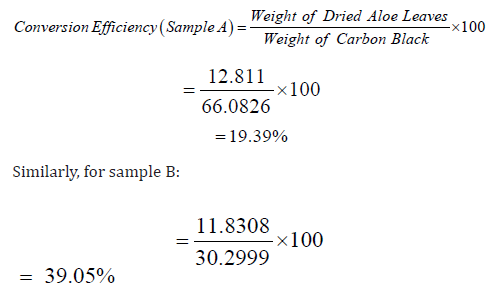
The yield calculations revealed variations in converting dry Aloe vera leaves to carbon black. Sample B showed a higher yield compared to sample A. However, challenges in sample A during the washing step after activation led to a lower yield. The conversion efficiency of Aloe vera leaves to carbon black for sample A was calculated as follows:

These results indicate that approximately 19.39% of the mass of dried Aloe vera leaves used in sample A was converted to carbon black during pyrolysis, while for sample B, it was 39.05%. These values reflect the effectiveness of the pyrolysis process in converting the Aloe vera waste into activated carbon.

c) Adsorption Capacity

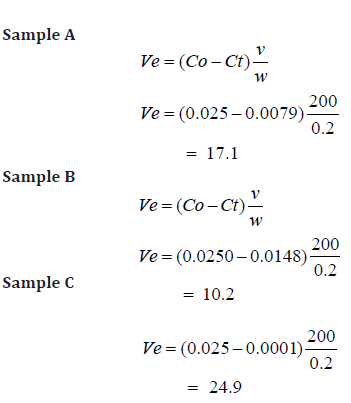
Methylene blue dye was used to test the adsorption properties of the activated charcoal. The results indicated that both sample A and sample B had notable adsorption capacity, with sample B (activated and carbonized simultaneously) showing the highest adsorption. The adsorption coefficient (Ve) was calculated using the formula:

Co – initial concentration of MB
Ce – final concentration of MB
V – volume of solvent/solution
W – mass of charcoal
Substituting values for the uptake after 2 hours:

d) Kinetic Study

The kinetic adsorption studies involved monitoring the absorbance at a wavelength of 664 nm over time. The data obtained from the standard solutions and each type of charcoal were used to calculate the rate of adsorption. If you were to investigate absorption, varying with defined time rates, you would obtain the absorption coefficient against time Vt

The rate Vt was calculated using the formula:

Co – Initial concentration of MB
Ct – Final concentration of MB after time t
V – Volume of solvent/solution (200cm3)
W – Mass of charcoal
This indicates that the uptake of methylene blue at 2 hours averaged against time is 17.1, 10.2, and 24.9, respectively.

e) Effect of Solution pH and Determination of pHpzc

Over the pH range of 2 to 12, the impact of solution pH on the sorption capacitance of MB onto the surface of activated carbon was examined. At a pH of 12, the sorption rate reached its maximum. Therefore, the pH of the solution affects the sorption process. Molecular cations are produced in aqueous by Methylene Blue (Figure 9). The pHpzc of activated carbon derived from Aloe vera wastes is displayed in the above figure. The pHpzc of the adsorbent was determined to be 11.3, as is evident.

f) UV-Visible Spectrophotometer Analysis

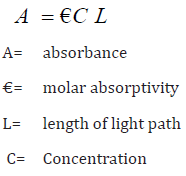
The UV-VIS was set at a wavelength of 664 nanometers. It was observed from the graph that the regression factor R2 was 0.9861 for the standard solution. Theoretically, the regression factor should be one since, according to Beer’s law, the absorbance of a solution is directly proportional to its concentration and the path length. As described by Beer, A=εlc the molar absorptivity was determined A/lc=ε where the ratio A/c is the gradient of the standard line we obtained. The deviation in the regression factor might be attributed to factors such as experimental error or variations in the sample preparation process. For the samples at the same wavelength of 664nm. It was observed from the graph that the regression factor R2 was 1; thus, the absorbance of a solution is directly proportional to its concentration and the path length (Figure 10).

g) Comparison with Other Studies

In this investigation, the maximum amount of Methylene blue that Aloe vera-activated Carbon could adsorb was 17.1 mg/g. The maximum sorption capacities found in other studies were compared to this value (Table 8) [5-13]. As observed, the sorbent used in this investigation had a higher Qm than other sorbents. Except for spherical carbon, the sorption occurred at very low ts toward other sorbents. In summary, activated carbon from leftover Aloe vera leaves is a highly efficient adsorbent for removing aniline from aqueous solutions (Zhang, et al. [14]).

h) Environmental and Economic Justification

The study provides a sound environmental justification for utilizing Aloe vera waste for activated carbon production. The circular economy approach, where waste materials are transformed into valuable products, minimizes waste and conserves resources, is highlighted. This aligns with the principles of sustainable and eco-friendly practices (Martini and Sharmeen Afroze, [15]). Aloe vera leaves contain valuable organic materials that, when converted into activated carbon, offer a sustainable and efficient means of resource utilization.

i) Potential Applications

The activated carbon from Aloe vera leaves demonstrated a high absorption capacity for methylene blue dye. This indicates its potential for removing various organic pollutants from wastewater and demonstrates its effectiveness in treating organic and inorganic contaminants.

Figure 9

Figure 10

Table 8: Comparison of the maximum monolayer adsorption capacity of Methylene Blue by various sorbents.

Waste Aloe vera leaves can be further be utilized for:

• Fertilizer Production: Aloe vera leaves contain various nutrients, including nitrogen, potassium, and other trace elements (BOUDREAU and BELAND, [16]). The decomposition of Aloe vera leaves can enrich the soil with these nutrients, making them valuable for organic fertilizer production. The leaves can be composted or processed into a liquid fertilizer.

• Biogas Production: When subjected to anaerobic digestion, Aloe vera waste can be a feedstock for biogas production (Nanda, [17]). Microorganisms break down the organic matter in the waste, producing biogas (methane and carbon dioxide) as a byproduct. This renewable energy source can be utilized for cooking or electricity generation.

• Animal Feed Supplement: Aloe vera leaves may be incorporated into animal feed formulations, providing supplementary nutrition for livestock. Studies have explored Aloe vera waste in cattle diets, showing potential benefits such as increased milk production and improved overall health [18].

Conclusion

The work showed the possibility of activated carbon from Aloe vera leaves and its applicability as an adsorbent in wastewater treatment. The larger objective behind this research was to convert Aloe vera waste into a versatile potential resource that tackles two problems: environmental challenges related to the disposal of wastes and the need for more efficient adsorbents in wastewater treatment. The results of the study showed promising findings and highlighted observations. It was established by the yield calculations that the A sample (carbonized first and later activated) resulted in 19.39%. At the same time, B, which underwent activation simultaneously with carbonization, had a figure above 37%. The research concluded that co-activation and carbonization (Charcoal Type B) resulted in the highest adsorption capacity compared to commercially available activated carbons. However, it is worth mentioning that the yield variation could be due to losses during washing primarily caused by particles passing through sieves. This indicates the optimization of the post-activation treatment process for yield improvement. In addition, the adsorption efficiency of Aloe vera-derived activated carbon was characterized using UV-Vis spectrophotometry for methylene blue dye. These findings illustrated that Charcoal Type B (simultaneously activated and carbonized) had the highest adsorption capacity, followed by Charcoal A (carbonized and then autoclaved). In contrast, commercial-grade AC revealed a relatively lower removal level. This points to the fact that production methods determine the adsorption properties of activated carbon, and simultaneous activation and carbonization are particularly efficient.

The UV-Vis analysis yielded a regression factor (R2) of 0.9861, showing a perfect fit between absorbance and concentration. Any deviation from the theoretical value can be attributed to experimental factors or different features by sample preparation. Despite this, the outcomes confirmed that Aloe vera-derived activated carbon has significant potential as an efficient wastewater adsorbent compared to its commercial counterparts. The study of the kinetic aspects in both adsorption processes is critical and provides valuable information about the phase. The adsorption coefficient (+ve) values and methylene blue uptake at various time intervals were determined, which helped to understand how fast the process was conducted. These formulae provide helpful information about Aloe vera carbon and its practical use and performance over time. This research has effectively met its goals and provided feasible outcomes, though there are other opportunities for further study. It is recommended that future research refine the activation conditions further, investigate diverse biomass precursors, and make a thorough economic assessment for large-scale manufacturing. Furthermore, a better understanding of the mechanisms governing adsorption and how activated carbon could be regenerated to make it practical for more extended periods would add significantly from this domain’s perspective. Finally, manufacturing activated carbon from Aloe vera leaves is a potential venture with various benefits. It addresses environmental issues related to waste disposal, complies with circular economy ideas by converting waste into a valuable product, and provides an ecological protection strategy that satisfies increasing requirements for effective adsorbents in wastewater treatment. Nature-based solutions have great potential to address current environmental issues, and the successful transformation of Aloe vera waste into activated carbon demonstrates the merging of tradition methods and innovation.

Recommendations

a) Optimization of Activation Process: Investigate the differences in activator (NaOH) concentrations and type to establish optimal conditions for activation. Perform experiments of varying activation times and temperatures to develop the ideal circumstances that give maximum porosity and adsorption capacity.

b) Surface Area Analysis: Conduct intricate characterization methods such as BET analysis to determine the activated carbon’s surface area and pore size distribution. This will lead to a better understanding of how the structural properties influence adsorption.

c) Mechanism Studies: Study the dynamics of adsorption. Perform experimental studies on the interaction mechanism between activated carbon and methylene blue dye, whether it is a case of physical adsorption or chemical bonding.

d) Real Wastewater Testing: Stop relying on synthetic dye solutions and test samples of natural wastewater. They will validate the utility of activated carbon derived from Aloe vera in actual wastewater treatment settings.

e) Scale-up Studies: Research on the scalability of production. Evaluate potential industrial applications based on batch size, processing time, and resource requirements.

f) Comparison with Other Precursors: It is suitable to compare adsorption performance with Aloe vera-derived activated carbon and other precursors-derived activated carbons. This may illuminate Aloe vera-based activated carbon’s specific peculiarities and benefits.

Acknowledgement

We wish to acknowledge the following persons: Lincoln Kiviya, Faith Jeptum, Moris Mwangi, Grace Simiyu, Shirly Bett, and Kipkorir Elvis for their collaborative efforts and playing a pivotal role in various aspects of the research study. We are indebted to the Kenya Industrial Research and Development Institute (KIRDI) for providing the laboratory infrastructure and equipment to undertake this study.

Statements and declarations

Conflicts of Interest

The authors declare that no conflict of/ competing interest exist.

Author Declarations

All authors have read and agreed to the publication of the manuscript.

Ethics Approval/Declarations

It is not applicable.

Data Availability Statement

The authors declare that the data supporting the findings of this study are available within the paper and its Supplementary information files. Should any raw data files be needed in another format they are available from the corresponding author upon reasonable request.

For More Articles: Biomedical Journal Impact Factor: https://biomedres.us

Journals on Medical Casereports

Forensic Analysis of Snakebite Venom and its Effects on the Living Organism

Introduction

In tropical and sub-tropical areas, snakebite is a major health problem in the whole world. It is estimated that more than 6 million people are affected by snakes in tropical areas of the world [1]. The poisoned snake is too dangerous. According to the survey, approximately 2.11 × 10⁵ deaths occur among 3.1 × 10⁶ by poisonous snake bites [2,3]. The rural areas are much more affected by snake bites whereas the city areas are less affected. Although the effects of snake bites are much greater, the whole estimation is done generally. The labor causes snake bites in the marshy fields while working on rice crops [4,5]. Snakes bite people with their vicious venom which is produced naturally. The venom is produced in Elapidae and some groups of the Colubridae snake in venom glands called salivary glands [6,7]. During the biting or spitting the snake sprays his venom on the pray with the help of tabular fangs. The venom constitution consists of toxic and nontoxic enzymes. The molecular enzyme components are found between 1.3 × 10⁴ to 1.5 × 10⁴ Da and the polypeptides like mycotoxin, neurotoxin, platelet inhibitors (disintegrins), and cytotoxin (cardiotoxin) are found in the presynaptic and postsynaptic form. As well as these are called potassium binder channels.

The molecular weight of these polypeptides lies in the range of 5.1 ×10⁴ to 1.1 × 10⁵ Da. The components of venom such as organic acids, carbohydrates, lipids, nucleotides citrate salts, and carbohydrates contain molecular weight below 1.5 kDa [8-10]. From experiments, it was observed venom with smaller molecular weight constituents was less active. If we want to count the total number of humans affected by snake venom it would be hard to estimate. But people thousands are bitten by a snake and the majority die due to the unavailability of the anti-venomous vaccine [11,12]. The death ratio of patients by venoms can be decreased by applying some preventive measures. Through awareness to people, on-door delivery of anti-venomous vaccines, and education of the people, the death rate can be decreased [13,14]. Snake venom is the oldest known poison for human beings and many myths are related to it. Some herbs and many folks are associated with them, especially in Hinduism. Many scientists have studied peptide toxins and protein venom. The major issue in the synthesis of the anti-venom vaccine is that the mixture is very complicated, and drugs are required with surprising activity [14-17].

Material and Methods

Sample Collections

The samples of different patients affected by snake biting were collected from different hospitals like Mayo Hospitals, Sheikh Zaid Hospital, and the Services Hospitals Lahore. Samples were centrifuged and analyzed. The snake venom was separated from the blood. By using a densitometer and Gel electrophoresis the blood sample was analyzed. From Table 1, it can be understood that people ages 21-40 are more affected whereas children are less because they visit land and agriculture form, so they are affected Table 2 shows if we study gender-wise then males are more affected than females due to their routine work. If we study the aspect of occupation, then people who belong to agriculture occupation are more affected as compared to any other as shown in Table 3. Data related to the time of the incident reveals interesting facts. Table 4 indicates that more than half of cases occur between 1 pm to 5 pm, as compared to the morning. The data clearly shows snake bitness is due to the invasion of humans into their habitat means snake bitness is defensive, not offensive. The data in Table 5 shows that snake bites are enormous in the rainy season as compared to others. The reason behind that is during the rainy season the snakes come out of their habitats because water enters their habitat due to shallowness.

Table 1: Percentage of patients with snake bit relative to the age groups.

Table 2: Gender-specific number of patients.

Table 3: Occupation of patients.

Table 4: Data related to the incident of time of snake bite.

Table 5: Season of snakebite and affected people.

Table 6 shows about ninety percent of snake bite cases are on hands, feet, or legs because they are easily approachable and visible. Table 7 represents snake bite serum. The normal values of different analyses and values with serum are shown. There is a major difference observed between normal values and observed values. The deficiency of hemoglobin (HGB), white blood cells (WBS), and red blood cells (RBC) was observed in snake venomously affected patients. It causes a cardiac attack and damage to the kidney’s slow nervous system. The venom of the snake belonging to the Elapidae and Cobra family is neurotoxic and that of the Viperidae family is cytotoxic and myotoxic [18,19].

Table 6: Percentage of snake bites concerning the part of the body affected.

Table 7: Complete blood count of the snake-bitted patient.

Sample Preparation Methodology for UV-Visible Analysis

After collection of the sample, centrifuged for 4-7 minutes at 3500 RPS. The serum was separated into vials carefully and analysis was performed through UV-Vis. spectrophotometer immediately. With the help of the SDS-PAGE method, proteins were separated. For protein estimation, a serum named Bovine Albumin was used.

For Crude Venoms Sodium Dodecyl Sulfate-Polyacrylamide Gel Electrophoresis

Sodium dodecyl sulfate (SDS) an anionic detergent was implied for the negative charge on proteins. By increasing the concentration of SDS more binding happened with proteins, so large molecules were restrained from migrating fast compared to small molecules having acrylamide concentration in gel above critical density. All the samples treated against lamellar sample buffer contain the following characteristics, 6.8pH, 20% glycerol, 62.50 mM, Tris-HCl, sodium dodecyl sulfate SDS 2%, bromophenol blue 0.01% while the temperature was 10°C. By using a 5-min micropipette, 30 μL of each poured sample that was toxic into the well which consisted of polyacrylamide gel (PAG) of about 12%. At the temperature of (25°C), an electrophoresis process was performed. at the SALMONE pharmaceutical industry, Manga Mandi Lahore. By using Coomassie Brilliant Blue R-250 gel was stained 40mA and then scanned with a densitometer named GS-710. The molecular weight of proteins was calculated by using precise proteins. A mixture of 9 recombinant proteins was collected from the Salmone Pharmaceutical industry, 36 km, Multan Road, near Manga Mandi, and these proteins were through the two outer wells that contain similar gel. These proteins are 250, 200, 150, 100, 75, 50, 37, 25, 15, and 10 kDa.

Reverse Phase High Performances Liquid Chromatography (RP-HPLC) of Venoms Protein

Depending on hydrophobicity, the protein molecules were separated by using reversed-phased chromatography. The hydrophobic groups like hydrocarbon chains ranging from C-4 to C-8 were immobilized in the RP-HPLC stationary phase. Trifluoroacetic acid was in C-18 columns for reversed-phase chromatography for peptide molecules. Trifluoroacetic acid and peptide molecules provide adequate hydrophobic behavior that is retained through the stationary phase. The chromatographic column is developed in such a way by acetonitrile nitrile as the solvent that nonpolar components will be eluted last while polar components will elute early. In the first solution, dissolved the venom of the crude snake was in 0.08%, trifluoroacetic acid and then quickly injected into chromatography’s reverse phase C-18 with10μm, ST 3.9/260 mm column equilibrated with 0.1% tetra fluoro acetic acid. By increasing concentration (80% ACN in 0.1% trifluoroacetic acid) all proteins were eluted in solution 2 at a flow rate of 2mL/min. the AKTA explore system was used for the elution monitoring range is 215-280 nm.

Sodium Dodecyl Sulfate Page

Venom SDP-Page profiles are shown in the figure. The dissolved venom is in a homogenous mixture of SDS-PAGE while the conditions are nonreducing. The molecular weight of all four venom samples is different ranging from low to medium, and high. Revealed proteins in Coomassie blue-stained gel, those proteins whose molecular weight is in the range of 10-20 kDa. The protein contains two Viperidae snakes (C. rhodostoma and T. albolabris) and their molecular weight are high and low respectively. On the other hand, the low molecular weight was observed in proteins that contain Elapidae snakes (O. Hannah and N. kaouthia).

Reverse Phase- High-Performance Liquid Chromatography Profiles (RP-HPLC)

All four samples of venom were analyzed by using the PR-HPLC system. A small amount of unbounded venom was detected in samples. The unbounded proteins were eluted in solutions ranging from 80% to 25 % concentration [20]. The sodium dodecyl sulfate-polyacrylamide gel having venom was scanned through a GS-710 densitometer. The molecular weight marks were taken by lane of MW markers having samples in the sequence (W) T. albolabris venom, while (X) C. rhodostoma venom, (Y) N. kaouthia venom, and (Z) O. Hannah venom respectively (Figures 1-4).

Figure 1

Figure 2

Figure 3

Figure 4

Results and Discussion

It was found that snake venom severity is influenced by various factors like season, diet, climate altitude, and age of the snake. The biological activity of snakes is affected by processing methods such as storage, sample collection, and drying. The venom of Naja kaouthia and Ophiphagus Hannah was more toxic than Viperidae species like C and T [21] albolabris. The snakes of the same species are less toxic than in other countries, but the death rate is high due to the unavailability of anti-venom vaccines. The results that were obtained from experiments give us information about further research. The venom of the elapid snake accumulated shows some major bands in the range of 200-250 kDa. Whereas a wide range of protein bands mainly from 15 to 200 is observed in vampire snakes’ venom. The venom proteins of Elapidae snake having molecular less than 15 kDa show high density [22]. The bands that show very high density represent high neurotoxin. These neurotoxins are a sign of the high toxicity of cobra venom. According to SDS-PAGE analysis, the venom of the Viperidae snake contains small components of normal size proteins. Mostly elution of about 50-80% of Viperidae snake venom components takes place in solution 2. On the other hand, 30 to 60% elution of Elapsidae snake venom takes place in solution 2. So, this varying range of elution shows the hydrophobic nature of the venom of Viperidae snake is more as compared to Elapsodae snake venom.

Conclusion

Venom is a complex mixture of proteins, peptides, and small molecules secreted by an animal to cause harm to another. It is mainly used in predation or self-defense. Among the components, peptides, in particular, have been studied extensively after the discovery of their diverse pharmacological properties. Moreover, there are a large number of bioactive venom peptides that have been isolated, and these represent a huge and undiscovered source of new therapeutic leads. One of the reasons may be because of the problems of low bioavailability and stability associated with peptides. The development of peptidomimetics, using organic compounds with a lower molecular weight or shorter peptides to mimic the action of peptides, has become an approach to overcome these problems. Tirofiban and eptifibatide are typical examples of using peptidomimetics in drug development. The snake toxins exhibit various therapeutic activities in vitro or in vivo models as well as in clinical studies. As there is an argument about the cytotoxic effect of toxins, some new technologies have been used to modify them into detoxified versions. Besides, the conjugation of toxins with polymeric materials, such as liposomes, microspheres, hydrogels, and nanoparticles for targeted drug delivery usually reduces toxicity, protects from protease degradation, and enhances therapeutic activities. This specific delivery system can deliver the toxins directly to their primary site of action and reduce the side effects encountered in systemic administration. The serum of different samples was analyzed, and it determined that cases of snakebite patients in Pakistan are low, but the mortality rate is high due inaccessibility of the vaccine.

For More Articles: Biomedical Journal Impact Factor: https://biomedres.us

Journals on Biomedical Imaging

Review of Literature: Scientific Report on Quite Often Misuse of Antibiotics

Introduction

Antibiotics are one of the most commonly prescribed drugs in recent decades. It is the class of a drug which is commonly sold especially in developing countries (Buke, et al. [1]). An estimation of nearly one third of patients which were hospitalized were given antibiotics and accounts up to 40% of the hospital’s drug budget. Rational use of it is very much important than the effectiveness of the drug itself. Recently, the misuse of antibiotics issue had been raised critically and affects the healthcare settings in various ways. The misuse or may be referred as overuse of antibiotics may have serious effects on health. The irrational use arises from the economic factors, health policies, lack of physicians’ concern regarding long term resistance and the sale of the antibiotics without prescription (Metlay, et al. [2]). Patients can purchase any antibiotics over the counter in certain countries without prescription from physicians (Shankar, et al. [3]). In Jordan, it is revealed that inappropriate patterns of prescription and dispensing showed misuse of the antibiotics (Al Bakri, et al. [4]). This pattern of prescribing was also found to be practiced in Bangladesh as well. The incidence of self-medication with antibiotics is quite high in Jordan (Al Bakri, et al. [4]), Al Azzam, et al. 2007, Sawair, et al. 2009a.

These practices of antibiotics misuse cause the adverse effect on the health and may give rise to Antimicrobial Resistance (AMR) of certain types of microorganisms. For an example, Staphylococcus Aureus sp. is a type of bacteria of the normal flora which is able to adapt fast to the different environment condition (Lowy FD, et al. [5]), Chamber HF 2005. These characteristics have made Staphylococcus. Aureus sp. difficult to be treated with normal antibiotics which it had developed resistance strain in it to resist antimicrobial agent such as Methicillin-resistant S. Aureus (MRSA) due to various antimicrobial administrations (Okeke IN, et al. [6]). On further findings, the US Centre for Diseases Control and Prevention mapped the first case of the presence of the Vancomycin Resistant Staphylococcus Aureus sp. (VRSA) [7]. This increasing risk of potential resistance brings fear to the world regarding the effects of the antibiotics misuse which leads to multiple drugs resistant bacterial strain. In order to deal with this occurrence due to antibiotics misuse, some strategies were included in this review to eradicate the problems uprising related to the misuse.

Objectives

1. To investigate the misuse of the antibiotics in usage and prescription.

2. Effects of antibiotics misuse and preventive measures of antibiotics misuse.

Material and Methods

Sources of Information

In this review, systematic review is done and various information and resources were found from available and reliable sources. Searches on online databases were done using the key words such as “Antibiotics”, “Misuse” and “Effects” to locate relevant articles related to the topic. After searching and collecting all the required information, I did review by performing critical appraisal to identify the validity of the information. Important information was documented for further reviewing whereas the unrelated were kept aside. The sources are as follows:

Table 1:

Search Results

After searching the required information related with the topic of the review by applying the strategies mentioned earlier in previous part of “materials and methods”, the data of the searches are as follows:

 Articles:17

 Scientific webpages:3

 Scientific reports:3

 Medical books:1

All the articles are of full length.

Review of Literature

The Misuse of the Antibiotics in Usage and Prescriptions

Antibiotics are among one of the most common drugs had been used for decades. It also had been the drug classes which were demanded highly in the pharmaceuticals industry especially in the developing countries. In 1928, Sir Alexander Flemings, a Scottish pharmacologist made history by his discovery of the first antibiotic to be developed which is the Penicillin and it started to revolutionize the modern medicine [8]. It becomes one of the drugs which were commonly sold especially in developing countries where the demands for this drug is high (Buke, et al. [9]). Antibiotics had achieved a statement that it result in prolonged life expectancy of human [10]. The development of this precious drug had results in the over production and misuse of the drugs in the healthcare settings and society. Excessive use may render increased risk of drug resistance of the microorganisms. The irrational use of antibiotics arises due to factors such as economic factors, health policies, and lack of concern by the physicians regarding the effect of the long- term use of this drug which could bring about negative implications such as the development of antimicrobial resistant (AMR). The fact that this drug that can be obtain over the counter without prescription had become another reason for the overuse and misuse of the antibiotics in some countries (McNulty, et al. [11,12]).

In some countries as well, the patients are not restricted to access the local pharmacies to acquire antibiotics without proper prescriptions (Shankar, et al. [13]). In Jordan, research had revealed that inappropriate patterns prescription of the antibiotics by the physicians and dispensing of them is another factor of the misuse of the antibiotics4 and a cross sectional study design was carried out to identify the attitude and behaviour regarding the antibiotics use and misuse. This is to know the level of knowledge regarding the indications for antibiotics usage which may results in the misuse of the antibiotics. Based on the study done by the King Saud University,1500 questionnaires were distributed to the citizens of Jordan to obtain the information regarding the knowledge and behaviour regarding the antibiotic use among them. Out of it, 1141 were completed which accounts for about 76.1% response rate [14]. The results showed that 19.5% which accounts one fifth of the respondents were believed to use antibiotics for more than three times in the past year. The frequency of the antibiotic usage was portrayed in (Figure 1a). 40.9% of the respondents claims to purchase the antibiotics from local pharmacies with physician’s prescriptions, while 30.0% of the respondents acquired the antibiotics without doctor’s prescription from the pharmacies available by over the counter (OTC).

Figure 1

Figure 1b summarizes the sources of the antibiotics obtained by the respondent in the past year. About 33.9%and 16.9% of respondents of Group A took antibiotics for sore throat and bronchitis, respectively as shown in (Figure 1c). Figure 1d represents the increased usage of antibiotics with the passage of time. The knowledge level regarding the use, effectiveness of antibiotics usage was evaluated and presented in the (Table 1). The information in the table represents that the respondents were less knowledgeable about the antibiotics whether it was active against bacteria, viruses and/or parasites. There is no significance can be found that the level of knowledge regarding the effectiveness of the antibiotics in treating common cold between the respondents in Group A and B. Out of the total respondents, 32.9% agreed correctly that antibiotics are effective against only bacteria Whereas 6.9% wrongly agreed that antibiotics are effective against viruses. On the other side, 9.7% of the respondents believed that antibiotics have the same effects of antipyretic drugs to reduce symptoms of fever while 28.2% that they possess the same function as pain-killers. Furthermore, about 51% of the responses agreed that antibiotics able to resolve on common cold, cough and nasal congestion (Table 1).

Table 2: The Knowledge of responder regarding antibiotic use.

Note: Group A: respondents who reported receiving antibiotics during the last year Group B: respondents who reported not receiving antibiotics during the last year Total percentage denote those who answered the question and agree with the statement. Statement used in scoring respondents knowledge .

(M.shehadeh, Saudi Pharmaceutical Journal (2012)20,125-133)

It was also reported that about one third of the respondents which accounts for 38.5% agreed that antibiotics effectiveness would not be affected by the misuse of not completing the full course of the antibiotics. Only 36.0% claims that antibiotics would not be effective if it is overused. In both study groups of A and B, their awareness regarding antibiotics possible adverse effects were very low since 33.2% of them does not know that certain antibiotics could bring harmful effects (e.g. effects on children’s teeth) and 41.6% denies the statement that antibiotic may develop implication such as allergies which may leads to death of the patient. In other situation, the antibiotics misuse took into place by the method of prescribing patterns where the medical practitioners play the major role that causes the misuse of the antibiotic’s distribution simply for any types of diseases. The knowledge for antibiotic usage is essential to utilize the benefits optimally and need to be given by a qualified Physicians. Based on the research done (Biswas, et al. [15]). The present research represents a cross-sectional study which was carried in three different cities named Jessore Sadar, Manirampurand Keshabpur upazila in the district of Jessore under Khulna Division of Bangladesh.

The first survey was done to describe the prescription obtained from different healthcare professionals in these three cities. The results found that in these three cities, averagely 29% patients visited Bachelor of Medicine & Bachelor of Surgery (MBBS) doctors, 63% of the patients surveyed went to Quack doctors whereas only 8% of the patients recorded visits the Bachelor of Dental Service (BDS) doctors. The information was presented in (Figure 2). Variations in the results showed that in Jessore Sadar, 76% of patients visited MBBS doctors. But in Manirampur and Keshabpur, the highest percentage of patients visited Quack doctors which accounts 92% and 93% respectively. In all the cities, number of patients which visits the BDS doctors carries the least percentage as shown in the (Figure 2). Further studies was carried out in order to obtain the information of the usage and prescriptions of the antibiotics for the outpatients within these three cities. The data was tabulated in (Table 2). The mean of the highest prescribed antibiotic groups in these three cities were cephalosporin (31.78%), macrolides (27.33%), quinolones (16.33%), penicillin (7.11%) and metronidazole (6.78%) (Table 2). Cephalosporin was prescribed the highest in Keshabpur upazila (34.22%) whereas lowest in Manirampur upazila (29.67%).

Figure 2

Table 3: Frequency of prescribed antibiotics.

Note: Here, JES=Jessore sadar, MAPR=Marirampur, KEPR= Keshabpur, TNP=Total Number of Prescriptions, IP: Individual Percentage, Avp =Average Percentage SD: Standard Deviation calculated by Ms office Excel-2007,95% CI=confidence Interval Calculated by Modified Wald method at 95% Confidence Level (Biswas et al.: Prescription antibiotics for outpatients in Bangladesh: A cross sectional health Survey conducted in three cities .2014 13:15.)

These antibiotics were commonly prescribed for patients suffering from respiratory tract infection (RTI), urinary tract infection (UTI), cesarean patients, typhoid fever etc. Next after the cephalosporin, the highest usage of antibiotics was macrolides which were prescribed in Keshabpur the highest (43%). In Jessore Sadar, it accounts the lowest usage of macrolides of (8.33%) is used for curing cold and fever. Quinolones were prescribed highest in Jessore city (28.33%) whereas the lowest in Keshabpur which was only (6%). These were used for the condition of typhoid fever, respiratory infections and gonorrhea. In Jessore city as well, penicillin was prescribed the highest about (12%) while the lowest was at Keshabpur (3.67%) and given mainly for the recovery of bruises and wounds. Other than that, metronidazoles was prescribed as the highest in Manirampur (9%) followed by the lowest in Jessore city (4.33%) and used for the purpose of diarrhea and dysentery (Table 2). In 74.56% of the prescription, single antibiotics was prescribed whereas two or more antibiotics were prescribed for 25.44% of the prescription. 68.89% of the total prescription have complete information regarding the dosage form, 57% has complete direction for antibiotics use and 83% of the prescriptions have no clinical test for prescribing antibiotics. Total of 64.22% patients completed their full course of antibiotics and the percentage of disease recovery was 61.78%. 38.22% of the patients complained to have side effects after taking the prescribed antibiotics.

Effects of Antibiotics Misuse

Antibiotics are believed to be the cure all disease once and had been used in broad spectrum to treat many diseases. Despite of its use which brings benefits, these drugs also cause many implications and adverse effect. In this era, antibiotics have been overly used and results in multiple drug resistant microorganisms. These microorganisms cause many diseases in humans which is difficult to be dealt with in terms of treatments due to the development of the resistant strain in the microorganism which counters the effect of antibiotics causing the failure in a course of treatment. These microorganisms if given with suitable condition and time enables them to adapt to almost extreme situation in order to survive a particular condition. This is believed to be mainly due to the antibiotics overuse and misuse by humans. Improper management and treatment and also inappropriate utilizing of antibiotics are the primary reason for the access of the antimicrobial resistance (AMR) development. A study was done in Niger Delta University. Wilberforce Island, Amassoma, Bayelsastate, in Nigeria by randomly selecting 120 subjects which consists of the students and villagers. The purpose of the study to identify isolates of the common normal flora of the gastrointestinal tract (GIT) such as Staphylococcus Aureus sp. in the intestine.

This is done to investigate the effect of previously taken antibiotics by the subjects on the normal flora or microorganisms which harbour’s normally in the GIT. Questionnaires from the subjects were retrieved and the results were tabulated. Based on the results obtained, fifty-four (45%) of the students and the villagers had taken antibiotics by themselves in which 34(63%) were villagers while the remaining 20(37%) were the students. The information was provided in the (Table 3). Twenty-five (41.7%) students and 10 (16.7%) villagers used their antibiotics prescribed judiciously as shown in the (Table 4). The distribution of the microbial agents used on selfmedication by the subjects is portrayed in the following (Figure 3). Besides from the isolation of the bacteria, the bacteria were undergone with antibiotic susceptibility test by using two method of-

1) Agar diffusion test (zone of inhibition)

2) Agar dilution method (MIC-minimum inhibitory concentration Test)

Table 4: Use of antibiotics by subjects.

Note: Source: J Health popul Nutr 2011 Oct .29(5) 446-453, Department of Pharmaceutical microbiology and Biotechnology, Niger Delta University, Wilberforce Island, Bayelsa state, Nigeria

Table 5: Antimicrobial resistance profile of volunteers’ intestinal S. aureus isolates.

Note: Source: J Health Popul Nutr 2011 Oct. 29(5) 446-453, Department of Pharmaceutical Microbiology and Biotechnology, Niger Delta University, Wilbeforce Island, Bayelsa State, Nigeria.

Figure 3

The test for the agar diffusion test, six common antibiotics were used for this test

For the other test, another six antibiotics were prepared which were the antibiotics commonly used as follows-

a) Vancomycin

b) Ampicillin

c) Erythromycin

d) Chloramphenicol

e) Amoxicillin-clavulanic acid (Augmentin)

f) Cefuroxime

The isolates represented high resistance to ampicillin, doxycycline, co-trimoxazole, erythromycin and chloramphenicol. On the other side, there were only mild level of resistance of the isolates to cefuroxime, Augmentin, ciprofloxacin, ofloxacin, and gentamycin (Table 4). The pattern of antimicrobial agents’ resistance between the isolates from the male and female were compared. There were marked significance in level of resistance of doxycycline by the females’ isolates. Methicillin-resistant Staphylococcus Aureus sp. (MRSA) were identified in 13 (34.2%) of the 38 isolates, all of which were resistant to three or more agents tested. The isolates with decreased susceptibility to Vancomycin were 14(36.8%), of which 8 were MRSA. The increase in the MRSA infections prevalence in the community should be taken into great concern as is arising and the root problem should be eradicated such as the antibiotics misuse which drives the problem [16]. This problem is something that should be feared of by the medical society as it becomes difficult to keep up with fighting the microorganisms where the window of antibiotic effect is narrowed due to resistant development [17-22].

Discussion

Nowadays, antibiotics misuse had become a no longer rare case that had been occurring in the healthcare settings. In this review, the results of the review have clearly stated that the respondents believed to take antibiotics from past years. More than three types of antibiotics were used for many reasons by the respondents without proper prescription from physicians and been using it without their consult which leads to inappropriate use. One-third of the people took antibiotics for inappropriate illness which may resolve by itself without even the need for the antibiotics use. The study also shown that knowledge of taking antibiotic is poor in the patients in which they did not understand that antibiotics are not effective against viruses than bacteria which is sensitive to antibiotics. Some of them misinterpret wrongly that antibiotic have the similar effects of giving relief to fever as anti-pyretic drugs do. This explain wrong indications for antibiotics prescription. Part of the patients in this study immediately stops the course of antibiotics as soon as the symptoms of the condition resolves slightly which leads to improper treatment for the disease. This condition may result in the recurrent occurrence of the disease which may develop resistant in the next infection. Not finishing the full course of antibiotics impersonates the misuse of the antibiotics.

Another situation where the medical practitioners often prescribe antibiotic excessively for almost any indications without any reason for its treatment. This can be explained by the numbers of quack doctors available in the settings which were not accredited by the authority. In some countries, the availability of this type of doctors causes many unmonitored distributions of antibiotics to the community which lacks socioeconomic value and unable to access the proper practitioners. The quack doctors don’t have proper understanding regarding the use of specific antibiotics for different indication. In Bangladesh, the statistics proves that majority of the prescription have no clinical testing for the use of the drugs. Excessive use of first line of antibiotics treatment develops resistance and forced the usage of the stronger antibiotics need. Antibiotics misuse had brought into a new situation of antimicrobial property by the microorganisms. The development of methicillin resistant staphylococcus aureus sp. (MRSA) is an example of the effect of the misuse. For instance, multiple drugs administration in the Gastrointestinal tract (GIT) causes the exposures of the normal flora of the GIT to develop multiple drug resistance such as the commonly used drugs like cephalosporin, macrolides and many more.

Isolates of resistance to four type of antibiotics proves this situation of multiple drug resistance. The effect of misuse had evoked the higher board of practitioners to intervene measures such as introducing antimicrobial stewardship event. Interventions such as having antibiotics list enables the healthcare settings to monitor strictly the use. This enables also the registry of the antibiotics in hospitals to be systematic. A guideline to the use of the antibiotics in particular indication is an essential approach in the usage of antibiotics accordingly. This optimizes its use. A database should be established in order for the particular institution to govern the rate of antibiotic consumption. This will lead to proper management of antimicrobial use and ensure effectiveness.

Danish Researchers Link Antibiotic to Heart Disease

(Malaysian star news, Thursday 21 August 2014, 33). Danish researchers reported a link between a commonly- used antibiotics and a “significantly” higher risk of heart deaths, while observers urged caution in interpreting the results. In a study published online by the British Medical Journal (The BMJ), the team said Clarithromycin use was associated with 76% higher risk of cardiac death, compared to use of Penicillin V. The absolute risk difference was 37 cardiac deaths per one million courses with Clarithromycin, reported the trio from the Statens Serum Institute’s epidemiology department in Copenhagen. The risk stopped when treatment ended. Clarithromycin is prescribed to million of people every year, to treat bacterial infections like pneumonia, bronchitis and some other skin infections. The team had analysed data from more than five million antibiotics courses given to Danish adults aged 40-74 in the period of 1997-2011. Of the patients, just over 160,000 had received Clarithromycin, 590,000 Roxithromycin and 4.4 million of Penicillin V. Clarithromycin and Roxithromycin are macrolide antibiotics that effect the electrical activity of the heart muscle and are thought to increase the risk of fatal heart rhythm problems, the researchers said. No increased risk was observed with Roxithromycin. While the absolute increase in risk with Clarithromycin was small, it was “one of the more commonly used antibiotics in many countries….thus the total number of excess cardiac deaths may not be negligible”.

Conclusion

Basically, this review had shown that antibiotics are being misused in many ways. The misused includes the attitude, behaviour and knowledge of the patients towards the improper consumption of antibiotics. Besides that, medical practitioners also play important role in prescribing the drugs excessively and inappropriately. This is done without required clinical testing for the right indication for the drug use. The prescription by unauthorized doctors is also the factor that leads to antibiotics misused by giving antibiotics without knowledge of its pharmacological actions. Regards of the antibiotics misuse, the emergence of the multidrug resistance of certain microorganisms such as Staphylococcus Aureus sp. had aroused many concerns of the ability of the microorganisms to develop resistant strain. Administration of multiple drugs holds the major reason of the emergence of the isolates of staphylococcus aureus sp. resistance to antibiotics especially in the gastrointestinal tract (GIT). Improper course finishing of antibiotics treatments results in the recurrent infections with more resistant of the previously administered drug. This needs a wider spectrum of antibiotic for next treatment. This makes it harder to eradicate the infection problem in future predicted. Various interventions can be done to deal with the misuse of the drugs such as antibiotics list for proper documentations of the drug use. Antibiotics guidelines is an essential method to ensure the correct indication for particular treatment. In long run, the governance of the consumption rate of antibiotics will make more institution to benefits in eradicating the antibiotic misuse progress.

For More Articles: Biomedical Journal Impact Factor: https://biomedres.us

Behavioural medicine journals

Qualitative and Quantitative Techniques of Phytochemicals Isolation and Detection

Introduction

The phytochemicals have been categorized as primary or secondary metabolites include amino acids, proteins, sugars, alkaloids, steroids, chlorophylls, purines and pyrimidines of nucleic acids, terpenes, flavonoids, lignans, glucosides, curcumines, saponins, and phenolics. Methods generally used in the field of phytochemistry are extraction, isolation, and structural elucidation of natural products, besides several chromatography and spectrometric techniques (MPLC, HPLC, and LC-MS, GC- MS). There are different techniques which are being used for the Qualitative and Quantitative Analysis of plant metabolites [1,2]. Certain methods of phytochemicals analysis are Alkaloids determination by Mayer’ s and Wagner’s test; Ninhydrin test for Amino acids detection, Carbohydrates detection by Molish’s and Benedict’ s test; Spot and Saponification test for Fixed oils and Fats detection. Borntrager’s test and Legal’s test is used to determine the Glycosides, Phenolic compounds and Tannins are tested by Ferric Chloride test, Gelatin, Lead acetate, Alkaline reagent test, Magnesium and Hydrochloric acid reduction. Phytosterols are tested by Libermann- Burchard’s test and Proteins presence is Millon’s test and Biuret test [3,4].

Other standard strategies for medicinal plant extraction include immersion, infusion, penetration, digestion, decoction, high temperature continuous extraction (Soxhlet), fermented aqueous alcohol extraction, Countercurrent extraction, microwave-assisted extraction, ultrasonic extraction (sonication), supercritical fluid extraction, and phyton extraction (using fluorocarbon solvent) [5]. Chromatography is the an efficient, simple, rapid and reliable method of separation and identification of phytochemicals. Separation of phytochemicals is achieved in Chromatography through differential partitioning amid the mobile and stationary phases. There are different types of chromatographic techniques. In phytochemical research, these techniques are selected based on the type of analysis, the target compound, and the nature of plant product involved. Chromatographic separations can be conceded out using a variable supports, comprising silica on glass plates (thin-layer chromatography, TLC), paper (Paper chromatography PC), volatile gases (gas chromatography, GC), and liquids, which may incorporate hydrophilic, insoluble molecules [6].

Gas Chromatography (GC)

If a sample dispenses itself in both phases, it will migrate at an intermediate rate. Gas chromatography is appropriate for volatile mixtures. In this technique, species apportion between a gas and a liquid phase. The liquid phase is fixed and the gas stage is flowing. At the point when the sample particles are in liquid phase they are fixed. The rate of migration relies on the amount of chemical species that is dispersed in liquid phase. High the level of material in the vaporous state fast will be the migration. The species which administers itself 100 percent in the fixed state won’t migrate. In the event that a sample apportions itself in both liquid and gaseous phase, it will migrate at an intermediate rate. This gas chromatography gives the total vapors. Consequently, it is generally utilized for quantitative analysis [7].

Gas Chromatography Mass Spectroscopy (GCMS)

GCMS is the utmost reliable instrument for studying natural samples, separating compounds, and distinguishing parts at the elementary particle level. The GC deals with the rule that when a mixture is heated, it separates into individual substances. The heated gas passes through a section containing latent gas such as helium. As the separated material rises from the segment opening, it flows into the MS. Mass spectrometry makes a larger distinction based on the mass of the analyte particles. A library of known mass spectra containing thousands of mixtures is stored on your PC. Mass spectrometry is considered to be the only definitive insightful detector [8].

High Performance Liquid Chromatography (HPLC)

HPLC, also known as high pressure liquid chromatography, offers together qualitative quantitative and examination in a single operation. This is a high-speed isolation and analysis technique established on conventional column chromatography. Its isolation principle is analogous to regular column chromatography including adsorption chromatography, gel chromatography, partition chromatography and ion exchange chromatography. HPLC is valuable for compounds that cannot be vaporized or that decompose at elevated temperatures. HPLC separate compounds based on their interaction with solid particles and mobile phase solvents in high density packed columns. High pressures of 400 bar is requisite to elute the analyte from the column afore it permits through the detector [9]. HPLC started around 45 years ago and various HPLC stationary phases and columns have been presented by more than 50 manufacturers in the United States and around the world. GCMS is applied to solid, liquid and gas samples. First, the sample is converted to a gaseous state, and then the analysis is performed based on the mass-to-charge ratio. HPLC can be applied to compounds that are soluble in solvents. HPTLC is suitable for separation, detection, qualitative and quantitative analysis of phytochemicals. HPLC columns are manufactured using particulate fillers 5-20 μm in diameter and high pressure homogenate column loading innovation.

The eluent is pumped into the column by a high pressure infusion pump and is outfitted with a sensitive detector and automatic recording and collection device. This is far superior to traditional column chromatography in terms of separation rate and efficacy. It features high competence, high rate, and automation [6]. The detectors generally utilized in HPLC are UV detectors and differential refractometer detectors, both of which have constraints. Differential refractometers are sensitive to temperature changes, detection of small amounts of material is a lot of times not ideal, and gradient elution can’t be utilized. The UV detector cannot detect a sample without UV absorbance. As of late, a type of mass detector called the Evaporative Light Scattering Detector (ELSD) has been used in HPLC. Not only can samples without UV absorption be detected, but also gradient elution can be used. Suitable for utmost non-volatile components [6,10]. Preparative HPLC can be utilized to produce large quantities of high-purity samples. HPLC has part an undeniably significant part in isolation, identification, and qualitative and quantitative analysis of phytochemical components.

When separating many phytochemical components, it is important to isolate the trace components from large amounts of crude extract. High-purity samples are usually prepared by high-pressure or medium-pressure liquid chromatography during the final stages of separation. The constant concentration eluent is mainly utilized in preparative HPLC. However, gradient elution may be used for samples that are challenging to be isolated. In addition, HPLC holds the following advantages of liquid chromatography, for example, a wide range of applications and adaptability while changing mobile phases. It can be applied to chemical components that are difficult to gasify, have high molecular weight, and have thermal instability [6].

Figure 1

High Performance Thin Layer Chromatography: (HPTLC)

HPTLC is a modified version of TLC. HPTLC is planner chromatography, which uses an advanced workstation to perform detection and acquisition and perform sample component separation on the high-performance layer. These high performance layers are precoated with an adsorbent with a particle size of 5-7 microns and a layer thickness of 150-200 microns. The reduction in layer thickness and particle size, along with the type of separation, leads to improved panel efficiency. HPTLC is apt for qualitative, quantitative, and micro preparative chromatography [11].

Optimum Performance Laminar Chromatography (OPLC)

OPLC cartels the recompenses of HPLC and TLC. The system can separate approximately 10-15 mg of samples, depending on the model, and process up to 4 or 8 samples simultaneously. OPLC uses a pump to force a liquid mobile phase through a stationary phase like silica gel or a bound phase medium. The OPLC column housing construction allows the use of flat planar columns, similar to cylindrical glass or stainless steel columns. The flat column is pressurized to a maximum of 50 bar and the mobile phase is extruded at a constant linear velocity via a solvent feed pump. The workstation effectively separates the desired compound sample, together with two sample holders for 96-well plates and an automated sampling system that takes samples from each well and spaces them in the solvent flat OPLC adsorbent bed. Contains all the modules needed for. Delivery system with mobile phase degasser and pump, OPLC cleaning unit, 4-channel diode array detector to monitor eluent, and 6 96-well plate fraction collectors to collect isolated compounds. Multilayer OPLC (ML-OPLC) Principle OPLC is apposite for developing multiple chromatographic plates at the same time if the plates are expressly manufactured. By this multi-layer technique, numerous samples can be isolated in a single chromatographic analysis. By connecting the chromatographic plates in parallel, multiple HPTLC plates can be settled at the same time. Circular OPLC can separate 360 phytochemical samples in 150 seconds.

The speed and / or efficiency of OPLC separation for complex samples can be improved by using ML-OPLC. In this case, more chromatographic plates can be developed using the identical or different types of stationary phases. Principle of long-distance OPLC (LDOPLC) Long-distance OPLC is a multi-layer development technology using specifically prepared plates. Similar to the production of layers for linear OPLC development, all four edges of the chromatographic plate should be impregnated with the polymer suspension. Eluent transfer with a linear solvent front can be make certain by placing a narrow sheet of plastic over the layer or by scratching the narrow channel of adsorbent at the solvent inlet. Several plates overlap each other to confirm a long mileage. The benefit of circular development, in which the mobile phase moves radially from the center of the plate to the periphery, is known to separate the compounds in the low RF range, which provides 4 or 5 times the resolution of circular development. The separation force of the circular deployment is more effectively utilized when the sample is punctured near the center. As the distance among mobile phase inlet and the sample application rises, the separability approaches a linear expansion. Of Sine Circular OPLC does not require plate preparation [12].

Spectrometry

Spectroscopy is utilized to detect secondary plant material. The following are commonly used when studying phytochemicals. UV-Vis to see if the system is conjugated (colored compounds like β-carotene are in the strongly conjugated pi-electron system). FT-IR for identifying functional groups present in a compound. Determines the molecular weight of MS-compounds and identifies the presence of Cl and Br isotopic patterns. 13CNMR-determines the type of carbon atom present in a compound. 1H NMR-Investigate the types of hydrogen atoms present in a compound and find out how the hydrogen atoms are connected.

UV-Vis Spectrophotometry

Ultraviolet-visible spectroscopy is a measurement of attenuation after a light beam has passed through a sample. Most organic molecules and functional groups absorb in the region of the electromagnetic spectrum in the range of 190 nm to 800 nm. This denotes to absorption spectroscopy in the UV-visible spectrum range. Visible absorption directly affects the perceived color of the chemicals convoluted. UV light has enough energy to push external electrons to higher energy levels, and UV spectroscopy is typically valuable to molecules or inorganic complexes in solution. This leads to transitions between electron energy levels. Also called electron spectroscopy. Applying Lambert-Beer’s law to measure the absorbance at a particular wavelength can determine the concentration of the solution to be analyzed. The information provided by this spectroscopy, combined with the information delivered by NMR and IR spectral data, leads to valuable structural proposals. It helps to characterize the absorption, transmission and reflection of various important substances such as pigments and other compounds from plants. This qualitative application entails recording at least a portion of the UV-Vis spectrum to characterize the optical or electronic properties of the material. Chromophores of organic molecules absorb this radiation in the ultraviolet or visible range. The absorbed photons excite the electrons in the chromophore into high-energy molecular orbitals, resulting in an excited state. The organic chromophore envisions four possible transitions: π–π*, n–π*, σ–σ*, and n–σ*. These transitions require a certain amount of energy (quantization) and produce one or more distinct peaks. The greater the number of chromophores, the greater the degree of absorption and the higher the intensity of the absorption peak. If only a few chromophores absorb the radiation, the total energy absorption will be low, resulting in the observation of lower intensity peaks. This forms the basis of Beer-Lambert’s law, which shows that the percentage of absorbed radiation is proportional to the number of absorbed molecules in its pathway.
Mathematically:

The wavelength of the absorption peak is dependent on the type of bond in the molecule. Woodward-Fieser rules, such as a series of empirical observations, are utilized to determine λmax. However, the spectrum alone is not a definite test for a specific sample. There are several factors that affect the absorption spectrum of an unknown sample, the type of solvent, the pH of the solution, the temperature, the high electrolyte concentration, presence of interfering substances etc.

Fourier Transform Infrared Spectroscopy (FT-IR)

FT-IR spectroscopy is an effective analytical technique that finds greatest utility in qualitative analysis of organic and organic metal compounds. For example, FT-IR spectroscopy is used to characterize phytochemicals in plant extracts. Infrared spectroscopy is a measurement of near-infrared light wavenumber and absorption intensity by a sample. Mid-infrared light has enough energy to excite molecular vibrations to higher energy levels. The FT-IR spectrum is recorded in the wavenumber range of 4000-400 cm-1 to determine the functional groups present in the phytochemicals. The various absorption bands of the FT-IR spectrum correspond to the characteristic stretching and bending vibrations of the various functional groups present. The FTIR bands appearing in the range of 4000-1500 cm-1 are associated with stretching and bending vibrations of functional groups, and the presence of absorption bands in the 1500-1400 cm-1 wavenumber range corresponds to the fingerprint area. The OH and C-H stretch frequencies were in the range of 3700-2500cm-1, and the C-H stretch oscillations were in the range of 2900-2800cm-1. FT-IR spectroscopy is used to identify the identity of a particular compound and determine newly synthesized molecules. This technique works on the principle that a beam of light contains light of many frequencies at the same time and how much of that beam is absorbed by the sample. The beam is then modified to contain different combinations of frequencies, producing a second data point.

This process repeats rapidly over and over in a short period of time. The FT IR software then takes all this data and works in the opposite direction to derive the absorbance in the IR region. The above beam is generated by starting with a broadband light source that contains the full spectrum of the measured wavelength. In the FT-IR Michelson interferometer, light is directed at a Michelson interferometer with a specific configuration of mirrors, one driven by a motor and the other fixed. As the movable mirror moves, the light of each wavelength in the beam is periodically blocked by wave interference and passes through the interferometer. Because different wavelengths are modulated at different velocities, the beam coming out of the interferometer has different spectra at any time or at the mirror position. Processing the data requires computer processing to convert the raw data (absorbance at each mirror position) to the desired result (absorbance at each wavelength). It turns out that the required processing is a common algorithm called the Fourier transform. The Fourier transform transforms the domain (displacement of this mirror (cm) into its inverse domain (wavenumber (cm-1). The raw data obtained is called an “interferogram”. This resulting interferogram is transformed into an FT-IR spectrum by Fourier transform. Raw data should be stored in digital format as a series of values at equal path length intervals, depending on the required resolution.

Mass Spectrometry

Mass spectrometry is a powerful material identification tool based on determining the atomic or molecular weight of individual species present in a sample. In mass spectrometry, a small sample of a compound in either solid, liquid, or gas form is introduced into a device called a mass spectrometer, where it is vaporized and then ionized. The most common are electron ionization, but other sources include fast atom bombardment, chemical ionization, atmospheric chemical ionization, and electrospray ionization. In the electron ionization method, when an electron hits a molecule, it knocks out the electron to generate a radical. These radical cations dissociate into smaller fragments due to the high energy gain from the electrons. This ionization and fragmentation produces a mixture of particles. Some of the particles are neutral and some are positively charged. These positively charged fragments pass through two negatively charged plates, accelerating the fragment into an analyzer tube surrounded by magnets, deflecting the ions from their original orbits and allowing them to adopt a circular path. Their radii depend on their mass-to-charge ratio. Ions deflected by a magnetic field hit the detector and generate an electric current. The detector used is a photomultiplier tube, but other detectors such as Faraday cups and ion-to-photon detectors are also used.

The resulting compound spectrum consists of the relative intensities plotted against m / z. Mass spectrometry has become one of the most important tools in biochemical science, with potential from small molecule analysis to protein characterization. Mass spectrometry is a powerful analytical technique used to identify unknown compounds, quantify known compounds, and elucidate the structure and chemistry of molecules. The molecular weight of the sample can be determined from the MS spectrum. Structural information can also be generated by certain types of mass spectrometers. This method is a previously characterized compound in a complex mixture with high specificity by simultaneously determining the structural elucidation of organic compounds, the sequencing of peptides or oligonucleotides, and the molecular weight and diagnostic fragments of the molecule. Helps monitor the presence of.

Nuclear Magnetic Resonance Spectroscopy (NMR)

Nuclear magnetic resonance spectroscopy provides the physical, chemical, and biological properties of a substance. Chemists routinely use NMR spectroscopy to study chemical structures in a simple one-dimensional technique. Two-dimensional techniques are used to determine the structure of more complex molecules. These techniques replace X-ray crystallography to determine the structure of proteins. Time domain NMR spectroscopy is used to study molecular dynamics in solution. Solid-state NMR spectroscopy is used to determine the molecular structure of a solid. 13C NMR is used to identify the carbon species present in a compound. 1H NMR is used to find out what kind of hydrogen is present in a compound and how the hydrogen atoms are connected. NMR spectroscopy is an advanced characterization method for measuring organic molecules by placing them in a string magnetic field. The nuclei of some atoms with a spin quantum number I = ½ begin to behave like small magnets. When a wide range of radio frequency waves from a radio source are applied to the sample, the nuclear spin state no longer has the same energy. Therefore, one creates a low-energy (+ 1/2) and the other high-energy (-1 / 2) nuclear spin state. Protons in a magnetic field aligned with the applied magnetic field have lower energies than protons aligned with the magnetic field. Nuclei aligned with the applied magnetic field can absorb energy and change the spin state (high energy state). This phenomenon is called flipping. The amount of energy absorbed depends on the energy gap between the two states.

After absorbing high frequency radiation, it begins to oscillate at its own specific frequency (Figures 1 & 2). The nuclear resonance frequency is then measured by the detector of a nuclear magnetic resonance spectrometer and converted into an NMR spectrum. It shows all the correct frequencies as peaks in the figure. The height of each peak represents the number of nuclei that resonate at each particular frequency. This is called signal strength. The more resonance cores there are, the stronger the will. Nuclear magnetic resonance spectroscopy provides information about atoms such as protons, their adjacent atoms, and their relative positions. The environment around the protons determines the amount of radio frequency absorbed. If the atoms are in close proximity to each other, they may even resonate with each other. By examining the cross-chip, scientists can determine the 3D structure of the molecule [13].

X-Ray Diffractometry (XRD) X-ray diffraction is a non-destructive analysis technique utilized to analyze the atomic or molecular structure of a materials. The furtive of protein crystal structure (many times larger than cholesterol) was unraveled in myoglobin by Sir John Kendrew in the 1950s. X-ray crystallography is a useful tool for this determination of how a drug interacts with its protein and what changes are improved. X-rays are the appropriate wavelength (~ 1Aº) scattered by an electron cloud of atoms of comparable size. These monochromatic X-rays generated by the X-ray cathode fluorescent lamp or the rotating target pass through the collimator and are scattered by the sample (in the form of fine powder), causing interference. This leads to lower intensity and higher intensity patterns because of constructive and destructive interference.
According to Bragg’s law.
nλ = 2dsinθ
Path difference = 2dsinθ
Path difference for constructive interference = nλ
The diffracted beam that can be captured on photographic film forms a series of spots called the Laue pattern. The crystal structure is derived by evaluating the position and strength of various points. Bragg’s law helps determine the D spacing, which is the distance among the atomic planes that causes diffraction spikes. The structure of the sample can be recognized through comparison with the standard reference pattern at D intervals. D-spacing references are accessable from sources such as the International Center for Diffraction Data (ICDD). The electron density can be reconstructed from the diffraction pattern of the periodic arrangement of molecules or atoms in the crystal obtained by X-ray scattering. Additional phase information can be extracted from either diffraction data or supplemental diffraction experiments to complete the reconstruction. The model is then gradually incorporated into the experimental electron density and refined from the data, resulting in a fairly accurate molecular structure [14].

Figure 2

Conclusion

The world’s flora is a rich treasure of phytochemicals which can be used in many industries. These photosynthetic machines can be said to be a gift from God because of their usefulness in the treatment and management of diseases. Utilization of pharmacological properties of phytochemicals includes advance research of active components by enactment methods of identification after extraction, purification, separation and crystallization. It is likewise found that non standardized methodology of extraction might prompt the degradation of the phytochemicals present in the plants and may prompt the variations hence prompting the lack of reproducibility. Plant material consists of several bioactive compounds of multi-component mixtures so the separation and grit can be acritical task. Practically the vast majority of them must be purified by the combination of a few chromatographic strategies and different other purification techniques to separate bioactive compound. Chromatography and Spectrometry is the science that concentrates on separation of molecules based on differences in their structures.

For More Articles: Biomedical Journal Impact Factor: https://biomedres.us

Journals on Medical Informatics

Susceptibility MRI in Brain Nuclei Improves Early Diagnosis of Parkinson’s Disease Using Linear Discriminant Analysis Method

Introduction

The diagnosis of Parkinson’s disease (PD) in clinical practice lacks objective verification and mainly based on motor symptoms, which have not yielded great accuracy [1,2]. Significant motor symptoms generally emerge in the advanced stage resulted in poor prognosis and poor quality of life. Nevertheless, the accuracy of early diagnosis is only approximately 50% according to routine clinical practice [2], indicating an urgent need for a reliable biological marker to confirm PD diagnosis and monitor its progression. To meet the above requirements, potential biomarker should be related to the mechanisms and pathophysiology of PD. Cerebral iron plays an important role as the synthesis of neurotransmitters. In contrast, iron overload in the brain would promote apoptosis of dopamine (DA) neurons [3,4] due to iron-related oxidative reactions and neurotoxicity. In vivo and autopsy studies have provided evidence of iron overload in the substantia nigra (SN) of PD patients [2,5,6] Quantitative and distribution characteristics of brain iron is a promising biomarker for PD diagnosis and for progression monitoring [5,6]. It may be helpful for making a clinical diagnosis of PD. Advanced MR imaging techniques were used for brain iron imaging in PD, such as susceptibility contrasts (T2*-weighted imaging and R2* [1/T2*] mapping), relaxation contrast (T2-weighted imaging), quantitative susceptibility mapping (QSM) and susceptibility weighted imaging (SWI), provided objective measures of the magnetic susceptibility value of iron quantitatively in the deep brain nuclei [6-8]. QSM has been proposed to be a powerful tool for the quantitative analysis of brain iron because it is more accurate than transverse relaxation rates for iron quantification [5,8,9]. QSM has shown more sensitivity over R2* mapping in multiple sclerosis patients evaluation based on regional iron accumulation [10].

Progressive regional iron deposition, including its levels and spatial distribution, has been found in the deep gray nuclei, including the caudate nucleus (CN), globus pallidus (GP), thalamus (THA), putamen (PUT), substantia nigra (SN) and red nucleus (RN), and especially in the SN, PUT and GP, which are the main regions impaired in PD. Compared to controls, most but not all studies have suggested that iron accumulation increased significantly in all these nuclei in PD patients [7,11-13]. However, these results have not been replicated between studies. In addition, differences at the level of nuclei measurement is also an important reason for these inconsistent results. Each nuclear cluster was previously studied as a separate area, in fact, the functions of these nuclei do not occur in isolation, and these tasks are carried out through the internal connections between each nuclei and compensatory mechanisms [13-15]. The mean value of magnetic susceptibilities of all deep nuclei was used to distinguish PD patients and healthy controls [16,17]. Previous studies have demonstrated that the voxel-wise magnetic susceptibility of the whole brain,13 diagnostic performance of QSM combined with histogram analysis and multivariate logistic regression analysis in mutiple nuclei [18], and machine learning models derived from Random Forest (RF), Extreme Gradient Boosting (XGB), and Light Gradient Boosting (LGB) and trained with the mean QSM-based magnetic susceptibilities extracted from multiple brain regions [14] could improve the identification and discrimination ability of PD.Linear discriminant analysis (LDA) is a supervised dimension reduction method to measure the difference of labels and categories. Compared with the ambiguity of principal component analysis (PCA), LDA has a clearer purpose and can better reflect the differences between samples [19].

At the same time, the corresponding weight factors are given to different features. Several studies have revealed the advantage of the diagnostic capabilities of clinical features such as voice signal [20], blood biomarkers [21] and MRI data [22] combined with LDA to distinguish PD patients from healthy controls, assess disease progression and distinguish it from other degenerative diseases. We hypothesize that the clear deposition characteristics and accurate quantification of iron in multiple deep brain nuclei would be helpful to improve early diagnosis and advanced assessment of PD. Therefore, to test this hypothesis, the diagnostic performance of the LDA classifier to identify PD was compared to those of several single nuclei.

Materials and Methods

Subjects

The study comprised 34 PD patients and 15 controls in our institution between March 2019 and December 2019. PD was diagnosed according to the MDS clinical diagnostic criteria (2015). In addition, PD patients were divided into two subgroups based on Hoehn-Yahr stages (clinical disease stage), namely, the early-stage (H&Y1-2) and advanced-stage (H&Y3-5) groups. The control group had no history of neurological or psychiatric disorders. Indications for their examination included headache, cerebral artery aneurysms, benign positional vertigo, hemifacial spasm and bilateral upper extremity numbness. In all subjects, conventional MR imaging (T1- and T2-weighted imaging, T2w-FLAIR and diffusion-weighted imaging) results were normal. All subjects were free of major acute and chronic medical issues such as liver, kidney or thyroid abnormalities, diabetes, stroke and severe hypertension. Patients with other known neurodegenerative disorders or with microbleeds or vascular dysmorphia in the deep brain nuclei were excluded. The main characteristics of the study participants are summarized in (Table 1). Our study was approved by the institutional review board of First People’s Hospital of Foshan (ID: L(2018).4th). Informed consent was obtained from all participants.

Table 1: Clinical and demographic data of the study cohort.

Note: † mean(standard deviation)
†† = median (range)

MR Image Acquisition

All examinations were performed on a 3.0-T MR system (Discovery MR 750; GE Healthcare) equipped with an eight-channel head coil. To avoid moving artifacts, the head was fixed with the sponges. Traditional MRI sequences[ T2-weighted imaging (T2w), T1-weighted imaging (T1w), and fluid-attenuated inversion recovery (FLAIR)] were performed with the following parameters: T2w (TR: 2500 ms, TE: 60 ms), T1w (TR: 450 ms, TE: 3.5 ms) and T2-FLAIR (TR: 8500 ms, TE: 128 ms). All sequences take the following parameter, such as thickness 4 mm, space 1.5 mm, matrix 320×192, and field of view (FOV) 24cm×24cm. QSM was obtained with a 3D flow-compensated multiecho spoiled gradient echo sequence. The parameters were as follows: TR: 58 ms; TE1: 4.5 ms; TE spacing: 5 ms; number of TEs: 11; flip angle: 15°; bandwidth, 62.5 Hz; matrix: 256×512; thickness: 2 mm; FOV: 22cm×22cm. All images were visually inspected to ensure that no visible artifacts were included in the subsequent analyses.

QSM Data Analysis

QSM raw data were processed by using QSM analysis software (AW4.7, GE America), as conducted in previous studies [9,11,12] and MEDI Toolbox (http://pre.weill.cornell.edu/mri/pages/qsm.html). Six regions of interest (ROIs) within the deep nuclei system (including the CN, GP, PUT, THA, SN and RN) were drawn manually on the QSM maps (Figure 1). Data of each region was obtained from the largest cross section clearly discernible to the naked eye. The magnetic susceptibility of each ROI was calculated from the average of both sides. In order to more accurately depict the ROIs, the QSM images were magnified 3-4 times, and the ROIs were marked and confirmed by two neuroradiologists with 10 years of experience in neuroimaging and were blinded to the subject data. For each subject (patients with PD and controls), the mean magnetic susceptibilities obtained by the two neuroradiologists as the final values, and all statistical analyses used those final values.

Figure 1

Statistical Analysis

We used statistical software (StatView 5.0; SAS Institute, Cary, North Carolina). The results are expressed as the mean±SD. p<0.05 were considered statistically significant. Differences in the sex and age distribution were compared with chi-squared tests and t-tests. Because of the influence of age, differences in the magnetic susceptibility across the system of deep brain nuclei in the patients with PD (early and advanced stages) and controls were analyzed with ANCOVA. For pairwise multiple comparisons, the LSD (Least Significant Difference) was used. Multivariate analysis was performed to identify the best weighted combination of magnetic susceptibilities of all of these nuclei as a new biomarker for discriminating PD patients from controls, early-PD patients from controls and early-stage patients from advanced-stage patients with PD. To achieve this aim, a linear discriminant analysis (LDA) method was used, and an LDA score was evaluated for differential diagnosis. To clarify the effectiveness of the various individual magnetic susceptibilities in these nuclei (CN, GP, PUT, THA, SN and RN) and a new imaging biomarker derived from LDA (LDA biomarker), ROC curves for the linear classifier were calculated, and the area under the curves (AUC) were evaluated. The correlations of the magnetic susceptibility among each region within these nuclei were analyzed by using Pearson’s correlations (moderate correlation: 0.5≤R<0.8; mild correlation: 0.3≤R<0.5).

Results

Characterizing Iron Deposition in PD patients

Magnetic susceptibilities of all regions in the controls and PD patients were summarized in (Table 2 & Figure 2). Magnetic susceptibilities in these nuclei from the control group to the early PD group to the advanced PD group showed an increasing trend. Compared with controls, the PD patients had magnetic susceptibilities that were significantly increased in the THA and PUT but not in the SN, RN, CN or GP. Magnetic susceptibility of the THA was also significantly increased between controls and early-stage PD patients (p=0.037). However, the susceptibilities in all regions were not significantly different between the subgroups of PD patients.

Table 2: Comparison of magnetic susceptibility in deep nuclei between the PD and control groups (mean±SD).

Note: Measuring disease progression in early Parkinson’s disease: the National Institutes of Health Exploratory Trials in Parkinson’s Disease (NET-PD) experience. The unit is ppm.

Figure 2

Correlations Between Magnetic Susceptibility in Each Region

Figure 3 showed that there were some significant positive correlations among the magnetic susceptibilities of the CN, GP, PUT, THA, SN and RN. The magnetic susceptibility of the GP showed a significant moderate correlation with that of the PUT (R=0.575, P<0.01) and showed a significant mild positive correlation with that of the RN. A significant mild positive correlation was observed between magnetic susceptibility of the PUT and CN. In addition, the magnetic susceptibility of the RN displayed a moderate positive correlation with that of the SN (R=0.564, P<0.01). The magnetic susceptibility displayed mild or moderate positive correlations among the GP, PUT, SN and RN.

Figure 3

ROC Curve Analysis of the Susceptibility of Each Region and the LDA Biomarker in PD Evaluation

Figure 4 displayed the magnetic susceptibility of each ROI and a new biomarker derived from LDA for PD diagnosis and evaluation. The LDA biomarker had the highest AUC (AUC=0.784, P=0.002) to distinguish PD patients from healthy controls, followed by the magnetic susceptibility of the THA and GP (Figure 4A). For the diagnosis of early-stage PD, the LDA biomarker had the highest AUC (AUC=0.777, p=0.006), which was followed by the magnetic susceptibility of the THA, GP and RN (Figure 4B). In addition, only the LDA biomarker had a notable discrimination ability in assessing the severity and progression of PD (AUC=0.714, p=0.036), followed by the magnetic susceptibility of the SN (Figure 4C). The magnetic susceptibility of the SN had the lowest AUC for classifying PD patients (0.549) and an early-stage PD diagnosis (0.510), and its AUC increased up to 0.632, following the LDA biomarker for the discrimination of PD subgroups. The LDA biomarker displayed the best diagnostic power, not only in PD identification but also in the earlystage diagnosis and assessment of PD. LDA score in each group was calculated for each patient by using a formula derived from the magnetic susceptibilities of these six regions within the deep nuclei weighted by their regression coefficient.

Figure 4

Discussion

Abnormal iron depositions were observed in the current study, and all magnetic susceptibilities of these nuclei (including the CN, GP, PUT, THA, SN and RN) showed heterogeneity increases in PD patients. By now, QSM is the most accurate and sensitive technique for iron quantification [8-10]. Our results confirmed previous results that magnetic susceptibilities increased inhomogeneity in all measured nuclei of PD patients compared to controls. The magnetic susceptibility of the GP was the highest, followed by that of the PUT and RN. Prior studies have reported that significantly increased iron in the SN and GP was a robust biomarker or, perhaps, the only valid indicator to identify PD patients and assess disease progression [6,11,15]. However, whether the increase in iron concentrations in the SN and GP contributes to PD has been controversial. Our results were consistent with some previous research results in that the iron deposition in the SN [7,13] and GP (6) did not show significant differences between the controls and PD patients. Uchida, et al. [13] demonstrated that the voxel-based analysis failed to show that the susceptibility of (parts of) the SN could predicted PD. Previous studies have revealed that regional changes were much sensitive than global changes, opening a promising door to separate high iron content patients from normal iron content patients [23-25]. Averaging over the whole nuclei based on traditional ROI-based approaches will reduce the chance of iron content differences, which resulted in a decrease in the diagnostic performance in detecting PD [18,24].

Furthermore, the sample sizes were limited, which may have impacted the statistical power. The magnetic susceptibility of the PUT and THA were both significantly increased in PD patients, and the susceptibility of the THA could readily distinguish early-onset PD patients from controls. Regarding the iron levels in the PUT of PD patients, these findings seem to be consistent with previous studies [18,25] that found that brain iron deposition in the PUT was of great value in distinguishing PD patients from controls. The PUT, as the main component of the striatum as well as the SN, is the major pathological change in PD. Brain iron does not readily cross the blood–brain barrier, which might suggest non-homogeneous iron transport from one structure to another in the brain, leading to abnormal deposition in certain functional regions in PD patients. Therefore, the accumulation of brain iron is not homogeneous in these deep nuclei in PD patients, as demonstrated in previous reports [23-25], and the results of the present study confirmed this characteristic. However, the mechanisms contributing to iron deposition in these regions have not been clarified. Our results demonstrated markedly increased iron levels in different regions with positive mild or moderate correlations among these nuclei (e.g., the GP, PUT, SN, and RN), especially between the GP and PUT (R=0.575) and between the RN and SN (R=0.564), suggesting that possible functional or fibrous connections exist between these nuclei.

Previous studies have demonstrated that there were structural and functional connections among these nuclei [15,16,26]. The fascicula nigrale (FN), as a mineralized structure that connects the GP to the SN, has been hypothesized to be involved in iron transport between the midbrain and the basal ganglia [26]. A novel gradient distribution pattern of iron deposition in the FN (the iron disposition gradually increased from the medial aspect of the GP to the anterior aspect of the SN) was found in PD patients and could represent underlying tract dysfunction. These results demonstrated that the magnetic susceptibility of the GP was highest and that the magnetic susceptibility of the SN significantly increased in the progressive PD group. Combined with previous results [15,26,27], we speculated that abnormal brain iron deposition might have started in the striatum and moved to the SN along the FN structure. Furthermore, the previously suggested cerebellar pathways also played an important role in compensating for basal ganglia system dysfunction in PD patients [15]. The RN and THA may provide another point of functional intersection between the striato cortical and cerebello thalamo cortical motor pathways.

Increased iron in the RN and THA may reveal structural changes related to cerebello thalamocortical compensation in PD, and iron binding capacities may be increased in these regions with higher metabolism. Moreover, the magnetic susceptibility of the THA as a unique biomarker increased significantly in the early stage of PD, and we hypothesized that THA was located in the central region among these functional connections and may have higher metabolic requirements. Based on the above characteristics and neurological theories, we proposed the hypothesis that integrating the characteristics of iron deposition in each nuclei would be more conducive to elucidating the role of abnormal cerebral iron deposition in PD, thereby revealing the pathogenesis of the disease and assessing the progression of PD. To achieve this, the LDA method was used to integrate susceptibility across the system of deep brain nuclei as a new biomarker (LDA biomarker).

These results demonstrated that the LDA biomarker had the highest AUC (AUC=0.784) to classify PD patients, followed by the magnetic susceptibility of the THA and GP. Regarding an early PD diagnosis, the highest AUC was for the LDA biomarker (AUC=0.777), followed by the magnetic susceptibility of the THA. In addition, only the LDA biomarker had a clear discrimination ability in assessing the severity and progression of PD (AUC=0.714). These results confirmed our hypothesis, and to the best of our knowledge, LDA biomarker is a new promising biomarker to advance the diagnosis and assessment of PD. Differential diagnosis between PD and atypical parkinsonism (AP), mainly progressive multiple system atrophy (MSA) and supranuclear palsy (PSP), remains challenging. Previous studies [28,29] demonstrated that QSM allows quantification of tissue iron content and could be a promising approach for differential diagnosis between PD and AP. The distribution characteristics of magnetic susceptibilities in various nuclei were different in PD, PSP and MSA. Mazzucchi, et al. [29] reported that the highest diagnostic accuracy for PSP was observed for the substantia nigra (STN), RN and medial part of the SN, whereas in MSA, iron accumulation in the PUT was significantly higher, following the patterns of pathological involvement that characterize the different diseases.

Our study has some limitations. It was a cross-sectional study, and a comprehensive, longitudinal study on brain iron deposition in PD patients needs to be performed. The ROIs were manually delineated, and the accuracy needs to be improved. At the same time, the ROI was set at a specific section, however, the susceptibility varies within each nuclei such that the mean across the nuclei ignore spatial variability that may improve classification. The study ignores this within- nuclei variation by taking the mean over the nuclei, which can not accurately and comprehensively measure the characteristics of iron deposition in various parts, which may have affected the results. The SN was not further separated into pars compacts and pars reticulata because of the rather low resolution of the clinical GRE data [30]. When dividing the patients into subgroups of PD according to H & Y stages, the UPDRS-III scores were not evaluated, which may have affected the results of the sensitivity, specificity, and accuracy of the magnetic susceptibility for PD evaluation. Some patients recruited in this study were taking antiparkinsonian medications, which may have influenced the evaluation of the clinical status of the PD patients and interacted with the speed and amount of iron deposition. DTI can provide an indirect measure of dopaminergic degeneration within the SN, but this technique was not applied in this study. Studies comparing the results of DTI and QSM may help to clarify the pathological changes and pathogenesis of PD patients.

Conclusion

QSM mapping successfully and quantitatively displayed abnormal iron deposition with heterogeneity across the deep nuclei in PD patients. Magnetic susceptibilities were significantly increased in the PUT, GP and THA but not in the SN. The magnetic susceptibility of the THA was a promising biomarker for discrimination early-stage PD patients from controls. The iron contents in different regions had mild or moderate positive correlations with each other (GP, PUT, SN, and RN), indicating that various nuclei have various functional connections and cascading changes in structure or functionality. LDA biomarker based on QSM is a promising tool for early diagnosis of PD.

Acknowledgment

We would like to thank all of the PD patients, their families, and the investigators who participated in this trial.

Funding

This study was supported by the Key Specialty Cultivation Project of Foshan (Fspy3-2015013) and Medical Scientific Research Foundation of Guangdong Province of China (A2021493).

Author Contributions

ZFX contributed to the conception or design of the work. JZX, YBJ, YJR, WXW, MYG, and HMH contributed to the acquisition, analysis, or interpretation of data for the work. JZX, ZFX contributed to drafting of the work or revising it critically for important intellectual content. All authors approved the final version of the manuscript.

Conflict of Interest

The authors declare no conflict of interest.

For More Articles: Biomedical Journal Impact Factor: https://biomedres.us

Open Access journals on surgery

Renewing Horizons: Emotional Impact and Well-being in Older Adults at a Lifelong Learning University – Enhancing Socio-Healthcare Support through Emotional Intelligence and Resilience Strategies

Introduction

The concept of active aging is positioned as fundamental [1-4], even in aspects such as gamification [5]. The World Health Organization (WHO) defines it as the process of optimizing health, participation, and security opportunities to enhance the quality of life as people age [6,7]. This concept is closely related to psychological and social well-being, emphasizing the importance of social integration, active participation, and continuous learning [8]. Psychological well-being in older adults [9] encompasses multiple dimensions, including autonomy, personal growth, mastery of the environment, positive relationships with others, purpose in life, and self-acceptance. These dimensions are significantly affected by factors such as education and lifelong learning [10]. Likewise, social well-being, which involves the quality of relationships and social integration, is crucial in this age group [11]. Education, in this sense, not only acts as a tool for cognitive development but also as a means to enhance social interaction and community integration. Quality education for older adults is an essential aspect within the framework of active aging. This education should not only focus on knowledge acquisition but also on promoting psychosocial well-being, adapting to the specific needs of this group [12]. The relevance of adaptive education lies in its ability to address the unique challenges faced by older adults [13], including changes in health, the transition to retirement, and the search for purpose and meaning at this life stage [14].

Objectives

General Objective

To investigate and analyze the interconnection between well-being and emotions of older adults attending the Permanent University for Adults in Alicante (Spain) (UPUA), with the purpose of identifying essential factors that explain the influence of the training provided on their emotional state and well-being. Additionally, this study aims to determine possible pedagogical adaptations that could enhance their quality of life and personal satisfaction.

Specific Objectives

To describe in detail the well-being profile of the older adult population by applying statistical analysis, specifically measures of central tendency and dispersion, on the data collected in the well-being survey.

Research Hypotheses

• H0: No statistically significant variations are observed in the self-reported well-being levels when comparing different categories within the selected sample.
• H1: Statistically moderate differences in the perception of well-being are recorded among the students under study.
• H2: Statistically significant differences in the perception of well-being are identified among the students under study.

Methodology

Study Methodology

This pilot study is structured as a descriptive and quantitative research, which has a preliminary advancement (deleted for anonymity) and is part of a broader research to be developed with a much larger spectrum of students (deleted for anonymity). The main tool used was a questionnaire based on the Ryff Scales of Well-being and Mood [9,15-27]. A descriptive and frequency analysis was performed, incorporating measures of central tendency and dispersion, to examine the responses in relation to the different items of the Well-being Scale. This analysis will focus on the distribution of responses, identification of patterns therein, interpretation of findings, their significance for psychological well-being, and in formulating pedagogical recommendations based on these results.

Study Sample

The study sample consists of older adults enrolled in online educational programs at UPUA. For this pilot phase, 15 individuals from a course taught by one of the researchers on the History of Spain through poison participated. Participation was completely voluntary and anonymous, without external incentives. Informed consent was obtained that explained the objectives, potential risks, contact information of the researchers and the institution, as well as the benefits of participating in the study, thus ensuring the autonomy and protection of the personal data of the participants in accordance with data protection regulations. No specific exclusion criteria were applied, to obtain a diverse and representative sample of the target population, which is key to the generalization and relevance of the study results.

Evaluation Tools

A single questionnaire, previously validated and used in educational research, considered a reliable and valid instrument for evaluating students according to the research objectives, was used. The administration of the questionnaire, which is central to the evaluation, had an approximate duration of 20 to 30 minutes at the beginning of the classes. Each item was designed to correspond with a specific dimension of the survey, and relevant statistical analyses were applied to examine the relationships between these variables and others in the study. The selected instrument was, as mentioned, the Ryff Psychological Well-being Evaluation Questionnaire [9], recognized and validated in the scientific literature, with the necessary adaptations [21,28,29]. For the analysis of well-being and mood, the responses from the Ryff questionnaire were used. Each item was linked to a specific dimension of well-being or mood. The responses were analyzed using 6-point Likert scales, ranging from 1 (not at all agree) to 6 (absolutely agree). The analysis, in this second phase of this pilot study, included the comparison of levels of well-being and mood of the participants, and the exploration of other variables relevant to the study.

Data Analysis Procedure

A Descriptive Analysis was carried out, which included obtaining measures of central tendency (mean, median) and dispersion (standard deviation, range) for each item of the survey. This analysis is essential to assess the quality of the collected data, including the identification of missing values and atypical responses, and provides a basic understanding of the characteristics of the collected data.

Results

Item Analysis

Items were examined in comparison with their opposing equivalents to identify the most significant contrasts. These antagonistic relationships illustrate how different aspects of the attitudes and perceptions of older adults may conflict or not fully align with each other. These discrepancies, therefore, offer a more nuanced view of their psychological and social well-being. In each case, the prevailing proportions were analyzed, and the inherent variability was explored. This process is crucial for a deep understanding of the psychological well-being of the studied sample. Based on the results, relevant recommendations were formulated to implement formative strategies in the educational field, optimize the learning experience, and promote psychological well-being in the classroom.

Future Planning (Item 6), Having New Experiences (Item 35), and Lack of Personal Improvement (Item 36): First, we will analyze the responses to the statement of item 6 (“I enjoy making plans for the future and working to make them a reality”). All respondents (100% adding categories 4, 5, and 6) show a considerable degree of enjoyment in making plans for the future and working towards their realization (Figure 1). Regarding Psychological Well-being, having future goals and enjoying the planning and realization process is important, as it contributes to a sense of purpose and direction in life. Enjoying planning and achieving goals is related to greater self-efficacy and personal satisfaction. Considering the unanimity in response, the focus in student training could be on maintaining and enhancing this proactive attitude. That is, to continue encouraging planning and a proactive attitude, as well as providing tools and resources that aid in the effective realization of plans. Next, we will analyze the responses to the statement of item 35 (“I think it is important to have new experiences that challenge what one thinks about oneself and the world”). The majority of respondents (73.3% adding categories 5 and 6) consider it very important to have experiences that challenge their perceptions, while 26.6% (adding categories 3 and 4) value these experiences as moderately or quite important. These results suggest that most respondents value self-exploration and, relevant to our research, continuous learning through new experiences that challenge their view of the world and themselves. Regarding Psychological Well-being, seeking new experiences that challenge what one thinks is crucial, as it fosters mental flexibility and adaptability. Valuing these experiences is related to resilience and openness to new ideas and perspectives.

Figure 1

For those with a moderate rating, it could be beneficial to promote in training the benefits of learning and self-exploration through new experiences (Table 1 & Figure 2). Lastly, we will analyze the responses to the statement of item 36 (“When I think about it, I really haven’t improved much as a person over the years”). A majority of respondents (60% adding categories 1 and 2) disagree with the idea that they have not improved much as people over the years, while 33.3% of respondents (adding categories 4 and 5) somewhat agree that they have not improved much as people. There is variability in the perception of personal growth, which may reflect different experiences, expectations, and levels of self-awareness. Regarding Psychological Well-being, the perception of improvement and personal growth is important, as it contributes to self-esteem and life satisfaction. For those who feel stuck in their personal growth, identifying areas of improvement and setting clear goals can be beneficial. For those who feel they have not improved much, it would be useful to focus on training in the classroom on strategies for personal development and self-awareness. Encouraging personal reflection, goal setting, and continuous learning can help improve the perception of one’s personal growth (Table 2). The analysis of items related to future planning, new experiences, and personal improvement offers a nuanced view of the psychological well-being of older adults. While item 6 reveals a proactive attitude towards the future, item 35 shows the valuation of new experiences for personal growth, and item 36 reflects varied perceptions of personal development over the years. These findings suggest the need for personalized educational training that recognizes both strengths and potential growth areas, thus comprehensively addressing the psychological and social well-being of older adults (Figure 3).

Table 1: Item 35. I think it is important to have new experiences that challenge what one thinks about oneself and the world.

Note: Source: Own elaboration

Figure 2

Table 2: Item 36. When I think about it, I really haven’t improved much as a person over the years.

Note: Source: Own elaboration

Figure 3

Relationship between Self-Confidence (Item 7), Willingness to Change (Item 39), and the Influence of External Opinions (Item 33): First, we will analyze the responses to the statement of item 7 (“In general, I feel confident and positive about myself”). A significant majority of respondents (86.6% adding categories 4, 5, and 6) show a considerable degree of agreement with feeling secure and positive about themselves, though 13.3% of respondents (category 2) indicate little agreement with feeling secure and positive (Figure 4). Regarding Psychological Well-being, feeling secure and positive is fundamental, as it contributes to good mental health and healthy interpersonal relationships. A positive self-image is related to greater resilience and a better ability to manage adversities. For those who feel less secure and positive, it could be beneficial in training to explore strategies to strengthen self-esteem and self-acceptance. Next, we will analyze the responses to the statement of item 39 (“If I were unhappy with my life situation, I would take the most effective steps to change it”). A significant majority of respondents (66.7% adding categories 5 and 6) show a high or very high willingness to take effective measures to change their life situation if they feel unhappy. A 33.3% of respondents (adding categories 2 and 4) indicate a lower or moderate willingness to make changes. Regarding Psychological Well-being, the ability and willingness to change unsatisfactory situations are important, as they reflect personal agency and self-efficacy. Finding a balance between accepting circumstances and the willingness to make changes is crucial for mental health. For those with less willingness, it may be useful to develop in training strategies that increase confidence and self-efficacy, thus facilitating the ability to change unsatisfactory situations.

Figure 4

In this sense, promoting adaptability, planning, and problem-solving skills can be beneficial for those looking to improve their willingness to change (Table 3 & Figure 5). Lastly, we will analyze the responses to the statement of item 33 (“I often change my decisions if my friends or family disagree”). A majority of respondents (53.3% adding categories 3, 4, and 5) show a moderate to high tendency to change their decisions if their friends or family disagree, while 33.4% of respondents (adding categories 1 and 2) indicate they rarely or unlikely change their decisions based on others’ disagreement. Regarding Psychological Well-being, finding a healthy balance between considering others’ opinions and maintaining personal autonomy is important. For those who often change their decisions based on others, it may be useful to develop in classroom training skills of self-assertion and confidence in their own choices (Table 4 & Figure 6). The exploration of responses to items on self-confidence, willingness to change, and the influence of external opinions in older adults reveals a complex interaction of factors affecting their psychological and social well-being. While the majority show high self-confidence and willingness to change, some are susceptible to external influence, suggesting a potential conflict between self-confidence and adaptability to others’ opinions. These results underline the importance of a holistic approach in the education of older adults, considering the interconnection of different attitudes and perceptions to promote an integral and sustained well-being (Figure 7).

Table 3: Item 36. When I think about it, I really haven’t improved much as a person over the years.

Figure 5

Table 4: Item 33. I often change my decisions if my friends or family disagree.

Figure 6

Figure 7

Relationship between Satisfaction with Home (item 11) and Lack of Close Relationships (Item 26): First, we will analyze the responses to the statement of item 11 (“I have been able to build a home and a way of life to my liking”). A significant majority of respondents (66.7% adding categories 5 and 6) feel very or extremely satisfied with the home and way of life they have built, although 33.3% of respondents (adding categories 2, 3, and 4) show a lower degree of satisfaction. The variability in responses may reflect different personal circumstances, priorities, and available resources (Figure 8). In the radar chart illustrating the relationship between satisfaction with home life and the lack of close relationships, it is shown how both aspects have a similar level of satisfaction/agreement among respondents, with 66.7% satisfaction or disagreement with the lack of close and trusting relationships. Regarding Psychological Well-being, being satisfied with one’s home and way of life is crucial for overall well-being, as it contributes to a sense of security, comfort, and belonging. The ability to create an environment and lifestyle in accordance with personal tastes is related to autonomy and the achievement of personal goals. For those with a lower degree of satisfaction, it might be useful in training to explore strategies to improve their domestic environment and lifestyle. Promoting reflection on personal priorities and providing resources or advice to improve the living environment can be beneficial for those seeking greater satisfaction in this aspect. Second, we will analyze the responses to the statement of item 26 (“I have not experienced many close and trusting relationships”). A majority of respondents (66.7% adding categories 1 and 2) disagree with the idea that they have not experienced many close and trusting relationships. A 20.1% of respondents (adding categories 4, 5, and 6) agree with the lack of close and trusting relationships. Regarding Psychological Well-being, having close and trusting relationships is fundamental. For those with limited experiences, it may be useful to foster in training social skills and opportunities to develop significant relationships (Table 5 & Figure 9). It’s important to address the needs of those lacking close relationships, possibly through social interventions or therapy. Encouraging the building of support networks and improving relationship skills can be beneficial for enhancing the quality of personal relationships. The relationship between satisfaction with the home and lack of close relationships in older adults reveals key aspects of psychological and social well-being. While satisfaction with the home implies security, comfort, and belonging, reflecting autonomy and personal achievements, close and trusting relationships contribute to emotional well-being, offering social support and emotional connection. This interaction highlights the importance of a holistic approach in the well-being of older adults, recognizing the influence of both the physical environment and social relationships, and suggests that satisfaction in one area may coexist with deficiencies in another (Figure 10).

Figure 8

Table 5: Item 26. I have not experienced many close and trusting relationships.

Note: Source: Own elaboration

Figure 9

Figure 10

Discussion

This research at the Permanent University for Adults in Alicante has unveiled significant aspects of the psychological and social well-being of older adults, offering an opportunity to discuss and compare these findings with similar experiences, both direct and indirect, in the field of education for older adults. The results reveal a diversity in the perception of well-being among older adults, aligning with previous studies on variations in psychological well-being in this population. While some exhibit high self-efficacy and satisfaction, others face challenges in personal growth and interpersonal relationships, reflected in the varied responses to items 35 and 36. [30-35]. The variability in the perception of well-being and the valuation of new experiences in older adults support the need for a holistic educational approach. Previous research highlights the importance of programs that integrate knowledge and skills with self-exploration, adaptability, and personal development [36-38]. Furthermore, the results suggesting the need for pedagogical strategies adapted to improve self-esteem and self-acceptance (as inferred from the analysis of item 7) are consistent with existing literature that emphasizes the role of education in enhancing the mental health and social relationships of older adults. This aligns with research that has found a positive correlation between participation in educational activities and a greater sense of self-esteem and social well-being in this population [39-42]. Also, the indication that some older adults may be less inclined to change their life situation or may be susceptible to the influence of external opinions (items 39 and 33, respectively) resonates with studies exploring resistance to change and social influence on the decisions of older adults. These studies have underscored the importance of fostering autonomy and confidence in personal decisions within educational programs for this demographic [43,44]. The discussion emphasizes the importance of tailoring education for older adults, building on previous research to enhance the effectiveness of educational programs. It highlights the need for interdisciplinary collaboration to develop inclusive educational strategies that promote the integral well-being of this population.

Conclusion

In this research on the well-being of older adults at the Permanent University for Adults of Alicante, various responses to specific items were analyzed to assess the proposed hypotheses. The hypothesis H0, considering the absence of significant variations in self-reported well-being, is partially supported. While certain items like future planning (item 6) indicate uniformity in responses, others such as item 35 suggest subtle differences in the perception of well-being. These variations reflect that, although there are no pronounced overall differences, there are significant nuances in specific aspects of well-being. Regarding hypothesis H1, which posits moderate differences in the perception of well-being, support is found in the variability of responses to items such as 35 and 36. These differences in the perception of personal growth and openness to new experiences indicate that there are moderate variations in how individuals experience their well-being. On the other hand, hypothesis H2, which suggests the existence of relevant differences in the perception of well-being, is partially supported by the presence of variability in responses. Although overwhelming differences are not evident, variations in certain aspects of well-being, as observed in responses to item 36, indicate that there are significant differences in certain dimensions of well-being (Figure 11). In terms of pedagogical recommendations, the findings highlight the importance of strengthening the existing capabilities and attitudes of the students, as well as addressing areas for improvement. A key strategy is to encourage a proactive attitude in the planning and achievement of objectives, providing resources that support the effective implementation of plans. This includes activities that promote self-efficacy and autonomy, enabling older adults to achieve tangible successes (Figure 12). Moreover, it is crucial to include elements that encourage learning and self-exploration through new experiences, challenging current perspectives and promoting critical thinking and creativity. For students with less personal growth or self-esteem, strategies that strengthen self-acceptance and personal reflection, encouraging self-awareness and the valuation of individual achievements, should be implemented. Training should also increase self-efficacy and promote adaptability, especially for those students with less willingness to change. Teaching problem-solving and effective planning techniques can empower students to manage and change their circumstances.

Figure 11

Figure 12

Likewise, for students influenced by external opinions, it is important to develop self-assertion skills and confidence in their own decisions (Figure 13). Finally, addressing limited satisfaction with the domestic environment or the lack of close relationships is crucial. This may include developing social skills, building support networks, and improving relational skills, in addition to fostering reflection on personal priorities and improving the living environment. These strategies will not only improve well-being in the personal and domestic sphere of students but also strengthen their sense of connection and belonging in the community. Including group activities and social skills workshops within the educational program can be key to the development of significant relationships and support for the emotional well-being of students. Together, these pedagogical recommendations, derived from an exhaustive analysis of responses to the items and aligned with the general and specific objectives of the study, highlight the need for tailored and holistic training. This approach should enhance the strengths of older adults while simultaneously addressing areas for improvement, to enhance their quality of life and personal satisfaction. The implementation of these pedagogical strategies emerges as a fundamental step towards a more effective and empathetic education for older adults, respecting their diversity of experiences and individual needs. In the exploration of well-being among older adults at the Permanent University for Adults of Alicante, this research provides nuanced insights into emotional wellness. While some aspects of well-being are uniform, others show significant variations. This study underscores the importance of adaptive learning strategies that cater to the diverse experiences of older adults, suggesting such tailored approaches can significantly benefit socio-healthcare assistance by fostering well-being that is attuned to individual needs and circumstances. These findings can guide the development of support services that enhance the quality of life for the elderly.

Figure 13

Acknowledgments/Support

Deleted for Anonymity.

For More Articles: Biomedical Journal Impact Factor: https://biomedres.us

Journals on Biomedical Imaging

ARFID: Gastrostomy, Rescue Therapy

Introduction

Avoidant/Restrictive Food Intake Disorder (ARFID) is a feeding disorder recently recognized in the DSM-5. It is characterized by the avoidance or restriction of food intake due to a lack of interest or aversion, unrelated to body image alteration or a desire to lose weight, leading to significant weight loss and nutritional deficiency. We present a case of a 5-year-old with ARFID admitted for moderate dehydration and significant weight loss. This review aims to present a multidisciplinary therapeutic approach to weight loss associated with this disorder.

Case Description

A 5-year-old male, referred from the pediatric outpatient clinic, was hospitalized for moderate dehydration and constitutional symptoms. According to the mother, the child is the product of the fifth gestation, with a history of 2 previous cesarean sections and 2 miscarriages. Prenatal care was uneventful. The patient received exclusive breastfeeding for 3 months, followed by formula feeding. Introduction of solid foods started at 6 months, but the child showed reluctance to new foods, making integration into family meals challenging. Regular occupational therapy for the past 4 months aimed to expand food variety with minimal improvement. The patient’s diet mainly consisted of water, rice cakes, and vegetable chips. Neurodevelopmental milestones were achieved within expected timelines, except for partial toilet training at 4 years, currently using diapers during sleep. Motor and language development were appropriate for age. Allergies to amoxicillin-clavulanic acid were reported. The patient presented with general discomfort, lethargy, anorexia, and a significant weight loss of 12.3% over the last three weeks. Alterations in behavior, including lack of interaction with peers and increased food restriction, were noted. The physical examination revealed an ectomorphic phenotype, pale skin, bilateral sunken eyes, dry oral mucosa, decreased abdominal skin turgor, and a capillary refill of 3-4 seconds. Height was 113 cm (32nd percentile), weight was 17.1 kg (7th percentile), and BMI was 13.4 kg/m2 (2nd percentile).

Emergency blood glucose measured 47 mg/dl. Hospitalization included intravenous rehydration and a multidisciplinary approach: complete blood count, acute phase reactants, urinalysis, and chest X-ray showed no abnormalities, ruling out infectious causes. Oncological evaluation, including various tests, ruled out malignancy. Endocrinology monitored glucose levels and investigated hormonal imbalances, identifying central hypothyroidism secondary to malnutrition. Diabetes mellitus and adrenal insufficiency were excluded. Neurological evaluation, including MRI and EEG, revealed no abnormalities. Child abuse and other digestive disorders causing oral aversion were also ruled out. Considering the recent diagnosis of autism spectrum disorder and the patient’s selective oral intake, a neurodevelopmental evaluation integrated the diagnoses of autism spectrum disorder and ARFID, meeting DSM-5 criteria. Due to the patient’s nutritional status, gastrostomy placement was agreed upon to ensure feeding therapy, alongside occupational therapy focusing on feeding (Figure 1).

Figure 1

Discussion

The diagnosis of Avoidant/Restrictive Food Intake Disorder (ARFID) is established in the DSM-5 in 2013. The diagnostic criteria for this syndrome are based on specific eating behaviors, specifically food selectivity, lack of appetite, and fear of feeding due to aversive consequences (more common with 36.92%, as reported in the analysis by Medina-Tepal et al) [1,2]. The patient exhibits food selectivity with a preference for crunchy textures, persistent anorexia despite occupational treatment focusing on introducing new foods, and rejection of the same. Medina-Tepal et al, through a literature review analyzing 41 articles following PRISMA and CARE guidelines, find that this syndrome is more frequent in males, with 53.85% in the 10 to 13 age group and 29.23%, but it’s noteworthy that 15.38% of cases analyzed were in the age range of 20 to 56 years [2]. The etiology remains unknown and is currently under study. A multifactorial origin is proposed, involving biological, psychological, and environmental factors [3]. Biological factors include hormonal and appetite-regulating peptide alterations, prematurity, and taste sensory disturbances. In the present case, sensory alterations became evident, such as reporting dysgeusia (a metallic taste in food) and rejecting milk upon discovering that his mother administered medications in it. Psychological factors include affective alterations and traumatic events during development, while environmental factors encompass lack of exposure to certain flavors and textures, forced feeding, or lack of exposure to new foods. Diagnosis of this pathology should be done carefully, ruling out organic pathologies before integrating elements recently established in DSM-5. Katzman et al, in a study with Canadian pediatricians, found that about 63% of specialists in their pilot study were unfamiliar with ARFID.

Diagnosis relies on clinical questioning (obtaining a thorough dietary history), DSM-5 criteria (Appendix Table 1), and suggestive signs and symptoms. The Eating Disturbances in Youth-Questionnaire (EDY-Q) is a useful diagnostic tool consisting of 12 questions and can be a simple tool for physicians less familiar with ARFID [4]. Regarding laboratory studies, blood analyses are particularly useful to assess the characteristics and degree of malnutrition, especially to review deficiencies in vitamins and minerals. ARFID is also associated with various psychiatric pathologies. Medina-Tepal et al report that in 26.15% of cases, no primary psychiatric disorder was reported in patients diagnosed with ARFID. However, some patients reported the presence of two or more disorders in addition to ARFID, with anxiety disorders being the most common at 38.46%. Selective eating, specifically in terms of type, texture, or presentation, is the most common eating disorder in patients with autism spectrum disorder (ASD). This could be one of the first symptoms manifested in undiagnosed children with ASD. These patients may also reject foods, exhibit disruptive eating behaviors, and prefer unhealthy foods (as seen in our patient’s food repertoire) or inadequate portions. Fruits and vegetables are generally rejected by most patients. De Toro et al suggest that, although its prevalence is not precisely known, previous studies suggest that 46- 89% of children with ASD present atypical eating habits [1]. Norris et al mention that most patients diagnosed with ARFID experienced significant weight loss or a deficit in adequate weight gain. Avoidance of foods due to their texture or smell, or a general aversion to food, were the most frequently reported eating symptoms.

Appendix Table 1: Diagnostic criteria for Avoidant/Restrictive Food Intake Disorder (ARFID) according to DSM-5. (9).

Lack of appetite and total food rejection were also commonly mentioned symptoms. Other reported symptoms include abdominal pain, fear of vomiting, anxiety when eating, complaints of satiety, nausea, and unpleasant sensory experiences when eating [5]. In the present case, the patient experienced dysgeusia and unpleasant experiences with food intake upon discovering that his parents used them to administer medications, as mentioned earlier. Regarding treatment, Medina-Tepal et al establish that hospitalization is the most common treatment modality at 46.34%, followed by outpatient treatment at 41.46%. Therapeutic conductive therapy is essential in management and mainly focuses on reducing restrictive eating practices, selective eating, and recovering associated signs and symptoms such as low weight. On the other hand, Family Therapy aims to motivate and empower family members to support the patient’s recovery using different strategies. Among the most used medications are antipsychotics, primarily olanzapine [1].

In the present case, cognitive-behavioral therapy was implemented for a period of 3 months before the episode that led to the hospital admission. A total of 16 sessions were conducted with the aim of introducing foods and addressing issues related to their selection and refusal to ingest unselected textures. Despite efforts in therapy, no significant improvements in intake were observed, leading to a critical state of malnutrition. This was evidenced by clinical signs such as sunken eyes, dry skin, positive skin turgor with a dry fold, and dry mucosa. Additionally, frequent and severe episodes of hypoglycemia were documented during hospitalization. Given the described circumstances, the indication for gastrostomy became indispensable in the treatment. Gastrostomy provides a safe and stable route for administering necessary nutrition, preventing the patient’s selective denial of food. This intervention will allow the patient to receive essential nutrients to improve his nutritional status and address the deficiencies that have led to malnutrition. It is important to emphasize that the decision to perform a gastrostomy has been made after carefully considering all available options and evaluating the associated risks and benefits. The lack of response to cognitive-behavioral therapy and the urgent need to address malnutrition and its negative consequences for the patient’s health have been considered [7-9].

Conclusion

ARFID is a psychiatric disorder challenging to diagnose and manage, requiring a multidisciplinary approach and reliance on new diagnostic tools. Comprehensive patient care, education, and family support are essential.

Acknowledgments

The authors thank the patient’s family for their cooperation, the nursing and medical teams involved in the patient’s care, and the institutions supporting this study.

Conflict of Interest

The authors declare no conflict of interest.

Funding

This study received no external funding.

Ethical Approval

Ethical approval was obtained from the Institutional Review Board at Tecnológico de Monterrey, School of Medicine and Health Sciences.

Informed Consent

Informed consent was obtained from the patient’s legal guardians.

For More Articles: Biomedical Journal Impact Factor: https://biomedres.us

Journals on Biomedical Engineering

Tai Chi, Qigong and the Treatment of Lung Cancer: A Study in Artificial Intelligence

Introduction

Tai chi and qigong are longstanding tools in the Traditional Chinese Medicine (TCM) toolbox. They have been used for centuries to treat a wide variety of diseases and ailments [1-46]. Whereas western medicine places its primary focus on the treatment of existing disease, Chinese medicine places more emphasis on prevention. Both tai chi and qigong build up and strengthen the body’s natural immune system, which helps to prevent the onset of disease and other ailments and also helps to treat the symptoms of patients who have already contracted an illness. In recent years, western medicine has started to pay more attention to tai chi and qigong. Many western medical studies have incorporated the practice of these two Chinese tools into their analysis and treatment, generally as supplements to traditional western medicine. A relatively new tool of western medicine has been the introduction of the use of artificial intelligence to aid in research as well as the treatment of various maladies [47-72]. The present article adds to these two bodies of literature. The focus is on finding medical studies that have incorporated artificial intelligence, using two popular chatbots – Copilot [73] and Gab AI [74] – in an attempt to determine which bot provides better information. The test topic is lung cancer. A search of the PubMed [75] database for the years 2020-2024 using the key words lung cancer, tai chi and qigong yielded 109 hits, which indicates that these tools of Chinese medicine are being used frequently in lung cancer research. Some of those studies are cited in the reference section [76-87].

The Study

The results of the study are reproduced below. The same instruction was given to Copilot and Gab AI. The results were different.

Gab AI Info

Instruction

Summarize the results of some studies on the effects of practicing either tai chi or qigong on lung cancer patients. Provide citations.

Reply

Tai chi and qigong are ancient Chinese practices that have been shown to provide health benefits for lung cancer patients. A study published in the Journal of Thoracic Oncology in 2011 found that lung cancer patients who practiced tai chi had improved physical function and quality of life compared to those who did not. Another study published in the Journal of Clinical Oncology in 2013 found that qigong improved the immune system function in lung cancer patients. Finally, a review article published in the International Journal of Behavioral Medicine in 2014 found that both tai chi and qigong can improve physical function, quality of life, and immune function in cancer patients, including those with lung cancer.

Instruction

What kind of tai chi or qigong were used in these studies?

Reply

The specific type of tai chi or qigong used in these studies can vary depending on the research and location of the study. However, the majority of studies focus on the most common forms of these practices. For tai chi, the most common form used in studies is the Yang style, which is the most popular form of tai chi practiced worldwide. For qigong, the most common form used in studies is the Baduanjin or Eight Pieces of Brocade, which is a popular and widely practiced qigong routine. Other forms of tai chi and qigong may also be used, depending on the researcher’s preference and the availability of instructors in the study location.

Copilot

Instruction

Summarize the results of some studies on the effects of practicing either tai chi or qigong on lung cancer patients. Provide citations.

Reply

Certainly! Here are some findings from studies on the impact of mind-body exercises such as tai chi and qigong on lung cancer patients:

Meta-Analysis of Randomized Controlled Trials (RCTs):

1. A meta-analysis evaluated the effects of mind-body exercises (including yoga, tai chi, and qigong) on lung cancer patients.

2. The study included 11 trials with a total of 897 patients.

3. Results showed that compared to usual care, mind-body exercise led to the following improvements:

 Increased 6-minute walk distance (WMD: 18.83 meters, 95% CI: 7.55–30.10, p = 0.001).

 Reduced anxiety levels (SMD: -1.51, 95% CI: -1.74 to -1.27, p < 0.05).

 Enhanced overall quality of life (SMD: 0.71, 95% CI: 0.10–1.31, p = 0.02).

4. Certainty of evidence for all outcomes was low1.

Aerobic Exercise and Tai Chi:

1. Patients with advanced lung cancer experienced improvements in circadian rhythm, physical function, sleep, and psychological distress.

2. Consistent participation in Aerobic Exercise (AE) and Tai Chi (TC) as part of survivorship care contributed to these positive effects2.

Feasibility Study:

1. Both aerobic exercise and mind-body exercise (including tai chi) were effective in improving sleep post-intervention among cancer patients.

2. However, only the benefit of aerobic exercise remained evident at 3 to 6 months post-intervention3.

In summary, mind-body exercises like tai chi and qigong can improve exercise capacity, reduce anxiety, and positively impact overall quality of life for lung cancer survivors. However, the evidence remains subject to further research and validation [88-90].

For More Details, You Can Refer to the Full Articles:

1. “The effect of mind–body exercise in lung cancer patients: a meta-analysis of RCTs”.

2. “Aerobic Exercise, Tai Chi Improved Sleep in Patients with Lung Cancer”.

3. “Feasibility of Aerobic Exercise and Tai-Chi Interventions in Advanced Lung Cancer Patients”.

Author Note

Copilot also provided prompts for related topics. One of them was: What is the difference between tai chi and qigong? Clicking on the prompt produced the following result: Certainly! Tai chi and qigong are both ancient Chinese mind-body practices that focus on cultivating energy (often referred to as “qi” or “chi”) and promoting overall well-being. While they share some similarities, they also have distinct characteristics:

Origins and Purpose

Tai Chi:

 Originates from the 16th century and was developed by Chen Wangting.

 Combines martial arts movements with meditative and health-enhancing aspects.

 Emphasizes coordination, balance, and mental discipline.

Qigong:

 Encompasses a broader range of practices related to energy cultivation.

 Primarily focuses on wellness, healing, and spiritual development.

 Utilizes simple, adaptive movements and breathwork.

Movements and Forms

Tai Chi:

 Involves a sequence of connected movements performed in a flowing manner.

 Often practiced as a series of forms or routines.

Qigong:

 Typically has fewer movements (usually less than 12) that are repeated multiple times.

 Can be done standing, sitting, or even lying down.

Martial vs. Healing Focus:

Tai Chi:

 Has its roots in martial arts.

 Combines self-defense techniques with energy cultivation.

Qigong:

 Primarily used for wellness, stress relief, and energy enhancement.

 Focuses on individual needs and specific functions of qi.

Internal vs. External

Tai Chi:

 Considered a form of active qigong.

 Involves external movements.

Qigong:

 Can be either active (with movements) or passive (without external movement).

 Often practiced internally, using concentration, breath, and imagination.

Accessibility

Tai Chi:

 Requires learning complex forms and stances.

 Often practiced standing.

Qigong:

 Simpler and more adaptable.

 Can be done in various positions (sitting, standing, or lying down).

In summary, tai chi emphasizes martial arts principles and structured movement, while qigong focuses on healing, relaxation, and internal energy flow. Many practitioners choose to explore both practices for a holistic approach to health and well-being.

For more information, you can explore these resources:

1. Tai Chi vs. Qigong: A Comparison Guide

2. Long White Cloud Qigong: Tai Chi vs. Qigong

3. Grounded MMA: Tai Chi vs. Qigong

4. Tai Chi Society: Difference between Tai Chi and Qigong [91-103].

Concluding Comments

The study found that both bots provided useful information, but that Copilot produced more and better information. This finding will be useful for medical scholars who want to incorporate the use of artificial intelligence into their studies but may not know where to start. This study may be replicated to examine other ailments and diseases as well as medical procedures and the management of medical practices.

Funding

None.

Conflict of Interest

None.

For More Articles: Biomedical Journal Impact Factor: https://biomedres.us