Medical Science Open Access Journal

A Study to Assess the Effectiveness of Structured Teaching Programme on Knowledge of ‘Electrocardiogram’ Among 2nd Year B.Sc. Nursing Students in Selected Nursing College at Indore

Abstract

The study was conducted to assess the effectiveness of structured teaching programme on knowledge of ‘electrocardiogram’ among nursing students. The study was conducted in Nursing College at Indore. Total samples were 30. Non probability purposive sampling technique was used .The research tool was developed in English after an extensive of literature and experts opinion. The structured questionnaire was used as an instrument to measure the level of knowledge of nursing students about ECG at Indore. This study revealed that samples had poor knowledge (63%) and very few of them had good knowledge (7%) whereas the level of knowledge in very poor range is (30%). Moreover, there were no any single respondent set in excellent and very good category of knowledge. Chi square test was calculated to find out the association between the demographic variables and the level of knowledge regarding ECG among nursing students and it resulted there is association between the demographic variable e.g. age and exposure in assisting the investigative procedure and the level of knowledge [1,2].

Keywords: Effectiveness; ECG; Knowledge; STP; Nursing

Introduction

Electrocardiography is the most commonly used diagnostic test in cardiology. If properly interpreted, it contributes significantly to the diagnosis and management of patients with cardiac disorders. Importantly, it is essential to the diagnosis of cardiac arrhythmias and the acute myocardial ischemic syndromes. These two conditions account for the majority of cardiac catastrophes. It is appropriately used as a screening test in many circumstances. Basic knowledge of the ECG is usually the most difficult to assimilate, as it implies learning the basis of interpretation. With technological advances, changes in provision of healthcare services and increasing pressure on critical care services, ward patients’ severity of illness is ever increasing. As such, nurses need to develop their skills and knowledge to care for their client group. Competency in cardiac rhythm monitoring is beneficial to identify changes in cardiac status, assess response to treatment, diagnosis and postsurgical monitoring. Every nursing student, nurse or even resident doctor must be aware of the importance of correlating clinical findings after a complete examination with the ECG finding. A good basic ECG interpretation may rely on the ability to combine clinical skills with basic ECG interpretation [3].

Need for the Study

a. Akhil S Kumar (2010): A Pre – experimental to “effectiveness of structured teaching Programme on knowledge regarding interpretation of electrocardiogram 60 second year B.Sc Nursing students in N.D.R.K College of nursing, Hassan, Karnataka. Probability sampling–Simple random technique is used. But result there was not much difference in pre test and post tests score [2].

b. Woods LS (2006): The ECG is a graphic display of the electrical forces generated by the heart. The ECG is the gold standard for non invasive diagnosis of cardiac arrhythmias and conduction abnormalities and useful tool in evaluating the function of implanted devices such as pace maker and implanted defibrillators. In 1902, a Dutch Physiologist, Willem Einthoven recorded the first ECG with his 270 kg machine, to string galvanometer for which he was awarded a Nobel Prize.

Objectives of the Study

a. To assess the Pre test knowledge regarding electrocardiogram among 2nd year B.Sc. Nursing students.

b. To assess the Post test knowledge regarding electrocardiogram among 2nd year B.Sc. Nursing students.

c. To assess the effectiveness of Structured Teaching Programme regarding electrocardiogram among 2nd year B.Sc. Nursing students.

d. To find the association between level of knowledge with selected socio demographic variables.

Hypotheses

a. H1: There will be significant difference between the pre test and post test knowledge score on electrocardiogram among 2nd year B.Sc. Nursing students at the level of 0.05.

b. H2: There will be significant association between selected socio demographic variables of Second year B.Sc. Nursing students and pre test knowledge score on electrocardiogram [4].

Material and Methods

a. Research design: Pre experimental design.

b. Setting: The study was conducted in selected nursing college at Indore.

c. Population: The target population and the accessible population were same for the present study i.e. 2nd year B.Sc. Nursing students in an Indore Nursing college, Indore.

d. Sample: 30 samples.

e. Sampling Technique: The Random purposive sampling technique.

f. Data analysis: The demographic variables were organized by using descriptive measures (frequency and percentage). The association between the level of knowledge and the selected demographic variables were assessed by Chi square test [5].

Result and Discussion

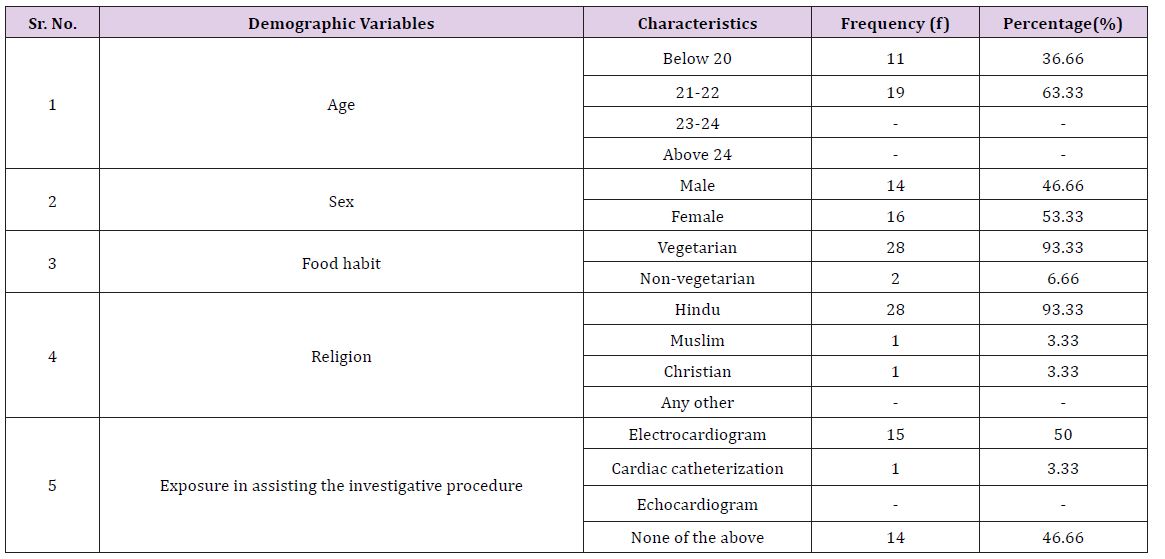
Majority of 2nd year B.Sc. Nursing students were in the age group of below 20 years (53.33%) followed by 21 22 years (46.6%) and no one was above 22 years old. Majority of 2nd year B.Sc. Nursing students were females (53.33%) and minimal percentage of the sample were males (46.6%). Second year B.Sc. Nursing students by their exposure in assisting the investigative procedure. They were assisted for electrocardiogram procedure (30%) followed by cardiac catheterization (30%). Echocardiogram (23.33%) and (16.66%) percentage of Second year B.Sc. Nursing students had not assisted for any procedure. It was inferred that some o f Second year B.Sc. Nursing students had exposure in assisting electrocardiogram procedure (Table 1).

Table 1: Frequency & Percentage distribution of students by their demographic characteristics.

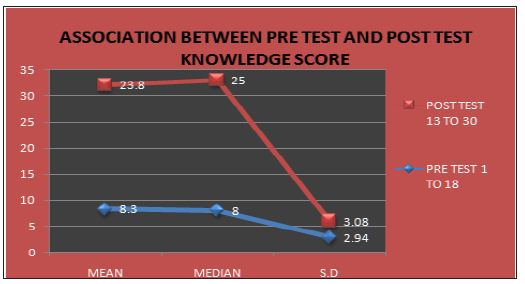
In this present study the mean and standard deviation in pre test assessment score was 7.93, (SD=3.12) and in post test assessment mean score was 23.8 (SD=3.08). The result shows that the STP is effective and helpful to raise the knowledge (Figure 1). In the association between socio demographic variables and pre test knowledge of Nursing students of 2nd year B.Sc.in relation to the age and exposure in assisting the Investigative procedure the chi square value obtained 7.14 (P=0.028<0.05, df=2) and 15.2 (P=0.02<0.05, df=6) respectively which showed significance at p<0.05 levels [6,7].

Figure 1: Association between pre test and post test knowledge score.

Conclusion

This study reveals that majority of the nursing students have adequate knowledge and regarding ECG after implementation of STP in Indore nursing college at Indore.

For More Articles: Biomedical Journal Impact Factor: https://biomedres.us

Journals on Nursing

Maytenus ovatus (schweinf.) An African Medicinal Plant Yielding Potential Anti-cancer Drugs

Introduction

Maytenus ovatus (Schweinf.) of the family Celastraceous is a shrub usually spiny with whitish flowers bearing reddish fruits and is widespread in the savannah regions of tropical Africa [1]. Mountains and sub-mountainous regions of African countries, viz., Ethiopia, Kenya, Tanzania, Uganda, Mozambique and others are wild habitats for the species, Maytenus ovatus, M. serratus, M. heterophylla and M. senegalensis [2]. Maytansine, a benzo-ansamacrolide (ansamycin antibiotic) is a highly potent microtubuletargeted compound that induces mitotic arrest and kills tumor cells at sub-nano-molar concentrations was originally isolated from the Ethiopian shrub, Maytenus ovatus. Maytansine binds to tubulin at the rhizoxin binding site. It inhibits microtubule assembly, induces microtubule disassembly, and disrupts mitosis. Maytansine exhibits cytotoxicity against many tumor cell lines and also inhibit tumor growth in vivo [3]. Since the discovery of Maytansine from Maytenus ovatus in 1972 as a potent cytotoxic agent, further 53 more maytansinoids have been identified from wild plants, microorganisms and mosses [4].

Results and Discussion

Maytansine, the highly cytotoxic natural product, could not succeed as an anticancer agent in earlier clinical trials conducted on humans because of systemic toxicity. The potent cell killing ability of maytansine was further tested in a targeted delivery approach for the selective destruction of cancer cells. A series of new maytansinoids, bearing a disulfide or thiol substituents were developed synthetically. Several of these maytansinoids were found to be even more potent in in-vivo experiments than maytansine. The targeted delivery of these maytansinoids, using monoclonal antibodies, resulted in high, specific killing of the targeted cancer cells in-vivo and remarkable antitumor activity in-vivo [5]. Some plants that indicate potential as an anticancer agent in laboratorybased in-vivo research including species of Maytenus are currently being studied extensively.

There can be many years between promising laboratory work and the availability of an effective anti-cancer drug. In the 1950’s scientists began systematically examining natural organisms as a source of useful anti-cancer substances [6]. It has recently been argued that “the use of natural products has been the single most successful strategy in the discovery of novel anti-cancer medicines”. These phyto-chemicals that is selectively more toxic to cancer cells than normal cells have been used in screening programs and are developed as potential chemotherapy drugs. Cancer is a malignant neoplastic disease characterized by uncontrolled growth of cells with the ability of the cells to migrate and spread to distant sites [7]. The most commonly occurring cancers are carcinomas while sarcomas, leukemias, lymphomas, melanomas and gliomas also pose big threat to human lives in the present day life all over the world.

Maytansinoids exhibit broad spectrum activity in ultra low concentrations (nanogram to microgram ranges). Early work on maytansine, the most widely studied of this series was hampered by exceptionally low yields (0.2 mg/kg of plant part) of this compound from Maytenus species. Higher yields of maytansine (12 mg/kg) have been obtained from Putter1ickia verrucosa also of the family Ce1astraceae [8]. In a clinical trial, toxicity of maytansine was manifested by profound weakness; nausea and prolonged diarrhea to the extent that a few patients refused further treatment. But much more beneficial antitumor responses were observed by the administration of maytansine and its derivatives/ analogues and hence this group of compounds is undergoing extensive evaluation in current clinical oncology experiments.

Background of the Invention

United States Patent Number 3,896,111 of July 22, 1975, awarded to Kupchan [9], it was disclosed that certain African woods, in particular Maytenus ovatus and M. buchananii contain certain factors which demonstrated significant anti-leukemic activity in microgram/kilogram level. One of these factors, the chemical structure of which was disclosed in the patent was identified as “maytansine”. The starting material for the development of maytansine based drugs by the procedures of the invention of Kupchan [9] is maytansine containing plant material, suitably woody portions of stem and bark. The preferred sources are wood from Maytenus ovatus, Maytenus buchananii and Putterlickia verrucosa. Wood of these plants is ground on a hammer mill to give slivers of a size of the order of 1 cm × 1 mm, but also includes larger slivers and dust particles.

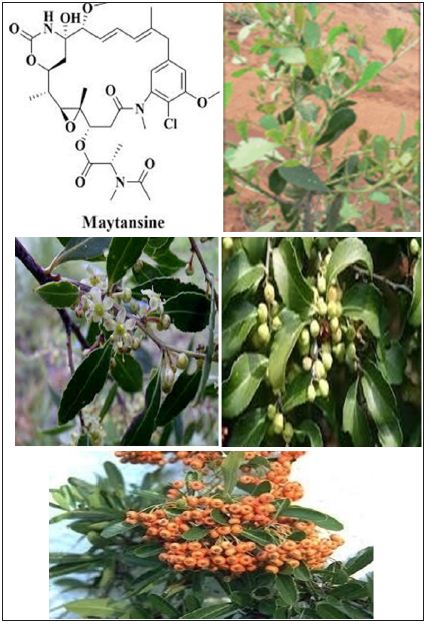
The wood chips are processed in batches of approximately 1,400kg of wood and are extracted with ethanol suitably containing up to about 5% by weight of moisture. The process also utilizes approximately 5,500 to 6,500 liters of extracting solvent per 1,400kg batch of wood. Extraction is carried out in a recycling, large scale soxhlet type apparatus over a time of approximately 100 hours. The solvent is removed from the extracted mass to yield an initial crude isolate (corresponding to Kupchan fraction) of the order of 25 to 30 grams of extract per kilogram of charged wood and by further purification maytansine is isolated. Maytansine, a benzo-ansa-macrolide, first isolated from the bark of the Ethiopian shrub Maytenus ovatus is a vital cytotoxic agent and its derivatives bind to tubulin near the Vinca alkaloid binding site. Two maytansine derivatives, emtansine also referred to as DM 1 and ravtansine also referred to as DM 4 have been widely used in combination with reversible and irreversible linkers [10](Figure 1).

Figure 1:

Trastuzumab emtansine (T-DM1; Roche in partnership with ImmunoGen) which received marketing patent in 2013 is a human epidermal growth factor receptor drug [11]. As shown in preclinical studies, the drug combines the distinct mechanisms of action of both DM1 and trastuzumab, and has antitumor activity in experimental human tumor models. T-DM1 has been approved as a secondline treatment for breast cancer patients that have previously failed to respond to therapy with trastuzumab chemotherapy. SAR3419 (Sanofi in collaboration with ImmunoGen) is another representative example of a maytansine-based ADC (Antibody Drug Conjugate) and this drug in clinical trials has demonstrated a response rate more than 70% in large B-cell lymphoma patients. Most of the African cultures have a verbal tradition and therefore, written information on cultural features in the past are not so readily available from Africa as from many other parts of the world.

The ethno-botanical information on the uses of these plants was sometimes documented on herbarium labels and, in this way, ethno-botanical information on a number of plants began to accumulate. Systematic accounts in written form dealing with medicinal plants in Africa are of a fairly recent date, while reports dealing with ethno-pharmacological aspects are more recent. A number of traditional national pharmacopeias have appeared, starting with the Madagascar Pharmacopeia in 1957 and research in the field of ethno-botany and ethno-pharmacology has developed rapidly in many African countries. The African Pharmacopoeia, covering traditional medicine of many African countries, has been published by the Scientific Technical Research Commission of the Organization of African Unity, starting with volume 1 in 1985.

Recently, the Association for African Medicinal Plants Standards, from Mauritius, started the publication of Monographs on medicinal plants which provide botanical, phyto-chemical, pharmacological and commercial information on the most important medicinal plants used in Africa. In Africa, the ethno-pharmacological and botanical knowledge on the uses of medicinal plants is often orally passed down from generation to generation. Although traditional medicine has been recognized as a part of primary health care programs in many African countries, there is a need to evaluate scientifically the crude extracts of plants for their medicinal and pharmaco-dynamic properties, clinical usefulness and toxicological potential.

Mertansine, a semi-synthetic derivative of Maytansine

Mertansine, also called DM1 (and in some of its forms emtansine), is a thiol-containing maytansinoid that for therapeutic purposes is attached to a monoclonal antibody through reaction of the thiol group with a linker structure to create an antibodydrug conjugate (ADC). ADCs with this design include trastuzumab emtansine, lorvotuzumab mertansine, and cantuzumab mertansine. Some of these compounds are still experimental; many others are in regular clinical use (Peter, 2013) [12].

a. Mechanism of action of Mertansine

Mertansine is a tubulin inhibitor, meaning that it inhibits the assembly of microtubules by binding to tubulin (at the rhizoxin binding site). The monoclonal antibody binds specifically to a structure (usually a protein) occurring in a tumour, thus directing mertansine into the tumour cells. This concept is called targeted cancer chemo-therapy.

Conclusion

Ethiopian forests and wild habitats are potential sources of rich bio-diversity which include highly potential medicinal plants that can be utilized in the traditional practices of Ethiopia and at the same time can be exploited in the modern systems of medicine. Killer ailments like, cardio-vascular diseases, cancer, HIV, diabetes is posing big threat to human lives not only in Africa but all throughout the world. In this context, more and more medicinal plants need to be explored for their cultivation and utilization in human health care. The scientific community involved in the discovery and isolation of Maytansine from Maytenus ovatus for the treatment of leukemia; breast and lung cancers deserve high admiration. The search for more medicinal plants needs to be undertaken in Ethiopia for utilization in different aspects of human healthcare.

For More Articles: Biomedical Journal Impact Factor: https://biomedres.us

Journals on Surgery

New Surgical Strategy for Abdominal Wall Defects. A Successful Swine Model Experiment

Abstract

Background: The purpose of this study was to develop a large incisional hernia pattern made on an animal that is clinically relevant, to design a new original surgical technique to repair abdominal wall defect, and to evaluate its effectiveness, Methodsing to apply it on patients.

Methods: Physical examination and ultrasound scan was performed at fixed intervals at 3, 7, 14 and 30 days. Postoperative complications were followed. To evaluate the resistance of the repair, the swine model went through gestation and given birth process.

Results: There are the following situations: wound infection, enteric fistula, stoma, or retraction of the abdominal wall, when direct synthetic mesh repair is inadequate. Biological meshes may be placed to achieve abdominal wall reconstruction, but they are associated with a high recurrence risk. The good result is based on the flap properties of biocompatibility and incorporation into the surrounding tissue. If some surgeons questioned the flap repair, which would not provide the required resistance, the reinforcement with the mesh would ensure it. The advantage of using the flap directly into the defect reduces the risk of infection. Mechanical test of abdominal rectus muscle across the repair site was performed and no test is better than the gestation and given birth process.

Conclusion: The technique accomplishes the reconstruction of a functional dynamic abdominal wall via the antilogous vascularized tissue flap and the mesh insertion, which will reinforce the repair. We recommend it due to the fast tissue regeneration and resistance to pressure forces on different physiological acts.

Keywords: Flap; Reconstruction; Abdominal Defect

Introduction

Despite the frequency of ventral hernia repair, there is little consensus in the literature about the ideal approach for this difficult problem. In the repair of abdominal wall defects, the surgeon must consider a multitude of factors to identify the appropriate surgical technique to accomplish the reconstructive goals [1]. The reconstruction of the abdominal wall has become a new surgical superspeciality, which needs to be investigated. Plastic surgeons use native abdominal wall whenever possible and general surgeons suggests the use of synthetic or biologic mesh in ventral hernia repairs. One particular group of patients are those with contaminated wounds, enterocutaneous fistulas, recurrent incisional hernias, where synthetic mesh is to be avoided if possible. Due to the high risk of mesh infection or mesh rejection that could lead to dramatic consequences [2]. Most recently, biologic mesh has become the new standard in high-risk patients with contaminated and dirty-infected wounds [3].

The cost of the biomaterials should not be an important factor in these cases, but this issue of price cannot be avoided, especially when hospitals do not have enough funds (in poor or developing countries) or have a limited number of meshes (in some developed countries) or, even worse, the patient must support all the costs by himself. Furthermore, this product is usually ordered on a caseby- case basis because of the expense of having large numbers o matrix sheets available for intermittent use [4]. Therefore, flap surgery is the option for such cases. Flap reconstruction offers immediate and definitive wound closure, mitigating the local milieu inflammatory response and local tissue injury [5]. Although these defects can be attributed to a myriad of etiologic factors, the objectives in abdominal wall reconstruction are consistent and include the restoration of abdominal wall integrity, protection of intra-abdominal viscera, and the prevention of herniation [6]. A new experimental surgical repair, an original method for the reconstruction of the abdominal wall, using deep inferior epigastria artery perforator propeller flap reinforced by an on lay prosthetic mesh, is presented for the first time in this article.

Methods

Animals

An experimental protocol was developed on a swine as a model. Anesthesia was performed with atropine sulfate 0,04mg/kg SC, azaperone 2mg/kg IM (Stressing, Belgium), diazepam 0,1mg/ kg IM, ketamine 10 mg/kg IM (Vetased, Romania). This protocol of sedation allowed safe transportation to the preparation room. Protocol was administered to have effect on the induction of general anesthesia (1-2mg/kg IV) (Norfolk , Northern Ireland). The swine was incubated with a straight laryngoscope blade using a number 5.5 – 6 end tracheal tube. To maintain anesthesia, isoflurane was delivered in 100% oxygen (Dragger Fabius Plus XL, Dragger Medical AG & Co – Germany). ECG, respiratory rate, oxygen saturation, pulse, esophageal temperature, ETCO2, FiO2 and anesthetic gas concentration were monitored throughout the surgical procedure. Postoperative analgesia – meloxicam 0.4mg/ kg IM/24 h, Lexicon (Nor brook Laboratories Limited, Northern Ireland) was also performed.

Abdominal Wall Defect Creation

The swine model underwent survival surgery which consisted in creating a standard ellipse 5cm in width and 10cm in length abdominal wall defect, using a surgical steel blade no. 23, through the fascia of the midline linea alba. The peritoneum immediately below the facial incision was kept intact. Full-thickness skin flap– 1.5 cm lateral to the midline – was raised through the vascular prefascial plane. The 1:2 ratio of the flap length to width was maintained to prevent flap ischemia.

New Surgical Repair

Simultaneously, the repair was done using a de-epithelialized flap, harvested in a supine position. An elliptic transverse skin paddle was drawn with a surgical marker on the inferior hemiabdomen. The flap was designed as an island flap based on a single perforator, in our case DIEP, and was rotated through 90 degrees to cover the defect. The flap was then inset without tension and the donor site area was closed first. After the flap was fixed into the defect, the repair was supplemented with a lightweight polypropylene-mesh, in the onlay position, extended beyond the line of the closure by 3 cm in all directions. The mesh was fixed with a continuous suture around the periphery, using a heavy gauge non-absorbable suture. The fascia closure was tension-free, using a continuous suture and the skin was closed with intra-dermal suture using Monocryl 3.0 (Figure 1). To determine the repair strength, due to lack of an tensile tester or other equipped device, I decided to have a tensile testing of the swine model by choosing a natural way. Because a month after surgery the swine model underwent the reproduction process.

Results

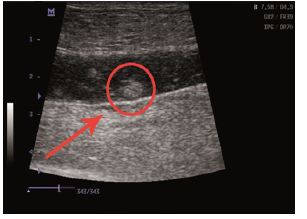
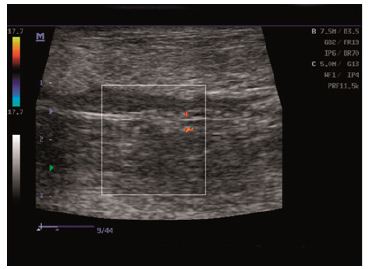
Physical examination and ultrasound scan were performed at fixed intervals at 3, 7, 14 and 30 days. Then complications followed: infection, seroma/hematoma, extrusion, hernia recurrence, dehiscence, and necrosis. After a three-day-evaluation a slight edema can be noticed during the physical examination. There are no other concerns regarding the wound healing. Ultrasound scan identified small hematomas formations above the repair, in the subfascial space, even if the mesh was well positioned (Figure 2). Examining the flap perfusion, the perforator vessel was identified and the vessel flow was normal (Figure 3). Seven days later after the surgery, the flap seems to be well incorporated into repair, excepting the extremities of the defect, where mesh elevation is detected. Clinical examination shows a normal process of the wound healing (Figure 4). No changes occur at the two-week evaluation. After a month the results reveal the good repair of the abdominal wall without complications at the US evaluation and also with optimal cosmetic results (Figure 5). After the breeding, the normal gestation period was carried on without any problems, and the swine model gave birth to four piglets. Both mother and piglets are healthy. One-week physical examination of the abdominal wall swine model shows no recurrent hernia being present (Figure 6).

Figure 2: Ultrasound scan identified small hematomas formations.

Figure 3: Ultrasound scans: normal vessel flow.

Discussion

Several options exist for the reconstruction of the abdominal wall defects. The idea for this original repair started with the question: why a perfect mesh and not a combination using the original material reinforced with a mesh? There are many different types of meshes available, and even more products are being brought to the marketplace, having a commercial interest. It is difficult to browse through all of these new products, without longterm clinical and experimental data to support their use [4]. If we add the high costs in purchasing these meshes, all of these hamper and delay the repair process. There are situations, such as wound infection, enteric fistula, stoma, or retraction of the abdominal wall, when direct mesh repair is inadequate. Biological meshes may be placed to achieve abdominal wall reconstruction, but they are associated with a high recurrence risk because they weaken as they dissolve [2]. Placing the flap into the defect, prevents the development of complications, which can jeopardize the repair. The only technique is popular among surgeons because it avoids direct contact with bowel and imparts less tension on the repair [7]. Mechanical test of abdominal rectus muscle across the repair site was performed and no test is better than the gestation and given birth process. Results show that the repaired area did not record any changes throughout all the process and it proved to be a resistant repair.

Among the postoperative complications, only hematomas were recorded, and they were resolved by natural drainage. Hematomas are susceptible of infection and can easily provide the medium for bacterial overgrowth. Any evidence of infection with hematoma may require evacuation of the hematoma to prevent removal of the mesh. No infection, no superficial or deep wound dehiscence, no recurrence even after the birth process was recorded in the swine model. Mesh infection is given by local or systemic factors. Additionally, the properties of the mesh material affect the degree of local inflammatory response and fibro vascular tissue incorporation [4]. The good result is based on the flap properties of biocompatibility and incorporation into the surrounding tissue. And, if some surgeons questioned whether the flap repair would provide the required resistance, the reinforcement with the mesh will ensure it. This technique allows the preservation of the perforator vessel, reducing the risk of subsequent skin necrosis. From an esthetic point of view the repair, combining the two methods used on the swine model, had an excellent result, which did not undergo any changes during the gestation process. The advantage of using the flap directly into the defect reduces the risk of infection. The recurrence rate is an important element to establish the efficiency of surgical treatment [2]. Long-term data analysis, with large case studies, is still needed to obtain detailed information about recurrence, particularly in the assessment of new techniques.

Conclusion

The repair accomplishes the reconstruction of a functional dynamic abdominal wall via the antilogous vascularized tissue flap. Mesh reinforcement of the repair provides resistance under constant pressure and can be indicated to treat young patients. Long-term clinical and experimental data are needed to support its use.

For More Articles: Biomedical Journal Impact Factor: https://biomedres.us

Journals on Medical Sciences

Lessons Learned From Field Deployment of the Hemaapp: A Non-Invasive Hemoglobin Measurement Tool

Introduction

The Hemaapp [1] is a smart phone application that measures the hemoglobin level in your finger by using the phone’s built-in camera and flash. The hemoglobin measurement is done noninvasively, by placing the finger of the patient on the camera of the phone. The light from the flash allows the camera to record the absorption of light by the blood, while the Hemaapp application analyzes the images to determine the level of hemoglobin. The application was developed at the University of Washington’s Ubiquitous Computing Laboratory. The University of Washington team worked with the NGO, Asociacion Red Innova, to test the innovative technology in the field. The team conducted a field deployment in a variety of diverse settings in Peru, including two communities in the Amazon region, an urban-slum community in Lima, and three clinics in Lima. The following report was drafted to reflect the lessons learned in the field.

Participants of the study received an examination with the Hemaapp and then an examination with an invasive method to measure hemoglobin, such as the HemoCue or Complete Blood Count. The results of the two tests were compared to improve the precision of the algorithm of the Hemaapp. 100% of participants indicated that they prefer the analysis by the Hemaapp to an analysis by the HemoCue or CBC. In additional to a satisfaction questionnaire, the research team identified a number of opportunities to improve the diagnostic tool and methods for campaigns that utilize the Hema App.

Some of the findings included:

a) A cloth strip can be installed on the phone case to help hold the finger securely over the camera. This will help the participant from moving excessively during the analysis and ensure that the technician properly placed the subject’s finger over the camera. The cloth strip also serves to block out the ambient light to ensure the light is stable and consistent in all environments.

b) It can be difficult to conduct the Hemaapp measurement on very young children. Some of children in the field study were afraid or uncomfortable about placing their finger on the camera for 15 seconds. As Hemaapp relies on optical measurements through the finger’s skin, if the subject does not hold their finger still over the camera, the excessive motion will render the measurement unusable. Thus, Hemaapp is not suitable for crying children who are resisting. For this reason, we found that it is important to take a moment to reassure the child and gain their confidence. This can be accomplished more easily by showing a video with a cell phone. A future edition of the HemaApp may include a child-friendly video that convinces the child to put their finger on the camera and then continues for 15 seconds to ensure the child does not move during the analysis.

c) A phone case that is appealing to children may also be beneficial for calming the child and encouraging them to participate. Some of the children seemed particularly frightened by the black phone case, but became noticeably less agitated when we showed them the screen display of the phone.

d) We found that children are calmer when sitting in a chair independently rather than on an adult’s lap during the measurement. The independence may reduce the amount of anxiety caused by a lack of control.

e) It is often not feasible to examine children under the age of 10 months with the Hemaapp as their fingers are too small to cover the camera and the flash. An attachment may be constructed in the future to utilize with babies less than 1 year of age.

f) The flash of the camera can get hot. It is best to wait until the finger is placed on the camera, secured with a cloth strip, and then placed securely on a table before turning on the flash, thus minimizing the amount of time the flash is illuminated. When the device is used repeatedly and rapidly, cleaning the flash and camera with alcohol can help cool the light.

g) Participants in the clinics were less willing to participate in the study with the innovative tool than participants in the community. Those in the clinic were more cautious of participating in the study. Those in the communities were excited at the prospect of trying an innovative tool and receiving the exam with the cell phone.

Through the field deployment in Peru we learned several lessons for how to improve the overall effectiveness of the diagnostic tool. Simple modifications of a phone case and steps taken between exams can increase the appeal and effectiveness of the tool, especially when dealing with children. The team at the University of Washington is continuously making improvements to the application and the device to make it more precise and userfriendly. We are continuing to address the challenges identified in the Peru trials to continuously improve the prototype and learn from the end-user. The team at Asociacion Red Innova is planning the next field validation campaign for the Hemaapp with great consideration to the lessons learned from the last deployment. We hope to make the evaluation more appealing to children and streamlining the procedure to improve the efficiency of the measurement. Based on the satisfaction we observed from the recipients of the Hemaapp we know that the tool is highly desired and feasible to execute in large scale anemia screening campaigns in diverse settings. Most of the children and their parents in the Amazonian and urban communities were excited to receive the evaluation with the cell phone. We believe the appeal of the technology represents a great opportunity to make more tools like the Hemaapp for diagnosis, surveillance, and education to improve public health in the future.

Dentistry Journal

The Smile Aesthetics and its Implications in Social Prosthetic Rehabilitations: A Case Report

Abstract

The aim of this study is to individualize the correlative aspects between the type of smile , the degree of visibility of the teeth and the way in which the chosen therapeutic solution, in accordance with the particularity of the clinical case, offers the ultimate clinical success in terms of aesthetic requirements.In order to make the aesthetic evaluations and the contour matches we used photos for the patients faces and teeth and we processed these photos in Corel Draw 7.0. We manually traced the contour of the face and the frontal tooth and we matched the two shapes changing accordingly their dimensions; the smile type was also established through contour detection.The type of prosthesis is fully in agreement with the particularity of the prosthetic field, the presence or absence of specific prosthetic preparation corroborated with the aesthetic restoration through individualized modeling decisively influences the final results.

Keywords: Clinical Case; Removable Prosheses; Smile; Aesthetic Evaluation

Introduction

The multitude of clinical cases requiring aesthetic therapy anchored in both the fixed prosthesis registry and the movable prosthesis, makes it impossible to classify the treatment according to the state of edification [1-4]. What can be deduced from a thorough clinical examination is the extent of the edentation, the degree of compensation in the odontal, periodontal, mucosal and bone support, the maintenance of the stable occlusion relationship and the type of smile [5-7]. The smile involves altering the physiognomy in all the facial stages, but the anatomy of the lower floor level is most important: the labyrinth extends, the upper lip rises and stretches, and the free edge of the lower lip becomes concave [8- 12]. A distance can be measured between the mouth commisura; the smile index can also be calculated: the ratio between the vertical and horizontal dimensions of the laughing slit associated with the smile. The amplitude of the smile determines the degree of exposure of the dental arches and thereby the definition of the area of aesthetic interest to be taken into account during the dental arcade restoration treatments. Smile is a form of non-verbal communication, most often associated with the exposure of dental arches. Appreciation of the relationships between upper lip, lower lip, and mouth commisure with the dental arches during smile is one of the important stages of examination in dental aesthetics [13- 15].

Aim

The aim of this study is to individualize the correlative aspects between the type of smile , the degree of visibility of the teeth and the way in which the chosen therapeutic solution, in accordance with the particularity of the clinical case, offers the ultimate clinical success in terms of aesthetic requirements.

Material and Methods

In order to make the aesthetic evaluations and the contour matches we used photos for the patient’s faces and teeth and we processed these photos in Corel Draw 7.0. We manually traced the contour of the face and the frontal tooth and we matched the two shapes changing accordingly their dimensions; the smile type was also established through contour detection. We preferred to perform these procedures by hand because the automated functions for contour tracing do not deal correctly with the anatomical particular details.

Results and Discussion

The clinical presentation shown here is representative of a social approach, in which we pay special attention to the aestheticfunctional binomial which governs the current therapies, in these particular situations the socio-economic criteria are restrictive. The 55-year-old PZ patient following the clinical and paraclinical assessment was diagnosed as follows: General condition affected by the HTA stage offset, under medication, that favours the treatment stages; Chronic superficial periodontitis at the level of the anterior frontal teeth, of a plurifactorial etiology with slow progression, favorable prognosis by treatment, currently untreated, Total maxillary edentation of plurifactorial aetiology, which induces functional, masticatory, physiological, phonetic, swallowing disorders, evolving slowly, giving local complications such as edema and atrophy of the edentated and loco-regional crest with articular dysfunction, with prognosis favorably untreated, Kennedy Class I stretched mandibular partial joint jaw, of mixed etiology, which induces functional discomfort, swallowing, physiognomy, slowly evolving, causing local complications such as resorption and atrophy of the edentar ridge localized and loco-regional disorders such as joint dysfunction, prognosis favoring treatment, mixed prosthesis treated at this stage.

Malocclusion by modifying occlusal morphological parameters, asymmetric occlusion curves, irregular oblique occlusion; Moderate joint dysfunction, with etiology extended stretch condition and reduced untreated partial edentary states and other detectable etiology through paraclinical examinations, giving discomfort to the masticatory, slowly evolving, with prognosis favorably through treatment Extrapostural and eccentric mandibulo-cranial malrelation, having the etiology of the partialextended edentation and the partially reduced untreated anterior edema, leading to masticatory, swallowing disorders, deglutition, slowly evolving, with favorable prognosis through treatment; Assessment of clinical and biological indices is a decisive starting point for the development of a therapeutic plan. The positive aspects characterizing the general clinical-biological indices are represented by the general good condition of the patient, which allows the development of the treatment stages.The loco-regional indices are characterized by negative aspects negative positioned at the TMJ level, noting aspects of mandibular dynamics characterized by asymmetric condylous excursions, which accompany left-sided latency. Regarding the local odonto-periodontal clinical-biological indices there is a small number of odonto-periodontal units, and the muco-bone support is characterized by the presence of resilient mucosa, irregular crests, negative indices that can be posed by specific training or the choice of a biomaterial with a structure adapted to these particularities (Figure 1).

Figure 1: Aspects of panoramic radiological evaluation.

The negative aspects related to occlusion reside in the changing of the static occlusion parameters due to the morphology and functionality of the mixed restorations which the patient presented, inducing changes in the dynamic occlusion trajectories. The therapeutic plan was governed by the following objectives:

a. Prophylaxis objective:nonspecific local prophylaxissanitary education, general prophylaxis – vitamin therapy, psychotherapy ,specific local prophylaxis.

b. Curative objective: morphological: the maxillary achievement of a complete denture restoration and at the mandibular level of some restorations fixed and partially removable flexible prostheses, restoring the dento-alveolar integrity.

c. Functional: restoring the functions of the stomatognate system: mastication, phonation, swallowing, physiognomy.

At the mandible we face a balanced symmetric-asymmetric edification, corroborated with the orientation of the vector RP(resistance-pressure) towards posterior, shows us both the deficient support area and the topography of the elements of maintenance, support and stabilization, if we remain as a variant in the territory of the removable prosthesis. After investigating and analyzing the treatment plan according to all the mentioned principles and criteria, we chose the following therapeutic solution: at the maxilla-complete acrylic denture, the teeth were chosen from the composite, the shape of the teeth being fully aligned with the shape of the face and the architecture of the maxilla prosthetic field. Regarding the mandibulary solution,we chose an mixed prosthesis variant composed:fixed metal-ceramic restoration at levels 33, 32, 31, 41, 42, 43, 44 and partially removable flexible prosthesis consisting of a dentum-mucosal plaque connector, 2 metal-acrylic mixed sutures with 8 artificial teeth, acrylic, anatomorphic, mediocuspidate and support, stabilization and support elements: elastic clasps. The stages of the treatment:

Preparation of the body and oral cavity

a) Health education,

b) General training,

c) Preprotetic (non-specific) preparation,

d) Preprotetic (specific) preparation-Recovery of organic substructures and correction of preparations at mandibular level (Figure 2).

Figure 2: Aspect ofpreparation of the teeth at the mandibular level.

The proper prosthetic treatment concerned the following steps:

a) Preliminaryimpression recorded in alginic material.

b) Functional impression-it is important to note that on the functional model, all the hybrid prosthesis, both the fixed and the mobilizable component, were made for the purpose of full harmony morpho-functional between the two components. The functional fingerprint was recorded with addition silicon.

c) The recording of the mandibular-cranial relations with the help of the occlusion models and the transfer on the simulator.

d) The checking of the prostheses in the wax. This step is important and precise by superimposing the therapeutic decision marks over the resulting technological elements.

e) Clinical examination, adaptation and fixation by temporary cementation of the fixed prosthesis and verification, adaptation of the partial removable prosthesis (Figure 3).

Figure 3: Aspects of maxillarycomplete denture andpartially mandibular removable.

f) Fixation by permanent cementing of the fixed prothesis.

prostheses and fixed componentent. After superposing the dental contour on the facial one, an optimsuperposing results, and the framing of the smile in the convex one, with contact restores aesthetics of the patient. The final results of the clinical case offer the image of the rehabilitation edentatotal or partial stretched by total prosthesis, respectively mandibular joint prosthesis, therapeutic solutions that created the cranio-mandibular reposition, as well as the restoration of all the functions affected by edentation (Figure 4). A very important factor in obtaining a result of high-level prosthetic treatment is the harmony between the shape of the teeth, their position, their color and the appearance of the gingival tissues adjacent to them, because a harmonious ensemble can not be defined only under conditions of free periodontal structures.For this reason, the gingival color, the level and extent of exposure of the free gum and the interdental papillae in the smile, even the aspect of the fibroma that covers the alveolar processes, are elements whose analysis completes the examination of dento-facial aesthetics.

Figure 4: Superposability of the shape of the face and of the dental shape.

Conclusion

a) Aesthetic exigency, which has become a social phenomenon in today’s life, represents for contemporary dental medicine not only as an important dental problem but also a professional duty.

b) The type of prosthesis is fully in agreement with the particularity of the prosthetic field, the presence or absence of specific prosthetic preparation corroborated with the aesthetic restoration through individualized modeling decisively influences the final results.

c) It is especially important that the therapeutic solution chosen in full accord with the degree of vision of the teeth and the type of smile giving the patients’ natural, but also the elegant result of the precision and observance of the clinical biological parameters that required the rehabilitation.

For More Articles: Biomedical Journal Impact Factor: https://biomedres.us

Dental Open Access Journal

Upper Crossed Syndrome and Dentistry Why the Need for Concern

Abstract

Occupational hazard plays a detrimental role in influencing the quality and quantity of work of dental health care personnel. Basic understanding of the same is essential in terms of improved productivity and progress. Among the work related health concerns, musculoskeletal disorders are perhaps the most common and debilitating. Dentists are prone for improper posture and associated muscle strain. Upper crossed syndrome is an incorrect posture associated musculoskeletal condition with high prevalence. This review article will brief on upper crossed syndrome and its implications in dental workforce, with focus on precautionary and therapeutic measures.

Introduction

Occupational hazard is an umbrella term, encompassing various short and long term risk factors encountered in the work place. Being un heedful of the potential work environment risk factors will lead to vulnerable state. Dental profession presents a unique platform relating to work burdens and ailments. Occupational Safety and Health Administration has outlined the involved factors related to dentistry, its recognition, control and prevention. Major risk factors included, but essentially not limited are biological, chemical and pharmaceutical hazards, musculoskeletal disorders and ergonomic issues, noise and vibration related hazards and psychological issues [1]. Musculoskeletal disorders (MSD) are key contemporary dental occupational hazard and its reported incidence is as high as 81.4% [2]. The work related pain was mostly attributed to shoulder, lower back and neck region [3]. Lower back pain had high prevalence of 64%, closely followed by 60% neck pain, with simultaneous pain in multiple sites tagging behind [4]. Females are found to be at higher risk than that of a male dentist.

The concerned symptoms were reported to occur early in the profession with chronicity noted due to typical late intervention. Reported consequences are socioeconomic burden on the professional with reduced working hours, even early retirement [5]. Long working sesions, sustained static position, awkward posture combined with that of recurrent, repetitive, precise and highly controlled movements are the reasons attributed.5 More frequent and prolonged the aforementioned factors happens to be, more pronounced is the resultant injury, owing to strained muscle, bone and joints. Dental professionals are more prone for prolonged bending; twisted trunk and continuous preordained static posture [6]. A static posture could be one that has been withheld during the whole period of the exertion. In dentistry, static postures with repetitive motion and poor ergonomics leads to a vicious pathway. During a specified treatment time, constrained posture with awkward position of head and trunk is highly observed [7].

Upper crossed Syndrome

Poor posture has been associated with musculoskeletal imbalance and one such commonly reported condition is Upper crossed syndrome (UCS). Improper posture has been associated with muscle tension and limited mobility [8]. Literature reports that the posture frequently adopted in the upper extremity is forward head posture [9]. UCS is the term coined by Janda and used for such misalignment. He has stated that the maintenance of a stooped sitting posture for an extended period of time is the major predisposing factor [10]. It is also known by other terms such as proximal or shoulder girdle crossed syndrome.

The overactive muscles on one side of the neck are found to counteract the underactive muscles of the adjacent side, creating an ‘X’ pattern. This comprises of reciprocal inhibition, wherein muscles on one side are lengthened to compensate for the shortened, contracted muscle on the other side of the joint. With prolonged continued postural imbalance, the intensity of the muscular imbalance increases over time, creating a vicious cycle [10]. The resultant clinical presentation are the complaint of neck and shoulder pain, cervicogenic headache, hunched upper back and rounded shoulders [8]. Owing to the constrained dental clinical work field aka oral cavity, rapid, repetitive, controlled and/ or forceful movements in conjunction with sustained awkward posture, the dental personnel are highly predisposed to UCS [4]. As previously stated, in the literature ample epidemiological studies are published establishing the association of occupational factors and MSD in dentistry. A cross sectional study analysing 220 dental students has ascertained the tendency of increased tightness in the neck extensor and pectoral muscles in dentists [11]. This supports the hypothesis of heightened risk of the dental professionals for developing muscular imbalance and especially, UCS.

However the methodological difficulties are key predicament in generalising the prevalence of such muscular imbalance. Inconsistencies in study design, classification method, outcome variable and interpretation of the results has generated significant controversy in this field. Rapid upper limb assessment (RULA) is a standard method used to assess the ergonomic sitting posture [12]. The number of movements, static muscle force and work are the aspects evaluated in RULA. Muscular length test, muscular strength test, cervical range of motion, forward head posture measurement by craniovertebral analysis, rounded shoulder measure and kyphosis measure are some assessments that will outline the severity of the clinical entity presented [13]. Subsequent to identification of the UCS, proper corrective measures need to be undertaken to correct and limit the muscular imbalance. A recent study assessing 30 dentists with UCS were analysed in a eight week exercise program [14]. A 30 – 60 minutes workout was carried out, with exercises being selected on the basis of individual needs. Warm up, light exercises, special strength and resistance training was the aspects of the training program, with significant positive outcome.

In the upcoming dental profession, preventive program aimed at establishing the habit of improper posture development is critical in curbing this vicious pathological process. Rigorous stress and training on workplace posture maintenance should be stressed upon in dental educative system. Appropriate use of ergonomic instruments will also reduce the unnecessary muscle load. A concept known as ‘Active physical movement’ during treatment procedures has been advocated by many researchers. Changing posture at regular interval, taking micro breaks, using stretching exercises in between the procedure will potentially reduce the ill-effects of static posture. The stretching exercise is advocated especially in the opposite direction of the static and repetitive posture [15]. Regular work out and/or yoga seems to be beneficial from biomechanical view, but studies doesn’t show consistent pattern in this regard [16]. Cultivation of healthier posture habits, early diagnosis and compensatory muscle stretching and relaxation exercises, especially in cervical region could prevent the incidence and severity of UCS.

Conclusion

Neck, a structurally delicate body segment tasks the huge burden of supporting the human head. Improper body posture inherent in dentistry, paves way for increased incidence of neck pain and UCS. Numerous suggestions are put forth for altering the assumption of awkward posture, including improved equipment ergonomics, favourable workspace up gradation, physical therapy and active life style adaptation. Early identification and prevention of UCS is crucial in preventing further degenerative changes and treating the musculoskeletal pain. Understanding how best to develop to awareness regarding prevention of UCS is a singular agenda of this research field still remaining. Modifying the dentists view on monotonous work, improving awareness of the posture embraced, positive ergonomic improvements perhaps be the cost effective and has long standing benefits.

For More Articles: Biomedical Journal Impact Factor: https://biomedres.us

Journals on Dentistry

Application of Nanobiomaterials in Endodontics

Abstract

Nowadays, the application of Nanobiomaterials in dentistry is increasing. The combination of biomaterials with nanotechnology leads to the term of “Nano biomaterial”. Nanotechnology aims to control over material properties at nanoscale and over the precision and sensitivity of various tools and devices in different technologies. In the endodontic science, Nanobiomaterials are utilized in different aspects such as: instruments and materials modifications, improvement of root canal disinfection and obturation, root repair materials, local anesthesia and repair and regeneration of pulpal tissue. The aim of the present study was to reviews the research findings and future possible applications of Nanobiomaterials and nanotechnology in endodontics.

Keywords: Endodontic; Nanomaterial; Nanotechnology

Introduction

Dental pulp is a unique low compliance tissue with specific characters different from similar loose connective tissues. Its encasement within the relatively rigid and unyielding dentinal walls, its particular rich neurovascular supply, a powerful immune response and scarcity of collateral circulation may lead to rapid degeneration and necrosis [1]. Dental caries, traumatic injuries and iatrogenic procedures could affect the health of dental pulp and trigger immune response within the pulpo-dentin complex [2,3]. Bacterial byproducts and products from the dissolution of the organic and inorganic constituents of dentin, mechanical and thermal injuries during cavity preparation, toxicity of restorative materials and more importantly micro leakage at the interface of dentinal walls and restorative materials could alter the existent balance within the pulp and cause irreversible pulpitis and pulp necrosis [4,5].

Clinical endodontics is mainly directed towards curing or preventing apical periodontitis. The microbial infection of the pulp via their toxins and noxious metabolic byproducts, in addition to the presence of disintegrated pulpal tissue are the primary causes of apical periodontitis [6]. Nonsurgical root canal treatment has a high degree of predictability with favorable outcome rates of up to 95% for the treatment of teeth with irreversible pulpitis [7] and up to 85% for necrotic teeth [8]. Endodontic treatment is based on the main two integrated phases: cleansing and shaping [9]. Cleansing and shaping procedures are directed towards the mechanically debridement, disinfecting the root canal system with irrigants and medicaments, and finally optimized canal geometrics for adequate obturation and seal [10,11]. The mechanical debridement is aimed to prepare all the root canal surfaces in a fully incorporated form into the original canal shape. Moreover, preparation errors such as perforations, zips, transport and etc. should be absent and as much as radicular dentin should be left to avoid vertical root fracture [12,13].

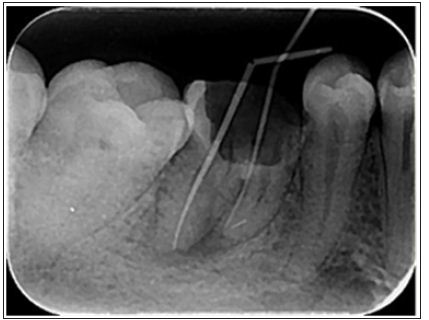
Endodontic instruments, both hand- held and engine-driven, are available for root canal preparation. Since the early 1990s, with the advent of nickel-titanium, various instrument designs and modalities have been produced in this regard [14]. Surface quality is an important factor in the function and durability of NiTi instruments and superficial defects such as metal flash, roll over and cracks may lead to the instrument fracture [15] (Figure1). Electro polishing the surface and coating it with titanium nitride have been recommended for promotion of the surface quality [16,17]. Currently, nanomaterials, with a smaller size, are being suggested for surface modification and reduction the incidence of failure in the rotary nickel-titanium files [18].

Figure 1: A separated nickel-titanium instrument in the mesiobuccal canal of mandibular first molar.

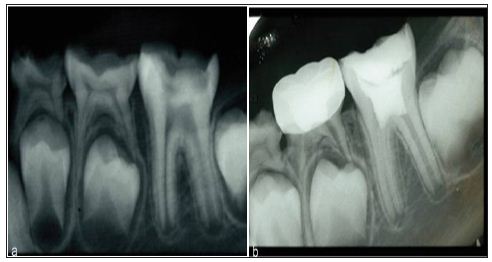
Nanoscaffolds for pulp regeneration, bioceramics for retrofilling, and repair materials are other applications of nanotechnology in the endodontic treatment (Figure 2). Nanorobots and nanoterminators are also new technologies for local anesthesia with fewer side effects and complications [24]. Nanotechnology has revolutionized all aspects of science and endodontic is no exception. Nano sized particles with significantly superior properties compared to the similar materials at larges scales of measurement have improved the quality of treatment. Understanding of dental tissue at the nanoscale, enabling the precise design of materials and instruments with ultrafine architecture and improving the present techniques in clinical dentistry have significantly promoted the quality of treatment.

Figure 2: Deep pulpotomy for apexogenesis. a. Extensive carious exposure in an immature mandibular first molar with a history of spontaneous pain. b. After complete caries removal and hemostasis, the radicular pulp is overlaid with mineral trioxide aggregate (MTA).

Two concerns remain in this regard:

a) Nanotechnology should make its way from laboratories to clinical practice.

b) The significant potential for misuse and abuse of this technology on a scale and scope should not be overlooked.

For More Articles: Biomedical Journal Impact Factor: https://biomedres.us

Journals on Environmental Science

Evaluating Antimicrobial activity of Aloe vera Plant Extract in Human Life

Abstract

Aloe vera is a perennial draught resistant plant containing more amount of gel in fluctuating amount to different season. Aloe plant is containing a variety of mineral elements and calcium, iron, and zinc. Aloe gel also contains polysaccharides, proteins, lipids, sugars, minerals, phenolic compounds, glucomannan and acemannan. Its composition accelerates wound healing, activating macrophages, stimulating immune system as well antibacterial and antiviral effects. Acemannan is effect as indirect anti-microbial activity through its ability and stimulate phagocytic leukocytes. Such types, it has more antimicrobial value like medicines. The aim of this study are evaluating antimicrobial activity of aloe vera gel such as antibacterial, antifungal, and antiviral activity to which solve human problems in life.

Keywords: Aloe Plant; Gel, Antibacterial Activity; Antifungal Activity; Antiviral Activity

Introduction

Aloe vera (A. barbadensis Miller L.) is most biologically active among 400 species [1-4]. The genus Aloe belonging to family Alliaceae is a succulent plant of 80-100cm in height which matures in 4-6 years and survives for nearly 50 years under favorable conditions. The plant is native to southern and eastern Africa along the upper Nile in the Sudan, and it was subsequently introduced into northern Africa and naturalized in the Mediterranean region and other countries across the globe. Aloe is commercially cultivated in Aruba, Bonaire, Haiti, India, South Africa, the United States of America, and Venezuela [1] while the finest quality of Aloe is grown in desert of Southern California. According to World Health Organization (WHO), aloe is the best source for obtaining a variety of drugs [2], because this plant can survive in both hot and cold temperatures. Plant extracts represent a continuous effort to find new compound against pathogens. Approximately 20% of the plants found in the world have been submitted to biological test, and a substantial number of new antibiotics introduced on the market are obtained from natural or semi synthetic resources [3]. Aleo gel is bactericidal against (bacteriostatic) for common wound infecting bacteria (in vitro). The aloin A and B (barbaloin) are 1,8-dihydroxyanthracene glycosides [4], after oral administration these are not absorbed in the upper intestine, and hydrolyzed in the colon by intestinal bacteria. It has following antimicrobial activities which generally observed after oral administration in 6-24 hours.

Anti-microbial Properties: The anti-microbial activity of aloe juice was investigated by agar disc diffusion against bacteria, fungi and yeast [5]. Aloe juice showed anti-bacterial activity against the Gram -ve bacteria (Pseudomonas aeruginosa, Klebsiella pneumonniae, E.coli and Salmonella typhimurium) and Candida albicans (in vitro) A. hydrophilia and E. coli and not against any fungi or yeast tested. Similar results have been obtained for anti-microbial activity of the aloe juice against Gram +ve bacteria by Alemdar and Agaoglu [6] (Mycobacterium smegmatis, Staphylococcus aureus, Enterococcus faecalis, Micrococcus luteus and Bacillus sphericus). Heggers et al. [7] tested Aloe vera gel against ten bacterial strains (Staphylococcus aureus, Streptococcus pyogenes, Streptococcus agalactiae, Escherichia coli, Serratia marcescens, Klebsiella sp., Enterobacter sp., Citrobacter sp., Bacillus subtilis and Candida albicans), at 90% concentration aloe gel that was effective against all the organisms but at the 70% concentration only against S. pyogenes. [8] tested preserved aloe gel extract and an unpreserved aloe extract against Pseudomonas aeruginosa, Enterobacter aerogenes, Staphylococcus aureus and Klebsiella pneumoniae. It was found that preserved Aloe gel extract was more effective in controlling bacterial growth. Aloe vera gel was shown to inhibit the growth of gram positive bacteria, Shigella flexneri and Streptococcus pyogenes [9].

Antibacterial Activity: Aloe vera gel is a bactericidal agent causing against Pseudomonas aeruginosa and acemannan and prevent human lung epithelial cells from adhering in a monolayer culture [10]. Using a rat model, suggested that the antibacterial effect of the Aloe vera gel (in vivo) could enhance the wound healing process by eliminating the bacteria that contributed to inflammation [7]. The aloe extract was potent against three strains of Mycobacterium (M. fortuitum, M. smegmatis and M. kansasi) and a strong antimycobacterial activity against M. tuberculosis as well as antibacterial activity against P. aeruginosa, E. coli, S. aureus and S. typhi. Thus, Aloe secundiflora could be a rich source of antimicrobial agents [11]. Aloe vera was shown to inhibit microbes like Staphylococcus aureus [12], Candida albicans [13] Pseudomonas aeruginosa [14], and Klebsiella pneumoniae. It has indirect antimicrobial property through self ability to stimulate phagocytic leukocytes [15].

Antiviral Activity: Aloe gels are effective antiviral agent in several ingredients, such as acemannan reduced herpes simplex infection in two cultured target cell lines. Lectins fractions of aloe gel directly inhibited the cytomegalovirus proliferation in cell culture, perhaps by interfering with protein synthesis [16]. A purified sample of aloe emodin was effective against infectivity of herpes simplex virus Type I and Type II and it was capable of inactivating all of the viruses, including varicella zoster virus, influenza virus, and pseudo rabies virus [17]. In some cases anthroquinones are treated herpes simplex virus under electron micrograph examination. Such types result is indicated that anthraquinone extract from aloe plant variety directly enveloped viruses. These fluctuations are indirectly effected due to stimulation of the immune system. The anthraquinone aloin also inactivates various enveloped viruses such as herpes simplex, varicella zoster and influenza [18].

Antifungal Activity: Aloe gel is evaluated on the mycelium development of Rhizoctonia solani, Fusarium oxysporum and Colletotrichum coccodes that showed an inhibitory effect of the pulp of aloe vera on F. oxysporum at 104 μl L-1. The liquid fraction is reduced rate of colony growth at a concentration of 105 μl L-1 in R. solani, F. oxysporum and C. coccodes [19]. A fresh leaf extract of A. barbadensis and A. arborescens have anti-fungal potential against Aspergillus niger, Cladosporium herbarum and Fusarium moniliforme and inhibit the growth of fungi [20]. Aloe juices are anti-inflammatory, anti-arthritic activity, antibacterial and hypoglycaemic effects [12] for bacteria inhibit growth of Streptococcus and Shigella species In Vitro. Agarry et al., [12] showed that aloe gel inhibited the growth of Trichophyton mentagrophytes (20.0 mm), while the leaf possesses inhibitory effects in Pseudomonas aeruginosa and Candida albicans. Another aloe constituents are includes saponins. These are soapy substances of gel that capable of cleaning and perform strongly antimicrobial against for bacteria, viruses, fungi and yeasts [21].

Conclusion

Aloe plant have important role in antimicrobial activity in everyday life. Aloe gel is mostly use in humanity for cosmetic, burn and medicinal application. Aloe plant has major role in the promotion of recombinant-DNA based product, targeting compounds of value to be isolated and produced in stable and realistic quantities. Such type aloe is a “wonder plant” because it use in multiple problems like antiseptic, anti-inflammatory agent and help in relieving like diabetes, and being a cosmetic field. The aloe plant is need to a greater research emphasis for better utilization of this plant in humankind welfare, it remains for us to introduce to ourselves and thank the nature for its never-ending gift. Furthermore, study all principles of aloe vera needs to be evaluated in future for scientific using, so that its other therapeutic uses can be widely explored. Isolation and maintenance procedures of aloe products are require special care and these have been established after painstaking efforts.

For More Articles: Biomedical Journal Impact Factor: https://biomedres.us

Journals on Physiology

Soil pH, Ca and Mg Stability and pH Association with Temperature and Groundwater Silicon

Abstract

Objective: It is generally known that pH, Ca and Mg have changed remarkably during 1961-90, but their inter-areal variation seems not have been fully discussed nor explained. Parameters of cropland have been earlier associated with CHD mortality. Silicon (Si) and temperature (Temp) have been earlier assessed with human CHD mortality. In this study we have assessed soil values of 21 Rural Centers (RC) from the 1960’s, 1970’s and 1980’s, [(60’s) (70’s), (80’s)] with respective mean annual temperatures from 1981-2010 and mean groundwater (gw) Si content.

Results: Combined regression by pH(60’s) and pH(70’s) explained pH(80) by 96.8 % (p < 0.001). Ca. (60’s) and Ca.(70’s) explained respectively Ca.(80’s) by 99.3 % (p < 0.001) and Mg.(60’s) and Mg.(70’s) explained respectively Mg.(80’s) by 92.3 % (p < 0.001). Combined regression by Temp and Si explained pH (80’s) by 86.5 % (p < 0.001). Respectively combined regression by Temp and pH (80’s) explained gw Si by 77.5 % (p < 0.001).

Conclusion: Groundwater silicon is associated with the soil matrix factor (sources of groundwater silicon/silicon colloids?), which seems with temperature to explain inter-areal pH variation and obviously is associated with relative local stability of cropland Ca and Mg (and soil fertility). Maybe now is the time to increase Si trials in agriculture.

Abbreviations: RC : Rural Centers; FMI: Finnish Meteorological Institute; ETS: Effective Temperature Sum

Introduction

It is generally known that pH, Ca and Mg have changed remarkably during 1961-90 [1,2,3] but their inter-areal variation seems not have been fully discussed nor explained. Parameters of cropland have been earlier associated with CHD mortality [4]. In this survey based on old statistics has been discovered great stability in inter-RC soil parameters and connection of this stability with temperature and gw Si.

Material and Methods

Soil data is from Eurofins Viljavuuspalvelu as in our earlier publications [1-4]. The soil values [1-3] given as 5 year periods (1961-65, 1966-70,..) were combined to decade periods [(60’s), (70’s), (80’s)]. Values of “(9).Kymenlaakso” and “(10).Etelä- Karjala” were combined to”(9;10).Kymi” by weighting the soil values by their cropland areas in 1988 (4,5). Respectively values of “(17).Keski-Pohjanmaan” and “(18).Oulun” were combined to “(17;18).K-Pohjanmaan, Oulun” and used as such in statistics. Available provincial Si.gw.m data from Geologic Survey of Finland [5] have been changed to approximate RC values by its provincial values as such if RC was totally inside of the province, in other cases by weighting the different Si.gw.w values of different provinces by their cropland areas. Area weights selected for this study as earlier from 1988 [4,5]. The values of RC temperatures were determined by benefiting the map of RCs in Official Statistics of Finland [6] and the map of Finnish Meteorological Institute (FMI) [7], by selecting their central commune and then visually estimating its place between the temperature lines.

Results

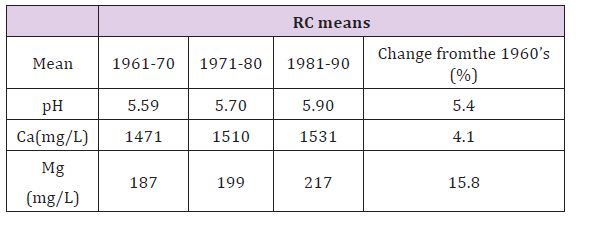
Table 1 shows that the range of periodical changes varied between 5.4 (pH) and 15.8 % (Ca).

Table 1: Changes of the mean RC soil values between the 1960’s and 1980’s.

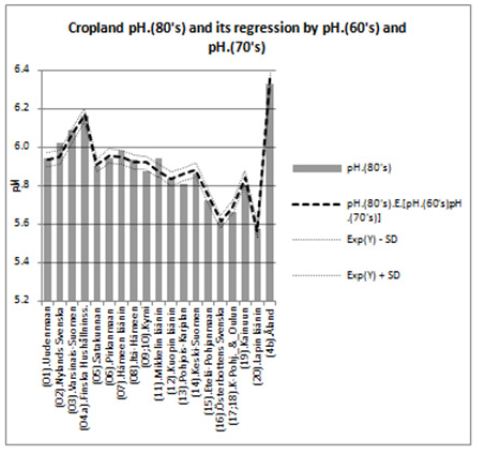
Combined regression by pH (60’s) and pH (70’s) explained pH (80’s) by 96.8 % (p < 0.001).

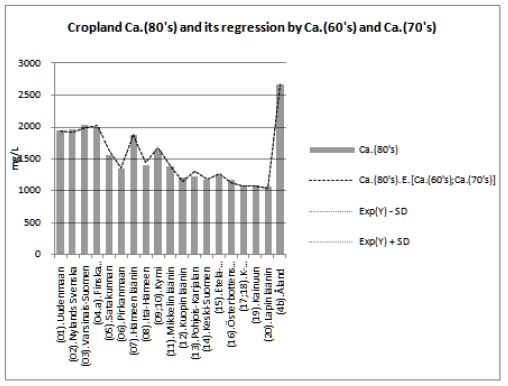
Combined regression by Ca. (60’s) and Ca. (70’s) explained Ca. (80’s) by 99.3 % (p < 0.001)

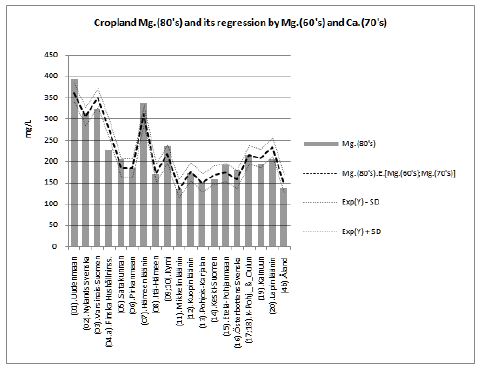
Combined regression by Mg. (60’s) and Mg. (70’s) explained Mg. (80’s) by 92.3 % (p < 0.001)

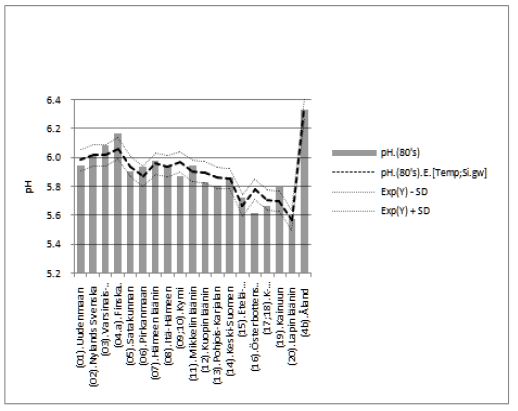
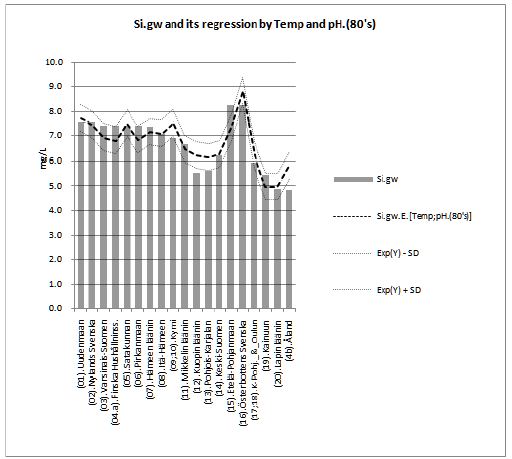
Combined regression by Temp and Si explained pH.(80’s) by 86.5 % (p < 0.001). (Fig.1)

Computation gave equation: pH [Temp; Si (mg/L)] = 6.02 + 0.16*Temp – 0.11*Si (mg/L).

Combined regression by Temp and pH (80’s) explained Si by 77.5 % (p < 0.001):

Computation gave equation: Si (mg/L) = 38.5 + 1.14*Temp – 6.12* pH.

Discussion

Values (60’s) and (70’s) explained inter-RC variations (80’s) in pH, Ca and Mg by 92-99 %. This stability in proportional inter- RC soil values seems not remarkably to have been affected by the equal nation-wide soil liming recommendations. Soil data have been collected by a private enterprise “Viljavuuspalvelu Oy” (since 2014 “Eurofins Viljavuuspalvelu Oy”) depending on the activity of the farmers. Additionally the number of Mg samples was lower than the number of “basic” samples until 1985, e.g. in 1966-70 the number of Ca samples was ca 400,000, but by Mg “only” ca 33,000” [8]. Obviously less biased sample series could show even higher associations, e.g. combined regression by provincial Si.gw and their capital Temp (4) can explain soil pH variation more than 90 %. This proportional inter-RC stability in the soil factors could explain the stability in proportional CHD mortality between provinces [9]. Association of groundwater with local food could (at least have been) promoted by long-root plants like alfalfa and red clover, which could benefit gw better than short-root plants. Evotranspiration (E0) [10] on Finnish croplands varies with the effective temperature sum (ETS) [11]

Figure 1: Combined regression by pH.(60’s) and pH.(70’s) explained pH.(80’s) by 96.8 % (p < 0.001).

Figure 2: Combined regression by Ca.(60’s) and Ca.(70’s) explained Ca.(80’s) by 99.3 % (p < 0.001).

Figure 3: Combined regression by Mg.(60’s) and Mg.(70’s) explained Mg.(80’s) by 92.3 % (p < 0.001).

Figure 4: Combined regression by Temp and Si explained pH.(80’s) by 86.5 % (p < 0.001). Computation gave equation: pH [Temp;Si (mg/L)] = 6.02 + 0.16*Temp – 0.11*Si (mg/L).

Figure 5: Combined regression by Temp and pH.(80’s) explained Si by 77.5 % (p < 0.001): Computation gave equation: Si (mg/L) = 38.5 + 1.14*Temp – 6.12* pH.

E0 = -100 + 0.388 *ETS (mm year-1), i.e. ca 2.5 – 4 million l/ha.

If one million liters of this came from gw, plants could get annually on the average 15 kg Ca, 3.8 kg Mg/ha and 6.5 kg Si/ha [6]. These values respond ca 1/4 of Ca and 1/3 of Mg total supply by fertilizers at the first half of the 1950’s [12] and possibly several folds the Si given in fertilizers, because in the 1970’s Si/Mg ratio in Finnish food was 0.008 [13]. Losses of Ca and Mg have been replaced, maybe now is the time to correct the Si losses [14-16].

Conclusion

Groundwater silicon is associated with the soil matrix factor (sources of groundwater silicon/silicon colloids?), which seems with temperature to explain inter-areal pH variation and obviously is associated with relative local stability of cropland Ca and Mg (and soil fertility). Maybe now is the time to increase Si trials in agriculture.

For More Articles: Biomedical Journal Impact Factor: https://biomedres.us

Journals on Dental Medicine

All-Ceramic versus Metal-Ceramic Tooth Supported Single Crowns with a Minimum Follow-Up Time of 3 Years; Survival and Complications: A Systematic Literature Review

Abstract

Purpose: To assess the 3-year survival rates and the incidences of biological and technical complications of all-ceramic and metal-ceramic tooth-supported single crowns.

Material and Methods: An online research of literature on Pub med was conducted independently by 3 reviewers to identify the clinical studies performed from 2000 up to 2017 and completed by a manual research. Keywords, inclusion and exclusion criteria were well-defined.

Results: The research revealed 501 titles and led to a final analysis of 31 full text articles. Only 6 studies met the inclusion criteria and reported on 215 metal-ceramic and 501 all-ceramic TSSCs. The meta-analysis of the included studies indicated an estimated survival rate of metal-ceramic TSSCs of 90.14% (95% CI: 89.72%-91.35%) after 3 years. This was a little bit higher than the estimated 3-year survival rate of Lithium-disilicate (89.54%; 95% CI: 87.18%-91.89%). However the 3-year survival rate, of Zirconia TSSCs was statistically much higher (92.01%; 95% CI: 89.58-94.43%). When the outcomes in anterior and posterior regions were compared, Zirconia and Lithium-disilicate TSSCs exhibited survival rates of 91.64% and 91.12% respectively, in the posterior region, where metal-ceramic TSSCs exhibited only 90.14% as a 3-year survival rate. As for the anterior region, we could only compare the TSSCs made out of Lithium-disilicate and Zirconia as the metalceramic ones were all laid on the posterior regions. Zirconia performed the highest 3-year survival rate in the anterior region (93.54%; 95% CI: 91.08-96%) whereas Lithium-disilicate showed only 87.5%. This was due to the low level of the mechanical properties of such material, which clinically indicated by major chipping and tooth fracture.

Conclusion: Survival rates of metal-ceramic crowns were nearly similar to those reported for most types of all-ceramic TSSCs in the posterior region. Weaker Lithium-disilicate-based ceramics should be limited to application in the anterior region, even if they expressed a higher survival rate in the anterior regions. Zirconia-based TSSCs should not be considered as a primary option due to their high incidence of technical problems.

Keywords: Tooth-supported single crowns; Fixed dental prosthesis; All-ceramic; Metal-ceramic; Survival; Technical complications; Biological complications

Introduction

Nowadays; all ceramic prostheses are considered as an established alternative compared to metal-ceramics. They offered more favorable esthetics by miming so naturally the optical properties of teeth [1].

Another more recent factor influencing the choice of ceramic materials is the pronounced cost for high precious metals as gold. The main defect of the firstly introduced ceramics as the feldspathic ones was the mechanical stability that limited the indication for all ceramic restorations to anterior regions and to single units fixed dental-prostheses. In the last years, many new dental ceramic materials were developed in order to increase the mechanical stability of the all-ceramic restorations and still maintaining the esthetic benefit. Among those materials; leucite/lithium-disilicate glass ceramics and oxide ceramics such as alumina and Zirconia that appeared to be very promising for different indications [2,3]. Reconstructions made of these more recently developed ceramics were placed at posterior sites and even included multiple-unit fixed dental-prostheses. Our systematic review focused on toothsupported single crowns, as the published studies reporting on this type of FDPs, were so limited and our objective was to obtain an estimate of the long term success, survival and complication rates of all-ceramic single crowns versus the metal-ceramic ones over an observation period of at least 3 years and to compare the biological and technical complication rates of all-ceramic TSSCs with the ones made out of metal-ceramic.

Material and Methods

An electronic literature search was carried out from the data banks MEDLINE, using the database Pub Med. The indexing language based on keywords has been used according to the formula ‘’PICO’’

The keywords were used after being audited if they were MeSH ones.

The formula PICO: Population, Intervention, Comparison and Outcomes, the ‘’PICO’’ for this systematic review was defined as follows:

Population: Anterior and/or posterior tooth-supported single crowns.

Intervention: All-ceramic tooth-supported single crowns.

Comparison: Metal-ceramic tooth-supported single crowns.

Outcomes: Clinical survival rates, and technical and/or biological complication rates.

The search was limited to human studies in dental journals written in English language. Articles published from 2000 up to 2017 and including the inclusion criteria.

The following detailed search terms were used and the search strategy was follows:

P and I: crowns[MeSH] OR crown[MeSH] OR dental crowns[MeSH] OR crowns, dental[MeSH] OR Denture, Partial, Fixed[Mesh])) OR (crown*[all fields] OR fixed partial denture*[all fields] OR FPD[all fields] OR FPDs[all fields] OR fixed-dental prosthesis[all fields] OR fixed dental prostheses[allfields] OR FDP[all fields] OR FDPs[all fields] OR bridge*[all fields].

C: Ceramic [MeSH] OR ceramics [MeSH] OR metal-ceramic restorations [MeSH])) OR (ceramic*[All Fields] ORall-ceramic [all fields] OR Dental Porcelain[All Fields] OR metal-ceramic[All Fields].

O: Survival [Mesh] OR survival rate [Mesh] OR survival analysis[Mesh] OR dental restoration failure[Mesh] OR prosthesis failure[Mesh] OR treatment failure[Mesh].The combination in the builder was set as ‘’P & I AND C AND O’’.

Titles and abstracts of the searches were independently screened by two reviewers for possible inclusion in the review. Furthermore, the full text of all studies of possible relevance was then obtained and spilt into literature on single crowns. The literature on single crowns was independently assessed by three of the reviewers. Any disagreement regarding the assortment articles was resolved by discussion.

Inclusion criteria

a) The additional inclusion criteria for study selection were:

b) Studies with a minimum mean follow-up period of 3 years.

c) Prospective studies.

d) Randomized Controlled Trial.

e) Cohorts.

f) Studies between 2000 and 2017.

g) Studies reported details on the characteristics of the reconstructions, on materials and methods, on the biological complications and their appearance and on the results.

h) Studies had to include and follow-up at least 10 patients.

i) Patients of studies had been examined clinically at regular intervals.

j) Studies on tooth-supported single crowns, fixed units with metal and ceramic frameworks were considered.

k) Data on the survival and failure of TSSCs and descriptions of the biological and technical complications had to be reported.

Exclusion criteria

The following study types were excluded:

a) In vitro or animal studies.

b) Studies with a mean follow-up time less than 3 years.

c) Clinical or case reports.

d) Narrative review.

e) Retrospectives studies.

f) Fixed implant prosthesis.

g) Partial removable dentures.

h) Plural fixed dental prosthesis (PFDPs).

Data extraction

Data on the following parameters were extracted: Author(s), Title, Journal, Year of publication, Study design (cohort, metaanalysis, randomized controlled clinical trials, prospective case series, prospective study, and prospective clinical study), Population (Planned number of patients, Sex, Age), number of patients at the end of the study, Drop-out rate, Mean age, Operators (practitioners), Material framework, Brand name of framework material, Veneering material, Brand name of veneering material, Type of manufacturing procedure, Number of single crowns, Location of single crowns (anterior, posterior, maxilla, mandible), Reported mean followup time, Published single crowns survival rate, Number of single crowns lost (total, anterior, posterior), Reported biological complications (caries, periodontal and endodontic diseases, root fracture, tooth fracture, marginal discrepancy), Reported technical complications (framework fracture, minor chipping, major chipping, loss of retention), Reported number of TSSCs free of complications, Specificity of the study, Aesthetic properties, Biological properties.

Statistical analysis:

Survival was defined as the tooth-supported single crowns remaining in situ with or without modification during the observation period. Failures included every type of complication that lead to the removal or the replacement of the restoration or the loss of the tooth. Complication may led or not to a failure. Failure and complication rates were calculated by dividing the number of events (failure or complication) in the numerator by the total toothsupported single crown exposure time in the denominator.

The numerator could usually be extracted directly from the publication. The total exposure time was calculated by talking the sum of:

a) Exposure time of tooth-supported single crowns that could be followed for the whole observation time.

b) Exposure time up to a failure of the tooth-supported single crown that were lost due to failure during the observation time.

c) Exposure time up to the end of observation time for toothsupported single crowns that did not complete the observation period due to reasons such as death, change of address, refusal to participate, non-response, chronic illnesses, missed appointments and work commitments.

For each study, event rates for the tooth-supported single crowns were calculated by dividing the total number of events by the total tooth-supported single crown exposure time in years. The total exposure was determined by multiplying the total number of tooth-supported single crowns by the mean follow-up time, no more precise information. For further analysis, the total number of events was considered to be Poisson, disturbed for a given sum of tooth-supported single crown exposure years and Poisson regression with a logarithmic link-function with a total exposure time per study as an offset were used [4].Robust standard errors were calculated to obtain 95% confidence intervals of the summary estimates for the event rates [4,5].

To assess heterogeneity of the study specific event rates, the Spearman goodness-of-fit statistics and associated p-value were calculated. If the goodness-of-fit p-value was below 0.05 three year survival; proportions had been calculated via the relationship between event rate and survival function S, S(T)=exp(-T* event rate), by assuming constant event rates [5]. The 95% confidence intervals for the survival proportions were calculated by using the 95% confidence limits of the event rates. Multivariable Poisson regression was used to formally compare construction subtypes and to assess other study characteristics. All analyses were performed using Stata®, version 13.1.

Results

The research on MEDLINE using the Boolean-equation had identified 501 articles. During the preselecting step, 437 articles were excluded based on titles and the year of publication. After reading, other 33 articles were excluded based on the exclusion criteria adopted in the study. Among the 31 selected articles, only 3 corresponded to studies on tooth-supported single crowns. 3 more articles were added based on manual research. (Figure 1) Among the 6 selected articles, 4 corresponded to Prospective clinical studies [6-9], one to a Randomized controlled trial [10] and another one to a Prospective case series [11], evaluating 3 to 15 years follow-up of the single restorations with all ceramic and metal ceramic materials. The articles included in this systematic review are listed in Table 1 by author, study design and patient characteristics.

Figure 1: Research strategy and included studies on TSSCs.
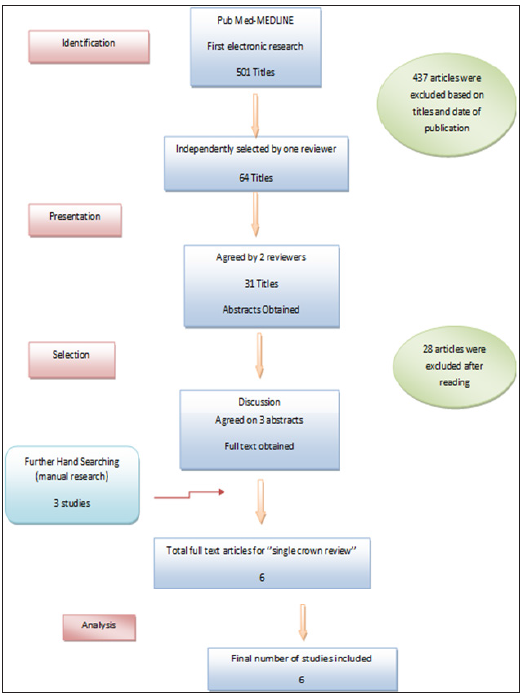
Table 1: Study and patient characteristics of the reviewed studies of tooth-supported single crowns.
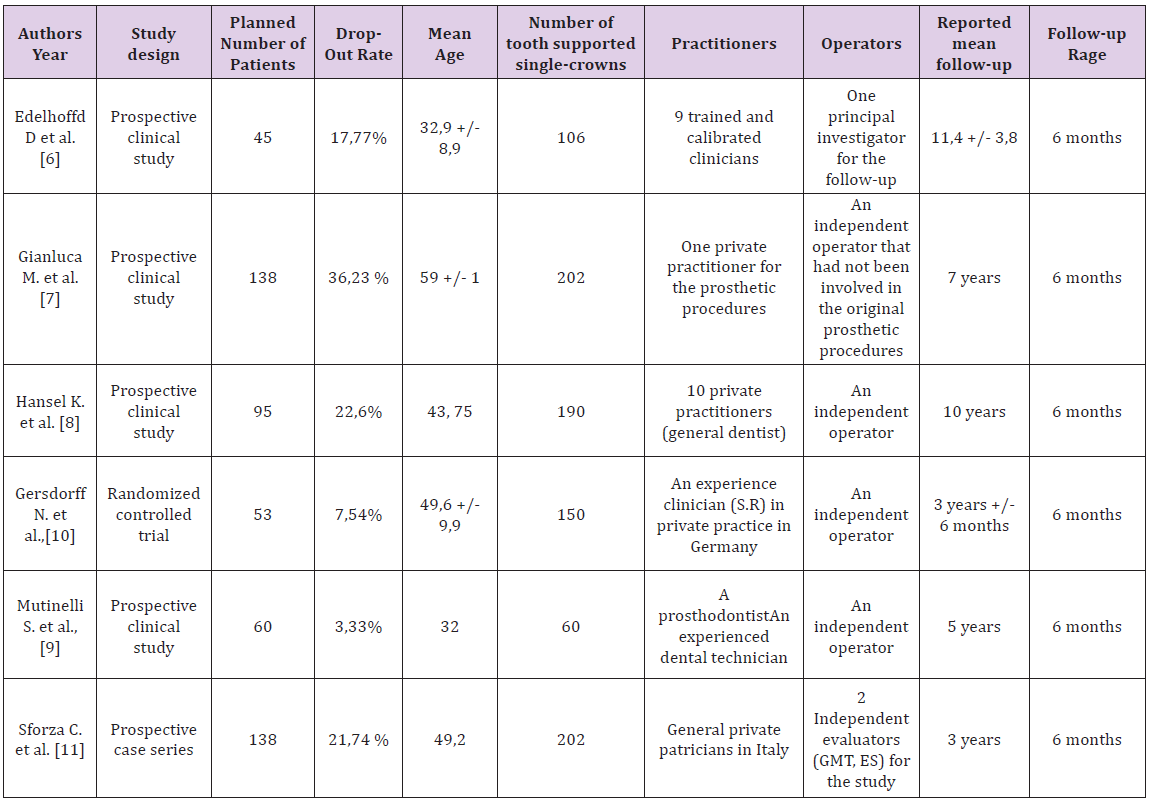
The 6 clinical studies included one 15-years follow-up [6], one 10-years follow-up [8], one 7-years follow-up [7], one 5-years follow-up [9] and two 3-years follow-up [10,11]. The studies included patients between the age of 32 and 60 with a follow-up rage of 6 months. The proportions of patients, who could not be followed for complete studies periods or at least 3 years, were calculated for all studies as a Drop-out rate and ranged from 3.33 % to 36.23 %. (Table 2) According to material and manufacturing procedures, two studies compared all-ceramic crowns made out of zirconia (one study on CAD/CAM System; cercon smart ceramics˖) [10] the remaining on Procera and Lava systems [9], to metal ceramic crowns [9,10]. Furthermore, one study was reporting on metal-ceramic tooth-supported single crowns [8], one on crowns made out of Lithium with IPS e-max press [6] and two on crowns made out of Zirconia with the CAD/CAM technology [7,11] (Table 2).

Table 2: Study and tooth-supported single crowns characteristics.
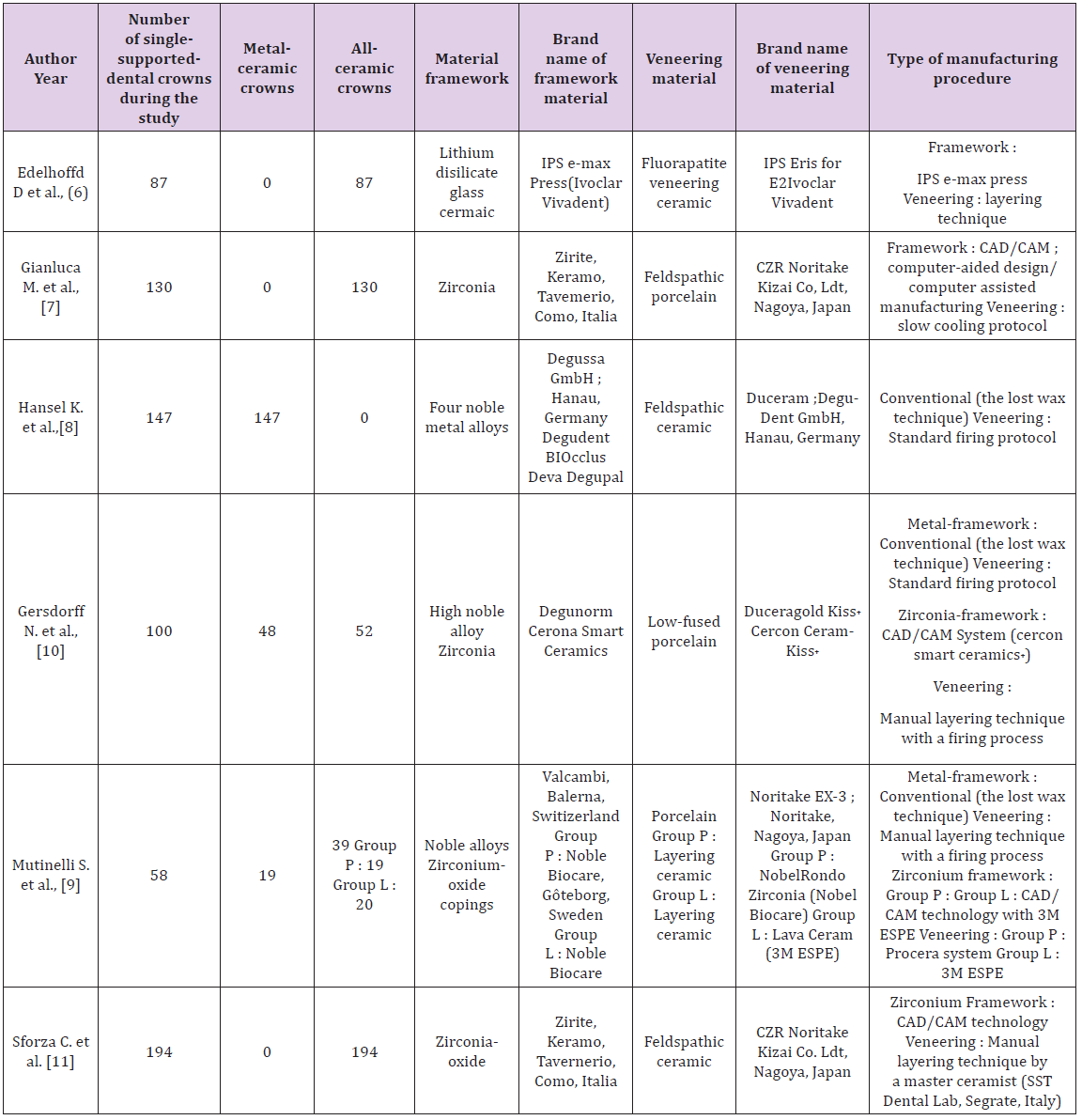
For metal-ceramic TSSCs only noble metal or high noble metal alloys were used for the framework; based on the conventional lost wax technique [8-10] and the veneering was based on the manual layering technique with a standard firing process (Figure 2), using ; feldspathic ceramic [8], low fused porcelain [10] and non-specific porcelain [9] (Table 2).For all-ceramic TSSCs the layering material used during the various studies was as follows: fluorapatite veneering ceramic [6], feldspathic porcelain [7,11] and layering ceramic [9,10]. The veneering technique was based on manual layering [6-11] (Figure 2), the slow cooling protocol [7] and various CAD/CAM manufacturing procedures such as Procera system and 3M ESPE [9] (Table 2). In all included studies, preparation guidelines according to the manufacturer’s recommendation were considered. Different measurement methods were used to exanimate the TSSCs at the recall appointments; in order to identify the technical and biological complications. In two studies [7, 8] remarkable complications of TSSCs were discovered and the criteria used were not specified. For biological and technical complications the California Dental Association criteria (CDA) was used in one study, in the company of periodontal parameters [14] such as plaque index, gingival index [6]. The technical complications were evaluated according to Heintz/Rousson 2010 chipping criteria in two studies [6, 10]. The United States Public Health Service (USPHS) criteria were used to evaluate technical issues in one study [9]. Both technical and biological complications were defined based on a specific clinical evaluation according to Hickel et al. in one study [11].The estimated survival rates of 716 TSSCs ranged from 80% to 93.54%. Which were predominantly posterior single reconstructions? (Table 3).

Figure 2: Tooth-supported single- crowns mean follow-up time according to material.
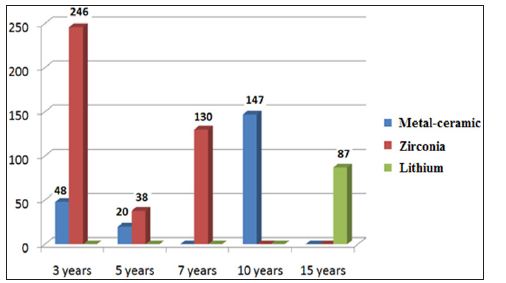
Crown survival

Overall, in the 3 studies [8-10] reporting on MC TSSCs with a mean follow-up of 7 years ± 6 months. An estimated annual failure rate of 0.051 was reported, translated into an estimated 3-year survival of metal-ceramic crowns of 90.14%. In comparison, all ceramic crowns had an annual failure rate ranging between 0.015 and 0.15, translating into overall estimated 3-year survival rates ranging between 80% and 93.54% (Table 3). This was based on 5 studies [6-11] on all-ceramic crowns included in this analysis (Table 3). The survival rates of all-ceramic crowns differed for the various types of ceramics. One study [6] reported on Lithium glass ceramic and rendered an estimated 3-year survival rate of 89.54%. This survival rate was a little bit lower than the one reported for the gold standard, metal-ceramic crowns (Table 3).Tooth-supported single crowns made out of zirconia had a significantly higher estimated 3-year survival rate compared to metal-ceramic crowns. The zirconia-based crowns reached an estimated 3-year survival rate of 92.01% (Table 3). Table 3: Annual failure and survival rates of single crowns (estimated evaluation after 3 years). Anterior vs. posterior regions TSSCs were distributed as 103 crown in anterior regions and 603 crown in posterior regions. The distribution of TSSCs according to material was as follows: none of MC TSSCs; 38 crowns were made of lithium [6] and 65 of zirconia [7-11].For the posterior regions we have, 215 metal-ceramic single crowns [8-10] and 388 all-ceramic crowns [6-11], in which 49 crown were made out from Lithium [6] and 339 from zirconia-oxide and zirconium [7-11]. When outcomes of anterior and posterior tooth-supported single crowns were compared no statistically significant differences of the survival rates were found for metal-ceramic crowns, as they were all made on posterior regions for the 3 studies analyzed (Table 4). For the entire 215 MC TSSCs posed in the posterior region, we had an estimated failure rate of 0.015. For the crowns made out of Lithium, there was a significant difference of survival rates between anterior region, which exhibited an estimated 3-years survival rate of 87.5% and the posterior region with an estimated 3-year survival rate of 91.12%. 38 crowns made out of Lithium and posed in anterior region, showed a higher estimated annual failure rate of 0.079 compared to the 49 crowns posed in posterior region, which showed a failure rate of 0.04 (Table 4). Table 4: Annual failure rates and survival 3 year estimates of crowns placed anterior and posterior. Crowns made out of Zirconia, showed significantly lower survival rates in the posterior region than the anterior (93.54 % vs. 91.64 %). 65 crowns were posed in the anterior region with a failure rate of 0.015, which was lower compared with the 339 crowns posed in the posterior region and showed a failure rate of 0.035 (Table 4). For all-ceramic crowns there is no significant difference of survival rates between anterior and posterior regions (91.31% vs. 91.57%).For the total number of TSSCs, there was no statistically difference between the anterior and the posterior regions, which exhibited 3-year survival rates of 91.31% vs. 91.06% respectively (Table 4). Over all, in the anterior region, the crowns made out of Lithium showed lower 3-years estimated survival rate compared to SCs made out of Zirconia (87.5% vs. 93.54%). Whereas in the posterior region the several types of SCs could be compared and showed a statistically difference between the MC SCs and those made out of Lithium and Zirconia, with 90.14% vs. 91.13% and 91.64% as a 3-years estimated survival rates, respectively. Finally to summarize, we could compared all-ceramic and the metal-ceramic SCs only in the posterior region, as none of the metalceramic crowns were placed on the anterior. A 3-year estimated survival rate was calculated as an over-all result for both MC SCs and CC SCs and showed a statistically difference between both of them (90.14% VS 91.57%) (Table 4). Technical and biological complications Table 5 and 6 display an overview of the incidences, the estimated annual complication rates and the cumulative 3-years complication rates of technical and biological complications for metal-ceramic and the two types of all-ceramic TSSCs, as well as the statistical differences between the crown types. Technical complications: Non optimal margin, marginal discrepancy, minor and major chipping, crown fracture, post fracture, loss of retention, anatomical form and ‘’the coping fracture, the veneering fracture the occlusal wear, the marginal adaptation and the anatomical form’’ according to the USPHS criteria (Table 3) and described as Bravo (B).The solutions adopted for the different technical complications were: a) A clinical check-up for the non-marginal adaptation was adopted as a solution for a one case reported as an all-ceramic SC made out of Lithium during a mean follow-up time of 11.4 ± 3.8 years in one study [6], no clinical or technical intervention was need. b) The minor chipping was the most common complication reported and the polishing of ceramic was the solution to adopt for 2 metal-ceramic single crowns reported in one study [10,11] single crown made out of Lithium [6] and 4 single crowns made out of Zirconium [7,10]. c) The loss of retention were reported for 9 all-ceramic crowns in two studies [6,7]; 4 crowns had been lusted adhesively and 2 had been cemented conventionally [6] for the 3 crowns reported in the second study [7] the technique of cementation was not mentioned. d) The unsatisfying anatomical form and contact point was reported on 152 all-ceramic single crown made out of Zirconium and zirconia-oxide in on study [11], no intervention was need, only a clinical follow-up was planned based on crown check-up and hygiene motivation. e) The Bravo criterion reported on the minor chipping, the occlusal wear, the slight probe catch and the slightly contoured according to the USPHS criteria (Table 3); was considered as technical complication affected one metal-ceramic single crown and 7 all-ceramic single crowns made out of zirconium with the Lava and Procera systems (Figure 3) in one study [9]. The polishing and the clinical control were the solutions to adopt. Figure 3: Survival rates by 3 years; Anterior versus posterior regions according to materials The major chipping, the crown fracture, the post fracture and the marginal discrepancy were reported as failure and the crown replacement was need. Charlie and Delta criterion according to the USPHS criteria were reported as failure and the loss of crown was a fact [9]. I. 7 crowns were lost by major chipping ; 4 crowns made out of Lithium [6], one crown made out of zirconium [10] and 2 metal-ceramic SCs [8]. II. The crown fracture was reported in two studies [6,8] and affected one all-ceramic crown made out of Lithium [6] and 2 metal-ceramic SCs [8]. III. The crown replacement by marginal discrepancy was reported on one crown made out of Lithium [6] as well as the post fracture. IV. For Charlie and Delta (Table 3) according to USPHP criteria; 9 crowns were lost in which 2 metal-ceramic crowns and 7 all-ceramic crowns made out of Zirconium [9]. According to Table 5; the ceramic chipping was a common problem, and overall occurred similarly at the metal-ceramics and the all-ceramic crowns. Furthermore, for metal ceramic crowns, minor chipping was the most frequent technical complication with a cumulative 3-years event rate of 0.88% (95% CI: 0-2.69). For allceramic a tendency to major chipping of the veneering ceramic was more observed for Lithium than the zirconia oxide (2.18% VS 0.23%), opposite to minor chipping with 0.68% cumulative 3-year event rate for Zirconium crowns vs. 0% for the Lithium ones. Crown fracture rarely occurred for metal-ceramic crowns (cumulative 3-year complication rate 0.44%; 95% CI: 0-1.34%). Overall, this problem occurred significantly more often for ceramic crowns. The Lithium glass ceramic exhibited the highest 3-year crown fracture rate of 1.09% (95% CI: 0.85-2.75%) when the Zirconia-based single crowns showed only 0.68% as an event rate. (95% CI: 0-1.6%). With the exception of zirconia-based crowns, loss of retention was not a predominant technical problem. Only crowns made out of zirconium exhibited loss of retention during a 3 years follow up time (estimated 3-year complication rate 0.23%; CI: 0-1.08%). Only zirconia TSSCs exhibit an unsatisfying anatomic form as a technical complication with a 3-years event rate of 34.87% (95% CI: 19.03- 50.73%) (Table 5). Table 5: Overview of technical complications for different types of SCs. All-ceramic vs. metal-ceramic technical complications According to (Table 7); ceramic chipping affected much more the metal-ceramic crowns than the all-ceramic crowns with a cumulative 3-years complication rate of 0.88% vs. 0.56% for minor chipping and 0.44% vs. 0.37% for major chipping. For crown fracture the all-ceramic crowns exhibit a superior cumulative 3-years complication rate compared to metal-ceramic crowns (0.75% vs. 0.44%). The loss of retention, the marginal discrepancy and the clinically controlled not-satisfying form and contact point affected only the all-ceramic crowns with a cumulative 3-years complication rate of 0.19% (95%; CI: 0.00-0.89%), 0.18% (95%; CI: 0.00-0.5%) and 28.82% (95%; CI: 15.72-41.92%) respectively. For the USPHS (Table 3), the criterions Bravo, Charlie and Delta were considered as technical complications that leaded to clinical control, intervention and loss of the crown respectively and they occurred significantly more often for all-ceramic crowns than metal-ceramic ones (2.08% vs. 0.88%). During the 3-years follow-up time, metal-ceramic TSSCs a superior rate of SCs free of technical complication in comparison with the all-ceramic ones. (92.36% vs. 62.05%) Biological complications Loss of abutment tooth vitality, abutment tooth fracture, endodontic and periodontal infections, recurrent caries lesions, lesion of the adjacent mucosa and extraction due to infection (caries, periodontal or endodontic infections), were reported as biological complications for TSSCs. The solutions adopted for different biological complications were: (Table 10) Root treatment for crown laying in 14 posterior metal-ceramic TSSCs [10] and 9 posterior all-ceramic TSSCs made out of zirconium.5 TSSCs were canal treated for endodontic infection; 2 anterior TSSCs made out of Lithium [6], one metal-ceramic TSSC and 2 all-ceramic TSSCs made out of zirconium [10]. A periodontal treatment was adopted for the several periodontal infections and diseases on 3 posterior Lithium TSSCs [6] and 48 posterior Zirconia TSSCs. [11]Only one case was reported for recurrent caries treatment on one TSSCs made out of zirconium. [7]The lesion of the adjacent mucosa was clinically controlled on 40 posterior Zirconia TSSCs. [11] the tooth fracture and the extraction due to infection (recurrent caries, periodontal and endodontic diseases) were reported as failures, during the different studies (Table 7). Two anterior abutment teeth were lost by fracture with crowns made out of lithium. [6] 28 TSSCs were extracted due to infections (periodontal and endodontic diseases and recurrent caries). 13 lithium TSSCs [6], 4 Zirconia TSSCs [7,10] and 11 metal-ceramic TSSCs. [8,10] According to Table 6; the periodontal diseases were common biological complication and the most frequent for Zirconia TSSCs (3-year complication rate 11.24%; 95% CI: 7.71- 14.76%). This problem less frequently occurred for lithium and metal-ceramic TSSCs with 3-year complication rate of 1.09% and 0.85% respectively. In addition, the marginal discrepancy and the lesion of the adjacent mucosa were also predominantly found for Zirconia TSSCs (3-year complication rate 9.17%; 95% CI: 6.73- 11.62%). This complication occurred significantly less frequently for Lithium with 3-year complication rate of 1.09% (CI: 0.85- 2.75%) and not existing for metal-ceramic TSSCs. Furthermore, the endodontic diseases were a common biological problem for the different types of TSSCs, with a cumulative 3-years complication rates for Metal-ceramic, Lithium and Zirconia of 2.2%, 1.09% and 0.46% respectively. The loss of vitality by root-canal-treatment for prosthodontic reasons affected only the Zirconia and the metalceramic TSSCs and showed a cumulative 3-years complication rates of 2.06% and 6.18% respectively. Finally, tooth fracture affected only the Lithium TSSCs with a cumulative 3-years complication rate of 1.09%; CI: 0.85-2.75%, when the caries affected the TSSCs made out of metal-ceramic and Zirconia with cumulative 3-years complication rates of 0.88% and 0.92% respectively. Table 6: Overview of biological complications for different types of SCs. All-ceramic VS metal-ceramic biological complications According to Table 7; endodontic and periodontal diseases, caries and loss of tooth vitality for prosthodontic reasons were the most common biological complications for all-ceramic and metalceramic TSSCs. Periodontal diseases occurred significantly high frequently for all-ceramics with a cumulative 3-years complication rate of 9.48% (95%; CI: 6.37-12.2%), when metal-ceramic TSSCs showed only a cumulative 3-years complication rate of 0.85% (95%; CI: 0-1.09%).For marginal discrepancy and the affection of adjacent mucosa, only all-ceramic crowns showed the unfolding of this event with a cumulative 3-year complication rate of 7.77% (95%; CI: 5.7-10.08%).Endodontic diseases affected both metalceramic and all-ceramic TSSCs, with a 3-year complication rate of 0.85% VS 9.48%, respectively. The loss of abutment tooth vitality for prosthodontic reasons, was also a common problem, but significantly occurred on metal-ceramic TSSCs compared to the allceramic ones (6.18% VS 1.7%).Recurrent caries were a rare event, but affected both metal-ceramic and all-ceramic TSSCs with a 3-year cumulative complication rate of 0.88% VS 0.76%, respectively. The tooth fracture happened only on all-ceramic TSSCs with a 3-year cumulative complication rate of 0.18%.Metal-ceramic TSSCs showed a 3-years free-biological event rate of 84.89%, when allceramic TSSCs showed only 74.73%. Table 7: Overview of technical and biological complications for metal-ceramic versus all-ceramic TSSCs. Discussion This systematic review focused on the results of prospective clinical studies and case series [9,10] that would compare head-tohead the different core materials of TSSCs along with a randomized controlled trial. Retrospective and in vitro studies, narrative review, case and clinical reports and studies with a mean follow-up period less than 3 years were excluded to summarize the available information about survival and complication rates of TSSCs after a period of at least 3 years. Even with follow-up time of at least 3 years, some clinicians may argue that such a period is still too short to obtain reliable information on survival and complication rates [12,13]. After an observation period of 3 years, the lowest annual failure rates were seen for Zirconia TSSCs (0.031 per 100 SCs years). Multivariable random-effect Poisson’s regression showed that Lithium TSSCs had significantly higher annual failure rates of about 0.057 per 100 SCs years. Furthermore, the analyzing study reporting on lithium TSSCs [6] with a mean follow-up time of 11.4 +/- 3.8 years had expressed an annual failure rate about 0.195 per 100 SCs years, translating into 10-year survival rate of 89.7%. This highest statistically significant failure rate of TSSCs may have his origin from the limited indication of the Lithium disilicate at the posterior regions. This study evoked the potential updating indication of such core material at the posterior regions. But it is still always limited especially for molars because of the high fracture rates. For Gianluca M [7] Reporting on zirconia TSSCs with a 7-year mean follow-up time, a failure rate of 0.054 per 100 SCs years had been reported. When Mutinelli S et al. [9] had reported an annual failure rate of 0.105 for CC TSSCs made by the Lava system, while the Procera ones had a failure rate of 0.201 for a 5-years mean follow-up time. This difference may have cause from the several types of manufacturing procedures. One study reported on zirconia TSSCs with a failure rate of 0.015 by 3 years, this statistical expressed difference amounts to both the observation period and the laying sites (posterior and anterior regions). The choice of zirconia as a core material for SCs, both in posterior and anterior sites, has been increasing over time with clinical results that seem quite comparable to the gold standard MC TSS restorations, although clinical trials are very few, to date specially on TSSCs. Zirconia SCs showed a success rate of 93% after a 2 years observation period, with a favorable soft tissue response, in a limited sample size of 15 Cercon crowns (DENTSPLY Degudent, Hanau, Germany). Another investigation with a longer observational period (3 years), performed on 204 Procera zirconia SCs delivered in a private practice, showed a survival rate of 93%; in this study, 16% of complication were recorded (6% loss of retention, 2.5% extraction of abutment teeth, 5% persistent pain, 2% porcelain chipping) [14]. For the MC gold standard, a clinical observation of 10 years mean follow-up time [8] had expressed a failure rate of 0.054 per 100 crowns which remain the same during the first 3 years of this study. For another one with a 5-years mean follow-up time; TSSCs had a failure rate of 0.1 per 100 crown which had been expressed lower in the first 3-years of observation (0.05 per 100 crown) [9]. This result was caused by the occurrence of biological complications. MC TSSCs had expressed a highest annual failure rate compared to the zirconia ones (0.051 vs. 0.031 per 100 crown), this is due to the occurrence of biological complications such as recurrent caries, periodontal and endodontic diseases and specially the lost of the abutment tooth vitality. Even if we cannot ignore that Zirconia SCs had expressed much more biological complications specially periodontal diseases in population of 414 TSSCs analyzed during this study, this can only be the fact of the precision of fit for a such material which depends on various factors, like; differences in manufacturing systems, individual characteristics of the SCs (regions), core-porcelain ratio, framework architecture, effect of veneering and influence of aging in same reported cases. As to softmachined 3Y-TZP restorations, the precise numerical compensation required by such a system of the enlargement ratio of the model is a paramount factor, strictly dependent also on the composition and homogeneity of pre-sintered zirconia blanks that should be consistent and precise [1]. Overall the lithium TSSCs had expressed a closer failure rate to the MC ones. But it is still higher compared to the gold standard SCs (0.057 vs. 0.051). This may due to the occurrence of technical complications on Lithium TSSCs in anterior regions. Technically, ceramic chipping, crown fracture and unsatisfactory anatomic form were the main complication of the all-ceramics. This problem was most specifically found when weaker ceramic materials were used. [6] The same observation was made when the outcomes of the SCs in anterior and posterior regions were compared. Metalceramic SCs performed a higher failure rate comparing to lithium SCs when it comes to the posterior regions (0.051 VS 0.04) whereas the Zirconia ones had the lowest annual failure rate (0.035 per 100 crown).For the anterior regions we can only compare the CC TSSCs, as the MC ones were all laid in the posterior regions. (Table 7) Biologically, all-ceramic TSSCs seemed to perform better than the gold standard, MC SCs. Significantly more loss of abutment tooth vitality and endodontic diseases was reported for MC TSSCs. While periodontal affections and tooth fracture, were more expressed on CC TSSCs especially to the Zirconia ones. This is caused by the unsatisfactory anatomic form of the last mentioned type of SCs. (Figure 3). In the present review, 3 studies [8-10] on posterior MC TSSCs were available as well as a few numbers of studies evaluating allceramic TSSCs [6-11]. The results of the present review, hence, may be considered more robust with more impact of the daily practice and on pending further studies. In present review, it was shown that all-ceramic crowns made out of Lithium can be recommended as an alternative treatment option to the MCs for TSSCs in anterior and posterior regions [6]. But still less stable in the posterior sites, so they are remaining until now, for anterior indication. Hansel K [8] had evoked another factor that may affect the choice of the core material which is Bruxism. MC TSSCs showed good longevity on vital posterior teeth especially in the case of Bruxism. This may due to the amortization properties of the gold standard SCs. The review also indicated that zirconia based SCs performed less well in clinics, despite the enhanced mechanical stability of this oxide ceramic. Failure due to extensive fracture of the veneering ceramic, loss of retention and non-satisfying anatomic form were found as technical problems for this type of ceramic crowns. The more recent clinical studies showed that despite all developments and efforts for the improvement of the veneering procedures of zirconia and lithium frameworks, the problem of chipping ceramic has not been eliminated yet [12-14]. The trend toward an increasingly extended use of all-ceramic SCs is an undeniable reality in FDPs. After the development era, dental ceramics introduced in the last 20 years exhibit different, favorable and promising esthetic and mechanical properties. At the moment, there is no one ceramic material that equally excels in all these characteristics. The choice of one specific typology of ceramic, rather than the latest fashion, should be based on a careful evaluation of the very advantages and disadvantages of the material related to the specific dental application [14]. Consequently, allceramic TSSCs should not be considered as the primary treatment option for now, and patients need to be thoroughly informed about current limitations. Another factor influencing the choice of the material for TSSCs in daily clinical practice is the biological outcome of the reconstructions.

For More Articles: Biomedical Journal Impact Factor: https://biomedres.us