Journal of Orthodontics

Assessment of Microbial Contamination if “As Received” and “Bench-Top Exposed” Orthodontic Materials: A Vitro Microbiologic Investigation| The role of Sterilization is indispensable in daily clinical practice. Although all the instruments used in Orthodontics, as in dentistry, are sterilized before use, the same is not true for orthodontic archwires, brackets, and bands. The orthodontic materials are used “as received” from the manufacturers, often with the assumption that the level of hygiene in the manufacturing process and subsequent transportation is sufficient to allow them for clinical use. In an era, where the orthodontic armamentarium has been upgraded with novel therapeutic systems, it becomes an integral part of the clinical practice to know all relevant aspects of sterilization. For More Articles: Biomedical Journal Impact Factor : https://biomedres.us/

Journal on Nursing

Can a Nasogastric Tube be Seen As the First Option When Children Intake Peg Prior to Colonoscopy? | According to ESPGHAN, polyethylene glycol with electrolytes (PEG) is generally the recommended laxative for bowel cleansing prior to colonoscopy in children owing to cleansing quality and safety [1]. Children with various gastrointestinal disorders such as inflammatory bowel disease (IBD) undergo colonoscopy as the standard examination of the bowel as a diagnostic and therapeutic tool. A colonoscopy can only be performed if the bowel is clean, however it has been seen that bowel cleansing is the most difficult part of the procedure prior to colonoscopy [2]. The whole procedure consists of several elements, for example, diet regime before bowel cleansing, blood tests, laxative intake and anesthesia. However, children and their parents reported that bowel cleansing was the most wear some [3,4]. Despite the availability of various laxatives, the ideal bowel preparation regimen for pediatric colonoscopy remains elusive because few randomized controlled studies in children have been published [5]. Prescription of PEG in children is based on Millar et al. [6] and may entail a large volume of PEG, which previous studies have reported is difficult to intake as children perceive it to have a bad taste. For More Articles: Biomedical Journal Impact Factor : https://biomedres.us/

Journal on Pediatrics

Determining the Correlation and Accuracy of Three Methodsof Measuring Neonatal Bilirubin Concentration: Serum,Capillary and Transcutaneous Bilirubin | The gold standard to assess hyperbilirubinemia in neonates remains the serum bilirubin measurement. Unfortunately, this is invasive, painful, and costly. Trying to overcome these drawbacks, non-invasive methods of bilirubin measurements have been proposed. Our aim was to assess the agreement between capillary sample gas analyzer results, total serum bilirrubin levels and transcutaneous bilirrubin results. the transcutaneous bilirubin (TCB) measurements were performed on the infant’s sternum and serum and capillary bilirubin were determined simultaneously. The agreement between both methods was assessed by Spearman´srank correlation coefficient. For More Articles: Biomedical Journal Articles : https://biomedres.us/

Correlation between serum and capillary bilirrubin.

Journal on Nursing

Reductionism and Nursing Clinical Reality | Biomedicine has been a significant force in medical and nursing research and understanding, and described by some as the cornerstone of laboratory-based diagnosis and care within modern health [1]. Biomedicine’s in-vitro research has significantly advanced diagnosis and treatment, evident particularly in the area of carcinogenesis [2]. Historically, from a perspective of vitalism (the idea of life forces engaging and animating the universe and living things), Western science moved progressively towards a position of positivism, reflecting similarity of elements, and subject to the same laws and dynamic principles [3]. This could be examined and understood substantially through a biological, chemical and physiological lens. For More Articles: Biomedical Open Access Journals : https://biomedres.us/

Journal on Anesthesiology

Postoperative Analgesia in Total Knee Arthroplasty (Tka)-The Changing Trends | Joint replacement surgeries are considered as one of the most painful procedure in orthopedics. Achieving complete and long term pain relief starts from the time of surgery, and perhaps even before the surgery. The traditional approached involved high dose opioid based regimen, though opioid are considered strong analgesic, but are associated with number of unwanted side effects which lead the researcher to sought for alternative techniques. Neuraxial techniques (intrathecal long acting opioid) and continuous epidural analgesia were popular and were accepted by many but they also have limitations and drawback, after epidural analgesia, next popular technique that has evolve major nerve block namely femoral and sciatic, of which femoral nerve block (FNB) seems to provide equianalgesia to epidural without the side effects of epidural. The role of sciatic nerve block in TKA pain is doubtful. FNB still hold its place and many expert consider femoral nerve block as gold standard, however, FNB is associated with quadriceps weakness and risk of fall and sciatic block with foot drop. To overcome these drawback- more distal nerve block techniques has evolved- namely saphenous nerve block in adductor canal, selective tibial which are claimed to provide comparable analgesia to that of femoral and sciatic nerve block. The combination of pre-emptive and multi-modal analgesia and technically well delivered regional nerve blocks and postoperative physical therapy are essential component which not only minimize the side effects of traditional opioid based analgesia but also speed up functional recovery, increases patient satisfaction and reduces overall length of hospitalisation and cost. For More Articles: Journal of Scientific and Technical Research : https://biomedres.us/

Journal on Medicine

PTSD Following Childbirth, Can it be Prevented and Can it be treated? A Case Report | Around 15-20% of women who had childbirth experience childbirth as traumatic per DSM-IV criteria [1]. No wonder there have been increasing recognition of the importance of mother’s PTSD following child birth. The prevalence of PTSD in women following childbirth has been estimated to happen in between 1.5 and 5.6% of these births [2-9]. Women may perceive their labour as traumatic because of many reasons. One of these is the mode of birth, as clearly first and more prolonged labour is more likely to be perceived as more traumatic. Also, medical and nursing interventions during labour or birth can also be of immense importance. And lastly, women’s perceived manner of treatment by healthcare professions during and after childbirth [10]. The aetiology can further be classified traditionally in psychiatry in these 3 criteria. For More Articles: Biomedical Science Articles : https://biomedres.us/

Journal on Dental Science

Lingual Orthodontics: The Changing Trends | Man has been striving for times and generations to improve his outlook, physical being, his appearance- what he calls the esthetic value. The face (in general) and teeth have also come to play a part in his presentation to the outside world. To enhance this desire, attention has been given to correct the malformations of teeth. Earlier very crude methods were used for this propose. But, now a day, new technologies have come across the globes which have completely changed the ways, traditional orthodontics has been practiced till date. Lingual orthodontics is not an unknown treatment modality in the present era which has given a new dimension to the operational areas of orthodontics, changing from the labial to the lingual giving rise to a new concept of the “Invisible Braces“. For More Articles: Biomedical Research Articles : https://biomedres.us/

Journal on Clinical Imaging

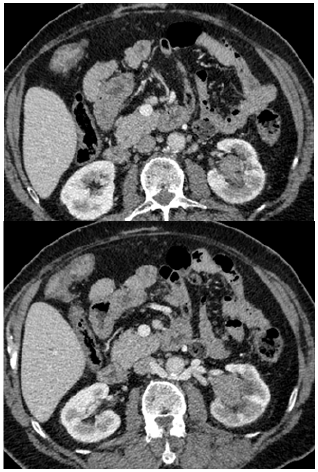
70 Year Old Male Patient with History of Intermittent Hematuria of 5 Month Duration | Papillary carcinoma (PC) is the second most common type of renal cell carcinoma (RCC). PC has specific imaging and clinical features that may help in differentiation from clear cell RCC. At contrast material–enhanced CT and MRI, PC enhances less than other RCC in all phases of contrast-enhanced imaging. The classification of renal cell carcinoma into subtypes is important as it has association with outcome of disease. Results have shown that renal cell carcinoma is not a single disease but, rather, a group of several disease entities [1]. According to the First International Workshop on Renal Cell Carcinoma held by the World Health Organization, renal cell carcinoma can be classified into conventional (i.e., clear cell) renal carcinoma, papillary renal carcinoma, chromophobe renal carcinoma, collecting duct renal carcinoma, and unclassified renal carcinoma. For More Articles: Biomedical Research Articles : https://biomedres.us/

Non-invasive high-grade papillary urothelial carcinoma of the renal pelvis and upper ureter (pTa) with free surgical resection margins.

Journal on Health Sciences

What Does We Know of Chromosome X Fragile | Chromosome X Fragile is the prevalent hereditary cause of intellectual disability. It is an inherited disease linked to the X chromosome, Fragile X syndrome (S X F). Its main clinical manifestation is intellectual disability and affects mainly males, with a prevalence of 1/4000 and females 1/6000. Women are the transmitters. The cause is a mutation on chromosome X9 27.3 and consists of an abnormal expansion of the trinucleotide citicin-guanine-guanine (CGG) in the FMR 1 gene (Fragile X Mental Retardation) in an area not coded at the beginning of the gene. Female of 16 years of age, cesarean birth due to lack of progression and descent, Apgar 9-10 E.G, 38 and 1/2 weeks by clinical examination and Date of last menstruation, placenta with calcifications, Birth weight 2850 gr, size 50 cm. Neonatal examination within normal limits. Normal facies. In the post natal period there is a delay of psychomotor development, walking at 21 months of age, good adaptation to the environment with moments of apparent disconnection of the same. She does not speak but is understood by gestures. The head pediatrician is consulted who does not give importance to the facts and diagnoses that it is a “Slow Maturity”. For More Articles: Journal of Biomedical Research and Reviews : https://biomedres.us/

Journal on Microbiology

Niche-Specific Genome Evolution in Gastrointestinal Probiotics | IProbiotics are defined as health-promoting microbes which confer health benefits upon the host. Lactobacillus is regarded as the most diverse probiotic genus which harbors over 200 species among which are many strains with proved functional probiotic characteristics [1-3]. The economic significance of probiotics have courage scientists to study the biochemistry, genomics, phylogeny and physiology of lactobacilli, exhaustively. The genomic data highlighted the probiotic capabilities as strain specific traits which may be a result of the niche-specialization of the genomes of these bacteria to certain ecological niches (in this case the gastrointestinal tract of various animals). Another interesting feature of this genus may be the association between the genome size and the environmental distribution of its species [4,5]. The proposal of a co-evolutionary relationship between these bacteria with their hosts originates from the fact that certain Lactobacillus species have the capability to colonize the gastrointestinal tract (GIT) of animals and even some lactobacilli show degrees of hostspecificity in this regard. This evolutionary trend has resulted in a considerable rate of reductive evolution which is mirrored in their small genomes. For More articles: Scientific Research Articles on Biomedical : https://biomedres.us/