Biomedical Journal of Scientific & Technical Research (BJSTR) is a multidisciplinary, scholarly Open Access publisher focused on Genetic, Biomedical and Remedial missions in relation with Technical Knowledge as well.
Monitoring of Marketed Pork of Assam, Meghalaya and Manipur for Fenbendazole Residues | The study was undertaken to monitor marketed pork of Assam and its neighboring states Meghalaya and Manipur for Fenbendazole residues using Ultra High Performance Liquid Chromatography (UHPLC). 675 Samples of marketed pork of Assam, Meghalaya and Manipur were collected for the study. The samples after collection were preserved at -20 C. Recoveries of Fenbendazole in pork ranged from 89-98 %.Out of the tested samples, 29 samples were detected to be positive for trace residues of Fenbendazole which were well below the Maximum Residue Limit (MRL) value. For More Articles: Journal of Biomedical Research and Reviews : https://biomedres.us/
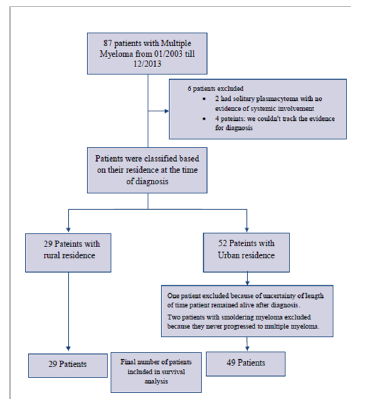
Multiple Myeloma Survival in A Rural Population | Disparities in cancer diagnosis, treatment and survival among different subgroups classified based on race, socioeconomic status and age have been previously noted. There is however a paucity of data addressing cancer disparities in rural populations. The purpose of this study is to examine multiple myeloma disease characteristics and survival in a rural population in comparison to their urban counterparts. This is a retrospective analysis of 81 multiple myeloma patients who presented to a New Mexico local hospital and cancer center from 2003 to 2013. Patients were classified to either rural or urban based on the Rural-Urban Commuting Area codes (RUCA) version 2.0, Categorization D. For More Articles: Biomedical Journal Articles : https://biomedres.us/
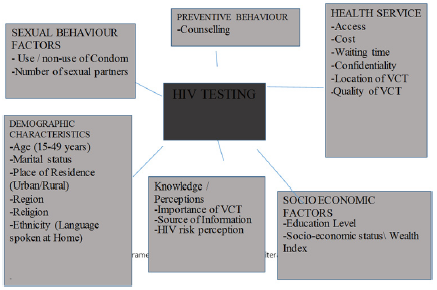
HIV Testing among Women in Namibia: Patterns and Determinants | HIV Testing and Counseling (HTC) remains an important entry to HIV Prevention, treatment, care and support services. HIV Testing Services (HTS) associated guidelines indicate that there are still significant gaps remaining in reaching undiagnosed HIV infected people and effectively linking them to treatment, care and support services with efficient use of limited available resources in Namibia. The objective of this study was to establish patterns and determinants of HIV testing, among women and to propose strategies to increase HIV testing among women. Secondary data from the Namibia Demographic and Health Survey (NDHS) was used to compute descriptive statistics and to fit a logistic regression to establish the determinants of HIV testing. Results indicated that younger women (p<0.001), except for those aged 15-19 years of age, those from Kavango (p=0.014), Kunene (p=0.013), Ohangwena (p=0.002), Omaheke (p<0.001) and Oshana (p=0.007) regions and those who reside in urban areas (p=0.001) were more likely to go for an HIV testing. Women with lower educational attainment (p<0.001) were less likely to go for HIV testing. HIV testing was also influenced by the number of sexual partners, culture, socio-economic status, and marital status. Intervention programs to increase the uptake of HIV testing should also target older women, rural areas and those with lower educational attainment. For More Articles: Biomedical Open Access Journals : https://biomedres.us/
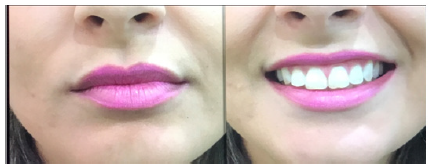
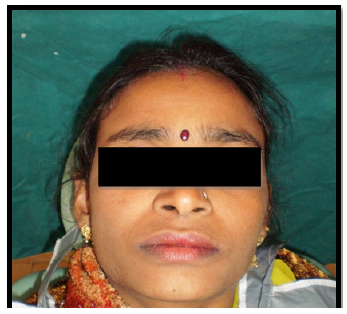
Muscle Groups Involved in the Gengival Smile | Contrary to what is stated, the gingival smile is not only caused by the upper lip lift muscle and nose wing! We see many treatments performed with Botulinum, on these muscles with disastrous results, leading to upper lip ptosis problems or with the the “joker smile” result. Often we have an interaction of other muscles that act individually or together and knowing how to diagnose the type of action cause by these muscular interactions is fundamental to obtain the satisfactory final result in Orofacial aesthetics! Muscles that may involve the gingival smile may be the lifter of the upper lip and nose wing, upper lip lifter, zigomáticos major, depressor of the tip of the lower lip. All these muscles act individually or together and will interfere with the excursion of the arching off the upper lip. How can we identify which muscle or muscle groups are involved in the case of excessive gingival tissue exposure? For More Articles: Journal of Scientific and Technical Research : https://biomedres.us/
The association of the upper lip and nose lift muscles with the upper lip lifting muscle.
Periodontal Diseases and Quality of Life | Oral health related Quality of life (QoL) research since 2011 has changed in character. Investigation refocused to include aspects of life such as psychosocial, professional and overall health. More specific methods and design appear in investigations. This review explores current literature since the 2011, which use these specific methodologies: validated QoL measurement instruments, no geographic identifiers, and no confounding systemic conditions, on the relationship between periodontal diseases and QoL. Quality of life is defined by Collins Dictionary as the general well-being of a person or society, in terms of health and happiness, rather than wealth [1]. The World Health Organization Global Oral Health Program 2003 recognizes the importance of oral-healthrelated quality of life (QoL). For More Articles: Biomedical Science Articles : https://biomedres.us/
Emerging Diagnostic and Prognostic Biomarkers of Triple Negative Breast Cancer | Triple negative breast cancer is one the most frequently diagnosed and major causes of cancer deaths among young women. Generally, mammography is used to detect breast cancer at an early stage. Magnetic resonance imaging (MRI) in addition to mammography is recommended for annual screening. Breast ultrasound is sometimes used to evaluate abnormal findings. However, these methods increase the likelihood of false-positive results. TNBC cells express or release some molecules into the blood stream and other body fluids at quite low level and their levels increase with cancer progression. The present review is aimed to update the currently available conventional and emerging biomarkers, and presenting the most effective biomarkers for early diagnosis and prognosis of TNBC. For More Articles: Biomedical Research Articles : https://biomedres.us/
Persistent Eosinophilia is a Challenging Problem | HE is defined as >1.5 x 10⁹/L eosinophils in the blood on 2 examinations (interval >1 mo) and/or tissue HE defined by: eosinophils percentage in BM section exceeding 20% of all nucleated cells; and/or extensive eosinophilic tissue infiltration by pathologist opinion; and/or presence of marked deposition of eosinophil granule proteins (in the absence or presence of major tissue eosinophils infiltration). Eosinophilia is defined as an AEC >500/μL [1]. The severity of eosinophilia has been arbitrarily divided into mild (AEC: 500- 1,500/mm3), moderate (AEC: 1,500-5,000/mm3), and severe (AEC: >5,000/mm3) [2]. HE is defined as >1.5 x 10⁹/L eosinophils in the blood on 2 examinations (interval >1 mo) and/or tissue HE. Subtypes of HE are hereditary (familial); primary (clonal/ neoplastic) HE, secondary (reactive) HE; hypereosinophilic syndrome (HES) and HE of undetermined significance (HEUS) [3]. HEUS is a novel term in lieu of idiopathic hypereosinophilia [4]. Most eosinophilias are reactive. For More Articles: Journal of Biomedical Research and Reviews : https://biomedres.us/
What Is Happening to Medicine | What is happening to medicine? Are the dictums of Standard of Care outweighing the needs of those who are to be served? I think so. Take, for instance, the screening recommendations for prostate cancer. The USPSTF concluded several years ago, 2012 I believe, that screening for men younger than 75 “offered no benefit” to that age group. Insufficient evidence was their language. And if someone is over 75, then they recommend totally against screening. I have read the background to these recommendations. There have been extensive studies, those with PSA, those without PSA who get DRE (digital rectal exams). It is remarkable, really, that this has been the position for over half a decade by the preventative task force. But it is a challenge when in your training the 70’s and 80’s, through medical school, internship and residency, palpating the prostate and later the blood analyses (there are multiple ones now) was an integral part of examining men. For More Articles: Biomedical Research Articles : https://biomedres.us/
Inhibitors to Von Willebrand Factor in Type 3 Von Willebrand Disease (VWD) | Type 3 VWD is the least common and most severe among the three types of VWD. The incidence was estimated at 5-3/million and the severity is thought to be similar to mild or moderate hemophilia A. A recent report from the UK showed that failing to perform all required assays for the diagnosis of VWD Type 3, may occasionally result in giving a wrong diagnosis such as mild or moderate hemophilia A, a practice occasionally used by some hemostasis laboratories.[1] Type 3 VWD is usually associated with a clinical course that combines the mucous membranes bleeding features seen in patients with VWD as well as the deep muscle and joint bleeding encountered in patients with mild to moderate hemophilia. The lack of VWF, which usually protects and delays the degradation of FVIII result in very low level of FVIII activity, which contributes to the bleeding severity. The treatment of this condition is somewhat similar to that of patients with hemophilia which consists of infusions to replace the missing factors as on demand regimen using plasma derived (PD) products which contains both FVIII and VWF. Furthermore, many of the patients are currently on some form of prophylaxis to eliminate or decrease the frequency of bleeding episodes. For More Articles: Journal of Biomedical Research and Reviews : https://biomedres.us/
Recurrent Intraoral Herpes (RIH) Infection – A Case Report | Recurrent intraoral herpes (RIH) appears to be an infrequent problem. The lesions of RIH are characteristic and can usually be distinguished from others. The lesions of intra oral herpes may persist and be very serious in patients with a compromised immune system. Here we present a case of recurrent intraoral herpes infection in a young female which is uncommon. The herpes comes from greek word meaning to creep or crawl [1]. The human herpes virus family is officially known as Herpetoviridiae. Humans are only natural reservoir for these viruses, which are endemic worldwide & share many features. Best known member is Herpes simplex virus which exists in two types i.e. HSV -1 & HSV-2 [2]. Oral infection with herpes virus occurs in three clinical forms. The most common type consists of recurrent small blisters on the lips commonly referred to as fever blisters or secondary herpes labialis. The second type is a generalized oral infection called primary herpetic stomatitis. The third and least common form of recurrent oral herpes infection consists of small ulcers usually localized on palatal mucosa [2]. Recurrent intraoral herpes appears to be an infrequent problem. The lesions of RIH are characteristic and can usually be distinguished from others. The lesions of intra oral herpes may persist and be very serious in patients with a compromised immune system. While the virus may regress, it does not disappear. For More Articles: Scientific Research Articles on Biomedical : https://biomedres.us/






 Biomedical Journal of Scientific & Technical Research (BJSTR)