Biomedical Journal of Scientific & Technical Research (BJSTR) is a multidisciplinary, scholarly Open Access publisher focused on Genetic, Biomedical and Remedial missions in relation with Technical Knowledge as well.
Nature’s Remedies: Medicinal Plant Flowers and their Role in Health and Sustainability
Background
The doctor treats, “Nature Heals”, said the famous Hippocrates. By medicinal plant flowers we mean those plants or parts of the plant that, through the substances they contain, can be used to cure or alleviate some diseases. Not all plants have medicinal value. For this they must contain one or more active substances that exert a certain beneficial action on the body. These substances are formed in plants as a result of metabolic processes that take place at the cellular level, located inside specialized tissues. Substances with a well-defined chemical structure are known as active principles [1]. The MPFs, for thousands of years, represent the raw material for the ancient and ever-present phytotherapy. Man since the dawn of his existence, at first from instinct, then from intuition and experience, and later through a scientific, rational approach, has used and continues to use, for the purpose of curing or ameliorating diseases, MPFs [2]. Ancient human civilizations each contributed to the knowledge and use of a growing number of MPFs. Numerous ancient and medieval scholars knew and recorded in their writings the medicinal properties and the way to use many plants. Nowadays, around half of the pharmaceutical products in the world are based on MPFs or have in their composition extracted active principles from plants (alkaloids, glycosides, volatile oils, etc.), being used in the treatment of serious diseases of the heart, stomach, etc. Added to this are the products used in the preparation of teas and in various industries (food, perfumery, cosmetics). Flowers, with their incredible diversity and amazing beauty, hide behind their colorful petals much more than a simple aesthetic appeal.
Throughout history, people discovered and began to harness their therapeutic properties, turning them into essential components in traditional and, later, modern medicine. Today, the pharmaceutical industry actively recognizes and integrates floral extracts to develop innovative and effective treatments. The use of MPFs dates back to ancient times, when healers and shamans of local communities identified through empirical methods plants that could relieve pain or treat various ailments. This ancestral wisdom has been passed down from generation to generation, forming the basis of naturopathic medicine. Nowadays, science has begun to decipher the mechanisms by which these plants act at the cellular and molecular level, thus validating many of the traditional uses and opening the way to new pharmaceutical discoveries [3]. It is estimated that on a global scale, around 20,000 species of medicinal and aromatic plants are used today in popular and “cult” phytotherapy, of which the most used are around 300 plants. All over the world, the enrichment of the assortment of medicinal and aromatic plants and the diversification of their use is in full swing. The concern regarding the valorization of medicinal and aromatic plants in our country has gained a recognized scientific support since the beginning of this century. It is worth mentioning that the first experimental station in the world, specialized in the study of medicinal plants, was established in Cluj (Romania), in 1904, thus laying the foundations for experimental research in the field of medicinal and aromatic plants from our flora. [1].
Flowering herbs have been an essential component in traditional medicine and continue to be valued for their therapeutic properties in modern medicine as well. These plants not only enrich the natural landscape, but are also an invaluable source of active ingredients that can prevent and treat various ailments. From pain relief to wellness enhancement, flowering herbs have served humanity throughout history. The history of the use of MPFs dates back to ancient times, being documented in various cultures around the globe. Ancient Egyptians, Greeks, Romans and Asian civilizations recognized their value and used them wisely to treat disease and maintain health [4,5]. Flowering herbs are not only a source of beauty and calm, but also a storehouse of benefits for our health. Their use spans a wide spectrum of applications, from relieving minor symptoms to supporting healing processes in more serious conditions. Plants that can be used in phytotherapy:
Extracts with antibacterial effect: pomegranate, sage, echinacea.
Extracts with anti-inflammatory effect: chamomile, dandelion, sage.
Extracts for cardiovascular conditions: linden, artichoke, hawthorn, lily, mistletoe.
Extracts for diabetes: artichoke, dandelion, pomegranate.
Extracts for immunity: acerola, garlic, thyme, echinacea, sage, nettle, parsley.
Extracts for gynecological conditions: raspberry, mouse tail, St. John’s wort,
Extracts for allergies: dandelion, St. John’s wort, nettle.
Extracts for liver disorders: artichoke, dandelion, sage, St. John’s wort.
Extracts for emotional imbalances: St. John’s wort, ginko-biloba, nightshade, hawthorn.
Extracts for skin conditions: potato, thyme.
Herbs for migraine: St. John’s wort, captalan or sweet burdock, mint or isma, willow extract, ginger, green tea/caffeine, valerian, coriander seeds, lavender oil, rosemary, horseradish. Plants and extracts for atherosclerosis: artichoke extract, garlic, niacin, red rice yeast, hawthorn.
Plants, supplements for rheumatoid arthritis: lamb’s tongue oil, cayenne pepper, cat’s claw or cat’s claw, evening primrose oil, fish oil, turmeric, ginger, green tea extract.
Supplements for Crohn’s disease: Boswellia serrata, turmeric, green tea, elder mallow. Plants for gastroesophageal reflux disease: peppermint oil, ginger root, cumin, angelica, German chamomile, rostopasca, licorice root, armor, turmeric.
There are a multitude of flowering and non-flowering medicinal plants that are valued for their therapeutic properties. Each of these herbs offers unique benefits, being used in various ways to improve health and treat specific conditions [8]. The MPFs are an important source of treatment for various diseases and health conditions. Due to their effectiveness and low cost, many people have turned to these herbs as an alternative to conventional drugs. However, it is important to remember that the use of MPFs must be done in a responsible and sustainable way, to avoid the extinction of species and to ensure the preservation of the environment. The sustainable use of MPFs involves a range of practices, such as responsible collection, cultivation in agroforestry systems and conservation of natural areas. Moreover, it is necessary to have a thorough knowledge of the properties and indications of each plant, so that its use is safe and effective. To achieve this, it is important to have qualified professionals, such as herbalists and biologists, who can advise you on the correct use of herbs [9].
Concepts and Definitions
Phytotherapy is the use of MPFs for therapeutic purposes, which can be used to prevent, treat and cure diseases. This practice is widely used throughout the world, being one of the oldest forms of medicine. Phytotherapy is considered a complementary therapy and is used in conjunction with other forms of treatment. Phytotherapy is a branch of therapy that deals with the means of preventing and curing diseases, through plants. The field of pharmacognosy has seen great progress that has increased the use of MPFs by practitioners of alternative medicine. This systematic review explored the history and current application of phytotherapeutic drugs, as there are currently many therapeutic possibilities in the use of phytotherapeutic drugs and MPFs. What exactly is phytotherapy and how does it work in the human body [10]. Ethnobotany is the study of the relationships between humans and plants, especially as they relate to medicinal, dietary, and cultural use. This science studies the diversity of plants used by different cultures and peoples, as well as the methods of using and preparing these plants [11]. Pharmacognosy is the science that studies the chemicals present in MPFs and their use in the production of medicines. This science is responsible for identifying, isolating and characterizing active substances present in MPFs, as well as studying their pharmacological effects [12].
Challenges and Future Prospects
Sustainable use of MPFs can bring socioeconomic benefits to local communities. Collecting and cultivating these plants can generate income for families and promote the economic development of the region. However, it is important that this use is done responsibly, avoiding overexploitation of the plants and ensuring that the income generated is distributed fairly among community members. It is also important that producers have access to information on the medicinal plant market and sustainable cultivation techniques to ensure product quality and market competitiveness [13]. For the sustainable use of MPFs, it is important to recognize that there are many challenges to face. Here are some questions that need to be addressed:
Preservation of Biodiversity
Excessive collection of MPFs can lead to the disappearance of some species. It is important to ensure that collection is done sustainably and that plant populations are monitored to ensure their survival [14].
Quality Control
The MPFs must be harvested and processed properly to ensure their effectiveness and safety. It is important to establish quality standards and ensure that plants are grown, harvested and processed properly [15].
Access to Resources
Communities that depend on MPFs for their livelihoods must have access to the resources needed to grow and harvest plants sustainably. This can include training, equipment and funding [16].
Regulation
It is important to establish clear regulations for the use of MPFs. This may include creating laws to protect plants, regulating the collection and trade of MPFs, and ensuring that harvesting and processing practices are safe and sustainable [17].
Research and Development
Research is essential for understanding the medicinal properties of plants and developing new herbal medicines. It is important to support research and development of new products to ensure that MPFs remain a viable option for treating disease [18]. Although there are many challenges to face, there are also many promising future prospects for the sustainable use of MPFs. With the right support, communities can continue to use MPFs safely and sustainably, while protecting biodiversity and promoting research and development of new products [19].
Why People Choose Herbal Medicine Over Science- Based Medicine
One theory is that the consumer/patient is disillusioned. He is dismayed by the number of questions that science still has no answers to. There are people who have been let down by overly broad and impersonal health services. But most importantly, he has become accustomed to choose and the power to exercise that choice. Another important factor is that, “people still believe that ‘Natural’ equals good and safe, despite the overwhelming evidence to the contrary.” This view is echoed by most researchers caught up in this unexpected anti-science boom. “People seem to manage to hold conflicting opinions at the same time. For example, that nicotine is bad, but other natural products are good”. “Although I know there are poisonous plants, this does not seem to affect the belief that herbs are good.” This situation may result from the fact that herbs are associated with a healthy diet. Physiologically, the body cannot tell the difference between chemically synthesized vitamin C and vitamin C that has been extracted from an orange. Another reason given for the resurgence of herbal medicine is that people are concerned about the side effects associated with synthetic drugs. Compared to some of the harsh treatments that are needed for many life-threatening illnesses, “the claim is that herbal remedies are gentler, easier and safer” [20].
Contraindications and Possible Risks of Phytotherapy
However, what is so safe about consuming substances that do not have to meet content standards? For example, some so-called “ginseng tablets” have recently been found to contain no ginseng at all. There should be no uniformity of chemical constituents: some “healthy” preparations contain completely different ingredients. In addition, socalled “natural” remedies are sold with very little information about their effects and dangers. The risks associated with phytotherapy also depend on the amount of substance consumed. If the recommendations for use are followed, phytotherapeutic products rarely produce adverse effects. However, some herbs are toxic, others can interact with medications and cause side effects. Also, pregnant and lactating women should limit the consumption of such products. It is recommended to use them only according to the doctor’s instructions. The European Medicines Agency has contra-indicated the use of certain plants in children under 12 years of age. They are often recommended for children under 18. Some plants can be used from the age of 3 and 6. Therefore, it is essential to consult a doctor to see if that treatment is suitable. When using an herbal product, read the package recommendations, dosage information, and possible risks and interactions of that herb or combination of herbs. Start with small doses to detect possible allergies to that plant [10]. In conclusion, flowering MPFs are a treasure of nature, offering effective and affordable solutions to improve the quality of life. By harnessing traditional knowledge and integrating modern scientific discoveries, we can navigate a future where health and nature go hand in hand.
Concluding Remarks and Future Perspectives
Preventive use of flowering herbs can play a key role in maintaining health and preventing disease. By including these herbs in our daily routine, whether in the form of teas, tinctures, or essential oils, we can harness their antioxidant, anti-inflammatory, and antimicrobial properties to strengthen the immune system and improve the body’s resistance to infection and disease. In recent years, interest in flowering MPFs and their therapeutic potential has increased significantly among the scientific community. Numerous case studies and research have been devoted to analyzing the effects and benefits of these plants on human health. These studies contribute to the understanding of the mechanisms by which the active components of plants influence various health conditions and provide a scientific basis for their use in medical practices. Exploring the world of medicinal flowering plants gave us valuable insight into their potential to improve health and well-being. From their traditional uses to the scientific confirmation of their effectiveness through modern studies, it is clear that these herbs hold an essential role in natural medicine and preventive health practices.
Conflicts of Interest/Competing Interests
The authors declare no conflict of interest.
Availability of Data and Material
Not applicable.
Code Availability
Not applicable.
Authors’ Contributions
Conceptualization, M.N.P.; I.G. and M.B.; data curation, M.N.P. and M.B.; writing—original draft preparation, M.B.; writing—review and editing, M.N.P.; I.G. and M.B.; visualization, M.B.; supervision, I.G and M.B. All authors have read and agreed to the published version of the manuscript.
Ethics Approval
Not applicable.
Consent to Participate
Not applicable.
Consent for Publication
Not applicable.
Data Availability Statement
The data presented in this study are available on request from the corresponding author.
Changes in Emergency Care During the COVID-19 Pandemic at a University Hospital in Barcelona
Introduction
Coronavirus disease (COVID-19) is a respiratory infection caused by the SARS-CoV-2 coronavirus, which was first reported in Wuhan on December 31st, 2019 [1]. On March 11th, 2020, the World Health Organization declared the COVID-19 a global pandemic [2]. In Spain, a state of alarm was declared on March 14th, 2020, as a measure to control the transmission of the coronavirus. This led to a population lockdown from March 15th to June 21st, 2020 [3]. Following the population lockdown, healthcare activity was affected to attend to COVID-19 cases. Although strategies were implemented to adapt to the health needs, coordination was challenging due to the increased demand for healthcare services and the limited capacity to reorganize the care of chronic diseases [4]. Consequently, in the Central Catalonia health region, there was a 31.1% reduction in the detection of new diagnoses in primary care in 2020 compared to 2019 [5]. Globally, several studies have documented a significant decrease in the utilization of hospital care services during 2020.
This decrease was observed in both the frequency of outpatient visits [6] and in the volume of hospital emergency care attended [7- 9]. Moreover, it has also been noted that emergency department visits for both COVID and non-COVID-related conditions were influenced by certain sociodemographic factors. For instance, emergency department visits among young people decreased [10,11], there was a decline in healthcare service utilization among women [12], and among population with low incomes or limited health coverage [13]. The changes observed during the pandemic varied between countries, as the health response differed in each territory, and the characteristics of each population were different. In Spain, there are limited studies that describe the changes in the frequency of hospital emergency visits and determine if there are any sociodemographic factors associated with these changes. The objective of this study is to analyse the change in the frequency of hospital emergency visits during the year 2020 compared to 2019 considering sociodemographic, clinical, and diagnostic factors and examine the trends of change across different pandemic waves in 2020.
Materials and Methods
A cross-sectional observational study was conducted on the emergency care attended at the University Hospital of Bellvitge (BUH), a third-level hospital in the city of Barcelona, during the period from January 1st, 2019, to December 31st, 2020. The study included patients attending the emergency department of the hospital’s reference area, aged 18 years or older, and with one or more emergency episodes. Episodes without registration in any of the explanatory variables of interest in the study were excluded. To select the comparison period, the distribution of emergency visits in 2018 and 2019 was analyzed according to the explanatory variables of the study. The distribution was similar in both years, so 2019 was chosen as the comparison period with 2020.
Variables
The variable of interest was the number of emergency visits attended during the study period. This variable was analyzed based on sociodemographic variables: age, sex, and socioeconomic index (SEI); variables related to the episode: triage level and discharge class; and clinical diagnoses classified according to the International Classification of Diseases, 10th edition (ICD-10). Each patient was assigned an SEI based on their Basic Health Area (BHA) of residence. This variable was obtained from information available in the Catalonia Health System Observatory [14], based on the standardized percentage of the population exempt from pharmacy copayment (year 2018) in all BHA of Catalonia. Three categories of SEI were created considering the distribution of the variable in percentiles as follows: low socioeconomic index (≥ 4,7), medium (2,8-4,6), high (≤ 2,7). The triage level was classified into five categories following the Andorran triage model. Thus, an emergency episode with level 1 was considered as immediate urgency, and an emergency episode with level 5 was considered non-urgent [15]. Patients with COVID-19 were identified based on the clinical diagnosis of SARS-CoV-2 disease using the following ICD-10 codes: U07.1, J12.89, B97.29, and B34.2. Three periods were analyzed: pre-pandemic period (January 1st, 2020 – March 11th, 2020), first COVID-19 wave (March 12th, 2020 – April 25th, 2020), and second COVID-19 wave (October 15th, 2020 – November 23rd, 2020) and were compared with the same periods of the previous year. All study variables (except the SEI variable) were obtained from the Minimum Basic Dataset for Emergencies, a mandatory record in Catalonia since 2010.
Statistical Analysis
A descriptive analysis of the number of emergencies attended was conducted using qualitative variables through frequencies and percentages. The chi-square test was used to compare proportions between groups, and Bonferroni correction was applied for multiple comparisons. Statistical significance was established at a p-value of less than 0.05. SPSS version 27.0.0 was used for statistical analysis.
Ethical-Legal Considerations
The study adhered to the guidelines of the International Conference on Harmonization’s Good Clinical Practice and received evaluation and approval from the Clinical Research Ethics Committee of Bellvitge Hospital (Ref. PR189/21).
Results
A total of 84,826 emergency episodes from BUH were analyzed during the period from January 1st, 2019, to December 31st, 2020, meeting the inclusion criteria (Figure 1). Exclusion criteria led to the removal of 1,413 episodes (1.66%) due to missing information on emergency triage level or diagnosis. The distribution of emergencies according to sociodemographic variables was highly similar in both years (Table 1). The percentage of emergencies was higher among women and individuals aged 75 or older. However, during the first wave, the percentage of emergencies among men was higher than that among women (50.50% vs. 49.50%; p=0.041), and the 45-64 age group was the most frequent (p<0.001). There were no significant differences observed between years or waves in terms of socioeconomic status. Regarding the distribution of emergencies based on clinical variables, there was an increase in triage level 2 and a decrease in levels 4 and 5 in 2020 compared to 2019 and across both waves (p<0.001). The percentage of hospital admissions, referrals, and deaths was higher in 2020 and in both waves, with significant differences observed among discharge class categories (p<0.001). The distribution of emergencies among COVID and non-COVID patients differed in certain sociodemographic variables (Table 2). The percentage of COVID-related emergencies was higher in men in both waves (51.58% and 54.30%), although the differences between men and women were not significant. The most frequent age group for COVID patients was 45-64 years (p<0.001).
Figure 1
Table 1: Distribution of emergencies according to sociodemographic and clinical variables in different periods.
Note: a1st January – 11th March; b12th March – 25th April; c15th October – 23rd November; dTriage. Level 1: inmediate; Level 2: very urgent; Level 3: urgent; Level 4: standard; Level 5: non urgent
Table 2: Distribution of emergencies among COVID and NON-COVID patients according to sociodemographic and clinical variables in different periods.
Note: a12th March – 25th April; b15th October – 23rd November; cTriage. Level 1: immediate; Level 2: very urgent; Level 3: urgent; Level 4: standard; Level 5: non urgent
In non-COVID patients, the ≥75 age group was the most frequent in both waves (p<0.001). In terms of clinical variables, the percentage of patients with triage level 2 was higher among COVID patients compared to non-COVID patients in both waves (24.08% vs. 15.22% in the first wave; 56.29% vs. 13.66% in the second wave). Regarding discharge class, the percentage of emergencies resulting in hospital admission was higher among COVID patients compared to non-COVID patients (70.93% vs. 20.73% in the first wave; 59.27% vs. 16.75% in the second wave). In 2020, there was a reduction of -21.85% in the number of attended emergencies compared to 2019. This reduction commenced with the onset of the pandemic (Figure 2) and persisted throughout the year 2020. The maximum reduction peak (-52.61%) occurred in April, and the second peak (-31.38%) was observed in November. The reduction in emergencies affected both men and women equally in both waves (-40.46% and -41.71% in the first wave; -27.04% and -28.15 in the second wave) (Table 3).
Figure 2
Table 3: Reduction in emergencies during 2020 year, first and second pandemic wave according to sociodemographic and clinical variables.
Note: a12th March – 25th April; b15th October – 23rd November
It affected all age groups, although the 45-64 age group experienced the smallest reduction throughout the study period. A similar reduction was observed in all three socioeconomic groups during the first wave. In the second wave, the reduction was lower in the less privileged socioeconomic group (-22.72% vs. -28.85% for high SEI and -27.81% for medium SEI). Regarding the analysis by ICD-10 chapters, there was a reduction in emergencies in all chapters except for the chapter of infectious and parasitic diseases, which increased by +225.39% compared to 2019 due to COVID-19 infection. Ophthalmic, otologic, and musculoskeletal disorders experienced the most significant reductions during both the first and second wave (Table 3).
Discussion
In 2020, attendance at the emergency department of Bellvitge University Hospital decreased by 21.85% compared to 2019. This reduction was more significant during the pandemic waves, with the first wave being the most affected. Similar results were observed in Europe and the USA. In England [11,16] the number of emergencies decreased by 40% during the first wave, and a study conducted in Massachusetts [12] reported a reduction of 30.9% in March-April 2020 compared to the same period in 2019. Possible barriers that could explain this decrease in service utilization during the pandemic have been identified. This includes the fear of contracting COVID-19, the stigma associated with receiving a COVID-19 diagnosis, perceived poor service quality, worsening socioeconomic conditions for patients, increased technological barriers, as well as the perception of minimizing the risk of complications and the need for medical care [17].
In our study, the reduction in emergency department visits affected both men and women similarly. However, some studies have shown that women, especially those with non-COVID-related conditions, had lower utilization of healthcare services [12]. Furthermore, the reduction in the number of emergency visits affects all age groups, with a greater decrease observed in the younger population and the 65-74 age group compared to the previous year. This could be attributed to a decrease in less urgent episodes, especially among young individuals [11], and lower healthcare utilization among chronic patients due to increased concerns about contracting COVID-19 [17]. In our study, unlike in other countries, the average age of patients visiting the emergency department during the first wave did not vary between years. However, hospitals located in Massachusetts and England reported an increase in the average age of approximately 3 years [11,12,16]. Similarly, in Italy and France, the patients attended during the pandemic were also older than usual [10,18]. Regarding socioeconomic status, the utilization of emergency services has maintained a proportional distribution among different groups, and the reductions in each level were similar between both years. However, during the first wave, the analysis by COVID-19 status showed that the less privileged group attended emergency services less frequently. Similar results have been observed in other studies, which found lower emergency department utilization among groups with lower income, limited healthcare coverage [13], or minority ethnicities [12]. Despite this lower utilization, in Anglo-Saxon countries, minority ethnic groups were more represented among those admitted with COVID-19 compared to non-COVID cases [12,16,19]. In non-COVID patients, a lower rate of urgent care attendance has been observed in rural populations [6,20].
In the case of Italy, it was generally found that those who reduced mobility the most were patients from provinces with higher population density, as well as those who were unemployed or working in the industrial or service sectors, with higher levels of education, and the elderly [21]. In 2020, all emergency department visits decreased except for those related to infectious and parasitic diseases, which increased due to COVID-19. The conditions that experienced the most significant reduction in the first wave were eye and ear-related disorders, as well as musculoskeletal disorders. However, these diagnostic groups remained among the most frequently visited in 2020, similar to 2019. These reductions, along with the increase in infectious and parasitic diseases (including COVID-19), align with preliminary studies [22,23]. Other admissions that have been reduced include those for traumatic causes, acute cerebrovascular events, mental health, and dermatological conditions, among others [10,11,18,22-25]. In 2020, an increase in the most urgent triage levels and a decrease in the less urgent levels were observed compared to 2019, consistent with other studies [22].
During the pandemic, there has been an increase in hospital admissions, deaths, and referrals to other centers. Similar to our study, different countries have reported an increased percentage of deaths among non-COVID patients treated in emergency departments in 2020 [10,11,24,26,27]. This study analyzed the total number of emergency department visits by the population in the catchment area of a tertiary-level hospital during the years 2019 and 2020. It is a descriptive study with limitations inherent to this study design, but due to the analysis of all the records, it reflects the change in emergency department utilization that the territory has experienced during the waves of the SARS-CoV-2 pandemic. The criteria for confirming suspected COVID-19 diagnoses and the subsequent coding of the attended emergencies varied throughout the pandemic, which could have led to deviations in the percentages of COVID diagnoses, particularly during the first wave. To minimize this information bias, emergency episodes attended during the first wave of 2020, classified as non- COVID, were cross-checked for suspected SARS-CoV-2 infection (secondary diagnosis or positive diagnostic test).
The socioeconomic level was treated as a cluster variable, assigning each patient the socioeconomic index of the basic health area in which they reside. This classification of patients may not accurately reflect the social reality of the attended emergencies and could, therefore, affect the differences between socioeconomic groups. To determine if the differences found in age groups and the lack of differences between socioeconomic groups were influenced by gender patterns, a gender-stratified analysis was conducted. The results obtained were analogous to those without stratification.
Conclusion
This study identified a reduction in emergency department utilization during the SARS-CoV-2 pandemic. This reduction occurred in both men and women, across all age groups, among different sociodemographic strata of the population, and for all types of pathologies attended in a university teaching hospital emergency department. The findings of this study can serve as a guide to compare and determine the impact of the pandemic on emergency department attendance in different countries. However, it is important to consider that the Catalan healthcare system is publicly accessible and free, which may reduce barriers to accessing medical care.
Acknowledgements
Mercedes Fernandez Camacho and Raquel Leo n Oyonarte, Care Coding Unit of Bellvitge Hospital, who have contributed to the data generation.
Non-Equilibrium Shear Inversion of Polymer Brush Bilayer: An MD Simulation Study
Introduction
Polymer brush bilayers form when linear polymer chains are densely grafted to two parallel surfaces and the top and bottom chains interpenetrate [1,2]. Polymer brush bilayers could be found in synovial joints of mammals as aggregan and in outer wall of cells as glycol [1]. There have been many theoretical and experimental researches about this system to identify its behavior in equilibrium, under stationary shear and under non equilibrium shear [3-4]. In some of these works, it has been mentioned that polymer brush bilayers show an shear stress overshoot under non-equilibrium shear inversion [3,5-7]. In this article, I show that this over- shoot exist only due to presence of hydrodynamic interactions between monomers. Polymer brush bilayers without hydrodynamic interactions is not a good lubricant due to its inter- penetration zone. Existence of hydrodynamic interactions make this system a good lubricant but in the expense of mechanical instabilities. Note that the lubricity of the polymer brush bilayers with hydrodynamic interactions can not be confirmed by MD simulations due to mechanical instabilities. However, this lubricity is predicted by the DFT and the scaling theory. In this article, I investigate three different systems by MD simulations. First, a neutral polymer brush bilayer without hydrodynamic interactions, second, a neutral polymer brush bilayer with hydrodynamic interactions and third, a charged polymer brush bilayer with hydrodynamic interactions.
Molecular Dynamic Simulation
In this article, I use molecular dynamic simulations in which the Newton’s equation of motion is solved to achieve each particle’s trajectory to study polymer brush bilayers under non- equilibrium shear inversion. I use two thermostats the Langevin and the DPD to study the system with and without hydrodynamic interactions. To discrete the equations of motion, I use the Leap-Frog scheme and we know that this scheme has an accuracy of Δt4. To build the atomic structure, I use the Lennard-Jones potential which comes from integrating over all quantum mechanical degrees of freedom, therefore, it is a semi-classical model of atoms. The repulsive hard-core part of the Lennard-Jones potential comes from the kinetic energy term of the Schrödinger equation and the attractive tail of it comes from the electrostatic interactions between electron cloud and the protons in nuclei. The Lennard-Jones potential is given as follows,
where, ϵ is the strength of the potential and σ is the diameter of the particle. Here, we cut off the potential at rc = 21/6σ and rise the potential with C = ϵ to produce the good solvent conditions. The walls are build by arranging the Lennard-Jones atoms in a two dimensional hexagonal close packed lattice (HCP). The finitely-extensible-nonlinear- elastic (FENE) potential is used to connect the monomers in the backbone of the chains. This potential is given as follows,
where k is the elastic constant of the FENE potential and r0 is the maximum allowed extension of the FENE potential. To mimic the presence of implicit solvent molecules as well as thermal fluctuations, I use the Langevin thermostat. The Langevin thermostat adds a fluctuating force with white noise which has the following properties,
The combination of the Lennard-Jones, the FENE and the Langevin thermostat is called Kremer-Grest model [8,9] which in general is called coarse-grained model of atoms. I run the simulations for 105 time steps to achieve stationary state and I apply the step function like shear inversion protocol as follows,
and to capture the most accurate results. Table 1 shows the numerical values of simulation parameters in my simulation [10-23]. The dissipative particle dynamic (DPD) thermostat takes the hydrodynamic interactions into account in the atomic and molecular scale. The DPD is composed of a dissipative and a random force which are given as follows,
Table 1: Numerical values of the simulation parameters.
Figure 1
The DPD simulations run for 10 times from a same initial values and the average of the results of these 10 simulations are shown in Figure 1. The shear inversion protocol in the DPD simulations is a cosine- like protocol which is defined as follows,
where τi/2 is the inversion time with the cosine protocol. The electrostatic interactions is taken into account by so called Debye-Hückel potential which is given as follows,
where z is valency of the monomers, lB is the Bjerrum length and κ−1 is the Debye length. The Bjerrum length is a measure of competition between the electrostatic interactions and the thermal energy and is defined as follows
where ϵ0 is the permittivity of the vacuum. The Debye screening length is a measure of effectiveness of the electrostatic interactions and it is given as follows,
here, zi is valency of the counterions suspended in the solvent and ni is the density of counterions. The simulations for Polyelectrolyte brush bilayers run for 1.5 × 10⁵ time steps or 300 (mσ/ϵ)1/2. The outcome of the simulations of Polyelectrolyte brush bilayers is shown in Figure 2. Note that, in these simulations I have used the cosine shear protocol shown in Eq. 2 and the results of Figure 2 are average of five different simulations with a same initial values.
Figure 2
Results and Conclusion
In this article, I study polymer brush bilayers under non-equilibrium shear inversion by means of MD simulations. The simulations run for 105 time steps to achieve the stationary state and by an step function (sudden) protocol and the cosine function protocol shear inversion the direction of the shear velocity is inverted. Then I run ten simulations each for 105 time steps to achieve the stationary state in opposite direction. Note that, the simulations of Polyelectrolyte brush bilayers run for 1.5 × 10⁵ time steps to achieve the stationary state in opposite direction. It turns out that the shear stress show no overshoot during inversion without hydrodynamic interactions (see Fig. (reffig:plots)). However, simulations with the hydrodynamic interactions shows that there is an overshoot in the shear stress during the inversion (see Figure 1). Another interesting phenomenon is the behavior of chain extension in the shear direction (see Figure 3). It turns out that the shear chain extensions shrink in the first and third quarter of the inversion process time and they swell in the middle of inversion. The first minimum is related to the moment when the chains are stretched in the perpendicular direction, the maximum is related to the moment when the chains strongly stretched in the opposite direction and collide with the wall atoms and the second minimum is related to the moment when the chains after collision with wall atoms again nearly stretch in the perpendicular direction (see Figure 4).
Figure 3
Figure 4
Finally, we see that the new stationary state is established in the opposite direction Figure 4. The overshoot in the shear stress takes place in moments after the chains for the second time stretch in the opposite shear direction (figure number four in Figure 4). The overshoot in the shear stress is a cause of mammalian knee join damages and it should be suppressed. Interestingly, the simulations of Polyelectrolyte brush bilayers reveal that electrostatic interactions between monomers completely suppresses the shear stress overshoot (see Figure 2). Since, the electrostatic interactions always is present in the biological systems, it turns out that nature uses those interactions to avoid mechanical instabilities in non-equilibrium processes. This is an amazing outcome of very complex behavior of the soft matter systems with a many different types of interactions. Therefore, apparently, the synovial joint diseases which result from the lack of lubricity in the area between joint could be managed and cured by increasing charged particles. In this condition, the mechanical instabilities minimize and the motions of knee joint take place in an smooth fashion.
Acknowledgments
I am honored to acknowledge the Biomedical Journal of Scientific and Technical Research (BJSTR), the Cold Spring Harbor Laboratory (CSHL) and the Regeneron Pharmaceuticals Inc. for giving credit to my research. I also, thank Weizmann institute for the XMGrace software, the Wolfram Research for the Mathematica software and the GNU Inc. for the GFortran without which my research was not come into reality.
Traditional Chinese Herbal Drinks Improved Liver Injury by Increasing Antioxidant Capacity
Introduction
As one of the most vital organs in the human body, the liver plays various physiological roles, including metabolism, excretion, synthesis, and storage [1]. Acute liver injury refers to a rapid decline in liver function within a short period. It can be caused by various factors such as drug toxicity, viral infections, and alcohol abuse [2]. Oxidation is the process wherein molecules lose electrons, generating reactive oxygen species (ROS) with high reactivity that can damage cell structures and functions [3]. During acute liver injury, oxidative reactions are often accelerated, increasing intracellular oxidative stress [4]. The antioxidant defense system includes a series of enzymes and molecules that neutralize and scavenge reactive oxygen species and maintain the oxidative balance within cells [5]. In addition, oxidative stress may also activate inflammatory responses and aggravate the degree of liver damage [6]. Therefore, understanding the interrelationship between acute liver injury and oxidation is essential for developing preventive and therapeutic strategies. Some studies have shown that the extent of acute liver injury can be reduced by enhancing the activity of the antioxidant defense system [7]. Certain herbal extracts have shown potential effects in mitigating acute liver injury.
The homology of medicine and food refers to some Chinese herbal medicines with medicinal value closely related to their edible ingredients. Many foods considered medicinal value are also rich in antioxidants, such as vitamin C, E, polyphenols, flavonoids, etc [8]. These ingredients help neutralize free radicals, slow down the damage to the liver caused by oxidative stress, and play a liver-protective antioxidant role [9]. Some Chinese herbal medicines are used in traditional Chinese medicine to remove toxins from the body, regulate liver function, promote liver cell repair and regeneration, and also help strengthen the immune system, reduce chronic inflammation, and play a liver-protective role [10]. Chinese herbal medicines such as Imperata cylindrica, Orange peel, Polygonati Rhizoma, Kudzu root, Myristica fragrans, Japanese raisin tree (Hovenia dulcis Thunb.), Fructus mume, are rich in natural antioxidants, such as polyphenols, flavonoids, vitamins, which can neutralize and eliminate antioxidants in the body. Imperata cylindrica [11], Orange peel [12], Polygonati Rhizoma [13], Kudzu root [14] can reduce oxidative damage. Myristica fragrans are thought to have anti-inflammatory and soothing effects on liver discomfort [15].
Fructus mume and Japanese raisin tree have a protective effect on the liver and can promote the repair and regeneration of liver cells [16]. Imperata cylindrica and orange peel help eliminate harmful substances from the body and are helpful for the liver’s detoxification function [17]. Kudzu root is considered to have the effect of regulating blood lipids, helping to reduce the accumulation of fat in the liver. It may have specific benefits for fatty liver disease [14]. This study explores whether Chinese herbal drinks (including Imperata cylindrica, Orange peel, Polygonati Rhizoma, Kudzu root, Myristica fragrans, Japanese raisin tree (Hovenia dulcis Thunb.), Fructus mume can improve liver injury. First, using H2O2-induced oxidative stress in HepG2 cells, Chinese herbal drinks were added, and antioxidant capacity was analyzed. Second, using carbon tetrachloride (CCL4) to induce liver injury in animal models, and using different doses of Chinese herbal drinks to treat liver injury.
Material and Methods
Cell Culture
Cell culture Human hepatoblastoma cell line HepG2 was cultured in Dulbecco’s modified Eagle medium (DMEM; Sigma-Aldrich; Merck KGaA, Darmstadt, Germany) containing 10% fetal bovine serum (Sigma- Aldrich; Merck KGaA), 100 U/ml penicillin and 100 μg/ml streptomycin and placed in a cell culture chamber at 37°C and under a humidified atmosphere with 5% CO2. After the cells adhered and were grown to 80% confluence, the culture medium was removed, washed with the appropriate amount of PBS, and digested with 0.25% trypsin (Sigma-Aldrich; Merck KGaA). Cells in the logarithmic phase of growth were selected for the following experiments.
Supplement Formulation
Chinese herbal drinks (Commercially name: BaoRenTang Raisin Tree Hydrosol) included Imperata cylindrica, Orange peel, Polygonati Rhizoma, Kudzu root, Myristica fragrans, Japanese raisin tree, Fructus mume, citric acid, water.
Quantification of Gene Expressions by Real-Time PCR
0.25% Chinese herbal drinks treated HepG2 cells for 24h, then cells were harvested, and total RNA was isolated from cells using an RNA purification kit (Geneaid, Taiwan). DNA-free total RNA was reversely transcribed to cDNA using a SuperScript™ Reverse Transcriptase kit (Invitrogen, Life Technologies Co., CA, USA). Quantitative real- time PCR was conducted using an ABI StepOnePlus™ Real-Time PCR System (Thermo Fisher Scientific, Inc., CA, USA) and the SYBR Green Master Mix (KAPA Biosystems, MA, USA) for transcript measurements. The gene-specific primers used in this study, human SOD1, forward 5’-ACTGGTGGTCCATGAAAAAGC-3’ and reverse 5’-AACGACTTCCAGCGTTTCCT- 3’ human catalase, forward 5’-GCTCTTCTGGACAAGTACAATGCTG- 3’ and reverse 5’-TTACACGGATGAACGCTAAGCTTC-3’. The GAPDH gene was used as a normalization control. Determination of Glutamate Pyruvate Transaminase The GPT levels were determined using GPT enzyme-linked immunosorbent assay (ELISA) kits (Asan Pharmaceutical, Seoul, Korea) in accordance with the manufacturer’s instructions.
Measurement of Intracellular ROS
The assay is based on the use of an established non-fluorescent (H2DCFDA)/fluorescent (DCF) system that measures ROS activity within the cell. HepG2 cells were seeded into 24-well plates (4 × 10⁴ cells/well) and allowed to attach overnight. Cells were incubated in a serum-free medium in the presence of various concentrations of CF extract (100–250 μg/mL) after UVB radiation or CML treatment. The cells were washed with PBS, and the ROS detection reagent DCFDA was added to each well for 30 min. Images were captured using a fluorescence microscope (Leica DM IL LED, Leica Microsystems, Wetzlar, Germany), and the fluorescence (excitation/emission: 488 nm/520 nm) were measured using a microplate reader (Synergy HTX, BioTek Instruments, Winooski, VT, USA)
Animal Model
The procedures for this study were approved by PEKING UNIVERSITY BESCHOLOR. All animal experiments in this study were conducted by the ARRIVE guidelines for reporting experiments involving animals. All methods were carried out by relevant guidelines and regulations. The sixty Kunming mice (male n=30, female n=30), weighing 18-22 g, were purchased from the SPF(Beijing)BIOTECHNOLOGY Co., Ltd. All mice were housed under the controlled temperature (22–23 °C) and on a 12 h light and 12 h dark cycle with food and water ad libitum. All animals were adapted to their new housing conditions for one week before the experiments. The mice were randomly divided into 6 groups (n = 10 in each group) as follows: control group, CCL4-treated model group, Bicyclol-treated group (200mg/kg), high (6g/kg), medium (3g/kg), and low (1.5g/kg) dose of Chinese herbal drinks co-treated group. The control group and CCL4-treated model group were administered corresponding volumes of distilled water. After the 6th day of administration, except for the control group, the mice in the other groups were intraperitoneally injected with 0.12% CCL4 corn oil solution at 0.1mL/10g, and the control group was given saline. Administration was carried out 15h later, and blood was collected from the orbit 1h later, centrifuged at 3000 rpm for 15 minutes, and the supernatant was taken to measure the serum ALT and AST.
Statistical Analysis
Data are expressed as mean ± standard deviation. Homogeneity of variance uses F-test, and comparison between groups uses t-test or ANOVA, as p < 0.05 was considered statistical significance
Results
Chinese Herbal Drinks Have Antioxidant Capabilities
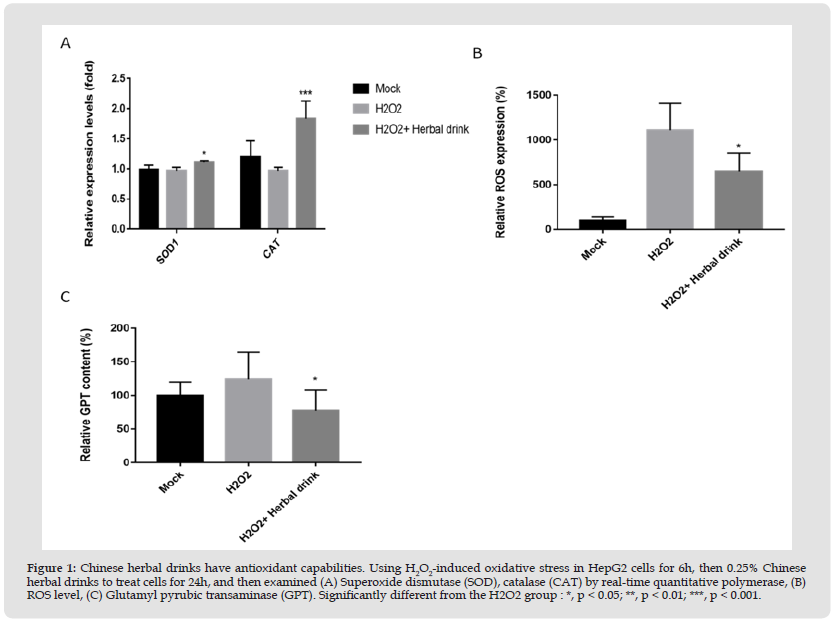
First, explore whether Chinese herbal drinks have antioxidant capabilities, using H2O2-induced oxidative stress in HepG2 cells for 6h, then 0.25% Chinese herbal drinks to treat cells for 24h. The results showed that Chinese herbal drinks can significantly increase superoxide dismutase (SOD) by 1.1 times and catalase (CAT) by 2 times, and significantly decrease ROS expression compared to H2O2 group (Figures 1A & 1B). The glutamyl pyrubic transaminase (GPT), also known as, alanine aminotransferase (ALT), is a vital test item for health examination and an indicator of liver damage. Chinese herbal drinks can significantly decrease GPT compared to H2O2 group (Figure 1C). The above results showed that Chinese herbal drinks can increase antioxidant gene expression and reduce GPT.
Figure 1
Chinese Herbal Drinks Prevent CCL4-Induced Acute Liver Injury in Mice
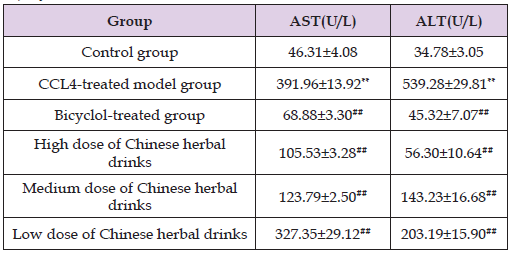
Table 1 showed that serum ALT/AST was significantly increased in the CCL4-treated model group compared with the control group. Serum ALT/AST was significantly decreased in the Bicyclol-treated group compared with the CCL4-treated model group. Serum ALT/AST was significantly decreased in the high (6g/kg), medium (3g/kg), and low (1.5g/kg) doses of Chinese herbal drinks groups compared to the CCL4-treated model group. The above results showed that Chinese herbal drinks can prevent CCL4-induced acute liver injury.
Table 1: Evaluation of Chinese herbal drinks as indicators of liver injury.
Note: ALT: Alanine aminotransferase; AST: Aspartate aminotransferase. Compared with control group, *P<0.05, **P<0.01. Compared with CCL4-treated model group, #P<0.05, ##P<0.01.
Discussion
This study found that Chinese herbal drinks, including Imperata cylindrica, Orange peel, Polygonati Rhizoma, Kudzu root, Myristica fragrans, Japanese raisin tree, and Fructus mume, can increase antioxidant capacity in vitro and improve liver injury in vivo. Traditional Chinese herbs are typically composed of a combination of multiple compounds rather than a single chemical entity. This comprehensive effect allows Chinese herbs to impact the liver in various ways, including antioxidative, anti-inflammatory, and detoxifying effects, contributing to maintaining normal liver function [18]. Chinese herbs are generally considered safe and suitable for long-term use [19]. In comparison to certain Western medications that may entail side effects, Chinese herbs are often perceived as gentler on the body. Imperata cylindrica, belonging to the Gramineae family, is extensively distributed in southwestern Asia and is specifically indigenous to tropical and subtropical zones [20].
In traditional Chinese medicine, the dried rhizomes of Imperata cylindrica, known as “Bai mao gen,” have been widely utilized [20]. Research indicates that Imperata cylindrica exhibits notable hydroxyl radical scavenging activity, with an IC50 of 0.0948 mg/mL, surpassing the efficacy of ascorbic acid (IC50: 0.1096 mg/mL) based on Fenton and potassium ferricyanide reduction methods [21]. Furthermore, studies have demonstrated that Imperata cylindrica extract enhances superoxide dismutase (SOD) activity in liver and brain tissues, inhibits hydroxyl free radicals, and reduces malondialdehyde levels [20]. Bioactive compounds such as protocatechuic acid, syringic acid, and catenarin contribute to its free radical scavenging properties. Orange peel, a primary byproduct in orange juice production, contains flavonoids associated with antioxidant activity [22]. Hesperidin and naringin glycosides play a vital role in the purported antioxidant effects of citrus peel extracts [23]. Rat studies indicate that hesperidin supplementation increases SOD, glutathione–S–transferase (GST), and glutathione (GSH) levels, offering protection against CCl4-induced liver injury [24].
Polygonati rhizoma (Huangjing) is a dual-purpose material in traditional Chinese medicine, containing various bioactive substances such as purine nucleosides, carbohydrates, bioflavonoids, alkaloids, saponins, lignins, amino acids, peptides, anthraquinones, cardiac glycosides, vitamins, and acids [25]. Polysaccharides in Polygonati Rhizoma contribute to its sweet taste and demonstrate metabolic regulation, immunomodulation, anti-aging, anti-inflammatory, and liver-protective effects [13]. Kudzu root (Gegen) from Pueraria lobata exhibits antioxidant and anti-inflammatory effects attributed to active ingredients like puerarin, baicalin, berberine, and glycyrrhizin [26]. Myristica fragrans Houtt (nutmeg) exhibits anti-inflammatory, antioxidant, and antimicrobial effects, regulating gut microbes and metabolites to attenuate non-alcoholic fatty liver disease in mice [27]. Hovenia dulcis, a traditional folk medicine, demonstrates antioxidant, immunostimulatory, anti-diabetic, and hepatic protective effects [28]. Fructus mume derived from Prunus mume Sieb. Et Zucc contains various components, including organic acids, exhibiting antioxidant and antibacterial properties [29]. The combined formula of Imperata cylindrica, Orange peel, Polygonati Rhizoma, Kudzu root, Myristica fragrans, Hovenia dulcis, and Fructus mume shows promising potential in preventing CCl4-induced acute liver injury. However, the specific mechanisms of this herbal combination require further research for clarification.
Limitations of this study include the fact that CCL4-induced toxicity depends on Cyp-induced CCL3 free radical formation. However, whether Chinese herbal drinks can regulate CCL3 requires more research to confirm. There is also a lack of genetic changes in cells treated with Chinese herbal drinks alone. The future applications of traditional Chinese herbal medicine in improving and safeguarding liver health may focus on clinical use and molecular mechanism research. Through further clinical trials, the actual effects of Chinese herbal medicine on human liver health, including the impact of supplements or formulations on liver function, enzyme levels, and tissue integrity, can be substantiated. Simultaneously, an in-depth exploration of the molecular mechanisms underlying the actions of Chinese herbal medicine can unveil its therapeutic mechanisms, providing concrete insights into potential targets and facilitating the development of more effective herbal treatment strategies.
Incorporating Artificial Intelligence and Traditional Chinese Medicine (TCM) into a Western Medical Practice: A Case Study
Introduction
The goal of this study is to provide some guidance on how western medical practitioners can incorporate artificial intelligence (AI) and traditional Chinese medicine (TCM) into their medical practice. Artificial intelligence has become an increasingly popular adjunct to medical practices in recent years and will probably be used even more frequently in the years to come [1-27]. It has an increasingly large number of applications to a wide range of medical specialties and can make medical practices more efficient in operation. Traditional Chinese medicine has been used for centuries to treat or cure a wide range of ailments [28-54]. Its focus has been on prevention rather than treatment, but it has also been used to treat existing ailments. TCM has several branches, the most important of which are acupuncture, acupressure, herbal concoctions, tai chi and qigong exercises. Due to space limitations, we shall confine our discussion to tai chi and qigong applications. AI can be used to quickly find basic information on many medical topics, although care must be taken when reading the results of an AI-generated search, since prior studies have found that results have not always been accurate [55].
The quality of AI search findings will undoubtedly improve over time, but we are not yet at the stage where we can totally trust their results. AI-generated searches can be used as a starting point for information retrieval but should not be the final step in any research project. AI chatbots can be used to generate summary information on particular topics. To show how chatbots can be used in this manner, I have decided to use Microsoft Copilot [56], one of the better chatbots as of this writing. Using a chatbot to do the preliminary work saves much time because practitioners who are not familiar with the topicqigong and tai chi in this case — can be spared the time and trouble of reading hundreds or thousands of pages of explanatory literature on the topic [57-69]. The way to generate information is to give the chatbot a command or instruction. The instruction in this case might be: “Give a brief summary of tai chi and qigong. What are their common features and what are their differences?”
The Reply
Certainly! Let’s delve into the fascinating world of Tai Chi and Qigong, two ancient Chinese practices that share common roots but also exhibit distinct characteristics. Here’s a concise exploration of their key features and differences: 1. Historical Background and Evolution o Tai Chi • Developed in the 16th century by Chen Wangting, a retired warrior, Tai Chi (or Tai Chi Chuan) initially served as a martial art form. • Over time, it evolved, drawing influences from Taoist and Confucian philosophies. It transformed into a practice that includes self-defense techniques, meditation, and a harmonious balance between mind and body. • Different styles of Tai Chi, such as Yang, Wu, and Sun, emerged, each with unique characteristics while retaining core principles of fluidity, control, and relaxation. o Qigong • Qigong’s history dates back over 5,000 years, making it one of the oldest forms of health care globally. • Rooted deeply in traditional Chinese medicine, philosophy, and martial arts, Qigong was initially practiced for spiritual growth and longevity. • It emphasizes breathing techniques, gentle movements, and meditation. Over time, various forms of Qigong have evolved, each serving different health and spiritual purposes. 2. Movement Style and Practice o Tai Chi • Characterized by a series of flowing, interconnected movements or forms. • Examples include the Yang style, known for its gentle, wide-ranging motions, and the Chen style, which incorporates more explosive movements and greater physicality. • Each Tai Chi movement, such as “Wave Hands Like Clouds” or “Grasp the Sparrow’s Tail,” has a specific posture and sequence, often carrying symbolic meanings. • Practicing Tai Chi feels like a slow, meditative dance, demanding precision and fluidity. o Qigong • Involves simpler, repetitive movements or static postures that are easier to learn and execute. • Examples include “Lifting the Sky,” a movement for stimulating energy flow, and “Standing Like a Tree,” a meditative posture for grounding and centering. 3. Purpose and Emphasis o Tai Chi • Originating as a martial art, Tai Chi emphasizes self-defense, coordination, and balance. • It requires significant time and dedication to master due to its complexity. o Qigong • Rooted in spiritual and healing practices, Qigong provides a more accessible and varied approach. • It focuses on internal healing, stress relief, and energy cultivation. • Qigong is suitable for those seeking longevity, health, and maximum human potential. In summary, while Tai Chi offers a structured approach to bodymind integration, Qigong provides a more accessible path, emphasizing internal healing and energy flow. Both practices contribute to overall well-being, catering to diverse personal needs and preferences.
Author Comment
In the present author’s opinion, these summaries are good enough for a medical practitioner who is unfamiliar with these exercise sets to obtain a basic understanding of the similarities and differences between these two tools of Chinese medicine practitioners. Both tai chi and qigong awaken and energize the body’s natural healing power, which then flows to the affected area. Western medical practitioners who would like to incorporate one or more of these exercise sets into a practice would be wise to seek out the services of a tai chi or qigong practitioner who has several years of experience practicing and using some of these sets. One way to find such practitioners would be to contact a kung fu or tai chi school in the local area. The people in these schools can probably put you in touch with one or more practitioners.
The Study
Baduanjin is the most frequently used set of qigong exercises used in medical research [30,42,54] but it is not the only one. The Chinese Health Qigong Association has instruction manuals on several other sets of medical qigong exercises [70-77]. I decided to search the PubMed database [78] to see if some of these other exercise sets had been used in medical research. My first search term was “Da Wu,” one of the other sets of qigong exercises suggested by the Chinese Health Qigong Association. My search using that key word turned up empty. No medical studies could be found that included this key word in either the title or abstract. The Chinese often combine several words when the Chinese characters are translated into English, so I decided to do a search using the key word “dawu.” This time I was able to find one study that used Da Wu, as well as some other qigong exercise sets. It was a comparative study that evaluated the results of several different sets of qigong exercise sets, of which Da Wu was one, and compared those results to those of a no exercise group and an aerobic exercise group [79]. I next went to Elicit AI [80], another artificial intelligence bot, to see if I could find additional studies. I gave it the following command: “Find medical studies that incorporated the use of dawu, also called da wu, a set of qigong exercises, to treat or cure a disease or ailment.”
It gave me a summary and citation for eight studies on the health benefits of qigong, none of which included dawu in the title or abstract [81-88]. This search exercise provided a good example of how chatbots can give imperfect or irrelevant information. In this case, the information was not totally irrelevant because it gave good summaries of qigong studies other than dawu. A close look at the references shows that the chatbot sometimes gave incomplete references that did not follow acceptable APA or other format. I decided not to correct these flaws so that the reader could see what the actual references looked like that were generated by the chatbot.
Summary
At this point I decided to use the “Extract data from PDFs” feature of Elicit. This feature provides a summary of the contents of PDF documents, which can be a big time-saver for researchers. I uploaded the Gao, et al. [79] article [81], since that was the only article I could find that was on point. Elicit gave me the following summary: “The summary is that the study systematically reviewed the effects of different traditional Chinese exercises on blood lipids in middle-aged and elderly individuals, highlighting the potential of WQX as the best TCE treatment for dyslipidemia, emphasizing the importance of managing lipid profiles in this population.” The problem with this summary is that the reader is not told what the abbreviations stand for, making it necessary to read the paper to obtain this information. However, the summary did provide some useful information.
Main Findings
I then asked it to give me the main findings. This is what it gave me: “WQX and TJQ were found to be effective in improving blood lipid indicators, with WQX being ranked as the best intervention, followed by BDJ.” Again, Elicit did not disclose what the abbreviations stood for, making it necessary to read the paper. However, a summary of the main findings was not without value. It did disclose the fact that some exercises were effective, and that some exercises were more effective than others.
Methodology
I next clicked on the link for Methodology. This I what Elicit gave me. “The methodology involved searching Chinese and English databases, creating a search strategy using MeSH terms, keywords, and phrases, defining inclusion and exclusion criteria based on PICOS, and having two researchers independently review and evaluate the selected articles.” Elicit provided many other summary links as well, including:
• Intervention • Outcome measured • Limitations • Intervention effects • Summary of introduction • Summary of discussion • Study design • Study objectives • Theoretical framework • Research question • Research gaps • Hypotheses tested • Future research • Funding source • Dataset • Study count • Independent variables • Dependent variables • Measured variables • Region • Duration • Statistical techniques • Experimental techniques • Algorithms • Software used • Participant count • Population characteristics • Participant age • Population sex • Organism • Policy recommendations
Because I determined that the summary provided by Elicit did not give the details or the depth that I had hoped for, I decided to actually read the paper so that I would be able to write my own summary, which is as follows:
• Gao, et al. [81] examined the effect of six traditional Chinese exercises on blood lipids on middle-aged and elderly patients. The exercises included in the study were tai chi (taijiquan), wuqinxi, baduanjin, liuzijue, yijinjing and dawu. The results were measured against a no exercise group and an aerobic exercise group. The results were as follows: • For HDL-C, liuzijue, baduanjin, taijiquan and wuqinxi were superior to the no exercise group (p < 0.05). Differences in mean scores for the other two Chinese exercises compared to the no exercise group were not significant. • For LDL-C, almost all Chinese exercises showed statistical differences in reducing LDL-C levels compared to the no exercise and aerobic exercise groups. • All six Chinese exercises were effective in improving blood lipid indicators. • Wuqinxi and taijiquan “can be effective for all four blood lipid indicators and seem to be recommended as the most appropriate way for the elderly to exercise.” • The rankings indicated that wuqinxi was the most effective in improving blood lipids.
Concluding Comment
The main finding of the present study is that Elicit, an artificial intelligence bot, can be used as a good starting point for further medical research. Not only was it able to provide a decent short summary of findings for a long and technical article, but it was also able to focus on a wide range of subaspects of the study, making it easier for medical researchers to determine the contents and value of a study without first having to read the entire study. However, I had to read the study in order to obtain the level of depth and detail that I wanted because the summary provided by Elicit was inadequate for my needs. Elicit can be used as a screening process, a first step, that can save time and effort for medical researchers. Upon reading the summary, I was able to determine that the article was worth reading in its entirely.
Stem Cell Transplant Registry Implementation: A Case Report
Introduction
Nowadays, health-related research and studies has become very valuable to Saudi society. It can provide vital information about diseases; patterns of care, risk factors and outcomes (Nass [1]). Health-related research plays a significant role in the development of new medical treatments and finding new ways to prevent diseases (WHRI [2]). There are many types of health-related research such as: behavior studies, clinical trials, genetic studies, observation studies and prevention studies (WTHR [3]). However, all of these research types require data to support their outcomes. One of the most rapidly evolving health-related research fields around the world is the stem cell research. stem cells are very special, powerful cells, and so called the core of regenerative medicine. They have the ability to replicate themselves in order to replace and repair other cells, tissues, and organs damaged from injury, disease, or aging [4]. Many countries are establishing stem cells banks using registries in order to have the necessary detailed information for research. Such research helps society to know the outcomes of the stem cells transplant. stem cells (blood or marrow) transplant is “the infusion, or injection, of healthy stem cells into your body to replace damaged or diseased stem cells” (Knowles [5]). This work will highlight the stem cell transplant project as implanted in the National Guard Health Affairs (NGHA), Riyadh, Saudi Arabia (MNGHA [6]).
The defects of the current collection process for the data needed for the research of such a project will be defined. A solution will be proposed by establishing a registry that will be sponsored by King Abdulla International Medical Research Center (KAIMRC), Riyadh, Saudi Arabia (KAIMRC [7]). KAIMRC is a research center under the umbrella of the NGHA. NGHA was established in 1982 (MNGHA, ‘History’). it is one of the largest healthcare organizations in the Kingdom of Saudi Arabia. NGHA provides tertiary health care to National Guard employees and their families, as well as to Saudi Nationals with tertiary health problems. It serves more than 2.5 million outpatients and around 60,000 in-patients yearly. NGHA consists of five hospitals, sixty primary and secondary health centers scattered in five regions around the kingdom (Riyadh, Jeddah, Dammam, Al-Ahsa, and Al-Madina) (“Medical Cities”, NGHA). KAIMRC also has several offices all with the main goal of developing and supporting the scientific research. The supported research shall assist in understanding and solving medical and health-related problems, evaluate the results of the application of basic research, build capacity, and promote health research cooperation. In fact, KAIMRC is known with its remarkable primary research projects such as the Saudi Bio-Bank, Cord Blood Bank, and many other projects. These projects contribute in studying the most common diseases within Saudi Arabia, including cardiovascular diseases, diabetes, hypertension, trauma, and obesity (KAIMRC [7]).
Problem Statement
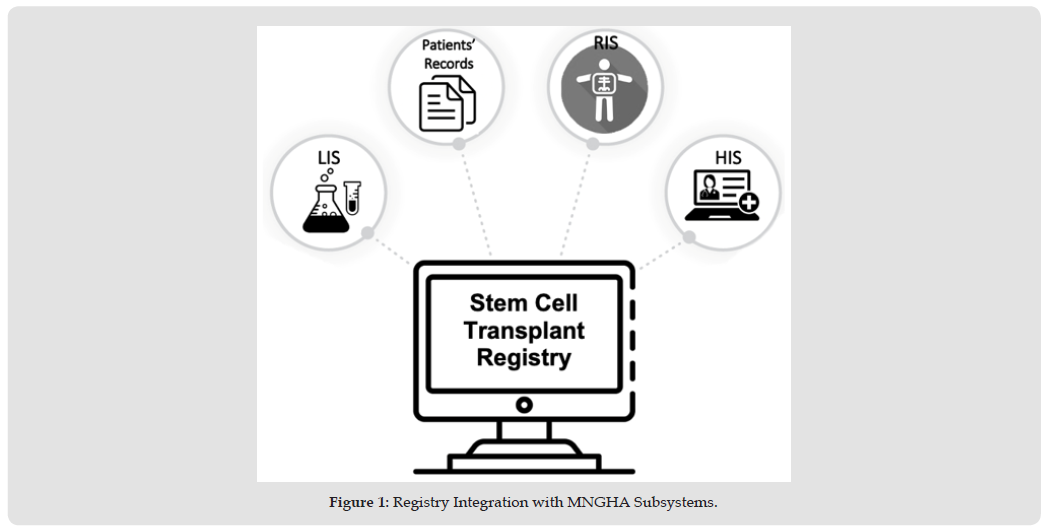
Stem cell transplant project started at the NGHA by a team from the hematology department to study the outcomes of the transplant procedures that had been done on different patients. The purpose was to find out how do they response and what is the effectiveness of this transplant procedure. Also, does this procedure have side effects or positive affects in helping patients to recover faster from certain diseases, such as blood cancer. A general purpose is to provide better care for patients. Hence, for that reason, there is a highly need for a system that can provide all the needed data in an electronic, accurate, and protected way, such as a registry, to help researchers in conducting their studies about stem cell transplant. However, the process of data collection and analysis to extract knowledge had many defects. First of all, there was no electronic system to help collect data and there was no actual repository to store them. Instead, data and acquired information were being logged manually on an excel sheet, which is a time consuming and doesn’t include any validation. Nevertheless, some of these data are available from different resources in the hospital such as Hospital Information System (HIS), Laboratory Information System (LIS) and Radiology Information System (RIS) as well as the hard copies from patients’ records. Having sparse data make it very hard to collect these data by accessing each system individually and get back to the paper records one by one, then manually entering them into the excel sheet as a code. In fact, this process of collecting data in a flat file such as an excel sheet requires some statistical techniques that may take days to generate needed reports for research.
Summary of Key Facts
There are some key factors surrounding the data collection process that is being used for stem cell transplant project, which are:
• Time consumption • Data accuracy • Data integrity • Patient care • Data availability • Patient privacy and confidentiality • Employees buy-in • Hospital administration and regulation
Implications of the Problem
With regard to the process used currently in collecting data needed for research on stem cell transplant procedure in NGHA, there are some limitations and defects that should be taken into consideration. Firstly, the time consumption is significantly high since there is no electronic system that has the power of interfacing with other systems in the hospital, such as HIS, LIS, RIS, for collecting and managing all needed data. Secondly, with the current process of entering the collected data manually into an excel sheet, there is a high risk in entering wrong data, which would affect the accuracy and integrity of data and that would lead to affect the research outcomes. In addition, these inaccurate data will affect patient care as the research results are mainly used for patient care such as finding out the effect of the treatment on patients considering different factors (age, gender, etc.). Thirdly, collecting data in a flat file format such as excel sheet stored in a single computer machine without having a backup copy where the computer could crash at any time leading to the loss of the collected data. Finally, storing data in an excel sheet is not providing the needed security where such data should be stored in a secured database to ensure patient privacy and confidentiality.
Proposed Solution
In recent years, there is an enormous improvement in the healthcare sector in Saudi Arabia and more awareness in the importance of research as there was several research centers that have been established. KAIMRC is one of those research centers where there are various research studies and registries established. However, among all of these researches, there is a project about stem cell transplant conducted by a team from the hematology department within NGHA. Their goal is to know the outcomes of such transplant to help assure better patient treatment. However, as mentioned earlier, there are limitations and defects behind the current process and the workflow used to collect the required data for such a project. Thus, KAIMRC will be the sponsor by providing a solution of having a repository that includes all data needed through the utilization of technology. Hence, from the concept of Electronic Medical Record (EMR), KAIMRC will establish a registry for stem cell transplants. This registry will be a web-based system of a special and secure database designed to collect specific data. It shall help the researchers and their teams to enter data through the use of electronic data capture forms with an easy user interface. In addition, as a web based system, the data entering process can be conducted at anytime, anywhere and from various devices whether PC, laptops, tablet PC or even Smartphone devices (iPhone, iPad, etc.)
Moreover, the registry will be supported with special statistical techniques and queries to create reports and graphics in an easy and rapid way. Since the data is collected from different sources of patients’ records, there should be an integration between the registry and the hospital subsystems in NGHA as shown in Figure 1. This registry implementation and integration shall save time and effort compared with the current way of manual data collection.
Figure 1
Implementation Plan
In order to have an efficient and effective stem cell transplant registry that covers the needs and regulations of research, there is a need to have a clear requirements of such registry which includes research proposals approved by Institutional Review Board (IRB). There is also a need for a clear patient’s consent form according to the Guidelines of Good Clinical Practice (GCP) needed for patient signature since there will be a transplant procedure done on them (World Health Organization [8]). In addition, there is a need for a Case Report Form (CRF), which is the form used to collect the required data needed for research such as laboratory/radiology tests, implication or adverse event and other required data. Indeed, all of these requirements will be provided to the Research Office Department at KAIMRC to ensure that everything is complete. After that, the Research Office will send the proposal along with the CRF to the department of Research Database And Disease Registry (RD&DR). Then, when RD&DR receives these documents, a consultation form will be sent to the researchers of the project. The consultation form is a form implemented by the RD&DR department and it includes the type of the research proposed, whether it is a survey, clinical trials, or a registry, as well as the type of services that the researcher needs. After the response is received from the researchers, firstly, the manager of the department will assign a team for the project including clinical analysts, developers and a team leader where each team member has a role and responsibility.
In reality, the clinical analyst will provide assistance during the review of the registry implementation proposal and the CRF as there are medical terminology used and need to be clarified to the developer during the designing of the electronic CRF. The team leader will manage the overall project by creating the project plan; ensuring that everything under control and the delivery of the project will be on the specified period of time and within allocated budget. Secondly, a meeting will be conducted between the researchers; manager and the team members of the project to discuss the plan of the project and other required information related to the building of the registry, such as the validation requirements and analysis reports needed. Hence, if everything is clear and complete, the developer will start working on the building of e CRF. A team from the Information Technology Department (ITD) is also involved and responsible for the infrastructure of the registry (server, backup, maintenance, etc.) Moreover, this team along with the developer of the registry will collaborate with the Information Systems And Informatics Department (ISID) in NGHA on the matter of integration between the registry and the hospital systems such as HIS, LIS, and RIS. Finally, after the implementation and testing of the registry is done, the RD&DR team will schedule a time for training the researchers with their teams along with providing them with a training manual.
Challenges
With regards to the establishment of a stem cell transplant registry, like any new system implemented, there are always some challenges and obstacles that might be encountered during the implementation process. Some of those challenges are as follows:
• Technical challenges: the high costs of hardware and software needed as well as the network availability since it must be always available. • People challenges: like any other new technology, there was a resistance from the staff to adopt and use the registry. • Integration challenges: The challenge of integration with hospital systems, as there were strict regulations from the ISID department.
Conclusion
A stem cell transplant registry implementation project started in NGHA to study the outcomes and the complications of the transplant procedures at the hospital. The difficulties of the manual process used to collect the needed data for research mandated the utilization of the technology by implementing stem cell transplant registry software, where KAIMRC was the main sponsor. The implemented registry included various features to help researchers save data collection and processing time and to ensure the accuracy of data collected and results reported.
Association Between Frequency of Major Amputations and the Occlusive Pattern of Peripheral Arterial Disease
Introduction
Peripheral Arterial Disease (PAD) occurs due to narrowing or blockage of arterial blood vessels, resulting in impaired blood flow to tissues. Around 70 to 80% of affected patients are asymptomatic, which can delay or hinder early diagnosis and initiation of early treatment, thus improving the chances of a positive evolution of the disease. Intermittent claudication is the path gnomonic sign of PAD and is characterized by pain triggered by walking, in the feet, calves or eventually in the thigh and buttocks of the affected limb, ceasing after rest. A minority of patients progress to critical ischemia or suffer amputation, being more common in men [1]. This pathology includes a range of non-coronary arterial syndromes that are caused by alterations in the structure and function of the arteries at the level of the non-coronary circulation. There are many pathophysiologic processes that can contribute to the formation of occlusions in the non-coronary arterial circulation; however, Atherosclerosis Obliterans (AEO) continues to be the main cause that affects the aorta and its different branches. The definition of occlusive arterial disease of the lower limbs then refers to any occlusive lesion or stenosis, whether it generates a reduction in blood flow to the extremities [2-4]. Aging is one of the biggest changes in the age pyramid of the human population in recent years. In Brazil, for example, every year, more than 650 thousand people become part of the elderly population.
With the aging process of the human population, there is also an increase in the prevalence of chronic diseases such as: Diabetes Mellitus (DM), High Blood Pressure (HTN), which in turn constitutes risk factors for PAD. In addition to aging, other factors influence the increase in chronic diseases such as smoking, alcoholism, unbalanced diet, and a sedentary lifestyle. It is estimated that after age 40, the risk of PAD increases two to three times every 10 years [5]. PAD is becoming more common in modern society due, in part, to increased life expectancy. This pathology affected 202 million people worldwide in 2010. The growing interest in early diagnosis has occurred because it is related to atherosclerotic disease in other territories, such as coronary, cerebral, carotid, and increases the risk of cardiovascular events ( death, acute myocardial infarction, stroke), of the order of 4 to 6% per year, in patients with the disease. Cardiovascular diseases continue to be the main cause of morbidity and mortality in developed and emerging countries, Brazil being no exception. An example of this is that, in 2006, they represented 29.4% of deaths in that country, while neoplasms were 15.1%. Because it is a chronic disease, the resources required for its treatment are high. In the North American population, the estimated cost per year was $5,955 per patient with a tendency to continue increasing [6]. It is estimated that in the North American population the prevalence of PAD is 4.3%, so by the year 2000, 5 million people were affected, and the numbers continue to rise.
People in low- and middle-income countries have a moderately low rate of this disease compared to high-income countries. In The Global Burden of Disease study, it is reported that more than 30% of deaths and disabilities were attributed to PAD between 2005 and 2015 and that approximately 1 in 10 people over 70 years of age suffer from it [7]. In Cuba, approximately 1,000 amputations are performed each year, with a prevalence in diabetic patients of 15% and according to reports from the World Health Organization (WHO), amputees represent between 0.25 and 1.25% of the world population [8,9]. Without a doubt, patients requiring AMI represent a group of seriously ill individuals. They impose a great impact on the health system, especially when more than 150,000 AMI procedures are performed annually around the world [10]. It is vital for the community and for the development of the scientific and health sector to adequately know the behavior of their diseases, more even when it comes to diseases with serious outcomes and high costs for the health system; these are largely preventable, as is the case of chronic peripheral arterial disease. This disease represents a great problem for public health, due to its close relationship with cardiovascular diseases, which in turn represent the leading cause of death in the world, added also to the high costs for its management as it is generally diagnosed in phases. Late stages of the disease. Failure to identify it in a timely manner can lead to decreased quality of life in patients in relation to claudicate-type pain and even the loss of a limb.
To the author’s knowledge, many studies show high rates of amputations related to peripheral arterial disease; but its association with different locations has not yet been studied and precisely this motivated our research.
Methodological Design
Type of Study
An observational, descriptive, analytical, retrospective study was carried out, with the objective of ruling out the association between the frequency of amputations and the aortoiliac or femoropopliteal topography of PAD, in patients with said diagnosis, hospitalized in the Arteriology service of the INACV, during the years. 2018 and 2019. Universe or population and sample: Universe: All patients with PAD due to AEO of the aortoiliac or femoropopliteal sectors hospitalized in the Arteriology service of the INACV, during the years 2018 and 2019. Sample: A sample of 220 patients who met the proposed inclusion criteria was selected.
• Inclusion Criteria: Patients with a history of PAD due to AEO in Fontaine stages 3 and 4, over 18 years of age, of both sexes. • Exclusion Criteria: Patients with incomplete medical records (who do not have the necessary data to carry out this study.
Operationalization of Variables
Dependent Variables: Main output variable: Frequency of major amputations for each location: Result of the ratio obtained between the number of amputees and the total number of patients for each location. Secondary output variables: Time in which the amputation occurs for each level: Time elapsed for each level of amputation from the moment of diagnosis until the execution of the exegetical procedure. Keep in mind that the date of diagnosis will be taken as the date that coincides with the day of the first admission for this pathology, in medical history. It will be measured in days, months, and years. Amputation level for each location: Major amputations according to (de Jesús, et al. [11]) are generally defined as those performed above the level of the ankle, whether transtibial, transfemoral, knee disarticulations or hip disarticulations. Spoden [12] conceptualizes amputation as the removal of a limb or part of it and establishes the following levels of lower limb amputations: Hemipelvectomy (cut in line with the pelvis, complete removal of the limb). Hip disarticulation. Transfemoral. Knee disarticulation. Transtibial (infra condylar). Ankle disarticulation. In our work, only major transfemoral (supracondylar) and transtibial (infra condylar) amputations were considered as they are the ones most frequently performed due to AI or FP condition secondary to AEO.
Distal patterns and minor amputations generally respond to other causes of PAD (which are not the objective of our research), mainly diabetic macroangiopathy 12, and 11 associated risk factors: Clinical- epidemiological factors considered to be associated with lower limb amputation due to PAD. The variables explained below were included here: Age: According to the date of birth recorded in medical history and will be expressed in years. Sex: According to the patient’s gender: Male and Female. Smoking: According to the WHO, it is a chronic addictive disease associated with tobacco consumption that evolves with relapses. Is considered: Smoker: Person who has smoked at least one cigarette in the last 6 months. Ex-smoker: Person who, having been a smoker, has remained abstinent for at least the last 6 months. Non-smoker: A person who has never smoked or has smoked less than 100 cigarettes during their entire life. Personal pathological history: According to pathologies recorded in medical history: Diabetes mellitus, HBP, dyslipidemia, chronic renal failure, and obesity, others related to the development of PAD.
Independent Variables: (Explanation and/or confusion): Fontaine stage: Only Fontaine stages III and IV were taken into account because they are the terminal phases of the disease that translate into an eminent risk of limb loss. Stage III: It is the pain that appears in the lower extremities of patients in advanced stages of peripheral arterial disease (Fontaine’s y and IV) that tends to manifest during rest. Stage IV: 2 variants of ischemic lesions may occur: Ischemic ulcer: Loss of continuity solution Ischemic gangrene: Mummification of tissue due to tissue death. Occlusive steno pattern: It was determined clinically (by examining the pulses) Aortoiliac Femoropopliteal
Statistical Analysis
The information was processed on a Dell brand laptop. Microsoft Word and Excel were used to create text, tables, and graphics. Data processing was carried out with the Statistical Package for the Social Sciences: IBM SPSS Statistics) version 21.0. The results were presented through summary measures for qualitative variables, such as (absolute and relative frequencies) and quantitative variables such as the mean, standard deviation. To establish the degree of statistical association between the qualitative variables, the Chi square test was used, with a significance level of p < 0.05. The results were presented in tables and graphs for better understanding.
Ethical Considerations
The study was governed by the principles established in the Helsinki codes [13] and the standards of the Council of International Organizations of Medical Sciences (CIOMS) [14], meeting the ethical requirements of value, scientific validity, respect, and responsibility. All standards of professional medical ethics were respected in carrying out the study. The data used was collected from the clinical history without any variation and with total confidentiality regarding the identity of the patients and the database of the information obtained; it was protected in compliance with computer security protocols. Authorization to review the patients’ medical records was requested in writing from the center’s management. The work was carried out after being approved by the Research Ethics Committee (CEI) and the Scientific Council of the INACV.
Results
To fulfill the objectives proposed in the study, we included 220 patients. Related to their general characteristics, as shown in Table 1, the variables predominated were HBP (n= 158; 71.8%), smoking (n=133; 60.5%), patients with ischemic lesions (n= 173; 74.1). %), as well as femoropopliteal patterns (n= 131; 59.5%). 56.8% of patients undergo amputation. Table 2 shows the factors associated with limb amputations in the AI sector. Of the 89 patients included in this location, 49 (n=49; 55.1%) were amputated. The variables that showed a tendency to be a predictor of amputation were ischemic heart disease, cerebrovascular disease, obesity, and Fontaine stage [4]. Despite this, none were statistically significant. Table 3 shows the factors associated with limb amputations in the FP sector. Of the 131 patients included in this location, 76 (n=76; 58%) were amputated. No variables were found as possible predictors of amputation in this location. Table 4 shows the factors associated with the steno-occlusive pattern. There were no significant differences in the frequency of amputations in patients in each sector. Infra condylar amputations were performed more in patients with femoropopliteal involvement, while supracondylar amputations were performed in a similar proportion for both sectors. A more notable influence of smoking on the aortoiliac sector was evident compared to the femoropopliteal sector. Steno-occlusive. Vertical Axis: Probability of amputation Horizontal Axis: Time in days Graph 1 outlines the probability of amputation according to time for each sector.
Table 1: General characteristics of the included patients.
Note: CI: Confidence interval HTA: Arterial Hypertension Mean ± SD: Mean standard deviation. IC: Ischemic heart disease. CVD: Cerebrovascular disease. EO: Steno-occlusive. AI: Aortoiliac FP: Femoropopliteal.
Table 2: Factors associated with limb amputations with AI injury.
Graph 1
Table 3: Factors associated with limb amputations with PF injury.
Table 4: Factors associated with steno-occlusive level.
This is composed of two curves that represent the AI and FP sectors. At time zero, that is, at the beginning of the study, the curves are well up and to the left, and this is 100% and means that all of them are without amputation. As time passes, patients are amputated, and the curves are lowering. By lowering both together, it shows that the location factor was not important over time for the occurrence of amputations. Odds: Probability of amputation, in a certain sector. Odds ratio AI/FP: Probability of amputation of the aortoiliac sector with respect to the femoropopliteal sector. (Graph 2) For the AI sector, for every 100 people who do not amputate, 122 are amputated, as for the femoropopliteal, 138 are amputated for every 100 who do not do so. The Odds ratio, having a value close to 1, indicates the existence of a similar probability of amputation for each sector.
Graph 2
Discussion of Results
There is a direct relationship between PAD and major amputations, as (Aboyans, et al. [15,16]) proposed in their respective studies. The coexistence of risk factors predisposing to vascular disease such as smoking, High Blood Pressure (HTN), Ischemic Heart Disease (IHD), hyperlipidemia, genetic factors, among others, causes people who suffer from PAD to have a high rate of amputations given that they do not adequately and stably control the risk factors that produce it (Barrios, et al. [17]). In a Consensus of experts carried out in Spain-Barcelona in 2020; agree that smoking and high blood pressure continue to be highly relevant risk factors for the occurrence of PAD, which coincides with what was found in our work (Frank U et al. [18]). Demonstrated in their study that 25-70% of patients with PAD had atherosclerotic heart disease, with a higher risk of presenting multivessel disease, 14-19% had carotid stenosis greater than 70%, among 10 -23% had renal artery stenosis and increased risk of death. Our research supports what was confirmed by this author regarding the presentation of ischemic heart disease in the AI sector, by demonstrating a predominance of this pathology among amputees in this location, despite not being statistically significant. We did not study the rest of the variables that this author studied (Criqui et al. [19])
During the Council on Epidemiology and Prevention of Atherosclerosis of the American Heart Association demonstrated the incidence of cardiovascular disease such as acute myocardial infarction in patients with PAD of up to 14.9% of patients with said pathology, however, in our work we found a greater presence of ischemic heart disease in the patients studied, probably because other clinical modalities of this disease were included. In Mexico, some risk factors linked to peripheral arterial disease in non-diabetic patients include high blood pressure, smoking and dyslipidemia, a behavior similar to reports in the medical literature and to our work. 4 Another investigation on the general prevalence of peripheral arterial disease carried out by (Sikes, et al. [20]) concluded that it is more prevalent in men than in women, especially in the younger population, since at very advanced ages practically no differences are achieved. Between both groups. Furthermore, the prevalence in men was higher in the more severe degrees of involvement (critical ischemia). It was estimated that the prevalence of intermittent claudication in the 60–65-year-old group was 35%. However, in the population 10 years older than 70- 75 years, the prevalence increased to reach 70%. Similar results were obtained in our study where men with PAD prevail, both amputees and non-amputees, with fewer differences between sexes in amputees in the AI sector, as well as there is an increase in the percentage of presentation of this ailment for those over 60 years of age.
In fact, both in a general sense and by sector, in our research, the average age of patients always exceeds the sixth decade of life. These results are like those obtained by (Garcia, et al. [21]), who showed a mean age of 72 ± 13 years, with 79% corresponding to the male sex. (Blanco, et al. [22]), who in a prospective study where 45 patients with peripheral arterial disease were included, found a mean age of 68 years and a male/female ratio of 3:1. The same author determined in patients with PAD studied with Doppler ultrasound, 30% diabetic, 37% dyslipidemia, 58% hypertensive and 27% heart disease. We obtained similar results regarding heart disease in the 2 sectors studied and in a general sense (Bravo, et al. [23]). Reported that PAD was associated with other pathologies such as arterial hypertension, ischemic heart disease, cerebrovascular ischemia, dyslipidemia, and diabetes, as the most important risk factor, according to the desensitization of non-communicable diseases. Coinciding with our research (De la Torre, et al. [24]). Determined the prevalence of classic cardiovascular risk factors in patients with chronic ischemia of the lower extremities upon arrival at a Vascular Surgery Unit. Demonstrating the prevalence of active smoking and high blood pressure with 45% and 59.4% respectively. Higher percentages of HTA were those obtained by this author. Regarding smoking behavior, it is consistent with the results of this report. (Kim C, et al. [25]) conducted a systematic review of observational studies published between 2008 and 2019.
Search terms included “Peripheral Arterial Disease,” “Risk Factors,” and “amputation-free survival.” This review found that variables such as advanced age, male sex, African American race, low body mass index, nutritional risk and frailty, comorbidities (CVD, kidney disease, DM, COPD, ischemic heart disease, dementia, wide pulse pressure) , the severity of PAD and its topography, as well as other treatment-related factors, were identified as risk factors affecting amputation-free survival. These results partially coincide with ours in terms of common variables studied, even though the body mass index that Kim associates as a predictor of amputation when it is low, unlike our research where obesity constituted a tendency to predict exotic surgery in the AI sector. (E Rodriguez, et al. [26]) in a study to determine the risk factors associated with peripheral arterial disease in patients diagnosed by the ankle-brachial index, the mean age of the population was 58.43 ± 16.69, HBP, DM and dyslipidemia were predictor variables of having an ABI < 0.9. BMI ≥ 25 kg/m2 and sedentary lifestyle, although they were associated in the univariate analysis, did not constitute predictor variables. Coincidentally with our research, age over 60 years and HTN were predominant variables while obesity represented a predictive trend of amputation in the AI sector. Other associated comorbidities such as DM were not included in our research, due to the characteristic profile of patients admitted to the INACV Arteriology service, where hospitalizations of patients with this diagnosis are rare.
The age behavior coincidentally coincides with (Pichín, et al. [27,28]) obtained a predominance of male patients while in the study by (Nishimura, et al. [29]) the female sex was more frequent. In descending order of frequency, HTN was obtained in this study as the most frequent personal pathological history, followed by smoking, DM, dyslipidemia, CKD, and a sedentary lifestyle. In the reviewed articles [26-32] similar frequency data were obtained, unlike (Martínez, et al. [28]) who obtained 100% smokers in their study. A high prevalence of these diseases is described in the literature; more currently, given the poor dietary habits and lifestyle of the population, all of them are described to a greater or lesser extent related to PAD. (Chen, et al. [32]) obtained a positive relationship between overweight and obese patients, with respect to the presence of PAD, coinciding with the present research when studying the behavior of this variable in the AI sector. However, (Wassel, et al. [33]) did not obtain this relationship. According to the present results, patients suffering from arterial hypertension have a higher risk of developing peripheral arterial disease as a complication. (Chen, et al. [32]) found a positive relationship between HBP and PAD, coinciding with the results of the present investigation, despite not demonstrating the predictive quality for amputation of this variable in our study, especially in the femoropopliteal sector where it is demonstrated. a statistically significant difference in favor of non-amputees.
Smoking, according to Chen, had no statistical relationship with low ABI, contrary to what was obtained by other authors. (Álvarez, et al. [33-36]) in their study determine the frequency found for smoking (47.3%). This author suggests that smoking constitutes a powerful risk factor for PAD, four times greater in smokers than in non-smokers. In our research, a higher percentage of smokers is obtained, which can be justified by the wide spread of this harmful habit in the Cuban population. It should be noted that in this work a possible association between smoking and PAD was found that was most marked in the IA sector, as in many works on the subject where this independent risk factor is the most associated with this disease [37,38]. However, an association between this variable and the frequency of amputations could not be demonstrated. (E. Castrillón, et al. [11]) in a study published in 2018 carried out in Southern Colombia, evaluated 158 records of patients between 30 and 95 years old with peripheral arterial disease undergoing lower limb angioplasty. The age of greatest presentation was more than 65 years, coinciding with our study where the average age of presentation of PAD was 61 years. It is also coincidental that HBP is the most presented risk factor among those studied and the femoropopliteal sector is the most affected. Medical literature states that peripheral vascular disease constitutes a high risk of major lower limb amputation in patients without the possibility of revascularization.
Exegetic surgery in turn leads to a potentially disabling process, considered worldwide as a significant public health problem. Of all amputations, lower limb amputations are the most common [39]. We agree with the results found in the study carried out by (Vega, et al. [40]) which included 145 amputee patients, regarding the variables sex (male predominance), HBP and smoking habit (most representative variables among those studied), and regarding the greater representativeness of supracondylar amputations. (Shin, et al. [41]) conclude after reviewing the 101 publications that support their research, that HBP, IHD, CVD and PAD are the predictor variables of higher rates of major amputation. This author obtained similar results, mainly in the AI sector where IC and CVD showed a certain tendency to constitute predictive variables of amputation, while the amputations performed in our study respond to PAD as a cause. Shin also reports that major amputations are related to the variables, advanced age, more severe ischemia, anemia, sepsis and/or stroke, partially coinciding with our research, as it did not study the variables anemia and sepsis, making it impossible for us to issue a judgment about it. (Kennedy, et al. [42]) conducted a two-year retrospective prevalence cohort involving 79 patients undergoing major lower limb amputations. Of the 79 patients, 52 were men and 27 were women. The mean age at the time of surgery was 72 years (range 34-99 years). 58% suffered from diabetes mellitus, 35% from heart failure, 39% from chronic kidney disease (CKD) and 13% from Chronic Obstructive Pulmonary Disease (COPD).
Unlike our research, within the coincident variables in our studies, there were a greater number of cases with CKD. The study by (Alijarrah, et al. [43]) managed to identify the medical records of patients undergoing Major Lower Limb Amputation (MLAM) due to ischemic cause and Diabetic Foot Syndrome (DFS). 140 patients underwent AMMI including 110 below-knee (ADR) and 30 above-knee (AAR) amputations. Unlike our Study in which supracondylar amputation predominated. This is justified by the predominance of diabetic patients in this investigation (89.3%). 61.4% were men, the average age of amputee patients was 63 years (62.1 years for ADR) (66.0 years for AAR). There was a high prevalence of arterial hypertension (80.3%). 46% had ischemic heart disease, 31.6% had congestive heart failure, and 27.7% had cerebrovascular disease. Almost a quarter of the patients had chronic kidney disease (CKD). Furthermore, differentiating from our research are the higher percentages of patients with IC, CVD and CKD, which may respond to an underreporting of cases with these pathologies in our environment. We agree regarding the presentation regarding sex and age. (F. Regalado, et al. [43]) in their study conclude that the mean age of the patients was 65 ± 15 years, and 79 patients (62%) were men; 71 patients (56%) had HTN. Smoking was recorded as a prevalent risk factor in 50% of the patients and 12% more who had already given up the habit at the time of the initial evaluation. 32.57% of patients had extensive lesions.
It also reported that in 96 patients, 75.60%, the amputations were performed above the knee and that in 31 patients, 24.40%; the amputations were performed below the knee. In this study, there was a predominance of amputee patients over 65 years of age, 51.1%, and a predominance of smoking amputees 63 for 50%; results are like ours. (Gómez, et al. [44]) in their study, obstructions in the femoropopliteal sector predominated and it was necessary to sacrifice the limb due to amputation of the thigh in 35.6%, contrary to our work where 76 patients were amputated, equivalent to 58% but coinciding about the most affected sector. Furthermore, Gómez reported a predominance of patients with ischemic lesions, 67%, of whom 51.5% had to undergo limb amputation, a result like ours, unlike the percentage of amputees with ischemic lesions, which is greater than 70%. In both sectors studied in our study. In the research by (Sereday, et al. [45]), the average age of the amputee population was 62.5 ± 13.0 years. In non-diabetics, the most frequent amputation is reported to be above the knee for 56.47% of patients, followed by infra condylar amputations with 14.7%; Similar behavior was obtained in our study. (Mc Cook, et al. [46]) carried out an epidemiological investigation in 218 patients who had undergone major amputation, supra or infra condylar of the lower limbs. 61% of the patients were male and 39% were female. Results similar to ours where, regardless of the sector, more men amputate than women. The study carried out by (Nonell, et al. [47]) reported that supracondylar amputation was the most performed (in 64.1% of their patients).
Depending on sex, we found that it is performed more in women (54.7%) (Unlike of our study where more men amputated), there was a predominance of amputees due to vascular causes and lower limb amputations predominated in the age group of 60 years and over with 84.4% of the cases. 60.9% of amputees were hypertensive and 60.9% of amputee patients were smokers. In a general sense, with respect to the aspects, there is similarity between both studies. Contrary to our research and coinciding with that of (L. Nonell, et al. [47]), the predominance of female amputees over 60 years of age converges with the findings of other authors, such as (NJ Shatnawi, et al. [48]) and (MH Arambewela, et al.) Nonell also found a higher rate of supracondylar amputation in non-Diabetics, HTN and smoking were the risk factors most identified among patients with major amputation, coinciding with our work. (Hernández, et al. [49]), in his study on the behavior of non-traumatic lower limb amputations, found a predominance of diabetes mellitus (60%) and arteriosclerosis obliterans (35%) as the first causes of major amputation. Supracondylar amputations predominated (69%). We obtained identical results despite not including diabetic patients. (Cabrera, et al. [50]) in their study of 150 patients who had been admitted to the Arteriology and Diabetic Angiopathy services of the National Institute of Angiology and Vascular Surgery over a period of five years, determined a predominance of male patients (n= 44; 61.97%); and regardless of sex, a greater frequency of patients over 60 years of age.
71 of them underwent major amputation. Supracondylar amputations predominated (69.6%). Similar results are recorded in our research. In the study by (Estévez, et al. [51]) on the tendency towards lower limb amputations, there was a predominance of the male sex with a slightly increasing trend, coinciding with our study. Diabetic Angiopathy and obliterative atherosclerosis were the diseases that most frequently caused amputations, thus reporting the Infra condylar level of amputation in a greater proportion, and their trend was downward in relation to the supracondylar level of amputation, the trend of major amputations was It behaved upwards in those under 60 years of age and downwards in the group aged 70 and over. These results could coincide with ours considering the increasing trend of supracondylar amputations, especially in the sixth decade of life. Aortoiliac disease occurs more frequently after the sixth decade of life. It mainly affects male patients with a predisposition to peripheral arterial disease, exposed to risk factors such as smoking, systemic arterial hypertension, dyslipidemia and obesity, results that we also found.79 Various studies of clinical cases reveal the association of aortoiliac disease with risk factors such as advanced age, hypertension, smoking and obesity, elements with which we agree. 80. 81 In the research study carried out by (Rodriguez, et al. [52]) characterizing aortoiliac steno-occlusive disease, the most frequent risk factors were smoking (73.9%) and high blood pressure (74.4%); The average age was 65 years.
We obtained similar Results. (Hernández, et al. [53]) report that in their study the most frequent occlusive pattern was the femoropopliteal in 31 patients for 47.7%, they also reported smoking as the only risk factor present in all the patients studied. We obtained similar results in our research. (Leo, et al. [54]) in a study on the results of hybrid procedures to treat PAD over a period of 5 years, in 87 patients revascularized for this pathology, a higher incidence was demonstrated in males, where involvement of the femoropopliteal sector also predominated, coinciding with our studio. (Cabrera, et al. [39]) carried out an investigation about femoropopliteal disease in patients with acute thrombotic arterial ischemia of the lower limbs, in a series of 243 patients over a period of 10 years, finding that major amputation is performed in 74.7 % of patients who presented said acute event. This high percentage of exotic surgery is justified by the high incidence of atherosclerotic involvement at this level, confirmed in the results of our research where the topography most frequently affected by PAD is the femoropopliteal. (Cheng SW, et al. [16]) in a prospective vascular registry consisting of 510 Chinese patients with PAD, revealed a male/female ratio of 1.6:1.0 with a mean age of 72 years. The predominant pattern was femoropopliteal occlusive disease (49%). Half of all patients had tissue loss at the presentation. Smoking affected 59%, hypertension (55%). Male patients were mostly smokers (80%) with a higher proportion of aortoiliac disease. We observed great similarity in our research.
Medical literature refers to ischemic manifestations of the lower limbs as the most frequent signs of this disease; it is estimated that it is present in approximately 400 to 450 million patients per inhabitant per year, a worrying fact, since they constitute causes for limb amputations. (Pinto, et al. [48,54]) in his analytical study of patients undergoing lower limb revascularization between 2012 and 2014 found grade IV according to the Leriche Fontaine classification as a predictor variable of amputation and mortality. Our results were identical, mainly at the aortoiliac level. According to the Spanish multidisciplinary consensus guide on peripheral arterial disease corresponding to 2012, none of the studies, since the last 40 years, have altered the impression that only 25% of patients will deteriorate significantly, progressing to clinical states. more serious, which is more frequent in the first year of diagnosis (7-9%) compared to 2-3% annually from the first year onwards. 5-10% of patients with PAD will progress to critical ischemia (defined as grades III and IV of the Fontaine classification), of which 1-3% will require amputation, which represents a rate of 30%30. A similar result is shown by (Monteiro, et al. [55-61]) who estimated a mean amputation time of ±27 months and Adame25 when they state that 30% of patients affected by critical ischemia of the lower extremities suffer a major amputation during the first year after diagnosis. We find something similar in our work, visible through Graph 1, which shows the survival curves where precisely the time they persist with a vertical descent (±2 years) coincides with the most accelerated rate of amputations and the point from which they begin.
To become horizontal, marks the deceleration of the pace of amputation. It is striking that this deceleration point coincides precisely with 2 years, which could be interpreted as a similarity with previous studies where they estimate an average amputation time from diagnosis, between 12 to 27 months. The time from the onset of the disease to the occurrence of lower limb amputation is highly variable and multifactorial according to reports in the medical literature, fundamentally motivated by the initial subclinical phase of PAD. For this reason, the data currently available regarding limb survival are limited to describing the behavior of reputation and not the time elapsed from diagnosis to the performance of the first amputation. This justifies the limited information on the topic that tends to become, in my opinion, totally new or never studied, when it comes to the relationship between the moment of amputation and steno-occlusive sectors. In recent years, a significant increase in patients consulting for peripheral arterial disease has been observed, especially a high prevalence in the elderly population, with deterioration in quality of life, risk of limb amputation and worse overall survival, due to the slow and progressive obstruction of the arterial lumen, determining ischemia of the limbs. Its relevance is reflected in the large number of studies carried out. Failure to identify the disease in a timely manner can lead to a decrease in the patient’s quality of life, ranging from claudicate-type pain to the loss of a limb.
Added to this, without forgetting its close relationship with cardiovascular diseases, it generates an increase in the patient’s cardiovascular morbidity and mortality, becoming one of the markers of cardiovascular risk worldwide. It is necessary, then, to raise awareness among patients and health-providing entities of the recognition, timely management, and care of this silent disease to improve the health of patients and prevent catastrophic outcomes.
Conclusion
1. The type of occlusive pattern did not show an association with the frequency of amputations, the time in which the amputation occurs, or with risk factors associated with mutilations. 2. There was a high frequency of amputated patients (56.8%), with similar percentages for both steno-occlusive sectors. 3. The percentage value of supracondylar amputations was similar for both sectors; however, in the femoropopliteal sector the Infra condylar level predominated.
Hygienic Features of Production of Organic Plant Food Products and Control of them by Supervisor Authorities in Russia
Introduction
Currently, three segments have clearly taken shape and are functioning in world agriculture and the world food market: the industrial sectoral system, called conventional in the West, dominant and based on intensive technologies; the production of genetically modified crops is a new direction that has already been introduced into the agricultural sector of many countries, and organic agriculture, which at the present stage acts as an alternative to the first two segments that dominate the global food market. Organic agriculture is a production system that improves the ecosystem, preserves soil fertility, protects human health, and, taking into account local conditions and relying on ecological cycles, preserves biological diversity, does not use components that can harm the environment. Organic products are products grown, harvested, processed and packaged in accordance with the standards of organic farming and agricultural production adopted in Europe, the USA, Japan, Russia and other countries.
The requirements for organic food differ from those for conventional agricultural products. The process of their production is an integral part of their identification, labeling and filing a claim [1]. The production of organic food products that are safer for human health is ensured by compliance with the principles of organic production and a complex and expensive procedure for certification of production and products. At the same time, in the process of production, preparation and circulation of organic products, both socio-economic, organizational, legislative problems and hygienic problems arise, which ultimately have a negative impact on the quality and safety of products.
Materials and Methods
The purpose of the research was to study the problems arising in the production of organic vegetable products, supervision of their safety in the Russian Federation by Rospotrebnadzor, as well as to determine some safety indicators and nutritional value in organic vegetables grown in 2 peasant farms in the Novgorod and Leningrad regions. The work uses the method of literary research and analysis of domestic and foreign legislation in the segment of organic food production, as well as standard laboratory methods for determining a number of pesticides, toxic metal compounds, nitrates, potassium, vitamin C and в-carotene in food products.
Results and Discussion
An analysis of the legislation of the EU and the Russian Federation [2-4] allowed us to state that it does not provide for specific distances from sources of pollution to cultivated fields and the regulation of permitted plant protection products (PPPs) in organic food products. A serious problem for organic vegetable growing is dependence on imports of a number of components used in the production of organic products. Organic seeds are practically not produced in Russia. Plant protection preparations and components for the production of products are also mainly imported and are not available to most manufacturers of organic food products [5]. When using biopesticides, the question of their correct use and dosage remains open, mainly due to their selective action. Plant protection products allowed in organic production – preparations based on pyrethrins and rotenone, spinosad, azadirachtin, etc., can be found in food products in concentrations from minimal to maximum values, and methods for their determination and identification have been developed abroad and in the Russian Federation [6,7], are not used in our country. In organic farming, where, in comparison with traditional crop rotations, the use of synthetic mineral fertilizers, chemical plant protection products and other techniques characteristic of conventional farming is prohibited, agricultural technologies for obtaining high yields of various crops have not yet been developed [5,8].
It should also be noted that, due to general environmental pollution, organic production methods alone are not always able to ensure the complete absence of pesticide residues and other xenobiotics in food products. Analysis of the reporting forms of Rospotrebnadzor allowed us to state that organic food products are not distinguished when examining food products based on sanitary-chemical, parasitological, microbiological indicators and specific activity of radioactive substances. Due to the small volumes of organic products on the Russian market, it is not economically efficient for Rospotrebnadzor to develop and implement methods for determining plant protection products in them, since the development of such methods is a complex and expensive process. At the same time, in St. Petersburg the Office of Rospotrebnadzor for 2019-2023. 130 samples of organic products were selected for the content of pesticides, antibiotics, GMOs and compliance with labeling. All organic food products complied with TR CU 021/2011 for the studied indicators, with the exception of 1 sample, which did not comply with TR CU 022/2011 “Food products in terms of their labeling.”
After studying the problems arising during the production of organic vegetable products and the supervision of their safety by Rospotrebnadzor, we, together with specialists from the sanitary- chemical laboratory of the Federal State Budgetary Institution “Center for Hygiene and Epidemiology in the city of St. Petersburg and the Leningrad Region”, conducted studies on the content of 34 pesticides, nitrates, lead, arsenic, cadmium, mercury, as well as a number of nutrients in organic vegetables grown in 2 peasant farms in the Novgorod and Leningrad regions. Laboratory studies used standard methods for determining the above substances. 0.1, which is not typical for similar products grown according to As a result of the research, it can be stated that the quantitative content of all studied pesticides, toxic metal compounds and nitrates in potatoes, carrots and beets, harvested in 2023, is many times lower than the permissible level of traditional intensive technology (Table 1). Studies of the nutritional value of organic vegetables grown in 2 peasant farms in the Novgorod and Leningrad regions also indicate that the quantitative content of в-carotene in red carrots is 1.8 times more, and vitamin C in potatoes is 1.1 times more than in appropriate vegetables grown using traditional technology. However, the content of vitamin potassium in the vegetables studied turned out to be less than in their traditional counterparts [9-11].
Table 1: Content of xenobiotics in organic vegetables harvested in 2023, grown on peasant farms in the Novgorod and Leningrad regions.
Conclusion
Thus, the conducted research revealed a number of hygienic problems in the production and supervision of the quality and safety of organic plant food products associated with the lack of regulation, proper use and dosage of plant protection products approved for use in organic farming. In the practical activities of Rospotrebnadzor, organic food products are not highlighted in statistical reporting, and methods for determining and identifying biopesticides are not used due to the small volume of organic products on the Russian market. At the same time, as a result of a study of organic vegetables from the 2023 harvest, grown in peasant farms in the Novgorod and Leningrad regions, data were obtained confirming that the studied organic vegetables were safer in terms of the content of a number of pesticides, toxic metal compounds, nitrates, and also had higher nutritional value in terms of some nutrients than similar products grown using traditional intensive technology.
Role of Lipid Management in Cardiovascular Risk Assessment and Improving Prognosis
Introduction
The dawn of the 21st century has seen a troubling rise in cardiovascular diseases (CVDs) across India, making them the leading cause of mortality in the country [1]. It is particularly alarming when compared to their European counterparts that Indians are experiencing CVDs a decade earlier in life. This premature onset of CVDs can be attributed to a mix of genetic predisposition and environmental factors like unhealthy diet, smoking, lack of physical activity, diabetes, and elevated cholesterol levels. Among Indians, non-traditional risk factors such as hyperinsulinemia, insulin resistance, and lipoprotein (a) (Lp(a)) further compound the issue, contributing to the earlier onset of CVDs [2]. Acute myocardial infarction (MI), a significant form of CVD, affects a considerable number of individuals annually, with a substantial mortality rate. Various lipid parameters, including total cholesterol, triglycerides, LDL cholesterol, HDL cholesterol, and Lp(a), play pivotal roles in the development of CVDs, particularly coronary artery disease (CAD). Recent advancements in lipid profile assessment have introduced novel indices such as the Lipid Tetrad Index (LTI) and Lipid Pentad Index (LPI), offering more comprehensive evaluations of lipid profiles and emerging risk factors [3].
These indices provide a more holistic approach to global risk assessment by incorporating parameters like Lp(a), apolipoprotein AI (apoA-I), and apoB, thus enabling a more accurate estimation of the total burden of dyslipidemia and aiding in the early identification of individuals at high risk for CVDs [4]. Given the escalating incidence of CVDs, especially among young populations, routine screening for dyslipidemia becomes imperative for early detection and prevention of adverse cardiovascular events. Screening protocols should encompass various risk factors, including genetic predisposition, obesity, unhealthy dietary habits, and sedentary lifestyles. Selective, universal, or clinical-based screening approaches can be adopted based on cost-effectiveness and resource availability, with a focus on identifying high-risk individuals and initiating timely interventions [5]. Additionally, cascade screening strategies targeting families with confirmed cases of familial hyperlipidemia can significantly contribute to early diagnosis and preventive measures [6]. Genetic screenings, coupled with advanced imaging techniques like coronary artery calcium (CAC) scoring, offer personalized risk assessments and guide therapeutic decisions, especially in low- to intermediate-risk patients [7].
Conclusion
In conclusion, the integration of novel lipid indices, along with traditional lipid parameters, holds promise in improving risk stratification and early intervention strategies for CVDs, particularly in young populations. By leveraging advancements in screening methodologies and embracing a multidisciplinary approach involving healthcare providers and patients, we can effectively combat the rising burden of CVDs and mitigate their impact on public health.
Convolutional Neural Networks for Enhancing Clinical Decision-Making
Introduction
Convolutional Neural Networks, or CNNs, are a revolutionary technology [1] that has gained significant attention in recent years and has the potential to revolutionize several industries, including healthcare. CNNs have demonstrated a great deal of potential in the field [2] of healthcare to improve clinical decision-making, especially in medical imaging analysis. The purpose of this introduction is to give a general overview of CNNs and their uses in healthcare, with an emphasis on how they might enhance patient outcomes, treatment planning, and diagnostic accuracy [3,4]. A class of deep learning algorithms called Convolutional Neural Networks (CNNs) is motivated by the structure and operation of the human visual cortex. CNNs are made expressly to handle and analyses both structured and unstructured data having a grid-like architecture, like sequences and images, in contrast to typical machine learning techniques. Convolutional, pooling, and fully linked layers are among the layers that make up a CNN [5].
Convolutional layers extract information from input images by using convolution procedures, thereby capturing spatial hierarchies of features at various scales. Feature maps are down sampled by pooling layers, which lowers computational complexity without sacrificing crucial information [6]. Lastly, using the features that were retrieved, fully linked layers carry out tasks like regression or classification. CNNs have proven to be remarkably useful in a number of clinical domains, such as but not exclusive to: a. Diagnosing Diseases: CNNs are capable of precisely recognizing and categorizing illnesses based on pictures from medical exams, such as tumors in MRI scans or pneumonia in chest X-rays [7]. CNNs supplement human expertise and offer quick diagnostic insights by examining tiny patterns and abnormalities, especially in time-sensitive scenarios. Treatment Planning: By evaluating medical images and forecasting treatment outcomes, CNNs help physicians create individualized treatment plans. For instance, CNN-based models can suggest the best radiation therapy regimens for cancer patients based on the features of the tumor and the surrounding anatomy, enhancing the effectiveness of the treatment and reducing adverse effects’ [8]. Prognosis and Risk Prediction: By examining longitudinal medical imaging data, CNNs make it possible to forecast how a disease will proceed and how a patient will turn out.
Literature Survey
In medical image processing, neural networks in particular, deep learning models—have demonstrated impressive efficacy [9]. For tasks like image classification, segmentation, and detection in modalities like X-ray, MRI, CT [10], and histopathological pictures, Convolutional Neural Networks (CNNs) have been widely used [11]. In radiology, for example, CNNs may precisely identify tumours in MRI scans, detect abnormalities in chest X-rays [12], and segment organs or lesions for treatment planning. Neural networks have the ability to accurately identify diseases like cancer and classify different types of tissue in pathology by analysing images from histopathological studies [13]. Neural networks have been used for a variety of clinical data types outside of medical imaging, such as genomics, wearable sensor data, and electronic health records (EHRs). Particularly well-suited for sequential tasks are Long Short-Term Memory (LSTM) networks and Recurrent Neural Networks (RNNs) [14]. The capacity of neural networks to extract intricate patterns and relationships from massive amounts of data is one of its main advantages in clinical decision- making. In addition to eliminating the need for manual feature engineering, deep learning models can automatically extract pertinent features from raw data, perhaps revealing hidden insights that are not immediately evident to human specialists. Better patient outcomes are possible because to this data-driven approach [15], which also makes diagnosis and prognosis more accurate.
Neural networks also make it easier to create decision support systems (DSS), which help doctors make evidence-based decisions. Based on the examination of patient data, these systems can offer recommendations, risk evaluations, and treatment ideas in real time. Neural network integration into clinical procedures allows DSS to improve treatment plans, lower diagnostic errors, and increase diagnostic accuracy [16]. In summary, the use of convolutional neural networks in medical imaging analysis has shown them to have enormous promise for improving clinical decision-making [17]. CNNs are incredibly helpful to physicians in identifying diseases, planning therapies, and enhancing patient outcomes. They may be used for anything from image classification and segmentation to object recognition and multimodal fusion. For CNN-based clinical decision support systems to be widely used in healthcare settings, issues with data availability, interpretability, and dependability must be resolved as this field of study develops [18].
Deign Convolutional Neural Networks for Enhancing Clinical Decision-Making
To guarantee convolutional neural networks’ (CNNs) efficacy and dependability in medical applications, a number of critical procedures must be taken during the design process. A general framework for creating CNNs specifically for this use is as follows: Clearly define the clinical task (i.e., disease diagnosis, tumour detection, treatment planning) that the CNN will be used for when making clinical decisions. Gathering and Preparing Data: assemble a large dataset of photographs related to medicine that are pertinent to the clinical endeavour. To guarantee consistency, adjust for artefacts, and normalise intensity levels, preprocess the data. Expand the dataset to add more diversity and size, particularly if there is a shortage of data. Architecture Selection: Based on the task’s complexity and the features of the medical images, select a CNN architecture that makes sense. Conventional designs like AlexNet, VGG, and ResNet are popular options, as are specialised architectures made for tasks involving medical imaging, like segmentation with U-Net. Personalisation of the Model: Adjust the selected architecture to meet the unique needs of the given clinical task. To improve performance, this can entail changing the network’s width or depth or including task-specific layers like spatial transformers or attention mechanisms. Choosing a Loss Function: Establish a suitable loss function that corresponds with the task’s therapeutic goals. For classification tasks, dice coefficient is a common choice; for segmentation tasks, it’s the dice coefficient; and for regression tasks, mean squared error is a common choice.
Results and Comparison
Convolutional neural networks (CNNs) have been used to improve clinical decision-making. The analysis of these results requires analysing the model’s performance metrics, determining how the model affects clinical processes, and understanding the significance of the results. Here’s how to carry out a thorough study of the outcomes. Evaluation of Performance Metrics: Accuracy: Evaluate how well the CNN classified or segmented medical images overall. Sensitivity and Specificity: To assess the diagnostic performance of the model, consider how well it can detect positive cases (sensitivity) and negative ones (specificity). Region Under the ROC Curve (AUC): Analyze the AUC value to determine how well the model can discriminate between various thresholds. Dice Coefficient: To measure the accuracy of segmentation, measure the overlap between the segmentations that are predicted and the segmentations that are based on ground truth. Clinical Impact Assessment: Clinical Utility: Determine the extent to which clinical judgement and patient outcomes are impacted by the predictions made by CNN. Evaluate whether the model enhances treatment planning, helps with diagnosis, or offers insightful information. Time Efficiency: Examine whether, in comparison to conventional methods, CNN shortens the time needed for image interpretation or other clinical procedures. Resource Allocation: Examine whether CNN helps physicians focus on instances that need quick attention or intervention, hence optimizing the use of resources as Figures 1 & 2.
Figure 1
Figure 2
Conclusion
Convolutional Neural Networks (CNNs) have great potential to improve clinical decision-making in a variety of medical fields, to sum up. CNNs provide insightful analysis that can help physicians with diagnosis, prognosis, and treatment planning because of their capacity to evaluate complicated medical data, including imaging investigations and patient records. CNNs lead to better patient outcomes and more efficient healthcare operations by delivering high accuracy and specificity in tasks like illness identification and picture segmentation. Notwithstanding, it is imperative to tackle obstacles like interpretability, data privacy, and model generalisation to guarantee the extensive integration and moral application of CNN-driven decision support systems in medical practice. To fully utilise CNNs’ potential to improve healthcare delivery and advance precision, more research and collaboration between data scientists, physicians, and policymakers are required.