Journals on Medicine

Crystal Structure and Pharmacological Importance of Benzimidazoles and Their Derivatives

Introduction

Benzimidazoles and their derivatives exhibit a number of important pharmacological properties, such as antihistaminic [1], anti-ulcerative [2], anti allergic [3], and antipyretic [4]. In addition, benzimidazole derivatives are effective against the human cytomegalovirus (HCMV) [5] and are also efficient selective neuropeptide Y Y1 receptor antagonists [6]. We report here in the Crystal structure of 2-(4-(methylthio) phenyl)-1H-benzo[d] imidazole (1) and 2-(4-Methylsulfanylphenyl)-1Hbenzimidazol-3- ium bromide (2).

X-ray analysis and Refinement

The X-ray diffraction data for the compound 1 was collected on a Bruker Smart CCD Area Detector System, using MoKα (0.71073Å) radiation for the crystal. Intensity data were collected up to a maximum of 26.37° in the w–ф scan mode. The data were reduced using SAINTPLUS [7]. The structure was solved by direct methods using SHELXS97 [8] and difference Fourier synthesis using SHELXL97 [8]. The positions and anisotropic displacement parameters of all non-hydrogen atoms were included in the fullmatrix least-square refinement using SHELXL97 [8] and the procedures were carried out for a few cycles until convergence was reached. A total of 17827 reflections were collected, resulting in 2520 [R(int) = 0.0847] independent reflections of which the number of reflections satisfying I>2 σ(I) criteria was 1382. The R factor for observed data finally converged to R= 0.0736 with wR2 = 0.1351 in the compound. Molecular diagrams were generated using ORTEP [9]. The mean plane calculation was done using the program PARST [10] (Figures 1 & 2).

Figure 1 : Molecular structure of the title compound with the atomic-numbering scheme. Dotted line indicates intramolecular C4-H4…N2 interaction.

The X-ray diffraction data for the compound 2 was collected on a Bruker Smart CCD Area Detector System .In the compound, there is one benzimidazole thiomethyl phenyl cation and one Branion in the asymmetric unit. The expected proton transfer from HBr to benzimidazole thiomethyl phenyl occurs at atom N1 of the benzimidazole ring. Consequently, atom N1 shows quaternary character and bears a positive charge. In the molecule, the benzimidazole and thiomethyl phenyl rings are planar inclined at an dihedral angle 2.133(2)° between them. The molecular structure is primarily stabilized by strong intramolecular N-H…Br hydrogen bond Further, the crystal structure is stabilized by intermolecular interactions into three dimensional framework structure by the combination of C-H…S and N-H…Br. The C-H…S and N-H…Br interactions together generates tetramers linking the molecules into chain like pattern along crystallographic ‘a’ axis. (Figures 3 & 4)

Figure 3 : ORTEP view of the title compound with the atomic-numbering scheme.

For More Articles: Biomedical Journal Impact Factor : https://biomedres.us

Biomedical Journal of Scientific & Technical Research (BJSTR)

The only motto of Biomedical Journal of Scientific & Technical Research (BJSTR) Publishers is accelerating the scientific and technical research papers, considering the importance of technology and the human health in the advanced levels and several emergency medical and clinical issues associated with it, the key attention is given towards biomedical research. Thus, asserting the requirement of a common evoked and enriched information sharing platform for the craving readers.

BJSTR is such a unique platform to accumulate and publicize scientific knowledge on science and related discipline. This multidisciplinary open access publisher is rendering a global podium for the professors, academicians, researchers and students of the relevant disciplines to share their scientific excellence in the form of an original research article, review article, case reports, short communication, e-books, video articles, etc.

BJSTR Publishers are self supporting, with no dependency on any other external sources (like universities, centers) for funds and strives for the best and enhanced quality publications competes the world wide open access publishing market.

We always rely on the support from the members of our BJSTR family that is relevantly our Authors, Editorial Committee members, advisory board, Reviewers Board and all the technical support teams all over the globe. We trust in the reciprocated coordination and cooperation in terms of sharing the scientific knowledge of individuals and Groups of Research centers/areas will in turn educates and provokes in advanced researches. In this case we would like to act as a media that anchors in the transformation of information in the form of global online publication.

Scope:

This Biomedical Journal of Scientific & Technical Research (BJSTR) seeks articles those are related to:

  1. Agri and Aquaculture
  2. Biochemistry
  3. Bioinformatics & Systems Biology
  4. Biomedical Sciences
  5. Clinical Sciences
  6. Chemical Engineering
  7. Chemistry
  8. Computer Science
  9. Economics & Accounting
  10. Engineering
  11. Environmental Sciences
  12. Food & Nutrition
  13. General Science
  14. Genetics & Molecular Biology
  15. Geology & Earth Science
  16. Immunology & Microbiology
  17. Informatics
  18. Materials Science
  19. Orthopaedics
  20. Mathematics
  21. Medical Sciences
  22. Nanotechnology
  23. Neuroscience & Psychology
  24. Nursing & Health Care
  25. Pharmaceutical Sciences
  26. Physics
  27. Plant Sciences
  28. Social & Political Sciences
  29. Veterinary Sciences
  30. Clinical & Medical
  31. Anesthesiology
  32. Cardiology
  33. Clinical Research
  34. Dentistry
  35. Dermatology
  36. Diabetes & Endocrinology
  37. Gastroenterology
  38. Genetics
  39. Haematology
  40. Healthcare
  41. Immunology
  42. Infectious Diseases
  43. Medicine
  44. Microbiology
  45. Molecular Biology
  46. Nephrology
  47. Neurology
  48. Nursing
  49. Nutrition
  50. Oncology
  51. Ophthalmology
  52. Pathology
  53. Pediatrics
  54. Physicaltherapy & Rehabilitation
  55. Psychiatry
  56. Pulmonology
  57. Radiology
  58. Reproductive Medicine
  59. Surgery
  60. Toxicology

Our Vision:

The vision of our journal is to

  • Upgrade the awareness among experts and the young scientists about modern breakthroughs and emerging opportunities in Biomedical and clinical research. And their implications for public policy, societal benefit, and continued scientific progress.
  • Establish rapid peer review processes to accelerate the publication of excellent research papers of their interest.
  • Meet the vigorously increasing demand for essential medical information by disseminating significant advances and grand results of scientific works and discoveries to the broader global health community.
  • Create deep resources to guide the efforts of participating Reviewers.
  • Assist in the dissemination of journal content to the developing world.
  • Significantly contribute to publishing high empirical research data for the comprehensive treatment of rare diseases to improve the health of people.
  • Aid scientists and global audience through prompt publication of rigorous peer-reviewed articles.

The open access journal supports the open exchange of advanced scientific information among scientists and the upcoming researchers. Our Biomedical journal ensures that its access policies and practices for information dissemination are consistent with the sustainability of a system requiring careful scientific review prior to publication.


Publication Ethics and Malpractice statement

Biomedical Journal of Scientific & Technical Research(BJSTR) adheres to the principles outlined hereunder, which have been devised to ensure the accurate, timely, fair and ethical publication of scientific papers. We adopt clear and rigorous guidelines for best working practices in open access scientific publishing, working in conjunction with our academic authors, researchers.

  • Biomedres is committed to publish the most objective and unbiased scientific information. The editorial board members take all necessary steps to maintain the accuracy and quality of the papers published in in our Biomedical Journal.
  • Editorial Board and reviewers are restricted to disclose information of the manuscripts to anyone, excluding the authors. They should not use knowledge of the work before its publication to further their own interests. Reviewers also have the right to confidentiality; they will remain anonymous and their comments will not be published.
  • The authors should be responsible for the originality and integrity of the articles they submit to our Biomedical Journal. Authors must adhere to the ethical standards as prescribed by the International Committee of Medical Journal Editors
    (ICMJE, http://www.icmje.org/journals-following-the-icmje-recommendations/) and Committee on Publication Ethics (COPE, http://publicationethics.org/).
  • A Copyright statement is included in every single articlewhich is an agreement between both the authors and the journal, in order to protect their rights and ensure that all legal information and copyright regulations are addressed.
  • Misconducts including fabrication, falsification, and plagiarism concerning unethical publishing behavior are unacceptable. BJSTR (Biomedical Research Network+, LLC) reserves the right to report the incident to the sponsoring or funding institution or other appropriate authority for investigation in any malpractice is noticed.
  • Published papers that raise concerns about possible misconduct would be retracted. BJSTR would deal with these papers following the guidelines of COPE

Indexing and Archiving – Biomedical Journal

Open Access Policy In Biomedical Journal of Scientific & Technical Research (BJSTR)


A comprehensive outlook on open access policy that we follow:

Open access refers to the practice of making peer-reviewed scholarly research and literature freely available online to anyone interested in reading it without any restriction. This Open access publications are freely and permanently available online to anyone with an internet access. Unrestricted use, distribution and reproduction in any medium is permitted, provided the author/editor is properly attributed.

As such, every published article appearing in any Biomedical Journal of Scientific & Technical Research means that:

  • The article/book available in BJSTR is universally, freely accessible via the Internet, in an easily readable format. All the periodicals are deposited immediately upon publication, without any technical, financial, gender limitations, in an agreed format – current preference is PDF, PHP and e-pub version of articles are available, which are the major forms of widely and internationally recognised open access repositories.
  • All articles are self archiving, with world wide access through DOI number (Digital Object Identifier) – standardized by the International Organization for Standardization, provided for individual article published.
Biomedres open-access-policy

What are the benefits of open access publishing?

  • Free availability of information: cheers to unrestricted online access

Restricted access to scientific research and advancements through subscription type and pay-per-view journals will surely impede communication through the scientific community. Moreover, restricted access can also hinder the education and dissemination of scientific knowledge to the aspiring younger generations who are keen to pursue a career in science. Increased productivity and development of science can only be achieved by diffusing knowledge and providing the facilities for creating permanent repositories such as Open Access.

  • Authors retain copyright

The use of a Creative Commons Attribution 4.0 International License enables authors/editors to retain copyright to their work published with us. Publications can be reused and redistributed as long as the original author is appropriately credited.

  • High quality and rigorous peer review

Open access publications run through the same peer review process as journals and books published under subscription-based publications. Biomedical Journal of Scientific & Technical Research (BJSTR) usually follows Double Blind peer review process, which means that both the reviewer and author identities are concealed from the reviewers, and vice versa, throughout the review process.

Peer Review Process in Biomedical Journal of Scientific & Technical Research (BJSTR)

What is Peer Review Process?

  • Peer review process is the system used to assess the quality of a manuscript before it is published online. Independent professionals/experts/researchers in the relevant research area are subjected to assess the submitted manuscripts for originality, validity and significance to help editors determine whether a manuscript should be published in their journal.
  • This Peer review process helps in validating the research works, establish a method by which it can be evaluated and increase networking possibilities within research communities. Despite criticisms, peer review is still the only widely accepted method for research validation
  • Only the articles that meet good scientific standards, explanations, records and proofs of their work presented with Bibliographic reasoning (e.g., acknowledge and build upon other work in the field, rely on logical reasoning and well-designed studies, back up claims with evidence etc.) are accepted for publication in the Journal.
Peer Review Process

Types of Peer Review Process

Single Blind

In a single-blind peer review process, authors are unaware of who reviewed their paper, but reviewers are aware of the authors’ identity. While this method serves to reduce chances of bias or conflict of interest, there is a possibility that making the author’s identity known could influence the review.

Double Blind

In a double-blind peer review both the author and peer reviewers are not aware of each other’s identity. Peer-reviewed articles provide a trusted form of scientific communication as it is scrutinized only based on the content provided irrespective of the submitted person or the area of submission.

There is also another type of Review process:

Many journals have adopted even open peer review. In this model, the author’s and reviewers’ identities are known to each other.

What We follow?

We generally follow Double blind peer review process, in which both the authors and the editors who are going to review the papers submitted and approve for publication are unaware of each other’s identity. In this Process the Managing Director of the journal assigns the articles, received from the researchers to the Reviewers along with an Electronic review form, in which the Reviewers are initially supposed to check the scope of the manuscript whether fits to the journal or not then, they need to fill the form of a questionnaire and at the end they will provide their comments or any suggestions/edits in the paper (if required) (sometimes may ask for the results that they have got with proofs) to approve the manuscript for publication in the journal. This forms the basis for deciding whether the work should be accepted, considered acceptable with revisions, or rejected. Submissions with serious failings will be rejected, though they can be re-submitted once they have been thoroughly revised.

If a work is rejected, this does not necessarily mean it is of poor quality. A paper may also be rejected because it doesn’t fall within the journal’s area of specialization or because it doesn’t meet the high standards of novelty and originality required by the journal in question.

The journal will publish the paper if the reviewer suggests only minor edits but before that the author is asked to make those corrections.

How Does It Work?

For authors, peer review policy provides a patina of respectability on their work. A scientist who publishes in his field’s most prestigious journal gets to bask in the glow of the publication’s reputation. He may get called for more interviews and may have future research viewed more favorably by funding bodies.

For journal editors, peer review informs their decision-making process. An editor can publish a paper with much greater confidence if he knows that paper has been thoroughly vetted by a team of qualified referees. The editor’s management of the peer-review process is directly related to the reputation of the journal. If he consistently selects papers of the highest quality, he will enhance the reputation of his journal. If, on the other hand, he allows the occasional substandard paper to be published, he can erode the journal’s credibility.

For other Readers, peer review process acts as a mechanism to help prioritize what they read. By focusing only peer reviewed journals in their field, a reader can assume they are reading the most important papers of the highest quality. It’s sort of like using the New York Times bestseller list to determine which novel you’re going to read next.

Editorial Committee in Biomedical Journal of Scientific & Technical Research (BJSTR)

  1. Adel W EkladiousGeneral Medicine & Cardiology, University of Western Australia, AustraliaOpen or Close
  2. Gabriele De SenaGeneral Surgery, University of Campania “Vanvitelli” – Naples, ItalyOpen or Close
  3. Jitka VseteckovaDepartment of Sport Medicine and Health Oriented Physical Education, Charles University , Czech RepublicOpen or Close
  4. Azimah Abdul WahabDepartment of Microbiology, University of Surrey, MalaysiaOpen or Close
  5. Fahimeh Dana RezazadeganDepartment of Robotics, Queensland University of Technology (QUT), AustraliaOpen or Close
  6. Timo ToysaPeriodic Rehabilitation, Universities of Tampere and Jyvaskyla, Central FinlandOpen or Close
  7. Ahmad Shakir Bin Mohd SaudiDepartment of Environmental Forensic Science, Universiti Sultan Zainal Abidin, MalaysiaOpen or Close
  8. Martain Pierre Jean LoonenDepartment of cosmetic and plastic surgery, University of Utrecht, NetherlandsOpen or Close
  9. Khalid Salim AljabriDepartment of Endocrinology, King Abdulaziz University, Saudi ArabiaOpen or Close
  10. Carmen Di GiovanniDepartment of Pharmacy, University of Naples, ItalyOpen or Close
  11. Tunay KaranDepartment of Molecular Biology and Genetics, Gaziosmanpasa University , TurkeyOpen or Close
  12. Concetta ImperatoreDepartment of Pharmaceutical Chemistry and Technology, University of Naples Federico II, ItalyOpen or Close
  13. Abyt IbraimovDepartment of Medical Genetics, Institute of Medical Genetics, RussiaOpen or Close
  14. Alpizar Salazar Melchor Department of Endocrinology, National Autonomous University of Mexico, MexicoOpen or Close
  15. Kai HuDepartment of Developmental Biology, Harvard School of Dental Medicine, ChinaOpen or Close
  16. Alireza HeidariChemistry, California South University, USAOpen or Close
  17. Shinya TajimaDepartment of Pathology and Radiology, St. Marianna University School of Medicine, JapanOpen or Close
  18. Jia LiuDepartment of Medicine, Division of Endocrinology and Metabolism,, University of Virginia Health System, Charlottesville, VA, USAOpen or Close
  19. Young ChaDepartment of Psychiatry, CHA University, USAOpen or Close
  20. Alain l FymatDepartment of Radiology, International Institute of Medicine and Science, USAOpen or Close
  21. Michael TanzerDepartment of Surgery, McGill University, CanadaOpen or Close
  22. Vural FidanDepartment of Otorhinolaryngology, Hacettepe University, TurkeyOpen or Close
  23. James M McKiviganSchool of Physical Therapy, Touro University Nevada, USAOpen or Close
  24. Knox Van DykeDepartment of Biochemistry, American Society of Experimental Pharmacology and Therapeutics, USAOpen or Close
  25. Meng MaoPediatrics, Sichuan University, ChinaOpen or Close
  26. Hong LinDepartment of Computer Science and Engineering Technology, University of Houston-Downtown, USAOpen or Close
  27. Chen Hsiung YehChief Scientific Officer, Circulogene Theranostics, USAOpen or Close
  28. Pius PadayattiDepartment of Structural and Computational Biology, The Scripps Research Institute, USAOpen or Close
  29. Kelly Ann GrussendorfDepartment of Natural and Applied Sciences, University of Dubuque, USAOpen or Close
  30. Joseph CurtisCell & Developmental Biology, Cascade Biotherapeutics, Inc., USAOpen or Close
  31. Daniela CapdepónOncology and Oncohematology, Oncology Center Campana, USAOpen or Close
  32. Douglas GonsalesNeurological Institute, Baptist Medical Center, USAOpen or Close
  33. Michelle ConoverDepartment of Neuropsychology, Southern California Neuropsychology Group, USAOpen or Close
  34. Katalin ProkaiDepartment of Pharmaceutical Sciences, University of North Texas Health Science Center, USAOpen or Close
  35. Chateen Izaddin Ali PambukImmunology and Medical microbiology, University of Tikrit, IraqOpen or Close
  36. Suman KunduDivision of Cardiovascular Medicine, Vanderbilt University Medical Center, USAOpen or Close
  37. Amit KumarDepartment of Pharmaceutical Sciences, Charles River Laboratories, USAOpen or Close
  38. Damian Gomez HernandezDepartment of Orthopedic and Traumatology Surgery, Hospital Universitario Madrid Torrelodones, SpainOpen or Close
  39. Deborah A WilliamsDepartment of Psychology, Preventive Measures LLC, USAOpen or Close
  40. Sitalakshmi VenkatramanDepartment of Professional Practice, Melbourne Polytechnic, Australia, Melbourne Polytechnic, AustraliaOpen or Close
  41. He LiuDepartment of Molecular and Cellular Biology, Gannon University, USAOpen or Close
  42. James Kwasi Kumi DiakaDepartment of Biological Sciences, Florida Atlantic University, USAOpen or Close
  43. Ayman OmarSpecialist in Endovascular Neurosurgery, Purdue University Schoolof Medicine, USAOpen or Close
  44. Peter A SchadBioinformatics Board for the PhRMA Foundation, PhRMA Foundation, USAOpen or Close
  45. Jay M FinkelmanDepartment of Psychology, Chicago School of Professional Psychology, USAOpen or Close
  46. Echeng BasseyDepartment of Mathematics and Statistics, Cross River University of Technology, NigeriaOpen or Close
  47. Waleed KishtaAdjunct Professor of Surgery, University of Western Ontario, CanadaOpen or Close
  48. Kishore CholkarR&D Formulation, analytical, bioanalytical and Quality Control, CUSTOpharm, Inc, USAOpen or Close
  49. Jean Marie ExbrayatDepartment of Animal Biology, Lyon Catholic University, FranceOpen or Close
  50. Mariana BabayevaPharmaco-kinetics, dynamics and Drug Metabolism, Touro College of Pharmacy, USAOpen or Close
  51. Francisco R Breijo MarquezDeaprtment of Cardiology, East Boston Hospital, School of Medicine, USAOpen or Close
  52. Jay SeitzDepartment of Neuropsychology, Midtown East Neuropsychology , USAOpen or Close
  53. Qi GongBiostatistics Manager, Gilead Science Inc, USAOpen or Close
  54. Gayathri BommakantiPulendran lab, Emory Vaccine Center, Emory University, USAOpen or Close
  55. Salam A IbrahimFood Microbiology Laboratory, College of Agriculture and Environmental Sciences, USAOpen or Close
  56. Laith R SultanSenior Research Scientist, Johns Hopkins’s University, USAOpen or Close
  57. Bárbara Aymeé Hernández HernándezClinical Neurophysiologist, Cuban Neuroscience Center, CubaOpen or Close
  58. Rehman Ashfaq UrDepartment of Bioinformatics, Tong University China, ChinaOpen or Close
  59. Margaret SimonianNeurology, LA BioMed Research Institute, USAOpen or Close
  60. Ahmed Mohamed Ahmed ElmarakbyDepartment of Operative Dentistry, Al-Azhar University, EgyptOpen or Close
  61. Charles A VeltriDepartment of Medicinal Chemistry, Midwestern University, USAOpen or Close
  62. Dra Tania Alvarado ChavezOrthopaedic Surgeon, Santiago de Guayaquil Catholic University, Ecuador, USAOpen or Close
  63. Ali OlfatiDepartment of Animal Science, University of Tabriz, IranOpen or Close
  64. Abhimanyu RohmetraDepartment of orthodontics and dentofacial orthopaedics, Saraswati Dental College and Hospital, IndiaOpen or Close

Associate Editors Biomedical Journal of Scientific & Technical Research (BJSTR)

  1. Jacob Francis BrewerDepartment of Neurology, Hardin-Simmons University, USAOpen or Close
  2. Muhammad Mehmood RiazDepartment of Medicine, Aga Khan University Hospital, PakistanOpen or Close
  3. Simerdeep Singh GuptaSenior Scientist, Product development, Teva Pharmaceuticals USA Inc., , USAOpen or Close
  4. Aws Hashim Ali Al-KadhimFaculty of Dentistry, Universiti Sains Islam Malaysia, MalaysiaOpen or Close
  5. Ahmad FarrokhiDepartment of Anatomical Sciences, Zanjan University of Medical Sciences (ZUMS), IranOpen or Close
  6. Sohrab Tour SavadkouhiEndodontist, Islamic Azad University, IranOpen or Close
  7. Mounika Bollu, Chalapathi Institute of Pharmaceutical Sciences, IndiaOpen or CloseResearch InterestsPharmacovigilance; Clinical data management; Clinical research; Auditing and Quality management systems; Pharmacoeconomics

Journals on Medicine

Invasive Pneumococcal Disease in HIV-Infected Patient – Case Presentation

Introduction

Systemic infections pose a continuous threat to HIV-positive patients even with the spectacular development of antiretroviral therapy [1]. The main germs involved in the etiology of infections in HIV-positive immunodepressed patients are encapsulated or with intracellular tropism [1,2]. It has been repeatedly demonstrated that Streptococcus pneumoniae is one of the main causes of invasive infections in HIV-positive patients, and the risk of severe pneumococcal disease is several times higher in this category of population than in the general population [3].

In January 2016, the female patient LM, aged 27 years old, living in a rural area, known as HIV-infected for 22 years , at the third stage of the disease, is admitted in the Infectious Diseases Clinic Iasi, by transfer from a county hospital, for: fever, chills, headaches, nausea, vomiting, and myalgia, symptomatology that started suddenly about 48 hours before the presentation. From the patient’s history results a lack of adherence to antiretroviral therapy, the patient being at the fourth treatment regimen, currently represented by the combination of daronavir/ ritonavir and lamivudine (DRV/RTV + 3TC). The clinical examination makes evidence of a moderatelyinfluenced general status, underweight (BMI = 16.3kg/m²), high fever (39.8ºC), skin pallor, tachycardia, tachypnea, hypotension, somnolence, stiff neck. Paraclinical examinations showed leucopenia (WBC = 3560/mmc), moderate neutropenia (PMN = 750/mmc), anemia (Hb = 9.3g/dL, Ht = 33%), ESR = 120mm/1h, C reactive protein = 148 μg/mL, urea = 65 mg%, creatinine = 1.49 mg%, ALT = 75 UI/L, AST = 120 UI/L, glucose = 125 mg%, CD4 lymphocyte count = 29/mmc, HIV RNA = 1.568.000 copies/ml.

The lumbar puncture revealed an opalescent CSF with 512 nucleated cells/mmc, 92% neutrophils in the differential CSF count, 1.6 g/L albumin, 0.2 g/L glucose, 6.9 g/L chloride. The bacterioscopy of CSF sediment revealed the presence of Gram-positive diplococci. Thoracic radiography did not reveal pathological changes suggestive of a lung infection process, and computed tomography only revealed a moderate degree of diffuse cerebral edema, without the description of an intracranial expansive processes; the abdominal ultrasound examination and transthoracic echocardiography were also normal. After collection of blood cultures and CSF, first-choice therapy with ceftriaxone was initiated, along with pathogenic, symptomatic and antiretroviral therapy. Three days later, CSF cultures and blood cultures indicated the presence of S. pneumoniae.

Initial antibiotic therapy was maintained until antibiotic susceptibility test results delivery. The patient’s evolution under treatment was unfavorable, her general condition worsening progressively, with the alteration of consciousness, requiring specific maneuvers of intensive care. At the same time, there was an increase in nitrogen retention syndrome, with increased levels of urea and creatinine (120 mg% and, respectively, 2.2 mg %), hepatic cytolysis and metabolic acidosis (15mEq/L alkaline reserve). The antibiotic susceptibility test indicated resistance ofthe pneumococcal strain to penicillin, ceftriaxone, doxycycline and clindamycin; the isolated strain was susceptible to vancomycin, levofloxacin, linezolid and erythromycin (Table 1). As a result, antibiotic therapy was changed to vancomycin with favorable clinical and paraclinical evolution in about 14 days. The patient was discharged after 21 days of treatment, with the recommendation to continue the antiretroviral therapy at home and to return periodically for viro-immunological reassessment.

Table 1 : Antibiotic susceptibility test and minimum inhibitory concentration (MIC) values.

Discussion

S. pneumoniae invasive infections are more common among immunosuppressed patients [4]. The incidence of invasive pneumococcal disease (IPD) is approximately 100 times higher among the HIV-infected population than the general population, and recurrences are also common [3,5]. The introduction of antiretroviral therapy has led to substantial changes in the epidemiology of IPD in HIV-positive patients over the last decades [6]. Studies on this subject have shown a decreasing incidence of BPI as an indirect consequence of the implementation of HAART therapy, most likely due to the drug-generated immune reconstruction [5,7]. In USA, even with an effective therapeutic control of HIV infection, the risk of developing IPD was 35 times higher than in seronegative individuals [6].

Other research has led to the conclusion that, on the contrary, the risk remained unchanged in the post-HAART era. However, there is a cumulative risk factor involved in the determinism of severe infections in HIV-infected patients: race, ethnicity, training, drug and/or alcohol use, smoking, co-morbidities, repeated hospitalizations, co-infection with hepatitis viruses, low levels of CD4 T lymphocytes, high viremia, adherence and, last but not least, patient’s compliance with antiretroviral therapy [7].

Conclusion

In this case, we may state that the long-term evolution of HIV infection (over 20 years, under the conditions of an infection in childhood) and non-adherence to HAART therapy (with a direct effect on the functionality of the immune system), has favored the emergence of pneumococcal bacteremia and meningitis, apparently in the absence of respiratory infection, usually associated with such a pathological condition. The initial lack of response to the empirical antibiotherapy, as well as the need for a change according to the antibiogram results, poses various therapeutic problems of severe systemic infections. The susceptibility to antibiotics of S. pneumoniae producing severe systemic infections was significantly diminished in the last years, the antibiogram being essential in guiding the therapy.

The failure of empiric treatment is a clear demonstration for the need of antibiotic susceptibility testing for S. pneumoniae infections. The particularity of the case also concerns aspects related to the favorable evolution of this patient, probably due to infection with a slow progressive HIV strain, the absence of associated comorbidities and the prompt change of antibiotic therapy.

For More Articles: Biomedical Journal Impact Factor : https://biomedres.us

Journals on Pathology

Aligning Pathology Assessment in a Learner-Cantered Undergraduate Medical Curriculum

Introduction

The changing medical curriculum from a process-based traditional didactic model to competency-based integrated model requires alignment of assessment with teaching and learning. The teaching and learning of pathology in undergraduate medical curriculum has been evolving over the last two decades which demands changes in the assessment methods [1]. Medical schools are continuously exploring methods to integrate basic sciences and clinical sciences for better understanding of the disease process and its clinical application [2]. ‘Assessment for learning’ demands ‘fit-for-purpose’, multi-modal and longitudinal assessment [3]. For a robust medical program, the assessment process should reflect the content of the curriculum and the teaching approaches used. Assessing observational skills and the clinical application of basic sciences is a valuable tool for learning pathology.

Pathology in Bond University Medical Program

Bond University Medical program is a 4.8 year accelerated MD degree. First three years are pre-clinical and the last two years are clinical hospital rotations. The pathology syllabus in preclinical years is delivered through problem-based learning, didactic lectures, tutorials with macroscopic museum specimens, casebased workshops, and simulation at Bond Virtual Hospital. The relevant macroscopic pathology museum specimen’s areused in face-to-face sessions so that students can observe the macroscopic pathological changes in the three dimensions and correlate them with the pathophysiological disease process (Figure 1).

Figure 1:Pathology tutorial with museum specimens.

The macroscopic observational skills and the ability to identify microscopic histological features enable a doctor to understandthe relevance between pathological changes of a disease and its clinical symptoms and signs and help to derive a clinical diagnosis which guides patient management. Pathologists work closely with clinicians to deliver holistic patient care. For example, when students see a museum specimen of papillary urothelial carcinoma in bladder, they can associate it with a patient’s symptoms of hematuria and urinary frequency.

Well-structured clinical vignettes are used in association with multi-media such as anatomy models, videos, macroscopic museum specimens, laboratory reports and histopathology images to assess learner’s clinical reasoning skills. The IPA requires integration of knowledge and understanding of the disease process which can test the learner’s three dimensional observational skills of pathology [6], to which the students are exposed during their face-to-face pathology teachings. Answering questions related to the gross specimens allows for integration of basic sciences with clinical sciences which aids in clinico-pathological correlation skill useful in clinical practice.

Methods

At Bond University, Year 2 students undertake an IPA and a multi-disciplinary written exam at the end of each semester. To measure any difference in students’ performance between the written and practical assessment, this study presents the correlation between yearly cumulative performance of traditional written assessment and the new integrated practical assessment for 2015 Year 2 cohort. Students were de-identified and rankordered according to their yearly summative written and IPA score percentages. The cumulative raw scores over three semester exams for Year 2 (n=93) students were converted to percentages and rank ordered for boththe IPA and the written assessment.

They were grouped into quartiles of 1, 2, 3 and 4 against scores 0-25%, 26-50%, 51-75% and 76-100%, respectively and rankordered. Using a combination of statistical packages: Microsoft Excel (Microsoft, Redmond, WA) and SPSS ver. 23 (SPSS Inc., Chicago, IL), Pearson’s correlation coefficient was calculated to find the strength of association between the two assessment modalities.

Integrated Pathology Assessment at Bond Medical Program

Assessment of learning ensures learners competency and evaluates the quality of training program [4]. Assessment also drives further learning [5]. Over the years, pathology has been assessed through oral, written and practical examinations. In previous curricula at Bond Medical program , pathology was examined as a separate entity through written paper consisting of multiple choice questions (MCQ’s), short answer questions (SAQ’s) and extended matching questions ( EMQ’s) which were recall questions not based on a clinical vignette.

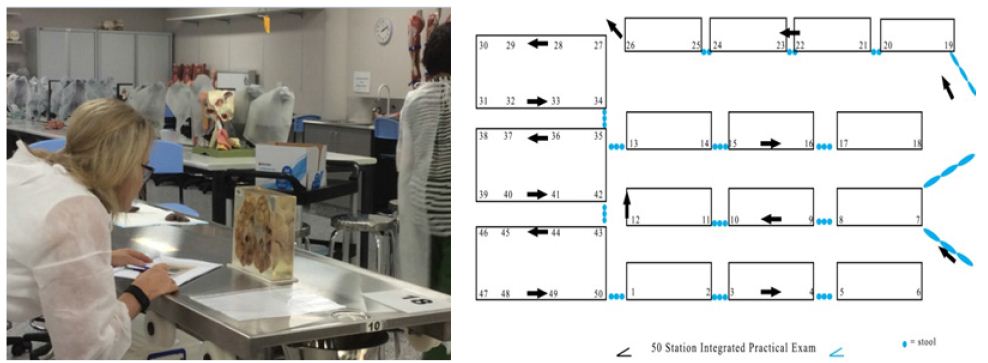
In the current integrated examination, pathology is embedded within a clinical scenario, testing learners theoretical and practical application ability [1]. This helps to relate pathological processes to clinical problems through MCQs, SAQs, EMQs and objective structured practical examinations (OSPEs) and provide good face validity [6]. In 2015, along with a series of written papers (MCQ,SAQ, EMQ) students under took a clinical oriented integrated practical assessment(IPA)which is a hybrid of the ’old-spotter’ and the OSPE [7]. The Bond University IPA (Figure 2) is a time-based, sequential 50-station practical exam, blueprinted against the learning outcomes and held in a laboratory setting (Figure 2).

Figure 2:Year 2 Integrated Practical Assessment at Bond Medical School.

Result

A 4×4 contingency table of quartile range was made to visualize the distribution of the IPA and written examination scores (Figure 3). Table 1 and Figure 3 highlights that 24 students scored better in IPA compared to 21 in written exam. The graph (Figure 3) shows that 18 students who did well quartile 4 in IPA were the same students who did well in the written and the 13 students who did poorly quartile 1 were the same in both assessment methods. This suggests that students in highest quartile 4 or lowest quartile1 maintained their performance irrespective of the assessment modality but students in mid-quartile 2 and 3 moved across.

Figure 3:Correlation of quartile rank order between the IPA and written examination for 2015 cohort.

Table 1:

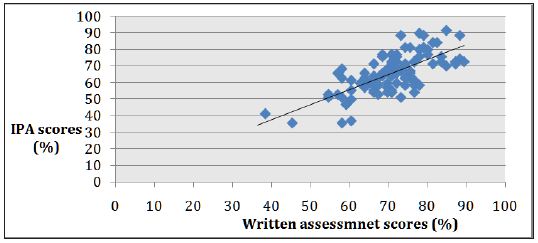
Table in (Figure 3) shows 51.6 % (48/93) of students’ scores were not affected by assessment modality but it did affect the performance of the remaining 48.4 % (21+24) that either went up or down the quartile range when challenged with two different assessment methods. Figure 4 shows the positive Pearson’s correlation coefficient of percentage scores (r= 0.68, significant at > 0.01) between the two assessment methods. A scatter plot of two variables (IPA score % and written score %) shows the line of best fit is in the positive direction i.e. there is positive association between the two exams marks. Cronbach alpha is a measure of reliability [7] and a measure of0.7 which is closer to 1.0 suggests good reliability of our IPA exam.

Figure 4:Pearson correlation coefficient curve, r =0.68.

Discussion

Our study shows that higher number of students (n=24) did better with IPA when compared to written exam (n=21). Cronbach alpha of 0.7 indicates as a reliable assessment tool. Smith et al. [7] study on robust assessment method for anatomy- Integrated Anatomy Practical Paper (IAPP) revealed consistently strong reliability coefficients ( Cronbach alpha) of up to 0.923 and suggested that IAPP is an integrated, relatively cost-effective and fit-for-practice tool for assessing anatomical knowledge and application.

The IPA was developed based on IAPP. The combination of wellstructured clinical vignettes and three dimensional observations of macroscopic specimen’s allowstesting of the visual-spatial ability and gives students ‘an experience of actual learning [8]. IPA helps to correlate structural pathology [5] to clinical symptoms and signs of a disease which fosters clinico-pathological correlation skills in students.

Jones et al. [9] concluded in their study that introduction of 3D printed anatomical models could be a disruptive technology to improve surgical education and clinical practice. This re-enforces that three dimensional learning and correlation can happen with real life museum specimens and not with 3D printed pathology images.

Study Limitations

This study suggests IPA to be a reliable exam tool based on a single small cohort size (n=93). This indicates directions for further study by collecting data on more cohorts.Students perception on IPA is not included which would help in understanding its advantages and disadvantages. The cost -effectiveness and logistic of running IPA needs to be considered. Inability to the handle pathology specimen in pots hinders the tactile aspect of deeper learning.

Conclusion

A strong association(r = 0.68) between the two assessment methods is shown by the positive Pearson’s correlation curve. This suggests that the students’ performance in the IPA correlated well with the written assessment, so either could be used to predict their learning. Written assessment examines the theoretical knowledge and the IPA assesses the three-dimensional application of knowledge to understand the pathophysiology of a disease. Though it is small single cohort study, it suggests that IPA could bea reliable and feasible assessment tool to integrate basic sciences with clinical sciences. This study reassures that the pathology teaching methods are aligned with the assessment tools in our undergraduate medical program.

For More Articles: Biomedical Journal Impact Factor : https://biomedres.us

Journals on Genetics

Genotoxic Effects on buccal Cells of Workers Exposed to Fogging Sprays during Fogging Operation

Introduction

The number of death due to dengue fever in Malaysia is at an alarming level with 109 deaths reported from 3rd January 2016 to 14th May 2016 [1]. The Government in collaboration with the Ministry of Health Malaysia have been conducting fogging operation to control the spread of dengue in hotspot areas in Malaysia. Thermal fogging spray is recommended as a control measure to kill the mosquitoes at their adult stage [2]. A few chemicals are frequently used in thermal fogging operations, such asmalathion, fenitrothion, fenthion, and some other pyrethroid pesticides [3]. These pesticides, especially malathion, are associated with a genotoxic effect as they could worsen the damage on chromosomal structure in cells [4]. Research by Koutros et al. [5] also found out that there is an increased and aggressive prostate cancer among workers who use a combination of a few pesticides such as malathion, terbufos, and fonofos.

The mechanism of cancer starts when an individual is exposed to genotoxic agents for a long period of time. This exposure causes chromosomal damage when fragments of chromosomes do not move to the opposite pole during anaphase stage. The nuclear membrane forms around the chromosomal fragments, which eventually develop into a small-sized nucleus known as a micronucleus (plural: micronuclei). Micronucleus formation is also an indication of an increase in DNA damage, which is often encountered in the formation of cancer cells [6]. To identify the formation of micronuclei in cells, micronucleus assay method is used. There are two types of cells that can be used for this method,namely lymphocytes and buccal cells. However, sampling of buccal cells is preferable because it is easier and cheaper than using lymphocytes and causes no pain to the subject [7].

The aim of this research was to study the genotoxic effect in terms of micronucleus formation among fogging workers due to the exposure to fogging chemicalsat which previous studies have found that the effect can be seen on the farmers who handle pesticides to kill the insects and pests. This study reveals new findings in which there were no previous studies that examined the effect on fogging workers. The results are reported in this article by comparing the frequency of micronucleus per 1,000 cells between fogging workers and office workers. Several factors that may potentially contribute to the formation of micronucleus, such as age, smoking status, and years of pesticide exposure were also investigated.

This research study has proven that there is DNA damage that can be seen in the spraying operation workers exposed to genotoxic agents through the formation of micronuclei in their buccal cells. In addition, the findings also prove that there are no significant differences to differentiate between categories of age and duration of pesticides exposure to the fogging workers. Only smoking status that showed a significant difference to distinguish the two groups of workers who smoke and workers who do not smoke.

Materials and Method

Materials: Chemicals: Acetic acid, 0.0025% acridine orange (AO), 0.03 M ethylene di amine tetra acetic acid (EDTA), 1% of dimethyl sulphoxide (DMSO), methanol, 0.075 M potassium chloride (KCl), 0.64 M sodium chloride (NaCl), 0.01 M Tris-HCl.

Distribution Of Questionnaires: The questionnaire, which was a modified version of the questionnaire from Program Molek Tani KPKK UKM 2014/2015, was distributed to the subject before collecting the buccal cells. The respondents’ sociodemographic data, disease history, employment background, type of mosquito pesticides used, smoking status, and type of personal protective equipment worn during fogging operation were collected using the questionnaire.

Collection of Buccal Cells: Before taking the sample, the subjects were asked to wash their mouth with water to remove any contaminants or food residuals. Buccal cells were collected by gently scrapping the mucosal surfaces on both sides of the cheek using a sterile wooden tongue depressor [8]. This process was carried out for a minute to obtain adequate buccal cells from each subject. The buccal cells collected were then transferred into polypropylene tubes containing 5mL of buffer solution. Each tube was then labelled with the name of the subject.

Fixation and Sample Processing: Buccal cells were washed 3 times in a buffer solution (0.03 M EDTA, 0.01 M Tris-HCl, 0.64 M NaCl) at pH 7 by centrifugation at 2,000 rpm for 10 min. For each of the last wash, the cell pellet was added with 5mL of 0.075 M KCl and 50mL of 1% DMSO. The compounds were then incubated for 30 min at room temperature and then added with Carnoy solution (methanol and acetic acid at a ratio of 3:1). The compounds were centrifuged again at 2,000 rpm for 10 min. The supernatant was then removed, and the cell pellet was added with Carnoy solution and stored at −20 °C for subsequent analysis.

Preparation and Staining of Slides: The cell pellet was washed twice with Carnoy solution at 2,000 rpm for 10 min. At the last wash, the supernatant was removed, and 1mL of the remaining solution was left in the tube. 200 mL of cell suspension was dropped on the slide that had been heated and cleaned. The slides were then allowed to dry for 5–10 min and stained using 0.0025% acridine orange (AO) for microscopic analysis. The slides can be stored in a dry slide storage box and stored in a refrigerator with a temperature of less than 4ºC [9]. Staining process was done in a dark room because acridine orange is very sensitive to light. A total of three replicates of cells were prepared for each sample to obtain the average number of micronuclei formed per 1,000 cells.

Scoring of Micronucleus per 1,000 Cells: The presence of micronucleus was observed by using a fluorescent microscope at 200× and 400× magnifications. Several criteria were considered in the scoring, as stated by Bonassi et al. [10]. For the first criterion, the cells with the presence of major and minor nucleus were recognised as micronucleus. The micronucleus was round or oval and had a diameter 3–16 times smaller than the size of the main nucleus. Most cells had only one micronucleus, but it was possible to have more than one micronucleus in one cell. This situation could be seen in subjects who had been exposed to genotoxic agents or radiation in a long term. Micronucleus should also be located in the cytoplasm of the cell. The pattern and colour intensity of the chromatin must also be the same as the main nucleus. Last criterion was that the border must be clearly seen to prove the presence of the nuclear membrane.

Results and Discussion

The frequency of micronucleus per 1,000 cells was recorded as a percentage (%) and expressed as mean ± Standard Error Mean (SEM) for three replicates of the samples (n=3). The sample size for the exposed group and the control group was less than 100. Therefore, Shapiro-Wilk test was chosen to test the normality of the data distribution for the frequency of micronucleus.

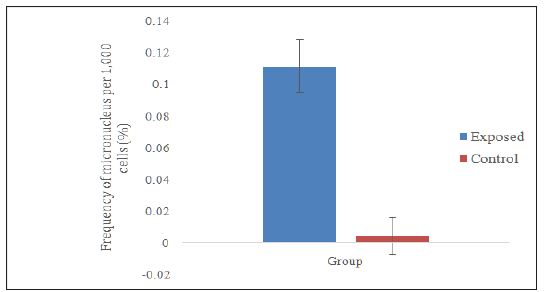
Data distribution was not normal; therefore, Mann-Whitney test was used to compare the frequency of micronucleus between the exposed group and the control group. Figure 1 shows the micronucleus frequencies in the exposed group (0.1117 ± 0.0167), which was significantly higher (p<0.001) compared to the micronucleus frequencies in the control group (0.0047 ± 0.0117). This result was also reflected in the study by Garaj-Vrhovac [11] involving 10 workers involved in the manufacturing of pesticides and 20 control workers who were not directly involved in the production of pesticides. The study found out that there was a significant difference in the micronucleus frequency in both groups, indicating that exposure to pesticides increased the formation of micronucleus in the buccal cells.

Figure 1:Comparison on micronucleus frequencies between fogging workers (exposed) and office workers control).

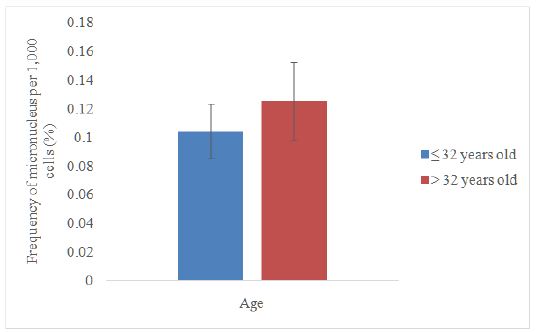
Data distribution was not normal; therefore, Mann-Whitney test was used to compare the frequency of micronucleus by age category in the exposed group. The range for the age was 28–39 years old. The median value (32 years) was taken as the midpoint to distinguish between these two age categories. Figure 2 shows the micronucleus frequency for the exposed groups aged ≤32 years (0.1044 ± 0.0190), which was slightly lower compared to the group aged>32 years (0.1253 ± 0.0273).However, the mean values between these two groups were not statistically different. This may be due to the small range of age between 28 and 39 years old, leading to a relatively weak statistical power analysis, thus making it difficult to observe the difference between these two age categories. These findings are also supported by Remor et al. [12] who found out that there was no statistically difference between the groups aged ≤38 years and >38 years.

Figure 2:Comparison between two age categories in the exposed group.

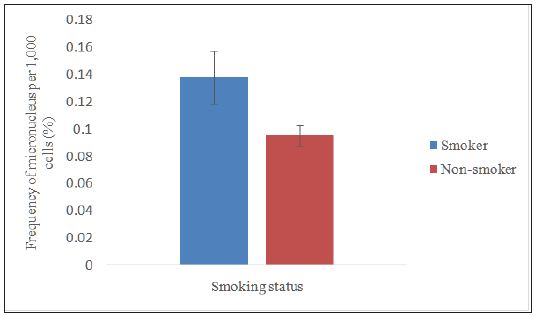
Data distribution was not normal; therefore, Mann-Whitney test was used to compare the frequency of micronucleus by smoking status. Figure 3 shows the micronucleus frequency in the smoker group (0.1383 ± 0.0195), which was significantly higher (p<0.05) than the non smoker group (0.0954 ± 0.0075). This result was supported with the study conducted by Sarto et al [13] who found that workers who smoked had a two-time higher micronucleus frequency than the workers who did not smoke. The study by Bhalli et al [14] also shows that smoking is an additional factor, other than exposure to pesticides that enhances the formation of micronuclei in buccal cells.

Figure 3:Comparison on smoking status between smokers and non smokers in the exposed group.

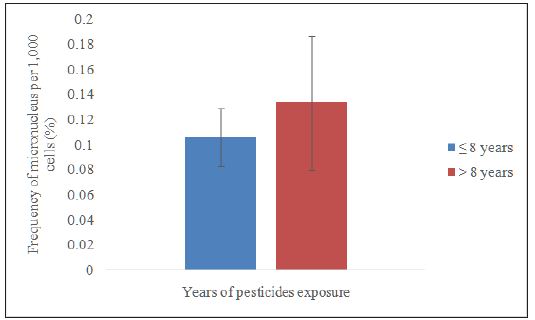
Data distribution was normal; therefore, independent samples t-test was used to compare the frequency of micronucleus by years of pesticide exposure. The range for pesticide exposure was 3–15 years. The median value (8 years) was taken as the midpoint to distinguish the two categories namely ≤8 years and >8 years. Figure 4 shows the micronucleus frequency among the workers who worked≤8 years (0.1060 ± 0.0232), which was lower but not significant (p>0.05) than the workers who worked>8 years (0.1338 ± 0.0533). DNA damage that occurs on buccal cells are associated with continuous use of pesticides. The severity of the damage depends on duration and intensity of exposure [15]. The longer and more frequent is the individual exposed to pesticides, the higher can the formation of micronucleus be found on buccal cells.

Figure 4:Comparison on smoking status between smokers and non smokers in the exposed group.

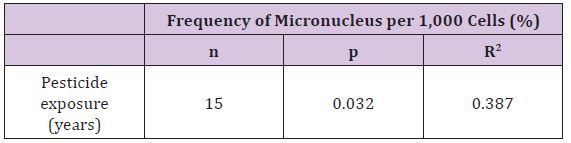
The data distribution was normal; therefore, the data were analysed using Pearson correlation test. The finding indicated that there was a weak positive correlation between the frequency of micronucleus and the working period (years) among the exposed workers (Table 1). This finding supports the claim that the longer is the period of pesticides exposure, the higher is the frequency of micronucleus per 1,000 cells.

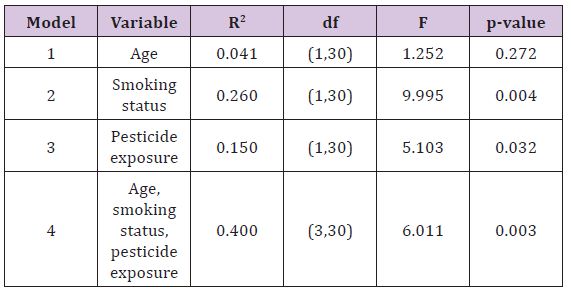
Table 2 shows the results for multiple linear regressions to identify the factors influencing the frequency of micronucleus per 1,000 cells. The study found out that smoking status andyears of pesticide exposure were the significant predictors for the frequency of micronucleus per 1,000 cells, while age did not show any significant correlation. Twenty-six percent of the increase in the frequency of micronucleus per 1,000 cells was influenced by smoking status, while 15% of the increase in the frequency of micro nucleus per 1,000 cells was influenced by the years of pesticide exposure. In addition, the study also found that a total of 40% of the change in the frequency of micro nucleus was caused by a combination of three factors namely age, smoking status, and period of work. Next, 60% of the change in the frequency of micronucleus per 1,000 cells may be due to other factors not examined in this study, such as alcohol consumption, diet, and radiotherapy.

Table 1:Correlation between micronucleus frequency and years of pesticide exposure.

Table 2:Result for analysis of multiple linear regression.

Conclusion

This study has proven that there was a significant difference in the micronucleus frequency per 1,000 cells between the fogging workers and the office workers. The findings also proved that there were no significant differences to differentiate the categories in terms of age and years of pesticide exposure. Only smoking status showed a significant difference to distinguish smokers and nonsmokers in exposed group of workers. This research also suggested that smoking status and years of pesticide exposure can be the significant predictors in determining the frequency of micronucleus per 1,000 cells.

For More Articles: Biomedical Journal Impact Factor : https://biomedres.us

Journals on Medicine

Class Based Variable Importance for Medical Decision Making

Introduction

Tree based methods are common for use with medical datasets, the goal being to create a predictive model of one variable based on several input variables. The basic algorithm consists of a single tree, whereby the input starts at the root node and follows a path down the tree, choosing a path based on a splitting decision at each interior node [1]. The prediction is made by whatever leaf node the path ends in, either the majority or average of the node, depending on whether the problem is classification or regression respectively. Several implementations exist, such as ID3 [1,2], C4.5 [1,3] and CART (Classification and Regression Trees) [2], with CART being the implementation in Python’s scikit-learn machine learning library used in this analysis. More sophisticated algorithms build on the simple tree by making an ensemble of thousands trees, pooling the predictions together for a single final prediction. Prominent among these are Random Forests [3], Extra Trees [4-9], and Gradient Boosted Trees [6].

Tree based modeling in itself is popular given that it is easy to use, can easily support multi class prediction, and is better equipped to deal with small n and large p problems, where the number of observations are much smaller than the number of variables. The small n, large p issue is especially relevant in certain medical domains, such as genetic data [5], where hundreds or thousands of measurements can be taken on a handful of patients in a single study. Traditional modeling in this instance, while possible, will likely find a multiplicity of models with comparable error estimates [4].

One major drawback for tree based learning is the lack of interpretability in model behavior. Machine learning can be used for two purposes: prediction and inference. Trees are excellent for prediction; for inference, however, they fall short. Building a single tree, we can examine the set of branching rules to gather insight, but typically a single tree is a poor predictor. Prediction can be improved by aggregating over hundreds of trees, but by doing so, the ability to infer disappears. Regression models, while more rigid in predictive power given that only a single model is made, are straightforward for inference, and thus are easy to convey to decision makers. The co-efficient from a model can be explained as the strength of the effect for the given variable on the target variable: a positive coefficient represents a positive effect, and a negative coefficient represents a negative effect. When trying to determine a course of treatment designed to change an outcome, such as for treating a patient given a poor prognosis from a model, inference can be argued to be just as important for the medical practitioner. In this context, a model should not only be able to detect a disease, but it should also provide insight as to why it detected the disease in order to treat it.

This issue of inference has been overlooked in the quest to find more accurate prediction. The main measure used, variable importance, provides some insight into how variables affect the overall model, but it does not provide insight as to how variables interact with the target. Some work using variable importance moves in this direction, such as for understanding the effects of correlated input variables [10-15], adjusting with imbalanced class sizes [10], measuring variable interactions [11], and as a variable selection mechanism [1] [8], but they still do not fully answer the question of how the features affect a given outcome. In classification problems, this question is essential for improving the usability of trees in the medical setting. What we desire is a new measure that conveys how the variable is important with regard to the target variable. In this paper, we raise this question for consideration and offer an initial approach for bridging the gap between prediction and inference. The paper is structured as follows: First, we outline the general approach for building a decision tree. Next, we explore the standard ways of interpreting a tree, both for a single tree and for an ensemble model. We then define a new measure, Class Variable Importance, to capture the strength of the effect of a variable with regard to different classes. Next, we explore the calculation of this new measure on several benchmark datasets. The final section concludes and proposes further areas for research.

Generating a Decision Tree

The general algorithm for building a decision tree consists of a binary splitting scheme, recursively breaking the observations into smaller groups until the groups are sufficiently homogeneous. For a classification problem, a split should only be made if it improves the separation of classes. The Gini index is commonly employed to measure the amount of separation, being defined by K.

Equation 1
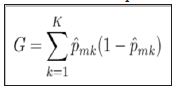
where ˆpmk represents the proportion of training observations in the mth node that come from the kth class.

From inspection, we can see that the Gini index takes on a small value if all of the class proportions are close to zero or one. This can be viewed as a measure of node purity, where a small value indicates that the node predominantly contains observations for a single class.

A popular alternative to the Gini index is cross-entropy, defined by

Equation 2
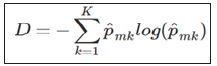
Cross entropy will also take on a value near zero if all of the class proportions are near zero or near one, so it is similar to the Gini index in its interpretation. To build a tree, the algorithm starts with the entire population, which serves as the root node, and then examines a set of variables. The Gini index of the root node is calculated. Subsequently, for each variable being considered, the Gini index of the resulting children nodes is calculated. The variable creating the lowest Gini index is chosen, and the process continues recursively on the children until no improvement can be made. For prediction, an observation starts at the root node and then follows a path down the tree. When it reaches a leaf node, the tree’s prediction is whichever class has the highest proportion.

Equation 3
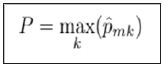
For ensemble models, many trees are generated in this manner, and the final prediction is an aggregation of predictions from all the individual decision trees.

Interpreting a Tree

Once a model is made, the question arises on how to interpret the output. For a single decision tree, the actual splitting decisions on variables can be examined to understand relationships. Consider the tree in (Figure 1), built off of the Hepatitis data set. Further description of the data set is discussed in Section 7.1. To understand how a variable improves accuracy, the splits and paths can be explored. For this tree, the variable bilirubin is used to split on two interior nodes, whereas ascites, alk phosphate, sgot and albumin are only used on one interior node. Bilirubin seems to be more important since it was selected by the algorithm twice. Also, the relative location of the variables in the tree can provide a different insight. In general, the higher up in the tree the node is, the bigger the gain in accuracy by splitting. Thus, bilirubin may make a relatively bigger difference on a larger proportion of patients than, for example, sgot, (Figure 1). Lastly, relationships between variables and outcomes can be inferred by examining the final interior nodes. For the bottom leftmost interior node, the split is defined as class 1 (die) if sgot is less than or equal to 86, and class 2 (live) otherwise. However, this interpretation becomes more difficult when examining nodes on higher levels.

Figure 1 : Decision Tree on Hepatitis Data Set.

Understanding a single decision tree is manageable, but as the number of trees increase, this visual understanding quickly becomes intractable. This is currently overcome by generating a measure of average effect over all the trees. Variable importance is defined as the total amount that the Gini index is decreased when it is split over a given variable and averaged over the number of trees [7]. The larger the number, the bigger the effect. A graphical representation of variable importance is presented in (Figure 2). We can infer from the graph that albumin makes the biggest average improvement in node accuracy when splitting, whereas antiviral make hardly any gains when used as splitting variables. Variable importance is valuable to see how well the variable is influencing the structure of the tree, but it does fall short when trying to understand how the variable is important to a given outcome. In this regard, regression models are still superior.

Figure 2 : Random Forest Variable Importance on Hepatitis Data Set.

Class Variable Importance

Variable importance as it is defined gives a measure of how well the model is differentiating between classes, but it suffers from two key weaknesses. The first is that it does not measure how a variable influences the target variable; instead, it simply tells us that there is some effect in shaping the tree (Figure 2). The second is that it tends to favor variables that make the biggest overall impact on the model. Since the Gini index is a main component of the calculation, the higher the variable importance is, the more likely the variable is to appear at the top of the tree. This bias in variable importance is known and has been explored in previous studies [14-16] with new ways of reducing the bias presented. Still, there has been little discussion of new measures in the literature.

What we desire is a measure that tells us not that the variable is important, but that it is important for detecting a specific class. For a given class C of a target variable, let c represent the number of training examples in the class. Define the importance of a variable V with respect to the class c over a model with k trees as

Equation 4
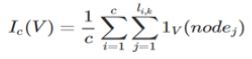
Where li,k represents the length of the path for example iover tree k, and 1V(nodej) being defined as 1 if the variable for nodej equals V and 0 otherwise.

Using Class Variable Importance (CVI), we can begin to understand the variable importance with respect to every class. For example, using the standard variable importance (Figure 2), we can only infer that albumin and bilirubin have a high chance of being at the top of the tree, given their large values. Examining a tree from model (Figure 1), that insight holds true. What would be more useful to know from an action ability standpoint is what variables went into generating a specific path. What variables went into classifying instances falling in the leftmost leaf node? Variable importance alone cannot tell us that.

When looking at the path of a variable ending in the first leaf node on the left, bilirubin, ascites, and sgot all appear in one node in the path. However, when considering the third leaf node from the left, bilirubin is counted twice, being in two path nodes, whereas ascites still appears only once. CVI gives us a way to look at the average of all these paths per class over all the training examples. Looking at the paths for all examples of a given class, we can measure the average number of times a variable is passed through to get to a prediction.

This measure on its own is a step toward better interpretability; the more a class passes through a variable, the more that variable is sifting through nuances in the class behavior. However, the question still exists as to the degree of an effect. If the variable is equally important to all classes, it does not demonstrate a preference toward one class or another. To help give insight into the degree of the effect, we can define pair wise ratios of class importance. For a two class classification problem, where C = [0, 1], we can examine the ratio of importance between classes, or

Equation 5

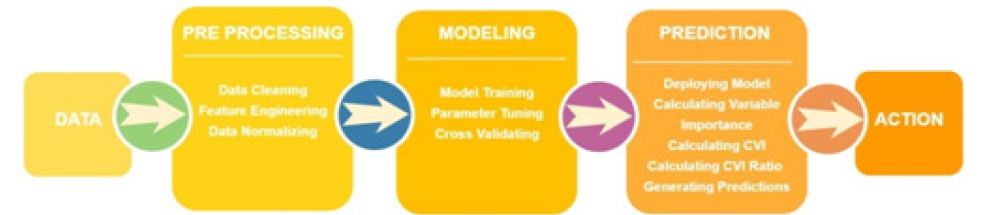
Ratios close to one indicate no real discriminative power, whereas ratios above or below one show preference towards the positive class or negative class respectively. We cannot infer the direction of the relationship as we can with regression models, but we can say that a given variable is more influential for one class or another so that the strength of the discriminative power can be found. It is worth noting that CVI does not change the way models are built-it merely enhances the interpretive power in post analysis. Considering that the traditional machine learning flow consists of processing data, building a model, deploying the model, and using predictions made, it can be argued that the most important part of machine learning occurs at the end of the flow. In the medical setting, the final step, acting on the prediction, can be critical in saving a patient’s life (Figure 3).

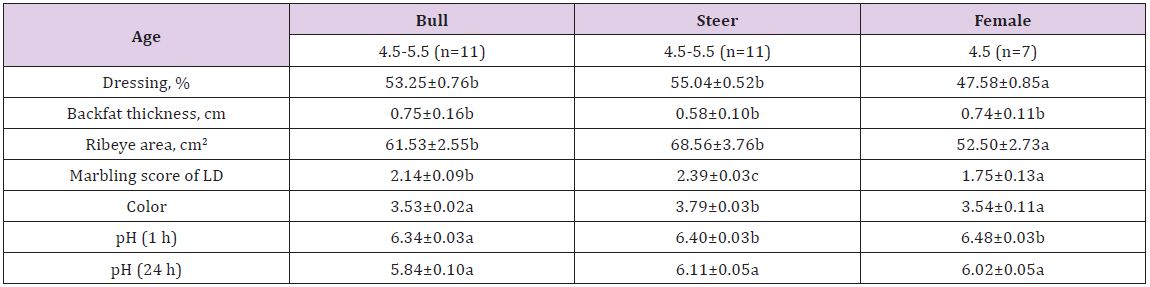
Figure 3 : Carcass characteristics of Yak.

While data cleaning and feature engineering can improve accuracy, without meaningful ways to use the prediction, the effort to build a model is wasted. Thus, more focus should be placed on the prediction phase to help utilize the predictions generated. CVI is calculated on top of all of the modeling that has already been done and can be calculated on any tree-based model. It can be retroactively included in currently deployed models as well as added on to any future modeling work with minimal computational expense. The resulting new measure provides more resources for a medical practitioner to use in their decision making, which can be valuable in generating a holistic view of a given patient (Figure 4).

Figure 4 : Carcass characteristics of Yak.
For pH (1h), the steer and female had similar scores but the bull was significantly higher. For pH (24h), all three sexes were similar but they are higher than would be expected for cattle suggesting that this may have been genetics or the animals may have been stressed before they were harvested. Also in general grass fed animals normally have higher ultimate pH values than grain fed animals (Table 2).

Performance on Benchmark Data

To see how useful class variable importance is in practice, an analysis was done on several benchmark datasets. Exploration of several tree-based methods was employed: Extra Trees (ET), Random Forests (RF), and Gradient Boosted Trees (GBT). Since the variables themselves were of key interest, no feature engineering was performed on the data. For preprocessing, median values were imputed on any missing data, and all numerical variables were normalized. AUC (Area under the Curve) of the ROC (Receiver Operating Characteristic) was chosen as the optimization metric, resulting in one best model of each respective algorithm per dataset.

Hepatitis Data

The Hepatitis dataset in this study is from UCI Machine Learning Repository, which included 155 samples with 20 attributes (14 binary, 6 numeric attributes). The objective of this dataset is to identify or predict whether patients with hepatitis are alive or not (1 for die and 2 for live). The model performance for each algorithm is reported in (Tables 1 & 2). Given that Extra Trees has the highest classification accuracy; it may be the favored model in terms of inference, though each model has its strengths and weaknesses to consider before deployment (Table 1). After the models were built, the corresponding variable importance and ratio importance Rlive, die (V) were calculated for each variable. Looking at the ranked lists of overall variable importance in (Figure 2), medical practitioners may make decisions for treatment based on which variables have the largest values. For example, in the Random Forests model, albumin and bilirubin seem most important. Using knowledge on a specific patient, they may go down the ranked list of variables starting with albumin and bilirubin until they find one they can influence for the patient’s situation. They would likely not consider antiviral, since these had the lowest importance of all.

Table 1 : Model Performance for Hepatitis Data.

Table 2 : Most and Least Important Variables on Hepatitis Data.

If instead we consider the ratio importance in (Figure 3), we see a very different picture. For the same Random Forests model, ‘spleen palpable’ and ‘malaise’ seem to favor the live class, whereas ‘anorexia’ and ‘sex’ seem to favor the die class.

It is worth noting that antivirals, which had relatively low overall variable importance, demonstrated a significant preference for the die class in the ratio representation. If a patient is given a death prognosis from a model, it may be more valuable in that specific patient’s case to focus on spleen palpable, malaise, anorexia, and sex in trying to bring about a change in the patient’s outcome since those are more strongly favoring one class or another. We cannot determine the direction of the relationship, whether it be negatively or positively correlated, but with domain expertise, this can be inferred. For example, it may be that malaise favors the live class, but that does not imply that the relationship is positive. It may be that when malaise is not present, a live prediction is generated. With domain experience, these types of nuances can be understood with decision making (Table 2).

This inversion of ranking appeared not just with antiviral in the Random Forests model, all models had some low-ranked variable importance appear high when examining the ratio importance. It is worth considering what causes this to be so. For these variables, it is very likely that they often appear at low leaves in the tree. Thus, they do not appear often, but when they do, they exhibit the strongest effect. Consider a dataset with a binary variable that is 0 most of the time. However, whenever it has a value of 1, the same class is always predicted. While the value of 0 may predict either class, the fact that when it is present it predicts 1 is a strong relationship, one that a regression model is more likely to detect. Creating a ranking of importance increases the ability of a tree based model to detect relationships of this sort (Table 3).

Table 3 : Most and Least Important Variables on Hepatitis Data.

Breast Cancer Data

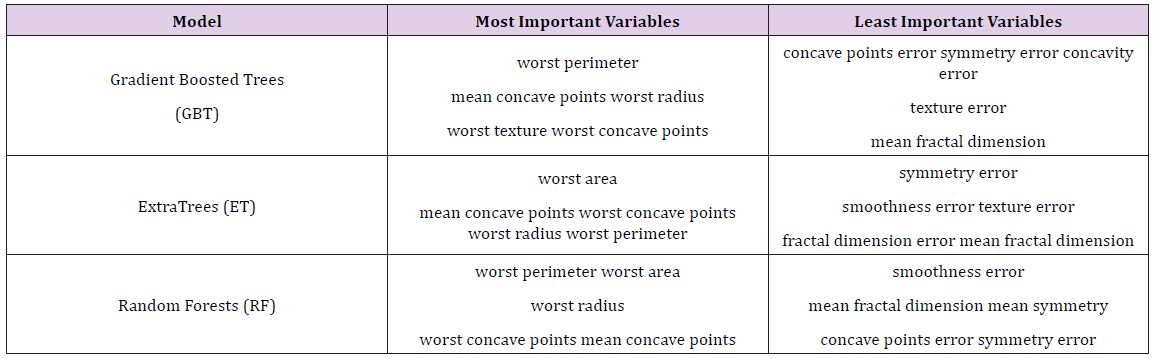
The Breast Cancer dataset in this study is from UCI Machine Learning Repository, which included 569 samples with 32 attributes (all numeric attributes). The objective of this dataset is to identify or predict whether the cancer is benign or malignant (M for malignant and B for benign). The model performance for each algorithm is reported (Table 4). Given that all models demonstrate the same classification accuracy and relatively similar AUC, the best model may be the Gradient Boosted Trees with the lowest Log Loss. Yet, each model has its strengths and weaknesses to consider before deployment (Table 5).

Table 4 : Model Performance for Hepatitis Data.

Table 5 : Most and Least Important Variables on Breast Cancer Data.

After the models were built, the corresponding variable importance and ratio importance RB, M (V) were calculated for each variable. Looking at the overall variable importance in (Table 5), we see the same set of variables appearing important across all models: ‘mean concave points,’ ‘worst concave points,’ and ‘worst radiuses. Given that the models had similar performance metrics, this is not surprising, and we can be more confident that these variables are truly important for a large portion of the examples in the training data. But again, we do not know why these variables are important, just that there seems to be some value in the ‘mean concave points,’ ‘worst concave points,’ and ‘worst radiuses when discriminating between benign and malignant tumors (Table 5).

When examining the ratio importance in (Table 6) however, more variation is present between models. ‘Symmetry error’ is most strongly related to the Extra Trees and Random Forest model, whereas ‘radius error’ is most important for Gradient Boosted Trees. In this situation, we see the same inverse presentation in the variable ranking as is witnessed in the hepatitis data: the least important variable in the Extra Trees and Random Forests model, ‘symmetry error’, and now has the strongest effect in the ratio representation. Again, this suggests that while it may not impact the majority of instances, when it does appear at the lower branches of the tree, the differences between classes are notable. When looking for innovation in cancer treatment, new ways of looking at the same data are needed to stimulate novel ideas.

Table 6 : Ratio Variable Importance on Breast Cancer Data.
Conclusion

Class Variable Importance (CVI) presents a new way of interpreting variable relationships in tree-based models. The fact that both datasets presented very opposing views of certain variables demonstrates the importance of considering different measures of variable importance: what is apparent in one representation is not always apparent in another, and in such a domain as medicine, that new representation may provide hidden insight. It is likely that the variable is only present in the bottom most splits of the trees, indicating that while not used often, for those instances where it is used, the variable is the biggest differentiator between the classes (Table 6).

CVI presents a very different interpretation of the variable relationship than the top down approach of standard variable importance. The commonly used variable importance measure is insightful in that it measures how strongly variables influence a lot of training instances; being a measure of how likely the variable is to appear in a top split of a tree and not how much it influences a specific prediction. CVI tries to overcome this by measuring the strength of the effect with respect to each class. If the class variable importance is relatively the same between all classes in the target variable, it can be inferred that the variable favors all classes similarly. To represent this relationship more cleanly, a ratio of class variable importance can be calculated, with ratios greater or less than one inferring that the variable favors one class over another. When looking for actionable model results by decision makers, as is often the case in the medical domain, this representation gives more useful information than variable importance on its own.

The fact that CVI measures the relative effect of a variable between classes and is not weighted by the proportion of nodes in the tree allows for the detection of more nuanced relationships. However, if the goal is to find variables with high relationships and a large portion of classes, a holistic look at the feature importance can be employed. Variables that have both high variable importance and high ratio importance can be identified as having affecting many examples and in the same way. It may not be easy to infer the direction of the relationship, but by looking at patients on a case by case basis and applying domain expertise, variables can be identified that are influential to a given example and its class prediction. While it is difficult for a single measure to convey a complete picture of a data set, creating a variety of measures to represent different nuances is key to better understanding and insight. In this regard, further exploration of variable importance in regard to inference is essential. Exploring different approaches for calculating the variable effect within the trees may result in more useful measures. For example, employing the Gini index instead of an indicator function or incorporating the actual splitting rule on the nodes into the class importance calculation may present the variables differently. Devising a weighting scheme to give more credence to importance ratios with a larger proportion of nodes in the tree may make detecting variables influencing a larger portion of the population. In future work, we plan to explore these nuances further.

For More Articles: Biomedical Journal Impact Factor : https://biomedres.us

Journals on Food Sciences

Yak’s Biochemistry Contain the Factors that Make it Possible for Human Habitation on the Top of the World in Central Asia

Introduction

In English terminology, Yak is used for both sexes. In Himalayan terminology, Yak is used for the male and Dzomo or Zhom for the female (Figure 1).

Figure 1 : Wild Yak, Himalayas (Photographed by Lopa Basu).

Materials and Methods

Description

The yak have enlarged lungs (four times as large as cattle), and more numerous red blood cells (three times more than cattle) and smaller cells (1/2 the size of cattle). Yaks have a dense coat which may be red, brown or black. They also have long hair sometimes reaching the ground (kilts or skirt) and lower number of sweat glands for conserving heat. Strong solid horns are used for removing snow to obtain covered vegetation and also used to establish the pecking order. They have multiple stomachs ruminant for digesting cellulose and coarse grazing material. They are also divided into domesticated (smaller size) and wild (larger size) yak. When it gets too cold wild yaks migrate seasonally to the lower plains to eat grass, lichens’ (composite symbiotic organism of algae and/or cyanobacteria living among multiple fungi) and herbs.

When it gets too hot they retreat to the higher plateau. Unfortunately, the numbers of these animals are decreasing due to uncontrolled hunting, predators, diseases, decreasing grazing areas and quality, malnutrition combined with the unforgiving environment. Yak nicknames are “Grunting Ox” or Hairy Cattle. The domesticated animals are Bos Grunniens and the wild is Bos mutus and they are native to the Himalayan Mountains of China Tibet, Nepal, and the surrounding areas. They were domesticated over 3,000 years ago, and can cross with bison and cattle. The male hybrids are sterile but the females (Dzomo or Zhom) are fertile. Yaks have short legs (females 4.5 feet in height and males 5.5-6.5 feet) with a weight of 1,800- 2,200 pounds. If dairy cattle are used in the cross the milk production is increased but most owners prefer pure breeds. The yaks (both sexes) have large horns (30 inches), four compartment ruminant stomachs, and a shoulder hump. Yaks head droops before high massive shoulders. They are sure footedanimals for the rough terrain. Thick red, black or brown undercoats acts as insulation and keep them warm to -40 °F or C. Domesticated yaks are more variable in color, and white splotches are common.

Reproduction

Heifers will breed at 18 months of age and gestation period is 8.5 months and males are of breeding age when then they are three years old. Calves at birth weight about 30 pounds but grow quickly on mother’s milk but the average survival rate is only about 50% due to poor nutrition for both mother and calf, harsh environmental conditions and death due to predators and diseases. Wild yak reproduce every two years and domestic yak sometimes reproduce ever year and occasionally have twins if the mothers have adequate nutrition. Infant yak can live up to 20 years.

Social

Most wild yak cows live in large herds with their young in groups of up to 100 or more animals. In contrast, adult males spend most of the year alone or in small groups.

Uses Of Yak

Meat – from grass fed animals is usually very lean and the yak is no exception.

Hair – When yaks shed their red, blackish or brown undercoat in the spring, the hair can be collected, combed out, and processed and results in a fiber that is comparable to cashmere, angora or qiviut (inner wool of the muskox). The coarser brown or black outer hair or ‘guard hair’ is traditionally used to weave ropes, belts, and bags. Hides – Can be tanned and used for many leather products including tent material and leather clothing.

Horns and Bones – Are often carved into utensils or sold to tourists or shipped (often on this beast of burden) to more traveled areas. Bones also find domestic uses, are converted into jewelry or carved into art objectives. Horns are also carved into objects of art. Fuel- Dried dung of the yak is the only obtainable fuel in this area of the world and is sometime used as construction material.

Yak Meat

Yak meat is a staple and can be naturally frozen by the environment but drying is often used to increase shelf life. It is a sweet, juicy, ultra-lean dark red delicately flavored red meat that is not gamey. It is lighter tasting than beef and never greasy. Meat can be air-dried and will keep from one to two years. Smoked meat (bacon beef) requires one to two days in salt and then keeps for up to 2 years. Spiced jerky or curry jerky is also available. Vacuum packaging can reduce oxidation of yak meat during frozen storage.

Meat Composition

Only a few papers have addressed this topic but one of the more informant ones on yak meat is by XD Zi, GH Zhong [1-3]. The data in Figure 2 and Tables 1 & 2 is a summary from this source.

Other Uses

Beast of burden-Yak can transport salt, grain and etc. They are used for plowing and threshing grain (primarily barley). Some yaks can be saddled and ridden. Yak racing is also practiced along with yak skiin and yak polo. Milk – Yak cow milk (higher in butter fat than cows) makes excellent cheeses (chhurpi) and is often dried to increase shelf life. Butter which is consumed in large quantities is also used in lamps and made into butter sculptures used in religious festivities. Butter is a staple food with salt added. Sour buttermilk can also be added to milk to produce sour milk. Grain is sometimes added to milk which results in the main course meal. Milk-tea, a mixture of tea and milk is often served to guests and is yellow in color.

Milk and mushrooms are used to make a stew; salt is usually added but no additional sugar is needed since the milk is naturally sweet in flavor. Yogurt is produced which also contributes needed nutrition. Milk powder is just beginning to become popular. Renin is added to coagulate the milk to make cheese. Viscera (edible) includes heart, stomach plus ruminant, small and large intestine, liver, kidney. In the inedible category, lungs and pancreas are primarily used for dog feed even though they are considered edible in other areas of the world.

Climate

Yaks have been brought to warmer climates and placed in zoos and some can be found on ranches where their primary food is grass. Under these conditions their meat sells well since it is different and scarce but the animals seem to prefer a colder climate.

Result and Discussion

Shows the live weights of Yak at different ages. It is evident from this graph that both male and female yaks have similar birth weights but starting at age 2 and continuing through 8 years the males out gain the females and the final mature weight of the males is about twice as much as the females (Figure 2) and (Table 1). For dressing percentages, the bull and steer are not significantly different but the female has a significantly lower percentage. For back-fat thickness, comparing all the values the results indicate no significant difference due to sexes. Marbling scores indicate all sexes are significantly different with the steer having the highest amount followed by the bull and the female which had a significantly lowermarbling score. For color, the steer had a significantly higher color values followed by similar scores for both bull and female.

Figure 2 : Live weights of Yak at different ages.

Table 1 : Carcass characteristics of Yak.

For pH (1h), the steer and female had similar scores but the bull was significantly higher. For pH (24h), all three sexes were similar but they are higher than would be expected for cattle suggesting that this may have been genetics or the animals may have been stressed before they were harvested. Also in general grass fed animals normally have higher ultimate pH values than grain fed animals (Table 2).

Table 2 : Proximate Composition of 10th/12th rib-cut of Yak.

Proximate composition of 10th/12th rib-cut of Yak is shown in (Table 2). Present dry matter was significantly lower in bulls than in steers or females which were not significantly different. Percent protein was significantly lower in females than in bulls and steers which were not significantly different. Fat parentage was significantly lower in bulls than in steers or females which were not significantly different. Percent ash was not significantly different due to sex. Amino acids were also analyzed in the original research but values are not shown in this summarized version since most of the values were similar to the expected ranges. The only major difference was that methionine is dramatically lower (0.34 g/100 g protein).

Conclusion

Yaks, due to their genetic construction have the ability to prosper at high altitudes and withstand stand cold temperatures and sparse vegetation. Their existence makes human habitation possible under these same conditions.

For More Articles: Biomedical Journal Impact Factor : https://biomedres.us

Journals on Biology

Bacteria A Benefit Cell

Mini Review

Before birth, microbiota does not exist in the human body, and microorganisms start to adapt in several locations in the body after birth. The microflora in the intestinal tract takes a long period to be formed. After they formed, human body get benefits from these microbiota and the important benefit the immune system supports, disposal of waste gastrointestinal, development metabolism and resistance the body against the pathogenic microorganisms [1-7].

Microbiota in the intestinal play a major benefit to the human health, the forming of these microbiota depended on the type of nutrients and lifestyle, and these reflected on the impact of formed microbiota on the body energy and metabolism [8-12]. Study the reflect of the food type on the intestinal microbiota were determined by several studies, López-Nicolâs et al. [13] studied the effect of fruit juices pine bark extract (PBE) on the intestinal microbiota and they found that the pure phenolic compounds such as gallic acid had a high antimicrobial effect on Staphylococcus aureus and Escherichia coli.

A study on the effects of lactose or inulin on constipated elderly patients of measured microbiota composition, the results show considerable interindividual variations that inulin increased bifidobacteria significantly and decreased enterococci in number and enterobacteria in frequency. Where the individuals consuming lactose, increase in fecal counts of enterococci and decrease in lactobacilli. Further, clostridia were detected. Total bacterial counts remained unchanged [14]. The dynamic mutual relations between the intestinal microflora and colon cancer risk can be modified by dietary components and eating behaviors. Composition of intestinal microbiota can be influenced by several dietary components.

Dietary modifiers the numbers and types of microbes and have been reduced colon cancer risk experimentally by generating bioactive compounds from food components. Further, gastrointestinal microbiota can impact both sides of the energy balance equation [15]. On the other hand, dieting affect the intestinal microbiota, several studies sought the relationship between the nutrient types and the composition of the intestinal microbiota, and the consequent of that on the human health and his activities. The determine of chronic soy consumption on modified gut microbiota activities, the results showed high concentrations of is flavones and their gut microbiota metabolites in the plasma, urine, and feces in the high-soy diet consumer compare to who consumed the low-soy diet [16].

In a study of dietary types to clarify some compounds etiologic role in colon cancer. The results showed that consuming a mixed Western diet was more able to hydrolyze glucuronide conjugates, and more microbially degraded bile acids compare with the vegetarians, seventh-day Adventists, Japanese and Chinese [17]. The probability of the effect of trans galacto oligo saccharides and a placebo on the composition and activity of the intestinal microbiota were determined in samples of males and females, and the concluded of this work confirmed that trans galacto oligo saccharides do not beneficially change the composition of the intestinal microflora, and After the ingestion of both placebo and trans galacto oligo saccharides number of bifidobacteria increased in intestinal microbiota [18].

Instead of the effect of the nutrient on the composition of microbiota, some factors had a side effect on the composition of macrobiotic. One of the most important factors is using the antibiotics; several studies investigate and determine the frequency and change of intestinal microbiota after a course of antibiotic treatment [19-21]. To study the effect of amoxicillin and vancomycin in the composition of microbiota randomized samples were measured to detect the changes in microbiota; the results showed that vancomycin reduced microbiota diversity and decrease gram-positive bacteria [22].

The antibiotics ciprofloxacin, clindamycin, vancomycin, amoxicillin, clarithromycin, and lansoprazole were studied as tream of long period antibiotic treatments. The conclusion of these studies improved the side effect of reduction and changes of the intestinal microbiota, facultative anaerobes and Enterobacteria increased after treatments with the antibiotics amoxicillin, clarithromycin, and lansoprazole, The influence of the intestinal microbiota differto the different antimicrobial agents in different ways, the effect in microbiota depends on several factors for example the agent spectrum, the dosage and duration of treatment [23- 25].

Moreover, treatment with chemotherapy has a side effect on the microbiota including changes in their compassion and their population, recently several studies investigated the effect of chemotherapy on the intestinal microbiota, 5-fluorouracil therapy infliance in methane produces by methanogenesis which reverse association with diarrhea and positive association with constipation, the intistenal microbitoa have been toxicity during the therapy [26].

Further, the impact of chemotherapy treatment on the composition of the microbiota extended to the composition of the human milk microbiota, a recent comparing study on the microbiota composition in cancer patient mothers and healthy mother’s milk showed that the genera Bifidobacterium, Eubacterium, Staphylococcus and Cloacibacterium were depleted, where the genera Acinetobacter, Xanthomonadaceae and Stenotrophomonas were decreased [27].

The gut microflora plays a major role to repair the intestinal homoeostasis and integrity. In a survey of intestinal microflora, bacteremia, mucositis, chemotherapy-induced diarrhea, chemotherapy-induced mucositis, radiotherapy-induced mucositis to evaluate the function of gut microflora in the pathogenesis of gastrointestinal mucositis, authors found that Patients who receiving cytotoxic and radiation therapy exhibit marked changes in intestinal microflora, with most frequently, decrease in Bifid bacterium, Clostridium cluster XIVa, Faecalibacterium prausnitzii, an increase in Enterobacteriaceae and Bacteroides, and they concluded that gut microflora can play a major role in the pathogenesis of mucositis by the changing of intestinal barrier function, innate immunity and intestinal repair mechanisms [28].

For More Articles: Biomedical Journal Impact Factor : https://biomedres.us

Journals on Surgery

Spontaneous Internal Drainage of Iatrogenic Oesophageal Perforation

Introduction

Oesophageal perforation remains a potentially fatal disease with mortality rates of 10% to 40% reported [1]. Iatrogenic injury is the most frequent cause of oesophageal perforation, with studies reporting incidence rates of 14% – 100% [2], followed by spontaneous rupture (Boerhaave syndrome) [3]. A variety of treatment options are available ranging from conservative medical therapy to radical oesophagectomy. Newer modalities with interventional endoscopy with or without placement of stents are more frequently being described [4].

Case Report

60-year old female with symptoms of dysphagia and reflux underwent diagnostic oesophago-gastroduodenoscopy (OGD). Immediately post-procedure, patient complained of chest pain and shortness of breath. Surgical emphysema was present in the neck and Computed Tomography (CT) confirmed oesophageal perforation in an upper oesophageal diverticulum (Figure 1). She remained well whilst managemened conservatively for 10 days with nasogastric tube, intravenous antibiotics and omeprazole. Subsequently the patient became septic, developing signs of mediastinitis and lung consolidation. She was transferred to Intensive care unit (ICU) where parenteral nutrition was commenced and antibiotics were changed appropriately. A repeat CT did not demonstrate any collections which required drainage, however there was a large iatrogenic oesophageal diverticulum extending from the retropharyngeal space down to the posterior mediastinum, just beyond the carina, compressing on the oesophagus. The patient also developed a neck swelling and air leak from a suspected perforated pharyngeal pouch for which ENT opinion was sought.

Figure 1:

Figure 2:

Repeat CT showed a small amount of contrast, identified within the gas containing mediastinal cavity which suggested a persistent small leak (Figure 2). The patient continued to be septic and did not improve as expected. Hence a repeat CT and contrast swallow was performed which demonstrated no leak in the cervical oesophagus, however there was a persistent defect. Contrast was noted to be leaking from a defect at the level of carina (Figure 3).

Figure 3:

A feeding jejunostomy was placed and a rigid OGD demonstrated a large defect in the thoracic oesophagus as well as perforated upper oesophageal diverticulum. ENT surgeons excised the diverticulum and drained the cavity. The distal perforation was left alone at this stage. This fortunately resolved spontaneously in 4 weeks without the need for further intervention. The upper oesophageal perforation/abscess cavity had internally drained itself back into the posterior thoracic oesophagus. Treating the proximal perforation led to spontaneous resolution of the distal perforation and abscess cavity.

Discussion

Flexible video endoscopy has almost totally replaced rigid oesophagoscopy. Despite the inherent safety of the procedure (0.03% perforation risk compared to 0.11% for rigid endoscopy), the dramatic increase in the number of examinations performed has led to an increase in the number of associated injuries [5]. Perforation related to diagnostic upper GI endoscopy occurs distally in 75 – 90%, mostly in relation to pathology. Most iatrogenic trauma is recognised immediately, or there is at least a high index of suspicion. Our patient presented soon after the procedure and appropriate management was commenced. However, this failed subsequently and she had to have multiple imaging only to diagnose a second oesophageal defect that was associated with an abscess cavity.

Iatrogenic cervical perforations are almost always contained and thus collections are usually drained percutaneously when necessary. Any resulting oesophagocutaneous fistulas heal rapidly in the absence of distal obstruction. Occasionally operative prevertebral lavage, primary closure and drainage is required, using a left lateral incision anterior to the sternocleidomastoid. This is well tolerated by even critically ill patients [5]. The optimal treatment of oesophageal perforation remains an issue of continuing debate. Surgical intervention has to be weighed against a conservative approach. Traditionally, the surgical approach was reserved to perforations diagnosed within a timeframe of 24 hr. If the diagnosis is not made early, surgery carries a high morbidity and mortality. Conservative therapy may be the better choice if the process is limited to the mediastinum, while surgery should be confined to those cases with simultaneous rupture or perforation of the pleura.

Our patient went onto develop a distal oesophageal defect thus internally draining the upper oesophageal perforation. Managing the upper oesophageal perforation lead to resolution and healing of the lower oesophageal defect. This is the first case to be reported in literature to clearly demonstrate that internal drainage and dealing with the proximal perforation could be attempted before contemplating thoracotomy if such a case is encountered in future.

For More Articles: Biomedical Journal Impact Factor : https://biomedres.us

Journals on Veterinary Medicine

Syringomyelia in the Thoracolumbar Spinal Cord of an African Wild Dog (Lycaon Pictus)

Brief Communication

A 31-day-old, captive born, male, African wild dog (Lycaon pictus, AWD) displayed hind limb ataxia and weakness since the onset of ambulation. Separation of the animal carried a high risk of aggression to the litter from the pack, leading to a conservative medical approach throughout the case. At 36 days of age, the clinical signs became more notable and the animal was visually smaller and thinner than its littermates. Although able to stand, it displayed an unsteady gait, taking a few steps at a time before the hind limbs collapsed. On physical examination, the animal was bright, alert and responsive, had a body condition score of 2/5, and displayed postural reaction (PR) deficits in both hind legs, more pronounced on the left. The remainder of the neurological examination, including the thoracic limb reflexes and cranial nerve evaluation, was normal. Ulcerated skin calluses of 1 cm diameter were present bilaterally on the elbows as a result of the hind limb weakness and increased time spent in recumbency. Mild laxity in the coxofemoral joints was noted on palpation. Radiographs showed left coxofemoral joint subluxation and mild muscle atrophy of the left hind limb. There was also asymmetry of the left capital femoral physis. A computed tomography (CT) scan was performed (HiSpeed CT/I, GE Medical Systems, Waukesha, Wisconsin 53188, USA; 3mm slice thickness, 1.25 mm reconstruction interval, soft tissue reconstruction algorithm) that supported the findings of the left hind limb muscle atrophy, but could not confirm the coxofemoral joint changes seen on radiographs. No abnormalities of the vertebral column or spinal cord were detected. The gait abnormalities were thought to be due to laxity in the tendons and ligaments of the coxofemoral joints.

As the animal grew, its ability to ambulate improved, but the gait remained abnormal with the animal intermittently falling to the side with both hind limbs. At 45 days of age it was able to keep up with the pack and by 52 days the elbow lesions were resolving. At 66 days of age, the animal was reevaluated. Body condition score had declined to 1.5/5 and new superficial abrasions were present on the dorsal lateral aspect of both hind feet, due to its abnormal ambulation. Significant muscle atrophy and marked ataxia in the hind end were noted. The animal was able to rise to a standing position and ambulate, but would drag its hind legs more often than previously observed, especially at a run. PR was now completely absent in both pelvic limbs. No pain was elicited on spinal or neck palpation, and deep pain was present bilaterally in the hind feet. Mentation was still normal, thoracic reflexes were normal, and anal tone was present. The animal was suspected to have a spinal lesion caudal to third thoracic vertebrae (T3), given a guarded prognosis, and returned to the litter with close monitoring of quality of life.

The gait abnormalities progressively worsened as the littermates were maturing and integrating into the pack. On day 87 the animal sustained a bite wound to the cranium, prompting intervention for treatment and further assessment. Cranial nerve examination and thoracic limb reflexes were normal, and mentation remained appropriate, but the animal was now paraparetic. Multiple superficial abrasions were noted on the elbows, hocks, and feet. Cerebrospinal fluid (CSF) was collected from the L5-6 intervertebral space. Culture revealed no growth of aerobic or anaerobic organisms. Fluid analysis showed a mild mononuclear pleocytosis (total nucleated cell count (TNCC) = 5 cells/uL, 58% large mildly vacuolated mononuclear cells, 42% small lymphocytes), a mild increase in protein (61.7 mg/dL), and peripheral blood contamination (586 red blood cells (RBC)/uL). Normal canine reference intervals for this laboratory include: TNCC <5 cells/uL, protein concentration <45 mg/dL for lumbar samples, and >500 RBCs/uL was considered peripheral blood contamination. Findings were considered non-specific and typical of inflammation, infection, or trauma to the central nervous system.

Figure 1 : Sagittal T2-weighted magnetic resonance image showing hyperintensity within the spinal cord representing syrinx formation at the level of T13-L1 (arrow).

A magnetic resonance imaging (MRI) scan (Philips Gyroscan NT, Imaging Center for Animals, Buffalo Grove, IL 60089, USA) showed a non-contrast enhancing, T2-weighted hyperintensity within the central and dorsal aspect of the right spinal cord extending from the level of the caudal aspect of T13 caudally to the level of L1-L2 (Figure 1). There was also mild bulging of the L7-S1 intervertebral disc without significant compression. The lesion visualized via MRI and the progressive worsening of clinical signs support the diagnosis of syringomyelia of the thoracolumbar spinal cord. Surgical intervention was not pursued due to the extensive postoperative care and aggressive social behavior of AWD. Mounting concern for the pack injuring or killing this debilitated member prompted euthanasia.

Figure 2 : (A) Histological section, spinal cord, T13. The image is not the most affected portion of the spinal cord, but demonstrates the syrinx clearly. The right dorsal and lateral funiculi contain a well-demarcated cavitation, or syrinx, delineated by mildly compressed neuropil (arrow). The syrinx does not communicate with the central canal. The central canal is mildly ectatic. “R” indicates right side. Hematoxylin and Eosin. (B) Gross spinal cord, T13-L1. Multiple cross sections of T13 to L1 spinal cord have a variable sized cavitation within the gray and white matter. This cavitation is 1.5 cm long and up to 3mm diameter. Fixed sections (10% buffered formalin).

On necropsy, the animal had adequate subcutaneous and visceral adipose tissue stores. Epaxial, gluteal and hind limb skeletal muscles were markedly atrophied. Bilaterally, skin overlying the olecranon processes of the elbows was ulcerated and overlain by a serocellular crust, interpreted as pressure sores. A 1.5 cm long, up to 3 mm diameter round to irregular cavitation, or syrinx, in the T13-L1 spinal cord was identified that markedly compressed and distorted the adjacent neuropil. On histopathology, the T13-L1 spinal cord had a well-demarcated cavitation, or syrinx, involving the dorsal, lateral and ventral funiculi white matter as well as adjacent grey matter (Figure 2). The syrinx was circumferentially demarcated by mildly compressed neuropil. Adjacent axon sheaths were dilated and empty, or contained swollen spheroids, which indicate axonal loss and degeneration, respectively. A few empty axon sheaths contained a single gitter cell. The bulging disc noted via MRI was not appreciated grossly. The necropsy findings confirmed the diagnosis of syringomyelia.

Syringomyelia is a general term that characterizes a spinal cord cavitation containing fluid [1]. Syringomyelia is a secondary finding due to a primary cause. A cavitation in the spinal cord, or a syrinx, has been associated with primary disorders including spinal cord tumors, myelitis, meningitis, congenital vascular malformations, chronic arachnoiditis, and spinal cord trauma [1]. The cause of syringomyelia is unknown, but may result from venous obstruction, mechanical disruption, or shearing of spinal cord tissue planes.

Clinical signs associated with syringomyelia depend on lesion location within the spinal cord [2]. In this case, the hind limb paresis, weakness, and lack of normal postural reactions of the pelvic limbs, yet normal forelimb reflexes were consistent with deficits in the sensory and/or motor components of the central nervous system, and localized the lesion to the T3-L3 spinal cord segment [3]. While the diagnosis of the large syringomyelia at the T13-L1 spinal cord was deemed the cause of the gait abnormalities, the size of the syrinx determined by MRI does not always correlate with severity of clinical signs [4]. Cavitation lesions may be progressive and expand along the gray matter of the dorsal horns, which are planes of structural weakness, resulting in subsequent necrosis and edema of the spinal cord parenchyma around the cavitation and progression of clinical signs [2]. In this case, clinical signs progressed as hind limb PR was delayed at one month of age and absent by three months of age.

Syringomyelia has been documented in humans [4], domestic dogs [2,5,6], domestic cats [7], cattle [8], horses [9], an African lion [10], and a dromedary camel [11]. To the authors’ knowledge, this is the first report of syringomyelia in any non-domestic canid. Previously thought to be a rare condition, diagnosis of syringomyelia in domestic companion animals is now more common, especially with the increased availability of MRI. This disorder is well described in certain dog breeds, especially the Cavalier King Charles spaniel [1]. In dogs, Chiari-like malformations are the most commonly described cause of syringomyelia, which typically occurs at the craniocervical junction. Syringomyelia caudal to the cervical spinal cord has been associated with spinal dysraphism [5], vertebral malformations, intervertebral disc disease and arachnoid cysts [6].

Diagnosis of syringomyelia is commonly made via breed disposition, clinical signs, MRI findings, and CSF analysis. When syringomyelia is detected via MRI, the primary cause should be sought out both cranial and caudal to the lesion [12]. MRI in this case showed a mild bulging of the L7-S1 intervertebral disc, caudal to the spinal lesion. The intramedulary pulse pressure theory suggests syringomyelia can develop a distance from the obstruction of CSF flow in any part of the spinal cord [1], and a bulging disc could have narrowed the diameter of the vertebral canal enough to alter the CSF fluid dynamics. The MRI did not show significant compression of the spinal cord from the bulging L7-S1 intervertebral disc, making it a likely incidental finding and not the cause of the syrinx formation.

While MRI is the best diagnostic tool, collection of CSF can indicate the degree of the spinal cord involvement. In a study of dogs diagnosed with Chiari-like malformations, CSF of dogs with syringomyelia had higher total nucleated cell count, higher protein concentration, and an increased neutrophil percentage. There was also a strong positive correlation between total nucleated cell count and the size of the syrinx [13]. Disruption of the blood-spinal cord barrier resulting in increased permeability has been suggested as the most likely mechanism of increased CSF protein concentration with syringomyelia. In this case, there was a mild increase in total nucleated cells and protein concentration.

Medical management of syringomyelia is directed towards analgesia, corticosteroids, and drugs that decrease CSF production. Surgical intervention is indicated when neurologic deficits are present, with the intent of restoring CSF dynamics by addressing the primary cause [6]. Direct draining of the syrinx with stents or shunts does not carry a good long term outcome in people due to obstructions [1]. Surgery was indicated for this AWD based on the severity of the clinical signs, but the extensive post-operative care would have prevented re-introduction to the pack and was not deemed in the animal’s best welfare.

Syringomyelia associated with Chiari-like malformations in Cavalier King Charles spaniels is a complex trait that has a moderately high heritability [14]. Although the syrinx that occurred in this AWD was not due to a Chiari-like malformation, it is possible that the primary malformation is heritable. Decreasing genetic diversity is expected to increase the frequency of congenital and heritable diseases. The AWD population is endangered and has experienced a significant loss of genetic diversity in the managed population, which is contributing to development of a genetic bottleneck for this species [15]. At present, there is insufficient evidence from this single case to suggest syringomyelia is a heritable condition in this species, but this should be closely monitored in populations under professional care. This report highlights the importance of species specific breeding management, and the need for careful planning to maximize the genetic diversity and minimize potential of genetically heritable diseases.

For More Articles: Biomedical Journal Impact Factor : https://biomedres.us